












Gjør som tusenvis av andre bokelskere
Abonner på vårt nyhetsbrev og få rabatter og inspirasjon til din neste leseopplevelse.
Ved å abonnere godtar du vår personvernerklæring.Du kan når som helst melde deg av våre nyhetsbrev.

This foundational text now features a new introduction by Rashid Khalidi reflecting on the significance of his work over the past decade and its relationship to the struggle for Palestinian nationhood. Khalidi also casts an eye to the future, noting the strength of Palestinian identity and social solidarity yet wondering whether current trends will lead to Palestinian statehood and independence.
America's Response to China has long been the standard resource for a succinct, historically grounded assessment of an increasingly complicated relationship. Written by one of America's leading diplomatic historians, this book analyzes the concerns and conceptions that have shaped U.S.-China policy and examines their far-reaching outcomes. Warren I. Cohen begins with the mercantile interests of the newly independent American colonies and discusses subsequent events up to the Tiananmen Square massacre and the policies of George H. W. Bush and Bill Clinton. For this fifth edition, Cohen adds a chapter on America in the age of potential Chinese ascendance, envisioning future partnerships and the shrinking global influence of the United States. Trenchant and insightful, America's Response to China is critically important for understanding U.S.-China relations in the twenty-first century.
In these pathbreaking essays, Roy Rosenzweig charts the impact of new media on teaching, researching, preserving, presenting, and understanding history. Negotiating between the "e;cyberenthusiasts"e; who champion technological breakthroughs and the "e;digital skeptics"e; who fear the end of traditional humanistic scholarship, Rosenzweig re-envisions the practices and professional rites of academic historians while analyzing and advocating for the achievements of amateur historians. While he addresses the perils of "e;doing history"e; online, Rosenzweig eloquently identifies the promises of digital work, detailing innovative strategies for powerful searches in primary and secondary sources, the increased opportunities for dialogue and debate, and, most of all, the unprecedented access afforded by the Internet. Rosenzweig draws attention to the opening up of the historical record to new voices, the availability of documents and narratives to new audiences, and the attractions of digital technologies for new and diverse practitioners. Though he celebrates digital history's democratizing influences, Rosenzweig also argues that the future of the past in this digital age can only be ensured through the active resistance to efforts by corporations to control access and profit from the Web.
We believe we know our bodies intimately that their material reality is certain and that this certainty leads to an epistemological truth about sex, gender, and identity. By exploring and giving equal weight to transgendered subjectivities, however, Gayle Salamon upends these certainties. Considering questions of transgendered embodiment via phenomenology (Maurice Merleau-Ponty), psychoanalysis (Sigmund Freud and Paul Ferdinand Schilder), and queer theory, Salamon advances an alternative theory of normative and non-normative gender, proving the value and vitality of trans experience for thinking about embodiment.Salamon suggests that the difference between transgendered and normatively gendered bodies is not, in the end, material. Rather, she argues that the production of gender itself relies on a disjunction between the "e;felt sense"e; of the body and an understanding of the body's corporeal contours, and that this process need not be viewed as pathological in nature. Examining the relationship between material and phantasmatic accounts of bodily being, Salamon emphasizes the productive tensions that make the body both present and absent in our consciousness and work to confirm and unsettle gendered certainties. She questions traditional theories that explain how the body comes to be and comes to be made one's own and she offers a new framework for thinking about what "e;counts"e; as a body. The result is a groundbreaking investigation into the phenomenological life of gender.
Evolution and the Emergent Self is an eloquent and evocative new synthesis that explores how the human species emerged from the cosmic dust. Lucidly presenting ideas about the rise of complexity in our genetic, neuronal, ecological, and ultimately cosmological settings, the author takes readers on a provocative tour of modern science's quest to understand our place in nature and in our universe. Readers fascinated with "e;Big History"e; and drawn to examine big ideas will be challenged and enthralled by Raymond L. Neubauer's ambitious narrative.How did humans emerge from the cosmos and the pre-biotic Earth, and what mechanisms of biological, chemical, and physical sciences drove this increasingly complex process? Neubauer presents a view of nature that describes the rising complexity of life in terms of increasing information content, first in genes and then in brains. The evolution of the nervous system expanded the capacity of organisms to store information, making learning possible. In key chapters, the author portrays four species with high brain:body ratios-chimpanzees, elephants, ravens, and dolphins-showing how each species shares with humans the capacity for complex communication, elaborate social relationships, flexible behavior, tool use, and powers of abstraction. A large brain can have a hierarchical arrangement of circuits that facilitates higher levels of abstraction.Neubauer describes this constellation of qualities as an emergent self, arguing that self-awareness is nascent in several species besides humans and that potential human characteristics are embedded in the evolutionary process and have emerged repeatedly in a variety of lineages on our planet. He ultimately demonstrates that human culture is not a unique offshoot of a language-specialized primate, but an analogue of fundamental mechanisms that organisms have used since the beginning of life on Earth to gather and process information in order to buffer themselves from fluctuations in the environment.Neubauer also views these developments in a cosmic setting, detailing open thermodynamic systems that grow more complex as the energy flowing through them increases. Similar processes of increasing complexity can be found in the "e;self-organizing"e; structures of both living and nonliving forms. Recent evidence from astronomy indicates that planet formation may be nearly as frequent as star formation. Since life makes use of the elements commonly seeded into space by burning and expiring stars, it is reasonable to speculate that the evolution of life and intelligence that happened on our planet may be found across the universe.
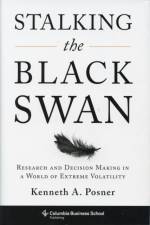
Kenneth A. Posner spent close to two decades as a Wall Street analyst, tracking the so-called "e;specialty finance"e; sector, which included controversial companies such as Countrywide, Fannie Mae, Freddie Mac, CIT, and MasterCard many of which were caught in the subprime mortgage and capital markets crisis of 2007. While extreme volatility is nothing new in finance, the recent downturn caught many off guard, indicating that the traditional approach to decision making had let them down. Introducing a new framework for handling and evaluating extreme risk, Posner draws on years of experience to show how decision makers can best cope with the "e;Black Swans"e; of our time.Posner's shrewd assessment combines the classic fundamental research approach of Benjamin Graham and David Dodd with more recent developments in cognitive science, computational theory, and quantitative finance. He outlines a probabilistic approach to decision making that involves forecasting across a range of scenarios, and he explains how to balance confidence, react accurately to fast-breaking information, overcome information overload, zero in on the critical issues, penetrate the information asymmetry shielding corporate executives, and integrate the power of human intuition with sophisticated analytics. Emphasizing the computational resources we already have at our disposal our computers and our minds Posner offers a new track to decision making for analysts, investors, traders, corporate executives, risk managers, regulators, policymakers, journalists, and anyone who faces a world of extreme volatility.
The story of the succession to the Prophet Muhammad and the rise of the Rashidun Caliphate (632-661) is familiar to historians from the political histories of medieval Islam, which treat it as a factual account. The story also informs the competing perspectives of Sunni and Shi'i Islam, which read into it the legitimacy of their claims. Yet while descriptive and varied, these approaches have long excluded a third reading, which views the conflict over the succession to the Prophet as a parable. From this vantage point, the motives, sayings, and actions of the protagonists reveal profound links to previous texts, not to mention a surprising irony regarding political and religious issues.In a controversial break from previous historiography, Tayeb El-Hibri privileges the literary and artistic triumphs of the medieval Islamic chronicles and maps the origins of Islamic political and religious orthodoxy. Considering the patterns and themes of these unified narratives, including the problem of measuring personal qualification according to religious merit, nobility, and skills in government, El-Hibri offers an insightful critique of both early and contemporary Islam and the concerns of legitimacy shadowing various rulers. In building an argument for reading the texts as parabolic commentary, he also highlights the Islamic reinterpretation of biblical traditions, both by Qur'anic exegesis and historical composition.
This comprehensive anthology collects works of fiction, poetry, drama, and essay-writing from a pivotal time in Japanese history. In addition to their literary achievements, the texts reflect the political, social, and intellectual changes that occurred in Japanese society during this period, including exposure to Western ideas and literature, the rise of nationalism, and the complex interaction of traditional and modern forces. The volume offers outstanding, often new translations of classic texts by such celebrated writers as Nagai Kafu, Shimazaki Toson, Natsume Soseki, Kawabata Yasunari, and Yosano Akiko. The editors have also unearthed works from lesser-known women writers, many of which have never been available in English. Organized chronologically and by genre within each period, the volume reveals the major influences in the development of modern Japanese literature: the Japanese classics themselves, the example of Chinese poetry, and the encounter with Western literature and culture. Modern Japanese writers reread the classics of Japanese literature, infused them with contemporary language, and refashioned them with an increased emphasis on psychological elements. They also reinterpreted older aesthetic concepts in light of twentieth-century mentalities. While modern ideas captured the imagination of some Japanese writers, the example of classical Chinese poetry remained important for others. Meiji writers continued to compose poetry in classical Chinese and adhere to a Confucian system of thought. Another factor in shaping modern Japanese literature was the example of foreign works, which offered new literary inspiration and opportunities for Japanese readers and writers. Divided into four chapters, the anthology begins with the early modern texts of the 1870s, continues with works written during the years of social change preceding World War I and the innovative writing of the interwar period, and concludes with texts from World War II. Each chapter includes a helpful critical introduction, situating the works within their literary, political, and cultural contexts. Additionally, there are biographical introductions for each writer.
Genocide is a matter of law. It is also a matter of history. Engaging some of the most disturbing responses to the Armenian genocide, Marc Nichanian strikingly reveals the complex role played by law and history in making this and other genocides endure as contentious events.Nichanian's book argues that both law and history fail to contend with the very nature of events for which there is no archive (no documents, no witnesses). Both history and law fail to address the modern reality that events can be and are now being perpetrated that depend upon the destruction of the archive, turning monstrous deeds into nonevents. Genocide, this book makes us see, is in one sense the destruction of the archive. It relies on the historiographic perversion.
In 1965, the United States government enacted legislation to provide low-income individuals with quality health care and related services. Initially viewed as the friendless stepchild of Medicare, Medicaid has grown exponentially since its inception, becoming a formidable force of its own. Funded jointly by the national government and each of the fifty states, the program is now the fourth most expensive item in the federal budget and the second largest category of spending for almost every state. Now, under the new, historic health care reform legislation, Medicaid is scheduled to include sixteen million more people.Laura Katz Olson, an expert on health, aging, and long-term care policy, unravels the multifaceted and perplexing puzzle of Medicaid with respect to those who invest in and benefit from the program. Assessing the social, political, and economic dynamics that have shaped Medicaid for almost half a century, she helps readers of all backgrounds understand the entrenched and powerful interests woven into the system that have been instrumental in swelling costs and holding elected officials hostage. Addressing such fundamental questions as whether patients receive good care and whether Medicaid meets the needs of the low-income population it is supposed to serve, Olson evaluates the extent to which the program is an appropriate foundation for health care reform.
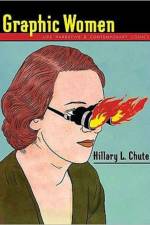
Some of the most acclaimed books of the twenty-first century are autobiographical comics by women. Aline Kominsky-Crumb is a pioneer of the autobiographical form, showing women's everyday lives, especially through the lens of the body. Phoebe Gloeckner places teenage sexuality at the center of her work, while Lynda Barry uses collage and the empty spaces between frames to capture the process of memory. Marjane Satrapi's Persepolis experiments with visual witness to frame her personal and historical narrative, and Alison Bechdel's Fun Home meticulously incorporates family documents by hand to re-present the author's past.These five cartoonists move the art of autobiography and graphic storytelling in new directions, particularly through the depiction of sex, gender, and lived experience. Hillary L. Chute explores their verbal and visual techniques, which have transformed autobiographical narrative and contemporary comics. Through the interplay of words and images, and the counterpoint of presence and absence, they express difficult, even traumatic stories while engaging with the workings of memory. Intertwining aesthetics and politics, these women both rewrite and redesign the parameters of acceptable discourse.
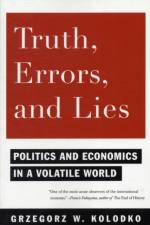
Grzegorz W. Kolodko, one of the world's leading authorities on economics and development policy and a key architect of Poland's successful economic reforms, applies his far-reaching knowledge to the past and future of the world economy, introducing a framework for understanding our global situation that transcends any single discipline or paradigm.Deploying a novel mix of scientific evaluation and personal observation, Kolodko begins with a brief discussion of misinformation and its perpetuation in economics and politics. He criticizes the simplification of complex economic and social issues and investigates the link between developments in the global economy and cultural change, scientific discoveries, and political fluctuations. Underscoring the necessity of conceptual and theoretical innovation in understanding our global economic situation, Kolodko offers a provocative study of globalization and the possibility of coming out ahead in an era of worldwide interdependence. Deeply critical of neoliberalism, which sought to transfer economic control exclusively to the private sector, Kolodko explores the virtues of social-economic development and the new rules of the economic game. He concludes with a look at our near and distant future, questioning whether we have a say in its making.
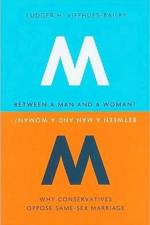
Through a probing investigation of conservative Christianity and its response to an issue that, according to the statistics of conservative Christian groups, affects only a small number of Americans, Ludger Viefhues-Bailey alights on a profound theological conundrum: in today's conservative Christian movement, both sexes are called upon to be at once assertive and submissive, masculine and feminine, not only within the home but also within the church, society, and the state. Therefore the arguments of conservative Christians against same-sex marriage involve more than literal readings of the Bible or nostalgia for simple gender roles.Focusing primarily on texts produced by Focus on the Family, a leading media and ministry organization informing conservative Christian culture, Viefhues-Bailey identifies two distinct ideas of male homosexuality: gender-disturbed and passive; and oversexed, strongly masculine, and aggressive. These homosexualities enable a complex ideal of Christian masculinity in which men are encouraged to be assertive toward the world while also being submissive toward God and family. This web of sexual contradiction influences the flow of power between the sexes and within the state. It joins notions of sexual equality to claims of "e;natural"e; difference, establishing a fraught basis for respectable romantic marriage. Heterosexual union is then treated as emblematic of, if not essential to, the success of American political life yet far from creating gender stability, these tensions produce an endless striving for balance. Viefhues-Bailey's final, brilliant move is to connect the desire for stability to the conservative Christian movement's strategies of political power.
Richard A. Debs analyzes the classical Islamic law of property based on the Shari'ah, traces its historic development in Egypt, and describes its integration as a source of law within the modern format of a civil code. He focuses specifically on Egypt, a country in the Islamic world that drew upon its society's own vigorous legal system as it formed its modern laws. He also touches on issues that are common to all such societies that have adopted, either by choice or by necessity, Western legal systems.Egypt's unique synthesis of Western and traditional elements is the outcome of an effort to respond to national goals and requirements. Its traditional law, the Shari'ah, is the fundamental law of all Islamic societies, and Debs's analysis of Egypt's experience demonstrates how Islamic jurisprudence can be sophisticated, coherent, rational, and effective, developed over centuries to serve the needs of societies that flourished under the rule of law.
For all their spectacular growth, China and India must still lift a hundred million citizens out of poverty and create jobs for the numerous laborers. Both powers hope trade and investment will sustain national unity. For the first time, Jonathan Holslag identifies these objectives as new sources of rivalry and argues that China and India cannot grow without fierce contest.Though he recognizes that both countries wish to maintain stable relations, Holslag argues that success in implementing economic reform will give way to conflict. This rivalry is already tangible in Asia as a whole, where shifting patterns of economic influence have altered the balance of power and have led to shortsighted policies that undermine regional stability. Holslag also demonstrates that despite two decades of peace, mutual perceptions have become hostile, and a military game of tit-for-tat promises to diminish prospects for peace. Holslag therefore refutes the notion that development and interdependence lead to peace, and he does so by embedding rich empirical evidence within broader debates on international relations theory. His book is down-to-earth and realistic while also taking into account the complexities of internal policymaking. The result is a fascinating portrait of the complicated interaction among economic, political, military, and perceptional levels of diplomacy.
In his latest book, William Egginton laments the current debate over religion in America, in which religious fundamentalists have set the tone of political discourse-no one can get elected without advertising a personal relation to God, for example-and prominent atheists treat religious belief as the root of all evil. Neither of these positions, Egginton argues, adequately represents the attitudes of a majority of Americans who, while identifying as Christians, Jews, and Muslims, do not find fault with those who support different faiths and philosophies. In fact, Egginton goes so far as to question whether fundamentalists and atheists truly oppose each other, united as they are in their commitment to a "e;code of codes."e; In his view, being a religious fundamentalist does not require adhering to a particular religious creed. Fundamentalists-and stringent atheists-unconsciously believe that the methods we use to understand the world are all versions of an underlying master code. This code of codes represents an ultimate truth, explaining everything. Surprisingly, perhaps the most effective weapon against such thinking is religious moderation, a way of believing that questions the very possibility of a code of codes as the source of all human knowledge. The moderately religious, with their inherent skepticism toward a master code, are best suited to protect science, politics, and other diverse strains of knowledge from fundamentalist attack, and to promote a worldview based on the compatibility between religious faith and scientific method.
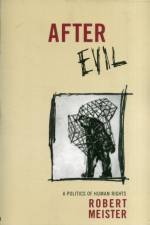
The way in which mainstream human rights discourse speaks of such evils as the Holocaust, slavery, or apartheid puts them solidly in the past. Its elaborate techniques of "e;transitional"e; justice encourage future generations to move forward by creating a false assumption of closure, enabling those who are guilty to elude responsibility. This approach to history, common to late-twentieth-century humanitarianism, doesn't presuppose that evil ends when justice begins. Rather, it assumes that a time before justice is the moment to put evil in the past. Merging examples from literature and history, Robert Meister confronts the problem of closure and the resolution of historical injustice. He boldly challenges the empty moral logic of "e;never again"e; or the theoretical reduction of evil to a cycle of violence and counterviolence, broken only once evil is remembered for what it was. Meister criticizes such methods for their deferral of justice and susceptibility to exploitation and elaborates the flawed moral logic of "e;never again"e; in relation to Auschwitz and its evolution into a twenty-first-century doctrine of the Responsibility to Protect.
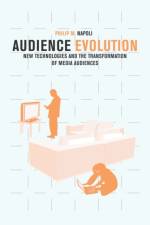
Today's consumers have unprecedented choice in terms of the technologies and platforms that access, produce, and distribute media content. The development and overlap of television, the internet, and other media technologies is fragmenting and empowering media audiences more than ever. Building on his award-winning book, Audience Economics, Philip M. Napoli maps the landscape of our current media environment and describes its challenge to traditional conceptions of the audience. He examines the redefinition of the industry-audience relationship by technologies that have moved the audience marketplace beyond traditional metrics. Media providers, advertisers, and audience measurement firms now deploy more sophisticated tools to gather and analyze audience information, focusing on factors rarely considered before, such as appreciation, recall, engagement, and behavior. Napoli explores the interplay between political and economic interests in the audience marketplace and their effect on audience evolution. He recounts the battles waged between stakeholders over the assessment of media audiences and their efforts to restrict the functionality of new technologies. As Napoli makes clear, the very meaning of the media audience continues to evolve in response to changing technological, economic, and political conditions.
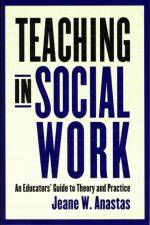
Drawing from her extensive classroom and field experience, Jeane W. Anastas merges the "e;practice wisdom"e; of today's social work educators with contemporary theories on instruction and learning. Built around a teacher- and student-in-situation framework, Teaching in Social Work examines the effect of social issues, professional norms and needs, and various educational settings on the interactions among educators, students, and the subjects they learn. The result is a singular volume that focuses specifically on teaching within the field of social work, identifying the factors that result in effective educational outcomes.Anastas draws on the theories and selected research findings of higher education and social work education literature. She illuminates the critical aspects of teaching and learning as an adult, the best uses of different modalities of instruction, and the issues of diversity that influence all aspects of teaching and learning. Her book includes guest-authored chapters on field learning and the latest advances in teaching technology. It also engages with ethics, teaching and learning assessments, and faculty work in full-time social work education.
Dorothy N. Gamble and Marie Weil differentiate among a range of intervention methods to provide a comprehensive and effective guide to working with communities. Presenting eight distinct models grounded in current practice and targeted toward specific goals, Gamble and Weil take an unusually inclusive step, combining their own extensive experience with numerous case and practice examples from talented practitioners in international and domestic settings.The authors open with a discussion of the theories for community work and the values of social justice and human rights, concerns that have guided the work of activists from Jane Addams and Martin Luther King Jr. to Cesar Chavez, Wangari Maathai, and Vandana Shiva. They survey the concepts, knowledge, and perspectives influencing community practice and evaluation strategies. Descriptions of eight practice models follow, incorporating real-life case examples from many parts of the world and demonstrating multiple applications for each model as well as the primary roles, competencies, and skills used by the practitioner. Complexities and variations encourage readers to determine, through comparative analysis, which model at which time best fits the goals of a community group or organization, given the context, culture, social, economic, and environmental issues and opportunities for change. An accompanying workbook stressing empowerment strategies and skills development is also available from Columbia University Press.
Shakespeare was acutely aware of our intimate struggles with aging. His dramatic characters either prosper or suffer according to their relationship with maturity, and his sonnets eloquently explore time's ravaging effects. "e;Wrinkled deep in time"e; is how the queen describes herself in Antony and Cleopatra, and at the end of King Lear, there is a tragic sense that both the king and Gloucester have acquired a wisdom they otherwise lacked at the beginning of the play. Even Juliet matures considerably before she drinks Friar Lawrence's potion, and Macbeth and his wife prematurely grow old from their murderous schemes.Drawing on historical documents and the dramatist's own complex depictions, Maurice Charney conducts an original investigation into patterns of aging in Shakespeare, exploring the fulfillment or distress of Shakespeare's characters in combination with their mental and physical decline. Comparing the characterizations of elderly kings and queens, older lovers, patriarchal men, matriarchal women, and the senex the stereotypical old man of Roman comedy with the history of life expectancy in Shakespeare's England, Charney uncovers similarities and differences between our contemporary attitudes toward aging and aging as it was understood more than four hundred years ago. From this dynamic examination, a new perspective on Shakespeare emerges, one that celebrates and deepens our knowledge of his subtler themes and characters.
In 1978, Ed Koch assumed control of a city plagued by filth, crime, bankruptcy, and racial tensions. By the end of his mayoral run in 1989 and despite the Wall Street crash of 1987, his administration had begun rebuilding neighborhoods and infrastructure. Unlike many American cities, Koch's New York was growing, not shrinking. Gentrification brought new businesses to neglected corners and converted low-end rental housing to coops and condos. Nevertheless, not all the changes were positive AIDS, crime, homelessness, and violent racial conflict increased, marking a time of great, if somewhat uneven, transition. For better or worse, Koch's efforts convinced many New Yorkers to embrace a new political order subsidizing business, particularly finance, insurance, and real estate, and privatizing public space. Each phase of the city's recovery required a difficult choice between moneyed interests and social services, forcing Koch to be both a moderate and a pragmatist as he tried to mitigate growing economic inequality. Throughout, Koch's rough rhetoric (attacking his opponents as "e;crazy,"e; "e;wackos,"e; and "e;radicals"e;) prompted charges of being racially divisive. The first book to recast Koch's legacy through personal and mayoral papers, authorized interviews, and oral histories, this volume plots a history of New York City through two rarely studied yet crucial decades: the bankruptcy of the 1970s and the recovery and crash of the 1980s.
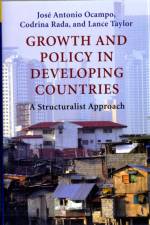
Economic structuralists use a broad, systemwide approach to understanding development, and this textbook assumes a structuralist perspective in its investigation of why a host of developing countries have failed to grow at 2 percent or more since 1960. Sensitive to the wide range of factors that affect an economy's strength and stability, the authors identify the problems that have long frustrated growth in many parts of the developing world while suggesting new strategies and policies to help improve standards of living.After a survey of structuralist methods and post-World War II trends of global economic growth, the authors discuss the role that patterns in productivity, production structures, and capital accumulation play in the growth dynamics of developing countries. Next, it outlines the evolution of trade patterns and the effect of the terms of trade on economic performance, especially for countries that depend on commodity exports. The authors acknowledge the structural limits of macroeconomic policy, highlighting the negative effects of financial volatility and certain financial structures while recommending policies to better manage external shocks. These policies are then further developed through a discussion of growth and structural improvements, and are evaluated according to which policy options-macro, industrial, or commercial best fit within different kinds of developing economies.
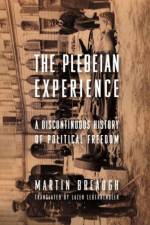
How do people excluded from political life achieve political agency? Through a series of historical events that have been mostly overlooked by political theorists, Martin Breaugh identifies fleeting yet decisive instances of emancipation in which people took it upon themselves to become political subjects. Emerging during the Roman plebs's first secession in 494 BCE, the plebeian experience consists of an underground or unexplored configuration of political strategies to obtain political freedom. The people reject domination through political praxis and concerted action, therefore establishing an alternative form of power. Breaugh's study concludes in the nineteenth century and integrates ideas from sociology, philosophy, history, and political science. Organized around diverse case studies, his work undertakes exercises in political theory to show how concepts provide a different understanding of the meaning of historical events and our political present. The Plebeian Experience describes a recurring phenomenon that clarifies struggles for emancipation throughout history, expanding research into the political agency of the many and shedding light on the richness of radical democratic struggles from ancient Rome to Occupy Wall Street and beyond.
Though China's economy is projected to become the world's largest within the next twenty years, industrial pollution threatens both the health of the country's citizens and the natural resources on which their economy depends. Capturing the consequences of this reality, Bryan Tilt conducts an in-depth, ethnographic study of Futian Township, a rural community reeling from pollution. The industrial township is located in the populous southwestern province of Sichuan. Three local factories-a zinc smelter, a coking plant, and a coal-washing plant-produce air and water pollution that far exceeds the standards set by the World Health Organization and China's Ministry of Environmental Protection. Interviewing state and company officials, factory workers, farmers, and scientists, Tilt shows how residents cope with this pollution and how they view its effects on health and economic growth. Striking at the heart of the community's environmental values, he explores the intersection between civil society and environmental policy, weighing the tradeoffs between protection and economic growth. Tilt ultimately finds that the residents are quite concerned about pollution, and he investigates the various strategies they use to fight it. His study unravels the complexity of sustainable development within a rapidly changing nation.
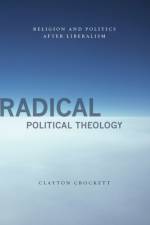
In the 1960s, the strict opposition between the religious and the secular began to break down, blurring the distinction between political philosophy and political theology. This collapse contributed to the decline of modern liberalism, which supported a neutral, value-free space for capitalism. It also deeply unsettled political, religious, and philosophical realms, forced to confront the conceptual stakes of a return to religion.Gamely intervening in a contest that defies simple resolutions, Clayton Crockett conceives of the postmodern convergence of the secular and the religious as a basis for emancipatory political thought. Engaging themes of sovereignty, democracy, potentiality, law, and event from a religious and political point of view, Crockett articulates a theological vision that responds to our contemporary world and its theo-political realities. Specifically, he claims we should think about God and the state in terms of potentiality rather than sovereign power. Deploying new concepts, such as Slavoj iek's idea of parallax and Catherine Malabou's notion of plasticity, his argument engages with debates over the nature and status of religion, ideology, and messianism. Tangling with the work of Derrida, Deleuze, Spinoza, Antonio Negri, Giorgio Agamben, Alain Badiou, John D. Caputo, and Catherine Keller, Crockett concludes with a reconsideration of democracy as a form of political thought and religious practice, underscoring its ties to modern liberal capitalism while also envisioning a more authentic democracy unconstrained by those ties.
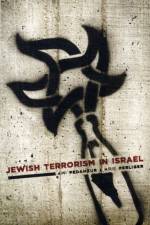
Ami Pedahzur and Arie Perliger, world experts on the study of terror and security, propose a theory of violence that contextualizes not only recent acts of terror but also instances of terrorism that stretch back centuries. Beginning with ancient Palestine and its encounters with Jewish terrorism, the authors analyze the social, political, and cultural factors that sponsor extreme violence, proving religious terrorism is not the fault of one faith, but flourishes within any counterculture that adheres to a totalistic ideology.When a totalistic community perceives an external threat, the connectivity of the group and the rhetoric of its leaders bolster the collective mindset of members, who respond with violence. In ancient times, the Jewish sicarii of Judea carried out stealth assassinations against their Roman occupiers. In the mid-twentieth century, to facilitate their independence, Jewish groups committed acts of terror against British soldiers and the Arab population in Palestine. More recently, Yigal Amir, a member of a Jewish terrorist cell, assassinated Yitzhak Rabin to express his opposition to the Oslo Peace Accords. Conducting interviews with former Jewish terrorists, political and spiritual leaders, and law-enforcement officials, and culling information from rare documents and surveys of terrorist networks, Pedahzur and Perliger construct an extensive portrait of terrorist aggression, while also describing the conditions behind the modern rise of zealotry.
Feminist theorist and philosopher Donna Haraway has substantially impacted thought on science, cyberculture, the environment, animals, and social relations. This long-overdue volume explores her influence on feminist theory and philosophy, paying particular attention to her more recent work on companion species, rather than her "e;Manifesto for Cyborgs."e;Margret Grebowicz and Helen Merrick argue that the ongoing fascination with, and re-production of, the cyborg has overshadowed Haraway's extensive body of work in ways that run counter to her own transdisciplinary practices. Sparked by their own personal "e;adventures"e; with Haraway's work, the authors offer readings of her texts framed by a series of theoretical and political perspectives: feminist materialism, standpoint epistemology, radical democratic theory, queer theory, and even science fiction. They situate Haraway's critical storytelling and "e;risky reading"e; practices as forms of feminist methodology and recognize her passionate engagement with "e;naturecultures"e; as the theoretical core driving her work. Chapters situate Haraway as critic, theorist, biologist, feminist, historian, and humorist, exploring the full range of her identities and reflecting her commitment to embodying all of these modes simultaneously.
Gyorgy Lukacs was a Hungarian Marxist philosopher, writer, and literary critic who shaped mainstream European Communist thought. Soul and Form was his first book, published in 1910, and it established his reputation, treating questions of linguistic expressivity and literary style in the works of Plato, Kierkegaard, Novalis, Sterne, and others. By isolating the formal techniques these thinkers developed, Lukacs laid the groundwork for his later work in Marxist aesthetics, a field that introduced the historical and political implications of text.For this centennial edition, John T. Sanders and Katie Terezakis add a dialogue entitled "e;On Poverty of Spirit,"e; which Lukacs wrote at the time of Soul and Form, and an introduction by Judith Butler, which compares Lukacs's key claims to his later work and subsequent movements in literary theory and criticism. In an afterword, Terezakis continues to trace the Lukacsian system within his writing and other fields. These essays explore problems of alienation and isolation and the curative quality of aesthetic form, which communicates both individuality and a shared human condition. They investigate the elements that give rise to form, the history that form implies, and the historicity that form embodies. Taken together, they showcase the breakdown, in modern times, of an objective aesthetics, and the rise of a new art born from lived experience.
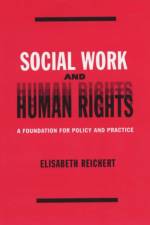
Social Work and Human Rights has become a standard text highlighting the role of social work in protecting the rights of vulnerable populations. Through rigorous analysis, classroom exercises, and a frank discussion of the implications for practice both within and outside of the United States, the volume effectively acquaints readers with the political, economic, and social dimensions of rights issues and the documents that guarantee them. New material covers international events, such as the United Nations' Millennium Declaration (2000) and its effort to reduce the poverty and suffering of billions worldwide. The volume now emphasizes cultural rights and includes a probing lesson in cultural relativism. It turns a critical eye toward the failure in the United States to address social welfare issues and its reluctance to rectify policies favoring one group over another.Praise for the first edition:"e;A human rights compass-a preliminary guide for the translation of human rights for social workers.... It is to be welcomed."e;-European Journal of Social Work"e;Foundation documents provide an essential tool for understanding the issues and applying the understanding to concrete social policy advocacy and action."e;-Canadian Association of Social Workers Bulletin"e;This is a text which is overdue for social work students and faculty."e;-Rosemary Link, coauthor of Human Behavior in a Just World: Reaching for Common Ground"e;Reichert makes human rights concepts come alive. Practice case examples and human rights analysis of the National Association of Social Worker's Code of Ethics are particularly valuable in orienting the reader to the domestic practice applications of the global human rights movement."e;-Lynne M. Healy, author of International Social Work: Professional Action in an Interdependent World
Abonner på vårt nyhetsbrev og få rabatter og inspirasjon til din neste leseopplevelse.
Ved å abonnere godtar du vår personvernerklæring.