














Gjør som tusenvis av andre bokelskere
Abonner på vårt nyhetsbrev og få rabatter og inspirasjon til din neste leseopplevelse.
Ved å abonnere godtar du vår personvernerklæring.Du kan når som helst melde deg av våre nyhetsbrev.

From mass murder to genocide, slavery to colonial suppression, acts of atrocity have lives that extend far beyond the horrific moment. They engender trauma that echoes for generations, in the experiences of those on both sides of the act. Gabriele Schwab reads these legacies in a number of narratives, primarily through the writing of postwar Germans and the descendents of Holocaust survivors. She connects their work to earlier histories of slavery and colonialism and to more recent events, such as South African Apartheid, the practice of torture after 9/11, and the "e;disappearances"e; that occurred during South American dictatorships.Schwab's texts include memoirs, such as Ruth Kluger's Still Alive and Marguerite Duras's La Douleur; second-generation accounts by the children of Holocaust survivors, such as Georges Perec's W, Art Spiegelman's Maus, and Philippe Grimbert's Secret; and second-generation recollections by Germans, such as W. G. Sebald's Austerlitz, Sabine Reichel's What Did You Do in the War, Daddy?, and Ursula Duba's Tales from a Child of the Enemy. She also incorporates her own reminiscences of growing up in postwar Germany, mapping interlaced memories and histories as they interact in psychic life and cultural memory. Schwab concludes with a bracing look at issues of responsibility, reparation, and forgiveness across the victim/perpetrator divide.
By the end of the nineteenth century, the world was ready to adopt the gold standard out of concerns of national power, prestige, and anti-English competition. Yet although the gold standard allowed countries to enact a virtual single world currency, the years before World War I were not a time of unfettered liberal economics and one-world, one-market harmony. Outside of Europe, the gold standard became a tool for nationalists and protectionists primarily interested in growing domestic industry and imperial expansion.This overlooked trend, provocatively reassessed in Steven Bryan's well-documented history, contradicts our conception of the gold standard as a British-based system infused with English ideas, interests, and institutions. In countries like Japan and Argentina, where nationalist concerns focused on infant-industry protection and the growth of military power, the gold standard enabled the expansion of trade and the goals of the age: industry and empire. Bryan argues that these countries looked less to Britain and more to North America and the rest of Europe for ideological models. Not only does this history challenge our idealistic notions of the prewar period, but it also reorients our understanding of the history that followed. Policymakers of the 1920s latched onto the idea that global prosperity before World War I was the result of a system dominated by English liberalism. Their attempt to reproduce this triumph helped bring about the global downturn, the Great Depression, and the collapse of the interwar world.
Sourcing the major traditions of progressive Christian social ethics social gospel liberalism, Niebuhrian realism, and liberation theology Gary Dorrien argues for the social-ethical necessity of social justice politics. In carefully reasoned essays, he focuses on three subjects: the ethics and politics of economic justice, racial and gender justice, and antimilitarism, making a constructive case for economic democracy, along with a liberationist understanding of racial and gender justice and an anti-imperial form of liberal internationalism. In Dorrien's view, the three major discourse traditions of progressive Christian social ethics share a fundamental commitment to transform the structures of society in the direction of social justice. His reflections on these topics feature innovative analyses of major figures, such as Walter Rauschenbusch, Reinhold Niebuhr, James Burnham, Norman Thomas, and Michael Harrington, and an extensive engagement with contemporary intellectuals, such as Rosemary R. Ruether, Katie Cannon, Gregory Baum, and Cornel West. Dorrien also weaves his personal experiences into his narrative, especially his involvement in social justice movements. He includes a special chapter on the 2008 presidential campaign and the historic candidacy of Barack Obama.
On May 4, 1919, thousands of students protested the Versailles treaty in Beijing. Seventy years later, another generation demonstrated in Tiananmen Square. Climbing the Monument of the People's Heroes, these protestors stood against a relief of their predecessors, merging with their own mythology while consciously deploying their activism. Through an investigation of twentieth-century Chinese student protest, Fabio Lanza considers the marriage of the cultural and the political, the intellectual and the quotidian, that occurred during the May Fourth movement, along with its rearticulation in subsequent protest. He ultimately explores the political category of the "e;student"e; and its making in the twentieth century.Lanza returns to the May Fourth period (1917-1923) and the rise of student activism in and around Beijing University. He revisits reform in pedagogical and learning routines, changes in daily campus life, the fluid relationship between the city and its residents, and the actions of allegedly cultural student organizations. Through a careful analysis of everyday life and urban space, Lanza radically reconceptualizes the emergence of political subjectivities (categories such as "e;worker,"e; "e;activist,"e; and "e;student"e;) and how they anchor and inform political action. He accounts for the elements that drew students to Tiananmen and the formation of the student as an enduring political category. His research underscores how, during a time of crisis, the lived realities of university and student became unsettled in Beijing, and how political militancy in China arose only when the boundaries of identification were challenged.
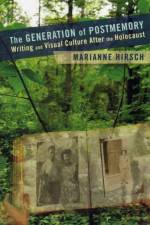
Can we remember other people's memories? The Generation of Postmemory argues we can: that memories of traumatic events live on to mark the lives of those who were not there to experience them. Children of survivors and their contemporaries inherit catastrophic histories not through direct recollection but through haunting postmemories multiply mediated images, objects, stories, behaviors, and affects passed down within the family and the culture at large. In these new and revised critical readings of the literary and visual legacies of the Holocaust and other, related sites of memory, Marianne Hirsch builds on her influential concept of postmemory. The book's chapters, two of which were written collaboratively with the historian Leo Spitzer, engage the work of postgeneration artists and writers such as Art Spiegelman, W.G. Sebald, Eva Hoffman, Tatana Kellner, Muriel Hasbun, Anne Karpff, Lily Brett, Lorie Novak, David Levinthal, Nancy Spero and Susan Meiselas. Grappling with the ethics of empathy and identification, these artists attempt to forge a creative postmemorial aesthetic that reanimates the past without appropriating it. In her analyses of their fractured texts, Hirsch locates the roots of the familial and affiliative practices of postmemory in feminism and other movements for social change. Using feminist critical strategies to connect past and present, words and images, and memory and gender, she brings the entangled strands of disparate traumatic histories into more intimate contact. With more than fifty illustrations, her text enables a multifaceted encounter with foundational and cutting edge theories in memory, trauma, gender, and visual culture, eliciting a new understanding of history and our place in it.
Yfaat Weiss tells the story of an Arab neighborhood in Haifa that later acquired iconic status in Israeli memory. In the summer of 1959, Jewish immigrants from Morocco rioted against local and national Israeli authorities of European origin. The protests of Wadi Salib generated for the first time a kind of political awareness of an existing ethnic discrimination among Israeli Jews. However, before that, Wadi Salib existed as an impoverished Arab neighborhood. The war of 1948 displaced its residents, even though the presence of the absentees and the Arab name still linger.Weiss investigates the erasure of Wadi Salib's Arab heritage and its emergence as an Israeli site of memory. At the core of her quest lies the concept of property, as she merges the constraints of former Arab ownership with requirements and restrictions pertaining to urban development and the emergence of its entangled memory. Establishing an association between Wadi Salib's Arab refugees and subsequent Moroccan evacuees, Weiss allegorizes the Israeli amnesia about both eventual stories that of the former Arab inhabitants and that of the riots of 1959, occurring at different times but in one place. Describing each in detail, Weiss uncovers a complex, multilayered, and hidden history. Through her sensitive reading of events, she offers uncommon perspective on the personal and political making of Israeli belonging.
It has long been recognized that an improved standard of living results from advances in technology, not from the accumulation of capital. It has also become clear that what truly separates developed from less-developed countries is not just a gap in resources or output but a gap in knowledge. In fact, the pace at which developing countries grow is largely a function of the pace at which they close that gap. Thus, to understand how countries grow and develop, it is essential to know how they learn and become more productive and what government can do to promote learning. In Creating a Learning Society, Joseph E. Stiglitz and Bruce C. Greenwald cast light on the significance of this insight for economic theory and policy. Taking as a starting point Kenneth J. Arrow's 1962 paper "e;Learning by Doing,"e; they explain why the production of knowledge differs from that of other goods and why market economies alone typically do not produce and transmit knowledge efficiently. Closing knowledge gaps and helping laggards learn are central to growth and development. But creating a learning society is equally crucial if we are to sustain improved living standards in advanced countries. Combining accessible prose with technical economic analysis, Stiglitz and Greenwald provide new models of "e;endogenous growth,"e; up-ending thowhe thinking about both domestic and global policy and trade regimes. They show well-designed government trade and industrial policies can help create a learning society, and how poorly designed intellectual property regimes can retard learning. They also explain how virtually every government policy has effects, both positive and negative, on learning, a fact that policymakers must recognize. They demonstrate why many standard policy prescriptions, especially those associated with "e;neoliberal"e; doctrines focusing on static resource allocations, have impeded learning. Among the provocative implications are that free trade may lead to stagnation whereas broad-based industrial protection and exchange rate interventions may bring benefits-not just to the industrial sector, but to the entire economy. The volume concludes with brief commentaries from Philippe Aghion and Michael Woodford, as well as from Nobel Laureates Kenneth J. Arrow and Robert M. Solow.
On Being and Having a Case Manager stresses the importance of the process of building relationships in helping clients realize independent lives. Based on a two-year study of Marilyn and her case managers, this book emphasizes the intentional exchange of attention and information between case managers, clients, and others within the caring network and clearly outlines a practical method for all service providers, clients, family members, and close friends to follow.Throughout the day, from moment to moment, relationships fluctuate among doing for, doing with, standing by for support, and doing for oneself. By observing Marilyn and her case manager, the authors prove the value of mutually and continuously monitoring these fluctuations within three primary domains-feeling, thinking, and acting-while carrying out daily activities. These findings show that managers are often stuck in doing-for modes of relating. Indeed, this may be one of the factors that contribute most to case manager and client burnout. While some clients with severe and persistent symptoms may, in fact, frequently require others to do-for, some like Marilyn may not require as much. They may need more doing-with and standing-by to encourage mastery and the internalization of confidence.
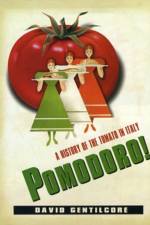
More than just the beloved base ingredient of so many of our favorite dishes, the tomato has generated both profound riches and controversy in its farming, processing, exchange, and consumption. It is a crop infused with national pride and passion for those who grow it, and a symbol of Old World nostalgia for those who claim its history and legacy. Over time, the tomato has embodied a range of values and meanings. From its domestication in Central America, it has traveled back and forth across the Atlantic, powering a story of aspiration and growth, agriculture and industry, class and identity, and global transition. In this entertaining and organic history, David Gentilcore recounts the surprising rise of the tomato from its New World origin to its Old World significance. From its inauspicious introduction into Renaissance Europe, the tomato came to dominate Italian cuisine and the food industry over the course of three centuries. Gentilcore explores why elite and peasant cultures took so long to assimilate the tomato into Italian cooking and how it eventually triumphed. He traces the tomato's appearance in medical and agricultural treatises, travel narratives, family recipe books, kitchen accounts, and Italian art, literature, and film. He focuses on Italy's fascination with the tomato, painting a larger portrait of changing trends and habits that began with botanical practices in the sixteenth century and attitudes toward vegetables in the seventeenth and eighteenth centuries, and concluded with the emergence of factory production in the nineteenth. Gentilcore continues with the transformation of the tomato into a national symbol during the years of Italian immigration and Fascism and examines the planetary success of the "e;Italian"e; tomato today, detailing its production, representation, and consumption.
India's foreign policy toward Israel is a subject of deep dispute. Throughout the twentieth century arguments have raged over the Palestinian problem and the future of bilateral relations. Yet no text comprehensively looks at the attitudes and policies of India toward Israel, especially their development in conjunction with history.P. R. Kumaraswamy is the first to account for India's Israel policy, revealing surprising inconsistencies in positions taken by the country's leaders, such as Mahatma Gandhi and Jawaharlal Nehru, and tracing the crackling tensions between its professed values and realpolitik. Kumaraswamy's findings debunk the belief that India possesses a homogenous policy toward the Middle East. In fact, since the early days of independence, many within India have supported and pursued relations with Israel. Using material derived from archives in both India and Israel, Kumaraswamy investigates the factors that have hindered relations between these two countries despite their numerous commonalities. He also considers how India destabilized relations, the actions that were necessary for normalization to occur, and the directions bilateral relations may take in the future. In his most provocative argument, Kumaraswamy underscores the disproportionate affect of anticolonial sentiments and the Muslim minority on shaping Indian policy.
Can there be a novel of the international working class despite the conditions and constraints of economic globalization? What does it mean to invoke working-class writing as an ethical intervention in an age of comparative advantage and outsourcing? No Country argues for a rethinking of the genre of working-class literature. Sonali Perera expands our understanding of working-class fiction by considering a range of international texts, identifying textual, political, and historical linkages often overlooked by Eurocentric and postcolonial scholarship. Her readings connect the literary radicalism of the 1930s to the feminist recovery projects of the 1970s, and the anticolonial and postcolonial fiction of the 1960s to today's counterglobalist struggles, building a new portrait of the twentieth century's global economy and the experiences of the working class within it.Perera considers novels by the Indian anticolonial writer Mulk Raj Anand; the American proletarian writer Tillie Olsen; Sri Lankan Tamil/Black British writer and political journalist Ambalavaner Sivanandan; Indian writer and bonded-labor activist Mahasweta Devi; South African-born Botswanan Bessie Head; and the fiction and poetry published under the collective signature Dabindu, a group of free-trade-zone garment factory workers and feminist activists in contemporary Sri Lanka. Articulating connections across the global North-South divide, Perera creates a new genealogy of working-class writing as world literature and transforms the ideological underpinnings casting literature as cultural practice.
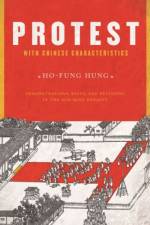
The origin of political modernity has long been tied to the Western history of protest and revolution, the currents of which many believe sparked popular dissent worldwide. Reviewing nearly one thousand instances of protest in China from the eighteenth to the early-nineteenth centuries, Ho-fung Hung charts an evolution of Chinese dissent that stands apart from Western trends. Hung samples from mid-Qing petitions and humble plaints to the emperor. He revisits rallies, riots, market strikes, and other forms of contention rarely considered in previous studies. Drawing on new world history, which accommodates parallels and divergences between political-economic and cultural developments East and West, Hung shows how the centralization of political power and an expanding market, coupled with a persistent Confucianist orthodoxy, shaped protesters' strategies and appeals in Qing China. This unique form of mid-Qing protest combined a quest for justice and autonomy with a filial-loyal respect for the imperial center, and Hung's careful research ties this distinct characteristic to popular protest in China today. As Hung makes clear, the nature of these protests prove late imperial China was anything but a stagnant and tranquil empire before the West cracked it open. In fact, the origins of modern popular politics in China predate the 1911 Revolution. Hung's work ultimately establishes a framework others can use to compare popular protest among different cultural fabrics. His book fundamentally recasts the evolution of such acts worldwide.
Author of the acclaimed work Iceberg Risk: An Adventure in Portfolio Theory, Kent Osband argues that uncertainty is central rather than marginal to finance. Markets don't trade mainly on changes in risk. They trade on changes in beliefs about risk, and in the process, markets unite, stretch, and occasionally defy beliefs. Recognizing this truth would make a world of difference in investing. Belittling uncertainty has created a rift between financial theory and practice and within finance theory itself, misguiding regulation and stoking huge financial imbalances.Sparking a revolution in the mindset of the investment professional, Osband recasts the market as a learning machine rather than a knowledge machine. The market continually errs, corrects itself, and makes new errors. Respecting that process, without idolizing it, will promote wiser investment, trading, and regulation. With uncertainty embedded at its core, Osband's rational approach points to a finance theory worthy of twenty-first-century investing.
Joseph Margolis, known for his considerable contributions to the philosophy of art and aesthetics, pragmatism, and American philosophy, has focused primarily on the troublesome concepts of culture, history, language, agency, art, interpretation, and the human person or self. For Margolis, the signal problem has always been the same: how can we distinguish between physical nature and human culture? How do these realms relate?The Cultural Space of the Arts and the Infelicities of Reductionism identifies a conceptual tendency that can be drawn from the work of the twentieth century's best-known analytic philosophers of art: Arthur Danto, Richard Wollheim, Kendall Walton, Nelson Goodman, Monroe Beardsley, Noel Carroll, and Jerrold Levinson, among others. This trend threatens to impoverish our grasp and appreciation of the arts by failing to do justice to the culturally informed nature of the arts themselves. Through his analysis, Margolis sets out to retrieve an adequate picture of the essential differences between physical nature and human culture particularly through language, history, meaning, significance, the emergence of the human self or person, and the essential features of human life all to explain how such difference bears on our perception of paintings and literature. Clearly argued and provocatively engaging, Margolis's work reestablishes what is essential to a productive encounter with art.
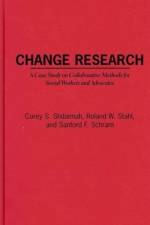
Collaborating with community members adds a critical dimension to social work research, providing practitioners with intimate knowledge of a community's goals and needs while equipping community advocates with vital skills for social change. Sharing the inspiring story of one such partnership, Corey Shdaimah, Roland Stahl, and Sanford F. Schram recount their efforts working with an affordable housing coalition in Philadelphia, helping activists research low-income home ownership and repair. Their collaboration helped create the Philadelphia Housing Trust Fund, which funnels millions of dollars to people in need. This volume describes the origins of their partnership and its growth, including developing tensions and their diffusion in ways that contributed to the research. The authors personalize methods of research and the possibilities for advocacy, ultimately connecting their encounters to more general, critical themes. Building on the field's commitment to social justice, they effectively demonstrate the potential of change research to facilitate widespread, long-term difference and improve community outcomes.
When she started working with the aged more than forty years ago, Ann Burack-Weiss began storing the knowledge and skills she thought would help when she got old herself. It was not until she hit her mid-seventies that she realized she had packed sneakers to climb Mount Everest, not anticipating the crevices and chasms that constitute the rocky terrain of old age. The professional gerontological and social work literature offered little help, so she turned to the late-life works of beloved women authors who had bravely climbed the mountain and sent back news from the summit. Maya Angelou, Colette, Simone de Beauvoir, Joan Didion, Marguerite Duras, M. F. K. Fisher, Doris Lessing, Mary Oliver, Adrienne Rich, May Sarton, and Florida Scott-Maxwell were among the many guides she turned to for inspiration. In The Lioness in Winter, Burack-Weiss blends an analysis of key writings from these and other famed women authors with her own wisdom to create an essential companion for older women and those who care for them. She fearlessly examines issues such as living with loss, finding comfort and joy in unexpected places, and facing disability and death. This book is filled with powerful passages from women who turned their experiences of aging into art, and Burack-Weiss ties their words to her own struggles and epiphanies, framing their collective observations with key insights from social work practice.
Mutual funds form the bedrock of retirement savings in the United States, and, considering their rapid growth, are sure to be more critical in the future. Because the size of fees paid by investors to mutual fund advisers can strongly affect the return on investment, these fees have become a contentious issue in Congress and the courts, with many arguing that investment advisers grow rich at the expense of investors. This ground-breaking book not only conceptualizes a new economic model of the mutual fund industry, but also uses this model to test for price competition between investment advisers, evaluating the assertion that market forces fail to protect investors' returns from excessive fees. Highly experienced authors track the growth of the industry over the past twenty-five years and present arguments and evidence both for and against theories of adviser malfeasance. The authors review the regulatory history of mutual fund fees and summarize leading case decisions addressing excessive fees.Revealing the extent to which the governance structure of mutual funds truly impacts fund performance, this book provides the best understanding of today's mutual fund industry and is a vital tool for investors, money managers, fund directors, securities lawyers, economists, and anyone concerned with the regulation of mutual funds.
Yukichi Fukuzawa rose from low samurai origins to become one of the finest intellectuals and social thinkers of modern Japan. Through his best-selling works, he helped transform an isolated feudal nation into a full-fledged international force. In Outline of a Theory of Civilization, the author's most sustained philosophical text, Fukuzawa translates and adapts a range of Western works for a Japanese audience, establishing the social, cultural, and political avenues through which Japan could connect with other countries. Echoing the ideas of Western contemporaries such as Ralph Waldo Emerson and Walt Whitman, Fukuzawa encouraged a grassroots elevation of the individual and national spirit, as well as free initiative in the private domain. Fukuzawa's bold project articulated thoughts that, for him, bolstered the material evidence of Western civilization. He argued that the essential difference separating Western countries from Japan and Asia was the extent to which citizens acted like free and responsible individuals. This careful new translation, accompanied by a comprehensive critical introduction, highlights the truly transnational aspects of Outline of a Theory of Civilization and its status as a foundational text of modern Japanese civilization. Approaching Fukuzawa's progressive thought with a fresh eye, these scholars elucidate the monumental and peerless quality of his work.
One of therapy's greatest challenges is the moment of transference, when a patient unconsciously transfers emotion or desire to a new and present object in some cases the therapist. During the course of treatment, a patient's projections and the analyst's struggle to divert them can stress, distort, or contaminate the therapeutic relationship. It may lead to various forms of enactment, in which the therapist unconsciously colludes with the client in interpretation and treatment, or it can lead to projective identification, in which the client imposes negative feelings and behaviors onto the therapist, further interfering with analysis and intervention.Drawing on decades of clinical case experience, Robert Waska leads practitioners through the steps of phantasy and transference mechanisms and their ability to increase, oppose, embrace, or neutralize analytic contact. Operating from a psychoanalytic perspective, he explains how to cope professionally with moments of transference and maintain an objective interpretive stance within the ongoing matrix of projective identification, countertransference, and enactment. Each chapter discusses a wide spectrum of cases and clinical situations, describing in detail the processes that invite a playing out of the patient's phantasies and the work required to reestablish balance. Refreshingly candid, Waska recognizes the imperfections of analysis yet reaffirms its potential for greater psychological integration and stability for the patient. He acknowledges the limits and frequent roadblocks of working with difficult patients, such as those who suffer from psychic retreat, paranoid phantasies, and depressive anxieties, yet he indicates an effective path for resetting the clinical moment and redirecting the course for treatment.
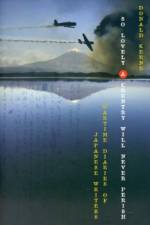
The attack on Pearl Harbor, which precipitated the Greater East Asia War and its initial triumphs, aroused pride and a host of other emotions among the Japanese people. Yet the single year in which Japanese forces occupied territory from Alaska to Indonesia was followed by three years of terrible defeat. Nevertheless, until the shattering end of the war, many Japanese continued to believe in the invincibility of their country. But in the diaries of well-known writers including Nagai Kafu, Takami Jun, Yamada Futaru, and Hirabayashi Taiko and the scholar Watanabe Kazuo, varying doubts were vividly, though privately, expressed.Donald Keene, renowned scholar of Japan, selects from these diaries, some written by authors he knew well. Their revelations were sometimes poignant, sometimes shocking to Keene. Ito Sei's fervent patriotism and even claims of racial superiority stand in stark contrast to the soft-spoken, kindly man Keene knew. Weaving archival materials with personal recollections and the intimate accounts themselves, Keene reproduces the passions aroused during the war and the sharply contrasting reactions in the year following Japan's surrender. Whether detailed or fragmentary, these entries communicate the reality of false victory and all-too-real defeat.
Since the early days of film, critics and theorists have contested the value of formula, cliche, conventional imagery, and recurring narrative patterns of reduced complexity in cinema. Whether it's the high-noon showdown or the last-minute rescue, a lonely woman standing in the window or two lovers saying goodbye in the rain, many films rely on scenes of stereotype, and audiences have come to expect them. Outlining a comprehensive theory of film stereotype, a device as functionally important as it is problematic to a film's narrative, Jorg Schweinitz constructs a fascinating though overlooked critical history from the 1920s to today.Drawing on theories of stereotype in linguistics, literary analysis, art history, and psychology, Schweinitz identifies the major facets of film stereotype and articulates the positions of theorists in response to the challenges posed by stereotype. He reviews the writing of Susan Sontag, Roland Barthes, Theodor W. Adorno, Rudolf Arnheim, Robert Musil, Bela Balazs, Hugo Munsterberg, and Edgar Morin, and he revives the work of less-prominent writers, such as Rene Fulop-Miller and Gilbert Cohen-Seat, tracing the evolution of the discourse into a postmodern celebration of the device. Through detailed readings of specific films, Schweinitz also maps the development of models for adapting and reflecting stereotype, from early irony (Alexander Granowski) and conscious rejection (Robert Rossellini) to critical deconstruction (Robert Altman in the 1970s) and celebratory transfiguration (Sergio Leone and the Coen brothers). Altogether a provocative spectacle, Schweinitz's history reveals the role of film stereotype in shaping processes of communication and recognition, as well as its function in growing media competence in audiences beyond cinema.
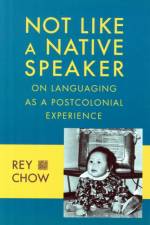
Although the era of European colonialism has long passed, misgivings about the inequality of the encounters between European and non-European languages persist in many parts of the postcolonial world. This unfinished state of affairs, this lingering historical experience of being caught among unequal languages, is the subject of Rey Chow's book. A diverse group of personae, never before assembled in a similar manner, make their appearances in the various chapters: the young mulatto happening upon a photograph about skin color in a popular magazine; the man from Martinique hearing himself named "e;Negro"e; in public in France; call center agents in India trained to Americanize their accents while speaking with customers; the Algerian Jewish philosopher reflecting on his relation to the French language; African intellectuals debating the pros and cons of using English for purposes of creative writing; the translator acting by turns as a traitor and as a mourner in the course of cross-cultural exchange; Cantonese-speaking writers of Chinese contemplating the politics of food consumption; radio drama workers straddling the forms of traditional storytelling and mediatized sound broadcast. In these riveting scenes of speaking and writing imbricated with race, pigmentation, and class demarcations, Chow suggests, postcolonial languaging becomes, de facto, an order of biopolitics. The native speaker, the fulcrum figure often accorded a transcendent status, is realigned here as the repository of illusory linguistic origins and unities. By inserting British and post-British Hong Kong (the city where she grew up) into the languaging controversies that tend to be pursued in Francophone (and occasionally Anglophone) deliberations, and by sketching the fraught situations faced by those coping with the specifics of using Chinese while negotiating with English, Chow not only redefines the geopolitical boundaries of postcolonial inquiry but also demonstrates how such inquiry must articulate historical experience to the habits, practices, affects, and imaginaries based in sounds and scripts.
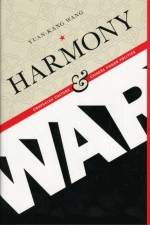
Confucianism has shaped a certain perception of Chinese security strategy, symbolized by the defensive, nonaggressive Great Wall. Many believe China is antimilitary and reluctant to use force against its enemies. It practices pacifism and refrains from expanding its boundaries, even when nationally strong. In a path-breaking study traversing six centuries of Chinese history, Yuan-kang Wang resoundingly discredits this notion, recasting China as a practitioner of realpolitik and a ruthless purveyor of expansive grand strategies. Leaders of the Song Dynasty (960-1279) and Ming Dynasty (1368-1644) prized military force and shrewdly assessed the capabilities of China's adversaries. They adopted defensive strategies when their country was weak and pursued expansive goals, such as territorial acquisition, enemy destruction, and total military victory, when their country was strong. Despite the dominance of an antimilitarist Confucian culture, warfare was not uncommon in the bulk of Chinese history. Grounding his research in primary Chinese sources, Wang outlines a politics of power that are crucial to understanding China's strategies today, especially its policy of "e;peaceful development,"e; which, he argues, the nation has adopted mainly because of its military, economic, and technological weakness in relation to the United States.
Sexual violence and exploitation occur in many conflict zones, and the children born of such acts face discrimination, stigma, and infanticide. Yet the massive transnational network of organizations working to protect war-affected children has, for two decades, remained curiously silent on the needs of this vulnerable population. Focusing specifically on the case of Bosnia-Herzegovina, R. Charli Carpenter questions the framing of atrocity by human rights organizations and the limitations these narratives impose on their response. She finds that human rights groups set their agendas according to certain grievances-the claims of female rape victims or the complaints of aggrieved minorities, for example-and that these concerns can overshadow the needs of others. Incorporating her research into a host of other conflict zones, Carpenter shows that the social construction of rights claims is contingent upon the social construction of wrongs. According to Carpenter, this pathology prevents the full protection of children born of war.
In Europe and North America, networks tracing their origins back to the Muslim Brotherhood and other Islamist movements have rapidly evolved into multifunctional and richly funded organizations competing to become the major representatives of Western Muslim communities and government interlocutors. Some analysts and policy makers see these organizations as positive forces encouraging integration. Others cast them as modern-day Trojan horses, feigning moderation while radicalizing Western Muslims. Lorenzo Vidino brokers a third, more informed view. Drawing on more than a decade of research on political Islam in the West, he keenly analyzes a controversial movement that still remains relatively unknown. Conducting in-depth interviews on four continents and sourcing documents in ten languages, Vidino shares the history, methods, attitudes, and goals of the Western Brothers, as well as their phenomenal growth. He then flips the perspective, examining the response to these groups by Western governments, specifically those of Great Britain, Germany, and the United States. Highly informed and thoughtfully presented, Vidino's research sheds light on a critical juncture in Muslim-Western relations.
Irregular migrants complicate the boundaries of citizenship and stretch the parameters of political belonging. Comprised of refugees, asylum seekers, "e;illegal"e; labor migrants, and stateless persons, this group of migrants occupies new sovereign spaces that generate new subjectivities. Investigating the role of irregular migrants in the transformation of citizenship, Anne McNevin argues that irregular status is an immanent (rather than aberrant) condition of global capitalism, formed by the fast-tracked processes of globalization.McNevin casts irregular migrants as more than mere victims of sovereign power, shuttled from one location to the next. Incorporating examples from the United States, Australia, and France, she shows how migrants reject their position as "e;illegal"e; outsiders and make claims on the communities in which they live and work. For these migrants, outsider status operates as both a mode of subjectification and as a site of active resistance, forcing observers to rethink the enactment of citizenship. McNevin connects irregular migrant activism to the complex rescaling of the neoliberal state. States increasingly prioritize transnational market relations that disrupt the spatial context for citizenship. At the same time, states police their borders in ways that reinvigorate territorial identities. Mapping the broad dynamics of political belonging in a neoliberal era, McNevin provides invaluable insight into the social and spatial transformation of citizenship, sovereignty, and power.
Jnanasrimitra (975-1025) was regarded by both Buddhists and non-Buddhists as the most important Indian philosopher of his generation. His theory of exclusion combined a philosophy of language with a theory of conceptual content to explore the nature of words and thought. Jnanasrimitra's theory informed much of the work accomplished at Vikramasila, a monastic and educational complex instrumental to the growth of Buddhism. His ideas were also passionately debated among successive Hindu and Jain philosophers.This volume marks the first English translation of Jnanasrimitra's Monograph on Exclusion, a careful, critical investigation into language, perception, and conceptual awareness. Featuring the rival arguments of Buddhist and Hindu intellectuals, among other thinkers, the Monograph reflects more than half a millennium of competing claims while providing an invaluable introduction to a crucial philosopher. Lawrence J. McCrea and Parimal G. Patil familiarize the reader with the author, themes, and topics of the text and situate Jnanasrimitra's findings within his larger intellectual milieu. Their clear, accessible, and accurate translation proves the influence of Jnanasrimitra on the foundations of Buddhist and Indian philosophy.
Accounting for Value teaches investors and analysts how to handle accounting in evaluating equity investments. The book's novel approach shows that valuation and accounting are much the same: valuation is actually a matter of accounting for value. Laying aside many of the tools of modern finance the cost-of-capital, the CAPM, and discounted cash flow analysis Stephen Penman returns to the common-sense principles that have long guided fundamental investing: price is what you pay but value is what you get; the risk in investing is the risk of paying too much; anchor on what you know rather than speculation; and beware of paying too much for speculative growth. Penman puts these ideas in touch with the quantification supplied by accounting, producing practical tools for the intelligent investor.Accounting for value provides protection from paying too much for a stock and clues the investor in to the likely return from buying growth. Strikingly, the analysis finesses the need to calculate a "e;cost-of-capital,"e; which often frustrates the application of modern valuation techniques. Accounting for value recasts "e;value"e; versus "e;growth"e; investing and explains such curiosities as why earnings-to-price and book-to-price ratios predict stock returns. By the end of the book, Penman has the intelligent investor thinking like an intelligent accountant, better equipped to handle the bubbles and crashes of our time. For accounting regulators, Penman also prescribes a formula for intelligent accounting reform, engaging with such controversial issues as fair value accounting.
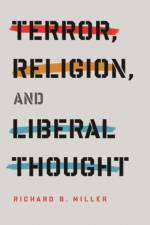
Religious violence may trigger feelings of repulsion and indignation, especially in a society that encourages toleration and respect, but rejection contradicts the principles of inclusion that define a democracy and its core moral values. How can we think ethically about religious violence and terrorism, especially in the wake of such atrocities as 9/11?Known for his skillful interrogation of ethical issues as they pertain to religion, politics, and culture, Richard B. Miller returns to the basic tenets of liberalism to divine an ethical response to religious extremism. He questions how we should think about the claims and aspirations of political religions, especially when they conflict so deeply with liberal norms and practices, and he suggests how liberal critics can speak confidently in ways that respect cultural and religious difference.Miller explores other concerns within these investigations as well, such as the protection of human rights and a liberal democratic commitment to multicultural politics. In relating religion and ethics, he develops a new lens for viewing political religions and their moral responsibilities. This probing inquiry also forces us to rethink our response to 9/11.
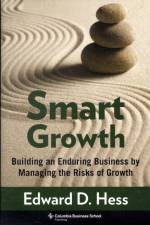
Wall Street believes that all public companies should grow smoothly and continuously, as evidenced by ever-increasing quarterly earnings, and that all companies either "e;grow or die."e; Introducing a research-based growth model called "e;Smart Growth,"e; Edward D. Hess challenges this ethos and its dangerous mentality, which often deters real growth and pressures businesses to create, manufacture, and purchase noncore earnings just to appease Wall Street.Smart Growth accounts for the complexity of growth from the perspective of organization, process, change, leadership, cognition, risk management, employee engagement, and human dynamics. Authentic growth is much more than a strategy or a desired result. It is a process characterized by complex change, entrepreneurial action, experimental learning, and the management of risk. Hess draws on extensive public and private company research, incorporating case studies of Best Buy, Sysco, UPS, Costco, Starbucks, McDonalds, Coca Cola, Room & Board, Home Depot, Tiffany & Company, P&G, and Jet Blue. With conceptual innovations such as an Authentic Earnings and Growth System framework, a seven-step growth funnel pipeline, a Growth Decision Template, and a Growth Risks Audit, Hess provides a blueprint for an enduring business that strives to be better, rather than simply bigger.
Abonner på vårt nyhetsbrev og få rabatter og inspirasjon til din neste leseopplevelse.
Ved å abonnere godtar du vår personvernerklæring.