



















Gjør som tusenvis av andre bokelskere
Abonner på vårt nyhetsbrev og få rabatter og inspirasjon til din neste leseopplevelse.
Ved å abonnere godtar du vår personvernerklæring.Du kan når som helst melde deg av våre nyhetsbrev.

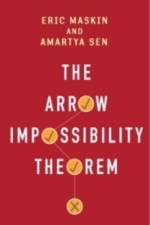
Kenneth J. Arrow's pathbreaking "e;impossibility theorem"e; was a watershed innovation in the history of welfare economics, voting theory, and collective choice, demonstrating that there is no voting rule that satisfies the four desirable axioms of decisiveness, consensus, nondictatorship, and independence. In this book Eric Maskin and Amartya Sen explore the implications of Arrow's theorem. Sen considers its ongoing utility, exploring the theorem's value and limitations in relation to recent research on social reasoning, and Maskin discusses how to design a voting rule that gets us closer to the ideal-given the impossibility of achieving the ideal. The volume also contains a contextual introduction by social choice scholar Prasanta K. Pattanaik and commentaries from Joseph E. Stiglitz and Kenneth J. Arrow himself, as well as essays by Maskin, Dasgupta, and Sen outlining the mathematical proof and framework behind their assertions.
To understand business and its political, cultural, and economic context, it helps to view it historically, yet most business histories look no further back than the nineteenth century. The full sweep of business history actually begins much earlier, with the initial cities of Mesopotamia. In the first book to describe and explain these origins, Roberts depicts the society of ancient traders and consumers, tracing the roots of modern business and underscoring the relationship between early and modern business practice. Roberts's narrative begins before business, which he defines as selling to voluntary buyers at a profit. Before business, he shows, the material conditions and concepts for the pursuit of profit did not exist, even though trade and manufacturing took place. The earliest business, he suggests, arose with the long distance trade of early Mesopotamia, and expanded into retail, manufacturing and finance in these command economies, culminating in the Middle Eastern empires. (Part One) But it was the largely independent rise of business, money, and markets in classical Greece that produced business much as we know it. Alexander the Great's conquests and the societies that his successors created in their kingdoms brought a version of this system to the old Middle Eastern empires, and beyond. (Part Two) At Rome this entrepreneurial market system gained important new features, including business corporations, public contracting, and even shopping malls. The story concludes with the sharp decline of business after the 3rd century CE. (Part Three) In each part, Roberts portrays the major new types of business coming into existence. He weaves these descriptions into a narrative of how the prevailing political, economic, and social culture shaped the nature and importance of business and the status, wealth, and treatment of business people. Throughout, the discussion indicates how much (and how little) business has changed, provides a clear picture of what business actually is, presents a model for understanding the social impact of business as a whole, and yields stimulating insights for public policy today.
Defined as operations other than war, stability operations can include peacekeeping activities, population control, and counternarcotics efforts, and for the entire history of the United States military, they have been considered a dangerous distraction if not an outright drain on combat resources. Yet in 2005, the U.S. Department of Defense reversed its stance on these practices, a dramatic shift in the mission of the armed forces and their role in foreign and domestic affairs. With the elevation of stability operations, the job of the American armed forces is no longer just to win battles but to create a controlled, nonviolent space for political negotiations and accord. Yet rather than produce revolutionary outcomes, stability operations have resulted in a large-scale mission creep with harmful practical and strategic consequences. Jennifer Morrison Taw examines the military's sudden embrace of stability operations and its implications for American foreign policy and war. Through a detailed examination of deployments in Iraq and Afghanistan, changes in U.S. military doctrine, adaptations in force preparation, and the political dynamics behind this new stance, Taw connects the preference for stability operations to the far-reaching, overly ambitious American preoccupation with managing international stability. She also shows how domestic politics have reduced civilian agencies' capabilities while fostering an unhealthy overreliance on the military. Introducing new concepts such as securitized instability and institutional privileging, Taw builds a framework for understanding and analyzing the expansion of the American armed forces' responsibilities in an ever-changing security landscape.
Throughout our history, humans have been captivated by mythic beasts and legendary creatures. Tales of Bigfoot, the Yeti, and the Loch Ness monster are part of our collective experience. Now comes a book from two dedicated investigators that explores and elucidates the fascinating world of cryptozoology. Daniel Loxton and Donald R. Prothero have written an entertaining, educational, and definitive text on cryptids, presenting the arguments both for and against their existence and systematically challenging the pseudoscience that perpetuates their myths. After examining the nature of science and pseudoscience and their relation to cryptozoology, Loxton and Prothero take on Bigfoot; the Yeti, or Abominable Snowman, and its cross-cultural incarnations; the Loch Ness monster and its highly publicized sightings; the evolution of the Great Sea Serpent; and Mokele Mbembe, or the Congo dinosaur. They conclude with an analysis of the psychology behind the persistent belief in paranormal phenomena, identifying the major players in cryptozoology, discussing the character of its subculture, and considering the challenge it poses to clear and critical thinking in our increasingly complex world.
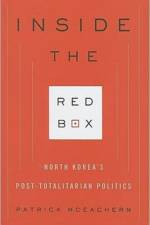
North Korea's institutional politics defy traditional political models, making the country's actions seem surprising or confusing when, in fact, they often conform to the regime's own logic. Drawing on recent materials, such as North Korean speeches, commentaries, and articles, Patrick McEachern, a specialist on North Korean affairs, reveals how the state's political institutions debate policy and inform and execute strategic-level decisions.Many scholars dismiss Kim Jong-Il's regime as a "e;one-man dictatorship,"e; calling him the "e;last totalitarian leader,"e; but McEachern identifies three major institutions that help maintain regime continuity: the cabinet, the military, and the party. These groups hold different institutional policy platforms and debate high-level policy options both before and after Kim and his senior leadership make their final call. This method of rule may challenge expectations, but North Korea does not follow a classically totalitarian, personalistic, or corporatist model. Rather than being monolithic, McEachern argues, the regime, emerging from the crises of the 1990s, rules differently today than it did under Kim's father, Kim Il Sung. The son is less powerful and pits institutions against one another in a strategy of divide and rule. His leadership is fundamentally different: it is "e;post-totalitarian."e; Authority may be centralized, but power remains diffuse. McEachern maps this process in great detail, supplying vital perspective on North Korea's reactive policy choices, which continue to bewilder the West.
For decades, aesthetics has been subjected to a variety of critiques, often concerning its treatment of beauty or the autonomy of art. Collectively, these complaints have generated an anti-aesthetic stance prevalent in the contemporary art world. Yet if we examine the motivations for these critiques, Michael Kelly argues, we find theorists and artists hungering for a new kind of aesthetics, one better calibrated to contemporary art and its moral and political demands.Following an analysis of the work of Stanley Cavell, Arthur Danto, Umberto Eco, Susan Sontag, and other philosophers of the 1960s who made aesthetics more responsive to contemporary art, Kelly considers Sontag's aesthetics in greater detail. In On Photography (1977), she argues that a photograph of a person who is suffering only aestheticizes the suffering for the viewer's pleasure, yet she insists in Regarding the Pain of Others (2003) that such a photograph can have a sustainable moral-political effect precisely because of its aesthetics. Kelly considers this dramatic change to be symptomatic of a cultural shift in our understanding of aesthetics, ethics, and politics. He discusses these issues in connection with Gerhard Richter's and Doris Salcedo's art, chosen because it is often identified with the anti-aesthetic, even though it is clearly aesthetic. Focusing first on Richter's Baader-Meinhof series, Kelly concludes with Salcedo's enactments of suffering caused by social injustice. Throughout A Hunger for Aesthetics, he reveals the place of critique in contemporary art, which, if we understand aesthetics as critique, confirms that it is integral to art. Meeting the demand for aesthetics voiced by many who participate in art, Kelly advocates for a critical aesthetics that confirms the power of art.
As a young lecturer in philosophy and the eldest son of a prominent Jewish family, Alan Montefiore faced two very different understandings of his identity: the more traditional view that an identity such as his carried with it, as a matter of given fact, certain duties and obligations, and an opposing view, emphasized by his studies in philosophy, according to which there can be no rationally compelling move from statements of fact whatever the alleged facts may be to "e;judgments of value."e; According to this second view, individuals must in the end take responsibility for determining their own values and obligations.In this book, Montefiore looks back on his attempts to understand the nature of this conflict and the misunderstandings it may engender. In the process, he illustrates through personal experience the practical implications of a characteristically philosophical issue. Montefiore finally settles on the following: while everyone has to accept that facts, including those of their own situation, are whatever they may be, both the "e;traditional"e; assumption that individuals must recognize certain values and obligations as rooted in those very facts, and the contrary view that individuals are ultimately responsible for determining their own values, are deeply embedded in differing conceptions of society and its relation to its members. Montefiore then examines the misunderstandings between those for whom identity constitutes in effect a conceptual bridge connecting the facts of who and what a person may be to the value commitments incumbent upon them, and those for whom the very idea of such a bridge can be nothing but a confusion. Using key examples from the notoriously vexed case of Jewish identity and from his own encounters with its conflicting meanings and implications, Montefiore depicts the practical significance of the differences between these worldviews, particularly for those who hove to negotiate them.
Solomon Schechter (1847-1915), the charismatic leader of New York's Jewish Theological Seminary (JTS), came to America in 1902 intent on revitalizing traditional Judaism. While he advocated a return to traditional practices, Schechter articulated no clear position on divisive issues, instead preferring to focus on similarities that could unite American Jewry under a broad message. Michael R. Cohen demonstrates how Schechter, unable to implement his vision on his own, turned to his disciples, rabbinical students and alumni of JTS, to shape his movement. By midcentury, Conservative Judaism had become the largest American Jewish grouping in the United States, guided by Schechter's disciples and their continuing efforts to embrace diversity while eschewing divisive debates. Yet Conservative Judaism's fluid boundaries also proved problematic for the movement, frustrating many rabbis who wanted a single platform to define their beliefs. Cohen demonstrates how a legacy of tension between diversity and boundaries now lies at the heart of Conservative Judaism's modern struggle for relevance. His analysis explicates four key claims: that Conservative Judaism's clergy, not its laity or Seminary, created and shaped the movement; that diversity was-and still is-a crucial component of the success and failure of new American religions; that the Conservative movement's contemporary struggle for self-definition is tied to its origins; and that the porous boundaries between Orthodox, Conservative, and Reform Judaism reflect the complexity of the American Jewish landscape-a fact that Schechter and his disciples keenly understood. Rectifying misconceptions in previous accounts of Conservative Judaism's emergence, Cohen's study enables a fresh encounter with a unique religious phenomenon.
All organisms and species are transitory, yet life endures. The origin, extinction, and evolution of species-interconnected in the web of life as "e;eternal ephemera"e;-are the concern of evolutionary biology. In this riveting work, renowned paleontologist Niles Eldredge follows leading thinkers as they have wrestled for more than two hundred years with the eternal skein of life composed of ephemeral beings, revitalizing evolutionary science with their own, more resilient findings.Eldredge begins in France with the naturalist Jean-Baptiste Lamarck, who in 1801 first framed the overarching question about the emergence of new species. The Italian geologist Giambattista Brocchi followed, bringing in geology and paleontology to expand the question. In 1825, at the University of Edinburgh, Robert Grant and Robert Jameson introduced the astounding ideas formulated by Lamarck and Brocchi to a young medical student named Charles Darwin. Who can doubt that Darwin left for his voyage on the Beagle in 1831 filled with thoughts about these daring new explanations for the "e;transmutation"e; of species.Eldredge revisits Darwin's early insights into evolution in South America and his later synthesis of knowledge into a theory of the origin of species. He then considers the ideas of more recent evolutionary thinkers, such as George Gaylord Simpson, Ernst Mayr, and Theodosius Dobzhansky, as well as the young and brash Niles Eldredge and Steven Jay Gould, who set science afire with their concept of punctuated equilibria. Filled with insights into evolutionary biology and told with a rich affection for the scientific arena, this book celebrates the organic, vital relationship between scientific thinking and its subjects.
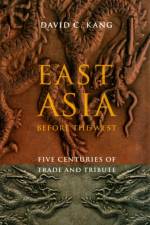
From the founding of the Ming dynasty in 1368 to the start of the Opium Wars in 1841, China has engaged in only two large-scale conflicts with its principal neighbors, Korea, Vietnam, and Japan. These four territorial and centralized states have otherwise fostered peaceful and long-lasting relationships with one another, and as they have grown more powerful, the atmosphere around them has stabilized.Focusing on the role of the "e;tribute system"e; in maintaining stability in East Asia and in fostering diplomatic and commercial exchange, Kang contrasts this history against the example of Europe and the East Asian states' skirmishes with nomadic peoples to the north and west. Although China has been the unquestioned hegemon in the region, with other political units always considered secondary, the tributary order entailed military, cultural, and economic dimensions that afforded its participants immense latitude. Europe's "e;Westphalian"e; system, on the other hand, was based on formal equality among states and balance-of-power politics, resulting in incessant interstate conflict. Scholars tend to view Europe's experience as universal, but Kang upends this tradition, emphasizing East Asia's formal hierarchy as an international system with its own history and character. This approach not only recasts our understanding of East Asian relations but also defines a model that applies to other hegemonies outside the European order.
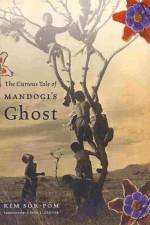
The Curious Tale of Mandogi's Ghost incorporates Korean folk tales, ghost stories, and myth into a phenomenal depiction of epic tragedy. Written by a zainichi, a permanent resident of Japan who is not of Japanese ancestry, the novel tells the story of Mandogi, a young priest living on the island of Cheju-do. Mandogi becomes unwittingly involved in the Four-Three Incident of 1948, in which the South Korean government brutally suppressed an armed peasant uprising and purged Cheju-do of communist sympathizers. Although Mandogi is sentenced to death for his part in the riot, he survives (in a sense) to take revenge on his enemies and fully commit himself to the resistance. Mandogi's indeterminate, shapeshifting character is emblematic of Japanese colonialism's outsized impact on both ruler and ruled. A central work of postwar Japanese fiction, The Curious Tale of Mandogi's Ghost relates the trauma of a long-forgotten history and its indelible imprint on Japanese and Korean memory.
Paul A. Offit and Charlotte A. Moser answer questions about the science and safety of modern vaccines. In straightforward prose, they explain how vaccines work, how they are made, and how they are tested. Most important, they separate the real risks of vaccines from feared but unfounded risks. Offit and Moser address parental fears that children may receive too many vaccines too early, that the HPV vaccine may cause chronic fatigue or other dangerous side effects, that additives and preservatives in vaccines cause autism, and that vaccines might do more harm than good. There couldn't be a better moment or more pressing need for this book, which offers honesty instead of hype in the quest to protect children's health.
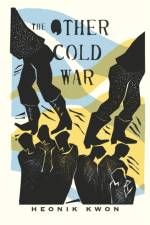
In this conceptually bold project, Heonik Kwon uses anthropology to interrogate the cold war's cultural and historical narratives. Adopting a truly panoramic view of local politics and international events, he challenges the notion that the cold war was a global struggle fought uniformly around the world and that the end of the war marked a radical, universal rupture in modern history.Incorporating comparative ethnographic study into a thorough analysis of the period, Kwon upends cherished ideas about the global and their hold on contemporary social science. His narrative describes the slow decomposition of a complex social and political order involving a number of local and culturally creative processes. While the nations of Europe and North America experienced the cold war as a time of "e;long peace,"e; postcolonial nations entered a different reality altogether, characterized by vicious civil wars and other exceptional forms of violence. Arguing that these events should be integrated into any account of the era, Kwon captures the first sociocultural portrait of the cold war in all its subtlety and diversity.
Gary L. Francione is a law professor and leading philosopher of animal rights theory. Robert Garner is a political theorist specializing in the philosophy and politics of animal protection. Francione maintains that we have no moral justification for using nonhumans and argues that because animals are property or economic commodities laws or industry practices requiring "e;humane"e; treatment will, as a general matter, fail to provide any meaningful level of protection. Garner favors a version of animal rights that focuses on eliminating animal suffering and adopts a protectionist approach, maintaining that although the traditional animal-welfare ethic is philosophically flawed, it can contribute strategically to the achievement of animal-rights ends. As they spar, Francione and Garner deconstruct the animal protection movement in the United States, the United Kingdom, Europe, and elsewhere, discussing the practices of such organizations as PETA, which joins with McDonald's and other animal users to "e;improve"e; the slaughter of animals. They also examine American and European laws and campaigns from both the rights and welfare perspectives, identifying weaknesses and strengths that give shape to future legislation and action.
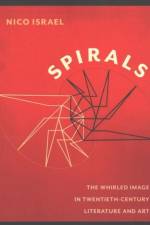
In this elegantly written and beautifully illustrated book, Nico Israel reveals how spirals are at the heart of the most significant literature and visual art of the twentieth century. Juxtaposing the work of writers and artists-including W. B. Yeats and Vladimir Tatlin, James Joyce and Marcel Duchamp, and Samuel Beckett and Robert Smithson-he argues that spirals provide a crucial frame for understanding the mutual involvement of modernity, history, and geopolitics, complicating the spatio-temporal logic of literary and artistic genres and of scholarly disciplines. The book takes the spiral not only as its topic but as its method. Drawing on the writings of Walter Benjamin and Alain Badiou, Israel theorizes a way of reading spirals, responding to their dual-directionality as well as their affective power. The sensations associated with spirals--flying, falling, drowning, being smothered-reflect the anxieties of limits tested or breached, and Israel charts these limits as they widen from the local to the global and recoil back. Chapters mix literary and art history to explore 'pataphysics, Futurism, Vorticism, Dada and Surrealism, "e;Concentrisme,"e; minimalism, and entropic earth art; a coda considers the work of novelist W. G. Sebald and contemporary artist William Kentridge. In Spirals, Israel offers a refreshingly original approach to the history of modernism and its aftermaths, one that gives modernist studies, comparative literature, and art criticism an important new spin.
Buddhist intellectual discourse owes its development to a dynamic interplay between primary source materials and subsequent interpretation, yet scholarship on Indian Buddhism has long neglected to privilege one crucial series of texts. Commentaries on Buddhist scriptures, particularly the sutras, offer rich insights into the complex relationship between Buddhist intellectual practices and the norms that inform and are informed by them. Evaluating these commentaries in detail for the first time, Richard F. Nance revisits and rewrites&mdashthe critical history of Buddhist thought, including its unique conception of doctrinal transmission.Attributed to such luminaries as Nagarjuna, Vasubandhu, Dignaga, and Santideva, scriptural commentaries have long played an important role in the monastic and philosophical life of Indian Buddhism. Nance reads these texts against the social and cultural conditions of their making, establishing a solid historical basis for the interpretation of key beliefs and doctrines. He also underscores areas of contention, in which scholars debate what it means to speak for, and as, a Buddha. Throughout these texts, Buddhist commentators struggle to deduce and characterize the speech of Buddhas and teach others how to convey and interpret its meaning. At the same time, they demonstrate the fundamental dilemma of trying to speak on behalf of Buddhas. Nance also investigates the notion of "e;right speech"e; as articulated by Buddhist texts and follows ideas about teaching as imagined through the common figure of a Buddhist preacher. He notes the use of epistemological concepts in scriptural interpretation and the protocols guiding the composition of scriptural commentary, and provides translations of three commentarial guides to better clarify the normative assumptions organizing these works.
Before the passage of the Hindu Widow's Re-marriage Act of 1856, Hindu tradition required a woman to live as a virtual outcast after her husband's death. Widows were expected to shave their heads, discard their jewelry, live in seclusion, and undergo regular acts of penance. Ishvarchandra Vidyasagar was the first Indian intellectual to successfully argue against these strictures. A Sanskrit scholar and passionate social reformer, Vidyasagar was a leading proponent of widow marriage in colonial India, urging his contemporaries to reject a ban that caused countless women to suffer needlessly.Vidyasagar's brilliant strategy paired a rereading of Hindu scripture with an emotional plea on behalf of the widow, resulting in an organic reimagining of Hindu law and custom. Vidyasagar made his case through the two-part publication Hindu Widow Marriage, a tour de force of logic, erudition, and humanitarian rhetoric. In this new translation, Brian A. Hatcher makes available in English for the first time the entire text of one of the most important nineteenth-century treatises on Indian social reform.An expert on Vidyasagar, Hinduism, and colonial Bengal, Hatcher enhances the original treatise with a substantial introduction describing Vidyasagar's multifaceted career, as well as the history of colonial debates on widow marriage. He innovatively interprets the significance of Hindu Widow Marriage within modern Indian intellectual history by situating the text in relation to indigenous commentarial practices. Finally, Hatcher increases the accessibility of the text by providing an overview of basic Hindu categories for first-time readers, a glossary of technical vocabulary, and an extensive bibliography.
Irene L. Gendzier presents incontrovertible evidence that oil politics played a significant role in the founding of Israel, the policy then adopted by the United States toward Palestinians, and subsequent U.S. involvement in the region. Consulting declassified U.S. government sources, as well as papers in the H.S. Truman Library, she uncovers little-known features of U.S. involvement in the region, including significant exchanges in the winter and spring of 1948 between the director of the Oil and Gas Division of the Interior Department and the representative of the Jewish Agency in the United States, months before Israel's independence and recognition by President Truman. Gendzier also shows that U.S. consuls and representatives abroad informed State Department officials, including the Secretary of State and the President, of the deleterious consequences of partition in Palestine. Yet the attempt to reconsider partition and replace it with a UN trusteeship for Palestine failed, jettisoned by Israel's declaration of independence. The results altered the regional balance of power and Washington's calculations of policy toward the new state. Prior to that, Gendzier reveals the U.S. endorsed the repatriation of Palestinian refugees in accord with UNGA Res 194 of Dec. 11, 1948, in addition to the resolution of territorial claims, the definition of boundaries, and the internationalization of Jerusalem. But U.S. interests in the Middle East, notably the protection of American oil interests, led U.S. officials to rethink Israel's military potential as a strategic ally. Washington then deferred to Israel with respect to the repatriation of Palestinian refugees, the question of boundaries, and the fate of Jerusalem-issues that U.S. officials have come to realize are central to the 1948 conflict and its aftermath.
Elegant representations of nature and the four seasons populate a wide range of Japanese genres and media-from poetry and screen painting to tea ceremonies, flower arrangements, and annual observances. In Japan and the Culture of the Four Seasons, Haruo Shirane shows how, when, and why this practice developed and explicates the richly encoded social, religious, and political meanings of this imagery. Refuting the belief that this tradition reflects Japan's agrarian origins and supposedly mild climate, Shirane traces the establishment of seasonal topics to the poetry composed by the urban nobility in the eighth century. After becoming highly codified and influencing visual arts in the tenth and eleventh centuries, the seasonal topics and their cultural associations evolved and spread to other genres, eventually settling in the popular culture of the early modern period. Contrasted with the elegant images of nature derived from court poetry was the agrarian view of nature based on rural life. The two landscapes began to intersect in the medieval period, creating a complex, layered web of competing associations. Shirane discusses a wide array of representations of nature and the four seasons in many genres, originating in both the urban and rural perspective: textual (poetry, chronicles, tales), cultivated (gardens, flower arrangement), material (kimonos, screens), performative (noh, festivals), and gastronomic (tea ceremony, food rituals). He reveals how this kind of "e;secondary nature,"e; which flourished in Japan's urban architecture and gardens, fostered and idealized a sense of harmony with the natural world just at the moment it was disappearing. Illuminating the deeper meaning behind Japanese aesthetics and artifacts, Shirane clarifies the use of natural images and seasonal topics and the changes in their cultural associations and function across history, genre, and community over more than a millennium. In this fascinating book, the four seasons are revealed to be as much a cultural construction as a reflection of the physical world.
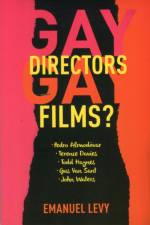
Through intimate encounters with the life and work of five contemporary gay male directors, this book develops a framework for interpreting what it means to make a gay film or adopt a gay point of view. For most of the twentieth century, gay characters and gay themes were both underrepresented and misrepresented in mainstream cinema. Since the 1970s, however, a new generation of openly gay directors has turned the closet inside out, bringing a poignant immediacy to modern cinema and popular culture.Combining his experienced critique with in-depth interviews, Emanuel Levy draws a clear timeline of gay filmmaking over the past four decades and its particular influences and innovations. While recognizing the "e;queering"e; of American culture that resulted from these films, Levy also takes stock of the ensuing conservative backlash and its impact on cinematic art, a trend that continues alongside a growing acceptance of homosexuality. He compares the similarities and differences between the "e;North American"e; attitudes of Todd Haynes, Gus Van Sant, and John Waters and the "e;European"e; perspectives of Pedro Almodovar and Terence Davies, developing a truly expansive approach to gay filmmaking and auteur cinema.
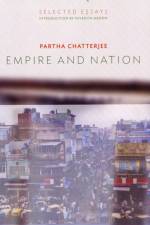
Partha Chatterjee is one of the world's greatest living theorists on the political, cultural, and intellectual history of nationalism. Beginning in the 1980s, his work, particularly within the context of India, has served as the foundation for subaltern studies, an area of scholarship he continues to develop. In this collection, English-speaking readers are finally able to experience the breadth and substance of Chatterjee's wide-ranging thought. His provocative essays examine the phenomenon of postcolonial democracy and establish the parameters for research in subaltern politics. They include an early engagement with agrarian politics and Chatterjee's brilliant book reviews and journalism. Selections include one never-before-published essay, "e;A Tribute to the Master,"e; which considers through a mock retelling of an episode from the classic Sanskrit epic, The Mahabharata, a deep dilemma in the study of postcolonial history, and several Bengali essays, now translated into English for the first time. An introduction by Nivedita Menon adds necessary context and depth, critiquing Chatterjee's ideas and their influence on contemporary political thought.
Many on the left lament an apathy or amnesia toward recent acts of war. Particularly during the George W. Bush administration's invasion of Iraq, opposition to war seemed to lack the heat and potency of the 1960s and 1970s, giving the impression that passionate dissent was all but dead. Through an analysis of three politically engaged works of art, Rosalyn Deutsche argues against this melancholic attitude, confirming the power of contemporary art to criticize subjectivity as well as war. Deutsche selects three videos centered on the deployment of the atomic bomb: Krzysztof Wodiczko's Hiroshima Projection (1999), made after the first Gulf War; Silvia Kolbowski's After Hiroshima mon amour (2005-2008); and Leslie Thornton's Let Me Count the Ways (2004-2008), which followed the U.S. invasion of Iraq. Each of these works confronts the ethical task of addressing historical disaster, and each explores the intersection of past and present wars. These artworks profoundly contribute to the discourse of war resistance, illuminating the complex dynamics of viewing and interpretation. Deutsche employs feminist and psychoanalytic approaches in her study, questioning both the role of totalizing images in the production of warlike subjects and the fantasies that perpetuate, especially among the left, traditional notions of political dissent. She ultimately reveals the passive collusion between leftist critique and dominant discourse in which personal dimensions of war are denied.
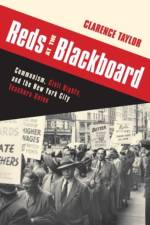
The New York City Teachers Union shares a deep history with the American left, having participated in some of its most explosive battles. Established in 1916, the union maintained an early, unofficial partnership with the American Communist Party, winning key union positions and advocating a number of Party goals. Clarence Taylor recounts this pivotal relationship and the backlash it created, as the union threw its support behind controversial policies and rights movements. Taylor's research reaffirms the party's close ties with the union yet it also makes clear that the organization was anything but a puppet of Communist power.Reds at the Blackboard showcases the rise of a unique type of unionism that would later dominate the organizational efforts behind civil rights, academic freedom, and the empowerment of blacks and Latinos. Through its affiliation with the Communist Party, the union pioneered what would later become social movement unionism, solidifying ties with labor groups, black and Latino parents, and civil rights organizations to acquire greater school and community resources. It also militantly fought to improve working conditions for teachers while championing broader social concerns. For the first time, Taylor reveals the union's early growth and the somewhat illegal attempts by the Board of Education to eradicate the group. He describes how the infamous Red Squad and other undercover agents worked with the board to bring down the union and how the union and its opponents wrestled with charges of anti-Semitism.
Based on his experience as a scholar and diplomat stationed in China, Jean-Luc Domenach consults a wealth of archival and contemporary materials to examine China's place in the world. A sympathetic yet critical observer, Domenach brings his intimate knowledge of the country to bear on a range of crucial issues, such as the growth (or deterioration) of China's economy, the government's ever-delayed democratization, the potential outcomes of a national political crisis, and the possible escalation of a revamped authoritarianism.Domenach ultimately reads China's current progress as a set of easy accomplishments presaging a more difficult era of development. His finely nuanced analysis captures the difficult decisions now confronting China's elite, who are under tremendous pressure to support an economy based on innovation and consumption, establish a political system based on law and popular participation, rethink their national identity and spatial organization, and define a more positive approach to the world's problems. These leaders are also besieged by corruption among their ranks, an increasingly restless urban population, and a sharp decline in the country's demographic growth. Domenach taps into these anxieties and the attempt to alleviate them, revealing a China much less confident and secure than many would believe.
A more ethical economic system is now possible, one that rectifies the crisis spots of our current downturn while balancing the injustices of extreme poverty and wealth. Adam Arvidsson and Nicolai Peitersen, a scholar and an entrepreneur, outline the shape such an economy might take, identifying its origins in innovations already existent in our production, valuation, and distribution systems.Much like nineteenth-century entrepreneurs, philosophers, bankers, artisans, and social organizers who planned a course for modern capitalism that was more economically efficient and ethically desirable, we now have a chance to construct new instruments, institutions, and infrastructure to reverse the trajectory of a quickly deteriorating economic environment. Considering a multitude of emerging phenomena, Arvidsson and Peitersen show wealth creation can be the result of a new kind of social production, and the motivation of continuous capital accumulation can exist in tandem with a new desire to maximize our social impact. Arvidsson and Peitersen argue that financial markets could become a central arena in which diverse ethical concerns are integrated into tangible economic valuations. They suggest that such a common standard has already emerged and that this process is linked to the spread of social media, making it possible to capture the sentiment of value to most people. They ultimately recommend how to build upon these developments to initiate a radical democratization of economic systems and the value decisions they generate.
In 1941, the Jewish American writer and avant-garde icon Gertrude Stein embarked on one of the strangest intellectual projects of her life: translating for an American audience the speeches of Marshal Philippe Petain, head of state for the collaborationist Vichy government. From 1941 to 1943, Stein translated thirty-two of Petain's speeches, in which he outlined the Vichy policy barring Jews and other "e;foreign elements"e; from the public sphere while calling for France to reconcile with Nazi occupiers.Unlikely Collaboration pursues troubling questions: Why and under what circumstances would Stein undertake this project? The answers lie in Stein's link to the man at the core of this controversy: Bernard Fay, Stein's apparent Vichy protector. Fay was director of the Bibliotheque Nationale during the Vichy regime and overseer of the repression of French freemasons. He convinced Petain to keep Stein undisturbed during the war and, in turn, encouraged her to translate Petain for American audiences. Yet Fay's protection was not coercive. Stein described the thinker as her chief intellectual companion during her final years. Barbara Will outlines the formative powers of this relationship, noting possible affinities between Stein and Fay's political and aesthetic ideals, especially their reflection in Stein's writing from the late 1920s to the 1940s. Will treats their interaction as a case study of intellectual life during wartime France and an indication of America's place in the Vichy imagination. Her book forces a reconsideration of modernism and fascism, asking what led so many within the avant-garde toward fascist and collaborationist thought. Touching off a potential powder keg of critical dispute, Will replays a collaboration that proves essential to understanding fascism and the remaking of modern Europe.
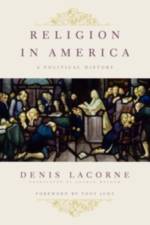
Denis Lacorne identifies two competing narratives defining the American identity. The first narrative, derived from the philosophy of the Enlightenment, is essentially secular. Associated with the Founding Fathers and reflected in the Declaration of Independence, the Constitution, and the Federalist Papers, this line of reasoning is predicated on separating religion from politics to preserve political freedom from an overpowering church. Prominent thinkers such as Voltaire, Thomas Paine, and Jean-Nicolas Demeunier, who viewed the American project as a radical attempt to create a new regime free from religion and the weight of ancient history, embraced this American effort to establish a genuine "e;wall of separation"e; between church and state. The second narrative is based on the premise that religion is a fundamental part of the American identity and emphasizes the importance of the original settlement of America by New England Puritans. This alternative vision was elaborated by Whig politicians and Romantic historians in the first half of the nineteenth century. It is still shared by modern political scientists such as Samuel Huntington. These thinkers insist America possesses a core, stable "e;Creed"e; mixing Protestant and republican values. Lacorne outlines the role of religion in the making of these narratives and examines, against this backdrop, how key historians, philosophers, novelists, and intellectuals situate religion in American politics.
The ongoing assault on climate science in the United States has never been more aggressive, more blatant, or more widely publicized than in the case of the Hockey Stick graph-a clear and compelling visual presentation of scientific data, put together by MichaelE. Mann and his colleagues, demonstrating that global temperatures have risen in conjunction with the increase in industrialization and the use of fossil fuels. Here was an easy-to-understand graph that, in a glance, posed a threat to major corporate energy interests and those who do their political bidding. The stakes were simply too high to ignore the Hockey Stick-and so began a relentless attack on a body of science and on the investigators whose work formed its scientific basis.The Hockey Stick achieved prominence in a 2001 UN report on climate change and quickly became a central icon in the "e;climate wars."e; The real issue has never been the graph's data but rather its implied threat to those who oppose governmental regulation and other restraints to protect the environment and planet. Mann, lead author of the original paper in which the Hockey Stick first appeared, shares the story of the science and politics behind this controversy. He reveals key figures in the oil and energy industries and the media frontgroups who do their bidding in sometimes slick, sometimes bare-knuckled ways. Mann concludes with the real story of the 2009 "e;Climategate"e; scandal, in which climate scientists' emails were hacked. This is essential reading for all who care about our planet's health and our own well-being.
Can we grow our world economy and create opportunities for the poor while keeping the planet intact? Can we maintain our vibrant, dynamic lifestyles while ensuring the Earth stays productive and viable? Aimed at managers, students, scholars, and policymakers, Sustainability Management answers these questions in the affirmative, arguing it is possible for environmentally sustainable business practices and policies to foster economic and long-term growth. Written by a former analyst and consultant with the EPA, this book originally combines sustainable efforts in water, agriculture, urban, and power management to achieve in practice, not just in theory a sustainable planet and economy. Steven Cohen begins with the technical, financial, managerial, and political challenges of such a project, and then honestly assesses sustainable practices in the manufacturing and service industries. He addresses renewable and carbon-free energy production; water sustainability, especially with regard to energy issues involving filtration, distribution, and changing rainfall patterns; food cultivation and distribution; and ways to maintain the interdependent systems on which we depend to live. Taking examples from New York City, one of the most sustainable and sustainability-minded metropolises in the world, Cohen explains how everything from construction to waste management can be designed to facilitate a sustainable environment, not just for New York but also for the world. He concludes with this macroscopic view, outlining the global efforts necessary to preserve biodiversity and ecosystems, and the impact of war, terrorism, and human conflict on sustainability.
Aisin Gioro Xianyu (1907-1948) was the fourteenth daughter of a Manchu prince and a legendary figure in China's bloody struggle with Japan. After the fall of the Manchu dynasty in 1912, Xianyu's father gave his daughter to a Japanese friend who was sympathetic to his efforts to reclaim power. This man raised Xianyu, now known as Kawashima Yoshiko, to restore the Manchus to their former glory. Her fearsome dedication to this cause ultimately got her killed.Yoshiko had a fiery personality and loved the limelight. She shocked Japanese society by dressing in men's clothes and rose to prominence as Commander Jin, touted in Japan's media as a new Joan of Arc. Boasting a short, handsome haircut and a genuine military uniform, Commander Jin was credited with many daring exploits, among them riding horseback as leader of her own army during the Japanese occupation of China. While trying to promote the Manchus, Yoshiko supported the puppet Manchu state established by the Japanese in 1932-one reason she was executed for treason after Japan's 1945 defeat. The truth of Yoshiko's life is still a source of contention between China and Japan: some believe she was exploited by powerful men, others claim she relished her role as political provocateur. China holds her responsible for unspeakable crimes, while Japan has forgiven her transgressions. This biography presents the richest and most accurate portrait to date of the controversial princess spy, recognizing her truly novel role in conflicts that transformed East Asia.
Abonner på vårt nyhetsbrev og få rabatter og inspirasjon til din neste leseopplevelse.
Ved å abonnere godtar du vår personvernerklæring.