













Gjør som tusenvis av andre bokelskere
Abonner på vårt nyhetsbrev og få rabatter og inspirasjon til din neste leseopplevelse.
Ved å abonnere godtar du vår personvernerklæring.Du kan når som helst melde deg av våre nyhetsbrev.

Few aspects of American military history have been as vigorously debated as Harry Truman's decision to use atomic bombs against Japan. In this carefully crafted volume, Michael Kort describes the wartime circumstances and thinking that form the context for the decision to use these weapons, surveys the major debates related to that decision, and provides a comprehensive collection of key primary source documents that illuminate the behavior of the United States and Japan during the closing days of World War II.Kort opens with a summary of the debate over Hiroshima as it has evolved since 1945. He then provides a historical overview of thye events in question, beginning with the decision and program to build the atomic bomb. Detailing the sequence of events leading to Japan's surrender, he revisits the decisive battles of the Pacific War and the motivations of American and Japanese leaders. Finally, Kort examines ten key issues in the discussion of Hiroshima and guides readers to relevant primary source documents, scholarly books, and articles.
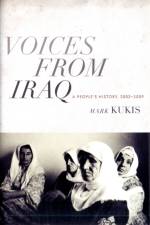
Featuring the testimony of close to seventy Iraqis from all walks of life, Voices from Iraq builds a riveting chronological history unmatched for its insight and revelations. Here is a history of the war in Iraq as told entirely by Iraqis living through the U.S. invasion and occupation.Beginning in 2003, this intimate narrative includes the experiential accounts of civilians, politicians, former dissidents, insurgents, and militiamen. Iraqis offering firsthand stories range from onetime Prime Minister Ayad Allawi to resistance fighters speaking on the condition of anonymity. Divided into five parts, these interviews recount the 2003 invasion; Iraq's gradual slide into chaos from 2004 to 2005; the start of a new order in 2006; the rise of open sectarian violence over the next two years; and the effort since 2008 to reconstruct a society from relative calm. Each section includes interviews grouped into themes, with brief epilogues for the participants. Not since Studs Terkel's The Good War has a book captured so acutely the human consequences of a conflict we are still struggling to understand. Voices from Iraq makes utterly vivid the meaning and legacy of America's campaign in Iraq.
In contrast to the close cooperation practiced among European states, space relations among Asian states have become increasingly tense. If current trends continue, the Asian civilian space competition could become a military race. To better understand these emerging dynamics, James Clay Moltz conducts the first in-depth policy analysis of Asia's fourteen leading space programs, concentrating especially on developments in China, Japan, India, and South Korea.Moltz isolates the domestic motivations driving Asia's space actors, revisiting critical events such as China's 2007 antisatellite weapons test and manned flights, Japan's successful Kaguya lunar mission and Kibo module for the International Space Station (ISS), India's Chandrayaan lunar mission, and South Korea's astronaut visit to the ISS, along with plans to establish independent space-launch capability. He investigates these nations' divergent space goals and their tendency to focus on national solutions and self-reliance rather than regionwide cooperation and multilateral initiatives. He concludes with recommendations for improved intra-Asian space cooperation and regional conflict prevention.Moltz also considers America's efforts to engage Asia's space programs in joint activities and the prospects for future U.S. space leadership. He extends his analysis to the relationship between space programs and economic development in Australia, Indonesia, Malaysia, North Korea, Pakistan, the Philippines, Singapore, Taiwan, Thailand, and Vietnam, making this a key text for international relations and Asian studies scholars.
With Western cultures becoming more pluralistic, the question of "e;truth"e; in politics has become a game of interpretations. Today, we face the demise of the very idea of truth as an objective description of facts, though many have yet to acknowledge that this is changing.Gianni Vattimo explicitly engages with the important consequences for democracy of our changing conception of politics and truth, such as a growing reluctance to ground politics in science, economics, and technology. Yet in Vattimo's conception, a farewell to truth can benefit democracy, exposing the unspoken issues that underlie all objective claims. The end of absolute truth challenges the legitimacy of policies based on perceived objective necessities protecting the free market, for example, even if it devastates certain groups or classes. Vattimo calls for a truth that is constructed with consensus and a respect for the liberty of all. By taking into account the cultural paradigms of others, a more "e;truthful"e; society freer and more democratic becomes possible. In this book, Vattimo continues his reinterpretation of Christianity as a religion of charity and hope, freeing society from authoritarian, metaphysical dogmatism. He also extends Nietzsche's "e;death of God"e; to the death of an authoritarian God, ushering in a new, postreligious Christianity. He connects the thought of Martin Heidegger, Karl Marx, and Karl Popper with surprising results and accommodates modern science more than in his previous work, reconciling its validity with an insistence that knowledge is interpretive. Vattimo's philosophy justifies Western nihilism in its capacity to dispense with absolute truths. Ranging over politics, ethics, religion, and the history of philosophy, his reflections contribute deeply to a modern reconception of God, metaphysics, and the purpose of reality.
This book continues and revises the ideas of justice as fairness that John Rawls presented in A Theory of Justice but changes its philosophical interpretation in a fundamental way. That previous work assumed what Rawls calls a "e;well-ordered society,"e; one that is stable and relatively homogenous in its basic moral beliefs and in which there is broad agreement about what constitutes the good life. Yet in modern democratic society a plurality of incompatible and irreconcilable doctrines-religious, philosophical, and moral-coexist within the framework of democratic institutions. Recognizing this as a permanent condition of democracy, Rawls asks how a stable and just society of free and equal citizens can live in concord when divided by reasonable but incompatible doctrines?This edition includes the essay "e;The Idea of Public Reason Revisited,"e; which outlines Rawls' plans to revise Political Liberalism, which were cut short by his death. "e;An extraordinary well-reasoned commentary on A Theory of Justice...a decisive turn towards political philosophy."e; -Times Literary Supplement
Featuring the first-ever English translation of the "e;Splendid Vision Sutra,"e; a sixth-century Indian Mahayana Buddhist scripture known for its rich ritual magic and worship of bodhisattva-goddesses, this volume explicates the text's cultural significance as a source of extraordinary value, cosmic truth, and existential meaning. The ancient author of the "e;Splendid Vision Sutra"e; promises every imaginable reward to those who heed its words and rites, whether one's desire is to become king, enjoy heavenly pleasures for thousands of millennia, or attain the spiritual summit of advanced bodhisattvahood. Richard S. Cohen carefully analyzes this religious rhetoric, developing a heuristic model of "e;scripture"e; that extends beyond Buddhist literature. In his framework, a text becomes sacred scripture when a community accepts it as a receptacle of extraordinary value, an authoritative source of cosmic truth, and a guide for meaningful action. While clarifying these points, Cohen untangles the discursive skein through which the "e;Splendid Vision Sutra"e; expresses its authority, inspires readers to accept that authority, and promises superior power and accomplishments to those who implement its teachings. Exploring ways of living and reading a text, Cohen draws on Marcel Duchamp's theory of found art, Jerzy Grotowski's idealization of the holy actor, and other formulations, identifying contingencies, uncertainties, and incompleteness in the lived present and its determination of our reception of the past. More than a mere introduction to an important work, The Splendid Vision opens a window into religious experience and practice in contemporary environments as well as in the world of the sutra.
America's post-World War II prosperity created a boom in higher education, expanding the number of university-educated readers and making a new literary politics possible. Writers began to direct their work toward the growing professional class, and the American public in turn became more open to literary culture. This relationship imbued fiction with a new social and cultural import, allowing authors to envision themselves as unique cultural educators. It also changed the nature of literary representation: writers came to depict social reality as a tissue of ideas produced by knowledge elites.Linking literary and historical trends, Stephen Schryer underscores the exalted fantasies that arose from postwar American writers' new sense of their cultural mission. Hoping to transform capitalism from within, writers and critics tried to cultivate aesthetically attuned professionals who could disrupt the narrow materialism of the bourgeoisie. Reading Don DeLillo, Marge Piercy, Mary McCarthy, Saul Bellow, Ursula K. Le Guin, Ralph Ellison, and Lionel Trilling, among others, Schryer unravels the postwar idea of American literature as a vehicle for instruction, while highlighting both the promise and flaws inherent in this vision.
We are told that Western/Christian and Muslim/Arab civilizations are heading towards inevitable conflict. The demographics of the West remain sluggish, while the population of the Muslim world explodes, widening the cultural gap and all but guaranteeing the outbreak of war. Leaving aside the media's sound and fury on this issue, measured analysis shows another reality taking shape: rapprochement between these two civilizations, benefiting from a universal movement with roots in the Enlightenment. The historical and geographical sweep of this book discredits the notion of a specific Islamic demography. The range of fertility among Muslim women, for example, is as varied as religious behavior among Muslims in general. Whether agnostics, fundamentalist Salafis, or al-Qaeda activists, Muslims are a diverse group that prove the variety and individuality of Islam. Youssef Courbage and Emmanuel Todd consider different degrees of literacy, patriarchy, and defensive reactions among minority Muslim populations, underscoring the spread of massive secularization throughout the Arab and Muslim world. In this regard, they argue, there is very little to distinguish the evolution of Islam from the history of Christianity, especially with Muslims now entering a global modernity. Sensitive to demographic variables and their reflection of personal and social truths, Courbage and Todd upend a dangerous meme: that we live in a fractured world close to crisis, struggling with an epidemic of closed cultures and minds made different by religion.
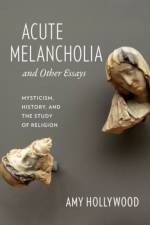
Acute Melancholia and Other Essays deploys spirited and progressive approaches to the study of Christian mysticism and the philosophy of religion. Ideal for novices and experienced scholars alike, the volume makes a forceful case for thinking about religion as both belief and practice, in which traditions marked by change are passed down through generations, laying the groundwork for their own critique. Through a provocative integration of medieval sources and texts by Jacques Derrida, Judith Butler, Talal Asad, and Dipesh Chakrabarty, this book redefines what it means to engage critically with history and those embedded within it.
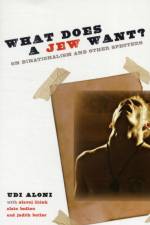
In the hopes of promoting justice, peace, and solidarity for and with the Palestinian people, Udi Aloni joins with Slavoj Zizek, Alain Badiou, and Judith Butler to confront the core issues of the Israeli-Palestinian conflict. Their bold question: Will a new generation of Israelis and Palestinians dare to walk together toward a joint Israel-Palestine? Through a collage of meditation, interview, diary, and essay, Aloni and his interlocutors present a personal, intellectual, and altogether provocative account rich with the insights of philosophy and critical theory. They ultimately foresee the emergence of a binational Israeli-Palestinian state, incorporating the work of Walter Benjamin, Edward Said, and Jewish theology to recast the conflict in secular theological terms.
In the Company of Strangers shows how a reconception of family and kinship underlies the revolutionary experiments of the modernist novel. While stories of marriage and long-lost relatives were a mainstay of classic Victorian fiction, Barry McCrea suggests that rival countercurrents within these family plots set the stage for the formal innovations of Joyce and Proust. Tracing the challenges to the family plot mounted by figures such as Fagin, Sherlock Holmes, Leopold Bloom, and Charles Swann, McCrea tells the story of how bonds generated by chance encounters between strangers come to take over the role of organizing narrative time and give shape to fictional worlds-a task and power that was once the preserve of the genealogical family. By investigating how the question of family is a hidden key to modernist structure and style, In the Company of Strangers explores the formal narrative potential of queerness and in doing so rewrites the history of the modern novel.
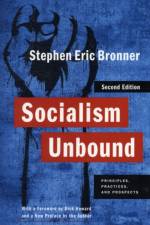
Published more than twenty years ago, Stephen Eric Bronner's bold defense of socialism remains a seminal text for our time. Treating socialism as an ethic, reinterpreting its core categories, and critically confronting its early foundations, Bronner's work offers a reinvigorated "e;class ideal"e; and a new perspective for progressive politics in the twentieth century.Socialism Unbound is an extraordinary work of political history that revisits the pivotal figures of the labor movement: Karl Marx, Friedrich Engels, Karl Kautsky, Vladimir Lenin, and Rosa Luxemburg. Examining their contributions as well as their flaws, Bronner shows how critical innovation gave way to dogma. New practical problems have arisen, and this volume engages with the relationship between class and social movements, institutional accountability and democratic participation, economic justice and market imperatives, and internationalism and identity. With a foreword by Dick Howard and a new introduction by the author, Bronner's classic study remains indispensable for scholars and activists alike.
In the debate over U. S. immigration, all sides now support policy and practice that expand the parameters of enforcement. Philip Kretsedemas examines this development from several different perspectives, exploring recent trends in U.S. immigration policy, the rise in extralegal state power over the course of the twentieth century, and discourses on race, nation, and cultural difference that have influenced politics and academia. He also analyzes the recent expansion of local immigration law and explains how forms of extralegal discretionary authority have become more prevalent in federal immigration policy, making the dispersion of local immigration laws possible. While connecting such extralegal state powers to a free flow position on immigration, Kretsedemas also observes how these same discretionary powers have been used historically to control racial minority populations, particularly African Americans under Jim Crow. This kind of discretionary authority often appeals to "e;states rights"e; arguments, recently revived by immigration control advocates. Using these and other examples, Kretsedemas explains how both sides of the immigration debate have converged on the issue of enforcement and how, despite differing interests, each faction has shaped the commonsense assumptions defining the debate.
In Animals and the Limits of Postmodernism, Gary Steiner illuminates postmodernism's inability to produce viable ethical and political principles. Ethics requires notions of self, agency, and value that are not available to postmodernists. Thus, much of what is published under the rubric of postmodernist theory lacks a proper basis for a systematic engagement with ethics. Steiner demonstrates this through a provocative critique of postmodernist approaches to the moral status of animals, set against the background of a broader indictment of postmodernism's failure to establish clear principles for action. He revisits the ideas of Derrida, Foucault, Nietzsche, and Heidegger, together with recent work by their American interpreters, and shows that the basic terms of postmodern thought are incompatible with definitive claims about the moral status of animals-as well as humans. Steiner also identifies the failures of liberal humanist thought in regards to this same moral dilemma, and he encourages a rethinking of humanist ideas in a way that avoids the anthropocentric limitations of traditional humanist thought. Drawing on the achievements of the Stoics and Kant, he builds on his earlier ideas of cosmic holism and non-anthropocentric cosmopolitanism to arrive at a more concrete foundation for animal rights.
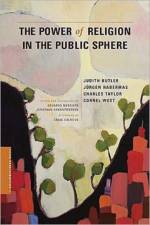
The Power of Religion in the Public Sphere represents a rare opportunity to experience a diverse group of preeminent philosophers confronting one pervasive contemporary concern: what role does or should religion play in our public lives? Reflecting on her recent work concerning state violence in Israel-Palestine, Judith Butler explores the potential of religious perspectives for renewing cultural and political criticism, while Jurgen Habermas, best known for his seminal conception of the public sphere, thinks through the ambiguous legacy of the concept of "e;the political"e; in contemporary theory. Charles Taylor argues for a radical redefinition of secularism, and Cornel West defends civil disobedience and emancipatory theology. Eduardo Mendieta and Jonathan VanAntwerpen detail the immense contribution of these philosophers to contemporary social and political theory, and an afterword by Craig Calhoun places these attempts to reconceive the significance of both religion and the secular in the context of contemporary national and international politics.
Designed to work with the acclaimed course text How to Read Chinese Poetry: A Guided Anthology, the How to Read Chinese Poetry Workbook introduces classical Chinese to advanced beginners and learners at higher levels, teaching them how to appreciate Chinese poetry in its original form. Also a remarkable stand-alone resource, the volume illuminates China's major poetic genres and themes through one hundred well-known, easy-to-recite works.Each of the volume's twenty units contains four to six classical poems in Chinese, English, and tone-marked pinyin romanization, with comprehensive vocabulary notes and prose poem translations in modern Chinese. Subsequent comprehension questions and comments focus on the artistic aspects of the poems, while exercises test readers' grasp of both classical and modern Chinese words, phrases, and syntax. An extensive glossary cross-references classical and modern Chinese usage, characters and compounds, and multiple character meanings, and online sound recordings are provided for each poem and its prose translation free of charge. A list of literary issues addressed throughout completes the volume, along with phonetic transcriptions for entering-tone characters, which appear in Tang and Song-regulated shi poems and lyric songs.
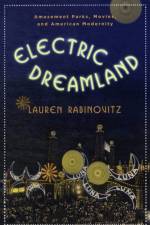
Amusement parks were the playgrounds of the working class in the early twentieth century, combining numerous, mechanically-based spectacles into one unique, modern cultural phenomenon. Lauren Rabinovitz describes the urban modernity engendered by these parks and their media, encouraging ordinary individuals to sense, interpret, and embody a burgeoning national identity. As industrialization, urbanization, and immigration upended society, amusement parks tempered the shocks of racial, ethnic, and cultural conflict while shrinking the distinctions between gender and class. Following the rise of American parks from 1896 to 1918, Rabinovitz seizes on a simultaneous increase in cinema and spectacle audiences and connects both to the success of leisure activities in stabilizing society. Critics of the time often condemned parks and movies for inciting moral decline, yet in fact they fostered women's independence, racial uplift, and assimilation. The rhythmic, mechanical movements of spectacle also conditioned audiences to process multiple stimuli. Featuring illustrations from private collections and accounts from unaccessed archives, Electric Dreamland joins film and historical analyses in a rare portrait of mass entertainment and the modern eye.
Renowned philosopher and prominent French critic Francois Noudelmann engages the musicality of Jean-Paul Sartre, Friedrich Nietzsche, and Roland Barthes, all of whom were amateur piano players and acute lovers of the medium. Though piano playing was a crucial art for these thinkers, their musings on the subject are largely scant, implicit, or discordant with each philosopher's oeuvre. Noudelmann both recovers and integrates these perspectives, showing that the manner in which these philosophers played, the composers they adored, and the music they chose reveals uncommon insight into their thinking styles and patterns.Noudelmann positions the physical and theoretical practice of music as a dimension underpinning and resonating with Sartre's, Nietzsche's, and Barthes's unique philosophical outlook. By reading their thought against their music, he introduces new critical formulations and reorients their trajectories, adding invaluable richness to these philosophers' lived and embodied experiences. The result heightens the multiple registers of being and the relationship between philosophy and the senses that informed so much of their work. A careful reader of music, Noudelmann maintains an elegant command of the texts under his gaze and appreciates the discursive points of musical and philosophical scholarship they involve, especially with regard to recent research and cutting-edge critique.
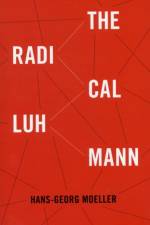
Niklas Luhmann (1927-1998) was a German sociologist and system theorist who wrote on law, economics, politics, art, religion, ecology, mass media, and love. Luhmann advocated a radical constructivism and antihumanism, or "e;grand theory,"e; to explain society within a universal theoretical framework. Nevertheless, despite being an iconoclast, Luhmann is viewed as a political conservative. Hans-Georg Moeller challenges this legacy, repositioning Luhmann as an explosive thinker critical of Western humanism.Moeller focuses on Luhmann's shift from philosophy to theory, which introduced new perspectives on the contemporary world. For centuries, the task of philosophy meant transforming contingency into necessity, in the sense that philosophy enabled an understanding of the necessity of everything that appeared contingent. Luhmann pursued the opposite-the transformation of necessity into contingency. Boldly breaking with the heritage of Western thought, Luhmann denied the central role of humans in social theory, particularly the possibility of autonomous agency. In this way, after Copernicus's cosmological, Darwin's biological, and Freud's psychological deconstructions of anthropocentrism, he added a sociological "e;fourth insult"e; to human vanity.A theoretical shift toward complex system-environment relations helped Luhmann "e;accidentally"e; solve one of Western philosophy's primary problems: mind-body dualism. By pulling communication into the mix, Luhmann rendered the Platonic dualist heritage obsolete. Moeller's clarity opens such formulations to general understanding and directly relates Luhmannian theory to contemporary social issues. He also captures for the first time a Luhmannian attitude toward society and life, defined through the cultivation of modesty, irony, and equanimity.
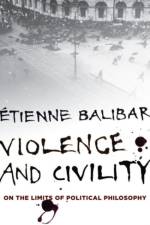
In Violence and Civility, Etienne Balibar boldly confronts the insidious causes of violence, racism, nationalism, and ethnic cleansing worldwide, as well as mass poverty and dispossession. Through a novel synthesis of theory and empirical studies of contemporary violence, the acclaimed thinker pushes past the limits of political philosophy to reconceive war, revolution, sovereignty, and class.Through the pathbreaking thought of Derrida, Balibar builds a topography of cruelty converted into extremism by ideology, juxtaposing its subjective forms (identity delusions, the desire for extermination, and the pursuit of vengeance) and its objective manifestations (capitalist exploitation and an institutional disregard for life). Engaging with Marx, Hegel, Hobbes, Clausewitz, Schmitt, and Luxemburg, Balibar introduces a new, productive understanding of politics as antiviolence and a fresh approach to achieving and sustaining civility. Rooted in the principles of transformation and empowerment, this theory brings hope to a world increasingly divided even as it draws closer together.
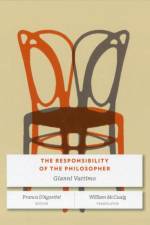
Over the course of his career, Gianni Vattimo has assumed a number of public and private identities and has pursued multiple intellectual paths. He seems to embody several contradictions, at once defending and questioning religion and critiquing and serving the state. Yet the diversity of his life and thought form the very essence of, as he sees it, the vocation and responsibility of the philosopher. In a world that desires quantifiable results and ideological expediency, the philosopher becomes the vital interpreter of the endlessly complex.As he outlines his ideas about the philosopher's role, Vattimo builds an important companion to his life's work. He confronts questions of science, religion, logic, literature, and truth, and passionately defends the power of hermeneutics to engage with life's conundrums. Vattimo conjures a clear vision of philosophy as something separate from the sciences and the humanities but also intimately connected to their processes, and he explicates a conception of truth that emphasizes fidelity and participation through dialogue.
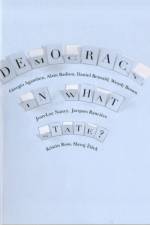
"e;Is it meaningful to call oneself a democrat? And if so, how do you interpret the word?"e;In responding to this question, eight iconoclastic thinkers prove the rich potential of democracy, along with its critical weaknesses, and reconceive the practice to accommodate new political and cultural realities. Giorgio Agamben traces the tense history of constitutions and their coexistence with various governments. Alain Badiou contrasts current democratic practice with democratic communism. Daniel Bensaid ponders the institutionalization of democracy, while Wendy Brown discusses the democratization of society under neoliberalism. Jean-Luc Nancy measures the difference between democracy as a form of rule and as a human end, and Jacques Ranciere highlights its egalitarian nature. Kristin Ross identifies hierarchical relationships within democratic practice, and Slavoj Zizek complicates the distinction between those who desire to own the state and those who wish to do without it.Concentrating on the classical roots of democracy and its changing meaning over time and within different contexts, these essays uniquely defend what is left of the left-wing tradition after the fall of Soviet communism. They confront disincentives to active democratic participation that have caused voter turnout to decline in western countries, and they address electoral indifference by invoking and reviving the tradition of citizen involvement. Passionately written and theoretically rich, this collection speaks to all facets of modern political and democratic debate.
Much has been written about the ups and downs of financial markets, from the lure of prosperity to the despair of crises. Yet a more fundamental and pernicious source of uncertainty exists in today's world: the traditional "e;insurance"e; risks of earthquakes, storms, terrorist attacks, and other disasters. Insightfully exploring these "e;acts of God and man,"e; Michael R. Powers guides readers through the methods available for identifying and measuring such risks, financing their consequences, and forecasting their future behavior within the limits of science.A distinctive characteristic of earthquakes, hurricanes, bombings, and other insurance risks is that they impact the values of stocks, bonds, commodities, and other market-based financial products, while remaining largely unaffected by or "e;aloof"e; from the behavior of markets. Quantifying such risks given limited data is difficult yet crucial for achieving the financing objectives of insurance. Powers begins with a discussion of how risk impacts our lives, health, and possessions and proceeds to introduce the statistical techniques necessary for analyzing these uncertainties. He then considers the experience of risk from the perspectives of both policyholders and insurance companies, and compares their respective responses.The risks inherent in the private insurance industry lead naturally to a discussion of the government's role as both market regulator and potential "e;insurer of last resort."e; Following a thoughtful and balanced analysis of these issues, Powers concludes with an interdisciplinary investigation into the nature of uncertainty, incorporating ideas from physics, philosophy, and game theory to assess science's limitations in predicting the ramifications of risk.
While the rise of the charmingly simple, brilliantly evocative haiku is often associated with the seventeenth-century Japanese poet Matsuo Basho, the form had already flourished for more than four hundred years before Basho even began to write. These early poems, known as hokku, are identical to haiku in syllable count and structure but function differently as a genre. Whereas each haiku is its own constellation of image and meaning, a hokku opens a series of linked, collaborative stanzas in a sequence called renga.Under the mastery of Basho, hokku first gained its modern independence. His talents contributed to the evolution of the style into the haiku beloved by so many poets around the world Richard Wright, Jack Kerouac, and Billy Collins being notable devotees. Haiku Before Haiku presents 320 hokku composed between the thirteenth and early eighteenth centuries, from the poems of the courtier Nijo Yoshimoto to those of the genre's first "e;professional"e; master, Sogi, and his disciples. It features 20 masterpieces by Basho himself. Steven D. Carter introduces the history of haiku and its aesthetics, classifying these poems according to style and context. His rich commentary and notes on composition and setting illuminate each work, and he provides brief biographies of the poets, the original Japanese text in romanized form, and earlier, classical poems to which some of the hokku allude.
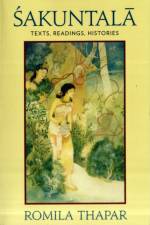
The figure of Sakuntala appears in many forms throughout South Asian literature, most famously in the Mahabharata and in Kalidisa's fourth-century Sanskrit play, Sakuntala and the Ring of Recollection. In these two texts, Sakuntala undergoes a critical transformation, relinquishing her assertiveness and autonomy to become the quintessentially submissive woman, revealing much about the performance of Hindu femininity that would come to dominate South Asian culture. Through a careful analysis of sections from Sakuntala and their various iterations in different contexts, Romila Thapar explores the interactions between literature and history, culture and gender, that frame the development of this canonical figure, as well as a distinct conception of female identity.
Diana Lobel takes readers on a journey across Eastern and Western philosophical and religious traditions to discover a beauty and purpose at the heart of reality that makes life worth living. Guided by the ideas of ancient thinkers and the insight of the philosophical historian Pierre Hadot, The Quest for God and the Good treats philosophy not as an abstract, theoretical discipline, but as a living experience. For centuries, human beings have struggled to know why we are here, whether a higher being or dimension exists, and whether our existence is fundamentally good. Above all, we want to know whether the search for God and the good will bring happiness. Following in the path of the ancient philosophers, Lobel directly connects conceptions of God or an Absolute with notions of the good, illuminating diverse classical texts and thinkers. She explores the Bible and the work of Plato, Aristotle, Augustine, Maimonides, al-Farabi, and al-Ghazali. She reads the Tao Te Ching, I Ching, Bhagavad Gita, and Upanishads, as well as the texts of Theravada, Mahayana, and Zen Buddhism, and traces the repercussions of these works in the modern thought of Alfred North Whitehead, Iris Murdoch, Alasdair MacIntyre, and Charles Taylor. While each of these texts and thinkers sets forth a distinct and unique vision, all maintain that human beings find fulfillment in their contact with beauty and purpose. Rather than arriving at one universal definition of God or the good, Lobel demonstrates the aesthetic value of multiple visions presented by many thinkers across cultures. The Quest for God and the Good sets forth a path of investigation and discovery culminating in intellectual and spiritual communion.
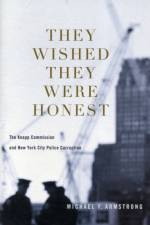
In fifty years of prosecuting and defending criminal cases in New York City and elsewhere,Michael F. Armstrong has often dealt with cops. For a single two-year span, as chief counsel to the Knapp Commission, he was charged with investigating them. Based on Armstrong's vivid recollections of this watershed moment in law enforcement accountability-prompted by the New York Times's report on whistleblower cop Frank Serpico-They Wished They Were Honest recreates the dramatic struggles and significance of the Commission and explores the factors that led to its success and the restoration of the NYPD's public image.Serpico's charges against the NYPD encouraged Mayor John Lindsay to appoint prominent attorney Whitman Knapp to chair a Citizen's Commission on police graft. Overcoming a number of organizational, budgetary, and political hurdles, Chief Counsel Armstrong cobbled together an investigative group of a half-dozen lawyers and a dozen agents. Just when funding was about to run out, the "e;blue wall of silence"e; collapsed. A flamboyant "e;Madame,"e; a corrupt lawyer, and a weasely informant led to a "e;super thief"e; cop, who was trapped and "e;turned"e; by the Commission. This led to sensational and revelatory hearings, which publicly refuted the notion that departmental corruption was limited to only a "e;few rotten apples."e;In the course of his narrative, Armstrong illuminates police investigative strategy; governmental and departmental political maneuvering; ethical and philosophical issues in law enforcement; the efficacy (or lack thereof) of the police's anticorruption efforts; the effectiveness of the training of police officers; the psychological and emotional pressures that lead to corruption; and the effects of police criminality on individuals and society. He concludes with the effects, in today's world, of Knapp and succeeding investigations into police corruption and the value of permanent outside monitoring bodies, such as the special prosecutor's office, formed in response to the Commission's recommendation, as well as the current monitoring commission, of which Armstrong is chairman.
Before 9/11, films addressing torture outside of the horror/slasher genre depicted the practice in a variety of forms. In most cases, torture was cast as the act of a desperate and depraved individual, and the viewer was more likely to identify with the victim rather than the torturer. Since the terrorist attacks of September 11, 2001, scenes of brutality and torture in mainstream comedies, dramatic narratives, and action films appear for little other reason than to titillate and delight. In these films, torture is devoid of any redeeming qualities, represented as an exercise in brutal senselessness carried out by authoritarian regimes and institutions.This volume follows the shift in the representation of torture over the past decade, specifically in documentary, action, and political films. It traces and compares the development of this trend in films from the United States, Europe, China, Latin America, South Africa, and the Middle East. Featuring essays by sociologists, psychologists, historians, journalists, and specialists in film and cultural studies, the collection approaches the representation of torture in film and television from multiple angles and disciplines, connecting its aesthetics and practices to the dynamic of state terror and political domination.
Film culture often rejects visually rich images, treating simplicity, austerity, or even ugliness as the more provocative, political, and truly cinematic choice. Cinema may challenge traditional ideas of art, but its opposition to the decorative represents a long-standing Western aesthetic bias against feminine cosmetics, Oriental effeminacy, and primitive ornament. Inheriting this patriarchal, colonial perspective which treats decorative style as foreign or sexually perverse filmmakers, critics, and theorists have often denigrated colorful, picturesque, and richly patterned visions in cinema.Condemning the exclusion of the "e;pretty"e; from masculine film culture, Rosalind Galt reevaluates received ideas about the decorative impulse from early film criticism to classical and postclassical film theory. The pretty embodies lush visuality, dense mise-en-scene, painterly framing, and arabesque camera movements-styles increasingly central to world cinema. From European art cinema to the films of Wong Kar-wai and Santosh Sivan, from the experimental films of Derek Jarman to the popular pleasures of Moulin Rouge!, the pretty is a vital element of contemporary cinema, communicating distinct sexual and political identities. Inverting the logic of anti-pretty thought, Galt firmly establishes the decorative image as a queer aesthetic, uniquely able to figure cinema's perverse pleasures and cross-cultural encounters. Creating her own critical tapestry from perspectives in art theory, film theory, and philosophy, Galt reclaims prettiness as a radically transgressive style, shimmering with threads of political agency.
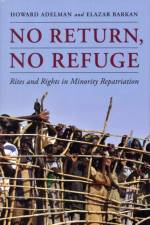
Refugee displacement is a global phenomenon that has uprooted millions of individuals over the past century. In the 1980s, repatriation became the preferred option for resolving the refugee crisis. As human rights achieved global eminence, refugees' right of return fell under its umbrella. Yet return as a right and its practice as a rite created a radical disconnect between principle and everyday practice, and the repatriation of refugees and Internally Displaced Persons (IDPs) remains elusive in cases of forced displacement of victims by ethnic conflict.Reviewing cases of ethnic displacement throughout the twentieth century in Europe, Asia, and Africa, Howard Adelman and Elazar Barkan juxtapose the empirical lack of repatriation in cases of ethnic conflict, unless accompanied by coercion. The emphasis on repatriation during the last several decades has obscured other options, leaving refugees to spend years warehoused in camps. Repatriation takes place when identity, defined by ethnicity or religion, is not at the center of the displacing conflict, or when the ethnic group to which the refugees belong are not a minority in their original country or in the region to which they want to return. Rather than perpetuate a ritual belief in return as a right without the prospect of realization, Adelman and Barkan call for solutions that bracket return as a primary focus in cases of ethnic conflict.
Abonner på vårt nyhetsbrev og få rabatter og inspirasjon til din neste leseopplevelse.
Ved å abonnere godtar du vår personvernerklæring.