


















Gjør som tusenvis av andre bokelskere
Abonner på vårt nyhetsbrev og få rabatter og inspirasjon til din neste leseopplevelse.
Ved å abonnere godtar du vår personvernerklæring.Du kan når som helst melde deg av våre nyhetsbrev.

International intervention liberated Cambodia from pariah state status in the early 1990s and laid the foundations for more peaceful, representative rule. Yet the country's social indicators and the integrity of its political institutions declined rapidly within a few short years, while inequality grew dramatically. Conducting an unflinching investigation into these developments, Sophal Ear reveals the pernicious effects of aid dependence and its perversion of Cambodian democracy.International intervention and foreign aid resulted in higher maternal (and possibly infant and child) mortality rates and unprecedented corruption by the mid-2000s. Similarly, in example after example, Ear finds the more aid dependent a country, the more distorted its incentives to develop sustainably. Contrasting Cambodia's clothing sector with its rice and livestock sectors and internal handling of the avian flu epidemic, he showcases the international community's role in preventing Cambodia from controlling its national development.A postconflict state unable to refuse aid, Cambodia is rife with trial-and-error donor experiments and their unintended consequences, such as bad governance and poor domestic and tax revenue performance-a major factor curbing sustainable, nationally owned growth. By outlining the terms through which countries can achieve better ownership of their development, Ear offers alternatives for governments still on the brink of collapse, despite ongoing dependence on foreign intervention and aid.
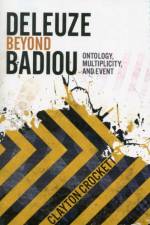
First published in 1997, Alain Badiou's Deleuze: The Clamor of Being cast Gilles Deleuze as a secret philosopher of the One. In this work, Clayton Crockett rehabilitates Deleuze's position within contemporary political and philosophical thought, advancing an original reading of the thinker's major works and a constructive conception of his philosophical ontology. Through close readings of Deleuze's Difference and Repetition, Capitalism and Schizophrenia (with Felix Guattari), and Cinema 2, Crockett argues that Deleuze is anything but the austere, quietistic, and aristocratic intellectual Badiou had portrayed. Instead, Crockett underscores Deleuze's radical aesthetics and innovative scientific, political, and mathematical forms of thought. He also refutes the notion Deleuze retreated from politics toward the end of his life. Using Badiou's critique as a foil, Crockett maintains the profound continuity of Deleuze's work and builds a general interpretation of his more obscure formulations.
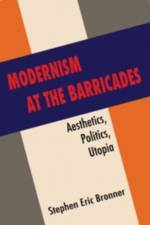
Stephen Eric Bronner revisits the modernist project's groundbreaking innovations, itsexperimental imagination, and its utopian politics. Reading the artistic and intellectual achievements of the movement's leading figures against larger social, political, and cultural trends, he follows the rise of a flawed yet salient effort at liberation and its confrontation with modernity.Modernism at the Barricades features chapters on expressionism, futurism, surrealism, and revolutionary art and includes fresh perspectives on the work of Arnold Schoenberg, Wassily Kandinsky, and Emil Nolde, among others. The volume illuminates an international avant garde intent on resisting bureaucracy, standardization, scientific rationality, and the increasing commodification of mass culture. Modernists sought new ways of feeling, new forms of expression, and new possibilities of experience while seeking to refashion society. Liberation was their aim, along with the invigoration of daily life-yet their process entangled political resistance with the cultural. Exploring both the political responsibility of the artist and the manipulation of authorial intention, Bronner reconfigures the modernist movement for contemporary progressive purposes and offers insight into the problems still complicating cultural politics. He ultimately reasserts the political dimension of developments often understood in purely aesthetic terms and confronts the self-indulgence and political irresponsibility of certain so-called modernists today. The result is a long overdue reinterpretation and rehabilitation of the modernist legacy for a new age.
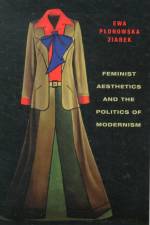
Ewa Ziarek fully articulates a feminist aesthetics, focusing on the struggle for freedom in women's literary and political modernism and the devastating impact of racist violence and sexism. She examines the contradiction between women's transformative literary and political practices and the oppressive realities of racist violence and sexism, and she situates these tensions within the entrenched opposition between revolt and melancholia in studies of modernity and within the friction between material injuries and experimental aesthetic forms. Ziarek's political and aesthetic investigations concern the exclusion and destruction of women in politics and literary production and the transformation of this oppression into the inaugural possibilities of writing and action. Her study is one of the first to combine an in-depth engagement with philosophical aesthetics, especially the work of Theodor W. Adorno, with women's literary modernism, particularly the writing of Virginia Woolf and Nella Larsen, along with feminist theories on the politics of race and gender. By bringing seemingly apolitical, gender-neutral debates about modernism's experimental forms together with an analysis of violence and destroyed materialities, Ziarek challenges both the anti-aesthetic subordination of modern literature to its political uses and the appreciation of art's emancipatory potential at the expense of feminist and anti-racist political struggles.
Since its inception, philosophy has struggled to perfect individual understanding through discussion and dialogue based in personal, poetic, or dramatic investigation. The positions of such philosophers as Socrates, Spinoza, Rousseau, Nietzsche, Foucault, and Derrida differ in almost every respect, yet these thinkers all share a common method of practicing philosophy-not as a detached, intellectual discipline, but as a worldly art. What is the love that turns into knowledge and how is the knowledge we seek already a form of love? Reading key texts from Socrates to Derrida, this book addresses the fundamental tension between love and knowledge that informs the history of Western philosophy. LoveKnowledge returns to the long tradition of philosophy as an exercise not only of the mind but also of the soul, asking whether philosophy can shape and inform our lives and communities.
Hunter Vaughan interweaves phenomenology and semiotics to analyze cinema's ability to challenge conventional modes of thought. Merging Maurice Merleau-Ponty's phenomenology of perception with Gilles Deleuze's image-philosophy, Vaughan applies a rich theoretical framework to a comparative analysis of Jean-Luc Godard's films, which critique the audio-visual illusion of empirical observation (objectivity), and the cinema of Alain Resnais, in which the sound-image generates innovative portrayals of individual experience (subjectivity). Both filmmakers radically upend conventional film practices and challenge philosophical traditions to alter our understanding of the self, the world, and the relationship between the two. Films discussed in detail include Godard's Vivre sa vie (1962), Contempt (1963), and 2 or 3 Things I Know About Her (1967); and Resnais's Hiroshima, mon amour (1959), Last Year at Marienbad (1961), and The War Is Over (1966). Situating the formative works of these filmmakers within a broader philosophical context, Vaughan pioneers a phenomenological film semiotics linking two disparate methodologies to the mirrored achievements of two seemingly irreconcilable artists.
Kiku's Prayer is told through the eyes of Kiku, a self-assured young woman from a rural Japanese village who falls in love with Seikichi, a devoted Catholic man. Practicing a faith still banned by the government, Seikichi is imprisoned but refuses to recant under torture. Kiku's efforts to reconcile her feelings for Seikichi's religion with the sacrifices she makes to free him mirror the painful, conflicting choices Japan faced as a result of exposure to modernity and the West. Seikichi's persecution exemplifies Japan's insecurities, and Kiku's tortured yet determined spirit represents the nation's resilient soul.Set in the turbulent years of the transition from the shogunate to the Meiji Restoration, Kiku's Prayer embodies themes central to Endo Shusaku's work, including religion, modernization, and the endurance of the human spirit. Yet this novel is much more than a historical allegory. It acutely renders one woman's troubled encounter with passion and spirituality at a transitional time in her life and in the history of her people. A renowned twentieth-century Japanese author, Endo wrote from the perspective of being both Japanese and Catholic. His work is often compared with that of Graham Greene, who himself considered Endo one of the century's finest writers.
Through readings of iconic figures such as the cannibal, the child, the alien, and the posthuman, Gabriele Schwab analyzes literary explorations at the boundaries of the human. Treating literature as a dynamic medium that "e;writes culture"e;-one that makes the abstract particular and local, and situates us within the world-Schwab pioneers a compelling approach to reading literary texts as "e;anthropologies of the future"e; that challenge habitual productions of meaning and knowledge. Schwab's study draws on anthropology, philosophy, critical theory, and psychoanalysis to trace literature's profound impact on the cultural imaginary. Following a new interpretation of Derrida's and Levi-Strauss's famous controversy over the indigenous Nambikwara, Schwab explores the vicissitudes of "e;traveling literature"e; through novels and films that fashion a cross-cultural imaginary. She also examines the intricate links between colonialism, cannibalism, melancholia, the fate of disenfranchised children under the forces of globalization, and the intertwinement of property and personhood in the neoliberal imaginary. Schwab concludes with an exploration of discourses on the posthuman, using Samuel Beckett's "e;The Lost Ones"e; and its depiction of a future lived under the conditions of minimal life. Drawing on a wide range of theories, Schwab engages the productive intersections between literary studies and anthropology, underscoring the power of literature to shape culture, subjectivity, and life.
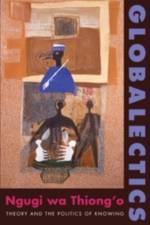
A masterful writer working in many genres, Ngugi wa Thiong'o entered the East African literary scene in 1962 with the performance of his first major play, The Black Hermit, at the National Theatre in Uganda. In 1977 he was imprisoned after his most controversial work, Ngaahika Ndeenda (I Will Marry When I Want), produced in Nairobi, sharply criticized the injustices of Kenyan society and unequivocally championed the causes of ordinary citizens. Following his release, Ngugi decided to write only in his native Gikuyu, communicating with Kenyans in one of the many languages of their daily lives, and today he is known as one of the most outspoken intellectuals working in postcolonial theory and the global postcolonial movement.In this volume, Ngugi wa Thiong'o summarizes and develops a cross-section of the issues he has grappled with in his work, which deploys a strategy of imagery, language, folklore, and character to "e;decolonize the mind."e; Ngugi confronts the politics of language in African writing; the problem of linguistic imperialism and literature's ability to resist it; the difficult balance between orality, or "e;orature,"e; and writing, or "e;literature"e;; the tension between national and world literature; and the role of the literary curriculum in both reaffirming and undermining the dominance of the Western canon. Throughout, he engages a range of philosophers and theorists writing on power and postcolonial creativity, including Hegel, Marx, Levi-Strauss, and Aime Cesaire. Yet his explorations remain grounded in his own experiences with literature (and orature) and reworks the difficult dialectics of theory into richly evocative prose.
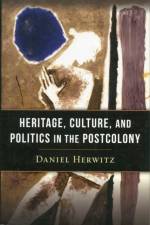
The act of remaking one's history into a heritage, a conscientiously crafted narrative placed over the past, is a thriving industry in almost every postcolonial culture. This is surprising, given the tainted role of heritage in so much of colonialism's history. Yet the postcolonial state, like its European predecessor of the eighteenth and nineteenth centuries, deploys heritage institutions and instruments, museums, courts of law, and universities to empower itself with unity, longevity, exaltation of value, origin, and destiny. Bringing the eye of a philosopher, the pen of an essayist, and the experience of a public intellectual to the study of heritage, Daniel Herwitz reveals the febrile pitch at which heritage is staked. In this absorbing book, he travels to South Africa and unpacks its controversial and robust confrontations with the colonial and apartheid past. He visits India and reads in its modern art the gesture of a newly minted heritage idealizing the precolonial world as the source of Indian modernity. He traverses the United States and finds in its heritage of incessant invention, small town exceptionalism, and settler destiny a key to contemporary American media-driven politics. Showing how destabilizing, ambivalent, and potentially dangerous heritage is as a producer of contemporary social, aesthetic, and political realities, Herwitz captures its perfect embodiment of the struggle to seize culture and society at moments of profound social change.
No longer is pregnancy a repulsive or shameful condition in Hollywood films, but an attractive attribute, often enhancing the romantic or comedic storyline of a female character. Kelly Oliver investigates this curious shift and its reflection of changing attitudes toward women's roles in reproduction and the family. Not all representations signify progress. Oliver finds that in many pregnancy films, our anxieties over modern reproductive practices and technologies are made manifest, and in some cases perpetuate conventions curtailing women's freedom. Reading such films as Where the Heart Is (2000), Riding in Cars with Boys (2001), Palindromes (2004), Saved! (2004), Quinceanera (2006), Children of Men (2006), Knocked Up (2007), Juno (2007), Baby Mama (2008), Away We Go (2009), Precious (2009), The Back-up Plan (2010), Due Date (2010), and Twilight: Breaking Dawn (2011), Oliver investigates pregnancy as a vehicle for romance, a political issue of "e;choice,"e; a representation of the hosting of "e;others,"e; a prism for fears of miscegenation, and a screen for modern technological anxieties.
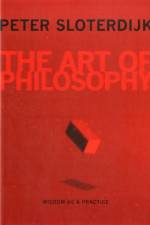
In his best-selling book You Must Change Your Life, Peter Sloterdijk argued exercise and practice were crucial to the human condition. In The Art of Philosophy, he extends this critique to academic science and scholarship, casting the training processes of academic study as key to the production of sophisticated thought. Infused with humor and provocative insight, The Art of Philosophy further integrates philosophy and human existence, richly detailing the foundations of this relationship and its transformative role in making the postmodern self. Sloterdijk begins with Plato's description of Socrates, whose internal monologues were so absorbing they often rooted the philosopher in place. The original academy, Sloterdijk argues, taught scholars to lose themselves in thought, and today's universities continue this tradition by offering scope for Plato's "e;accommodations for absences."e; By training scholars to practice thinking as an occupation transcending daily time and space, universities create the environment in which thought makes wisdom possible. Traversing the history of asceticism, the concept of suspended animation, and the theory of the neutral observer, Sloterdijk traces the evolution of philosophical practice from ancient times to today, showing how scholars can remain true to the tradition of "e;the examined life"e; even when the temporal dimension no longer corresponds to the eternal. Building on the work of Husserl, Heidegger, Nietzsche, Arendt, and other practitioners of the life of theory, Sloterdijk launches a posthumanist defense of philosophical inquiry and its everyday, therapeutic value.
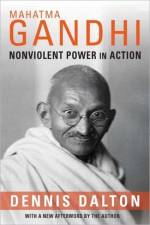
Dennis Dalton's classic account of Gandhi's political and intellectual development focuses on the leader's two signal triumphs: the civil disobedience movement (or salt satyagraha) of 1930 and the Calcutta fast of 1947. Dalton clearly demonstrates how Gandhi's lifelong career in national politics gave him the opportunity to develop and refine his ideals. He then concludes with a comparison of Gandhi's methods and the strategies of Martin Luther King Jr. and Malcolm X, drawing a fascinating juxtaposition that enriches the biography of all three figures and asserts Gandhi's relevance to the study of race and political leadership in America. Dalton situates Gandhi within the "e;clash of civilizations"e; debate, identifying the implications of his work on continuing nonviolent protests. He also extensively reviews Gandhian studies and adds a detailed chronology of events in Gandhi's life.
The first swap was executed over thirty years ago. Since then, the interest rate swaps and other derivative markets have grown and diversified in phenomenal directions. Derivatives are used today by a myriad of institutional investors for the purposes of risk management, expressing a view on the market, and pursuing market opportunities that are otherwise unavailable using more traditional financial instruments. In this volume, Howard Corb explores the concepts behind interest rate swaps and the many derivatives that evolved from them. Corb's book uniquely marries academic rigor and real-world trading experience in a compelling, readable style. While it is filled with sophisticated formulas and analysis, the volume is geared toward a wide range of readers searching for an in-depth understanding of these markets. It serves as both a textbook for students and a must-have reference book for practitioners. Corb helps readers develop an intuitive feel for these products and their use in the market, providing a detailed introduction to more complicated trades and structures. Through examples of financial structuring, readers will come away with an understanding of how derivatives products are created and how they can be deconstructed and analyzed effectively.
At the age of twenty-one, Brian Boyd wrote a thesis on Vladimir Nabokov that the famous author called "e;brilliant."e; After gaining exclusive access to the writer's archives, he wrote a two-part, award-winning biography, Vladimir Nabokov: The Russian Years (1990) and Vladimir Nabokov: The American Years (1991). This collection features essays written by Boyd since completing the biography, incorporating material he gleaned from his research as well as new discoveries and formulations.Boyd confronts Nabokov's life, career, and legacy; his art, science, and thought; his subtle humor and puzzle-like storytelling; his complex psychological portraits; and his inheritance from, reworking of, and affinities with Shakespeare, Pushkin, Tolstoy, and Machado de Assis. Boyd offers new ways of reading Nabokov's best English-language works: Lolita, Pale Fire, Ada, and the unparalleled autobiography, Speak, Memory, and he discloses otherwise unknown information about the author's world. Sharing his personal reflections, Boyd recounts the adventures, hardships, and revelations of researching Nabokov's biography and his unusual finds in the archives, including materials still awaiting publication. The first to focus on Nabokov's metaphysics, Boyd cautions against their being used as the key to unlock all of the author's secrets, showing instead the many other rooms in Nabokov's castle of fiction that need exploring, such as his humor, narrative invention, and psychological insight into characters and readers alike. Appreciating Nabokov as novelist, memoirist, poet, translator, scientist, and individual, Boyd helps us understand more than ever the author's multifaceted genius.
From the beginning of the American Occupation in 1945 to the post-bubble period of the early 1990s, popular music provided Japanese listeners with a much-needed release, channeling their desires, fears, and frustrations into a pleasurable and fluid art. Pop music allowed Japanese artists and audiences to assume various identities, reflecting the country's uncomfortable position under American hegemony and its uncertainty within ever-shifting geopolitical realities. In the first English-language study of this phenomenon, Michael K. Bourdaghs considers genres as diverse as boogie-woogie, rockabilly, enka, 1960s rock and roll, 1970s new music, folk, and techno-pop. Reading these forms and their cultural import through music, literary, and cultural theory, he introduces readers to the sensual moods and meanings of modern Japan. As he unpacks the complexities of popular music production and consumption, Bourdaghs interprets Japan as it worked through (or tried to forget) its imperial past. These efforts grew even murkier as Japanese pop migrated to the nation's former colonies. In postwar Japan, pop music both accelerated and protested the commodification of everyday life, challenged and reproduced gender hierarchies, and insisted on the uniqueness of a national culture, even as it participated in an increasingly integrated global marketplace. Each chapter in Sayonara Amerika, Sayonara Nippon examines a single genre through a particular theoretical lens: the relation of music to liberation; the influence of cultural mapping on musical appreciation; the role of translation in transmitting musical genres around the globe; the place of noise in music and its relation to historical change; the tenuous connection between ideologies of authenticity and imitation; the link between commercial success and artistic integrity; and the function of melodrama. Bourdaghs concludes with a look at recent Japanese pop music culture.
Noga Efrati outlines the first social and political history of women in Iraq during the periods of British occupation and the British-backed Hashimite monarchy (1917-1958). She traces the harsh and long-lasting implications of British state building on Iraqi women, particularly their legal and political enshrinement as second-class citizens, and the struggle by women's rights activists to counter this precedent. Efrati concludes with a discussion of post-Saddam Iraq and the women's associations now claiming their place in government. Finding common threads between these two generations of women, Efrati underscores the organic roots of the current fight for gender equality shaped by a memory of oppression under the monarchy.Efrati revisits the British strategy of efficient rule, largely adopted by the Iraqi government they erected and the consequent gender policy that emerged. The attempt to control Iraq through "e;authentic leaders"e;-giving them legal and political powers-marginalized the interests of women and virtually sacrificed their well-being altogether. Iraqi women refused to resign themselves to this fate. From the state's early days, they drew attention to the biases of the Tribal Criminal and Civil Disputes Regulation (TCCDR) and the absence of state intervention in matters of personal status and resisted women's disenfranchisement. Following the coup of 1958, their criticism helped precipitate the dissolution of the TCCDR and the ratification of the Personal Status Law. A new government gender discourse shaped by these past battles arose, yet the U.S.-led invasion of 2003, rather than helping cement women's rights into law, reinstated the British approach. Pressured to secure order and reestablish a pro-Western Iraq, the Americans increasingly turned to the country's "e;authentic leaders"e; to maintain control while continuing to marginalize women. Efrati considers Iraqi women's efforts to preserve the progress they have made, utterly defeating the notion that they have been passive witnesses to history.
Written for social workers by a social worker, Mental Disorders, Medications, and Clinical Social Work discusses the etiology, epidemiology, assessment, and intervention planning for common mental disorders. Looking at disorders from an ecosystems perspective, Austrian goes beyond a linear classification approach and DSM-IV-TR categories and encourages social workers to analyze the internal and external environmental factors that contribute to a disorder's development. Austrian's discussion of effective intervention(s) for a particular client also stresses the importance of working with families in treating disorders.In addition to information on new medications, biochemical data on the causes of disease, and diagnostic tests, the revised third edition discusses therapies such as motivational interviewing, cognitive-behavioral, interpersonal, and dialectic.
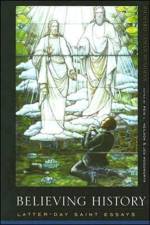
The eminent historian Richard Bushman here reflects on his faith and the history of his religion. By describing his own struggle to find a basis for belief in a skeptical world, Bushman poses the question of how scholars are to write about subjects in which they are personally invested. Does personal commitment make objectivity impossible? Bushman explicitly, and at points confessionally, explains his own commitments and then explores Joseph Smith and the Book of Mormon from the standpoint of belief.Joseph Smith cannot be dismissed as a colorful fraud, Bushman argues, nor seen only as a restorer of religious truth. Entangled in nineteenth-century Yankee culture-including the skeptical Enlightenment-Smith was nevertheless an original who cut his own path. And while there are multiple contexts from which to draw an understanding of Joseph Smith (including magic, seekers, the Second Great Awakening, communitarianism, restorationism, and more), Bushman suggests that Smith stood at the cusp of modernity and presented the possibility of belief in a time of growing skepticism. When examined carefully, the Book of Mormon is found to have intricate subplots and peculiar cultural twists. Bushman discusses the book's ambivalence toward republican government, explores the culture of the Lamanites (the enemies of the favored people), and traces the book's fascination with records, translation, and history. Yet Believing History also sheds light on the meaning of Joseph Smith and the Book of Mormon today. How do we situate Mormonism in American history? Is Mormonism relevant in the modern world? Believing History offers many surprises. Believers will learn that Joseph Smith is more than an icon, and non-believers will find that Mormonism cannot be summed up with a simple label. But wherever readers stand on Bushman's arguments, he provides us with a provocative and open look at a believing historian studying his own faith.
"e;Every man who undertakes the journey to the Our Lord's Sepulcher needs three sacks: a sack of patience, a sack of silver, and a sack of faith."e;-Symon Semeonis, an Irish medieval pilgrim As medieval pilgrims made their way to the places where Jesus Christ lived and suffered, they experienced, among other things: holy sites, the majesty of the Egyptian pyramids (often referred to as the "e;Pharaoh's granaries"e;), dips in the Dead Sea, unfamiliar desert landscapes, the perils of traveling along the Nile, the customs of their Muslim hosts, Barbary pirates, lice, inconsiderate traveling companions, and a variety of difficulties, both great and small. In this richly detailed study, Nicole Chareyron draws on more than one hundred firsthand accounts to consider the journeys and worldviews of medieval pilgrims. Her work brings the reader into vivid, intimate contact with the pilgrims' thoughts and emotions as they made the frequently difficult pilgrimage to the Holy Land and back home again. Unlike the knights, princes, and soldiers of the Crusades, who traveled to the Holy Land for the purpose of reclaiming it for Christendom, these subsequent pilgrims of various nationalities, professions, and social classes were motivated by both religious piety and personal curiosity. The travelers not only wrote journals and memoirs for themselves but also to convey to others the majesty and strangeness of distant lands. In their accounts, the pilgrims relate their sense of astonishment, pity, admiration, and disappointment with humor and a touching sincerity and honesty.These writings also reveal the complex interactions between Christians, Jews, and Muslims in the Holy Land. Throughout their journey, pilgrims confronted occasionally hostile Muslim administrators (who controlled access to many holy sites), Bedouin tribes, Jews, and Turks. Chareyron considers the pilgrims' conflicted, frequently simplistic, views of their Muslim hosts and their social and religious practices.
For more than 150 years, empowering practices have been used by social workers in their work with families, but the techniques of today differ significantly from those of the pioneers or even from those of a few years ago. Today's practitioners recognize that empowering others is impossible; social workers can, however, assist others as they empower themselves. This book integrates time-honored approaches with today's more modest goals, mindful of what empowerment can and cannot do. Synthesizing several theoretical supports-the strengths perspective, system theory, theories of family well-being, and theories of coping-the author responds to the question "e;What works?"e; with today's families in need. Practice illustrations are provided throughout to bring concepts to life and, more important, to present families describing their own experiences with achieving empowerment.
Who can forget Dorothy's quest for the great and powerful Oz as she tried to return to her beloved Kansas? She thought she needed a wizard's magic, only to discover that home-and the power to get there-had been with her all along. This engaging and provocative book proposes that Hollywood has created an imaginary cinematic geography filled with people and places we recognize and to which we are irresistibly drawn. Each viewing of a film stirs, in a very real and charismatic way, feelings of home, and the comfort of returning to films like familiar haunts is at the core of our nostalgic desire. Leading us on a journey through American film, Elisabeth Bronfen examines the different ways home is constructed in the development of cinematic narrative. Each chapter includes a close reading of such classic films as Fleming's The Wizard of Oz, Sirk's Imitation of Life, Burton's Batman Returns, Hitchcock's Rebecca, Ford's The Searchers, and Sayles's Lone Star.
Although there is extensive research on the loss of a spouse, predominantly focusing on the experiences of widows, much less attention is paid to bereaved partners not married to their significant other, whether or not the partners are of the same sex. This first-of-its-kind work explores both socially sanctioned and disenfranchised grief, highlighting similarities and differences. Combining a discussion of various theories of grief with personal narratives of grieving men and women drawn from numerous interviews, and detailed case study analysis, Carolyn Ambler Walter has produced a penetrating examination of the bereavement experiences of partners in varying types of relationships. She views narratives of widows, widowers, and bereaved domestic gay and lesbian partners from a postmodern perspective that breaks away from the traditional belief that the living must detach themselves from the dead in order to move on with their lives. Instead, building on the works of postmodern grief theorists such as Klass, Silverman, and Nickman, Walter views ongoing bonds with the dead as a resource for enriching functionality in the present, and as a key to looking to the future.
When it comes to social work practice in community outreach programs, in juvenile detention centres, in prisons, in parole and probation programs, and in the inner cities, Melvin Delgado asks the question: Where are all the young men and women of color? Although many urban residents, especially persons of color, are or have been involved in the juvenile and/or criminal justice system, the topic of criminal offenders and ex-offenders has been much neglected by the human services literature. This book stands as the only work to discuss correctional supervision and the needs of individuals in a nonprescriptive manner, marking a shift toward a capacity enhancement, or strengths perspective, approach- specifically what are the strengths of individuals and how can they capitalize on them? Delgado includes a section of reflections from the field that applies capacity enhancement principles and methods to case studies.
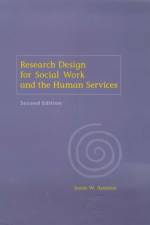
Research Design for Social Work and the Human Services integrates a range of research techniques into a single epistemological framework and presents a balanced approach to the teaching of research methods in the "e;helping professions."e; Jeane W. Anastas begins with a discussion of the different philosophical perspectives within which social research occurs and continues with problem formulation, research design, and methodological issues influencing data collection, analysis, and dissemination. She presents both fixed (quantitative) and flexible (qualitative) methods of research, granting legitimacy, value, utility, and relevance to both styles of inquiry.Utilizing complete case studies to illustrate different methodological approaches, Research Design for Social Work and the Human Services integrates material on women and people of color, and draws attention to the ways racism, heterosexism, sexism, and classism affect the conceptualization and conduct of research. Anastas not only exposes these biases but actively addresses the experiences, needs, and concerns of clients of both genders and different races, ethnicities, sexual orientations, cultures, and classes.
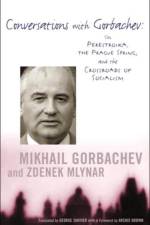
Mikhail Gorbachev and Zdenek Mlynar were friends for half a century, since they first crossed paths as students in 1950. Although one was a Russian and the other a Czech, they were both ardent supporters of communism and socialism. One took part in laying the groundwork for and carrying out the Prague spring; the other opened a new political era in Soviet world politics.In 1993 they decided that their conversations might be of interest to others and so they began to tape-record them. This book is the product of that thinking out loud process. It is an absorbing record of two friends trying to explain to one another their views on the problems and events that determined their destinies. From reminiscences of their starry-eyed university days to reflections on the use of force to save socialism to contemplation of the end of the cold war, here is a far more candid picture of Gorbachev than we have ever seen before.
Science and Social Work is a critical appraisal of the strategies and methods that have been used to develop knowledge for social work practice. It identifies the major ways in which social workers have drawn upon scientific knowledge and techniques, placing each one in historical perspective by explaining the nature of the problems it was designed to solve and the philosophical, political, and practical questions it raised. Kirk and Reid offer a balanced appraisal of the promises, accomplishments, and limits of such approaches, demonstrating how the fruits of scientific research can aid clinical practice with individuals, families and groups.
Imagine a dreamland where roasted pigs wander about with knives in their backs to make carving easy, where grilled geese fly directly into one's mouth, where cooked fish jump out of the water and land at one's feet. The weather is always mild, the wine flows freely, sex is readily available, and all people enjoy eternal youth.Such is Cockaigne. Portrayed in legend, oral history, and art, this imaginary land became the most pervasive collective dream of medieval times-an earthly paradise that served to counter the suffering and frustration of daily existence and to allay anxieties about an increasingly elusive heavenly paradise.Illustrated with extraordinary artwork from the Middle Ages, Herman Pleij's Dreaming of Cockaigne is a spirited account of this lost paradise and the world that brought it to life. Pleij takes three important texts as his starting points for an inspired of the panorama of ideas, dreams, popular religion, and literary and artistic creation present in the late Middle Ages. What emerges is a well-defined picture of the era, furnished with a wealth of detail from all of Europe, as well as Asia and America.Pleij draws upon his thorough knowledge of medieval European literature, art, history, and folklore to describe the fantasies that fed the tales of Cockaigne and their connections to the central obsessions of medieval life.
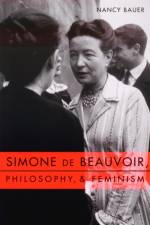
In the introduction to The Second Sex, Simone de Beauvoir notes that "e;a man never begins by establishing himself as an individual of a certain sex: his being a man poses no problem."e; Nancy Bauer begins her book by asking: "e;Then what kind of a problem does being a woman pose?"e; Bauer's aim is to show that in answering this question The Second Sex dramatizes the extent to which being a woman poses a philosophical problem. This book is a call for philosophers as well as feminists to turn, or return to, The Second Sex. Bauer shows that Beauvoir's magnum opus, written a quarter-century before the development of contemporary feminist philosophy, constitutes a meditation on the relationship between women and philosophy that remains profoundly undervalued. She argues that the extraordinary effect The Second Sex has had on women's lives, then and now, can be traced to Beauvoir's discovery of a new way to philosophize-a way grounded in her identity as a woman. In offering a new interpretation of The Second Sex, Bauer shows how philosophy can be politically productive for women while remaining genuinely philosophical.
Is polling a process that brings "e;science"e; into the study of society? Or are polls crude instruments that tell us little about the way people actually think? The role of public opinion polls in government and mass media has gained increasing importance with each new election or poll taken. Here Lewis presents a new look at an old tradition, the first study of opinion polls using an interdisciplinary approach combining cultural studies, sociology, political science, and mass communication. Rather than dismissing polls, he considers them to be a significant form of representation in contemporary culture; he explores how the media report on polls and, in turn, how publicized results influence the way people respond to polls. Lewis argues that the media tend to exclude the more progressive side of popular opinion from public debate. While the media's influence is limited, it works strategically to maintain the power of pro-corporate political elites.
Abonner på vårt nyhetsbrev og få rabatter og inspirasjon til din neste leseopplevelse.
Ved å abonnere godtar du vår personvernerklæring.