




Gjør som tusenvis av andre bokelskere
Abonner på vårt nyhetsbrev og få rabatter og inspirasjon til din neste leseopplevelse.
Ved å abonnere godtar du vår personvernerklæring.Du kan når som helst melde deg av våre nyhetsbrev.

What are the relevant conceptualities and terminologies marking the coupling of religion and medical interpretations of illness in different religions such as Judaism, Islam, Buddhism, and Christianity? How do religious orientations influence courses of a disease? How do experiences of illness change images of the divine in late modernity? This collection of essays from a symposium held at the International Research Institute of the University of Heidelberg examines connections between religious and medical interpretations of illness in different cultures in order to suggest criteria for coupling religion and medicine in ways that enhance rather than diminish life. By discerning which relationships between religion and medicine appear to be beneficial and which harmful, the book as a whole proposes criteria that are not limited to a single scientific approach, cultural tradition, or time period (such as the present). The book has four parts, which deal with Islamic medicine, Chinese medicine, and the relationship between religion and medicine in both Jewish and Christian traditions. All chapters cover from antiquity to the present.""Finally a cross-disciplinary scholarly compendium on religion and illness in a breathtakingly rich selection of texts, contexts, and topics. Invaluable as a resource for all interested in a more integrative approach towards medicine at the intersection of health and the holy, body and spirit, healing and theology.""--Brigitte Kahl, Professor of New Testament, Union Theological Seminary (New York) ""Illness is a pressing topic of today--and of the past, too. This book gives valuable insights into different religions and their ways of interpreting and coping with illness. The contributors write in a hermeneutic, reflecting, and transdisciplinary way, so they research understandings of illness transcending the limits of the scientific worldview.""--Christian Grethlein, Faculty of Protestant Theology, University of Munster""Weissenrieder and Etzelmuller tell us about the concept of illness, ancient and modern, to be sure. But more than that, they and their contributors tell us how to think about our body. Actually, if we are our body, then they aid us in thinking about our self. A must for the serious student of historical and self-understanding.""--Ted Peters, Distinguished Research Professor Emeritus of Theology and Ethics, Pacific Lutheran Theological Seminary and the Graduate Theological UnionAnnette Weissenrieder is Professor of New Testament at San Francisco Theological Seminary and the Graduate Theological Union. She is author of Images of Illness in the Gospel of Luke: Insights of Ancient Medical Texts (2003).Gregor Etzelmuller is Professor of Systematic Theology at Osnabruck University (Germany). He is author of Was geschieht beim Gottesdienst? (2014).
Values are culturally specific. This handbook explains select biblical social values in their Mediterranean cultural contexts. Some examples of values are altruism, freedom, family-centeredness, obedience, parenting, and power. Though the English words for the values described here would be familiar to readers (e.g., altruism) the meanings of such words differ between cultures. In the Mediterranean world, for instance, altruism is a duty incumbent upon anyone who has surplus. It is interpersonal and group specific. In the West, especially in the United States, altruism is impersonal and universally oriented generosity that operates in a highly organized context. This handbook not only presents the Mediterranean meanings of these value words but also contrasts those meanings with Western ones.""An already useful resource is strengthened in this third edition. New entries (e.g., ''Collectivism''; ''Mouth-Ears'') and an updated bibliography for many of the entries make the Handbook an up-to-date reference work. This book will be valuable for undergraduates, for seminarians and pastors, and for laypeople who seek to better understand the values of the ancient Mediterranean world embedded in the pages of the Bible, without which modern readers are sure to misunderstand the writings contained in it.""--Eric Stewart, Associate Professor of Religion, Augustana College (Illinois)""This volume is a tested cultural and social-scientific resource without parallel. Here is a hugely informative and reliable guide to the motivating worldviews and values of the biblical authors and their communities; an ideal handbook for both the pulpit and the classroom; and an essential resource for preachers, scholars, and visitors to the biblical world."" --John H. Elliott, Professor emeritus, University of San Francisco""The Handbook of Biblical Social Values, 3rd Edition is a fitting tribute to John J. Pilch (1937-2016), a pioneer in social-scientific interpretations of the Bible. This updated and expanded edition is a must-have for any serious exegete of the Scriptures. It provides users with cross-cultural scripts for reading the Bible in its originating social contexts, provokes new and surprising understandings of seemingly familiar passages, and challenges the way we apply sacred texts today."" --Ritva H. Williams, Independent Scholar, St. Stephen''s Lutheran Church, Cedar Rapids, IAJohn J. Pilch has been a visiting professor in the Odyssey Program at Johns Hopkins University since 2011. Previously he was professorial lecturer of biblical studies at Georgetown University. He is the author of many articles and books on the culture of the Bible, including The Cultural Dictionary of the Bible (1999), A Cultural Handbook to the Bible (2012), and The Cultural Life Setting of the Proverbs (2016). Bruce J. Malina is Professor Emeritus of New Testament at Creighton University. He is the author, coauthor, and editor of numerous influential books on the New Testament. These include The Social Gospel of Jesus (2001), The New Testament World (3rd ed., 2001), and Social-Science Models for Interpreting the Bible (edited with John J. Pilch, 2007).
Centered upon the lives of employees at a Manhattan advertising firm, the AMC television series Mad Men touches on the advertising world''s unique interests in consumerist culture, materialistic desire, and the role of deception in Western capitalism. While the subject matters of the chapters in this collection have a decidedly socio-historical focus, the authors use basic topics as starting points for philosophical, religious, and theological reflections. The authors show how Mad Men reveals deep truths concerning the social trends of the 1960s and early 1970s in American life and deserves a significant amount of reflection from philosophical, religious, and theological perspectives. Some of the chapters go beyond mere reflection and make deeper inquiries into what these trends say about American cultural habits, the business world within Western capitalism, and the rapid social changes (gender, race, and sexuality) that occur during this period. Chapters examine paradigms of masculinity and femininity as well as the presentation of motherhood, fatherhood, sexuality, and childhood. This collection shows how social change represents the undercurrent of the interpersonal dramas of the characters on Mad Men, from the staid and conventional early seasons to the war, assassinations, riots, and counterculture of later seasons.""This exciting volume joins the growing scholarly chorus calling us to take popular culture seriously--artistically and politically, to be sure, but more daringly as vernacular philosophy and theology. In the acclaimed television series Mad Men this volumes strikes gold, which its authors mine with skill, humor, and great insight. It''s a book that belongs on the shelf of every student of religion and popular culture.""--Matthew S. Hedstrom, Associate Professor, Religious Studies and American Studies, Director of Graduate Studies, Department of Religious Studies, University of Virginia""Duncan and Goodson have assembled a brilliant collection of essays that combine keen theological and philosophical insight into Mad Men. This book is a rare combination of outstanding scholarship and delightful reading. Of course, it''s about Mad Men, but it''s also about God, love, relationships, work, ethics, and life in the modern world. It is, in short, about everything that matters.""--David O''Hara, Associate Professor of Philosophy and Classics, Chair of the Department of Religion, Philosophy, and Classics, Augustana UniversityAnn W. Duncan (PhD, University of Virginia) is Associate Professor of Religion at Goucher College in Baltimore, Maryland. She is the coeditor of Church-State Issues in America Today (2007). Jacob L. Goodson (PhD, University of Virginia) is Assistant Professor of Philosophy at Southwestern College in Winfield, Kansas. He is the author of Narrative Theology and the Hermeneutical Virtues: Humility, Patience, Prudence (2015).
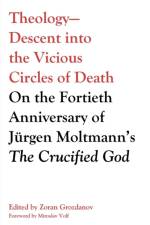
In this succinct, inviting volume, four Balkan theologians probe their contextual ways with the theology of Jurgen Moltmann, whose classic The Crucified God influenced novel theological approaches around the globe, most recently the emerging postwar Christian theology in the Balkans. The authors engage with the prevailing culture of ethnic and religious exclusivism within their context and present us with a range of theologically pertinent issues resulting from a wider discussion on religion and politics. The book offers a fresh and provocative reading of Christian faith that pins its hopes on the person and work of the Crucified and sets the ground for possible contextual contribution of Balkan theology to a World Church.Following Moltmann''s invitation to see the Cross, and the crucified Christ, as an inner criterion of all theology, this book sheds theological light on the situation in the Balkans. The Cross of that region can be described as a ""Cross of the crossroads,"" since different religions, ethnic and national communities, memories, and cultures have always been sources of profound contact but also of deep division and violence. On the occasion of the fortieth anniversary of The Crucified God, this collection can be read as a continuation of Moltmann''s theological project, which calls for a courageous descent into ""circles of death""--places of spiritual and physical imprisonment, without false comforts and premature hopes.""Post war societies need theological thought that does not negate the past but is able to reformulate its own tradition in order to develop adequate and relevant theologies. Until now, the Balkan area, flooded with blood, was not able to create a theology out of experiences of war and vicious nationalisms. Zoran Grozdanov and the other authors of this book manage to fill the gap by critically reflecting on the devastating consequences of misusing faith by blending it with nationalistic identities. In an original contribution, Jurgen Moltmann, whose seminal study on The Crucified God inspired the volume, reflects back on his own personal context and the contexts in which his work had its impact. I strongly recommend this work to anyone interested in understanding the relevance of theology--within and beyond the Balkan countries.""--Regina Ammicht Quinn, Catholic theologian; Professor of Ethics; Director of the Center for Ethics in the Sciences and Humanities, The University of Tuebingen, Germany""Jurgen Moltmann''s theology has motivated a group of theologians from the region of former Yugoslavia to develop a contextual, continental, political theology. They urge Christian theology to break away from its own ideologies and become the motor of a post-war political socialization. The memory of the regional war, the concern about the current political situation in Eastern Europe, and the commitment to theology make the book a painful, yet indispensable reading for anyone interested in political theology.""--Hille Haker, Richard McCormick Endowed Chair of Catholic Moral Theology, President of Societas Ethica, Loyola University Chicago, LSC""A contribution in its own right to living in the multiple conflicts of today, in a globalized world marked by contending particular universalisms that often turn violent.""--Miroslav Volf, Henry B. Wright Professor of Theology, Founder and Director of the Yale Center for Faith and CultureZoran Grozdanov is Assistant Professor at the Faculty of Protestant Theology Matthias Flacius Illyricus, University of Zagreb, Croatia. Among his publications are God in Front of the Cross: Essays in Honour of Jurgen Moltmann (2007) and Religion and Identity in Post-Conflict Societies (Concilium 1 [2015]).
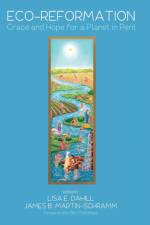
In 2017 Christians around the world will mark the five hundredth anniversary of the Reformation. In the midst of many appeals for reformation today, a growing number of theologians, scholars, and activists around the world believe Reformation celebrations in 2017 and beyond need to focus now on the urgent need for an Eco-Reformation. The rise of industrial, fossil fuel-driven capitalism and the explosive growth in human population endanger the fundamental planetary life-support systems on which life as we know it has evolved. The collective impact of human production, consumption, and reproduction is undermining the ecological systems that support human life on Earth. If human beings do not reform their relationship with God''s creation, unspeakable suffering will befall many--especially the weakest and most vulnerable among all species. The conviction at the heart of this collection of essays is that a gospel call for ecological justice belongs at the heart of the five hundredth anniversary observance of the Reformation in 2017 and as a--if not the--central dimension of Christian conversion, faith, and practice into the foreseeable future. Like Luther''s Ninety-Five Theses, this volume brings together critical biblical, pastoral, theological, historical, and ethical perspectives that constructively advance the vision of a socially and ecologically flourishing Earth.""Five hundred years ago, the Reformation shook European society''s foundations by challenging a corrupted religious order. In recent decades, Protestant churches have joined those who care for the earth, aiming to shake the foundations of our hyper-capitalist, technocratic world order that violates the integrity of creation on a titanic scale. These essays, from leading voices from within the Protestant eco-reformation, issue the challenge and inspiration we all need to hear."" --Fletcher Harper, Executive Director, GreenFaith ""In the footsteps of the religious reformer Martin Luther, who called attention to the spiritual urgencies of his day, the authors in this timely volume express a critical and an expansive Lutheran voice for the urgent care of creation and the common good. The essays make a compelling point that honoring and choosing life in its different forms belongs at the center of the re-orientation and paradigm shifts with the Reformation legacy."" --Kirsi Stjerna, Lutheran History and Theology, Chair, Pacific Lutheran Theological Seminary of California Lutheran University""It is refreshing to see the power of argument and of organizing inherent in these words. For people of faith these questions could not be more real or timely."" --Bill McKibben, from the ForewordLisa E. Dahill is Associate Professor of Religion at California Lutheran University, Thousand Oaks, California. From 2005 to 2015 she served on the faculty of Trinity Lutheran Seminary, Columbus, Ohio. She is a scholar and translator of Dietrich Bonhoeffer and the author of Reading from the Underside of Selfhood: Bonhoeffer and Spiritual Formation (Pickwick, 2007) and many other works on spirituality, worship, eco-theology, and the larger ecological expression of Christian life. James B. Martin-Schramm is Professor of Religion at Luther College in Decorah, Iowa. He is an ordained member of the Evangelical Lutheran Church in America and holds a doctorate in Christian ethics from Union Theological Seminary in New York City. He is the author or coauthor of several publications, including Climate Justice: Ethics, Energy, and Climate Policy (2010) and Earth Ethics: A Case Method Approach (2015).
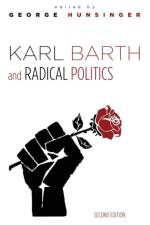
Karl Barth was one of the most important Christian theologians of the twentieth century, but his political views have often not been taken sufficiently into account. Beginning with a representative early essay by Karl Barth, this volume proceeds with essays by Friedrich-Wilhelm Marquardt, Helmut Gollwitzer, Hermann Diem, Dieter Schellong, Joseph Bettis, and George Hunsinger. These contributions engage both the relationship of Barth's theology to his socialist politics as well as Marquardt's analysis. This new edition expands upon the earlier one by adding three new essays by Hunsinger on Barth's theology and its relevance for human rights, liberation theology, and the theories of Rene Girard on violence and scapegoating. Hunsinger has extended the discussion as well as deepened our insight into how theology can speak meaningfully about fundamental issues of human need.
Since the dawn of science, ideas about the relation between science and religion have always depended on what else is going on in a society. During the twentieth century, daily life changed dramatically. Technology revolutionized transportation, agriculture, communications, and housework. People came to rely on scientific predictability in their technology. Many wondered whether God's supposed actions were consistent with scientific knowledge. The twenty-first century is bringing new scientific research capabilities. They are revealing that scientific results are not totally predictable after all. Certain types of interaction lead to outcomes that are unpredictable, in principle. These in turn may lead to a whole new range of potential interactions. They do not rule out the reality of a dynamic God who can act in the world without breaking the known principles of science. God may in fact work with ""the way things really are."" Human experience of God may accurately reflect this reality. Interactive World, Interactive God illustrates such new understandings in religion and science by describing recent developments in a wide range of sciences, and providing theological commentary. The book is written for intelligent readers who may not be specialized in science but who are looking for ways to understand divine action in today's world.
Abonner på vårt nyhetsbrev og få rabatter og inspirasjon til din neste leseopplevelse.
Ved å abonnere godtar du vår personvernerklæring.