














Gjør som tusenvis av andre bokelskere
Abonner på vårt nyhetsbrev og få rabatter og inspirasjon til din neste leseopplevelse.
Ved å abonnere godtar du vår personvernerklæring.Du kan når som helst melde deg av våre nyhetsbrev.

The beginning of the twentieth century evolved out of an era of Freethinking atheists and agnostics who challenged the Protestant hegemony of the day. Key among these mavericks was author and filmmaker Rubert Hughes, uncle to Howard Hughes. In 1922, Hughes published Souls for Sale, his wickedly playful satire of the Bible belt and Hollywood, offering a mischievous snapshot of the film industry as it struggled against a conservative Zeitgeist. The novel follows the prodigal adventures of a clergyman's daughter as she stumbles into the movie industry and finds it to be a new and liberating moral universe. Hughes's adaptation of his sly work challenged the religious hierarchy of his day, but ultimately fell by the wayside, even with the support of Hollywood icons like Eric von Stroheim and Charlie Chaplin. Souls for Sale offers a glimpse into the emerging Jazz age of moviemaking against the backdrop of a country moving from its traditional roots into the kinetic ways of Hollywood.
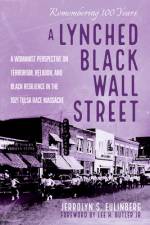
This book remembers one hundred years since Black Wall Street and it reflects on the 1921 Tulsa Race Massacre. Black Wall Street was the most successful Black business district in the United States; yet, it was isolated from the blooming white oil town of Tulsa, Oklahoma, because of racism. During the early twentieth century African-Americans lived in the constant threat of extreme violence by white supremacy, lynching, and Jim and Jane Crow laws. The text explores, through a Womanist lens, the moral dilemma of Black ontology and the existential crisis of living in America as equal human beings to white Americans.This prosperous Black business district and residential community was lynched by white terror, hate, jealousy, and hegemonic power, using unjust laws and a legally sanctioned white mob. Terrorism operated historically based on the lies of Black inferiority with the support of law and white supremacy. Today this same precedence continues to terrorize the life experiences of African-Americans. The research examines Native Americans and African-Americans, the Black migration west, the role of religion, Black women''s contributions, lynching, and the continued resilience of Black Americans.
Abonner på vårt nyhetsbrev og få rabatter og inspirasjon til din neste leseopplevelse.
Ved å abonnere godtar du vår personvernerklæring.