













Gjør som tusenvis av andre bokelskere
Abonner på vårt nyhetsbrev og få rabatter og inspirasjon til din neste leseopplevelse.
Ved å abonnere godtar du vår personvernerklæring.Du kan når som helst melde deg av våre nyhetsbrev.

In this book, Catherine E. Pratt explores how oil and wine became increasingly entangled in Greek culture, from the Late Bronze Age to the Archaic period. Using ceramic, architectural, and archaeobotanical data, she argues that Bronze Age exchange practices initiated a strong network of dependency between oil and wine production, and the people who produced, exchanged, and used them. After the palatial collapse, these prehistoric connections intensified during the Iron Age and evolved into the large-scale industries of the Classical period. Pratt argues that oil and wine in pre-Classical Greece should be considered 'cultural commodities', products that become indispensable for proper social and economic exchanges well beyond economic advantage. Offering a detailed diachronic account of the changing roles of surplus oil and wine in the economies of pre-classical Greek societies, her book contributes to a broader understanding of the complex interconnections between agriculture, commerce, and culture in the ancient Mediterranean.
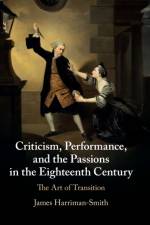
Great art is about emotion. In the eighteenth century, and especially for the English stage, critics developed a sensitivity to both the passions of a performance and what they called the transitions between those passions. It was these pivotal transitions, scripted by authors and executed by actors, that could make King Lear beautiful, Hamlet terrifying, Archer hilarious and Zara electrifying. James Harriman-Smith recovers a lost way of appreciating theatre as a set of transitions that produce simultaneously iconic and dynamic spectacles; fascinating moments when anything seems possible. Offering fresh readings and interpretations of Shakespearean and eighteenth-century tragedy, historical acting theory and early character criticism, this volume demonstrates how a concern with transition binds drama to everything, from lyric poetry and Newtonian science, to fine art and sceptical enquiry into the nature of the self.
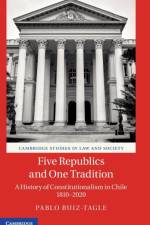
Like many countries around the world, Chile is undergoing a political moment when the nature of democracy and its political and legal institutions are being challenged. Senior Chilean legal scholar and constitutional historian Pablo Ruiz-Tagle provides an historical analysis of constitutional change and democratic crisis in the present context focused on Chilean constitutionalism. He offers a comparative analysis of the organization and function of government, the structure of rights and the main political agents that participated in each stage of Chilean constitutional history. Chile is a powerful case study of a Latin American country that has gone through several threats to its democracy, but that has once again followed a moderate path to rebuild its constitutional republican tradition. Not only the first comprehensive study of Chilean constitutional history in the English language from the nineteenth-century to the present day, this book is also a powerful defence of democratic values.
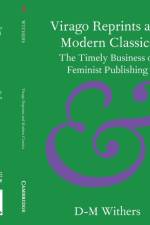
Reprinting, republishing and re-covering old books in new clothes is an established publishing practice. How are books that have fallen out of taste and favour resituated by publishers, and recognised by readers, as relevant and timely? This Element outlines three historical textures within British culture of the late 1970s and early 1980s - History, Remembrance and Heritage - that enabled Virago's reprint publishing to become a commercial and cultural success. With detailed archival case studies of the Virago Reprint Library, Testament of Youth and the Virago Modern Classics, it elaborates how reprints were profitable for the publisher and moved Virago's books - and the Virago brand name - from the periphery of culture to the centre. Throughout Virago's reprint publishing - and especially with the Modern Classics - the epistemic revelation that women writers were forgotten and could, therefore, be rediscovered, was repeated, again and again, and made culturally productive through the marketplace.
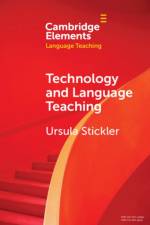
This Element is a practical guide for language teachers intending to upgrade their online teaching. During the COVID-19 pandemic many teachers were forced to move their teaching online without proper preparation and support. This has led to frustration and stress, and sometimes decisions based not on sound pedagogy but on technological constraints, requirements and opportunities. To balance this negative experience, a research-based, pedagogy-focussed approach has been taken in this volume: step-by-step, teachers are shown how to make decisions about the choice and usage of online tools, how to adapt their pedagogy and teaching strategies to fit with online learning environments, and how to create a positive learning experience for their students. In six sections this Element takes teachers from epistemological considerations to learning theories, from teacher-centred to learner-centred online tuition, and from technological needs to pedagogic choice, ending with suggestions on how to future-proof language teaching.
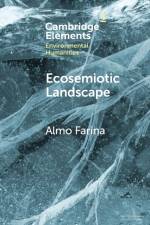
The distinction between humans and the natural world is an artefact and more a matter of linguistic communication than a conceptual separation. This Element proposes ecosemiotics as an epistemological tool to better understand the relationship between human and natural processes. Ecosemiotics with its affinity to the humanities, is presented here as the best disciplinary approach for interpreting complex environmental conditions for a broad audience, across a multitude of temporal and spatial scales. It is proposed as an intellectual bridge between divergent sciences to incorporate within a unique framework different paradigms. The ecosemiotic paradigm helps to explain how organisms interact with their external environments using mechanisms common to all living beings that capture external information and matter for internal usage. This paradigm can be applied in all the circumstances where a living being (man, animal, plant, fungi, etc.) performs processes to stay alive.
Ginzburg-Landau theory is an important tool in condensed matter physics research, describing the ordered phases of condensed matter, including the dynamics, elasticity, and thermodynamics of the condensed configurations. In this systematic introduction to Ginzberg-Landau theory, both common and topological excitations are considered on the same footing (including their thermodynamics and dynamical phenomena). The role of the topological versus energetic considerations is made clear. Required mathematics (symmetry, including lattice translation, topology, and perturbative techniques) are introduced as needed. The results are illustrated using arguably the most fascinating class of such systems, high Tc superconductors subject to magnetic field. This book is an important reference for both researchers and graduate students working in condensed matter physics or can act as a textbook for those taking advanced courses on these topics.
The author examines who language teacher educators are in the field of language teaching and learning. This includes a description of the different types of language teacher educators working in a range of professional and institutional contexts, an analysis of the reflections of a group of experienced English teacher educators working in Colombia and enrolled in a doctoral program to continue their professional development, and an exposition of the work that language teacher educators do, particularly in the domains of pedagogy, research, and service and leadership (institutional and community). All of this is done with the aim of understanding the identities that language teacher educators negotiate and are ascribed in their working contexts. The author emphasizes the need for research to pay attention to the lives and work of language teacher educators, and offers forty research questions as an indication of possible future research directions.
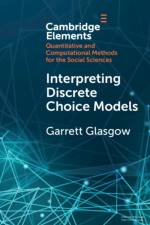
In discrete choice models the relationships between the independent variables and the choice probabilities are nonlinear, depending on both the value of the particular independent variable being interpreted and the values of the other independent variables. Thus, interpreting the magnitude of the effects (the "e;substantive effects"e;) of the independent variables on choice behavior requires the use of additional interpretative techniques. Three common techniques for interpretation are described here: first differences, marginal effects and elasticities, and odds ratios. Concepts related to these techniques are also discussed, as well as methods to account for estimation uncertainty. Interpretation of binary logits, ordered logits, multinomial and conditional logits, and mixed discrete choice models such as mixed multinomial logits and random effects logits for panel data are covered in detail. The techniques discussed here are general, and can be applied to other models with discrete dependent variables which are not specifically described here.
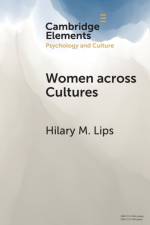
Psychology's study of women has revealed some themes that span cultures and countries, yet women's lived experiences in different cultures can be dramatically different. This Element explores, from a psychological perspective, women's issues in cultural contexts. Beginning with the question of public and private identity (i.e., who 'counts' as a woman), it goes on to examine embodiment, sexuality, reproduction, family roles, economic participation and power, violence, leadership, and feminist activism. It concludes with a brief discussion of women's complicated relationship to culture: as both keepers and sometimes prisoners of cultural traditions - particularly in the context of migration to different cultures. Running through the Element are two general themes: the pervasiveness of a gender hierarchy that often privileges men over women, and the ways in which women's lived experience varies within cultures according to the intersection of gender with other categories that affect expectations, norms, power and privilege.
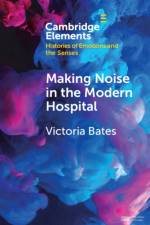
This Element examines the problem of hospital noise, a problem that has repeatedly been discovered anew, with each new era bringing its own efforts to control and abate unwanted sound in healthcare settings. Why, then, has hospital noise never been resolved? This question is at the heart of Making Noise in the Modern Hospital, which brings together histories of the senses, space, technology, society, medicine and architecture to understand the changing cacophony of the late twentieth-century hospital. This Element is fundamentally interdisciplinary - despite being historical, it comes up to the present day and brings in scholarship on space, place, atmosphere and the senses that will have relevance to scholars working outside of historical research. The intersection between medical and sensory histories also puts interdisciplinary research at the Element's core.
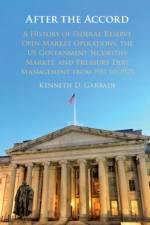
In this book Garbade, a former analyst at a primary dealer and researcher at the Federal Reserve Bank of New York, traces the evolution of open market operations, Treasury debt management, and the microstructure of the US government securities markets following the 1951 Treasury-Federal Reserve. This volume examines how these operations evolved, responding both to external forces and to one another. Utilising a vast scope of primary material, the work provides insight into how officials fashioned the instruments, facilities, and procedures needed to advance their policy objectives in light of their novel freedoms and responsibilities. Students and scholars of macroeconomics, financial regulation, and the history of central banking and the Federal Reserve will find this volume a welcome addition to Garbade's earlier studies of Treasury debt operations during World War I, the 1920s, and the Great Depression and since 1983.
Using Bishop's work on constructive analysis as a framework, this monograph gives a systematic, detailed and general constructive theory of probability theory and stochastic processes. It is the first extended account of this theory: almost all of the constructive existence and continuity theorems that permeate the book are original. It also contains results and methods hitherto unknown in the constructive and nonconstructive settings. The text features logic only in the common sense and, beyond a certain mathematical maturity, requires no prior training in either constructive mathematics or probability theory. It will thus be accessible and of interest, both to probabilists interested in the foundations of their speciality and to constructive mathematicians who wish to see Bishop's theory applied to a particular field.
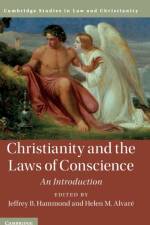
Conscience has long been a foundational theme in Christian ethics, but it is a notoriously slippery and contested term. This volume works to define conscience and reveal the similarities and differences between different Christian traditions' thinking on the subject. In a thorough and scholarly manner, the authors explore Christian theological, legal, constitutional, historical, and philosophical meanings of conscience. Covering a range of historical periods, major figures in the development of conscience, and contemporary applications, this book is a vital source for scholars from a wide variety of disciplines seeking to understand conscience from a range of perspectives.
Metamaterials, including their two-dimensional counterparts, are composed of subwavelength-scale artificial particles. These materials have novel electromagnetic properties, and can be artificially tailored for various applications. Based on metamaterials and metasurfaces, many abnormal physical phenomena have been realized, such as negative refraction, invisible cloaking, abnormal reflection and focusing, and many new functions and devices have been developed. The effective medium theory lays the foundation for design and application of metamaterials and metasurfaces, connecting metamaterials with real world applications. In this Element, the authors combine these essential ingredients, and aim to make this Element an access point to this field. To this end, they review classical theories for dielectric functions, effective medium theory, and effective parameter extraction of metamaterials, also introducing front edge technologies like metasurfaces with theories, methods, and potential applications. Energy densities are also included.
With up to 60 per cent of women experiencing both physical and emotional symptoms during the menopause, including hot flushes, mood swings and loss of libido, managing these symptoms can be a complex task. Managing the Menopause is a highly practical, evidence-based reference, covering all forms of management in detail. Providing guidance on prescribing, as well as the advantages and disadvantages of various products and therapies, particular emphasis is given to addressing concerns over the long-term complications of Menopausal Hormone Therapy (MHT) use. The book contains new chapters on nutrition, ovarian tissue cryopreservation and migraine in the menopause and previous chapters have been fully updated to inform readers of the latest research. Treatment plans are included in the text, helping clinicians to support their patients quickly and effectively. A comprehensive review of the menopause that is easily understood at all levels, this is an essential guide for clinicians.
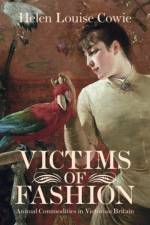
Animal products were used extensively in nineteenth-century Britain. A middle-class Victorian woman might wear a dress made of alpaca wool, drape herself in a sealskin jacket, brush her hair with a tortoiseshell comb, and sport feathers in her hat. She might entertain her friends by playing a piano with ivory keys or own a parrot or monkey as a living fashion accessory. In this innovative study, Helen Cowie examines the role of these animal-based commodities in Britain in the long nineteenth century and traces their rise and fall in popularity in response to changing tastes, availability, and ethical concerns. Focusing on six popular animal products - feathers, sealskin, ivory, alpaca wool, perfumes, and exotic pets - she considers how animal commodities were sourced and processed, how they were marketed and how they were consumed. She also assesses the ecological impact of nineteenth-century fashion.
The De incessu animalium forms an integral part of Aristotle's biological corpus but is one of the least studied Aristotelian works both by ancient and modern interpreters. Yet it is a treatise where we can see, with some clarity and detail, Aristotle's methodology at work. This volume contains a new critical edition of the Greek text, an English translation, and nine in-depth interpretative essays. A general introduction that focuses on the explanatory strategies adopted by Aristotle in the De incessu animalium plus a historical essay on the reception of this work in antiquity and beyond open the volume. No other work of this kind has been published in any modern language.
In 1914, seven million Jews across Eastern Europe and the Eastern Mediterranean were caught in the crossfire of warring empires in a disaster of stupendous, unprecedented proportions. In response, American Jews developed a new model of humanitarian relief for their suffering brethren abroad, wandering into American foreign policy as they navigated a wartime political landscape. The effort continued into peacetime, touching every interwar Jewish community in these troubled regions through long-term refugee, child welfare, public health, and poverty alleviation projects. Against the backdrop of war, revolution, and reconstruction, this is the story of American Jews who went abroad in solidarity to rescue and rebuild Jewish lives in Jewish homelands. As they constructed a new form of humanitarianism and re-drew the map of modern philanthropy, they rebuilt the Jewish Diaspora itself in the image of the modern social welfare state.
This study examines a network of writers that coalesced around the publication of The History of Mary Prince (1831), which recounts Prince's experiences as an enslaved person in the West Indies and the events that brought her to seek assistance from the Anti-Slavery Society in London. It focuses on the three writers who produced the text - Mary Prince, Thomas Pringle, and Susanna Moodie - with glances at their pro-slavery opponent, James MacQueen, and their literary friends and relatives. The History connects the Black Atlantic, a diasporic formation created through the colonial trade in enslaved people, with the Anglophone Atlantic, created through British migration and colonial settlement. It also challenges Romantic ideals of authorship as an autonomous creative act and the literary text as an aesthetically unified entity. Collaborating with Prince on the History's publication impacted Moodie's and Pringle's attitudes towards slavery and shaped their own accounts of migration and settlement.
This book explores how the Permanent Court of International Justice, the International Court of Justice, the European Court of Human Rights, and investment treaty tribunals have used deference to recognise the decision making authority of States. It analyses the approaches to deference taken by these four international courts and tribunals in 1,714 decisions produced between 1924 and 2019 concerning alleged State interferences with private property. The book identifies a large number of techniques capable of achieving deference to domestic decision-making in international adjudication. It groups these techniques to identify seven distinct 'modes' of deference reflecting differently structured relationships between international adjudicators and domestic decision-makers. These differing approaches to deference are shown to hold systemic significance. They reveal the shifting nature and structure of adjudication under international law and its relationship to domestic decision making authority.
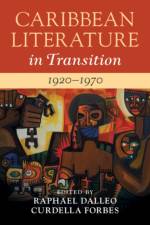
The years between the 1920s and 1970s are key for the development of Caribbean literature, producing the founding canonical literary texts of the Anglophone Caribbean. This volume features essays by major scholars as well as emerging voices revisiting important moments from that era to open up new perspectives. Caribbean contributions to the Harlem Renaissance, to the Windrush generation publishing in England after World War II, and to the regional reverberations of the Cuban Revolution all feature prominently in this story. At the same time, we uncover lesser known stories of writers publishing in regional newspapers and journals, of pioneering women writers, and of exchanges with Canada and the African continent. From major writers like Derek Walcott, V.S. Naipaul, George Lamming, and Jean Rhys to recently recuperated figures like Eric Walrond, Una Marson, Sylvia Wynter, and Ismith Khan, this volume sets a course for the future study of Caribbean literature.
In the first decade of life, children become bilingual in different language learning environments. Many children start learning two languages from birth (Bilingual First Language Acquisition). In early childhood hitherto monolingual children start hearing a second language through daycare or preschool (Early Second Language Acquisition). Yet other hitherto monolingual children in middle childhood may acquire a second language only after entering school (Second Language Acquisition). This Element explains how these different language learning settings dynamically affect bilingual children's language learning trajectories. All children eventually learn to speak the societal language, but they often do not learn to fluently speak their non-societal language and may even stop speaking it. Children's and families' harmonious bilingualism is threatened if bilingual children do not develop high proficiency in both languages. Educational institutions and parental conversational practices play a pivotal role in supporting harmonious bilingual development.
The modernist bookshop, best exemplified by Sylvia Beach's Shakespeare & Co. and Harold Monro's Poetry Bookshop, has received scant attention outside these more prominent examples. This writing will review how bookshops like David Archer's on Parton Street (London) in the 1930s were sites of distribution, publication, and networking. Parton Street, which also housed Lawrence & Wishart publishers and a briefly vibrant literary scene, will be approached from several contexts as a way of situating the modernist bookshop within both the book trade and the literary communities which it interacted with and made possible.
How Christian people have framed the meaning of violence within their faith tradition has been a complex process subject to all manner of historical, cultural, political, ethnic and theological contingencies. As a tradition encompassing widely divergent beliefs and perspectives, Christianity has, over two millennia, adapted to changing cultural and historical circumstances. To grasp the complexity of this tradition and its involvement with violence requires attention to specific elements explored in this Element: the scriptural and institutional sources for violence; the faith commitments and practices that join communities and sanction both resistance to and authorization for violence; and select historical developments that altered the power wielded by Christianity in society, culture and politics. Relevant issues in social psychology and the moral action guides addressing violence affirmed in Christian communities provide a deeper explanation for the motivations that have led to the diverse interpretations of violence avowed in the Christian tradition.
Reconstruction of ocean paleoproductivity and paleochemistry is paramount to understanding global biogeochemical cycles such as the carbon, oxygen and sulfur cycles and the responses of these cycles to changes in climate and tectonics. Paleo-reconstruction involves the application of various tracers that record seawater compositions, which in turn may be used to infer oceanic processes. Several important tracers are incorporated into pelagic barite, an authigenic mineral that forms in the water column. Here we summarize the utility of pelagic barite for the reconstruction of export production and as a recorder of seawater S, O, Sr, Ca and Ba.
Diverse and abundant lipid biomarker assemblages have been reported from a variety of Proterozoic marine environments from the careful analysis of well-preserved rocks and oils. These molecular biosignatures have provided unique insights into the communities and the environmental conditions which characterized the Proterozoic marine biosphere. We summarize some of the major temporal patterns evident in Proterozoic lipid biomarkers found to date, whilst emphasizing the scale of local heterogeneity found within Neoproterozoic oceans from region to region, and their relationship with the evolving ecological, climatic and ocean/atmospheric redox conditions. Short commentaries on a selection of papers published from the last 15 years of biomarker literature are given. The focus here is on key studies, highlighted for further reading, which have helped to better constrain the timing of the ecological expansion of eukaryotes in Proterozoic oceans or which have impacted on our knowledge of the biological sources of Proterozoic biomarkers.
After the development of manifolds and algebraic varieties in the previous century, mathematicians and physicists have continued to advance concepts of space. This book and its companion explore various new notions of space, including both formal and conceptual points of view, as presented by leading experts at the New Spaces in Mathematics and Physics workshop held at the Institut Henri Poincare in 2015. The chapters in this volume cover a broad range of topics in mathematics, including diffeologies, synthetic differential geometry, microlocal analysis, topos theory, infinity-groupoids, homotopy type theory, category-theoretic methods in geometry, stacks, derived geometry, and noncommutative geometry. It is addressed primarily to mathematicians and mathematical physicists, but also to historians and philosophers of these disciplines.
After the development of manifolds and algebraic varieties in the previous century, mathematicians and physicists have continued to advance concepts of space. This book and its companion explore various new notions of space, including both formal and conceptual points of view, as presented by leading experts at the New Spaces in Mathematics and Physics workshop held at the Institut Henri Poincare in 2015. This volume covers a broad range of topics in mathematical physics, including noncommutative geometry, supergeometry, derived symplectic geometry, higher geometric quantization, intuitionistic quantum logic, problems with the continuum description of spacetime, twistor theory, loop quantum gravity, and geometry in string theory. It is addressed primarily to mathematical physicists and mathematicians, but also to historians and philosophers of these disciplines.
How do bureaucracies remember? The conventional view is that institutional memory is static and singular, the sum of recorded files and learned procedures. There is a growing body of scholarship that suggests contemporary bureaucracies are failing at this core task. This Element argues that this diagnosis misses that memories are essentially dynamic stories. They reside with people and are thus dispersed across the array of actors that make up the differentiated polity. Drawing on four policy examples from four sectors (housing, energy, family violence and justice) in three countries (the UK, Australia and New Zealand), this Element argues that treating the way institutions remember as storytelling is both empirically salient and normatively desirable. It is concluded that the current conceptualisation of institutional memory needs to be recalibrated to fit the types of policy learning practices required by modern collaborative governance.
Abonner på vårt nyhetsbrev og få rabatter og inspirasjon til din neste leseopplevelse.
Ved å abonnere godtar du vår personvernerklæring.