
















Gjør som tusenvis av andre bokelskere
Abonner på vårt nyhetsbrev og få rabatter og inspirasjon til din neste leseopplevelse.
Ved å abonnere godtar du vår personvernerklæring.Du kan når som helst melde deg av våre nyhetsbrev.

An overview is given of cross-cultural psychology and cultural psychology, focusing on theory and methodology. In Section 1 historical developments in research are traced; it is found that initially extensive psychological differences tend to shrink when more carefully designed studies are conducted. Section 2 addresses the conceptualization of "e;culture"e; and of "e;a culture"e;. For psychological research the notion "e;culture"e; is considered too vague; more focal explanatory concepts are required. Section 3 describes methodological issues, taking the notion of the empirical cycle as a lead for both qualitative and quantitative research. Pitfalls in research design and data analysis of behavior-comparative studies, and the need for replication are discussed. Section 4 suggests to move beyond research on causal relationships and to incorporate additional questions, addressing the function and the development of behavior patterns in ontogenetic, phylogenetic and historical time. Section 5 emphasizes the need for applied research serving the global village.
Studies of pre-existing music in narrative cinema often focus on a single film, composer or director. The approach here adopts a wider perspective, placing a specific musical repertoire - baroque music - in the context of its reception to explore its mobilisation in post-war cinema. It shows how various revivals have shaped musical fashion, and how cinema has drawn on resultant popularity and in turn contributed to it. Close analyses of various films raise issues of baroque musical style and form to question why eighteenth-century music remains an exception to dominant film-music discourses. Account is taken of changing modern performance practice and its manifestation in cinema, particularly in the biopic. This question of the reimagining of baroque repertoire leads to consideration of pastiches and parodies to which cinema has been particularly drawn, and subsequently to the role that neobaroque music has played in more recent films.
Only recently has it become obvious that conductors' annotated scores and marked orchestral parts are of great cultural, historical and musical importance. In the not-so-distant past, these artefacts had something of an uncertain status with many either languishing unopened in libraries and family archives or simply being dispersed or discarded. With the help of institutions such as the Royal Academy of Music, Harvard University and the New York Philharmonic Orchestra this has begun to change with their extensive collections of these materials now being made available to scholars and musicians. This element examines the emergence of these artefacts as didactic and interpretative tools and explores the ways in which the performance styles of ten iconic conductors active in the nineteenth, twentieth and twenty-first centuries are reflected in their annotated scores and marked orchestral parts of Mozart's Symphony No. 41, K. 551 ('Jupiter').
This Element examines how the changing economic basis of parliamentary elections in nineteenth century England and Wales contributed to the development of modern parties and elections. Even after the 1832 Reform Act expanded the British electorate, elections in many constituencies went uncontested, party labels were nominal, and candidates spent large sums treating and bribing voters. By the end of the century, however, almost every constituency was contested, candidates stood as representatives of national parties, and campaigns were fought on the basis of policies. We show how industrialization, the spread of literacy, and the rise of cheap newspapers, encouraged candidates to enter and contest constituencies. The increased expense that came from fighting frequent elections in larger constituencies induced co-partisan candidates to form slates. This imparted a uniform partisan character to parliamentary elections that facilitated the emergence of programmatic political parties.
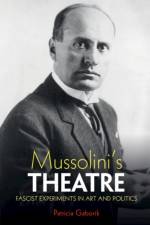
Benito Mussolini has persistently been described as an 'actor' - and also as a master of illusions. In her vividly narrated account of the Italian dictator's relationship with the theatre, Patricia Gaborik discards any metaphorical notions of Il Duce as a performer and instead tells the story of his life as literal spectator, critic, impresario, dramatist and censor of the stage. Discussing the ways in which the autarch's personal tastes and convictions shaped, in fascist Italy, theatrical programming, she explores Mussolini's most significant dramatic influences, his association with important figures such as Luigi Pirandello, Gabriele D'Annunzio and George Bernard Shaw, his oversight of stage censorship, and his forays into playwriting. By focusing on its subject's manoeuvres in the theatre, and manipulation of theatrical ideas, this consistently illuminating book transforms our understandings of fascism as a whole. It will have strong appeal to readers in both theatre studies and modern Italian history.
The European Convention on Human Rights (ECHR) has evolved from an international agreement into a highly integrated legal community with an ever more pervasive effect on domestic law and individuals. The supranational authority of the European Court of Human Rights bypasses the nation state in a growing number of other areas. Understanding the evolution of the ECHR and its Court may help in explaining and contextualising growing resistance against the Court, and in developing possible responses. Examining the Convention system through the prism of supranationality, Cedric Marti offers a fresh, comprehensive and interdisciplinary perspective on the expanding adjudicatory powers of the Court, including law-making. Marti addresses the growing literature of institutional studies on human rights enforcement to ascertain the particularities of the ECHR and its relationship to domestic legal systems. This study will be of great value to both scholars of international law and human rights practitioners.
The term 'new adult' was coined in 2009 by St Martin's Press, when they sought submissions for a contest for 'fiction similar to YA that can be published and marketed as adult - a sort of 'older YA' or 'new adult'.' However, the literary category that later emerged bore less resemblance to young adult fiction and instead became a sub-genre of another major popular genre: romance. This Element uses new adult fiction as a case study to explore how genres develop in the twenty-first-century literary marketplace. It traces new adult's evolution through three key stages in order to demonstrate the fluidity that characterises contemporary genres. It argues for greater consideration of paratextual factors in studies of genre. Using a genre worlds approach, it contends that in order to productively examine genre, we must consider industrial and social factors as well as texts.
This Element examines just how much the public knows about some of America's most stigmatized social groups, who comprise 40.3% of the population, and evaluates whether misinformation matters for shaping policy attitudes and candidate support. The authors design and field an original survey containing large national samples of Black, Latino, Asian, Muslim, and White Americans, and include measures of misinformation designed to assess the amount of factual information that individuals possess about these groups. They find that Republicans, Whites, the most racially resentful, and consumers of conservative news outlets are the most likely to be misinformed about socially marginalized groups. Their analysis also indicates that misinformation predicts hostile policy support on racialized issues; it is also positively correlated with support for Trump. They then conducted three studies aimed at correcting misinformation. Their research speaks to the prospects of a well-functioning democracy, and its ramifications on the most marginalized.
This Element surveys the place of the Critique of Pure Reason in Kant's overall philosophical project and describes and analyzes the main arguments of the work. It also surveys the developments in Kant's thought that led to the first critique, and provides an account of the genesis of the book during the 'silent decade' of its composition in the 1770s based on Kant's handwritten notes from the period.
Although childhood depressive disorders are relatively rare, the experience of depression in children's lives is not. Developmental contextual perspectives denote the importance of considering both depressive disorder and the experience of subclinical depressive symptoms in the child and the family to fully understand the implications of depressive experience for children's developmental well-being. This Element draws on basic emotion development and developmental psychopathology perspectives to address the nature of depressive experience in childhood, both symptoms and disorder, focusing on seminal and recent research that details critical issues regarding its phenomenology, epidemiology, continuity, etiology, consequences, and interventions to ameliorate the developmental challenges inherent in the experience. These issues are addressed within the context of the child's own experience and from the perspective of parent depression as a critical context that influences children's developmental well-being. Conclusions include suggestions for new directions in research on children's lives that focus on more systemic processes.
In addition to his ground-breaking research, Nobel Laureate Steven Weinberg is known for a series of highly praised texts on various aspects of physics, combining exceptional physical insight with his gift for clear exposition. Describing the foundations of modern physics in their historical context and with some new derivations, Weinberg introduces topics ranging from early applications of atomic theory through thermodynamics, statistical mechanics, transport theory, special relativity, quantum mechanics, nuclear physics, and quantum field theory. This volume provides the basis for advanced undergraduate and graduate physics courses as well as being a handy introduction to aspects of modern physics for working scientists.
Aphra Behn (1640-1689) is renowned as the first professional woman of literature and drama in English. Her career in the Restoration theatre extended over two decades, encompassing remarkable generic range and diversity. Her last five plays, written and performed between 1682 and 1696, include city comedies (The City-Heiress, The Luckey Chance), a farce (The Emperor of the Moon), a tragicomedy (The Widdow Ranter), and a comedy of family inheritance (The Younger Brother). These plays exemplify Behn's skills in writing for individual performers, and exhibit the topical political engagement for which she is renowned. They witness to Behn's popularity with theatre audiences during the politically and financially difficult years of the 1680s and even after her death. Informed by the most up-to-date research in computational attribution, this fully annotated edition draws on recent scholarship to provide a comprehensive guide to Behn's work, and the literary, theatrical and political history of the Restoration.
Echinoderms elaborate a calcite skeleton composed of numerous plates with a distinct microstructure (stereom) that can be modelled into different shapes thanks to the use of a transient amorphous calcium carbonate (ACC) precursor phase and the incorporation of an intraorganic matrix during biomineralization. A variety of different types of stereom microarchitecture have been distinguished, each of them optimized for a specific function. For instance, a regular, galleried stereom typically houses collagenous ligaments, whereas an irregular, fine labyrinthic stereom commonly bears muscles. Epithelial tissues, in turn, are usually associated with coarse and dense stereom microfabrics. Stereom can be preserved in fossil echinoderms and a wide array of investigating methods are available. As many case studies have shown, a great deal of important paleobiological and paleoecological information can be decoded by studying the stereom microstructure of extinct echinoderms.
In the twenty-first century, it has become easy to break IP law accidentally. The challenges presented by orphan works, independent invention or IP trolls are merely examples of a much more fundamental problem: IP accidents. This book argues that IP law ought to govern accidental infringement much like tort law governs other types of accidents. In particular, the accidental infringer ought to be liable in IP law only when their conduct was negligent. The current strict liability approach to IP infringement was appropriate in the nineteenth century, when IP accidents were far less frequent. But in the Information Age, where accidents are increasingly common, efficiency, equity, and fairness support the reform of IP to a negligence regime. Patrick R. Goold provides the most coherent explanation of how property and tort interact within the field of IP, contributing to a clearer understanding of property and tort law and private law generally.
The quantification of morphology through time is a vital tool in elucidating macroevolutionary patterns. Studies of disparity require intense effort but can provide insights beyond those gained using other methodologies. Over the last several decades, studies of disparity have proliferated, often using echinoderms as a model organism. Echinoderms have been used to study the methodology of disparity analyses and potential biases as well as documenting the morphological patterns observed in clades through time. Combining morphological studies with phylogenetic analyses or other disparate data sets allows for the testing of detailed and far-reaching evolutionary hypotheses.
Ultrasonography is a crucial tool in successful assisted reproduction but requires a steady hand and can often be difficult for unconfident clinicians. A comprehensive ultrasound imaging reference, this is an essential guide for trainee clinicians, ultrasonographers, and nurses working in the field of assisted reproductive technology. Providing the reader with an overview of the process and a foundation to direct their ultrasound assessment of each patient, it contains highly practical tips and tricks for obtaining the best images. Heavily illustrated with example images, the role of ultrasound in fertility treatment is explained, as well as how to identify the uterus and ovaries, measure the endometrium, count follicles and recognize pathology. The role of ultrasound in assisted reproduction is covered, including transvaginal oocyte collection, embryo transfer, early pregnancy, miscarriage and ectopic pregnancy. This is an indispensable reference for clinicians new to ultrasound in assisted reproduction.
Imaging and visualizing fossils in three dimensions with tomography is a powerful approach in paleontology. Here, the authors introduce select destructive and non-destructive tomographic techniques that are routinely applied to fossils and review how this work has improved our understanding of the anatomy, function, taphonomy, and phylogeny of fossil echinoderms. Building on this, this Element discusses how new imaging and computational methods have great promise for addressing long-standing paleobiological questions. Future efforts to improve the accessibility of the data underlying this work will be key for realizing the potential of this virtual world of paleontology.
Ancient Greek Lists brings together catalogic texts from a variety of genres, arguing that the list form was the ancient mode of expressing value through text. Ranging from Homer's Catalogue of Ships through Attic comedy and Hellenistic poetry to temple inventories, the book draws connections among texts seldom juxtaposed, examining the ways in which lists can stand in for objects, create value, act as methods of control, and even approximate the infinite. Athena Kirk analyzes how lists come to stand as a genre in their own right, shedding light on both under-studied and well-known sources to engage scholars and students of Classical literature, ancient history, and ancient languages.
Under Kim Jong-un, North Korea has experienced growing economic markets, an emerging 'nouveau riche,' and modest levels of urban development. To what extent is North Korean politics and society changing? How has the growth of markets transformed state-society relations? This Element evaluates the shifting relationship between state, society, and markets in a deeply authoritarian context. If the regime implements controlled economic measures, extracts rent, and subsumes the market economy into its ideology, the state will likely retain strong authoritarian control. Conversely, if it fails to incorporate markets into its legitimating message, as private actors build informal trust networks, share information, and collude with state bureaucrats, more fundamental changes in state-society relations are in order. By opening the 'black box' of North Korea, this Element reveals how the country manages to teeter forward, and where its domestic future may lie.
Recent advances in statistical approaches called phylogenetic comparative methods (PCMs) have provided paleontologists with a powerful set of analytical tools for investigating evolutionary tempo and mode in fossil lineages. However, attempts to integrate PCMs with fossil data often present workers with practical challenges or unfamiliar literature. This Element presents guides to the theory behind and the application of PCMs with fossil taxa. Based on an empirical dataset of Paleozoic crinoids, example analyses are presented to illustrate common applications of PCMs to fossil data, including investigating patterns of correlated trait evolution and macroevolutionary models of morphological change. The authors emphasize the importance of accounting for sources of uncertainty and discuss how to evaluate model fit and adequacy. Finally, the authors discuss several promising methods for modeling heterogeneous evolutionary dynamics with fossil phylogenies. Integrating phylogeny-based approaches with the fossil record provides a rigorous, quantitative perspective on understanding key patterns in the history of life.
The regulation of technology is an important and topical area of law, relevant to almost all aspects of society. Technology Law: Australian and International Perspectives presents a thorough exploration of the new legal challenges created by evolving technologies, from the use of facial recognition technology in criminal investigations to the rise and regulation of cryptocurrencies. A well-written and fascinating introduction to technology law in Australia and internationally, Technology Law provides thorough coverage of the theoretical perspectives, legislation, cases and developing issues where technology and the law interact. The text covers data protection and privacy, healthcare technology, criminal justice technology, commercial transactions, cybercrime, social media and intellectual property, and canvasses the future of technology and technology law. Written by leading experts in the field, Technology Law is an excellent resource for law students and legal professionals with an interest in the area.
With the importance of non-State actors ever increasing, the traditional State-centric approach of international law is being put to the test. In particular, significant accountability lacunae have emerged in the field of human rights protection. To address these challenges, this book makes a case for extraterritorial due diligence obligations of States in international human rights law. It traces back how due diligence obligations evolved on the international plane and develops a general analytical framework making the broad and vague notion of due diligence more approachable. The framework is applied to different fields of international law which provides guidance on how due diligence obligations can be better conceptualized. Drawing inspiration from these developments, the book analyses how extraterritorial human rights due diligence obligations could operate in practice and foster global human rights protection.
Exhibitions of Islamic artefacts in European museums have since 1989 been surrounded by a growing rhetoric of cultural tolerance, in response to the dissemination of images of Islam as misogynist, homophobic and violent. This has produced a new public context for exhibitions of Islam and has led to major recent investments in new galleries for Islamic artefacts, often with financial support from the Gulf and Saudi Arabia. This Element addresses contemporary framings of Islam in European museums, focusing on how museums in Germany and the UK with collections of Islamic heritage realise the ICOM (International Council of Museums) definition of museums as institutions in the service of society. The authors find that far too often the knowledge of Islamic cultural heritage is disconnected from contemporary developments in museum transformations, as well as from the geopolitical contexts they are a response to.
This Element demonstrates how ceramics, a dataset that is more typically identified with chronology than social analysis, can forward the study of Egyptian society writ large. This Element argues that the sheer mass of ceramic material indicates the importance of pottery to Egyptian life. Ceramics form a crucial dataset with which Egyptology must critically engage, and which necessitate working with the Egyptian past using a more fluid theoretical toolkit. This Element will demonstrate how ceramics may be employed in social analyses through a focus on four broad areas of inquiry: regionalism; ties between province and state, elite and non-elite; domestic life; and the relationship of political change to social change. While the case studies largely come from the Old through Middle Kingdoms, the methods and questions may be applied to any period of Egyptian history.
Design and deploy advanced vibration protection systems based on elastic composites under post-buckling, with this essential reference. Methods for designing vibration protection systems with negative and quasi-zero stiffness are formulated, explained, and demonstrated in practice. All key steps of the system design are covered, including the type and number synthesis, modelling and studying of stress-strain state under post-buckling of elastic composite designs, chaotic dynamics and stability conditions, real-time dimensioning, and active motion control. In addition to coverage of underlying theory, the use in helicopters, buses, railroad vehicles, construction equipment and agricultural machinery are included. An excellent reference for researchers and practicing engineers, as well as a tutorial for university students and professors with an interest in study, development and application of alternative methods of vibration protection anywhere.
Can international human rights law be applied and enforced in a part of a State's territory outside its effective control? This study provides a step by step analysis to show how it can. International human rights law can normalise an imperfect, defective situation through pragmatic interpretation; it imposes obligations both on the territorial State on account of its sovereign title and residual effectiveness on the one hand, and on any subject of international law exercising territorial control over the area on account of its effective control on the other. By considering effectiveness beyond formal normative sources and titles of the subjects implicated in the territorial situation, international human rights law is interpreted and applied in a manner which renders human rights practical and effective. The book provides a comprehensive analysis of State practice regarding various subjects implicated in the territorial situation, applicable legal sources and major geographic areas.
The Homeric Hymn to Hermes is the longest surviving hymn from early Greece, our fullest source for the god Hermes, and an entertaining narrative of theft, invention, cheekiness, and learning to get along. This study contains a new text of the poem, based on advances in our understanding of its transmission, and a commentary which brings together a range of methodologies to address points of linguistic difficulty, poetic technique, and cultural background. The introduction discusses the possible context for the first performance of the hymn, and makes an original argument about the hymnist's remarkable approach to praise and to the epic tradition. This book will therefore be an essential point of reference for students and scholars interested not only in the Hymn to Hermes but in Greek literature and religion.
This study examines how an artist construed himself as cultural heritage by the turn of the 19th century, how this heritage was further construed after his death, and how the artworks can be made to further new approaches and insights through a digital archive (aroseniusarchive.se). The study employs the concept of 'staging' to capture the means used by the artist, as well as by reception, in this construal. The question of 'staging' involves not only how the artist has been called forth from the archives, but also how the artist can be called forth in new ways today through digitization. The study first elaborates on the theoretical framework through the aspects of mediation and agency, then explores how the artist was staged after his death. Finally, the artist's own means of staging himself are explored. Swedish painter Ivar Arosenius (1878-1909) is the case studied.
Every year, droughts, floods, and fires impact hundreds of millions of people and cause massive economic losses. Climate change is making these catastrophes more dangerous. Now. Not in the future: NOW. This book describes how and why climate change is already fomenting dire consequences, and will certainly make climate disasters worse in the near future. Chris C. Funk combines the latest science with compelling stories, providing a timely, accessible, and beautifully-written synopsis of this critical topic. The book describes our unique and fragile Earth system, and the negative impacts humans are having on our support systems. It then examines recent disasters, including heat waves, extreme precipitation, hurricanes, fires, El Ninos and La Ninas, and their human consequences. By clearly describing the dangerous impacts that are already occurring, Funk provides a clarion call for social change, yet also conveys the beauty and wonder of our planet, and hope for our collective future.
Negative actions, like intentional omissions or refrainments, seem to be genuine actions. The standard metaphysical theories of action are event-based: they treat actions as events of a special kind. However, it seems that many (and perhaps all) negative actions are not events, but absences thereof. This is the first book-length treatment of the problem of negative action. It surveys the recent literature, and shows how the problem is rooted in interconnected issues in metaphysics, the philosophy of action, and the philosophy of language. In particular, it connects competing views of the ontology of negative actions to competing views of the semantics of 'negative action sentences', and develops unique ontological and semantic theories to solve the problem. It provides a comprehensive picture of the nature of negative actions, our thought and talk about them, and their place in a theory of action.
Abonner på vårt nyhetsbrev og få rabatter og inspirasjon til din neste leseopplevelse.
Ved å abonnere godtar du vår personvernerklæring.