










Gjør som tusenvis av andre bokelskere
Abonner på vårt nyhetsbrev og få rabatter og inspirasjon til din neste leseopplevelse.
Ved å abonnere godtar du vår personvernerklæring.Du kan når som helst melde deg av våre nyhetsbrev.

International law requires that, before any new weapon is developed, purchased or modified, the legality of its use must be determined. This book offers the first comprehensive and systemic analysis of the law mandating such assessments - Article 36 of the 1977 Additional Protocol I to the Geneva Conventions. Underpinned by empirical research, the book explores the challenges the weapons review authorities are facing when examining emerging military technology, such as autonomous weapons systems and (autonomous) cyber capabilities. It argues that Article 36 is sufficiently broad to cover a wide range of military systems and offers States the necessary flexibility to adopt a process that best suits their organisational demands. While sending a clear signal that law should not simply follow technological developments, but rather steer them, the provision has its limits, however, which are shaped and defined by the interpretative decisions made by States.
This study returns to the origins of Robert Lepage's directorial work and his first cross-cultural interaction with a Shakespearean text to provide some background for his later work. This early work is situated within the political and social context of Quebec and Canada in the 1980s. Constitutional wrangling and government policies of bilingualism, biculturalism and multiculturalism all had a profound impact on this director, helping to forge his priorities and working methods. In 2018 two of Lepage's productions were cancelled due to concerns about cultural appropriation. Lepage responded by stating his view that the artist is as above the concerns of political correctness. While this approach was deemed acceptable in the 1980s, this study looks at the dangers posed by approaching cross-cultural creation from this standpoint in the 21st century.
The uniqueness of this book is its conceptualization of a corporate group as a system of interaction, comprised of nodes, links and internal governance tools. This framework can be used to understand what constitutes a group, based on affiliation-linkages. By increasing our perception of group-structuring we can assess the extent to which existing laws address all variables. If the law does not consider certain variables to be used for identifying groups, a case of shadow business may be identified. Group-transparency is a recurring topic on the regulatory agenda. In this book, three legal domains are analysed questioning whether specific amendments have led to increased group-transparency: the control-definition for consolidated accounts, shareholder-transparency in company law, and major holding disclosure in listed companies. This book identifies deficiencies of the law in obtaining its regulatory objective of group-transparency, and proposes an interpretative solution based on Systems Thinking.
In ancient Greece, philosophers developed new and dazzling ideas about divinity, drawing on the deep well of poetry, myth, and religious practices even as they set out to construct new theological ideas. Andrea Nightingale argues that Plato shared in this culture and appropriates specific Greek religious discourses and practices to present his metaphysical philosophy. In particular, he uses the Greek conception of divine epiphany - a god appearing to humans - to claim that the Forms manifest their divinity epiphanically to the philosopher, with the result that the human soul becomes divine by contemplating these Forms and the cosmos. Nightingale also offers a detailed discussion of the Eleusinian Mysteries and the Orphic Mysteries and shows how these mystery religions influenced Plato's thinking. This book offers a robust challenge to the idea that Plato is a secular thinker.
This publication explores the interactions between the inhabitants of early medieval England and their contemporaries in continental Europe. Starting with a brief excursus on previous treatments of the topic, the discussion then focuses on Anglo-Saxon geographical perceptions and representations of Europe and of Britain's place in it, before moving on to explore relations with Rome, dynasties and diplomacy, religious missions and monasticism, travel, trade and warfare. This Element demonstrates that the Anglo-Saxons' relations with the continent had a major impact on the shaping of their political, economic, religious and cultural life.
This Element provides an accessible introduction to ecosemiotics and demonstrates its pertinence for the study of today's unstable culture-nature relations. Ecosemiotics can be defined as the study of sign processes responsible for ecological phenomena. The arguments in this Element are developed in three steps that take inspiration from both humanities and biological sciences: 1) Showing the diversity, reach and effects of sign-mediated relations in the natural environment from the level of a single individual up the functioning of the ecosystem. 2) Demonstrating numerous ways in which prelinguistic semiotic relations are part of culture and identifying detrimental environmental effects that self-contained and purely symbol-based sign systems, texts and discourses bring along. 3) Demonstrating how ecosemiotic analysis centred on models and modelling can effectively map relations between texts and the natural environment, or the lack thereof, and how this methodology can be used artistically to initiate environmentally friendly cultural forms and practices.
Every person on our home planet is affected by a worldwide deluge of man-made chemicals and pollutants - most of which have never been tested for safety. Our chemical emissions are six times larger than our total greenhouse gas emissions. They are in our food, our water, the air we breathe, our homes and workplaces, the things we use each day. This universal poisoning affects our minds, our bodies, our genes, our grandkids, and all life on Earth. Julian Cribb describes the full scale of the chemical catastrophe we have unleashed. He proposes a new Human Right - not to be poisoned. He maps an empowering and hopeful way forward: to rid our planet of these toxins and return Earth to the clean, healthy condition which our forebears enjoyed, and our grandchildren should too.
Supported by ten years of research, Wigmore has gathered extensive data covering the 2008 financial crisis and subsequent recovery to provide the first comprehensive history of the period. Financial crises cannot occur unless institutional investors finance the bubbles that created them. Wigmore follows the trail of data putting pressure on institutional investors to achieve higher levels of returns that led to over-leverage throughout the financial system and placed such a burden on recovery. Here is a 'very good picture - and painful reminder - of the crisis' evolution across multiple asset classes, structures, participants, and geographies.' This work serves as a critical analysis of modern portfolio management and an important reference work for financial professionals, academics, investors, and students.
Digitisation has significantly impacted international trade. This book explains the impact of digitisation on trade in services, the ensuing concept of 'digital services' and the different types of trade barriers these services face. This book establishes that the legal framework that applies to trade in services also applies to digital services. It elaborates on the scope of the General Agreement on Trade in Services (GATS) and how to classify digital services. The relevant GATS obligations are subsequently applied to several case studies that illustrate the barriers to digital services trade. These case studies demonstrate the impact of the applicability of GATS to digital services on countries' international obligations. Finally, the book maps the electronic commerce-related provisions in in regional trade agreements (RTAs). Six extensive e-commerce RTAs are compared in depth and it is considered whether they add substantially to the existing multilateral obligations applicable to digital services trade.
The social values of upper-class Christians in Late Antiquity often contrasted with the modest backgrounds of their religion's founders - the apostles - and the virtues they exemplified. Drawing on examples from the Cappadocian Fathers, John Chrysostom, and other late antique authors, this book examines attitudes toward the apostles' status as manual workers and their virtues of simplicity and humility. Due to the strong connection between these traits and low socioeconomic status, late antique bishops often allowed their own high standing to influence how they understood these matters. The virtues of simplicity and humility had been a natural fit for tentmakers and fishermen, but posed a significant challenge to Christians born into the elite and trained in prestigious schools. This volume examines the socioeconomic implications of Christianity in the Roman Empire by considering how the first wave of powerful, upper-class church leaders interpreted the socially radical elements of their religion.
Fiscal federalism has long been an important topic of inquiry in applied public economics, and interest in the functioning of intergovernmental fiscal relationships in multi-tiered public sector structures does not seem to be fading. Rather, the recent economic downturn and sovereign debt crisis have brought the analysis of multi-level fiscal governance to the forefront of academic discourse and stimulated the search for tax assignments that ease coordination between authorities at different tiers while preserving local fiscal autonomy and minimizing the harmful effects of taxation on the prospects of economic recovery. This Element examines the recent empirical work in this area and discusses the most critical issues that future research will need to address in order to push further the frontier of econometric analysis in fiscal federalism.
For much of its life, the field of policy analysis has lived with a wide range of definitions of its goals, work and significance in the society. This Element seeks to sort out these differences by describing the issues, players and developments that have played a role over the life of this field. As a result of the relationships that have developed an environment has emerged where both academics and practitioners who self identify as 'policy analysts' are not always recognized as such by others who use that same label. This Element explores the reasons why this conflictual situation has developed and whether the current status is a major departure from the past. While these developments may not be new or found only in policy analysis, they do have an impact on the status of the academics as well as the practitioners in the field.
Complaints are often made that recommendations about how to rear children are contradictory and, therefore, not helpful. In this Element we survey the history of theory and research relevant to childrearing in an attempt to show how apparent differences can be resolved. We suggest that socialization occurs in different domains, with each domain fostering socialization in a different way. Thus there is no all-purpose principle or mechanism of socialization but, rather, different forms of relationship between child and agent that serve a different function, involve different rules for effecting behavior change, and facilitate different outcomes. Using this framework, we survey research relevant to different domains, including the roles played by parents, siblings, and peers in the socialization process. We follow this with a discussion of how culture and biology make their contribution to an understanding of domains of socialization.
Humans may live in the Anthropocene, but this does not affect all in the same way. How would the Anthropocene look if, instead of searching its traces in the geosphere, researchers would look for them in the organosphere, in the ecologies of humans in their entanglements with the environment? Looking at this embodied stratigraphy of power and toxicity, more than the Anthropocene, we will discover the Wasteocene. The imposition of wasting relationships on subaltern human and more-than-human communities implies the construction of toxic ecologies made of contaminating substances and narratives. While official accounts have systematically erased any trace of those wasting relationships, another kind of narrative has been written in flesh, blood, and cells. Traveling between Naples (Italy) and Agbogbloshie (Ghana), science fiction and epidemic outbreaks, this Element will take the readers into the bowels of the Wasteocene, but it will also indicate the commoning practices which are dismantling it.
Ideas are important in shaping the policy choices of governments. But many ideas that have not been successful in the past continue to be used by policymakers, and some good ideas tend not to be adopted. This Element will focus on why governments make these poor policy choices. We will discuss a number of examples of 'zombie ideas' that refuse to die, and then discuss the factors that are associated with their survival. Those factors occur at the elite, the organizational and the societal level. We will also examine some 'ghost' ideas that may well be successful but have a difficult time being adopted, and the factors that are associated with the exclusion of these ideas from the policy process.
As one of the world's fastest growing industries, heritage tourism is surrounded by political and ethical issues. This research explores the social and political effects and implications of heritage tourism through several pertinent topics. It examines the hegemonic power of heritage tourism and its consequences, the spectre of nationalism and colonialism in heritage-making, particularly for minorities and indigenous peoples, and the paradox of heritage tourism's role in combating these issues. Drawing from global cases, the study addresses a range of approaches and challenges of empowerment within the context of heritage tourism, including cultural landscapes, intangible heritage and eco-museums. The research argues that heritage tourism has the potential to develop as a form of co-production. It can be used to create a mechanism for community-centred governance that integrates recognition and interpretation and promotes dialogue, equity and diversity.
This Element aims to elucidate the concept of language teacher agency by exploring the 'what' question, offering major conceptualisations of agency and explaining how they shape the way we approach teacher agency. The authors then continue with the 'why' question, and elaborate on the reasons that language teacher agency matters, based on a discussion of the varied purposes of teacher agency at multiple levels. They also acknowledge that teacher agency does not operate alone, and discuss how it intersects with such concepts as teacher identity, emotion, belief and knowledge. Based on this, they identify ways to promote teacher agency through making changes to contexts and/or actors. They then introduce the concept of collective agency and propose a multi-layered model based on an illustrative study. The Element ends with a call for a trans-perspective on understanding language teacher agency so as to facilitate the professional development of language teachers.
Musical community is a notion commonly evoked in situations of intensive collective activity and fervent negotiation of identities. Passion Square shows, the daily singing of Chinese pop classics in parks and on street corners in the city of Wuhan, have an ambivalent relationship with these ideas. They inspire modest outward signs of engagement and are guided by apparently individualistic concerns; singers are primarily motivated by making a living through the relationships they build with patrons, and reflection on group belonging is of lesser concern. How do these orientations help complicate the foundations of typical musical community discourses? This Element addresses community as a quality rather than as an entity to which people belong, exploring its ebbs and flows as associations between people, other bodies and the wider street music environment intersect with its various theoretical implications. A de-idealised picture of musical community better acknowledges the complexities of everyday musical experiences.
This Element is about the challenges of working collaboratively in and with governments in countries with a strong New Public Management (NPM) influence. As the evidence from New Zealand analyzed in this study demonstrates, collaboration - working across organization boundaries and with the public - was not inherently a part of the NPM and was often discouraged or ignored. When the need for collaborative public management approaches became obvious, efforts centered around "e;retrofitting"e; collaboration into the NPM, with mixed results. This Element analyzes the impediments and catalysts to collaboration in strong NPM governments and concludes that significant modification of the standard NPM operational model is needed including: Alternative institutions for funding, design, delivery, monitoring and accountability; New performance indicators; Incentives and rewards for collaboration; Training public servants in collaboration; Collaboration champions, guardians, complexity translators, and stewards; and paradoxically, NPM governance processes designed to make collaborative decisions stick.
Clement of Alexandria's Stromateis were celebrated in antiquity but modern readers have often skirted them as a messy jumble of notes. When scholarship on Greco-Roman miscellanies took off in the 1990s, Clement was left out as 'different' because he was Christian. This book interrogates the notion of Clement's 'Christian difference' by comparing his work with classic Roman miscellanies, especially those by Plutarch, Pliny, Gellius, and Athenaeus. The comparison opens up fuller insight into the literary and theological character of Clement's own oeuvre. Clement's Stromateis are contextualised within his larger literary project in Christian formation, which began with the Protrepticus and the Paedagogus and was completed by the Hypotyposeis. Together, this stepped sequence of works structured readers' reorientation, purification, and deepening prayerful 'converse' with God. Clement shaped his miscellanies as an instrument for encountering the hidden God in a hidden way, while marvelling at the variegated beauty of divine work refracted through the variegated beauty of his own textuality.
This Element brings together the history of emotions and temporalities, offering a new perspective on both. Time was often imagined as a movement from the past to the future: the past is gone and the future not yet here. Only present-day subjects could establish relations to other times, recovering history as well as imagining and anticipating the future. In a movement paralleling the emphasis on the porous self, constituted by emotions situated not inside but between subjects, this Element argues for a porous present, which is open to the intervention of ghosts coming from the past and from the future. What needs investigating is the flow between times as much as the creation of boundaries between them, which first banishes the ghosts and then denies their existence. Emotions are the most important way through which subjects situate and understand themselves in time.
In the past decades cultural heritage stored at museums and archives has been returned to source communities in various forms and under diverse circumstances. This contribution to the Elements series explores and discusses specifically the return of digital 'ethnographic' images to indigenous and non indigenous people that share a common recent history of coexistence and dispute over the same territory that is to be understood in the light of the consolidation of a Nation State with a settler colonial logic. The author argues that the affective reception of what a given archive labels as tangible and intangible heritage varies according to each audience's particular memory practices, historical experience and way of relating to shared hegemonic notions of 'whiteness' and 'indigeneity'.
Disavowing Disability examines the role that disability, both as a concept and an experience, played in seventeenth-century debates about salvation and religious practice. Exploring how the use and definition of the term 'disability' functioned to allocate agency and culpability, this study argues that the post-Restoration imperative to capacitate 'all men'-not just the 'elect'-entailed a conceptual circumscription of disability, one premised on a normative imputation of capability. The work of Richard Baxter, sometimes considered a harbinger of 'modernity' and one of the most influential divines of the Long Eighteenth Century, elucidates this multifarious process of enabling. In constructing an ideology of ability that imposed moral self-determination, Baxter encountered a germinal form of the 'problem' of disability in liberal theory. While a strategy of 'inclusionism' served to assimilate most manifestations of alterity, melancholy presented an intractability that frustrated the logic of rehabilitation in fatal ways. This title is also available as Open Access on Cambridge Core.
How can the classical Karnatik music of South India illuminate performers' and researchers' understanding of the art music of seventeenth-century Italy, and specifically Monteverdi's operas? Both art forms attach great value to the skill of vocal ornamentation, and by exploring the singer's practice moving between them, this Element reveals how intercultural approaches can enable the reconsideration of the history of Western music from a global perspective. Using methods from historical and comparative musicology, theory and practice-based research, Charulatha Mani analyses vocal ornamentation and technique and arrives at an innovative approach to studying musics from the past. Musical practice, the author argues, is an enactment of hybridity and the artistic product of plurality. Specifically, in early modern Europe the fluid movement of musicians from the East paved the way to a plurality of musical cultures. This finding holds deep implications for diversity in and decolonisation of current music performance and education.
You have heard of the Seven Deadly Sins: pride, greed, lust, envy, gluttony, wrath, and sloth. Each is a natural human weakness that impedes happiness. In addition to these vices, however, there are economic sins as well. And they, too, wreak havoc on our lives and in society. They can seem intuitively compelling, yet they lead to waste, loss, and forgone prosperity. In this thoughtful and compelling book, James Otteson tells the story of seven central economic fallacies, explaining why they are fallacies, why believing in them leads to mistakes and loss, and how exorcizing them from our thinking can help us avoid costly errors and enable us to live in peace and prosperity.
Suffering and evil in the world provide the basis for the most difficult challenge to monotheistic belief. This Element discusses how the three great monotheisms - Judaism, Christianity, and Islam - respond to the problem of suffering and evil. Different versions of the problem, types of answers, and recurring themes in philosophical and religious sources are analyzed. Objections to the enterprise of theodicy are also discussed as are additional objections to the monotheistic God more broadly. This treatment culminates in a recommendation for how monotheism can best respond to the most serious formulation of the problem, the argument from gratuitous evil.
The most utilized technique for exploring the Earth's subsurface for petroleum is reflection seismology. However, a sole focus on reflection seismology often misses opportunities to integrate other geophysical techniques such as gravity, magnetic, resistivity, and other seismicity techniques, which have tended to be used in isolation and by specialist teams. There is now growing appreciation that these technologies used in combination with reflection seismology can produce more accurate images of the subsurface. This book describes how these different field techniques can be used individually and in combination with each other and with seismic reflection data. World leading experts present chapters covering different techniques and describe when, where, and how to apply them to improve petroleum exploration and production. It also explores the use of such techniques in monitoring CO2 storage reservoirs. Including case studies throughout, it will be an invaluable resource for petroleum industry professionals, advanced students, and researchers.
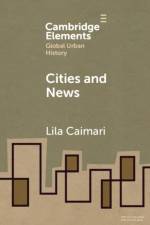
This Element examines urban imaginaries during the expansion of international news between the late nineteenth and the early twentieth centuries, when everyday information about faraway places found its way into newspapers all over the world. Building on the premise that news carried an unprecedented power to shape representations of the world, it follows this development as it made its way to regular readers beyond the dominant information poles, in the great port-cities of the South American Atlantic. Based on five case studies of typical turn-of-the-century foreign news, Lila Caimari shows how current events opened windows onto distant cities, feeding a new world horizon that was at once wider and eminently urban.
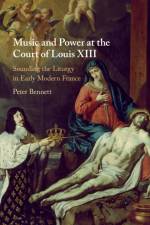
What role did sacred music play in mediating Louis XIII's grip on power in the early seventeenth century? How can a study of music as 'sounding liturgy' contribute to the wider discourse on absolutism and 'the arts' in early modern France? Taking the scholarship of the so-called 'ceremonialists' as a point of departure, Peter Bennett engages with Weber's seminal formulation of power to consider the contexts in which liturgy, music and ceremonial legitimated the power of a king almost continuously engaged in religious conflict. Numerous musical settings show that David, the psalmist, musician, king and agent of the Holy Spirit, provided the most enduring model of kingship; but in the final decade of his life, as Louis dedicated the Kingdom to the Virgin Mary, the model of 'Christ the King' became even more potent - a model reflected in a flowering of musical publication and famous paintings by Vouet and Champaigne.
International treaties are the primary means for codifying global human rights standards. However, nation-states are able to make their own choices in how to legally commit to human rights treaties. A state commits to a treaty through four commitment acts: signature, ratification, accession, and succession. These acts signify diverging legal paths with distinct contexts and mechanisms for rights change reflecting legalization, negotiation, sovereignty, and domestic constraints. How a state moves through these actions determines how, when, and to what extent it will comply with the human rights treaties it commits to. Using legal, archival, and quantitative analysis this important book shows that disentangling legal paths to commitment reveals distinct and significant compliance outcomes. Legal context matters for human rights and has important implications for the conceptualization of treaty commitment, the consideration of non-binding commitment, and an optimistic outlook for the impact of human rights treaties.
Abonner på vårt nyhetsbrev og få rabatter og inspirasjon til din neste leseopplevelse.
Ved å abonnere godtar du vår personvernerklæring.