

















Gjør som tusenvis av andre bokelskere
Abonner på vårt nyhetsbrev og få rabatter og inspirasjon til din neste leseopplevelse.
Ved å abonnere godtar du vår personvernerklæring.Du kan når som helst melde deg av våre nyhetsbrev.

Striking the right balance between public health priorities and health innovation is a critical policy challenge for India given their mutually conflicting nature and interests. India has a huge burden of diseases implicated by a gamut of health problems including the uneven distribution of demographic and epidemiological transition, threat of new infectious disease pandemic like COVID 19, increasing privatisation of healthcare, low affordability to life saving medicines and most importantly the escalating healthcare expenditure coupled with poor financial risk protection. The central question that the book addresses is whether health innovation in India is sensitive to the public health needs and priorities. It unearths the overriding issues related to responsiveness and equity in India's health innovation. The book highlights the need for a responsible innovation framework for India that balances the priorities of public health and the industry goals.
Whereas Dr Burney's writings are often mentioned in studies on eighteenth-century music, not much interest seems to have been given specifically to his relation to the organ, which played an important part in his professional career as a practising musician. No better introduction to the aesthetic ethos of the eighteenth-century English organ can be found than in Burney's remarks disseminated in his various writings. Taken together, they construct a coherent discourse on taste and constitute an aesthetic. Burney's view of the organ is indicative of a broader ethos of moderation that permeates his whole work, and is at one with the dominant moral philosophy of Georgian England. This conception is ripe with patriotic undertones, while it also articulates a constant plea for politeness as a condition for harmonious social interaction. He believed that moderation, simplicity, and fancy were the constituents of good taste as well as good manners.
The main question of this Element is how the existence, supremacy, and uniqueness of an almighty and immaterial God bear on our own nature. It aims to uncover lessons about what we are by thinking about what God might be. A dominant theme is that Abrahamic monotheism is a surprisingly hospitable framework within which to defend and develop the view that we are wholly material beings. But the resulting materialism cannot be of any standard variety. It demands revisions and twists on the usual views. We can indeed learn about ourselves by learning about God. One thing we learn is that, though we are indeed wholly material beings, we're not nearly as ordinary as we might seem.
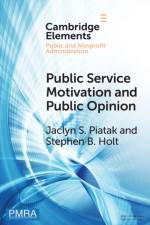
Practitioners, policymakers, and scholars across fields and disciplines seek to understand factors that shape public opinion and public service values, especially in today's polarized context. Yet we know little about how the two relate. Research on public service motivation (PSM), a drive to help others grounded in public institutions, has grown to examine career decisions and behaviors within and outside the workplace, but does the influence of PSM extend to individual values? Using data from the Cooperative Congressional Election Study surrounding the 2016 US presidential election, we first examine the antecedents of PSM; how do individual characteristics as well as socioeconomic and sociocultural factors influence levels of PSM? Second, we describe the role PSM plays in shaping public opinion on policy preferences, budget priorities, and political behaviors. Findings have implications for both understanding who has PSM as well as how PSM shapes public preferences, attitudes, and behaviors.
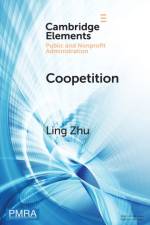
Public service innovation, defined as the adoption of new technology and methods of service delivery, is at the heart of public management research. Scholars have long studied public and private sector innovation as distinctive phenomena, arguing that private sector innovation aims to increase firms' competitive advantage, while public sector innovation purports to improve governance and performance. The public-private dichotomy overlooks the complex way how organizations interact with each other for service delivery. Public services are increasingly delivered through the web of collaborative networks, in which organizations compete and cooperate simultaneously. This Element explores how coopetition, namely the simultaneous presence of competition and collaboration, shapes innovation in the health care sector. Analyzing panel data of 4,000+ American hospitals from 2008 to 2017, this Element finds evidence that coopetition catalyzes the technology and service process innovation and offers practical implications on managing innovation in competitive environments.
This is an interdisciplinary volume exploring a range of historical, anthropological and literary ideas and issues in South Asian Borderlands. Going beyond the territorial and geo-political imaginaries of contemporary borderlands in South Asia, chapters in this book engage with the questions of sovereignty, control, policing as well as continuing affections across politically divided borderlands. Modern conceptions of nationhood have created categories of legality and illegality among historically, socially, economically and emotionally connected residents of South Asian borderlands. This volume provides unique insights into the interconnected lives and histories of these borderland spaces and communities.
The monograph focuses on the human rights challenges that are associated with the involvement of States in economic activities and on the role that international law has to play in addressing and understanding some of those challenges. State-owned entities are looked at through the lens of several topics of international law that have been found to hold particular relevance in this context, such as the concept of legal personality in international law, the process of normativity in international law, State immunity and State responsibility. The monograph shows how SOEs have had a significant role in shaping the evolution of international law and how, in turn, international law is currently shaping the evolution of State-owned entities. By focusing on State-owned or State-controlled business entities, rather than private corporations, the monograph aims to offer an alternative perspective on the challenges associated with corporations and human rights.
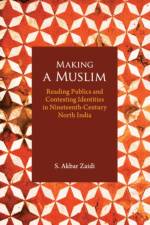
Using primarily Urdu sources from the nineteenth century, this book allows us to rethink notions of 'the Muslim', in its numerous, complex and often contradictory forms, which emerged in colonial North India after 1857. Allowing the self-representation of Muslimness and its manifestations to emerge, it contrasts how the colonial British 'made Muslims' very differently compared to how the community envisaged themselves. A key argument made here contests the general sense of the narrative of lamentation, decay, decline, and a sense of self-pity and ruination, by proposing a different condition, that of zillat, a condition which gave rise to much self-reflection resulting in action, even if it was in the form of writing and expression. By questioning how and when a Muslim community emerged in colonial India, the book unsettles the teleological explanation of the Partition of India and the making of Pakistan.
The first edition of this book appeared in 1981 as a direct continuation of Lectures of von Neumann Algebras (by S.V. Stratila and L. Zsido) and, until 2003, was the only comprehensive monograph on the subject. Addressing the students of mathematics and physics and researchers interested in operator algebras, noncommutative geometry and free probability, this revised edition covers the fundamentals and latest developments in the field of operator algebras. It discusses the group-measure space construction, Krieger factors, infinite tensor products of factors of type I (ITPFI factors) and construction of the type III_1 hyperfinite factor. It also studies the techniques necessary for continuous and discrete decomposition, duality theory for noncommutative groups, discrete decomposition of Connes, and Ocneanu's result on the actions of amenable groups. It contains a detailed consideration of groups of automorphisms and their spectral theory, and the theory of crossed products.
For decades after the declaration of the Republic of Turkey in 1923, the Turkish state promoted the idea of a desired citizen. The Kemalist state treated these citizens as superior, with full rights; but the 'others', those outside this desired citizenship, were either tolerated or considered undesirable citizens. And this caused the marginalization of ethnic and religious minorities, religious Muslims and leftists alike. In this book, Ihsan Yilmaz shows how historical traumas, victimhood, insecurities, anxieties, fears and siege mentality have negatively impacted on and radicalised the nation-building projects of the two competing hegemonic ideologies/regimes (those of Ataturk and Erdogan) and their treatment of majority and minority ethnic, religious and political groups. Yilmaz reveals the significant degree of overlap between the desired, undesired citizen and tolerated citizen categories of these two regimes, showing how both regimes aimed to create a perception of a homogenous Turkish nation.
As the US faced its lowest levels of reported trust in government, the COVID-19 crisis revealed the essential service that various federal agencies provide as sources of information. This Element explores variations in trust across various levels of government and government agencies based on a nationally-representative survey conducted in March of 2020. First, it examines trust in agencies including the Department of Health and Human Services, state health departments, and local health care providers. This includes variation across key characteristics including party identification, age, and race. Second, the Element explores the evolution of trust in health-related organizations throughout 2020 as the pandemic continued. The Element concludes with a discussion of the implications for agency-specific assessments of trust and their importance as we address historically low levels of trust in government. This title is also available as Open Access on Cambridge Core.
This Element first reviews the limitations of the concepts of problems in childhood. It proposes a universal, comprehensive, and longitudinal conceptual framework of problems in childhood, their differential context, and their cyclical effects. Based on the linkages identified in the children's problems, they are divided into three levels, primary, secondary, and tertiary. The Element then reviews the concepts and the limitations of the prevalent service delivery approaches of child welfare, protection, and justice, because of which these services have not helped to break the cycle of problems in childhood. The Element identifies the rights-based comprehensive, preventive, and systemic approach for child welfare, at primary, secondary and tertiary prevention levels, in order to break this cycle of problems. Finally, the Element goes into details of the tertiary prevention level integrated service delivery for children facing socio-legal problems.
Harmonious relationships between groups are critical for democracy, and intergroup contact presents an appealing way to encourage this harmony. However, what kinds of contact work best? Ethan Busby reviews existing studies of contact, propose a framework for studying the political consequences of contact, and discusses four experiments following these recommendations. These studies focus on equal status contact and rely on different samples and contexts. Busby finds that equal-status does not promote more political support for racial and ethnic outgroups and can reduce outgroup support. The Element is concluded by discussing the implications of these findings for the study of contact generally.
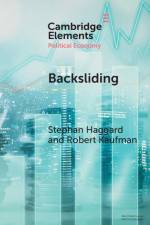
Assaults on democracy are increasingly coming from the actions of duly elected governments, rather than coups. Backsliding examines the processes through which elected rulers weaken checks on executive power, curtail political and civil liberties, and undermine the integrity of the electoral system. Drawing on detailed case studies, including the United States and countries in Latin America, Eastern Europe, and Africa, the book focuses on three, inter-related causal mechanisms: the pernicious effects of polarization; realignments of party systems that enable elected autocrats to gain legislative power; and the incremental nature of derogations, which divides oppositions and keeps them off balance. A concluding chapter looks at the international context of backsliding and the role of new technologies in these processes. An online appendix provides detailed accounts of backsliding in 16 countries, which can be found at www.cambridge.org/backsliding.
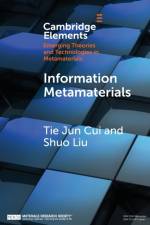
Metamaterials have attracted enormous interests from both physics and engineering communities in the past 20 years, owing to their powerful ability in manipulating electromagnetic waves. However, the functionalities of traditional metamaterials are fixed at the time of fabrication. To control the EM waves dynamically, active components are introduced to the meta-atoms, yielding active metamaterials. Recently, a special kind of active metamaterials, digital coding and programmable metamaterials, are proposed, which can achieve dynamically controllable functionalities using field programmable gate array (FPGA). Most importantly, the digital coding representations of metamaterials set up a bridge between the digital world and physical world, and allow metamaterials to process digital information directly, leading to information metamaterials. In this Element, we review the evolution of information metamaterials, mainly focusing on their basic concepts, design principles, fabrication techniques, experimental measurement and potential applications. Future developments of information metamaterials are also envisioned.
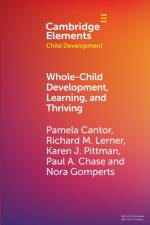
We discuss whole-child development, learning, and thriving through a dynamic systems theory lens that focuses on the United States and includes an analysis of historical challenges in the American public education system, including inequitable resources, opportunities, and outcomes. To transform US education systems, developmental and learning scientists, educators, policymakers, parents, and communities must apply the knowledge they have today to 1. challenge the assumptions and goals that drove the design of the current US education system, 2. articulate a revised, comprehensive definition of whole-child development, learning, and thriving that accepts rather than simplifies how human beings develop, 3. create a profound paradigm shift in how the purpose of education is described in the context of social, cultural, and political forces, including the impacts of race, privilege, and bias and 4. describe a new dynamic 'language' for measurement of both the academic competencies and the full set of 21st century skills.
Can the concept of law be indiscriminately extended to times and places in which it did simply not exist? Such an extension is at best useless and at worst misleading. Producing an intelligible jurisprudence of the concept of law means keeping it within the reasonable boundaries of its contemporary common-sense understanding: positive law. Parallel to Western societies in which it firstly emerged, the concept of positive law developed in many places, including countries characterized as Muslim. There, it faced other existing normativities, like customs and the Sharia. This book aims, from the Muslim world's perspective, to clarify the uses of the concept of law and the ways of studying it, to describe some of its historical developments, including the ideas of constitutional law, customary law and forensic evidence, and to describe present-day practices, including reference to law sources, rules and interpretation.
Tax policies are informed by principles developed in the tax theory and policy literature. This Element surveys the policy lessons that emerge from optimal tax analysis since the 1970s. This Element begins with the evolution of tax policy principles from the comprehensive income approach to the expenditure tax approach to normative tax analysis based on social welfare maximization and recounts key results from the optimal income tax analysis inspired by Mirrlees and extended by Diamond to the extensive margin approach. This Element also emphasizes analytical techniques that yield empirically relevant concepts and show the equity-efficiency trade-off at the heart of tax policy. We also extend the analysis to recent literature incorporating involuntary unemployment, and policies like welfare and unemployment insurance.
From early childhood boys often feel pressured to be athletic and muscular. But what impact does this have on physical and mental well-being through their teens and beyond? Worryingly, a third of teen boys are trying to 'bulk up' due to body dissatisfaction, and boys and men account for 25% of eating disorder cases. What can we tell our boys to help them feel happy and confident simply being themselves? Being You has the answers! It's an easy-to-read, evidence-based guide to developing a positive body image for boys aged 12+. It covers all the facts on puberty, diet, exercise, self-care, mental health, social media, and everything in-between. Boys will find answers to the questions most on their mind, the truth behind many diet and exercise myths, and real-life stories from other boys. Armed with this book, they will understand that muscles don't make a man - it's enough simply being you!
Placing evolutionary events in the context of geological time is a fundamental goal in paleobiology and macroevolution. In this Element we describe the tripartite model used for Bayesian estimation of time calibrated phylogenetic trees. The model can be readily separated into its component models: the substitution model, the clock model and the tree model. We provide an overview of the most widely used models for each component and highlight the advantages of implementing the tripartite model within a Bayesian framework.
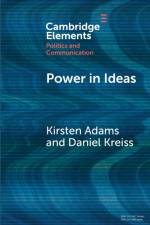
This Element develops an analytical framework for understanding the role of ideas in political life and communication. Power in Ideas argues that the empirical study of ideas should combine interpretive approaches to derive meaning and understand influence with quantitative analysis to help determine the reach, spread, and impact of ideas. This Element illustrates this approach through three case studies: the idea of reparations in Ta-Nehisi Coates's "e;The Case for Reparations,"e; the idea of free expression in Mark Zuckerberg's Facebook policy speech at Georgetown University, and the idea of universal basic income in Andrew Yang's "e;Freedom Dividend."e; Power in Ideas traces the landscapes and spheres within which these ideas emerged and were articulated, the ways they were encoded in discourse, the fields they traveled across, and how they became powerful.
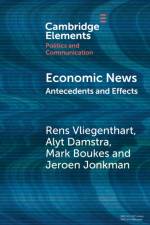
This Element provides a concise review of the existing literature on content, antecedents and consequences of economic news coverage. It tests and refines prominent assumptions and hypotheses in this area. Relying on communication science theories such as framing, news values and media dependency theories, we first outline and explain how media cover the economy. Additionally, it demonstrates that coverage has a fundamental impact above and beyond the state of the economy, both on economic perceptions and political attitudes of citizens, as well as on political decision makers and media reputation of a wide variety of organizations.
This book examines the political resonances of E. M. Forster's representations of music, offering readings of canonical and overlooked works. It reveals music's crucial role in his writing and draws attention to a previously unacknowledged eclecticism and complexity in Forster's ideological outlook. Examining unobtrusive musical allusions in a variety of Forster's writings, this book demonstrates how music provided Forster with a means of reflecting on race and epistemology, material culture and colonialism, literary heritage and national character, hero-worship and war, and gender and professionalism. It unveils how Forster's musical representations are mediated through a matrix of ideas and debates of his time, such as those about evolution, empire, Britain's relationship with the Continent, the rise of fascism, and the emergence of musicology as an academic discipline.
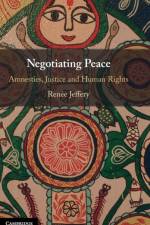
In the past two decades, peace negotiators around the world have increasingly accepted that granting amnesties for human rights violations is no longer an acceptable bargaining tool or incentive, even when the signing of a peace agreement is at stake. While many states that previously saw sweeping amnesties as integral to their peace processes now avoid amnesties for human rights violations, this anti-amnesty turn has been conspicuously absent in Asia. In Negotiating Peace: Amnesties, Justice and Human Rights Renee Jeffery examines why peace negotiators in Asia have resisted global anti-impunity measures more fervently and successfully than their counterparts around the world. Drawing on a new global dataset of 146 peace agreements (1980-2015) and with in-depth analysis of four key cases - Timor-Leste, Aceh Indonesia, Nepal and the Philippines - Jeffery uncovers the legal, political, economic and cultural reasons for the persistent popularity of amnesties in Asian peace processes.
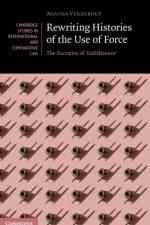
It is commonly taught that the prohibition of the use of force is an achievement of the twentieth century and that beforehand States were free to resort to the arms as they pleased. International law, the story goes, was 'indifferent' to the use of force. 'Reality' as it stems from historical sources, however, appears much more complex. Using tools of history, sociology, anthropology and social psychology, this monograph offers new insights into the history of the prohibition of the use of force in international law. Conducting in-depth analysis of nineteenth century doctrine and State practice, it paves the way for an alternative narrative on the prohibition of force, and seeks to understand the origins of international law's traditional account. In so doing, it also provides a more general reflection on how the discipline writes, rewrites and chooses to remember its own history.
Arguably, more legal texts survive from pre-Conquest England than from any other early medieval European community. The corpus includes roughly seventy royal law-codes, to which can be added well over a thousand charters, writs, and wills, as well as numerous political tracts, formularies, rituals, and homilies derived from legal sources. These texts offer valuable insight into early English concepts of royal authority and political identity. They reveal both the capacities and limits of the king's regulatory power, and in so doing, provide crucial evidence for the process by which disparate kingdoms gradually merged to become a unified English state. More broadly, pre-Norman legal texts shed light on the various ways in which cultural norms were established, enforced, and, in many cases, challenged. And perhaps most importantly, they provide unparalleled insight into the experiences of Anglo-Saxon England's diverse inhabitants, both those who enforced the law and those subject to it.
Historically, philosophical discussions of relations have featured chiefly as afterthoughts, loose ends to be addressed only after coming to terms with more important and pressing metaphysical issues. F. H. Bradley stands out as an exception. Understanding Bradley's views on relations and their significance today requires an appreciation of the alternatives, which in turn requires an understanding of how relations have traditionally been classified and how philosophers have struggled to capture their nature and their ontological standing. Positions on these topics range from the rejection of relations altogether, to their being awarded the status as grounds for everything else, to various intermediary positions along this spectrum. Love them, hate them, or merely tolerate them, no philosopher engaged in ontologically serious metaphysics can afford to ignore relations.
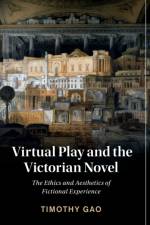
Pondering the town he had invented in his novels, Anthony Trollope had 'so realised the place, and the people, and the facts' of Barset that 'the pavement of the city ways are familiar to my footsteps'. After his novels end, William Thackeray wonders where his characters now live, and misses their conversation. How can we understand the novel as a form of artificial reality? Timothy Gao proposes a history of virtual realities, stemming from the imaginary worlds created by novelists like Trollope, Thackeray, Charlotte Bronte, and Charles Dickens. Departing from established historical or didactic understandings of Victorian fiction, Virtual Play and the Victorian Novel recovers the period's fascination with imagined places, people, and facts. This text provides a short history of virtual experiences in literature, four studies of major novelists, and an innovative approach for scholars and students to interpret realist fictions and fictional realities from before the digital age. This title is also available as Open Access on Cambridge Core.
With empirical touchstones from Europe, North America, Africa, Asia and the Pacific, the authors argue that heritage and property represent different approaches to subject formation, produce distinct bodies of expertise, and belong to different rationalities of government in a global patrimonial field: that cultural property is a technology of sovereignty, part of the order of the modern liberal state, but cultural heritage a technology of reformation that cultivates responsible subjects and entangles them in networks of expertise and management. While particular case trajectories may shift back and forth from rights-based claims and resolutions under the sign of cultural property to ethical claims and solutions under the sign of cultural heritage, the authors contend that there is significant analytical purchase to be gained from their distinction. Using a critical, comparative approach, they make the case for a historically grounded and theoretically informed understanding of the difference between the two terms.
The City of Cahokia provides a unique case study to review what draws people to a place and why. This Element examines not only the emergence and decline of this great American city but its intersection with the broader Native American world during this period. Cahokia was not an isolated complex but a place vivid on the landscape where people made pilgrimages to and from Cahokia for trade and religious practices. Cahokia was a centre-place with expansive reach and cultural influence. This Element analyses the social and political processes that helped create this city while also reflecting on the trajectory of Native American history in North America.
Abonner på vårt nyhetsbrev og få rabatter og inspirasjon til din neste leseopplevelse.
Ved å abonnere godtar du vår personvernerklæring.