










Gjør som tusenvis av andre bokelskere
Abonner på vårt nyhetsbrev og få rabatter og inspirasjon til din neste leseopplevelse.
Ved å abonnere godtar du vår personvernerklæring.Du kan når som helst melde deg av våre nyhetsbrev.

Moritz Steinschneider (1816-1907) is regarded as one of the founding fathers of the study of modern Judaism, and his work is still relevant today. Steinschneider's studies encompassed traditional Jewish subjects as well as classical and Semitic languages and cultures. He belonged to a small group of scholars who changed the scope of Jewish learning from that of rabbinics to a broader view of Jewish civilisation. Steinschneider also sought to provide a complete and accurate record of printed publications of Hebraica and Judaica. In this 1878 publication, Steinschneider lists all the Hebrew manuscripts held in the Hamburg State Library. He divides the manuscripts into thirteen categories, including homiletics, prayers, the Kabbalah, and theology and philosophy. Also represented are poetry, rhetoric, mathematics and medicine. Steinschneider also comments on each manuscript and evaluates the significance of the Hamburg collection compared to other German library collections.
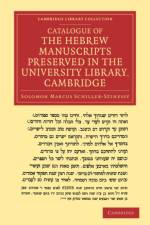
This catalogue, prepared in two parts between 1876 and 1878 and reissued here in one volume, analyses ninety-eight Hebrew manuscripts held at Cambridge University Library. Wonderfully discursive, lively and opinionated, it is the crowning achievement of Solomon Marcus Schiller-Szinessy (1820-90), the first Jewish scholar appointed by Cambridge to teach Talmudic and Rabbinic literature. Assessing not only the contents of the manuscripts, the work also examines their ownership, scribal marks and marginalia, authorship and textual traditions. The first part analyses seventy-two biblical scrolls, codices and commentaries, including thirteenth- and fourteenth-century Sefardi Bibles and outstanding editions of commentaries by Abraham ibn Ezra and Rashi, along with lesser-known but significant commentators. The second part, which was never formally published, examines a further twenty-six rabbinic manuscripts, including the famous Cambridge Mishnah - one of only three complete Mishnaic manuscripts.
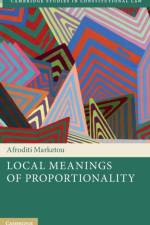
This book offers one of the rare empirical studies on the different meanings of proportionality as part of a global constitutional discourse. It develops and applies a theoretically informed comparative methodology for the study of differences in the use of legal transfers. Beyond the transplant versus culture controversy, it enriches our understanding of the relationship between law and its social context. Beyond the common law and civil law cleavage, it provides an in-depth comparison of French, English and Greek judicial review, rendering some core features of these systems accessible to non-initiated readers. The last part of the book provides insights as to the different visions of Europe underlying different phases of European integration and thus enriches our understanding of the process of integration through law.
These are the WTO's authorized and paginated reports in English. They are an essential addition to the library of all practising trade lawyers and a useful tool for students and academics worldwide working in the field of international economic or trade law. DSR 2019: Volume I contains the Appellate Body reports on 'Brazil - Certain Measures Concerning Taxation and Charges' (WT/DS472, WT/DS497).
Lithium isotopes are a relatively novel tracer of present and past silicate weathering processes. Given that silicate weathering is the primary long-term method by which CO2 is removed from the atmosphere, Li isotope research is going through an exciting phase. We show the weathering processes that fractionate dissolved and sedimentary Li isotope ratios, focusing on weathering intensity and clay formation. We then discuss the carbonate and silicate archive potential of past seawater I 7Li. These archives have been used to examine Li isotope changes across both short and long timescales. The former can demonstrate the rates at which the climate is stabilised from perturbations via weathering, a fundamental piece of the puzzle of the long-term carbon cycle.
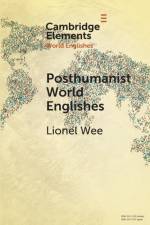
A posthumanist approach problematizes the separateness and centrality of humans in understanding the world around us. Posthumanism does not deny the role of humans but questions the assumption that it is human activity and agency that should be given pride of place in any analysis of social activity. This carries important and interesting implications for the study of World Englishes, some of which are explored in this Element. Sections 3 and 4, respectively, explore posthumanism in relation to two specific topics in World Englishes, creativity and language policy. These topics have been chosen because they allow us to see the contributions that posthumanism can make to a micro-level (creativity) as well as macro-level (language policy) topic.
The Water Quality Act of 1987 ushered in a new era of clean water policy to the US. The Act stands today as the longest-lived example of national water quality policy. It included a then-revolutionary funding model for wastewater infrastructure - the Clean Water State Revolving Fund - which gave states much greater authority to allocate clean water infrastructure resources. Significant differences between states exist in terms of their ability to provide adequate resources for the program, as well as their ability (or willingness) to meet the wishes of Congress to serve environmental needs and communities. This book examines the patterns of state program resource distribution using case studies and analysis of state and national program data. This book is important for researchers from a range of disciplines, including water, environmental and infrastructure policy, federalism/intergovernmental relations, intergovernmental administration, and natural resource management, as well as policy makers and policy advocates.
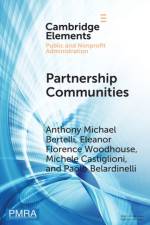
We undertake the first quantitative and broadly comparative study of the structure and performance of partnership communities to our knowledge. Our study addresses several important research questions. How connected are the members of partnership communities? How can we understand the quality of the projects a community undertakes? How do political institutions shape their structure and performance? After defining partnership communities as networked communities of private firms which form the consortia that enter into long-term contractual arrangements with governments, we show how they are affected by government demand for partners. We then provide an overview of those factors predicting success in financing projects. Finally, we focus on the political economy of partnership communities. We develop and test theoretical predictions about how national institutions shape partnership communities and the quality of projects. We also investigate voters' preferences over alternative arrangements of infrastructure delivery before drawing out implications for research and practice.
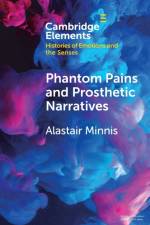
'Phantom limb pain' designates the sensations which seem to emanate from limbs that in reality are missing. The phrase was coined by the American Civil War surgeon, Weir Mitchell, in reference to his fictional amputee, George Dedlow. Contemporary neuroscience holds that the brain encloses a schema which covers the whole body, and asserts its unity even if certain parts are missing. Reading backwards from Dedlow's sufferings, Alastair Minnis traces the medieval precedents and parallels, focusing on Augustine and Dante, who subscribed to the notion of a 'body in the soul'. Dante's souls in purgatory self-prosthesize with aerial phantoms as they long for the full embodiment which only the resurrection can bring. Is a complete body necessary for personhood? And how can the gamut of human feelings be run if parts or the entirety of one's body does not exist? Combining medieval studies and contemporary neuroscience, this absorbing study explores the fascinating and surprising history of phantom pain.
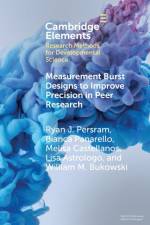
Measurement burst designs, in which assessments of a set of constructs are made at two or more times in quick succession (e.g., within days), can be used as a novel method to improve the stability of basic measures typically used in longitudinal peer research. In this Element, we hypothesized that the stabilities for adolescent-reported peer acceptance, anxiety, and self-concept would be stronger when using the measurement burst approach versus the single time observation. Participants included youth between 10 and 13 years old who completed (a) sociometric assessments of acceptance, and measures of (b) social and test anxiety, and (c) self-concept across three times with two assessments made at each burst. Findings broadly showed that the stabilities were significantly stronger with the measurement burst when compared to the single time assessment, supporting our main hypothesis. We discuss the utility of the measurement burst in a broader context and considerations for researchers.
In this novel and unorthodox historical analysis of modern comparative law, Daniel Bonilla Maldonado explores the connections between modern comparative law and the identity of the modern legal subject. Narratives created by modern comparative law shed light on the role played by law in the construction of modern individual and collective identities. This study first examines the relationship between identity, law, and narrative. Second, it explores the moments of emergence and transformation of this area of law: instrumental comparative studies, comparative legislative studies, and comparative law as an autonomous discipline. Finally, it analyzes the theoretical perspectives that question the narrative created by modern comparative law: Third World Approaches to International Law, postcolonial studies of law, and critical comparative law. For lawyers and legal scholars, this study brings a nuanced understanding of the connections between the theory of modern comparative law and contemporary practical legal and political issues.
What norms apply to the determination of lawful targets? What persons and objects may be lawfully targeted in armed conflict? What are the reasons, both legal and extra-legal, of civilian losses? What principles must be observed when attacking military objectives? How can the protection of persons who are not participating in hostilities can be strengthened? Is it possible to develop a consistent approach to targeting in armed conflict regardless of the legal qualification of the armed conflict? This monograph answers these questions and many more. Taking into account both military objectives and civilian objects, it considers the extent of their protection in a range of contexts, providing an essential source of reference for scholars dealing with issues across international humanitarian law and armed conflict.
Teaching Secondary History provides a comprehensive introduction to the theory and practice of teaching History to years 7-12 in Australian schools. Engaging directly with the Australian Curriculum, this text introduces pre-service teachers to the discipline of History. It builds on students' historical knowledge, thinking and skills and offers practical guidance on how to construct well-rounded History lessons for students. From inquiry strategies and teacher- and student-centred practice, to embedding the cross-curriculum priorities in planning and assessment, this text supports the learning and development of pre-service History teachers by connecting the 'big ideas' of teaching with the nuance of History content. Each chapter features short-answer and Pause and think questions to enhance understanding of key concepts, Bringing it together review questions to consolidate learning, classroom scenarios, examples of classroom work and a range of information boxes to connect students to additional material.
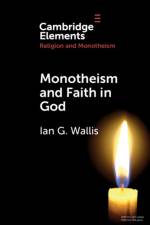
After offering a brief overview of the role of faith within Judaism, Christianity and Islam, an interdisciplinary analysis of faith, belief, belief systems and the act of believing is undertaken. The debate over the nature of doctrine between George Lindbeck and Alister McGrath brings into focus four ways in which beliefs can be employed: expressive, interpretative, formative and referential/relational. An analysis of monotheistic belief ensues which demonstrates how it can function meaningfully in each of these modes, including the last, where insights from phenomenology and relational ontology, as well as philosophical theology, favour a participatory approach in which God is encountered not as an object of investigation, but as that transcendent Other whose worship is the fulfilment of human being. The study concludes by highlighting convergences between the nature of faith presented in the initial scriptural overview and that developed throughout the rest of the study.
Geography is not only the study of the surface of the planet and the exploration of spatial and human - environment relationships, but also a way of thinking about the world. Guided by the Australian Curriculum and the Professional Standards for Teaching School Geography (GEOGstandards), Teaching Secondary Geography provides a comprehensive introduction to both the theory and practice of teaching Geography. This text covers fundamental geographical knowledge and skills, such as working with data, graphicacy, fieldwork and spatial technology, and provides practical guidance on teaching them in the classroom. Each chapter features short-answer and 'Pause and Think' questions to enhance understanding of key concepts, and 'Bringing It Together' review questions to consolidate learning. Classroom scenarios and a range of information boxes are provided throughout to connect students to additional material. Written by an author team with extensive teaching experience, Teaching Secondary Geography is an exemplary resource for pre-service teachers.
The growing scientific research output from Asia has been making headlines since the start of the twenty-first century. But behind this science story, there is a migration story. The elite scientists who are pursuing cutting-edge research in Asia are rarely 'homegrown' talent but were typically born in Asia, trained in the West, and then returned to work in Asia. Asian Scientists on the Move explores why more and more Asian scientists are choosing to return to Asia, and what happens after their return, when these scientists set up labs in Asia and start training the next generation of Asian scientists. Drawing on evocative firsthand accounts from 119 Western-trained Asian scientists about their migration decisions and experiences, and in-depth analysis of the scientific field in four country case studies - China, India, Singapore and Taiwan - the book reveals the growing complexity of the Asian scientist migration system.
Up to its pillage by the Crusaders in 1204, Constantinople teemed with magnificent statues of emperors, pagan gods, and mythical beasts. Yet the significance of this wealth of public sculpture has hardly been acknowledged beyond late antiquity. In this book, Paroma Chatterjee offers a new perspective on the topic, arguing that pagan statues were an integral part of Byzantine visual culture. Examining the evidence in patriographies, chronicles, novels, and epigrams, she demonstrates that the statues were admired for three specific qualities - longevity, mimesis, and prophecy; attributes that rendered them outside of imperial control and endowed them with an enduring charisma sometimes rivaling that of holy icons. Chatterjee's interpretations refine our conceptions of imperial imagery, the Hippodrome, the Macedonian Renaissance, a corpus of secular objects, and Orthodox icons. Her book offers novel insights into Iconoclasm and proposes a more truncated trajectory of the holy icon in medieval Orthodoxy than has been previously acknowledged.
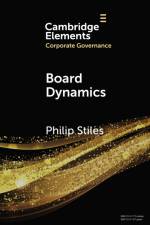
Boards of directors are at the apex of organisational decision-making and so are central in ensuring effective corporate governance. But boards are under increasing scrutiny due to the continuing prevalence of scandals and failures. Boards have been viewed as set up to fail because the demands placed upon them cannot effectively be delivered. In this Element, I examine this tension and look at the board as a working group, one which has an input, a process and an output. Through looking at the board as a group, the dynamics of how boards, and the potential for effective and ineffective operation, are highlighted. I conclude with outlining how the future of board dynamics may evolve.
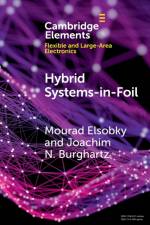
Hybrid Systems-in-Foil (HySiF) is a concept that extends the potential of conventional More-than-More Systems-in/on-Package (SiPs and SoPs) to the flexible electronics world. In HySiF, an economical implementation of flexible electronic systems is possible by integrating a minimum number of embedded silicon chips and a maximum number of on-foil components. Here, the complementary characteristics of CMOS SoCs and larger area organic and printed electronics are combined in a HySiF-compatible polymeric substrate. Within the HySiF scope, the fabrication process steps and the integration design rules with all the accompanying boundary conditions concerning material compatibility, surface properties, and thermal budget, are defined. This Element serves as an introduction to the HySiF concept. A summary of recent ultra-thin chip fabrication and flexible packaging techniques is provided. Several bendable electronic components are presented demonstrating the benefits of HySiF. Finally, prototypes of flexible wireless sensor systems that adopt the HySiF concept are demonstrated.
Are there good reasons for offering petitionary prayers to God, if God exists? Could such prayers make a difference in the world? Could we ever have good reason to think that such prayers had been answered? In this Element, the author will carefully explore these questions with special attention to recent philosophical discussions.
The rapid development of quantum technologies has driven a revolution in related research areas such as quantum computation and communication, and quantum materials. The first prototypes of functional quantum devices are beginning to appear, frequently created using ensembles of atoms, which allow the observation of sensitive, quantum effects, and have important applications in quantum simulation and matter wave interferometry. This modern text offers a self-contained introduction to the fundamentals of quantum atom optics and atomic many-body matter wave systems. Assuming a familiarity with undergraduate quantum mechanics, this book will be accessible for graduate students and early career researchers moving into this important new field. A detailed description of the underlying theory of quantum atom optics is given, before development of the key, quantum, technological applications, such as atom interferometry, quantum simulation, quantum metrology, and quantum computing.
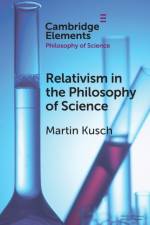
'Relativism versus absolutism' is one of the fundamental oppositions that have dominated reflections about science for much of its (modern) history. Often these reflections have been inseparable from wider social-political concerns regarding the position of science in society. Where does this debate stand in the philosophy and sociology of science today? And how does the 'relativism question' relate to current concerns with 'post truth' politics? In Relativism in the Philosophy of Science, Martin Kusch examines some of the most influential relativist proposals of the last fifties years, and the controversies they have triggered. He argues that defensible forms of relativism all deny that any sense can be made of a scientific result being absolutely true or justified, and that they all reject 'anything goes' - that is the thought that all scientific results are epistemically on a par. Kusch concludes by distinguishing between defensible forms of relativism and post-truth thinking.
Do you want to know what a parametric test is and when not to perform one? Do you get confused between odds ratios and relative risks? Want to understand the difference between sensitivity and specificity? Would like to find out what the fuss is about Bayes' theorem? Then this book is for you! Physicians need to understand the principles behind medical statistics. They don't need to learn the formula. The software knows it already! This book explains the fundamental concepts of medical statistics so that the learner will become confident in performing the most commonly used statistical tests. Each chapter is rich in anecdotes, illustrations, questions, and answers. Not enough? There is more material online with links to free statistical software, webpages, multimedia content, a practice dataset to get hands-on with data analysis, and a Single Best Answer questionnaire for the exam.
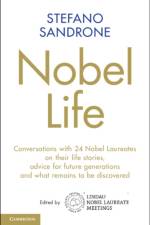
Few people have changed the world like the Nobel Prize winners. Their breakthrough discoveries have revolutionised medicine, chemistry, physics and economics. Nobel Life consists of original interviews with twenty-four Nobel Prize winners. Each of them has a unique story to tell. They recall their eureka moments and the challenges they overcame along the way, give advice to inspire future generations and discuss what remains to be discovered. Engaging and thought-provoking, Nobel Life provides an insight into life behind the Nobel Prize winners. A call from Stockholm turned a group of twenty-four academics into Nobel Prize winners. This is their call to the next generations worldwide.
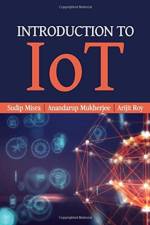
IoT is emerging as a popular area of research and has piqued the interest of academics and scholars across the world. This book serves as a textbook and a single point of reference for readers looking to delve further into this domain. Written by leading experts in the field, this lucid and comprehensive work provides a clear understanding of the operation and scope of the IoT. Along with the description of the basic outline and technologies associated with the subject, the book discusses the IoT case studies and hands-on exercises, enabling readers to visualise the vastly interdisciplinary nature of its applications. The book also serves curious, non-technical readers, enabling them to understand necessary concepts and terminologies associated with the IoT.
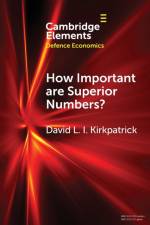
A century ago Frederick Lanchester formulated a mathematical model of combat which suggested that the combat power of a military force was proportional to the product of the individual effectiveness of the units in the force and the square of the number of units deployed. This model reinforced a long-established faith in the importance of superior numbers. However, successive historical studies failed to identify any clear relationship between the numbers and losses in opposing forces. This Element analyses American Civil War battles, and shows that the ratio of losses incurred was inversely proportional to the ratio of numbers effectively engaged. This result demonstrates that the numbers of fighting units in a military force are less important than the ability of those units to get into action and inflict losses on the enemy. This result demonstrates the limitations of the Square Law, and should prevent it from being applied indiscriminately.
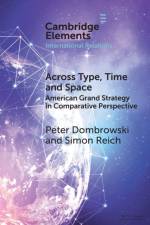
The field of grand strategy is exceptionally American-centric theoretically, methodologically and empirically. Indeed, many scholars treat the United States as a unique case, and thus incomparable. This Element addresses the shortcomings of this approach by developing a novel framework for the purpose of systematic comparison, both within and among different countries. Using the United States as a benchmark, three dimensions are considered in which grand strategy can be compared: first, attributes of the major types commonly discussed in the literature; second, similarities and differences in the implementation of grand strategies over time, using US strategic relations with contemporary Russia as an example; and finally, across space, properties of the grand strategies that are interactively employed by other major powers in relation to the United States in the Indo-Pacific. The Element can be used by scholars and students alike to expand analysis beyond the confines that currently dominate the field.
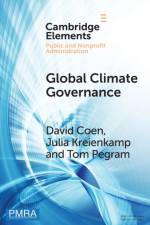
Climate change is one of the most daunting global policy challenges facing the international community in the 21st century. This Element takes stock of the current state of the global climate change regime, illuminating scope for policymaking and mobilizing collective action through networked governance at all scales, from the sub-national to the highest global level of political assembly. It provides an unusually comprehensive snapshot of policymaking within the regime created by the United Nations Framework Convention on Climate Change (UNFCCC), bolstered by the 2015 Paris Agreement, as well as novel insight into how other formal and informal intergovernmental organizations relate to this regime, including a sophisticated EU policymaking and delivery apparatus, already dedicated to tackling climate change at the regional level. It further locates a highly diverse and numerous non-state actor constituency, from market actors to NGOs to city governors, all of whom have a crucial role to play.
I can't breathe ... a haunting phrase moaned at the intersection of past and present, serving as an audible supplement to the visual evidence to yet another collision of race and policing. This phrase reflects the current state of police-community relations in the United States. But, what lies on the other side of now? This Element examines this salient question in the context of excessive use of force and through the lenses of race, policing and public governance. We draw upon extant research and scholarship on representative bureaucracy, public engagement in the co-creation of public polices and the co-production of public services, and the emerging findings from studies in network science, coupled with insights from elite interviews, to offer implications for future research, the profession of policing, the public policymaking process, public management, and post-secondary institutions.
Behavioral science is playing an increasing role in public policy, and it is raising new questions about fundamental issues - the role of government, freedom of choice, paternalism, and human welfare. In diverse nations, public officials are using behavioral findings to combat serious problems - poverty, air pollution, highway safety, COVID-19, discrimination, employment, climate change, and occupational health. Exploring theory and practice, this Element attempts to provide one-stop shopping for those who are new to the area and for those who are familiar with it. With reference to nudges, taxes, mandates, and bans, it offers concrete examples of behaviorally informed policies. It also engages the fundamental questions, include the proper analysis of human welfare in light of behavioral findings. It offers a plea for respecting freedom of choice - so long as people's choices are adequately informed and free from behavioral biases.
Abonner på vårt nyhetsbrev og få rabatter og inspirasjon til din neste leseopplevelse.
Ved å abonnere godtar du vår personvernerklæring.