







Gjør som tusenvis av andre bokelskere
Abonner på vårt nyhetsbrev og få rabatter og inspirasjon til din neste leseopplevelse.
Ved å abonnere godtar du vår personvernerklæring.Du kan når som helst melde deg av våre nyhetsbrev.

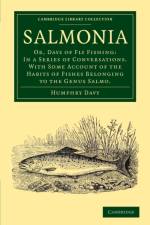
Championed as one of the gentlest and most calming of field sports, angling has had its notable votaries throughout its history, from Isaak Walton to Horatio Nelson. In this charming book on the pleasures of fly fishing, the eminent chemist Sir Humphry Davy (1778-1829) adds his name to the list. He assigns his often poetic arguments to an imaginary cast of four friends, some of whom adore the sport while others question its morality as they embark on a series of angling trips. As their conversations progress, the friends discuss entomology and biology, the finer techniques of landing trout, and the use of peacock feathers and yellow monkey fur in the making of artificial flies. Originally published in 1828, Davy's book offers a glimpse of the sportsman behind the chemist and remains both accessible and instructive for modern enthusiasts.
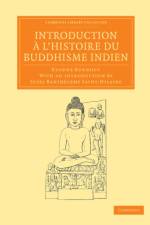
Eugene Burnouf (1801-52), an eminent French orientalist and scholar of Sanskrit, made groundbreaking contributions to the knowledge of Zoroastrianism and to the deciphering of the Zend and Pali languages. He was a member of the Academie des Inscriptions et Belles-Lettres, and of numerous Asiatic societies throughout Europe. When he first published this monumental work of scholarship in 1844, Burnouf established European Buddhist studies on solid foundations. In it, he presents the Indian historical context in which Buddhism developed, as well as its connections and debates with Brahmanism. He also sheds light on the role of the caste system in this religion. To this day, Burnouf's pioneering vision continues to shape our understanding of Buddhism. This second edition was published posthumously in 1876, with an introduction by the French philosopher and journalist Jules Barthelemy Saint-Hilaire (1805-95). It remains of relevance to students of religion, oriental studies and Indian history.
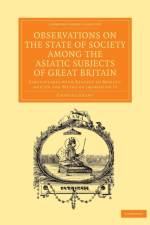
Scotsman Charles Grant (1746-1823) travelled to India in 1767. During his 22-year stay, he rose through the ranks of the East India Company, serving as a member of the company's board of trade. Following his return to Britain, he served three times as the company's chairman and was also elected to Parliament. His conversion to a fervent form of Christianity had occurred in 1776, making him a well-known advocate of evangelisation in the newly acquired British territories. In this work, he launches a strong attack on Hindu belief, labelling it as depraved, degenerate and despotic. 'The true cure of darkness is the introduction of light,' he argues. Written in 1792 but first published in 1797, this work was also presented to Parliament in 1813 in a bid to influence the renewal and amendment of the East India Company's charter.
The scholar and East India Company administrator Henry Thomas Colebrooke (1765-1837) brought India's rich mathematical heritage to the attention of the wider world with the publication of this book in 1817. Based on Sanskrit texts, it contains English translations of classic works by the Indian mathematicians and astronomers Brahmagupta (598-668) and Bhascara (1114-85), who were instrumental thinkers in the development of algebra. Included here are translations of chapters 12 and 18 of Brahmagupta's best-known work, Brahmasphutasiddhanta, focusing on arithmetic and algebra respectively. Also included in this book are translations of two of the greatest works by Bhascara: Lilavati, his treatise on arithmetic, and Bijaganita, on algebra. Furthermore, Colebrooke's introduction aims to position the Indian advancement of algebra in relation to its development by the Greeks and Arabs.
Serving as a judge in his native Bosnia in 1737 when war broke out between the Austrians and the Turks, Omer Efendi (about whose life little else is known) produced this vivid account of the conflict from an Ottoman perspective. Important for what it reveals about the region's social history, the work was revised and published by Ibrahim Muteferrika (c.1672-1745), the founder of Turkish printing. It was first published in English in 1830 after being translated by Charles Fraser, a professor at Edinburgh's Naval and Military Academy. Fraser also added an introduction to the work that gives both a brief history of Bosnia and an overview of the text. The narrative begins with a description of the army of the invading Austrians, who are described throughout as 'infidels'. An account is then given of the operations of the war, through to the signing of the Belgrade treaty in 1739.
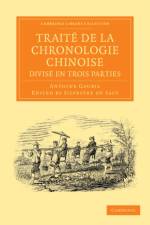
A French Jesuit and missionary to China, Antoine Gaubil (1689-1759) spent half his life in Beijing. His rigorous translations and studies in the fields of history, geography, astronomy and cartography made him one of the finest sinologists of his day. Thanks to his remarkable mastery of Chinese language, he also became the official interpreter to European embassies for the imperial court. Respected throughout Europe, he was a corresponding member of the Royal Society of London, the French Academie Royale des Sciences and the St Petersburg Academy of Sciences. Edited by the French philologist and orientalist Antoine Isaac Silvestre de Sacy (1758-1838), this work was published posthumously in 1814. In it, Gaubil comments on Chinese chronology from the beginning of time until 206 BCE and the start of the Han dynasty. Expertly examining the sources on which this chronology is based, this remains an important contribution to Chinese historiography.
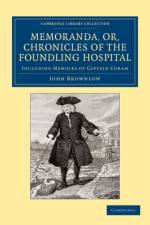
Captain Coram's Foundling Hospital was established in 1739 for 'the maintenance and education of exposed and deserted young children'. Hogarth was a governor of the hospital - he donated several pictures, including his portrait of Coram - as was Handel, whose famous performances of his oratorio Messiah were given there from 1750 to raise funds. John Brownlow (1800-73), himself a foundling, was secretary of the hospital from 1849 until his retirement. He introduced improvements to the children's education and was a staunch defender of the hospital, countering the criticism often levelled in the nineteenth century that taking in illegitimate children simply encouraged neglect. Brownlow's Memoranda, first published in 1847, presents a valuable account of the hospital, its early supporters, and Coram, as well as descriptions of the paintings (Kneller's portrait of Handel among them) which formed the first public art gallery in London. The book also includes contemporary engravings and facsimiles of many original documents.
An inspiration behind Sherlock Holmes, Jerome Caminada (1844-1914) was probably the most well-known detective in late Victorian England. Living in Manchester his whole life, he grew up in Deansgate, notorious for its brothels and beerhouses. He joined the police in 1868 and later became Manchester's first detective superintendent. Known for his unorthodox, eccentric methods, he regularly donned disguises and once hid inside a grand piano in order to catch a thief. Despite being responsible for imprisoning over 1,000 criminals, Caminada was perhaps progressive in his belief that punishment 'strengthens evil propensities, prevents repentance and renders reform impossible'. Peopled with characters such as 'Cabbage Ann', 'Bodger' and 'One Armed Kitty', this autobiography, first published in 1895, paints an extremely vivid picture of a seedy, dilapidated and dangerous Victorian city and its criminal underworld.
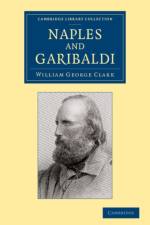
This short book derives from an article published in the periodical Vacation Tourists and Notes of Travel, edited by Francis Galton, in 1860. W. G. Clark (1821-78) was most famous as co-editor of the Cambridge Shakespeare, but was originally a classical scholar, whose Peloponnesus (1858) is also reissued in this series. This lively account of a critical period in Italian history, 'during the occurrence of events so strange and sudden that they resembled incidents of a romantic melodrama rather than real history', deliberately avoids the usual landscapes, ruins and peasants to give a day-by-day description of events in Naples at the time when Garibaldi had arrived in the city during his campaign for the liberation of the Kingdom of the Two Sicilies. However, as well as narrating political and military developments, Clark introduces some picturesque notes, including an account of the famous 'miracle' of the liquefaction of St Gennaro's blood.
Mariana Starke (1762-1838) was an ideal travel guide: she lived and travelled in Italy for much of the 1790s and had a truly practical mind, predicting perfectly what a traveller might need to know about both the journey and the destination. Travels on the Continent, first published in 1820, was partly based on her earlier bestseller Travels in Italy (also reissued in this series) but featured completely updated information based on extensive research during the late 1810s. Noting the latest improvements in transport and accommodation, which had both become more comfortable in Europe during the previous thirty years, the guide covers most of mainland Europe. For each popular route Starke offers itineraries and journey times, as well as recommendations for sightseeing and the best inns. In particular, she offers advice to the many travellers of the time who sought to improve their health through a change of climate.
Edmund Gosse (1849-1928), best known for his memoir Father and Son, was one of the foremost literary critics of his day, even though he had not received a university education. Invited to give the prestigious Clark Lectures at Cambridge, he developed the materials for this book, first published in 1885. Gosse sets out his theory of classical poetry, analysing its rise in the seventeenth century in opposition to freer, more romantic blank-verse forms. The book became the subject of a famously excoriating forty-page review by Oxford-educated critic John Churton Collins. While Collins' estimation of the inaccuracies in Gosse's work was largely correct, the review went far beyond constructive appraisal and caused a literary scandal, though Gosse's reputation was not permanently damaged. This book and the controversy it caused form part of the story of English literature as it established itself as a professional academic discipline.
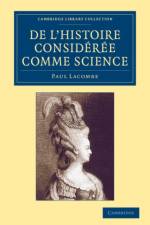
Paul Lacombe (1834-1919) had a varied career as a historian, senior official and general inspector of libraries and archives. He was one of the most brilliant minds of his day: in 1859 he graduated as first in his class from the elite Ecole Nationale des Chartes, and he was made Chevalier de la Legion d'Honneur in 1887. In 1894, Lacombe published this groundbreaking work, which put him at the heart of the debate about l'histoire science - history served by scientific inquiry - at a time of intense controversy among historians and sociologists. Lacombe insisted on the need for the historian to make strict selections of evidence and to establish a hierarchy among facts. He also laid the foundations of a history which brings social and economic factors to the forefront of investigation. The book remains important and relevant to historians, sociologists and ethnologists.
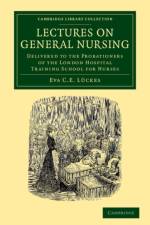
Eva Charlotte Ellis Luckes (1854-1919) was a pioneer of nursing training and friend of Florence Nightingale. In 1880, aged only twenty-six, she became matron of the London Hospital, the largest hospital in England, a post she held until her death. During her time there she improved working conditions for the nurses and trained her own staff, recognising the importance of a knowledge of anatomy and physiology, but never losing sight of the primary duty of a nurse to care for a patient's needs. First published in book form in 1884, these lectures were part of the training for probationers at the London Hospital. Emphasising the importance of attention to detail, the lectures address the practicalities of nursing, covering such topics as the management of infection, caring for sick children, bandaging techniques, and drug administration. Also reissued in this series is Luckes's popular 1886 textbook Hospital Sisters and their Duties.
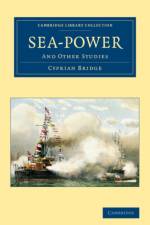
A naval officer from a generation that could spend an average of between 250 and 300 days a year at sea, Sir Cyprian Bridge (1839-1924) used this extensive experience and the knowledge he gained from wide reading to become a highly respected commander, firm in his beliefs and unafraid to voice them. In retirement he became a vocal critic of the drive to build bigger ships, believing that hardware should be subordinate to tactics. A regular contributor to newspapers, he wrote articles on naval history, tactics and strategy. This collection of articles was published in 1910, and includes his well-known paper, first delivered in 1902, setting out the difficulties in maintaining supplies and communications with a fleet based far from home. This work remains relevant to naval historians, and to those interested in how Britain maintained her maritime supremacy into the twentieth century.
First published in 1904, this book is the last of Lady Mary Anne Barker's memoirs of her life in several of Britain's colonies in the nineteenth century. Barker (1831-1911) was born in Jamaica and educated in England and France. In 1865, she moved to New Zealand with her second husband, Sir Frederick Broome, and spent three years living on a sheep station. She then lived in South Africa, Mauritius, Trinidad, and Western Australia following the various political appointments of her husband. During her travels she began her successful writing career and published several memoirs and housekeeping guides. In Colonial Memories, she recounts her life as a colonial wife, detailing her experiences in far-flung locales. The book also includes chapters on birds, interviews, General Charles Gordon (whom she met in Mauritius), and her servants. Several of the chapters were initially published as articles in London magazines.
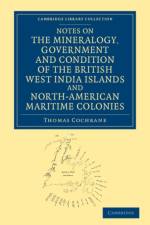
The most renowned naval officer of the mid-nineteenth century, Thomas Cochrane, Tenth Earl of Dundonald (1775-1860), served in wars against Spain and France, retiring as an admiral in the Royal Navy. He was also an M.P., vociferously calling for naval reform in Parliament. Due to a financial scandal, he left the Royal Navy for a period and became a celebrated mercenary, commanding naval forces in the wars of independence of Chile, Peru, Brazil and Greece. First published in 1851, this work contains notes on a voyage of 1849 around the West Indies and North America. Describing the peoples and geography encountered, it offers progressive remarks on the end of slavery, criticisms of plantation owners, and suggestions for commercial improvements. The book remains of enduring interest to scholars of naval, colonial and Caribbean history.
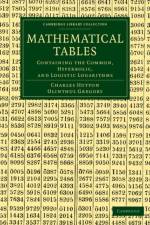
Prior to the advent of computers, no mathematician, physicist or engineer could do without a volume of tables of logarithmic and trigonometric functions. These tables made possible certain calculations which would otherwise be impossible. Unfortunately, carelessness and lazy plagiarism meant that the tables often contained serious errors. Those prepared by Charles Hutton (1737-1823) were notable for their reliability and remained the standard for a century. Hutton had risen, by mathematical ability, hard work and some luck, from humble beginnings to become a professor of mathematics at the Royal Military Academy. His mathematical work was distinguished by utility rather than originality, but his contributions to the teaching of the subject were substantial. This seventh edition was published in 1858 with additional material by Olinthus Gregory (1774-1841). The preliminary matter will be of interest to any modern-day reader who wishes to know how calculation was done before the electronic computer.
Adventures in the Rifle Brigade is probably the best-known and most popular of the many memoirs written by the men who served under Wellington in the Peninsular War and Waterloo Campaign. The author, John Kincaid (1787-1862), served as an officer in what was then the 95th Foot, the most famous of Wellington's regiments, which was 'first in the field and last out'. Kincaid fought in most of the great campaigns in the Iberian peninsula between 1809 and 1814 and at Waterloo in 1815. Originally published in 1830, this book is history at its best: informative, enlightening and perceptive, hard fact mixed with humour, a vivid description of life on campaign with one of the most famous regiments in the British army. It is, furthermore, highly readable and engaging: a contemporary review noted that Kincaid's book 'has one fault, the rarest fault in books, it is too short'.
A colourful British general, Robert Wilson (1777-1849) was knighted many times over by crowned heads, but never by his own monarch. Described by Wellington as 'a very slippery fellow', he fought in the Peninsular and Napoleonic wars, and his published account of the Egyptian campaign resulted in Napoleon complaining to the British government about accusations of his cruelty towards prisoners and his own men. Following the invasion of Russia, Wilson was seconded to Kutuzov's army, and was present at all the major engagements. Edited by his nephew and published in 1860, this second edition of Wilson's journal includes personal and official correspondence from Tsar Alexander I and his generals, and gives not only detailed accounts of troop movements and strategy, but also vivid descriptions of the savagery meted out by both sides. It remains an essential source of information on one of history's most famous military retreats.
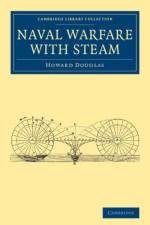
Sir Howard Douglas (1776-1861) fought in the Napoleonic wars in Spain, taught at the Royal Military College, served as lieutenant-governor of New Brunswick, lord high commissioner of the Ionian Islands, and as a Conservative MP for Liverpool. A military scholar, fellow of the Royal Geographical Society and Royal Society and associate of the Institution of Naval Architects, he wrote widely on bridges, systems of defence and attack, and on Britain's North American provinces. Written in retirement, when Douglas became an unofficial advisor to a succession of prime ministers, this work addresses the use of steam to propel ships, with detailed analysis of design, steering, propeller and paddle engineering and considerations of speed and manoeuvrability. The book goes on to examine tactics, including breaking the line, fuel economy and fleet arrangement. Built upon by others, this important work, first published in 1858, remains of interest to military historians.
This nineteenth-century travelogue documents John Turnbull's five-year journey around the world. Turnbull (fl. 1799-1813), a sailor in the merchant service, set out from Portsmouth in 1800 with the original purpose of pursuing trade in north-west Asia. In his ship, the Margaret, he sailed via Madeira and around the Cape of Good Hope. Setting aside his trading plans, he went on to explore Pacific territories, including Australia, Norfolk Island and the Society Islands. This book records his observations throughout, and also includes an appendix featuring Turnbull's account of his time in New Zealand. His notes from the voyage were first published in 1805, and an abridged version appeared a year later. This expanded edition was published in 1813. Popular at the time due to growing public interest in the Antipodes, A Voyage Round the World is a fascinating memoir of ship life and English exploration of the Pacific in the early nineteenth century.
The Nautical Magazine first appeared in 1832, and was published monthly well into the twenty-first century. It covers a wide range of subjects, including navigation, meteorology, technology and safety. An important resource for maritime historians, it also includes reports on military and scientific expeditions and on current affairs. The 1839 volume includes coverage of the competition for the design of a Nelson memorial. It reveals that the editor was unimpressed with the shortlist and strongly disliked the eventual winner, which still stands in Trafalgar Square. Other topics include naval promotions, births, marriages and deaths, a short history of Antarctic exploration timed to coincide with the departure of the Ross expedition, reports of anti-slavery measures, and analysis of steamship accidents and their causes. The volume also continues the editor's campaign for lightning conductors on board all Navy vessels, a measure finally implemented in 1869, and provides information about new lighthouses.
The Nautical Magazine first appeared in 1832, and was published monthly well into the twenty-first century. It covers a wide range of subjects, including navigation, meteorology, technology and safety. An important resource for maritime historians, it also includes reports on military and scientific expeditions and on current affairs. Alongside regular items on wrecks, harbours and lighthouses, naval personnel and law proceedings, the 1840 volume notes Queen Victoria's marriage. The Pacific region features strongly, with reports on the ongoing voyage of the Beagle around Australia, an ethnological article on the Maori (including descriptions of the haka and the 'almost amphibious' swimming of the women), and a brief note on the departure of 'a great number of emigrants' to New Zealand on board the Coromandel. Other contributions include Dumont d'Urville's account of his second Antarctic voyage, essays on China and Mozambique, and scientific work on electricity, magnetism and scurvy.
The Nautical Magazine first appeared in 1832, and was published monthly well into the twenty-first century. It covers a wide range of subjects, including navigation, meteorology, technology and safety. An important resource for maritime historians, it also includes reports on military and scientific expeditions and on current affairs. The volume for 1841 was the fifth in the 'enlarged series', and the journal's structure continued to evolve. China features strongly in this volume, with coverage of the ongoing First Opium War, and there are several reports from the Beagle survey in Western Australia, and from a Niger expedition, Sumatra and the Falkland Islands. James Ross, writing from Tasmania on 7 April, describes his Antarctic voyage and the naming of Mount Erebus, a 'magnificent volcano ... emitting flame and smoke in splendid profusion'. Closer to home, the magazine also outlines proposals for improvements to Bristol docks, involving a certain 'Mr Brunel'.
The Nautical Magazine first appeared in 1832, and was published monthly well into the twenty-first century. It covers a wide range of subjects, including navigation, meteorology, technology and safety. An important resource for maritime historians, it also includes reports on military and scientific expeditions, and on current affairs. The 1842 volume focuses strongly on China in the context of the First Opium War; the December issue reports the terms of the Treaty of Nanking, which ceded Hong Kong to the British. Books reviewed include John Lee Scott's account (also available in the Cambridge Library Collection) of his shipwreck and imprisonment in China during the war. The volume also includes descriptions of Japan, the Seychelles, Rio de Janeiro and New Zealand, and an article on the improvement of the Thames, together with a detailed essay on the evils of tobacco, and health advice for Europeans in Africa.
The Nautical Magazine first appeared in 1832, and was published monthly well into the twenty-first century. It covers a wide range of subjects, including navigation, meteorology, technology and safety. An important resource for maritime historians, it also includes reports on military and scientific expeditions and on current affairs. The 1834 volume devotes much space to naval news, including lists of ships and their captains, courts martial, promotions and appointments, births, marriages and deaths. It discusses the use of electricity for lighthouses and of steam engines in mines and ships, reports the launch of a new steam frigate, lists recent shipwrecks, and contains the timetables for the Falmouth packet boats to the Mediterranean, North and South America, and the Caribbean. Other contributions include a list of Arctic expeditions from England, a lurid account of a Maori haka and alleged cannibalism, and proposed designs for lightning conductors aboard ship.
The Nautical Magazine first appeared in 1832, and was published monthly well into the twenty-first century. It covers a wide range of subjects, including navigation, meteorology, technology and safety. An important resource for maritime historians, it also includes reports on military and scientific expeditions and on current affairs. The 1833 volume contains frequent references to steam power, comparing steam marine engines and those used in the mines of Cornwall, and noting new steamship routes. Arctic exploration features prominently, with consideration of policy on expeditions, a drawing of an ice-reinforced ship, and a report on Sir John Ross's recently completed second voyage (described in detail in Ross' 1835 book, also available in the Cambridge Library Collection). Other topics covered include Australia, the Pacific, the Falkland Islands and St Kilda, navigation infrastructure projects and naval personnel, while a long-running serial presents the 'advice of a sailor to his son'.
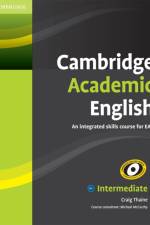
A three-level (B1+ to C1) integrated skills course for higher education students at university or on foundation courses. The B1+ Intermediate Student's Book introduces students to the characteristics of written and spoken academic texts. Students are guided towards developing relevant strategies for setting study goals and approaching these texts. From asking for help, understanding essay questions to planning essay paragraphs and listening for gist and detail, students have a wealth of opportunities to practice all core academic skills. The course develops independent learning skills and critical thinking through 'Study Tips' sections and allows for personalisation of learning in the 'Focus on your subject' sections. Five lecture skills units provide authentic practice in listening to lectures and note-taking.
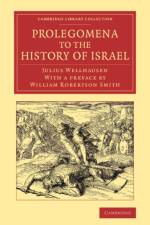
Julius Wellhausen (1844-1918) first published this work in German in 1878. Reissued here is the 1885 English translation of a revised 1883 version. Intended as a multi-volume work, this first book now stands as a self-contained work. A biblical scholar and orientalist, Wellhausen was professor of theology at Greifswald (until resigning for reasons of conscience) and then professor at Halle, Marburg and Gottingen. An early exponent of scientific philology, he placed the Pentateuch in a historical-social context, setting aside theological traditions. In this work, he sets out his method and argues that the Pentateuch is a synthesis of four independent narratives. He then examines the history of worship, sacrifice, sacred feasts, priests, and the law in ancient Israel. Wellhausen is a central figure in modern biblical studies, his theory dominated scholarship for a century, and his pioneering work remains of great interest in the field.
Controversial Jewish journalist and political lobbyist Lucien Wolf (1857-1930) co-founded the Jewish Historical Society of England in 1893, editing this work in 1901. It comprises a series of pamphlets and tracts written by Menasseh ben Israel (1604-57). An Amsterdam rabbi and founder of the city's first Hebrew publishing house, Menasseh was well regarded among non-Jewish theologians. As an advocate of messianic tradition, he sought to scatter the Jews across the world, leading him to England in the 1650s to campaign for their readmission following Edward I's edict of expulsion in 1290. The material presented here is chiefly concerned with Menasseh's interactions with Oliver Cromwell and shows the rabbi taking advantage of the contemporary drive for reinstatement for reasons of religious toleration as well as practical politics. The work includes the famous petition from the Jewish community and offers valuable insight into the history of the Jews in England.
Abonner på vårt nyhetsbrev og få rabatter og inspirasjon til din neste leseopplevelse.
Ved å abonnere godtar du vår personvernerklæring.