





Gjør som tusenvis av andre bokelskere
Abonner på vårt nyhetsbrev og få rabatter og inspirasjon til din neste leseopplevelse.
Ved å abonnere godtar du vår personvernerklæring.Du kan når som helst melde deg av våre nyhetsbrev.

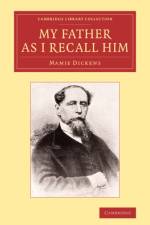
The official biography of Charles Dickens (1812-70) was published in 1872-4 by his close friend and literary executor John Forster, and has been reissued in this series. Of the many other memoirs and reminiscences of the great novelist, this book by his favourite daughter Mary (1838-96), known as Mamie, is perhaps the least familiar. Published in 1896, shortly after her death, it gives a loving picture, based on her own memories, of the person whom she held 'in my heart of hearts as a man apart from all other men, as one apart from all other beings'. Mamie, who had taken Dickens's side during the separation from his wife, and acted effectively as his housekeeper at Gad's Hill, had compiled an edition of her father's letters with her aunt Georgina Hogarth, and this second act of piety gives an idyllic - perhaps too idyllic - account of daily life with Dickens.
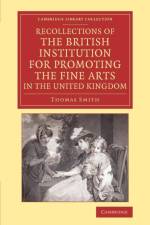
The British Institution for Promoting the Fine Arts in the United Kingdom was founded as a private art gallery in 1805, and took over the lease of publisher John Boydell's Shakespeare Gallery in Pall Mall, London. Its rich and noble subscribers (including the Prince of Wales, later George IV) patronised exhibitions of contemporary works, and also lent items for shows of Old Masters. The Institution also took in art students, and was a very popular public attraction in London: Jane Austen was among the many visitors from around the country. This 1860 book by Thomas Smith, a London historian, describes the founding and development of the Institution, with notices of its regular exhibitions and of special events such as the memorial dinner for Sir Joshua Reynolds. This is a fascinating account of a popular gallery in the first half of the nineteenth century, and of the tastes of its patrons and visitors.
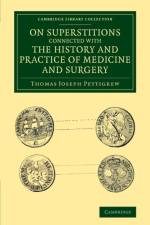
The surgeon Thomas Pettigrew (1791-1865) was interested in all aspects of antiquity, and gained fame in London society through his mummy-unwrapping parties. (His History of Egyptian Mummies is also reissued in the Cambridge Library Collection.) His interest in the early history of medicine is evidenced by this work, published in 1844, which describes the various forms of superstition which the science of medicine had always attracted since ancient times. Pettigrew considers alchemy and astrology, and the use of talismans, amulets and charms, as well as the history of Egyptian, Greek and Roman medicine, and some modern developments, including 'sympathetical cures' and the rejoining of severed fingers and ears. A chapter is devoted to the belief in the efficacy of the 'royal touch' against the King's Evil (scrofula), and another to the seventeenth-century faith healer Valentine Greatrakes, of whose alleged cures Pettigrew takes a robustly sceptical view.
Washington Allston (1779-1843) was considered by many at the time to be the greatest painter yet produced by the United States. After four years at Harvard, where he made an impression with his poetry, he went to London and became a pupil of the artist Benjamin West. On a tour of the continent, he met Samuel Taylor Coleridge in Rome, painted his portrait and became his firm friend. After a period at home, during which he married, Allston returned to London, and through Coleridge met Wordsworth, Southey, and the earl of Egremont, the great patron of artists, especially J. W. M. Turner. In this environment of intellectual and artistic experiment, Allston created paintings on religious, literary and historical topics, with an emphasis on landscape and contrasts of light and dark. This 1893 biography by his nephew and pupil Jared Bradley Flagg (1820-99) throws light on the artist, his works, and his milieu.
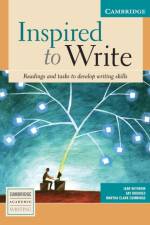
Inspired to Write uses powerful and provocative readings to inspire students to write personal and academic essays. Inspired to Write contains 45 thematically grouped readings taken from a variety of genres, including personal essays, stories, newspaper and magazine articles, and academic texts. The readings provide students with models of good writing, stimuli for discussion, and inspiration for their own writing. In addition, tips and strategies to help developing writers are woven throughout the text.
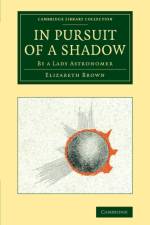
The title page calls the author of this 1888 work 'A Lady Astronomer'. She was Elizabeth Brown (1830-99), and the shadow she was pursuing was the eclipse of the sun on 19 August 1887, which could be best observed in northern Russia. Brought up by her father to make weather observations and to use a telescope, she became a member of the Liverpool Astronomical Society - on behalf of which she undertook her Russian expedition - and was later active in founding the British Astronomical Association. (The Royal Astronomical Society did not at this point admit women.) The book describes her journey, from her arrival at Hull to meet her travelling companion, to Russia, and home again. The actual viewing of the eclipse, at Kineshma, 200 miles north-east of Moscow, was spoiled by cloud cover, but her lively and observant account of her adventures is a fascinating record by a pioneering female scientist.
Professional English in Use Engineering presents and practises over 1000 words and phrases to help you function in English in your everyday working life. Using the highly successful format of presentation on the left hand page and practice on the right hand page, Professional English in Use Engineering presents essential vocabulary in context to help you use the words more easily. Easy to use, attractively designed in four colours throughout and and fully comprehensive, this book will be invaluable for anyone needing to use English for their professional lives. It is suitable for one-to-one classroom use and self-study.
Philip Luckombe (1730-1803), printer, author and shell-collector, published this work in 1771. (He had published a shorter version, A Concise History of the Origin and Progress of Printing, anonymously in the previous year.) Born in Exeter, he learned the printing trade there, and became a freeman of the city in 1776, but moved to London, where he wrote travelogues and several books on printing, edited dictionaries and encyclopaedias, and became an authority on shells. The first part of the book is concerned with the history of printing, including the various charters issued to the Stationers' Company, and the second with the practicalities of 'the art and mystery of printing' and 'the necessary materials used in a Printing House', including typefaces, presses and paper, and the duties of a warehouseman. This technical information continued to be used and quoted until the middle of the twentieth century.
Professional English in Use Marketing offers comprehensive coverage of key marketing vocabulary, it includes 50 units covering everything from marketing basics and the full marketing mix, through to research, advertising, media and PR.
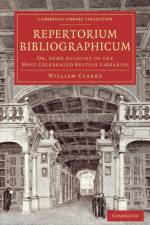
Little is known about William Clarke, the author of this 1819 survey of libraries in Britain, though hints in the opening pages suggest that he was acquainted with the activities of the Roxburghe Club. His object is 'to assist ... the collector in his pursuit of valuable editions of rare books'. A short survey of the major libraries of Europe is followed by descriptions of the collections which make up the British Museum's library, the great 'public' libraries, including those of Oxford and Cambridge, and the libraries of learned societies. Private libraries covered include those of Sir Joseph Banks, William Beckford, and the duke of Marlborough. The final portion of the work describes the content of some great library sales (a fuller list of sales having been given earlier in the book), from the seventeenth century to Clarke's own time. This remains a useful source for bibliographers and those interested in the provenance of books.
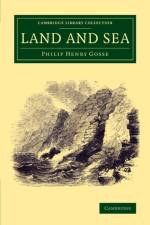
Philip Henry Gosse (1810-88) is best remembered today for the portrait given by his son Edmund in his autobiographical Father and Son. In his own day, he was famous as a natural historian, and his books were extremely popular. (His Naturalist's Sojourn in Jamaica is also reissued in this series.) In 1857, Gosse moved from London to Devon, where he spent the rest of his life. This 1865 book offers essays about various aspects of the geography and natural history of the West Country. There are some digressions (one chapter is on the woods of Jamaica), and reminders of the two great Victorian crazes, for ferns and for seashore life, which Gosse's writings partly instigated. In his final essay, on Dartmoor, is an appendix which argues that Britain is the biblical Tarshish - a reminder that Gosse was also a fundamentalist Christian who struggled with many aspects of contemporary science.
The antiquarian and topographer John Britton (1771-1857) is best remembered for his multi-volume series of The Beauties of England and Wales. A self-taught author and scholar, he was attracted by the work of John Aubrey (1626-97), who was born in the same Wiltshire village as him, and had very similar interests as an antiquarian and biographer, famous for his Brief Lives and for his surveys of and writings on Avebury and Stonehenge. Britton's research on Aubrey's life induced him to write a fresh account, using surviving manuscripts as well as printed sources, which would clear up the contradictions and errors of earlier versions. This 1845 book is a fascinating portrait of a sickly child who ended up a pauper because of family debts and lawsuits, but was a diligent and intelligent scholar, scientist and occultist, and a close friend of Thomas Hobbes and Robert Hooke.
Professional English in Use Medicine contains 60 units covering a wide variety of medical vocabulary. Topics include diseases and symptoms, investigations, treatment, examining and prevention. The book also introduces general medical vocabulary related to parts and functions of the body, medical and para-medical personnel, education and training, research, and presentations. Professional English in Use Medicine has been carefully researched using the Institute for Applied Language Studies medical corpus and is a must for teachers of medical English and for medical practitioners who need to use English at work, either in their own country or abroad.
By the early nineteenth century, meteorologists were equipped with plenty of useful devices: barometers, thermometers, hygrometers, and any number of variations thereon. But the nature of these instruments was not wholly understood. While it was possible to take accurate measurements with a barometer, what physical process made the mercury move? What exactly is atmospheric pressure? And how can one measure sunlight? Ranging from wild theories of gravity-resistant air particles to the latest experiments in altitude, chemist and physicist John Frederic Daniell (1790-1845) presents his answers in this collection of essays. First published in 1823, this enlarged second edition of 1827 includes his work on the climate of London, the effect of atmospheric conditions on human health, and suggested improvements for the design of a new hygrometer. Daniell later became the first professor of chemistry at King's College, London, and foreign secretary of the Royal Society.
While living in India for sixteen years, James Robert Ballantyne (1813-64) taught oriental languages to Indian pupils and became fascinated by Hindu philosophy, seeking to harmonise it with the Western tradition. He produced grammars of Hindi, Sanskrit and Persian, translations of Indian linguistics, and a science primer in English and Sanskrit (also reissued in the Cambridge Library Collection). Intended for the Tyro missionary and published in 1859, this work offers a summary of Hinduism (covering the Nyaya, Sankhya and Vedanta schools) and argues for the truth of Christianity, while acknowledging certain shared ideas. It contains a facing Sanskrit translation (with redactions of parts considered to be of no importance to 'those whom the missionary has to teach'). A valuable primary source for scholars of orientalism, this work helps to illuminate the religious dimensions of British imperialism.
Passages, Second Edition, is a thoroughly revised edition of Passages, the successful two-level, multi-skills course that takes adult and young-adult learners of English from the high-intermediate to advanced level. The Workbook has six-page units that provide additional practice in grammar, vocabulary, reading, and writing. The Workbook can be used for in-class work or assigned as homework.
The Nautical Magazine first appeared in 1832, and was published monthly well into the twenty-first century. It covers a wide range of subjects, including navigation, meteorology, technology and safety. An important resource for maritime historians, it also includes reports on military and scientific expeditions and on current affairs. The exceptionally long volume for 1876 devotes much space to the Merchant Shipping Act of that year, and to other legal matters including the recent history of legislation relating to merchant ships, rules for the loading of cargos, and the prevention of collisions at sea. It contains statistics on the year's shipbuilding activity, details of the fleets of several Atlantic shipping lines, and discussion of the recruitment, health and pensions of sailors. Other topics covered include the Suez Canal, Nares' Arctic expedition, the exhibition of scientific apparatus in Kensington, proposals for a Channel tunnel and railway, and solar steam generation.
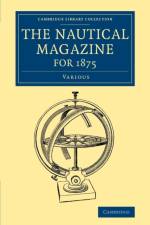
The Nautical Magazine first appeared in 1832, and was published monthly well into the twenty-first century. It covers a wide range of subjects, including navigation, meteorology, technology and safety. An important resource for maritime historians, it also includes reports on military and scientific expeditions and on current affairs. The 1875 volume is again dominated by reports on the Merchant Shipping Bill and debates on seaworthiness, with the editor continuing to prefer 'personal responsibility' to 'Plimsolecisms' and 'grandmotherly supervision' by the government. Serials focus on the economies of the British colonies, Atlantic shipping lines and emigration to South America, but fiction no longer features. Other topics include the opening of the Royal Naval Museum at Greenwich, innovations such as steel hawsers and desalination apparatus for producing drinking water, a proposal for generating power from wave action, and suggestions for using rats as a tasty and economical food source.
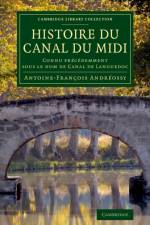
Officially opened in 1682, the Canal du Midi, designed and built by the engineers Pierre-Paul Riquet and Francois Andreossy, stretched from Toulouse to the Mediterranean. The present work was written by Andreossy's descendant, Antoine-Francois Andreossy (1761-1828), a French general and diplomat. A member of the Academie des Sciences, he analyses here the terrain of the south of France to show how and why the canal was built. Notably, the work became known for the author's argument that Riquet had usurped the glory that really belonged to his ancestor. Concluding with original documents from the period of the canal's construction, along with an appendix giving details on the canal's route, the book is reissued here in its first edition of 1800. A second edition appeared in 1804, and a third edition was begun but never completed.
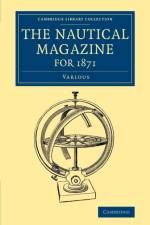
The Nautical Magazine first appeared in 1832, and was published monthly well into the twenty-first century. It covers a wide range of subjects, including navigation, meteorology, technology and safety. An important resource for maritime historians, it also includes reports on military and scientific expeditions and on current affairs. The 1871 volume, beginning a 'new series' under a new editor, opens by announcing certain changes to the magazine 'to bring it more into harmony with the spirit of this advancing age ... enlarging its usefulness' so as to be 'a means of adding to the honour and prosperity of England, and to the welfare of humanity at large'. Hydrography and navigation would continue to be prominent, but leisure reading would also feature. Other new departures include substantial articles analysing topics relating to a planned Shipping Bill, reports of the meetings of learned societies, and regular articles on competitive yachting and rowing.
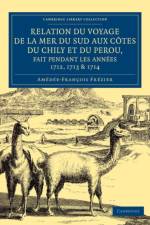
The first reliable maps of the Chilean and Peruvian coasts were drawn by the French explorer Amedee-Francois Frezier (1682-1773). In 1712, he was sent on a spying mission to the Spanish ports and fortifications of South America, travelling along the Pacific coastline as far as Callao, the port of Lima. His maps were later used by two of France's most famous explorers, Bougainville and Laperouse. Frezier also took a keen interest in botany, mineralogy, economics and anthropology. His most celebrated achievement is the introduction to Europe of the Chilean strawberry, which was used to create the hybrid species known today as the garden strawberry. Frezier's observations and illustrations of the people, plants and animals he encountered on his South American travels are given in this popular account, published in Paris in 1716 and subsequently translated into several European languages.
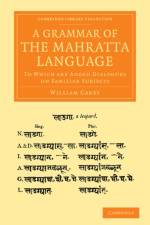
Marathi, an official language of Maharashtra and Goa, is among the twenty most widely spoken languages in the world. The southernmost Indo-Aryan language, it is also spoken in Gujarat, Madhya Pradesh, Karnataka, and Daman and Diu, and is believed to be over 1,300 years old, with its origins in Sanskrit. First published in 1805, this grammar of Marathi (then known as Mahratta) was compiled by the Baptist missionary William Carey (1761-1834) during his time in India. Its purpose was to assist Carey's European students at Fort William College in their learning of the language, and it is comprehensive in ITS coverage, providing numerous examples. Containing detailed descriptions of Marathi's Devanagari alphabet, its word and sentence formation, and its complex tense, voice, gender, agreement, inflection, and case systems, the work remains an invaluable resource for linguists today. Carey's 1810 dictionary of Marathi is also reissued in this series.
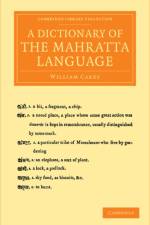
Marathi, an official language of Maharashtra and Goa, is among the twenty most widely spoken languages in the world. The southernmost Indo-Aryan language, it is also spoken in Gujarat, Madhya Pradesh, Karnataka, and Daman and Diu, and is believed to be over 1,300 years old, with its origins in Sanskrit. First published in 1810, this dictionary of Marathi (then known as Mahratta) was compiled by the Baptist missionary William Carey (1761-1834). Written during his time in India, it aimed to help European visitors communicate for business and social purposes with native speakers of the language. Methodical in its approach, it gives concise meanings and labels the various parts of speech. Containing over 9,500 entries in Devanagari script with English translations, it remains of interest to historical linguists and language typologists. Carey's 1805 grammar of Marathi is also reissued in this series.
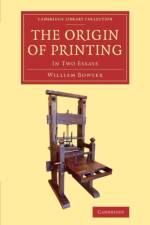
This work, first published in 1774, consists of a reissue of the Dissertation on the Origin of Printing in England by Conyers Middleton (1683-1750), first published in 1735, together with an abridgement of an account of the origin of printing by the Dutch lawyer Gerard Meerman (1722-71). It was compiled by the scholar and publisher William Bowyer (1699-1777) and his apprentice and later business partner John Nichols (1745-1826), several of whose works are also published in this series. Both essays debate the origins of printing, disputing the traditional account that Gutenberg introduced it to Europe and Caxton to England. Appendices describe the progress of printing in Greek and Hebrew, and the first printed polyglot Bibles. The names and achievements of Gutenberg's contemporaries in Germany and the Low Countries are given their due in this interesting overview of the earliest period of printing in the West.
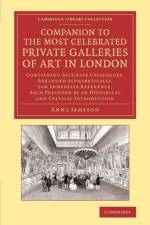
A professional author of art and literary criticism as well as travel writing, Anna Jameson (1794-1860) journeyed widely in Europe and North America, and moved in the literary circles which included the Brownings and Harriet Martineau. Many of her other works are also reissued in the Cambridge Library Collection. In 1844, she published this book on the great private art collections of London. She begins with an essay on the formation of the collections, from the seventeenth-century earl of Arundel onwards, and then describes in turn the Queen's Gallery, the Bridgewater, Sutherland, Grosvenor and Lansdowne galleries, and the collections of Sir Robert Peel and of the poet Samuel Rogers. For each collection there is an introductory essay, a catalogue raisonnee and a note of the most important items in the collection. This work is a fascinating and valuable guide to mid-nineteenth-century taste and fashion in art.
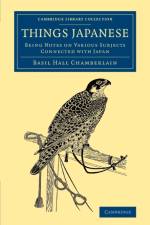
Basil Hall Chamberlain (1850-1935) first encountered Japan on a journey intended to promote the recovery of his health: he had suffered a nervous breakdown while working for Barings Bank. In May 1873, he arrived in Yokohama, and was immediately fascinated by traditional Japanese culture. The drive for modernisation had created a need for teachers of English, and Chamberlain was taken on as a tutor in the naval academy, at the same time studying the Japanese language to such good effect that in 1886 he was made professor of Japanese and philology of the Imperial University (later Tokyo University). This book, first published in 1890, and going into six editions over the next fifty years, is in the form of an encyclopaedia, with topics from 'abacus' to 'zoology'. It gives an affectionate account of aspects of Japanese culture which Chamberlain realised were disappearing under the relentless impact of Western influence.
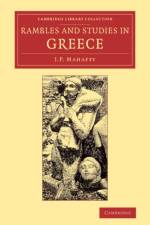
The classical scholar J. P. Mahaffy (1839-1919) is known equally for his work on Greek texts and Egyptian papyri (his edition of The Flinders Petrie Papyri is reissued in the Cambridge Library Collection). He graduated from Trinity College, Dublin and spent the rest of his working life there, as a fellow, and ultimately as provost from 1914 until his death. This work, in which Mahaffy records his impressions of his first visit to Greece, was published in 1876. Though it is not uncritical ('Nothing is more melancholy and more disappointing than the first view of the Athenian museums'), his account of the famous Greek sites of Attica, Thebes, Delphi and the Peloponnese is lively and observant, and his preface strongly argues that Greece, at a time of turmoil in Europe, was deserving of greater support from the western powers. The book will be of interest to scholars and travellers alike.
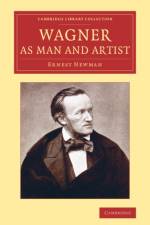
Ernest Newman (1868-1959) was undoubtedly the greatest Wagnerian critic of his age. (His magisterial four-volume Life of Richard Wagner is also reissued in this series.) In this 1914 work, he attempts 'a complete and impartial psychological estimate' of a complex and frequently misinterpreted genius. He notes that such an attempt would have been impossible before the publication in 1911 of Wagner's autobiographical Mein Leben, but in his opening chapter he also warns against a naive reading of that work, and of others by people 'who combine the maximum of good intentions with the minimum of critical insight'. He is clear-sighted about the strengths of Wagner the artist, not least his need to be 'the central sun of his universe', which of course led to Wagner the man behaving pettily, selfishly and frequently as a tyrant. This lucid account richly deserves its place in the history of Wagner studies.
The diary of John Rous (1584-1644) was edited for the Camden Society in 1856 by Mary Anne Everett Green (1818-95). Rous kept this diary between 1625 and 1643, when he was vicar of Santon Downham in Suffolk, recording both local events and reports of momentous happenings in Britain and abroad from Charles I's accession to the outbreak of the Civil War. M. A. E. Green was educated by her father, a Methodist minister, and began research on historical topics in the British Museum Reading Room and other London archives. She was recommended to Sir John Romilly as an external editor for the Calendar of State Papers project, and was the first to be appointed: her work became the standard which later editors followed. Rous's diary is preceded by an introduction placing its author in his family and historical context, and Green's notes explicate references to the people and events described.
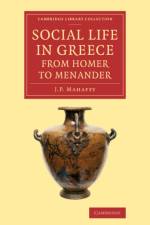
The classical scholar J. P. Mahaffy (1839-1919) is known equally for his work on Greek texts and Egyptian papyri (his edition of The Flinders Petrie Papyri is reissued in the Cambridge Library Collection). He graduated from Trinity College, Dublin and spent the rest of his working life there, as a fellow, and ultimately as provost from 1914 until his death. In this 1874 work, Mahaffy attempts to penetrate what he describes as the 'subjective side ... the feelings of the Greeks in their temples and their assemblies, in their homes, and their wanderings'. He considers the methodology to be used in interrogating works of literature for this sort of sociological, or even psychological, research, and examines the written evidence from Homer to Menander, focusing, almost inevitably, on Athens. This is an early and pioneering work in an area of study which has become increasingly significant over the last century.
Abonner på vårt nyhetsbrev og få rabatter og inspirasjon til din neste leseopplevelse.
Ved å abonnere godtar du vår personvernerklæring.