
Gjør som tusenvis av andre bokelskere
Abonner på vårt nyhetsbrev og få rabatter og inspirasjon til din neste leseopplevelse.
Ved å abonnere godtar du vår personvernerklæring.Du kan når som helst melde deg av våre nyhetsbrev.

An army officer and politician, Richard William Howard Vyse (1784-53) also made his mark as an Egyptologist. This three-volume work, published in 1840-2, has remained an instructive resource in Egyptology up to the present day. Adopting the style of a journal, with illustrations and diagrams throughout, it narrates in detail his excavations at Giza, surveying and measuring the pyramids. Following Vyse's return to England, the work was continued by the engineer and surveyor John Shae Perring (1813-69). Vyse gives observations of his travels, and of the landscape, people and architecture he encountered, as well as details of the important work he carried out. Most notable was his discovery, using gunpowder, of four new chambers in the Great Pyramid containing 'quarry marks' - graffiti by the pyramid builders. Volume 1 (1840) covers the start of his travels in Egypt and the early excavations on the Great Pyramid.
An army officer and politician, Richard William Howard Vyse (1784-53) also made his mark as an Egyptologist. This three-volume work, published in 1840-2, has remained an instructive resource in Egyptology up to the present day. Adopting the style of a journal, with illustrations and diagrams throughout, it narrates in detail his excavations at Giza, surveying and measuring the pyramids. Following Vyse's return to England, the work was continued by the engineer and surveyor John Shae Perring (1813-69). Vyse gives observations of his travels, and of the landscape, people and architecture he encountered, as well as details of the important work he carried out. Most notable was his discovery, using gunpowder, of four new chambers in the Great Pyramid containing 'quarry marks' - graffiti by the pyramid builders. Volume 2 (1840) contains detailed descriptions of the excavation of several pyramids and their contents, and appendices with extensive measurements.
An army officer and politician, Richard William Howard Vyse (1784-53) also made his mark as an Egyptologist. This three-volume work, published in 1840-2, has remained an instructive resource in Egyptology up to the present day. Adopting the style of a journal, with illustrations and diagrams throughout, it narrates in detail his excavations at Giza, surveying and measuring the pyramids. Following Vyse's return to England, the work was continued by the engineer and surveyor John Shae Perring (1813-69). Vyse gives observations of his travels, and of the landscape, people and architecture he encountered, as well as details of the important work he carried out. Most notable was his discovery, using gunpowder, of four new chambers in the Great Pyramid containing 'quarry marks' - graffiti by the pyramid builders. Volume 3 (1842) describes the work continued by Perring on various pyramids, and on the mummy pits at Saqqara.
Walter Crane (1845-1915) is best remembered today as the illustrator of whimsical stories for children, but in fact he worked in many styles and genres throughout his life. The son of a painter, he was apprenticed to a wood engraver at the age of thirteen, and his father died shortly afterwards. By the time his apprenticeship was completed, Crane was painting as well as engraving, and joined the circle of the Pre-Raphaelites, being especially influenced by the politics of William Morris and the aesthetics of the Arts and Crafts movement. This highly illustrated 1907 autobiography traces his life from his childhood in Torquay through the difficult period following his father's death to his success as an illustrator and decorative artist, describing work, politics and travel. Crane may have felt that he was not given recognition as a serious painter, but this engaging account of a happy life does not show it.
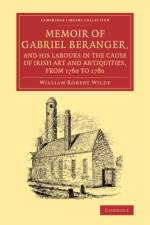
Sir William Wilde (1815-76), surgeon and father of Oscar Wilde, was an Irish patriot and antiquarian with a keen interest in the history of his country. This life of Gabriel Beranger (1729-1817), published in 1880, describes the activities of an Irish antiquarian in the eighteenth century. Born in Rotterdam, the Huguenot Beranger moved to Dublin in 1750 and opened a print shop. Historical pursuits were becoming popular in Dublin society at the time, and Beranger's sketches of ruins and monuments found great popularity. He went on several tours of Ireland, keeping a journal of his observations and the people he encountered, while making plans and drawings of antiquities with a view to later publication. Wilde's work, drawn from Beranger's journal and from the memories of people who had known him in his old age, offers an engaging insight into early antiquarian practice in Ireland.
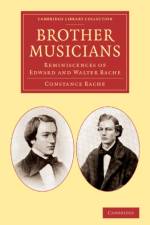
Francis Edward Bache (1833-58) and his younger brother Walter (1842-88) were active during a rich period of musical life in Britain. The Philharmonic Society and Crystal Palace concerts in London, the Halle Orchestra in Manchester, and the Birmingham and Three Choirs festivals were all well established, while celebrated composer/conductors from Berlioz to Wagner and virtuosi including violinist Joseph Joachim and pianist Anton Rubinstein were in great demand. Edward, a pupil of Sterndale Bennett, was a promising organist and composer whose potential was tragically ended by his early death from tuberculosis. Walter, a pupil of Liszt from 1862 to 1865, became a dedicated promoter of the pianist/composer's music to the British concert-going public through annual concerts that he financed. First published in 1901, this affectionate account of the brothers' lives by their sister Constance (1846-1903) includes many letters as well as lists of Edward's compositions and Liszt's orchestral works performed at Walter's concerts.
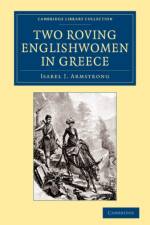
Isabel J. Armstrong (born c.1848) and her travelling companion Edith Payne were part of an increasing cohort of determined women entering territory deemed unsuitable for ladies: travel. Women such as Isabella Bird (whose work is also available in this series) and Mary Kingsley had defied social convention in order to explore the world around them. Their independence of spirit and thirst for knowledge made them inspirational role models. Little is known of Armstrong and Payne other than what is recorded in this engaging account of their Greek adventures, about which 'the general opinion seemed to be that we were going out to be murdered'. First published in 1893, the book depicts a country whose traditions and way of life were in danger of being swept away by the advance of modern technology. Incorporating vivid descriptions of Piraeus, Olympia, Thessaly and the monasteries of Meteora, the narrative is charmingly illustrated with Armstrong's own sketches.
The Scottish social anthropologist Sir James Frazer (1854-1941) first published The Golden Bough in 1890. A seminal two-volume work (reissued in the Cambridge Library Collection), it revolutionised the study of ancient religion through comparative analysis of mythology, rituals and superstitions around the world. Following the completion in 1915 of the revised twelve-volume third edition (also available in this series), Frazer found that he had more to say and further evidence to present. Published in 1936, Aftermath was conceived as a supplement to The Golden Bough, offering his additional findings on such topics as magic, royal and priestly taboos, sacrifice, reincarnation, and all manner of supernatural beliefs spanning cultures, continents and millennia. Sealing Frazer's profound contribution to the study of religion and folklore, this work remains an important text for scholars of anthropology and the history of ideas.
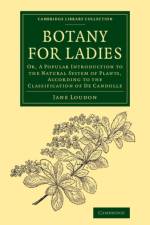
Jane Loudon (1807-58), the Mrs Beeton of the Victorian gardening world, wrote several popular books on horticulture and botany specifically for women. Her enthusiasm for plants and gardening was encouraged by her husband, the landscape designer John Claudius Loudon, whom she married in 1830. Her Instructions in Gardening for Ladies (also reissued in this series) was enormously successful, and she followed it up in 1842 with this volume on botany, in which she uses the natural system of classification. The 'grand object' of the work is 'to enable my readers to find out the name of a plant when they see it ... or, if they hear or read the name ... to make that name intelligible to them'. She takes her readers through the botanical orders, using a familiar plant as an exemplar for each, and then presents de Candolle's systematic description of plant species.
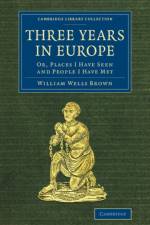
William Wells Brown (1814?-84) was uncertain of his own birthday because he was born a slave, near Lexington, Kentucky. He managed to escape to Ohio, a free state, in 1834. Obtaining work on steamboats, he assisted many other slaves to escape across Lake Erie to Canada. In 1849, having achieved prominence in the American anti-slavery movement, he left for Europe, both to lecture against slavery and also to gain an education for his daughters. He stayed in Europe until 1854, since the Fugitive Slave Act of 1850 had made it possible that he could be taken back into slavery if he returned. Meanwhile, he had begun to write both fiction and non-fiction, and this account of his travels in Europe, prefaced by a short biography, was published in 1852. Brown was able to return to the United States in 1854, when British friends paid for his freedom.
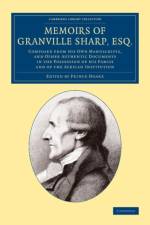
Self-educated in languages and the law, the author Granville Sharp (1735-1813) was a leading anti-slavery campaigner. Though many of his associates in the abolitionist movement were dissenters or freethinkers, he was an Anglican very much concerned with the fate of the church in America after the war of independence. His family consigned his archives to the painter, playwright and author Prince Hoare (1755-1834), who published this biography in 1820. Sharp is less well remembered than other British abolitionists such as Clarkson and Wilberforce, but it was his work which, in 1772, brought the landmark case of James Somerset before Lord Mansfield, who upheld Sharp's legal arguments: as a result, it was henceforth understood that any slave reaching the shores of England became free. Sharp's continuing work for abolition, and his many other charitable and scholarly activities, are detailed in this fascinating work, drawn directly from his own writings.
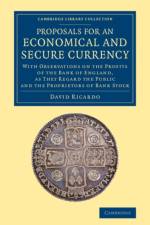
David Ricardo's work on currency was published in 1816, and this second edition appeared in the same year. Enormously successful as a stockbroker, Ricardo (1772-1823) was able to lead the life of a wealthy country squire, while his intellectual interests caused him to move in the circles of Thomas Malthus and James Mill. Written at the urging of the Cornish businessman Pascoe Grenfell, MP, who shared Ricardo's interest in financial matters, this work considers the problem of the national debt, in the context of paper money and whether it should in principle be exchanged at face value for gold bullion rather than for minted coins. Ricardo was very concerned at the large profits being made by the Bank of England in its dealings with the government, and suggests here the creation of an independent central bank, a proposal to which he later returned.
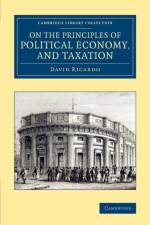
This work, originally published in 1817, is one of the founding texts of modern economics. Enormously successful as a stockbroker, David Ricardo (1772-1823) was able to lead the life of a wealthy country squire, while his intellectual interests caused him to move in the circles of Thomas Malthus and James Mill. It was at Mill's urging that Ricardo published this book, entered Parliament in 1819 (as an independent member for a rotten Irish borough) and worked for financial and parliamentary reform. Ricardo argues in this work that Adam Smith was mistaken in his understanding of the economic significance of rent, and also demonstrates the mutual benefit of free trade between countries, as against protectionism. The book's findings and conclusions have been controversial since its publication, but led John Stuart Mill to judge Ricardo 'the greatest political economist'.
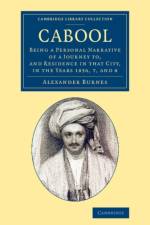
In the long and often disastrous history of British entanglement in Afghanistan, the name of Alexander Burnes (1805-41) deserves to be remembered. Aged sixteen, he went to India to take up a post in the army, and speedily learned both Hindustani and Persian. His skills led him to political work, and he himself proposed a covert expedition to Bukhara, to survey the country and to observe the expansionist activities of the Russians in central Asia. (Burnes' 1834 account of this journey is also reissued in this series.) In 1836, he was sent to Kabul, and became involved in the British plan to replace Dost Muhammad Khan with Shah Shuja (which he personally thought a mistake). The British became a focus of increasing local discontent, and in November 1841 Burnes was murdered in Kabul by a mob. This account of his stay in the city was published posthumously in 1842.
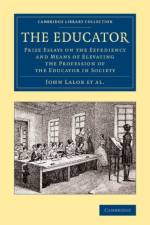
This work on the theory of education was first published in 1839. The five writers had been chosen as the winners in a competition for an essay on the 'Expediency and Means of Elevating the Profession of the Educator in Society', organised by the Central Society of Education, founded in 1837 to promote state funding of education, at a time when the 'monitor' system, whereby older children taught younger ones, was seen as an effective (and money-saving) method. The journalist John Lalor (1814-56) won first prize with a wide-ranging consideration of all the aspects of education, comparing the status of teachers through history and across several countries, and championing their 'sacred mission'. The runners-up were the writer John A. Heraud, the Unitarian minister Edward Higginson, the lawyer and author James Simpson, and Mrs Sarah Porter, prolific writer on education and sister of the political economist David Ricardo.
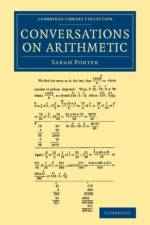
In this 1835 work, Sarah Porter, nee Ricardo (1790-1862) shows her enthusiasm for arithmetic, and her concern for teaching it in a way that will develop the pupil's mind: 'There is no branch of early education so admirably adapted to call forth and strengthen the reasoning powers.' She uses the device of a conversation between pupil and teacher, popularised by Jane Marcet (several of whose works are reissued in the Cambridge Library Collection), to guide young Edmund from the written symbols for numbers through addition, subtraction, multiplication and division, fractions and decimals, proportion, and square and cube roots. Answers to the questions are provided at the end of the book. A member of the Central Society of Education, which promoted imaginative theories of education instead of rote learning, Mrs Porter reworked her book in 1852 as Rational Arithmetic, a more conventional and less entertaining textbook for use in schools.
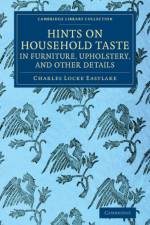
Later recognised for his work in interior and furniture design, Charles Locke Eastlake (1833-1906) had shown early promise in making architectural drawings, and he was awarded a silver medal in 1854 by the Royal Academy. His passion for Gothic style developed during a tour of Europe in the late 1850s, and his History of the Gothic Revival (1872) is also reissued in this series. Focusing on interior design, the present work was published in 1868 and influenced the style of later nineteenth-century 'Modern Gothic' furniture. It contains many illustrations of Eastlake's own designs for furniture, tiles and wallpaper, including colour plates which can be viewed online at www.cambridge.org/9781108075343. The book moves from the street into the home and then from room to room, finishing with chapters on crockery, cutlery, glassware, and dress and jewellery. It gives a fascinating insight into the late Victorian taste for the medieval, also fostered by the Arts and Crafts movement.
First published in 1880, this is a complete catalogue of the traders and products that featured in an exhibition at London's Agricultural Hall, 5-17 July 1880. The focus of the exhibition was printing, stationery, papermaking and related trades, and around 200 organisations participated, displaying items such as printing appliances, papermaking machinery, stationery materials, packaging, and precision instruments. The catalogue's editor, journalist Lucien Wolf (1857-1930), prefaces it with an informative overview of trade exhibitions, examining their history and future, and their role in bringing together producers, retailers, buyers, wholesalers and importers to assess competition, compare products and evaluate the state and progress of their trades. The main body of the catalogue contains information on exhibitors and their products, and a range of authentic advertisements. Providing a revealing snapshot of industrial England, this work remains of interest to historians and scholars interested in Victorian trade.
York Minster has the largest cathedral library in England. The original library was established in the eighth century, but nothing survives from this period. A new collection was begun in 1414 when John Newton left books to the Minster, and a new library was erected. Further bequests followed - including in 1628 the important collection of Tobie Matthew, archbishop of York - which reflect the religious controversies of the sixteenth century. Today the library contains some 120,000 items, of which more than 25,000 were printed before 1801. This catalogue, published in 1896, was compiled by James Raine (1830-96), chancellor of York Minster, a leading figure in the nineteenth-century restoration of the library. It contains an alphabetical list of most of the printed books that were then in the library, but does not include recent theological acquisitions or the bequest by Edward Hailstone (d.1890) of 10,000 items on Yorkshire.
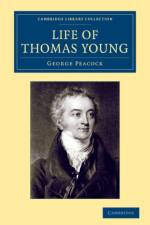
Admired long after his death by the likes of Lord Rayleigh and Einstein, Thomas Young (1773-1829) was the definition of a polymath. By the age of fourteen he was proficient in thirteen languages, including Greek, Hebrew and Persian. After studies in Edinburgh, London, Gottingen and Cambridge he established himself as a physician in London, and over the course of his life made contributions to science, linguistics and music. He was the first to prove that light is a wave rather than molecular, his three-colour theory of vision was confirmed in the twentieth century, and his work in deciphering the Rosetta Stone laid the foundations for its eventual translation. Published in 1855, this engaging biography drew on letters, journals and private papers, taking the mathematician George Peacock (1791-1858) twenty years to complete. It stands as a valuable and affectionate portrait of 'the last man who knew everything'.
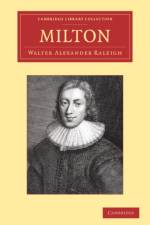
Ranking among the greatest of all English poets, John Milton (1608-74) was an influential thinker during a particularly volatile period in his nation's history. His supreme masterpiece Paradise Lost forms one of the pillars of English literature. The literary scholar and historian Sir Walter Alexander Raleigh (1861-1922) was educated at University College London and King's College, Cambridge. Following posts at Liverpool and Glasgow, he was appointed Professor of English Literature at Oxford University, where he also served as an adviser to the Clarendon Press. This work, first published in 1900, is based upon lectures he gave the previous year as Clark Lecturer in English Literature at Trinity College, Cambridge. Admired by the critic William Empson, it is a penetrating study of the great poet and contains a biographical sketch as well as lucid analyses of Milton's use of language and its significant influence.
Highly educated and accustomed to intellectual society, the writer and woman of letters Hester Lynch Piozzi (1741-1821) became a close friend of Samuel Johnson through her first husband, the brewer Henry Thrale. Her second marriage, to the Italian musician Gabriel Mario Piozzi in 1784, estranged her from Johnson, but following his death she published her groundbreaking Anecdotes of the Late Samuel Johnson, anticipating Boswell's biography. As well as her letters, poetry, essays, memoirs and travel diaries (several of which are also reissued in the Cambridge Library Collection), she was one of the first women to produce works on philology and history. Originally published in 1833, this highly readable volume of recollections by the writer and translator Edward Mangin (1772-1852) draws on her letters to him and his family (as well as on other memorabilia), extracts from which are quoted extensively in the work.
One of the most important musicologists of his age, Hugo Riemann (1849-1919) influenced an entire generation in its thinking. He held several teaching posts before settling at the University of Leipzig in 1895. A prolific writer on music theory, publishing works on almost every aspect of the subject, he is best remembered for his celebrated Musik-Lexikon (1882). These three lectures, setting out his thinking on how we listen to music, were first published in 1888 as Wie horen wir Musik? and in 1895 in this English translation by Heinrich Bewerunge (1862-1923), plainchant scholar at St Patrick's College, Maynooth. Each lecture deals with a different aspect of the overarching question posed in the original title, revealing Riemann's thoughts on the transformation of hearing into feeling, the different psychological effects of dynamics, emotional responses to rhythm and harmony, and passive and active listening.
William Poel (1852-1934), actor, director and author, began his acting career in 1876, deliberately choosing provincial touring in order to learn his craft. After a period as manager of the Royal Victoria Hall and Coffee Tavern (later the Old Vic), he worked as stage manager for the actor-manager Frank Benson. In the 1890s he founded the Elizabethan Stage Society in order to demonstrate his fervent belief that only a return to Elizabethan performance methods would enable a true understanding of Shakespeare's plays. This was to have a profound influence on modern productions, with directors such as Tyrone Guthrie and John Gielgud adopting his ideals rather than his often idiosyncratic practices. Moreover, his long-held wish for a replica of the Globe Theatre has since become a reality. Poel was also a prolific author and this work, first published in 1913, explores his philosophy by bringing together four articles on the staging of Shakespeare.
Elizabeth Gaskell (1810-65) lost her mother at an early age and was sent to live with her aunt in Knutsford, a country town outside Manchester which is often thought to bear a notable resemblance to the fictional Cranford. In this engaging biography, Esther Alice Chadwick (1862-1929) shows how many historical facts of Gaskell's life influenced her novels and stories - from the character of her home town to the sudden disappearance of her brother in India. Originally published in 1910, this was the first full biography of the author; the revised edition of 1913 is reissued here. It includes additional research, illustrations, and excerpts from Gaskell's letters, which provide a touching glimpse into the life of a writer who often felt herself torn between her intellectual and domestic duties. Still a major source for modern biographies, Chadwick's book remains an authoritative source for scholars and students of English literature.
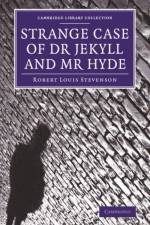
This short novel, published in 1886 by Robert Louis Stevenson (1850-94), may well be more familiar in its many stage, film and television adaptations than in its original form, while 'Jekyll and Hyde' has become the shorthand for a character who seems to have a 'split personality'. Stevenson claimed that the main features of the story came to him in a dream, and he wrote it very rapidly, though ill and bedridden at the time. Priced at one shilling (the genre of macabre and horror stories was known as the 'shilling shocker'), it was an immediate success. Though not the first of Stevenson's works to explore the notion of the divided self, in a period where increasing concern was felt about the possible negative sides of discoveries in both the physical and biological sciences, the story clearly struck a chord, and it has remained popular ever since.
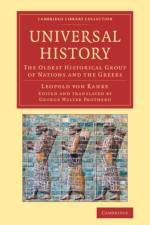
'No apology can be needed for introducing to English readers the latest work of Leopold von Ranke', states the editor's preface to this English translation, first published in 1884. Ranke (1795-1886) is well known for pioneering the modern historical method which advocates empiricism, rather than a focus on the philosophy of history. Emphasising the importance of presenting history exactly as the surviving evidence, both documentary and archaeological, reveals it to have happened, Ranke asserted that different eras need to be understood in their own contexts rather than in relation to each other. Though it is limited to the Mediterranean and the Middle East, this work takes a broad overview of 'the oldest historical group of nations and the Greeks', beginning with ancient Egypt and concluding with Alexander the Great and his immediate successors. Other works by Ranke in English translation are also reissued in the Cambridge Library Collection.
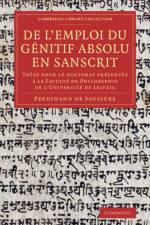
Ferdinand de Saussure (1857-1913), the founder of structuralist linguistics and pioneer of semiotics, began his career as a scholar of Indo-European languages (his early study of the Proto-Indo-European vowel system is also reissued in this series: ISBN 9781108006590). In 1880, Saussure was awarded a doctorate from the University of Leipzig for this study, which appeared in print in 1881. He published almost nothing more during his lifetime. Earlier Indo-Europeanists had noted the almost complete absence of the genitive absolute from Classical Sanskrit texts. Saussure argued that it must have been a feature of colloquial speech, as it appears in formulaic expressions in less 'purist' Sanskrit texts, as well as in Pali. He analyses different forms of the construction, and lists nearly 500 examples, many from the Mahabharata and the Ramayana. The thesis is also of interest as it reveals Saussure's early approach to problems of syntax.
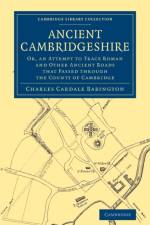
This work, first published in 1853, grew from a paper describing the crossing of two Roman roads at Cambridge, and the small Roman fort at Grantchester. However, other Roman sites were added to the investigation, and the book came to encompass all the Roman and other ancient roads of Cambridgeshire, as well as the locations where Roman coins and other remains had been found. The author, Charles Cardale Babington (1808-95), is best remembered as the pupil and assistant of John Stevens Henslow and as his successor in the chair of botany at Cambridge. However, Babington was also keenly interested in archaeology, and this fascinating work of local history is the first substantial account of Roman Cambridgeshire, describing not only the courses of the various roads but also finds such as the Roman villa at Comberton, the Roman cemetery at Trumpington, and large numbers of individual coins and other artefacts.
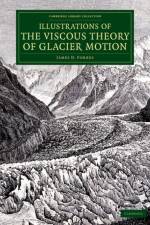
This book brings together works published between 1846 and 1859 by the Scot James D. Forbes (1809-68) and Irishman John Tyndall (1820-93), both of whom were experienced alpinists as well as glaciologists. However, their views on the motion of glaciers were disparate, and a scientific quarrel over primacy and credit for discoveries continued even after their respective deaths. These papers include Forbes' articles on experiments on the flow of plastic bodies and analogies between lava and glacier flows, and on the plasticity of glacier ice, as well as Tyndall's observations on the physical phenomena of various Alpine glaciers, including the famous 'Mer de Glace', and a piece on the structure and motion of glaciers, co-written with Thomas Huxley. Several works by and about all three scientists (including works on Alpine travel) have also been reissued in this series.
Abonner på vårt nyhetsbrev og få rabatter og inspirasjon til din neste leseopplevelse.
Ved å abonnere godtar du vår personvernerklæring.