
Gjør som tusenvis av andre bokelskere
Abonner på vårt nyhetsbrev og få rabatter og inspirasjon til din neste leseopplevelse.
Ved å abonnere godtar du vår personvernerklæring.Du kan når som helst melde deg av våre nyhetsbrev.

Joined by seven eminent natural scientists, including Karl von Scherzer (1821-1903), the Austrian naval expedition of 1857-9 was remarkable for its globe-spanning scale. During the course of the voyage, the naturalists collected an abundance of samples which contributed to several scientific discoveries, including the isolation of cocaine in its pure form. Some of the investigations also revolutionised knowledge in such fields as geology, oceanography, hydrography and geomagnetism, and are still being studied by modern-day researchers. Prepared by Scherzer and first published in English in 1861-3, this is a compelling three-volume account of the mission, remaining relevant to scholars interested in naval exploration and the history of science. Volume 2 covers the leg from India to Australia, with notes on the Nicobar Islands, Singapore, Java, Manila, Hong Kong, Shanghai, and Pacific archipelagos.
The horticulturalist John Lindley (1799-1865) worked for Sir Joseph Banks, and was later instrumental in saving the Royal Horticultural Society from financial disaster. He was a prolific author of works for gardening practitioners but also for a non-specialist readership, and many of his books have been reissued in this series. The first volume of this two-volume work was published in 1834, and the second in 1837. At a time when botany was regarded as the only science suitable for study by women and girls, Lindley felt that there was a lack of books for 'those who would become acquainted with Botany as an amusement and a relaxation', and attempted to meet this need. In the second volume of 'this little work', Lindley continues to introduce new 'tribes' of plants, including exotica such as mangoes and Venus fly traps, to his lady correspondent and her children.
Joined by seven eminent natural scientists, including Karl von Scherzer (1821-1903), the Austrian naval expedition of 1857-9 was remarkable for its globe-spanning scale. During the course of the voyage, the naturalists collected an abundance of samples which contributed to several scientific discoveries, including the isolation of cocaine in its pure form. Some of the investigations also revolutionised knowledge in such fields as geology, oceanography, hydrography and geomagnetism, and are still being studied by modern-day researchers. Prepared by Scherzer and first published in English in 1861-3, this is a compelling three-volume account of the mission, remaining relevant to scholars interested in naval exploration and the history of science. Opening with the guidance given by Alexander von Humboldt prior to the expedition, Volume 1 covers the leg between Europe and India. It includes notes on the social structure of the populations encountered, and on the local flora and fauna.
Inhabited by Polynesians since the thirteenth century and discovered by Europeans in the seventeenth, New Zealand is a geologically diverse island group where active volcanoes and frequent earthquakes have resulted in a rich variety of rock formations and geothermal activity. In 1859-60, the geologist Ferdinand von Hochstetter (1829-84) was employed by Auckland's government to undertake the first systematic geological survey of the islands, the results of which were first published in German in 1863 and translated into this English version in 1867. Hochstetter describes his travels across New Zealand, his encounters with native people and his scientific observations. He analyses plants, wildlife and fossils, describes mountains, rocks and boiling springs, and evaluates evidence of glaciers and tectonic activity. As a result of Hochstetter's work, several species in New Zealand were named after him. This book remains a valuable resource in the history of Australasian natural science.
The premiere of Otello, Giuseppe Verdi's only new opera for over a decade, was a much-anticipated event in Milan in February 1887, and musical talents from all over Europe had vied for the chance to be part of it. An American author and former opera singer, Blanche Roosevelt (1853-98) took an assignment as a special correspondent in Milan during the weeks surrounding the opera's premiere at La Scala. She was well connected in the artistic community and personally acquainted with Verdi himself, and her dispatches paint an informed and vivid picture of the city and its musical and literary scene in the late 1880s. Published in 1887, along with a short biography of Verdi, anecdotes, illustrations, and reminiscences of conversations with the composer, these writings will appeal to both music scholars and opera lovers.
In the nineteenth century and beyond, scientists at Cambridge produced some of the most significant developments in the study of biological variation and inheritance. The work of William Bateson (several of whose books are also reissued in this series) was especially important in this regard. This book, first published in 1906 by the botanist Robert Heath Lock (1879-1915), lucidly traces these and other milestones in modern biological understanding. A readable account is given of the evolution of the discipline since the publication of Darwin's On the Origins of Species in 1859, taking in the biometrical contributions of Francis Galton and the research into mutation conducted by Hugo de Vries. The pioneering experiments of Gregor Mendel, and the more recent rediscovery of his laws of inheritance, are clearly contextualised so that non-specialist readers can appreciate the scientific progress that had been made in the half-century prior to the book's first publication.
Educated at Christ Church, Oxford, Henry Fynes Clinton (1781-1852) distinguished himself as a classical scholar following an unsuccessful parliamentary career. He first published Fasti Hellenici in 1824; reissued here is the 1827 second edition, which contained a number of additions and corrections. The work received such a favourable reception that it was followed by further instalments in 1830 and 1834. His two-volume Fasti Romani (1840-5) is also reissued in this series. Featuring chronological tables of the civil, military and literary affairs of Greece from 560 to 278 BCE, Fasti Hellenici includes references in the extant sources to the rulers, philosophers and poets of the period. Alongside an essay on demography, the extensive appendices provide further information on kings, tyrants, orators, statesmen and other notables. A valuable contribution to the study of the ancient world, this work testifies to its author's immensely wide and methodical reading in Greek literature.
Imprisoned in 1849 for organising a Carbonari cell among the workers at Pompeii, numismatist and archaeologist Giuseppe Fiorelli (1823-96) was eventually appointed Director of Excavations, as well as Professor of Archaeology at Naples, in 1860. He introduced systematic excavation to the site and meticulous record-keeping, including the creation of a general map and a 1:100 model, as well as the use of plaster casts to capture the forms of ancient bodies. Published in 1875, as Fiorelli left Naples to take up the position of Director General of Italian Antiquities and Fine Arts, this guide, in Italian, gives a description of Pompeii ordered by region, insula, and building - a system devised by Fiorelli and still in use today. As such, the work illuminates the development of modern archaeological methods and the history of this remarkable site.
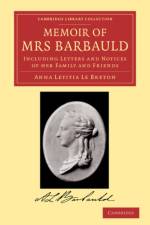
Anna Letitia Barbauld (1743-1825), poet, educator and essayist, is now considered to be one of the most important writers of the early Romantic period. Included in her highly regarded works on literary, political, social, and other intellectual topics is the ambitious poem Eighteen Hundred and Eleven (1812), which condemned Britain's participation in the Napoleonic Wars. She gained recognition for her influential elementary textbooks Lessons for Children (1778-9) and Hymns in Prose for Children (1781), which made her name synonymous with the instruction of infants. Her reputation suffered, however, from attacks by critics of her poetry and politics. This charming biography by Anna Letitia Le Breton (1808-85), her great-niece, was first published in 1874 and seeks to bring Barbauld's name back to public attention and acclaim. It draws on personal recollections, letters, and other family memorabilia in the author's possession.
The editor and forger John Payne Collier (1789-1883) claimed to have discovered a Second Folio of Shakespeare which had been 'corrected' in a mid-seventeenth-century hand. He published this catalogue of the emendations, including his commentary on them, in 1852. Collier then presented the so-called 'Perkins Folio' to the Duke of Devonshire, whose successor allowed it to be loaned in 1859 to the British Museum, where a thorough examination exposed it as a forgery. A storm of controversy followed and three of the key documents in the debate, all published in 1860, are also reissued here: 'An Inquiry into the Genuineness of the Manuscript Corrections in Mr. J. Payne Collier's Annotated Shakspere Folio, 1632' by Nicholas Hamilton (d.1915), assistant keeper of manuscripts at the British Museum; Collier's attempt to refute Hamilton's findings; and 'A Review of the Present State of the Shakespearian Controversy' by Thomas Duffus Hardy (1804-78).
Great mathematicians write for the future and Georg Friedrich Bernhard Riemann (1826-66) was one of the greatest mathematicians of all time. Edited by Heinrich Martin Weber, with assistance from Richard Dedekind, this edition of his collected works in German first appeared in 1876. Riemann's interests ranged from pure mathematics to mathematical physics. He wrote a short paper on number theory which provided the key to the prime number theorem, and his zeta hypothesis has given mathematicians the most famous of today's unsolved problems. Moreover, his famous 1854 lecture 'On the hypotheses which underlie geometry' set in motion studies which culminated in Einstein's general theory of relativity. Even Riemann's over-optimistic use of the Dirichlet principle to prove the conformal mapping theorem turned out to be immensely fruitful. The alert reader will further profit from finding here the seeds of modern distribution theory, algebraic topology and measure theory.
The German mathematician Karl Weierstrass (1815-97) is generally considered to be the father of modern analysis. His clear eye for what was important is demonstrated by the publication, late in life, of his polynomial approximation theorem; suitably generalised as the Stone-Weierstrass theorem, it became a central tool for twentieth-century analysis. Furthermore, the Weierstrass nowhere-differentiable function is the seed from which springs the entire modern theory of mathematical finance. The best students in Europe came to Berlin to attend his lectures, and his rigorous style still dominates the first analysis course at any university. His seven-volume collected works in the original German contain not only published treatises but also records of many of his famous lecture courses. Edited by Rudolf Rothe (1873-1942), Volume 7 was published in 1927.
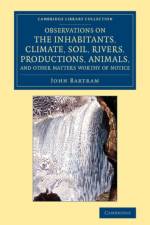
The botanist and explorer John Bartram (1699-1777) is regarded as having created the first true botanical collection in North America. Alongside Benjamin Franklin, he was also in 1743 a founding member of the American Philosophical Society. In the summer of the same year, he set out from Philadelphia on an expedition through Iroquois lands. Published in London in 1751 through the efforts of Bartram's correspondent and fellow botanist Peter Collinson, this short work chronicles the six-week journey, offering an important early insight into the region's ecology. As well as providing observations on flora, fauna and geography, Bartram includes insightful descriptions of the activities of the Native American population. The expedition members were able to travel further than was previously possible owing to the participation of the agent and interpreter Conrad Weiser, who had earned the respect of the Iroquois. The work concludes with a brief description of Niagara Falls by the naturalist Peter Kalm.
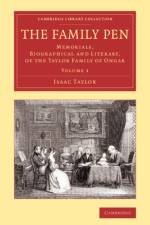
Isaac Taylor (1787-1865) was known as Isaac Taylor of Stanford Rivers, to distinguish him from his father, Isaac Taylor of Ongar, engraver and dissenting minister. He, his brother Jefferys, and their sisters Ann and Jane, were all writers, and their mother was the well-known 'Mrs Taylor of Ongar', some of whose books are also reissued in this series. The younger Isaac felt drawn to the Church of England, and made a name for himself with studies of the Church Fathers and the classics (he is said to have coined the word 'patristic'). This two-volume collection of writings by three generations of the Taylor family was compiled and published in 1867 by the Isaac Taylor of the next generation. Volume 2 contains essays and verses by the four siblings, their father Isaac, and a cousin, Jemima, of which the most notable is the long short story 'Display' by Jane Taylor.
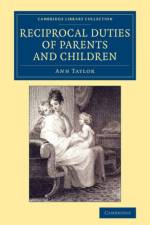
Displaying her intellectual and literary abilities from a young age, 'Mrs Taylor of Ongar' (1757-1830) enjoyed writing all her life. She had eleven children, of whom six (four of them writers) survived to adulthood. Her published works began with advice books for her own daughters, produced when increasing deafness made ordinary conversation difficult for her. This book, published in 1818, follows her earlier works for young women with a guide to conduct and 'reciprocal duties' within the family. Stern warnings and cautionary tales are given to show the importance of duty to and respect for parents by children, but the parental duties of care in rearing and especially in education are emphasised. Early discipline, lovingly applied, is seen as the key to successful parenting, and its absence is deemed disastrous. Like Ann Taylor's Practical Hints to Young Females (also reissued in this series), the book offers fascinating insights into the middle-class ideal of domestic happiness.
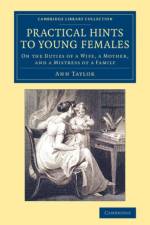
Displaying her intellectual and literary abilities from a young age, 'Mrs Taylor of Ongar' (1757-1830) enjoyed writing all her life. She had eleven children, of whom six (four of them writers) survived to adulthood. Her published works began with advice books for her own daughters, produced when increasing deafness made ordinary conversation difficult for her. Given the difficulty of providing advice equally appropriate to girls at all levels of society, this 1815 work is addressed to 'females in the middle ranks'. It is assumed that a girl's aspiration, as well as her destiny, is to be a wife and mother: conduct towards the husband, and the rearing of children, are of prime importance. But there is also a chapter for the husband, pointing out his reciprocal duties to his wife as an equal partner in their relationship. The book offers fascinating insights into the middle-class ideal of domestic happiness.
Before his untimely death from typhoid, William Spottiswoode (1825-83) had served as president of the London Mathematical Society, the British Association, and the Royal Society. In addition to publishing widely in mathematics and the experimental physical sciences, he restored the fortunes of his family printing firm, Eyre and Spottiswoode, the Queen's printers. An enthusiast for the popularisation of science, he lectured to large audiences at the Royal Institution, the South Kensington College of Science, and at British Association meetings. He also gave scientific talks at the school set up for the employees of his family firm. This illustrated 1874 work is based on these talks, and provides an introduction to 'this beautiful branch of optics'. Spottiswoode covers methods of polarisation, and the contemporary theory accounting for these effects. He describes various experiments, and explains how polarisation causes patterns and colours to appear in light.
The Baskerville Bible of 1763 is perhaps the most famous work published by Cambridge University Press, and Baskerville's own type punches are among its most treasured possessions. This short biography of John Baskerville (1706-75) was published in 1914 by Josiah Henry Benton (1843-1917), an American lawyer and author. Baskerville, born in Worcestershire, set up as a writing-master and letter-cutter in Birmingham, but later built up a business in 'japanning', the imitation of Japanese lacquer work, from which he made his fortune. He began working as a type-founder and printer around 1750, and made innovations not only in typefaces but also in paper, ink and printing machines. The quality of his books - not only the Bible, but also the Book of Common Prayer, an edition of Virgil, and Milton's Paradise Lost and Paradise Regained, among others - made them collectors' items: Benton provides an appendix listing his own Baskerville books.
Chawton House is famous today as the home of Jane Austen's brother Edward, who was adopted by a wealthy relative, Thomas Knight, and inherited his Hampshire estate. Edward offered the former bailiff's cottage close to the great house to his mother, who lived there with her unmarried daughters Jane and Cassandra. The house is now a study centre and library, for women's writing especially, but when this book was published in 1911 the building was still the Knight family home. Montagu Knight, the grandson of Edward, supplied material from the archives of the manor, while the book was largely written by his cousin William Austen Leigh, the son of Jane's nephew and memorialist. It covers the history of the manor from the Norman Conquest to the death of the second Edward in 1879, and, apart from the Austen connection, is a fascinating illustrated history of a typical English parish.
The preface to this work describes how its authors, Charles Irby (1789-1845) and James Mangles (1786-1867), both officers in the Royal Navy, left England in 1816 for a tour of the continent. 'Curiosity at first, and an increasing admiration of antiquities as they advanced, carried them at length through several parts of the Levant.' On their return to England, interest in Egypt being at its height, they were persuaded to compile this book from their letters to friends and family at home, and had it privately printed in 1823. Their account begins in Cairo, whence they made a journey down the Nile, meeting with Giovanni Belzoni at Abu Simbel. They then travelled from Cairo across the desert and along the coast of the Holy Land, reaching Aleppo and exploring Syria. This detailed account of their two-year travels provides much information of continuing interest to archaeologists and historians.
These diaries by Ralph Ward (fl.1754-6) and Arthur Jessop (1682-1751) were first published in 1952 and paint a valuable portrait of the trials, tribulations and pleasures of everyday life for the middle classes in rural Yorkshire in the mid-eighteenth century. A transcription of Jessop's diary from 1861 was first discovered in a Huddersfield bookshop in 1927. A local apothecary and pious community man, Jessop depicts the cycles of life in West Yorkshire, displaying a very British preoccupation with the weather. His diary, which covers the period 1730-46, notably discusses the impact of the Jacobite uprising of 1745. Ralph Ward was a fairly wealthy cattle trader, farmer and businessman in North Yorkshire. He was involved in local government, which he describes factually and clearly. His diary, covering the period 1754-6, also discusses business transactions, farming methods and, of course, the weather.
His independent means as the son of a wealthy banker enabled Alexander Henry Rhind (1833-63) to devote his short life to antiquarianism. While reading for the Scottish bar, he studied and investigated Pictish remains, and pressed for the inclusion of archaeological sites in Ordnance Survey maps. On developing tubercular symptoms, he gave up his legal studies and passed the winters from 1855 to 1857 in Egypt, where he made the important studies and excavations recorded in this 1862 book. He focuses on the necropolis of Thebes, and in particular on the unplundered tomb of an eighteenth-dynasty official. Putting his work into the wider context of the history of ancient Egypt and the importance of the city of Thebes, he also describes the reuse of the necropolis ruins as homes for modern Egyptian peasants and as the centre of a thriving trade in antiquities, both genuine and forged.
William Marshall (1745-1818), from farming stock, became a farmer and then estate manager and land agent after several years conducting business in the West Indies. This 1779 book (one of his earliest) describes his observations and experiments on his farm in Surrey (which he later had to give up because of his partner's bankruptcy). A description of the size, soil type and aspect of his various fields is followed by a summary of the experiments he carried out - mostly simple ones, such as comparing results if seeded fields were rolled or not. Diary records over two years for each crop are given, with areas sown, soil conditions and weather data. A chapter is devoted to weather prognostications, and another to day-to-day farm management and accounts. Marshall hoped that the systematic reporting of his findings would be of use to others, and the work provides interesting insights into the beginnings of scientifically based agriculture.
William Marshall (1745-1818), an experienced farmer and land agent, published this work in 1795, and early in 1796 produced a second edition (reissued here), 'with large additions'. The two-volume work was intended as a practical guide for the owners or managers of large estates on how to establish and maintain timber plantations, both for their financial value and also as important decorative elements in the landscaping of the surroundings of the owner's house. The work covers the practical issues of planting, propagating and transplanting, and discusses the choice of trees for different commercial purposes, and the planning and maintenance of hedgerows, as well as ornamental buildings. Volume 1 includes a review of the writings on landscape by such figures as Horace Walpole, (one of whose essays is reproduced), giving insights into the economic as well as the aesthetic aspects of landscape gardening in its golden age.
William Marshall (1745-1818), an experienced farmer and land agent, published this work in 1795, and early in 1796 produced a second edition (reissued here), 'with large additions'. The two-volume work was intended as a practical guide for the owners or managers of large estates on how to establish and maintain timber plantations, both for their financial value and also as important decorative elements in the landscaping of the surroundings of the owner's house. The work covers the practical issues of planting, propagating and transplanting, and discusses the choice of trees for different commercial purposes, and the planning and maintenance of hedgerows, as well as ornamental buildings. Volume 2 begins with an account of the Linnaean system of plant classification and its sexual basis, and supplies both an alphabetical list of trees and shrubs in their Latin Linnaean classes, and an index of plants under their English names.
In this absorbing work of medical history, the physician and writer John Aikin (1747-1822) brings together biographical information on a selection of Britain's early medics, shedding light on the lives, works and quirks of more than fifty medical writers, surgeons and physicians between the thirteenth and seventeenth centuries. Outlining the roles played by major figures in the great medical advances that marked this period, the book was first published in 1780, prior to Aikin's move to Great Yarmouth in 1784 to practise medicine. However, his political beliefs and dissenting views regarding the Church of England contributed to his unpopularity in the area, prompting his move to London and greater literary freedom. Over the years, he produced a broad range of published works, including his historically valuable Description of the Country from Thirty to Forty Miles Round Manchester (1795), which is also reissued in the Cambridge Library Collection.
Edward Blaquiere (1779-1832), an Irishman of Huguenot descent, joined the Royal Navy in 1794 and served, chiefly in the Mediterranean, throughout the Napoleonic wars. In 1820, influenced by Jeremy Bentham, he went on his behalf to Spain to observe the revolution there. On the fall of the liberal regime in Spain in 1823, Blaquiere and his friend John Bowring formed the London Greek Committee to raise money for the Greek war of independence and to lobby the British government for support. (It was under the auspices of the Committee, and recruited by Blaquiere, that Lord Byron made his famous, and fatal, journey to Greece.) After his second visit to Greece, in 1825 Blaquiere published this account of his own travels and of the last days of Lord Byron. His 1824 book on the progress of the Greek revolution is also reissued in this series.
Leicester Fitzgerald Charles Stanhope (1784-1862) played a controversial role in the struggle for Greek independence. After a career in the Indian army, he offered his services to the London Greek Committee in 1823, and was sent as its agent to Greece. However, his paternalistic view of the Greeks, as childlike 'natives' in need of guidance, was resented both by the Greeks themselves and by other members of the Committee. His approach, which supported the imposition of a unified constitutional system from above, alienated the Greek factions, especially Alexandros Mavrokordatos, whose otherwise pro-British stance was undermined by Stanhope's actions (which also disrupted the delivery of the Committee's loan to the Greeks). Stanhope was recalled by the British government (travelling home with Byron's body) and immediately released his correspondence with the Committee, which was edited and published in 1824, to deflect criticism of his conduct.
Brought up among the extensive grounds of her family home at Didlington Hall in Norfolk, Alicia Amherst (1865-1941) was a keen gardener from an early age. Especially interested in socially beneficial gardening, she sat on the board of the Chelsea Physic Garden from 1900, encouraged the growing of smoke-resistant flowers in poor urban areas, and promoted the greater use of allotments and school gardens during the First World War. Long regarded as a significant work for its thorough yet accessible approach, this well-researched historical and horticultural survey first appeared in 1907 under her married name of the Honourable Mrs Evelyn Cecil. Beautifully illustrated throughout, it covers London's royal and other parks as well as less obvious green spaces such as squares, burial grounds, and Inns of Court. A map and plant lists are also included. Amherst's History of Gardening in England (1895) is also reissued in this series.
In the mid-nineteenth century, the northern coastline of North America was of particular interest to the Hudson's Bay Company as it was believed to hold the key to the elusive North-West Passage, a trade route from the Atlantic to the Pacific. Recruited to lead a team to survey part of this forbidding region, the Scottish explorer John Rae (1813-93) undertook his first expedition during 1846-7. It was remarkable not only for its success, but also because Rae's was the first crew to overwinter in the Arctic. Unlike other Victorian explorers, Rae embraced the culture of the Inuit and learnt to live off the land like them, which enabled him to complete his survey. First published in 1850, this journal relates the details of his journey as well as how he and his men survived the extreme conditions. It remains a valuable document in the history of Arctic exploration.
Abonner på vårt nyhetsbrev og få rabatter og inspirasjon til din neste leseopplevelse.
Ved å abonnere godtar du vår personvernerklæring.