









Gjør som tusenvis av andre bokelskere
Abonner på vårt nyhetsbrev og få rabatter og inspirasjon til din neste leseopplevelse.
Ved å abonnere godtar du vår personvernerklæring.Du kan når som helst melde deg av våre nyhetsbrev.

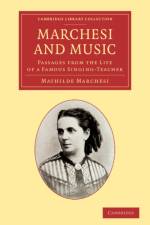
The German mezzo-soprano and celebrated singing teacher Mathilde Marchesi (1821-1913) presents an illuminating account of her life in these memoirs. First published in 1897, the book reflects the significant role that Marchesi played in vocal education during the nineteenth and early twentieth centuries. Having begun her career as a performer, from 1854 she devoted herself to teaching at the Vienna Conservatory and also in Paris and Cologne. She instructed many of the pre-eminent female singers of the age, including Nellie Melba, Mary Garden and Emma Calve. Also renowned for bringing the Italian bel canto vocal technique into the twentieth century, Marchesi occupied a prominent position in musical history. Featuring musical excerpts and a number of other illustrations, these memoirs record her outstanding achievements and strong opinions. The work also includes a brief introduction by the French composer Jules Massenet.
Having served on expeditions under John Franklin, the British naval officer Sir George Back (1796-1878) had already gained first-hand experience of Arctic peril and survival by the time he was appointed in 1836 to command HMS Terror. His mission was to survey uncharted coastline in the Canadian Arctic, yet Back's ship became trapped in ice near Frozen Strait and was unable to escape for ten months. In this account, first published in 1838, Back lucidly documents the developing crisis, noting the numerous preparations to abandon ship, the deaths of three of his men from scurvy, and the further damage caused by an iceberg after the Terror was freed. Against the odds, the ship managed to reach Ireland in 1837. Naturally, Back gives much credit to the durability of the Terror - originally a bomb vessel from the War of 1812, it had been further strengthened for Arctic service.
A controversial psychiatrist, Lyttleton Stewart Forbes Winslow (1844-1913) grew up around the lunatic asylums run by his father, Forbes B. Winslow, who was a specialist in the treatment of mental illness, establishing also medical grounds for the plea of insanity in criminal defence. Lyttleton spent much of his own medical career attempting to show the courts that crime and alcoholism were linked to mental illness, though he later gained notoriety for his amateur detective work: he claimed to know the identity of Jack the Ripper. Published in 1874, this book examines, often through case descriptions, the legal framework within which the mentally ill were managed, and comparisons are made with the status quo elsewhere in the world. It is an enlightening but often disturbing insight into the institutional treatment of mental illness in the late nineteenth century.
Born in Edinburgh, Daniel Wilson (1816-92) initially pursued an artistic career and spent time in Turner's studio. However, in 1846 he became a fellow of the Society of Antiquaries of Scotland and devoted the rest of his life to archaeology, anthropology and university administration. He was active in the Society's attempts to save historic buildings in Edinburgh, and the city's built environment was the subject of this two-volume 1848 work, which is illustrated with engravings after his own drawings. In Volume 1, Wilson begins by tracing the city's history from earliest times. The latter part of the volume covers local antiquities and traditions, with each chapter looking at a different area of the Old Town. The historical detail, with references, is immense, and Wilson's enthusiasm for his city is evident throughout. His second major work, the landmark Prehistoric Annals of Scotland (second edition, 1863), is also reissued in this series.
Perhaps the first celebrity chef, Alexis Soyer (1810-58) was a flamboyant, larger-than-life character who nonetheless took his profession very seriously. As the chef of London's Reform Club, he modernised its kitchens, installing refrigerators and gas cookers. They became something of a showpiece, even opening for tours. In contrast, Soyer also organised soup kitchens during the Great Famine in Ireland and volunteered his services in the Crimea in 1855 to improve military catering. He was also a prolific inventor of kitchen gadgets, notably promoting the Magic Stove, used for cooking food at the table. This work, first published in 1849, was aimed at the middle classes. Conceived as a dialogue between two housewives, it contains hundreds of recipes and tips, giving modern readers a rich insight into household management of the time. Also reissued in this series are Soyer's Gastronomic Regenerator (1846) and Culinary Campaign (1857).
Perhaps the first celebrity chef, Alexis Soyer (1810-58) was a flamboyant, larger-than-life character who nonetheless took his profession very seriously. As the chef of the Reform Club, he modernised its kitchens, installing refrigerators and gas cookers. In 1851, during the Great Exhibition, he prepared spectacular (but financially ruinous) culinary extravaganzas at his restaurant, the Gastronomic Symposium of All Nations. In stark contrast, he organised soup kitchens during the Great Famine in Ireland and volunteered his services in the Crimea in 1855 to improve military catering. He was also a prolific inventor of kitchen gadgets, notably promoting the Magic Stove, used for cooking food at the table. Several of his highly popular cookery books have been reissued in this series. Following his death, his secretaries Francois Volant and James Warren published this anecdotal and admiring biography in 1859, together with recipes and other cookery writings.
Perhaps the first celebrity chef, Alexis Soyer (1810-58) was a flamboyant, larger-than-life character who nonetheless took his profession very seriously. As the chef of the Reform Club, he modernised its kitchens, installing refrigerators and gas cookers. In 1851, during the Great Exhibition, he prepared spectacular (but financially ruinous) culinary extravaganzas at his restaurant, the Gastronomic Symposium of All Nations. In stark contrast, he organised soup kitchens during the Great Famine in Ireland and volunteered his services in the Crimea in 1855 to improve military catering. This work, first published in 1857, gives a vivid account of his efforts to prepare nutritious meals for the soldiers using a newly invented portable field stove, which remained in use until the Second World War. Also reissued in this series are Soyer's Gastronomic Regenerator (1846) and The Modern Housewife or Menagere (1849).
Born in Germany and trained in Greek, Latin and Sanskrit, Friedrich Max Muller (1823-1900) settled at Oxford, where he would become the university's first professor of comparative philology. Best known for his work on the Rig Veda, he brought the comparative study of language, mythology and religion to a wider audience in Victorian Britain. His lectures at the Royal Institution, published in two volumes between 1861 and 1864, were reprinted fifteen times before the end of the century. Volume 2 contains the twelve 1863 lectures, in which Max Muller argues for the inseparability of the science of language from the science of the mind. He explores 'the body or the outside of language, the sounds in which language is clothed' as well as 'the soul or the inside' and its relation to mythology. Hugely successful at the time - George Eliot was particularly enthused - the lectures remain instructive reading in the history of linguistics.
Born in Germany and trained in Greek, Latin and Sanskrit, Friedrich Max Muller (1823-1900) settled at Oxford, where he would become the university's first professor of comparative philology. Best known for his work on the Rig Veda, he brought the comparative study of language, mythology and religion to a wider audience in Victorian Britain. His lectures at the Royal Institution, published in two volumes between 1861 and 1864, were reprinted fifteen times before the end of the century. Volume 1 contains the nine 1861 lectures, in which Max Muller aligns the science of language with the physical sciences, breaking his subject down into the three stages that he argues mark the history of any branch of human knowledge: the empirical, the classificatory and the theoretical. Hugely successful at the time - George Eliot was particularly enthused - the lectures remain instructive reading in the history of linguistics.
Learn about the properties of synchrotron radiation and its wide range of applications in physics, materials science and chemistry with this invaluable reference. This thorough text describes the physical principles of the subject, its source and methods of delivery to the sample, as well as the different techniques that use synchrotron radiation to analyse the electronic properties and structure of crystalline and non-crystalline materials and surfaces. Explains applications to study the structure and electronic properties of materials on a microscopic, nanoscopic and atomic scale. An excellent resource for current and future users of these facilities, showing how the available techniques can complement information obtained in users' home laboratories. Perfect for graduate and senior undergraduate students taking specialist courses in synchrotron radiation, in addition to new and established researchers in the field.
First published in 1790, this collection of letters presents the mature views of Catharine Macaulay (1731-91) on education and related topics. Famed as an impassioned writer on history and politics, she defied eighteenth-century preconceptions of what it was possible and appropriate for women to achieve. Ranging across a broad spectrum of subjects, from diet and reading to pastimes, religion and discipline, this work reflects her enlightened thinking. She compares the educational situation in England to the contemporary French and American systems, and even those of ancient Rome and Sparta. Championing equality in education regardless of gender, Macaulay argues for the instruction of girls within a co-educational system, seeing this as the only way to improve female standing in society. Also reissued in this series is her eight-volume History of England (1763-83), which traces the upheavals of the seventeenth century.
The German linguists Johannes Schmidt (1843-1901) and Hugo Schuchardt (1842-1927) sought to answer many questions relating to the development of Indo-European languages, which are all believed to be descended from a single common ancestor. Schmidt's Verwantschaftsverhaltnisse was originally published in 1872 and Schuchardt's Uber die Lautgesetze followed in 1885; here they are reissued together in one volume. Schmidt's work developed the 'wave model' of language change, to which Schuchardt also subscribed. According to this theory, linguistic innovations spread outwards concentrically like waves, which become progressively weaker as time elapses and the distance from their point of origin increases. Since later changes may not cover the same area, there may be no sharp boundaries between neighbouring languages or dialects. This theory stood in opposition to the tree model and the doctrine of sound laws propounded by the Neogrammarian school of linguists, which is roundly critiqued in Schuchardt's contribution.
The Greek mathematician Diophantos of Alexandria lived during the third century CE. Apart from his age (he reached eighty-four), very little else is known about his life. Even the exact form of his name is uncertain, and only a few incomplete manuscripts of his greatest work, Arithmetica, have survived. In this impressive scholarly investigation, first published in 1885, Thomas Little Heath (1861-1940) meticulously presents what can be gleaned from Greek, Latin and Arabic sources, and guides the reader through the algebraist's idiosyncratic style of mathematics, discussing his notation and originality. This was the first thorough survey of Diophantos' work to appear in English. Also reissued in this series are Heath's two-volume History of Greek Mathematics, his treatment of Greek astronomy through the work of Aristarchus of Samos, and his edition in modern notation of the Treatise on Conic Sections by Apollonius of Perga.
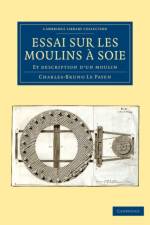
From the fifteenth century, the silk industry developed in France to rival that of Italy. Taking off during the reign of Henri IV, sericulture was historically centred on Tours and Lyon. In the eighteenth century, attempts were made to introduce it to the north-east of France, to compensate for the decline of viticulture, which had until then represented the region's main economic activity. Agronomist and director of the Royal Academy of Metz, Charles-Bruno Le Payen (1715-82) was the first to breed silkworms on local mulberry leaves in 1754. He also invented a new type of silk-weaving mill. In this work of 1767, he gives a detailed and illustrated description of the structure and functioning of his mill. Le Payen also shares his views on the challenges of breeding silkworms and mulberry trees in the colder climate of Metz.
In the late eighteenth century, slave labour in Britain's colonies was seen as central to world trade, and the practice was supported by prominent members of society, including the king. Ottobah Cugoano, an emancipated slave living in England, had joined the Sons of Africa, a group whose members wrote to the royal family, aristocrats and leading politicians to condemn slavery and campaign for its abolition. This work, first published in 1787 and sent to George III, was a daring attack on colonial conquest and enslavement, arguing that slaves had a moral duty to rebel against their oppressors. Widely read upon publication, it went through at least three printings that year and was translated into French, with a shorter version published in 1791. This reissue of the original work makes available an important document in the history of colonialism and slavery in the British Empire.
Having urged political reforms in Britain, Richard Price (1723-91) turned to defending the cause of American independence. Born in Wales, Price became an influential moral philosopher, dissenting Protestant preacher, political pamphleteer, and economic theorist. Known for his trenchant defence of the freedom of the human will against philosophical sceptics, Price applied his justification of individual moral agency to political issues - particularly the American Revolution - during the latter part of his life. This tract on America first appeared in 1784. Defining the right of American colonists to oppose British corruption, it suggested that their independence would offer much 'benefit to the world'. But it also offered a relatively rare critique of the system of racial slavery that continued to develop in America. Reissued here is the 1785 publication that also contained translations from French of a letter to Price by the economist Turgot and a parody by Charles-Joseph Mathon de la Cour which had amused Benjamin Franklin.
Although he was tried for attempted murder and died in Newgate Prison, the natural philosopher and apothecary John Elliot (1747-87) published a number of significant scientific works in the first part of the 1780s, especially with regard to sensory perception. This 1789 second edition of a 1781 work is essentially an alphabetically arranged catalogue of the principal British mineral waters, their properties and uses, along with those 'most celebrated ones which the English valetudinarian may have occasion to visit on the continent'. In his introduction, Elliot classes the waters according to their respective mineral properties and supplies details of the four classes of substances found united with water, and three methods for analysis. An extract of Joseph Priestley's 1772 pamphlet Directions for Impregnating Water with Fixed Air, with Dr John Nooth's alternative method as an appendix, forms an entertaining preface, informative as to the history of producing carbonated water.
This children's history of England by Maria Callcott (1785-1842) was written as though she were telling a series of stories to a young boy known as 'Little Arthur'. Having travelled widely during her first marriage, publishing accounts under the name Maria Graham, she had become an invalid by 1831 owing to a burst blood vessel. Nevertheless, she continued her literary activity and became best known for this highly popular work. The first edition, published by John Murray in two volumes in 1835, is reissued here in a single volume. In the course of the century after its appearance, the book went through seventy editions and sold some 80,000 copies. Its success stemmed partly from its romantic and patriotic depiction of the protagonists of English history. Also reissued in the Cambridge Library Collection are Callcott's travel journals describing her time in India, Brazil and Chile.
Begun in 1874 and published in 1880, a detailed survey of the stones of Stonehenge was one of the earliest works of William Matthew Flinders Petrie (1853-1942), the energetic archaeologist who is remembered as a pioneering Egyptologist. It is reissued here alongside Sir Richard Colt Hoare's 1829 analysis of the barrows surrounding Stonehenge, thus giving modern readers a valuable two-part snapshot of nineteenth-century investigations into this famous site. Hoare (1758-1838), a Wiltshire baronet with a keen interest in archaeology and topography, conducted excavations on the site of the stones in the early 1800s, which were later referred to by Petrie, whose measurements were much more accurate (up to one tenth of an inch). Petrie's numbering system for the stones, as set out in this publication, is still in use today. Many of his groundbreaking works in Egyptology are also reissued in the Cambridge Library Collection.
Sir Charles Santley (1834-1922), the English baritone whose career spanned more than fifty years, embracing both the operatic and concert stages, ranked among the foremost singers of his generation. After studying in Italy, he returned to England, where he was soon in great demand on the concert platform and in operatic roles, singing with the Pyne-Harrison, Mapleson and Carl Rosa opera companies, the Sacred Harmonic Society, the Philharmonic Society, and at the major English music festivals. His name is linked inseparably with the lavish Handel festivals at the Crystal Palace, and with the prophet in Mendelssohn's great oratorio Elijah. Santley's memoirs, first published in 1892 and reissued here in the third edition of that year, concentrate almost exclusively on his operatic career (a further volume on his concert experiences had been planned). His genial and informative anecdotes underpin the overriding message that hard work and perseverance win the day.
This three-volume history of England from before the Roman conquest through to the Glorious Revolution of 1688 was originally serialised in Charles Dickens' magazine Household Words between 1851 and 1853. The text was published in book form in the same period, although each volume was post-dated to the following year. Dickens dedicated the work to his own children, intending it to be a stepping stone to more substantial histories. The volumes were popular with readers for decades, and were used in British schools well into the twentieth century. Dickens employs his signature style to bring events and personalities to life, making use of vivid similes, unabashedly partisan language and direct speech, as well as the occasional moral lesson. Volume 2 covers the period from the reign of Henry III through to the death in 1485 of the 'usurper and murderer' Richard III.
In this illustrated 1900 publication, Frederick Cook (1865-1940) gives a detailed account of his experiences on the Belgian Antarctic Expedition, the first to endure the harsh winter of the Antarctic. The goal of the expedition was scientific discovery, and Cook, the ship's doctor, tells an engaging story of 'new human experience in a new, inhuman world of ice'. Boarding the Belgica in Rio de Janeiro, he joined a crew that included Roald Amundsen, who would later lead a Norwegian expedition to the South Pole. Cook describes the challenging conditions in the Antarctic Circle, where the ship became ice-bound for almost a year, with over two months of total darkness. When crew members developed scurvy, Cook took over command from the Belgian naval officer Adrien de Gerlache. Notably, he helped save lives by promoting the consumption of penguin and seal meat at a time when Vitamin C had yet to be discovered.
This story of an Indian garden was published in 1915. Its author, Kathleen L. Murray, was living in the remote north-eastern region of Bihar in the home of her brother, an indigo producer, and some of her musings on life and gardening in India had already been published in the periodical The Statesman. She viewed this work not as a guide, but 'merely a rambling record of some years in a garden' which combined European plants such as roses and sweet peas with natives such as cannas and beaumontias. Along with her gardening successes and failures over three years, the book provides insights into the life of the European woman in India - with no employment, and required to be both idle and aloof from the lives of the wider population. Murray's descriptive powers and enthusiasm for her garden make this book both enjoyable and evocative of imperial India.
Mrs C. W. Earle (1836-1925) was born into the minor aristocracy as Maria Theresa Villiers. After training as an artist, she married Captain C. W. Earle, who inherited family property which enabled a comfortable lifestyle with a town house in London and a small property with a large garden in Surrey. Earle's designs for her garden were much admired by her artistic and literary circle, and she was encouraged to write down her gardening advice. In 1903 she published this work, the third in a very successful series of writings about gardening, cookery, travel and art, but the emphasis in this book is very much on the importance of diet to health, though there are plenty of other topics. The final section of the book contains the last letters home of Mrs Earle's son Sydney, a captain in the Coldstream Guards, who was killed late in 1899 during the Boer War.
Mrs C. W. Earle (1836-1925) was born into the minor aristocracy as Maria Theresa Villiers. After training as an artist, she married Captain C. W. Earle, who inherited family property which enabled a comfortable lifestyle with a town house in London and a small property with a large garden in Surrey. Earle's designs for her garden were much admired by her artistic and literary circle, and she was encouraged to write down her gardening advice. With the help of her niece, Lady Constance Lytton (who provides an appendix on Japanese flower arranging), she published this book, the first of three, in 1897, and it was a great and immediate success. The reader is addressed directly and engagingly on topics ranging from gardening and cookery books to planting schemes, healthy recipes, interior decoration, and the rearing of boys and girls, together with plenty of practical advice on all aspects of gardening.
Mrs C. W. Earle (1836-1925) was born into the minor aristocracy as Maria Theresa Villiers. After training as an artist, she married Captain C. W. Earle, who inherited family property which enabled a comfortable lifestyle with a town house in London and a small property with a large garden in Surrey. Earle's designs for her garden were much admired by her artistic and literary circle, and she was encouraged to write down her gardening advice. This work, published in 1899, followed on from the success of her Pot-Pourri from a Surrey Garden (1897). It contains a similar collection of writings on gardening, cookery, travel and art, in chapters which follow the horticultural year from September to August. An introductory section describes with verve and good humour the critical reception of Earle's earlier book, and her reasons for writing another.
Employed early in his career by Sir Joseph Banks, the botanist John Lindley (1799-1865) is best known for his recommendation that Kew Gardens should become a national botanical institution, and for saving the Royal Horticultural Society from financial disaster. As an author, he is best remembered for his works on taxonomy and classification. A partisan of the 'natural' system rather than the Linnaean, Lindley published this 1841 work, the fourth edition of his Outline of the First Principles of Botany, under a new title to emphasise not only that it was 'much extended, and, it is hoped, improved', but also that it was a textbook for students of 'structural, physiological, systematical, and medical' botany. He defines the different elements of a plant, and provides a checklist for identification of plant families, before discussing the various 'natural' systems of classification, including his own, and the different practical uses of plants.
Mrs C. W. Earle (1836-1925) was born into the minor aristocracy as Maria Theresa Villiers. After training as an artist, she married Captain C. W. Earle, who inherited family wealth which enabled a comfortable lifestyle with a town house in London and a small property with a large garden in Surrey. Earle's designs for her garden were much admired by her circle, and she was encouraged to write down her gardening advice. She published three volumes of Pot-Pourri from a Surrey Garden (also reissued in this series) between 1897 and 1903, but these works were not restricted to gardening, and contained thoughts on travel and art, and also on the importance of diet to health. Published in 1911, these reminiscences are dedicated to her grandchildren, and contain her parents' history as well as her own memories of a privileged upbringing among the literary and artistic giants of mid-Victorian England.
Joined by seven eminent natural scientists, including Karl von Scherzer (1821-1903), the Austrian naval expedition of 1857-9 was remarkable for its globe-spanning scale. During the course of the voyage, the naturalists collected an abundance of samples which contributed to several scientific discoveries, including the isolation of cocaine in its pure form. Some of the investigations also revolutionised knowledge in such fields as geology, oceanography, hydrography and geomagnetism, and are still being studied by modern-day researchers. Prepared by Scherzer and first published in English in 1861-3, this is a compelling three-volume account of the mission, remaining relevant to scholars interested in naval exploration and the history of science. Volume 3 includes notes on Sydney, Auckland, Tahiti, the coastal cities of South and Central America, and the journey back to Europe, as well as reflections by the author on the achievements of the expedition.
The American social historian and antiquarian Alice Morse Earle (1851-1911) published this work in 1901. She was a prolific writer of books and pamphlets on pre-revolutionary New England, and her writings were very popular with readers who took great interest in the social history and material culture of their country. In this work, which contains more than 200 illustrations, Earle describes the historic and modern gardens of the north-eastern seaboard, the gardening activities - for pleasure as well as for food - of early settlers, and the progress of plant-hunters and nursery-men such as John Bartram in discovering and categorising new specimens, as well as the introduction into the United States of cottage garden favourites from Europe and exotica from the Far East. Earle's Sundials and Roses of Yesterday (1902) is also reissued in this series.
Abonner på vårt nyhetsbrev og få rabatter og inspirasjon til din neste leseopplevelse.
Ved å abonnere godtar du vår personvernerklæring.