

Gjør som tusenvis av andre bokelskere
Abonner på vårt nyhetsbrev og få rabatter og inspirasjon til din neste leseopplevelse.
Ved å abonnere godtar du vår personvernerklæring.Du kan når som helst melde deg av våre nyhetsbrev.

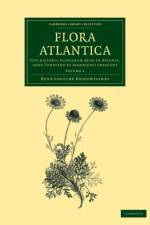
A member, and later president, of the Academie des Sciences, French botanist and doctor Rene Louiche Desfontaines (1750-1833) spent the years 1783-5 on an expedition to North Africa. During his time in Tunisia and Algeria, he collected over a thousand plant specimens: more than three hundred genera were new to European naturalists at this time. Having succeeded Le Monnier in the chair of botany at the Jardin du Roi in 1786, Desfontaines helped found the Institut de France following the Revolution and published his two-volume Flora atlantica in Latin in 1798-9. A lavishly illustrated second edition appeared in four volumes in 1800. Combining its two volumes of plates into one, this reissue will give modern researchers an insight into the promulgation of pioneering plant science. Volume 2 contains classes 14 to 24 in the Linnaean system of plant taxonomy, from Didynamia to Cryptogamia.
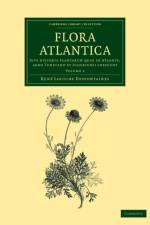
A member, and later president, of the Academie des Sciences, French botanist and doctor Rene Louiche Desfontaines (1750-1833) spent the years 1783-5 on an expedition to North Africa. During his time in Tunisia and Algeria, he collected over a thousand plant specimens: more than three hundred genera were new to European naturalists at this time. Having succeeded Le Monnier in the chair of botany at the Jardin du Roi in 1786, Desfontaines helped found the Institut de France following the Revolution and published his two-volume Flora atlantica in Latin in 1798-9. A lavishly illustrated second edition appeared in four volumes in 1800. Combining its two volumes of plates into one, this reissue will give modern researchers an insight into the promulgation of pioneering plant science. Volume 1 contains the first thirteen classes of plants in the Linnaean system of taxonomy, from Monandria to Polyandria.
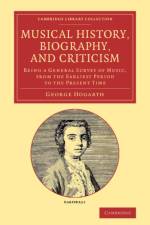
George Hogarth (1783-1870), music critic and journalist, is also remembered as a friend of Sir Walter Scott and the father-in-law of Charles Dickens. His lengthy writing career included posts as music critic with The Harmonicon, the Morning Chronicle (where he first met Dickens), the Evening Chronicle (which he co-edited), and the Daily News. He also served as music critic for The Illustrated London News and was secretary to the Philharmonic Society between 1850 and 1864. His account of the first fifty years of the Society has also been reissued in this series. The present work, first published in 1835, is his lively history of music from ancient to modern times, aimed squarely at the general reader. It is couched in 'simple and perspicuous language, avoiding technical phraseology and abstruse discussions'. The final chapter presents an invaluable first-hand account of contemporary music and musical life in England.
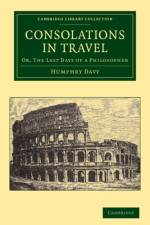
Arguably the first celebrity scientist, and the epitome of the 'Romantic' natural philosopher, Sir Humphry Davy (1778-1829) was a brilliant lecturer whose popularising of science made him famous. He pioneered electrochemistry, befriended the Romantic poets, invented a safety lamp for miners and even wrote on angling (see On the Safety Lamp and Salmonia, also reissued in this series). Described as 'the last words of a dying Plato', Consolations in Travel was published posthumously in 1830. It is an intriguing mixture of poetry, autobiographical sketches, descriptions of dreams, philosophical musings on the afterlife and, in the view of one contemporary review, 'some [matter] which sober reason must dissent as extravagant, and almost bordering on the absurd'. Here, in his final months, Davy turns to the eternal, believing that through science all the questions of the universe could be answered. It remains a poignant and controversial postscript to an illustrious life.
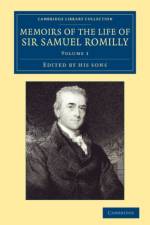
A friend of Wilberforce and Bentham, Sir Samuel Romilly (1757-1818) combined considerable legal expertise with commitment to progressive political causes such as the abolition of the slave trade. During his time in Parliament - he was Solicitor General in Lord Grenville's 'Ministry of All the Talents' - he sought to lessen the archaic severity of English criminal law regarding corporal and capital punishment. Though he met with resistance, his efforts raised awareness and influenced later reforms. Compiled by his sons and published in 1840, this three-volume collection of autobiographical writings and varied correspondence illuminates the development of his outlook and the principles which guided him. Volume 3 contains the concluding part of Romilly's diary of his parliamentary life, covering the years 1812-18. Also included are private memoranda which Romilly described as observations on his 'situation in life and future prospects'.
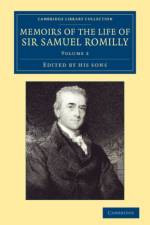
A friend of Wilberforce and Bentham, Sir Samuel Romilly (1757-1818) combined considerable legal expertise with commitment to progressive political causes such as the abolition of the slave trade. During his time in Parliament - he was Solicitor General in Lord Grenville's 'Ministry of All the Talents' - he sought to lessen the archaic severity of English criminal law regarding corporal and capital punishment. Though he met with resistance, his efforts raised awareness and influenced later reforms. Compiled by his sons and published in 1840, this three-volume collection of autobiographical writings and varied correspondence illuminates the development of his outlook and the principles which guided him. Volume 2 comprises selected correspondence for the period 1792-1802, the diary of a visit to Paris in 1802, an unfinished narrative of personal events in 1805, and Romilly's diary of his parliamentary life between 1806 and 1811.
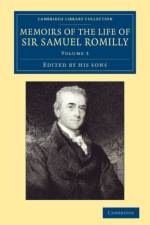
A friend of Wilberforce and Bentham, Sir Samuel Romilly (1757-1818) combined considerable legal expertise with commitment to progressive political causes such as the abolition of the slave trade. During his time in Parliament - he was Solicitor General in Lord Grenville's 'Ministry of All the Talents' - he sought to lessen the archaic severity of English criminal law regarding corporal and capital punishment. Though he met with resistance, his efforts raised awareness and influenced later reforms. Compiled by his sons and published in 1840, this three-volume collection of autobiographical writings and varied correspondence illuminates the development of his outlook and the principles which guided him. Volume 1 includes Romilly's two-part narrative of his life from 1757 to 1789, letters about English affairs sent to his brother-in-law in Lausanne (1780-3), letters from eminent friends such as the French revolutionary Mirabeau (1783-7), and selected correspondence with the Genevan writer Etienne Dumont and others (1788-91).
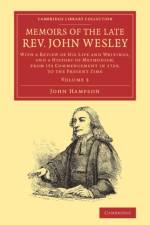
This three-volume account of the life of John Wesley (1703-91) was published in the year of his death. Written by John Hampson (c.1753-1819), a Church of England clergyman and former Methodist preacher, the work also contains a thorough review of Wesley's writings and a history of Methodism. Hampson's excellent overview of contemporary assessments of the preacher is more balanced than John Whitehead's two-volume Life of the Rev. John Wesley (1793-6), which has also been reissued in this series. Volume 3 gives an account of Wesley's death, but is predominantly concerned with a critique of Methodist theology, activity and mode of preaching. It gives a measured assessment of Wesley's character and reflects on the opposition to the work's previous volumes displayed by Wesley's executors, highlighting the struggle over his legacy - a matter of great importance in the history of Methodism.
This three-volume account of the life of John Wesley (1703-91) was published in the year of his death. Written by John Hampson (c.1753-1819), a Church of England clergyman and former Methodist preacher, the work also contains a thorough review of Wesley's writings and a history of Methodism. Hampson's excellent overview of contemporary assessments of the preacher is more balanced than John Whitehead's two-volume Life of the Rev. John Wesley (1793-6), which has also been reissued in this series. Volume 2 traces the growth of Methodism in both England and North America, covering Wesley's itinerant preaching, the death of his mother, and theological differences with his brother Charles. It also gives an account of Wesley's increased activity in ordaining priests for travel to America. Drawing on a wide range of sources, the work remains important for its informed appraisal of this religious movement and its founder.
This three-volume account of the life of John Wesley (1703-91) was published in the year of his death. Written by John Hampson (c.1753-1819), a Church of England clergyman and former Methodist preacher, the work also contains a thorough review of Wesley's writings and a history of Methodism. Hampson's excellent overview of contemporary assessments of the preacher is more balanced than John Whitehead's two-volume Life of the Rev. John Wesley (1793-6), which has also been reissued in this series. Volume 1 explores Wesley's lineage and early life, including his journey to America in 1735 and his conversion in 1738. This volume also contains short chapters on his brothers Samuel and Charles. Drawing on a wide range of sources, the work remains important for its informed appraisal of this religious movement and its founder.
Clara Schumann (1819-1896), child prodigy, celebrated concert pianist, composer, and friend of Brahms, was also the wife of composer Robert Schumann. Her father Friedrich Wieck's implacable opposition to their marriage, the sublime music she inspired in Schumann and his tragic death at a cruelly young age underlie one of music's great romances. The German literary historian Berthold Litzmann (1857-1926) first published his biography in three volumes between 1902 and 1908, based on the diaries and letters of Robert and Clara Schumann. Appearing in 1913, this two-volume English translation by Grace Hadow (1875-1940) is an abridged version of the German fourth edition, offering a lucid portrait of a central figure in nineteenth-century European musical life. A preface is provided by the translator's elder brother, William Henry Hadow (1859-1937), the music historian. Volume 2 covers the years 1850 to 1896.
Clara Schumann (1819-1896), child prodigy, celebrated concert pianist, composer, and friend of Brahms, was also the wife of composer Robert Schumann. Her father Friedrich Wieck's implacable opposition to their marriage, the sublime music she inspired in Schumann and his tragic death at a cruelly young age underlie one of music's great romances. The German literary historian Berthold Litzmann (1857-1926) first published his biography in three volumes between 1902 and 1908, based on the diaries and letters of Robert and Clara Schumann. Appearing in 1913, this two-volume English translation by Grace Hadow (1875-1940) is an abridged version of the German fourth edition, offering a lucid portrait of a central figure in nineteenth-century European musical life. A preface is provided by the translator's elder brother, William Henry Hadow (1859-1937), the music historian. Volume 1 covers the years 1819 to 1850.
Born into a musical family as the daughter of Charles Burney, Frances 'Fanny' Burney (1752-1840) opted for a life of letters. Her epistolary novel Evelina generated both sensation and sales upon its appearance early in 1778, and when her identity as the author was soon revealed, it opened the door to intellectual circles frequented by the likes of Samuel Johnson and fellow diarist Hester Thrale. Appearing under her married name of Madame d'Arblay, her witty and candid journals and correspondence, from her breakthrough until her final years, were edited by her niece Charlotte Barrett (1786-1870) and first published in seven volumes between 1842 and 1846. Reissued here is the new edition of 1854, including biographical notes. Volume 7 covers the period from 1813 until her death, a time of bereavement in which she lost her father, brother, husband and son. Also included is a general index to all the volumes.
Born into a musical family as the daughter of Charles Burney, Frances 'Fanny' Burney (1752-1840) opted for a life of letters. Her epistolary novel Evelina generated both sensation and sales upon its appearance early in 1778, and when her identity as the author was soon revealed, it opened the door to intellectual circles frequented by the likes of Samuel Johnson and fellow diarist Hester Thrale. Appearing under her married name of Madame d'Arblay, her witty and candid journals and correspondence, from her breakthrough until her final years, were edited by her niece Charlotte Barrett (1786-1870) and first published in seven volumes between 1842 and 1846. Reissued here is the new edition of 1854, including biographical notes. Volume 6 covers the period from September 1793 through to 1812, during which she published Camilla (1796) and, in an episode omitted here, endured a mastectomy without anaesthetic.
Born into a musical family as the daughter of Charles Burney, Frances 'Fanny' Burney (1752-1840) opted for a life of letters. Her epistolary novel Evelina generated both sensation and sales upon its appearance early in 1778, and when her identity as the author was soon revealed, it opened the door to intellectual circles frequented by the likes of Samuel Johnson and fellow diarist Hester Thrale. Appearing under her married name of Madame d'Arblay, her witty and candid journals and correspondence, from her breakthrough until her final years, were edited by her niece Charlotte Barrett (1786-1870) and first published in seven volumes between 1842 and 1846. Reissued here is the new edition of 1854, including biographical notes. Volume 5 covers the period from March 1789 through to September 1793, during which she married an emigre officer as the French Revolution shook Europe.
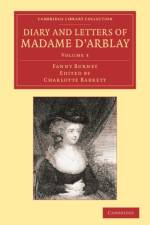
Born into a musical family as the daughter of Charles Burney, Frances 'Fanny' Burney (1752-1840) opted for a life of letters. Her epistolary novel Evelina generated both sensation and sales upon its appearance early in 1778, and when her identity as the author was soon revealed, it opened the door to intellectual circles frequented by the likes of Samuel Johnson and fellow diarist Hester Thrale. Appearing under her married name of Madame d'Arblay, her witty and candid journals and correspondence, from her breakthrough until her final years, were edited by her niece Charlotte Barrett (1786-1870) and first published in seven volumes between 1842 and 1846. Reissued here is the new edition of 1854, including biographical notes. Volume 4 covers the period from the beginning of 1788 through to the end of February 1789. It features the notable episode in which an unbalanced George III chased Fanny through Kew Gardens.
Born into a musical family as the daughter of Charles Burney, Frances 'Fanny' Burney (1752-1840) opted for a life of letters. Her epistolary novel Evelina generated both sensation and sales upon its appearance early in 1778, and when her identity as the author was soon revealed, it opened the door to intellectual circles frequented by the likes of Samuel Johnson and fellow diarist Hester Thrale. Appearing under her married name of Madame d'Arblay, her witty and candid journals and correspondence, from her breakthrough until her final years, were edited by her niece Charlotte Barrett (1786-1870) and first published in seven volumes between 1842 and 1846. Reissued here is the new edition of 1854, including biographical notes. Volume 3 covers the period from July 1786 to December 1787, during which she reluctantly took up an onerous court appointment to Queen Charlotte.
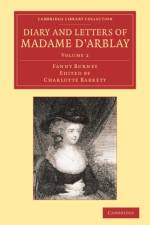
Born into a musical family as the daughter of Charles Burney, Frances 'Fanny' Burney (1752-1840) opted for a life of letters. Her epistolary novel Evelina generated both sensation and sales upon its appearance early in 1778, and when her identity as the author was soon revealed, it opened the door to intellectual circles frequented by the likes of Samuel Johnson and fellow diarist Hester Thrale. Appearing under her married name of Madame d'Arblay, her witty and candid journals and correspondence, from her breakthrough until her final years, were edited by her niece Charlotte Barrett (1786-1870) and first published in seven volumes between 1842 and 1846. Reissued here is the new edition of 1854, including biographical notes. Volume 2 covers the period from the beginning of 1781 to July 1786, during which Cecilia (1782), her second novel, was published.
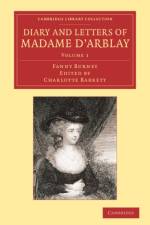
Born into a musical family as the daughter of Charles Burney, Frances 'Fanny' Burney (1752-1840) opted for a life of letters. Her epistolary novel Evelina generated both sensation and sales upon its appearance early in 1778, and when her identity as the author was soon revealed, it opened the door to intellectual circles frequented by the likes of Samuel Johnson and fellow diarist Hester Thrale. Appearing under her married name of Madame d'Arblay, her witty and candid journals and correspondence, from her breakthrough until her final years, were edited by her niece Charlotte Barrett (1786-1870) and first published in seven volumes between 1842 and 1846. Reissued here is the new edition of 1854, including biographical notes. Detailing the success of her literary debut and the friendships she forged as a result, Volume 1 captures the excitement of the period from 1778 to 1780.
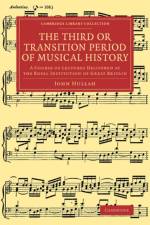
The music teacher and composer John Pyke Hullah (1812-84) is best remembered for his 'singing school for schoolmasters'. Through his dedicated efforts music was embedded into the school curriculum, and his inspiration influenced the rapid growth of amateur choral societies in Britain. Professor of vocal music at King's College, London, from 1844 to 1874, Hullah was elected to the committee of management of the Royal Academy of Music in 1869 and in 1872 became the first government inspector of music in teacher training colleges. The work reissued here is the second edition, published in 1876, of lectures given at the Royal Institution in 1865 on the topic of Italian, French, German and English music from the Renaissance to Handel. It expands on part of his overarching 1861 course of lectures, The History of Modern Music, which is also reissued in this series.
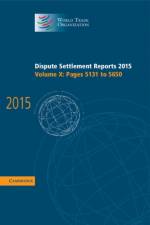
The Dispute Settlement Reports of the World Trade Organization (WTO) include Panel and Appellate Body reports, as well as arbitration awards, in disputes concerning the rights and obligations of WTO members under the provisions of the Marrakesh Agreement Establishing the World Trade Organization. These are the WTO authorized and paginated reports in English. They are an essential addition to the library of all practicing and academic trade lawyers, and needed by students worldwide taking courses in international economic or trade law. DSR 2015: Volume 10 reports on United States - Measures Concerning the Importation, Marketing and Sale of Tuna and Tuna Products - Recourse to Article 21.5 of the DSU by Mexico (WT/DS381).
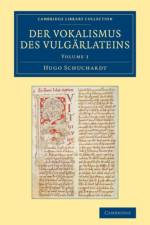
The German linguist Hugo Schuchardt (1842-1927) made significant contributions to the study of the Basque and Romance languages, publishing also on pidgins and creoles. A critic of the Neogrammarian hypothesis of sound laws, he subscribed to the 'wave model' of language change. His Uber die Lautgesetze: Gegen die Junggrammatiker (1885) has been reissued in this series in a volume with Die Verwantschaftsverhaltnisse der indogermanischen Sprachen (1872) by Johannes Schmidt (1843-1901). Based on Schuchardt's doctoral dissertation and the painstaking study of extant sources, the present three-volume work appeared between 1866 and 1868. He explores here the development and characteristics of Vulgar Latin, the language of the general population, as opposed to the classical, literary variety. The work focuses on the distinctive vowel changes that took place in Romance vernaculars over many centuries. Opening with a thorough introduction and discussion of sources, Volume 1 (1866) examines qualitative vowel changes.
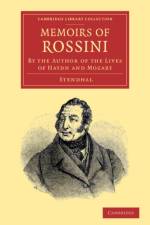
Marie-Henri Beyle (1783-1842), better known by his pen name Stendhal, is remembered today for such novels as Le Rouge et le Noir. Over the course of his life, he wrote in a variety of literary genres and under a multitude of names, or anonymously. Reissued here is the 1824 English translation of his Vie de Rossini of the same year, which was accused of being partly plagiarised from Giuseppe Carpani's Le Rossiniane, following similar claims regarding his biographies of Haydn and Mozart (which are also reissued together in translation in this series). Best known for William Tell and The Barber of Seville, Gioachino Rossini (1792-1868) was by far the most popular opera composer of his day, adored by his public. Colourful, vigorous and forthright, Stendhal's brilliant though somewhat unreliable biography offers an opinionated contemporary critique of 'Signor Crescendo'.
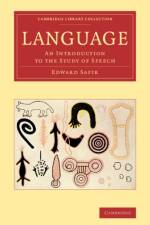
Among the most influential figures in the development of modern linguistics, the American scholar Edward Sapir (1884-1939) notably promoted the connection between anthropology and the study of language. His name is also associated with that of his student in the Sapir-Whorf principle of linguistic relativity, the hypothesis that the structure of a language affects how its speakers conceptualise the world. In this seminal work, first published in 1921, Sapir lucidly introduces his ideas about language and explores topics that remain fundamental to linguistics today, such as the relationship between language and culture, the elements of speech, grammatical processes and concepts, historical language development, and the question of how languages influence one another. Especially significant in the history of structural linguistics and ethnolinguistics, this clearly written text remains relevant and accessible to students and scholars across the social sciences.
Thomas Grahame Bailey (1872-1942) had the components of this work printed in individual parts in India between 1902 and 1906. The Royal Asiatic Society in London decided to collect and publish them in 1908 in its monograph series, incorporating a preface by Bailey. The pagination is not continuous as already printed sheets of the earlier studies were reused. Twenty-six dialects from the hill regions of the northern and north-western Himalayas are covered in some detail, including grammar, vocabulary, their relationship to each other, and some songs. Bailey's work was pioneering: he had travelled among the hill peoples, being initiated into tribal rites and secret vocabularies, often of a criminal nature. There had been no previous publications on the grammar or philology of these dialects, merely some translated Christian texts. Bailey subsequently published a number of works on languages of the Indian subcontinent, including a history of Urdu literature.
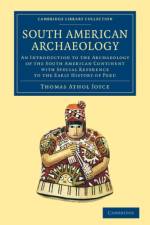
An anthropologist and archaeologist working for much of his life in the British Museum, Thomas Athol Joyce (1878-1942) succeeded in making American archaeology more accessible to non-specialists. Through careful analysis and presentation of the available evidence from South and Central America, he secured his reputation as an authority in this field, especially with regard to Mayan civilisation. Drawing on his wide reading of the published literature, he produced three pioneering and highly illustrated textbooks. The present work appeared in 1912 and confined itself to South America, beginning its coverage with Colombia in the north. Given the better preservation of the material culture, there is a particular focus on Peru and the Incas. The topics discussed range from burials, mummies and shrunken heads to nose ornaments, musical instruments, tattoos and weaving. Joyce's Mexican Archaeology (1914) and Central American and West Indian Archaeology (1916) are also reissued in this series.
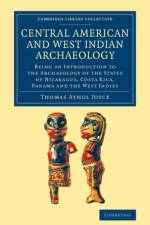
An anthropologist and archaeologist working for much of his life at the British Museum, Thomas Athol Joyce (1878-1942) succeeded in making American archaeology more accessible to non-specialists. Through careful analysis and presentation of the available evidence from South and Central America, he secured his reputation as an authority in this field, especially with regard to Mayan civilisation. Drawing on his wide reading of the published literature, he produced three pioneering and highly illustrated textbooks. The present work appeared in 1916 and focuses on Nicaragua, Costa Rica, Panama and the West Indies. The laws, religion, customs and daily life of the various indigenous peoples are discussed and compared, with thorough illustration and examination of a range of artefacts. Joyce intended his summary of the evidence to serve as 'a signpost for future investigators'. His South American Archaeology (1912) and Mexican Archaeology (1914) are also reissued in this series.
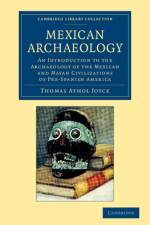
An anthropologist and archaeologist working for much of his life at the British Museum, Thomas Athol Joyce (1878-1942) succeeded in making American archaeology more accessible to non-specialists. Through careful analysis and presentation of the available evidence from South and Central America, he secured his reputation as an authority in this field, especially with regard to Mayan civilisation. Drawing on his wide reading of the published literature, he produced three pioneering and highly illustrated textbooks. The present work appeared in 1914 and focuses on Mexican and Mayan culture. The topics discussed include social structure and daily life, warfare, trade and architecture, as well as religious observance and mythology. Particular attention is paid to the calendar, with appendices providing the names of days and months along with a provisional dating scheme. Joyce's South American Archaeology (1912) and Central American and West Indian Archaeology (1916) are also reissued in this series.
This practical text guides the reader in infant and child death investigation from the moment the phone rings to the final signature on the death certificate. Using an easily understood conversational writing style, the text imparts up-to-date, practice-based information on approaches to death investigation, clarifying misunderstandings and supplementing training gaps. Chapters also impart personal experiences relating to policy, procedure, standards, and the anticipation of problems during death investigations. Interspersed throughout the text are procedural standards from the National Association of Medical Examiners and Centers for Disease Control and Prevention, as well as high-quality images and observations of effective administrative and management strategies for offices involved with death investigations. The book is packaged with a password, giving users online access to all text and images. Pearls and Pitfalls in Forensic Pathology: Infant and Child Death Investigation is an essential resource for medicolegal death investigators, coroners, medical examiners, forensic pathologists, forensic laboratorians and attorneys.
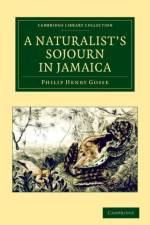
The English naturalist Philip Henry Gosse (1810-88) travelled to Jamaica in 1844 and stayed for eighteen months to observe the diverse wildlife there. Upon his return he described his findings in a trilogy of books. The first two examined the island's birds - he has been hailed as the 'father of Jamaican ornithology' - but he used the present work, first published in 1851, to describe all the other forms of life on the island, from beetles to fruit trees. Lamenting that natural history was too often presented as a 'science of dead things', Gosse made his investigations come alive in this work by writing it in a diary form, discussing what he encountered as his journey progressed, and providing a number of illustrations. His lively and engaging style won him a wide audience, and this work remains an important early example of popular natural history.
Abonner på vårt nyhetsbrev og få rabatter og inspirasjon til din neste leseopplevelse.
Ved å abonnere godtar du vår personvernerklæring.