



Gjør som tusenvis av andre bokelskere
Abonner på vårt nyhetsbrev og få rabatter og inspirasjon til din neste leseopplevelse.
Ved å abonnere godtar du vår personvernerklæring.Du kan når som helst melde deg av våre nyhetsbrev.

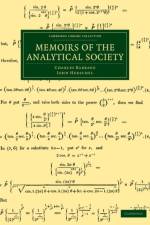
By the end of the eighteenth century, British mathematics had been stuck in a rut for a hundred years. Calculus was still taught in the style of Newton, with no recognition of the great advances made in continental Europe. The examination system at Cambridge even mandated the use of Newtonian notation. As discontented undergraduates, Charles Babbage (1791-1871) and John Herschel (1792-1871) formed the Analytical Society in 1811. The group, including William Whewell and George Peacock, sought to promote the new continental mathematics. Babbage's preface to the present work, first published in 1813, may be considered the movement's manifesto. He provided the first paper here, and Herschel the two others. Although the group was relatively short-lived, its ideas took root as its erstwhile members rose to prominence. As the society's sole publication, this remains a significant text in the history of British mathematics.
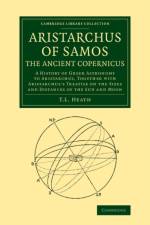
The Greek astronomer Aristarchus of Samos was active in the third century BCE, more than a thousand years before Copernicus presented his model of a heliocentric solar system. It was Aristarchus, however, who first suggested - in a work that is now lost - that the planets revolve around the sun. Edited by Sir Thomas Little Heath (1861-1940), this 1913 publication contains the ancient astronomer's only surviving treatise, which does not propound the heliocentric hypothesis. The Greek text is based principally on the tenth-century manuscript Vaticanus Graecus 204. Heath also provides a facing-page English translation and explanatory notes. The treatise is prefaced by a substantial history of ancient Greek astronomy, ranging from Homer's first mention of constellations to work by Heraclides of Pontus in the fourth century BCE relating to the Earth's rotation. Heath's collection of translated ancient texts, Greek Astronomy (1932), is also reissued in this series.
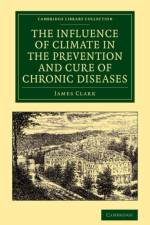
Published in 1829, this important work raised awareness of a poorly understood topic, running to a third edition by 1841. Sir James Clark (1788-1870) had trained as a surgeon in Edinburgh and gained experience in the Royal Navy during the Napoleonic Wars. During subsequent European travels, he studied the effects of climate on disease, particularly tuberculosis, and this publication represents an expanded version of his Medical Notes on Climate, Diseases, Hospitals, and Medical Schools in France, Italy, and Switzerland (1820), which is also reissued in this series. A licentiate of the Royal College of Physicians from 1826, and elected to the Royal Society in 1832, Clark became a trusted physician and friend to Queen Victoria and Prince Albert. Also reissued in the Cambridge Library Collection are his Treatise on Pulmonary Consumption (1835) and Memoir of John Conolly (1869).
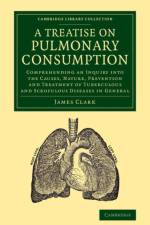
Having trained in Edinburgh as a surgeon and served aboard Royal Navy vessels, Sir James Clark (1788-1870) developed a particular interest in the spread of the tuberculosis pandemic in Europe. A licentiate of the Royal College of Physicians from 1826, and elected to the Royal Society in 1832, he became a trusted physician and friend to Queen Victoria and Prince Albert. This influential work of 1835 focuses on the treatment and prevention of tuberculosis. Written for a general as well as medical readership, it was lauded by The Lancet and ran to several English editions along with translations into other languages. Also reissued in this series are Clark's Medical Notes on Climate, Diseases, Hospitals, and Medical Schools in France, Italy, and Switzerland (1820), The Influence of Climate in the Prevention and Cure of Chronic Diseases (1829) and his Memoir of John Conolly (1869).
Daughter of a Unitarian minister and schoolmaster, the penal reformer and educationist Mary Carpenter (1807-77) grew up in a pious family with a strong sense of obligation to those who were less fortunate. Moved by the appalling circumstances of destitute children in Bristol, she established her first ragged school in 1846. In her bid to improve the difficult lives of juvenile delinquents, her enlightened philosophy was one of rehabilitation rather than retribution, emphasising the importance of giving children a sense of self-worth. These views form the basis of this landmark work, first published in 1851. Marshalling a range of evidence in support of her argument, Carpenter highlights the need for radical change in the treatment of young offenders. Her lobbying bore fruit in England with the passage of the Youthful Offenders Act (1854), described as 'the Magna Carta of the neglected child'.
Born Alphonse Louis Constant, French magician Eliphas Levi (1810-75) wrote prolifically on the occult sciences. His hugely popular Dogme et rituel de la haute magie, published in French in 1854, was translated into English by Arthur Edward Waite (1857-1942) in 1896. In the present work, Waite condenses Levi's two volumes into one. The first part outlines Levi's theory of the doctrine of transcendent magic and discusses a wide range of magical phenomena, including bewitchment, Kabbalah and alchemy. The second part focuses on the practical aspects of ritual and ceremony in Western occult philosophy. Waite, a mystic and occult historian, edited several alchemical and magical texts for publication in the wake of the mid-nineteenth century occult revival. His translation is accompanied by a preface outlining Levi's colourful career. The original two-volume French edition is also reissued in the Cambridge Library Collection.
The explorer, soldier and geophysicist Sir Edward Sabine (1788-1883) served as astronomer on John Ross's 1818 expedition in search of the North-West Passage. His return to the Arctic, under William Parry in 1819-20, compounded a keen interest in geomagnetism and his publications earned him the Copley Medal of the Royal Society (whose presidency he would later hold). His experience and expertise made him a natural editor, therefore, of this Arctic narrative, translated into English from German by his wife, Elizabeth Juliana Leeves (1807-79), and published in 1840. It is the account by Ferdinand von Wrangell (1797-1870), a Russian explorer of Baltic German ancestry, regarding his expedition to survey Siberia's north-eastern coastline. Compiled from the notes of the scientists on board, this work offers a valuable and wide-ranging insight into an inaccessible and little-known portion of the globe.
Upon the restoration of Charles II, theatre burst back into popularity across the stages of England. For the first time since the rise of Cromwell, it was possible to make a living from writing verse, and the theatres attracted poets in their dozens. One of them was the young John Dryden (1631-1700). In this sprightly 1826 biography, reissued here in one volume, Walter Scott (1771-1832) brings Dryden's work, philosophy and historical context vividly to life. He begins with Dryden's literary origins in the Restoration theatre, exploring the flops and then the successes that earned the poet his laurels, and continues with a detailed analysis of his later work, including the unstaged opera The State of Innocence as well as Mac Flecknoe, the cornerstone of Restoration satire. A lively critic, Scott is unafraid to write off Anglo-Saxon poetry, insult grammarians and illuminate Dryden's less admirable qualities.
Early in the twentieth century, public interest in Jane Austen (1775-1817) was considerable. Although the popularity of her work had remained modest in her lifetime, she was sufficiently well known by the centenary of her death to have provoked toxic reviews from Henry James and Mark Twain along with the reserved support of E. M. Forster. Previous biographies had been riddled with inaccuracies: she was called 'narrow', was said to have disliked children and animals, and to have led a quiet, almost monastic life. Many of these mistakes could be traced back to the unashamedly idealised biography written by her nephew, but while contrary accounts emerged later in the form of her letters, the old misapprehensions endured. In this neglected addition to Austen literature, first published in 1920, Mary Augusta Austen-Leigh (1838-1922) corrects many of these errors, advocating a closer critical reading of her great aunt's novels.
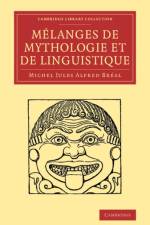
The eminent French philologist Michel Breal (1832-1915) made significant contributions to the fields of comparative linguistics, pedagogy and etymology. He became a member of the Academie des Inscriptions et Belles-Lettres in 1875 and a commander of the Legion d'honneur in 1890. This work, first published in 1877, gathers together articles that Breal mostly wrote before 1869, when he was appointed secretary of the new and prestigious Societe de Linguistique de Paris. He argues that language and mythology have a common origin, which accounts for why most abstract nouns are feminine, in remembrance of ancient deities. Breal also exposes new ways to study languages and their impact in primary and secondary education. Lastly, he lays the foundations of modern semantics, a discipline he intended would reconcile historical linguistics with the philosophy of the Enlightenment.
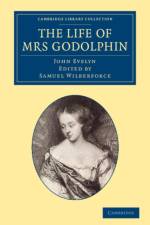
John Evelyn (1620-1706), a founder member of the Royal Society, was a horticulturalist and author, best remembered for his diaries. Throughout his prolific writings he exhibits a strong distaste for the corruption of life at court. The beautiful and pious Margaret Godolphin (1652-78), a courtier more than thirty years Evelyn's junior, with whom he struck up an intense friendship in 1672, was maid of honour in the household of Queen Catherine, wife of King Charles II. To Evelyn she represented the antithesis of the corruption he despised. Written as 'a record of her perfections' following her death in childbirth, this hagiographic biography reflects the extent of Evelyn's devotion. Left among his unrevised manuscripts, it was not published until 1847, nearly two centuries after its composition. Edited by the bishop and orator Samuel Wilberforce (1805-73), the work includes helpful notes and genealogical tables that elucidate the text.
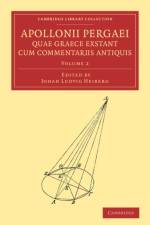
The Greek astronomer and geometrician Apollonius of Perga (c.262-c.190 BCE) produced pioneering written work on conic sections in which he demonstrated mathematically the generation of curves and their fundamental properties. His innovative terminology gave us the terms 'ellipse', 'hyperbola' and 'parabola'. The Danish scholar Johan Ludvig Heiberg (1854-1928), a professor of classical philology at the University of Copenhagen, prepared important editions of works by Euclid, Archimedes and Ptolemy, among others. Published between 1891 and 1893, this two-volume work contains the definitive Greek text of the first four books of Apollonius' treatise together with a facing-page Latin translation. (The fifth, sixth and seventh books survive only in Arabic translation, while the eighth is lost entirely.) Volume 2 contains the fourth book in addition to other Greek fragments and ancient commentaries, notably that of Eutocius, as well as the editor's Latin prolegomena comparing the various manuscript sources.
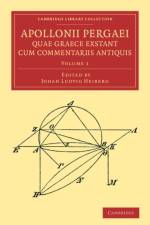
The Greek astronomer and geometrician Apollonius of Perga (c.262-c.190 BCE) produced pioneering written work on conic sections in which he demonstrated mathematically the generation of curves and their fundamental properties. His innovative terminology gave us the terms 'ellipse', 'hyperbola' and 'parabola'. The Danish scholar Johan Ludvig Heiberg (1854-1928), a professor of classical philology at the University of Copenhagen, prepared important editions of works by Euclid, Archimedes and Ptolemy, among others. Published between 1891 and 1893, this two-volume work contains the definitive Greek text of the first four books of Apollonius' treatise together with a facing-page Latin translation. (The fifth, sixth and seventh books survive only in Arabic translation, while the eighth is lost entirely.) Volume 1 contains the first three books, with the editor's introductory matter in Latin.
Beyond the fact that he made a journey to the Holy Land between 1336 and 1341, very little is known about Ludolf von Suchem (whose first name may in fact have been Rudolf). However, his work has long been regarded as a major source of information about the eastern Mediterranean in the fourteenth century, owing to its high level of detail. Ludolf states his intention to describe the region, its buildings, towns, fortified places, people, customs, stories and legends, drawing on both his own observations, and on information from the 'kings, princes, nobles and lords' with whom he spent days and nights in conversation. Some stories are clearly travellers' tales, but others, like his account of the fall of Acre (1291), based on reports by eyewitnesses, are both full and convincing. This English translation, by Aubrey Stewart (1844-1918), of Ludolf's Latin text was published in 1895.
The German polymath Carl Stumpf (1848-1936) influenced one of the most significant philosophical developments of the early twentieth century: his student, Edmund Husserl, founded modern phenomenology. In a distinguished academic career spanning more than five decades, Stumpf also contributed to the growth of Gestalt psychology and ethnomusicology. An accomplished amateur musician, he used experimental methods to further the scientific study of music theory. His best-known work, first published in two volumes between 1883 and 1890, rigorously investigates the psychology of tone and music, ranging in coverage from physiology to acoustics. Its aim is to elucidate the effect that sounds have on various psychological functions. In Volume 2, Stumpf focuses on describing how the mind responds to listening to different sounds at the same time. He addresses the fusion of different sounds as well as distinguishing between sound and noise.
The German polymath Carl Stumpf (1848-1936) influenced one of the most significant philosophical developments of the early twentieth century: his student, Edmund Husserl, founded modern phenomenology. In a distinguished academic career spanning more than five decades, Stumpf also contributed to the growth of Gestalt psychology and ethnomusicology. An accomplished amateur musician, he used experimental methods to further the scientific study of music theory. His best-known work, first published in two volumes between 1883 and 1890, rigorously investigates the psychology of tone and music, ranging in coverage from physiology to acoustics. Its aim is to elucidate the effect that sounds have on various psychological functions. Volume 1 is divided into two sections. In the first, Stumpf describes the types of decision made by the human mind. In the second, he attempts to explain the connection between specific sounds and the decision-making process.
The practice of weather forecasting underwent a crucial transformation in the Middle Ages. Exploring how scientifically-based meteorology spread and flourished from c.700-c.1600, this study reveals the dramatic changes in forecasting and how the new science of 'astro-meteorology' developed. Both narrower and more practical in its approach than earlier forms of meteorology, this new science claimed to deliver weather forecasts for months and even years ahead, on the premise that weather is caused by the atmospheric effects of the planets and stars, and mediated by local and seasonal climatic conditions. Anne Lawrence-Mathers explores how these forecasts were made and explains the growing practice of recording actual weather. These records were used to support forecasting practices, and their popularity grew from the fourteenth century onwards. Essential reading for anyone interested in medieval science, Medieval Meteorology demonstrates that the roots of scientific forecasting are much deeper than is usually recognized.
When this book first appeared in 1793, there had been no significant work on comets published in English since Edmond Halley's death some fifty years before. In Europe the field was dominated by French astronomers such as Pingre and Laplace, but their ornate styles were often difficult to translate. In this concise monograph, Sir Henry Englefield (c.1752-1822) draws both on this continental work and on his own correspondence with William Herschel to produce one of the few accessible manuals in English for the computation of cometary orbits. He includes mathematical examples as new formulae are introduced, along with detailed tables and appendices. Englefield's particular interest was in the development of scientific instruments suitable for travellers - he devised a portable telescope and lent his name to the Englefield mountain barometer - and his passion for efficiency shines through in this work, still valuable to researchers in the history of astronomy and comet science.
Although first to suggest the possibility of light frequencies beyond the visible spectrum, the natural philosopher John Elliott (1747-87) was better known at his death for his failed suicide in front of the woman he loved. Tried for attempting to shoot her, he was acquitted but died in prison awaiting trial on the lesser charge of assault. First published in 1780, this work was his most important. Contemporary science held that vibrations of the air were directly communicated to the optic and auditory nerves and passed on to the sensorium, while Elliot proposed, through experimentation upon himself, the existence of sensory receptors, each tuned to only a limited part of the spectrum of physical frequencies. This insight led him to postulate the existence of what we now know to be ultraviolet and infrared radiation, thus paving the way for further discoveries in human sensory perception.
The later nineteenth century saw a dramatic increase in the popularity of domestic gardening and the cultivation of plants and flowers in the home. Largely a middle-class pursuit, it caught the attention of writers and publishers who recognised and nurtured the growing demand for advice. This detailed guide first appeared in 1877 and was written for those living in towns and cities who, without substantial gardens, cultivated plants mainly in their windows. The author, John R. Mollison, intended for it to be 'understood by all', and advises on matters ranging from suitable vases, window boxes, hanging baskets and soil, to watering methods, insect prevention and the labelling of specimens, while also discussing the health-related pros and cons of keeping plants in the home. Complete with an alphabetical list of suitable species, and illustrated with a host of wood engravings, this attractive resource will interest both gardening enthusiasts and social historians.
Perhaps the first celebrity chef, Alexis Soyer (1810-58) was a flamboyant, larger-than-life character who nonetheless took his profession very seriously. As the chef of the Reform Club, he modernised its kitchens, installing refrigerators and gas cookers. In 1851, during the Great Exhibition, he prepared spectacular (but financially ruinous) culinary extravaganzas at his restaurant, the Gastronomic Symposium of All Nations. In stark contrast, he organised soup kitchens during the Great Famine in Ireland and volunteered his services in the Crimea in 1855 to improve military catering. He was also a prolific inventor of kitchen gadgets, notably promoting the Magic Stove, used for cooking food at the table. First published in 1938, this biography by Helen Soutar Morris (1909-95) is based on Francois Volant and James Warren's anecdotal account of 1859 (also reissued in this series), and it faithfully conveys the adulation that Soyer engendered in his lifetime.
The mining engineer and petrologist Frederick Henry Hatch (1864-1932) left the Geological Survey of Great Britain in 1892, relocating to South Africa. He worked for De Beers and with John Hays Hammond for Cecil Rhodes, finding important new gold fields in Matabeleland and Mashonaland. Control of the gold mines was a significant factor in the tension between Dutch and English settlers that would result in the Second Boer War in 1899. Prior to this, Rhodes and Hammond were behind the abortive Jameson Raid, but Hatch had returned to England briefly and was not implicated. This 1895 work, written with South African mining engineer J. A. Chalmers, reveals the extent of gold reserves in the Transvaal, and the engineering skills needed to exploit them. It deals with geological, economic and legal aspects of the mining industry, remaining of interest to historians of South Africa and the British Empire.
Equally revered and reviled, the radical John Horne Tooke (1736-1812) enjoyed a well-deserved reputation as a political firebrand. Having attended Eton and St John's College, Cambridge, he explored careers in the church and law before finally gaining recognition as a vehement advocate of political reform. This acclaimed two-volume biography by Alexander Stephens (1757-1821) was published in 1813, incorporating personal correspondence and presenting its subject as 'a firm friend to the laws and liberties of his native country'. Volume 2 covers the period 1777-1812 and leads the reader through Horne's two periods of imprisonment, two parliamentary election campaigns, the rise of the Society for Constitutional Information and the publication of his final pamphlet, A Warning to the Electors of Westminster (1807). This volume concludes with an account of his final years of ill health, his death and his political legacy.
Equally revered and reviled, the radical John Horne Tooke (1736-1812) enjoyed a well-deserved reputation as a political firebrand. Having attended Eton and St John's College, Cambridge, he explored careers in the church and law before finally gaining recognition as a vehement advocate of political reform. This acclaimed two-volume biography by Alexander Stephens (1757-1821) was published in 1813, incorporating personal correspondence and presenting its subject as 'a firm friend to the laws and liberties of his native country'. Volume 1 covers the period 1736-77 and leads the reader from Horne's birth, education and ordination through to his early defence of John Wilkes and the foundation of the Society of Gentleman Supporters of the Bill of Rights. During this period, Horne published The Petition of an Englishman (1765) as well as stinging letters in the Oxford Magazine. This volume concludes with an account of Horne's infamous trial and imprisonment for libel.
The writer, composer and organist Thomas Busby (1754-1838) is best remembered for his highly entertaining Concert Room and Orchestra Anecdotes (1825), which paints a vivid picture of musical life at the time. The son of a coach painter, Busby was originally articled to the composer Jonathan Battishill but found the experience unrewarding. His compositions (many now lost) include songs, theatre music, The Divine Harmonist, and the oratorios The Prophecy and Britannia. Throughout his working life he continued his extensive literary activities, musical and otherwise, contributing to journals such as the Monthly Magazine and Public Characters, and publishing several books, among them A General History of Music (also reissued in this series). First published in 1818, the present work is a primer on music theory and the principles of composition. Busby intended it to be 'a compendium ... modern and amusing in its style ... to impart knowledge and facilitate execution'. Reissued here is the second edition of 1826.
An influential work on naval strategy, The Influence of Sea Power on History (1890) by Alfred Mahan, an American naval officer, had been instrumental in reshaping military tactics in navies all around the world. Its central idea was that a nation's success was determined by its 'sea power' - its ability to command the oceans with a large fleet. Frederick Thomas Jane (1865-1916), the founding editor of All the World's Fighting Ships and All the World's Airships (which continue to this day), here recounts historical battles to argue that other factors were as crucial, if not more, in determining military outcomes. In this daring and astute critique of Mahan's work, Jane proposes that 'fitness to win' played an essential role in securing victory. First published in 1906, this work is a thought-provoking contribution to the debate that influenced the naval arms race in the period before the First World War.
In 1908, the motoring journalist R. P. Hearne published Aerial Warfare, the first book on the subject to reach an audience beyond military strategists. Enormous advances in aviation resulted in the publication of this substantially revised edition in 1910. At a time of intense European military rivalry, the book highlighted differences in the way countries were adopting new aerial technology. Hearne makes the assumption that conflict with Germany at some point is inevitable, and identifies the airship as 'practically an invisible enemy'. At this point Germany had ten airships compared to Britain's one, and while the British regarded them as useful only for reconnaissance, the Germans had identified potential offensive uses. Reviews commended the book for its depth and numerous illustrations, but also suggested it was alarmist and anti-German. However, it brought the subject to wider attention, and was a factor behind the government's decision to invest properly in aviation research.
Founded in 1666, the French Academie des Sciences was a prominent and prestigious organisation behind numerous scientific advances in Europe in the seventeenth and eighteenth centuries. In 1817, commissioned by the Academie, Louis de Freycinet (1779-1841) embarked on a three-year expedition with the main purpose of investigating terrestrial magnetism and taking a series of pendulum measurements. In the course of this voyage around the world, the scientists aboard the Uranie also collected an abundance of samples and made significant observations in the fields of geography, ethnology, astronomy, hydrography and meteorology. The progress of this journey was detailed by Jacques Arago (1790-1855), draughtsman on the expedition, in the form of letters to a friend. This illustrated narrative is prefaced by a report to the Academie which summarises the mission's findings. Translated into English and published in 1823, this work is an informative and often witty account, reflecting contemporary ambitions in science and exploration.
Rudolf Westphal (1826-92) originally studied theology at the University of Marburg before turning to classical philology and comparative linguistics. He learnt Sanskrit and Arabic and took a keen interest in Indo-European languages and Semitic grammar. In the late 1850s and early 1860s he joined his friend and fellow philologist August Rossbach (1823-98) at the University of Breslau (Wroclaw). This multi-volume work on ancient Greek metre and music resulted from their collaboration. Reissued here is the revised third edition published in four parts between 1885 and 1889. Part 1 of Volume 3 (1887), which features the input of classical scholar Hugo Gleditsch (1837-1913), discusses the distinction drawn by Aristoxenus between singing and speaking. The volume also focuses on prosody and different types of verse feet.
Rudolf Westphal (1826-92) originally studied theology at the University of Marburg before turning to classical philology and comparative linguistics. He learnt Sanskrit and Arabic and took a keen interest in Indo-European languages and Semitic grammar. In the late 1850s and early 1860s he joined his friend and fellow philologist August Rossbach (1823-98) at the University of Breslau (Wroclaw). This multi-volume work on ancient Greek metre and music resulted from their collaboration. Reissued here is the revised third edition published in four parts between 1885 and 1889. Volume 2 (1886) is devoted to Westphal's thorough account of melody and harmony in Greek music. He provides a general introduction to the development of Greek melody through history as well as an account of Aristoxenus' theory on intervals. The latter part of the volume focuses on the scholarship relating to harmonies and scales.
Abonner på vårt nyhetsbrev og få rabatter og inspirasjon til din neste leseopplevelse.
Ved å abonnere godtar du vår personvernerklæring.