




Gjør som tusenvis av andre bokelskere
Abonner på vårt nyhetsbrev og få rabatter og inspirasjon til din neste leseopplevelse.
Ved å abonnere godtar du vår personvernerklæring.Du kan når som helst melde deg av våre nyhetsbrev.

A painter, army officer and eminent Royal Academician, George Jones (1786-1869) enjoyed a close friendship with the sculptor Sir Francis Chantrey (1781-1841). Britain's portrait sculptor of choice at the peak of his career, Chantrey is most celebrated for works such as his busts of Sir Walter Scott and John Horne Tooke, his statue of James Watt, the equestrian bronze of Sir Thomas Munro in India, and The Sleeping Children in Lichfield Cathedral. Originally published in 1849, this book is an affectionate tribute to the man and his work, featuring also a selection of his letters to Jones, the engraver Charles Turner, and other correspondents. Whereas Jones's patriotism led him to enlist, Chantrey's was reflected in his enthusiasm for the advancement and promotion of his country's art: his generous bequest to the Royal Academy allowed for the purchase of numerous works of British art, now held by the Tate.
Reissued in its first edition of 1834, this catalogue gives a valuable insight into bibliographical activity in early nineteenth-century Britain. It is the work of the former bookseller John Martin (1791-1855), an antiquary who would later become librarian to the Duke of Bedford at Woburn Abbey. Martin's aim was to assemble a catalogue of books which were never intended for the open market, circulating only among the 'friends and connexions' of those who produced them. Spanning more than two centuries of small-scale British publishing, the resulting work is an extraordinarily eclectic resource, enlivened throughout by an eye for curious detail. The latter portion of the work documents the books, bills and pamphlets which emerged from the regional presses of Martin's own day, and records the early membership and output of the Roxburghe, Maitland and Bannatyne clubs, which would in time become the foremost bibliophilic societies of Victorian Britain.
In 1820, the English traveller Sir Frederick Henniker (1793-1825) set out for Egypt, which he would explore for nearly three years. He sailed up the Nile, calling it 'the least romantic, but most useful of rivers', stopping off at many places along the way. His adventures were varied: he was the first known person to climb to the apex of the Pyramid of Khafre at Giza, and he acquired a second-century coffin that is now in the British Museum. He claimed to have met Egypt's khedive, Muhammad Ali Pasha, with whom he discussed English horses and military campaigns. Heading next to Mount Sinai and Jerusalem, he was brutally attacked by bandits on the road to Jericho, leaving him injured and naked. He recovered and continued his journey through the Middle East and back to England, where he published this lively and often amusing account of his adventures in 1823.
Well versed in oriental languages and antiquities, Claudius James Rich (1786/7-1821), the East India Company's resident at Baghdad, visited and described many historic locations in present-day Iraq and Iran. Following his early death from cholera in Shiraz, Rich's widow prepared his writings for publication. His two-volume Narrative of a Residence in Koordistan, and on the Site of Ancient Nineveh (1836) is also reissued in this series. The present work, which appeared in 1839, contains Rich's 1811 journal of his first visit to the site of the ancient city of Babylon, followed by the archaeological memoir he published in 1815. 'Remarks on the Topography of Ancient Babylon', an 1815 paper by the geographer James Rennell (1742-1830), who queried Rich's conclusions, is included, and Rich's 1818 memoir of his second visit then responds to Rennell. A narrative of Rich's Persian travels in 1821, featuring 'hitherto unpublished cuneiform inscriptions copied at Persepolis', completes the work.
Isaac Schomberg (1753-1813) had a controversial career in the Royal Navy. Although he distinguished himself at the relief of Gibraltar and the battles of St Kitts and the Saintes, his aggressive temperament and scholarly interests meant he was a poor choice to serve as first lieutenant under the petulant, pleasure-seeking future William IV. Schomberg's career never recovered after they clashed. Retiring to Wiltshire in 1796, he began this long-planned chronology of the Royal Navy. Published in 1802, with detailed descriptions of engagements, events on board, and politics at home, as well as an appendix of facts and figures stretching back to the origins of the Senior Service, this five-volume work remains a classic source of naval history. Forming a thorough appendix, Volume 4 presents numerous lists, including information on the number of vessels in the Royal Navy and how many guns and men were aboard each ship.
Having trained in Edinburgh as a surgeon and served aboard Royal Navy vessels, Sir James Clark (1788-1870) developed a particular interest in the spread of the tuberculosis pandemic in Europe. A licentiate of the Royal College of Physicians from 1826, and elected to the Royal Society in 1832, he became a trusted physician and friend to Queen Victoria and Prince Albert. This early work of 1820 was based on his first-hand knowledge of the treatment of tuberculosis in southern Europe as well as the effects of climate on the disease. Among his tubercular patients in Italy around this time was the poet John Keats (who would succumb in 1821). Also reissued in this series are Clark's Treatise on Pulmonary Consumption (1835), his Memoir of John Conolly (1869), and The Influence of Climate in the Prevention and Cure of Chronic Diseases (1829), a development of aspects of the present work.
Born in Dublin and classically educated at Trinity College, James Henry (1798-1876) practised as a doctor for more than twenty years before an inheritance allowed him to focus on the close study of Virgil's Aeneid. Travelling extensively across Europe, Henry conferred with eminent scholars and consulted numerous manuscripts. After the death of his wife in 1849, he was accompanied and ably assisted in his quest by his sole surviving daughter, Katherine Olivia (1830-72). In 1853 he published in Dresden his textual analysis of the poem's first six books. Reissued here is the version that appeared in Britain in 1859. This painstaking research was in turn incorporated into Henry's monumental multi-volume commentary, Aeneidea, published between 1873 and 1892 and now also reissued in the Cambridge Library Collection. The present work throws much light on both the ancient text and the approach of an idiosyncratic and indefatigable Virgilian scholar.
Sir George Steuart Mackenzie (1780-1848) was a Scottish baronet whose interests included chemistry and geology. This work, first published in 1811, is his account of his voyage to Iceland in 1810 for the purposes of mineralogical research. Accompanied by physicians Henry Holland and Richard Bright, Mackenzie surveyed volcanoes, geysers and the other geological features of the island. In addition to reporting the results of the expedition's scientific exploration, this charming and evocative journal describes the history, culture, attire and cuisine of the islanders. Also included are Richard Bright's observations on the zoology and botany of Iceland and a survey of the health of the population by Henry Holland, who introduced smallpox inoculation during his visit. Written in an easy, accessible style, this account brings to life the sights, smells and tastes of the tour and the often rudimentary accommodation and travel conditions.
Florence Kelley (1859-1932) was a committed socialist and political reformer who campaigned against child labour in the United States. In 1899 she became the leader of the National Consumers' League, an anti-sweatshop and pro-minimum wage pressure group which she supported until her death. This volume, first published in 1914, describes her views on the problems facing American society due to the expansion of industry. Kelley discusses the negative effects of rapid industrialisation on the American urban working class, in terms of the effects on the family, on the health of workers, on the education of the working class; and discusses the economic 'morality' of controlling the means of production. She also suggests possible legislation to mitigate these problems, some of which later passed into federal law. This volume provides a vivid description of the lives of America's urban working class and illustrates the extent of contemporary industrialisation in America.
The Belgian polymath Lambert Adolphe Jacques Quetelet (1796-1874) was regarded by John Maynard Keynes as a 'parent of modern statistical method'. Applying his training in mathematics to the physical and psychological dimensions of individuals, his Treatise on Man (also reissued in this series) identified the 'average man' in statistical terms. Reissued here is the 1839 English translation of his 1828 work, which appeared at a time when the application of probability was moving away from gaming tables towards more useful areas of life. Quetelet believed that probability had more influence on human affairs than had been accepted, and this work marked his move from a focus on mathematics and the natural sciences to the study of statistics and, eventually, the investigation of social phenomena. Written as a summary of lectures given in Brussels, the work was translated from French by the engineer Richard Beamish (1798-1873).
Returning from the Crimea, Florence Nightingale (1820-1910) used her experience of army medicine to ameliorate civilian nursing care. She was appalled by the conditions she found, affirming that the first requirement of a hospital was that 'it should do the sick no harm'. Problems such as overcrowding and damp, in addition to lack of ventilation and proper sanitation, contributed to high mortality rates. Nightingale's belief that such suffering was preventable was seen as revolutionary. In 1859 she published her two most influential works, Notes on Nursing (also reissued in this series) and Notes on Hospitals. This collection contains the two papers she presented to the National Association for the Promotion of Social Science in 1858. Also included, from 1857, is her evidence to the royal commission on the British army's sanitary conditions. Three illustrated articles on hospital design, published in The Builder in 1858, form an appendix to the work.
Maria Fitzherbert (1756-1837) was already twice widowed when the young Prince of Wales began his pursuit of her in 1784. Initially refusing his offer of marriage, she eventually accepted it and the couple were wed in secret the following year. Though legitimate in her eyes, the union was invalid under the Royal Marriages Act of 1772, and controversial because of her Catholicism. A posthumous attack on her faith and morals, penned by Lord Holland in his Memoirs of the Whig Party, provoked her close friend Charles Langdale (1787-1868) into publishing this defence in 1856. A champion of Catholic emancipation, Langdale was one of the first Catholics elected to Parliament. These memoirs are based on Maria Fitzherbert's own recollections, recounted to Langdale's brother, Lord Stourton. They reveal the values and beliefs of an exceptional woman who occupied a unique and precarious position within British high society.
Originally published in 1851, partly with the aim of correcting certain mistakes in painter George Jones's 1849 tribute (also reissued in this series), this work commemorates Norton-born sculptor Sir Francis Chantrey (1781-1841), whose illustrious career began in nearby Sheffield. His most celebrated works include The Sleeping Children in Lichfield Cathedral, his statue of James Watt, and his busts of Sir Walter Scott and John Horne Tooke. An enthusiast for his country's art, Chantrey left a generous bequest to the Royal Academy which allowed for the purchase of numerous works of British art, now held by the Tate. The author John Holland (1794-1872), himself a Sheffield man, wrote with a passion for local history and topography. Here, his delight in the 'absolutely or comparatively trivial' lends a curious local slant to his delineation of the sculptor's background, entry into the profession, later working life and burial back in Norton.
Jean-Baptiste-Barthelemy de Lesseps (1766-1834), a French diplomat, served as an interpreter on La Perouse's voyage around the world, which sailed from Brest in 1785. In 1787, on the eastern coast of the Kamchatka peninsula, he was tasked with an overland mission to get reports back to France as La Perouse proceeded to Australia. This two-volume work, reissued here in its English translation of 1790, is a compelling account of the one-year journey from Russia to France, and a tale of endurance and resourcefulness in the face of forbidding conditions. More than a mere journal, it also relates the author's observations on the way of life in Kamchatka, its institutions and trade. Rich in detail, the work will appeal to historians and readers with an interest in transcontinental adventure. Volume 2 covers his journey from the north-eastern extremity of the Sea of Okhotsk all the way back to France.
Jean-Baptiste-Barthelemy de Lesseps (1766-1834), a French diplomat, served as an interpreter on La Perouse's voyage around the world, which sailed from Brest in 1785. In 1787, on the eastern coast of the Kamchatka peninsula, he was tasked with an overland mission to get reports back to France as La Perouse proceeded to Australia. This two-volume work, reissued here in its English translation of 1790, is a compelling account of the one-year journey from Russia to France, and a tale of endurance and resourcefulness in the face of forbidding conditions. More than a mere journal, it also relates the author's observations on the way of life in Kamchatka, its institutions and trade. Rich in detail, the work will appeal to historians and readers with an interest in transcontinental adventure. Volume 1 covers his journey from Petropavlovsk-Kamchatsky to the north-eastern extremity of the Sea of Okhotsk.
From its beginnings in Babylonian and Egyptian theories, through its flowering into revolutionary ideas such as heliocentricity, astronomy proved a source of constant fascination for the philosophers of antiquity. In ancient Greece, the earliest written evidence of astronomical knowledge appeared in the poems of Homer and Hesiod. In the present work, first published in 1932, Sir Thomas Little Heath (1861-1940) collects some of the most notable essays and discussions of astronomical theory by Greek astronomers and mathematicians, presenting them in English translation for the modern reader. With chronological coverage, Heath's book features a thorough introduction, a doxography of what ancient authors said about the earliest theorists and longer excerpts exploring fundamental ideas. Among the pieces are extracts from Plato's Republic and Ptolemy's work on the impossibility of a moving Earth, alongside material from Aristotle, Euclid, Strabo, Plutarch and others.
Active in Alexandria in the third century BCE, Apollonius of Perga ranks as one of the greatest Greek geometers. Building on foundations laid by Euclid, he is famous for defining the parabola, hyperbola and ellipse in his major treatise on conic sections. The dense nature of its text, however, made it inaccessible to most readers. When it was originally published in 1896 by the civil servant and classical scholar Thomas Little Heath (1861-1940), the present work was the first English translation and, more importantly, the first serious effort to standardise the terminology and notation. Along with clear diagrams, Heath includes a thorough introduction to the work and the history of the subject. Seeing the treatise as more than an esoteric artefact, Heath presents it as a valuable tool for modern mathematicians. His works on Diophantos of Alexandria (1885) and Aristarchus of Samos (1913) are also reissued in this series.
William Dwight Whitney (1827-94) was the foremost American philologist and Sanskrit scholar of the nineteenth century. After studying in Germany, then at the forefront of linguistic scholarship, he assumed the chair of Sanskrit at Yale in 1854, with comparative philology added to his professorship in 1869. As well as teaching modern languages, Whitney published over 300 scholarly papers and books, acted as chief editor of the ten-volume Century Dictionary, and co-founded the American Philological Association. This 1867 work is an expanded version of lectures he had given at the Smithsonian Institution and in Boston, rewritten for a wider audience and emphasising the importance of recent German philological scholarship. The first five lectures concentrate mostly on the English language and the study of languages in general, including discussion of regional dialects and American English. The lectures then go on to look at the Indo-European language family as well as methods of linguistic research.
Geomathematics provides a comprehensive summary of the mathematical principles behind key topics in geophysics and geodesy, covering the foundations of gravimetry, geomagnetics and seismology. Theorems and their proofs explain why physical realities in geoscience are the logical mathematical consequences of basic laws. The book also derives and analyzes the theory and numerical aspects of established systems of basis functions; and presents an algorithm for combining different types of trial functions. Topics cover inverse problems and their regularization, the Laplace/Poisson equation, boundary-value problems, foundations of potential theory, the Poisson integral formula, spherical harmonics, Legendre polynomials and functions, radial basis functions, the Biot-Savart law, decomposition theorems (orthogonal, Helmholtz, and Mie), basics of continuum mechanics, conservation laws, modelling of seismic waves, the Cauchy-Navier equation, seismic rays, and travel-time tomography. Each chapter ends with review questions, with solutions for instructors available online, providing a valuable reference for graduate students and researchers.
Published in 1880-1, this three-volume edition of the extant works of the Greek mathematician Archimedes of Syracuse (c.287-c.212 BCE) was edited by the Danish philologist and historian Johan Ludvig Heiberg (1854-1928), whose Quaestiones Archimedeae (1879) is also reissued in this series. He later discovered a medieval palimpsest containing lost works by Archimedes, which significantly expanded the canon, but the present collection was produced long before this and therefore contains the works known at the time of publication. Heiberg consulted a Florentine codex, which he painstakingly compared with other sources to produce his edition. This third volume contains the editor's Latin prolegomena - his own extended essay on the works of Archimedes - followed by the commentaries on Archimedes by Eutocius of Ascalon (c.480-c.540) and indexes. The texts are given in the original Greek with parallel Latin translation, notes and introductory material.
Published in 1880-1, this three-volume edition of the extant works of the Greek mathematician Archimedes of Syracuse (c.287-c.212 BCE) was edited by the Danish philologist and historian Johan Ludvig Heiberg (1854-1928), whose Quaestiones Archimedeae (1879) is also reissued in this series. He later discovered a medieval palimpsest containing lost works by Archimedes, which significantly expanded the canon, but the present collection was produced long before this and therefore contains the works known at the time of publication. Heiberg consulted a Florentine codex, which he painstakingly compared with other sources to produce his edition. This second volume contains On Spirals, On the Equilibrium of Planes, The Sand Reckoner, The Quadrature of the Parabola, On Floating Bodies, the Liber Assumptorum (now thought to be apocryphal), the cattle problem and fragments. The texts are given in the original Greek with parallel Latin translation, notes and introductory material.
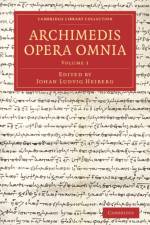
Published in 1880-1, this three-volume edition of the extant works of the Greek mathematician Archimedes of Syracuse (c.287-c.212 BCE) was edited by the Danish philologist and historian Johan Ludvig Heiberg (1854-1928), whose Quaestiones Archimedeae (1879) is also reissued in this series. He later discovered a medieval palimpsest containing lost works by Archimedes, which significantly expanded the canon, but the present collection was produced long before this and therefore contains the works known at the time of publication. Heiberg consulted a Florentine codex, which he painstakingly compared with other sources to produce his edition. This first volume contains On the Sphere and the Cylinder (in two books), On the Measurement of a Circle and On Conoids and Spheroids. The texts are given in the original Greek with parallel Latin translation, notes and introductory material.
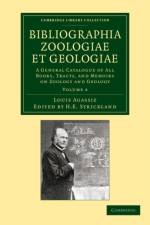
Born in Switzerland, Louis Agassiz (1807-73) distinguished himself as one of the most capable and industrious naturalists of the nineteenth century, working in fields as diverse as ichthyology and glaciology. In the late 1840s, he moved to North America, where he became a professor of zoology at Harvard and established the Museum of Comparative Zoology. His extensive bibliography of all known works relating to zoology and geology, which he had compiled for private use, was revised and substantially expanded by the English naturalist Hugh Edwin Strickland (1811-53) and published by the Ray Society in four volumes between 1848 and 1854. As such, it stands as the fullest record of the existing scientific literature just prior to the publication of Darwin's On the Origin of Species. Volume 4 (1854), completed by Sir William Jardine (1800-74) after the death of Strickland, concludes the list of works, arranged alphabetically by author, ranging here from Naccari to Zwinger.
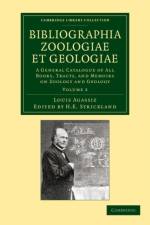
Born in Switzerland, Louis Agassiz (1807-73) distinguished himself as one of the most capable and industrious naturalists of the nineteenth century, working in fields as diverse as ichthyology and glaciology. In the late 1840s, he moved to North America, where he became a professor of zoology at Harvard and established the Museum of Comparative Zoology. His extensive bibliography of all known works relating to zoology and geology, which he had compiled for private use, was revised and substantially expanded by the English naturalist Hugh Edwin Strickland (1811-53) and published by the Ray Society in four volumes between 1848 and 1854. As such, it stands as the fullest record of the existing scientific literature just prior to the publication of Darwin's On the Origin of Species. Volume 2 (1850) continues the list of works, arranged alphabetically by author, ranging here from Cabanis to Fyfe.
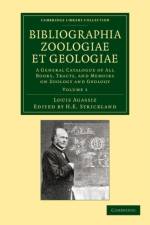
Born in Switzerland, Louis Agassiz (1807-73) distinguished himself as one of the most capable and industrious naturalists of the nineteenth century, working in fields as diverse as ichthyology and glaciology. In the late 1840s, he moved to North America, where he became a professor of zoology at Harvard and established the Museum of Comparative Zoology. His extensive bibliography of all known works relating to zoology and geology, which he had compiled for private use, was revised and substantially expanded by the English naturalist Hugh Edwin Strickland (1811-53) and published by the Ray Society in four volumes between 1848 and 1854. As such, it stands as the fullest record of the existing scientific literature just prior to the publication of Darwin's On the Origin of Species. Volume 1 (1848) provides a global list of all relevant periodicals before beginning the principal list of works, arranged alphabetically by author, ranging here from Aalborg to Bywater.
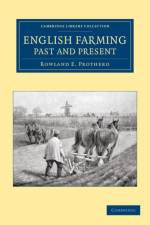
The author and politician Rowland Edmund Prothero (1851-1937), an expert on British agricultural history, held the post of President of the Board of Agriculture in David Lloyd George's cabinet between 1916 and 1919. In 1885 he had written an article for the Quarterly Review in which he traced the progress of English agriculture since the middle ages. This was expanded into a book, published in 1888 as The Pioneers and Progress of English Farming. Then, in 1912, Prothero revised and greatly expanded it under its current title, bringing the story up to date. This classic work charts the development of farming from the medieval manorial system up to the Corn Laws in the nineteenth century and the agricultural crises that confronted administrators at the beginning of the twentieth. The appendices include a chronological list of agricultural writers as well as data on the Corn Laws, tithes, acreage and wages.
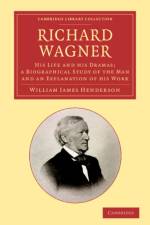
The American music critic and lecturer William James Henderson (1855-1937) wrote for The New York Times and The New York Sun, provided the libretto for Walter Damrosch's opera Cyrano (1913) and authored fiction, poetry, sea stories and a textbook on navigation. He also taught at the New York College of Music and the Institute of Musical Art. Taking up the cause of Wagner with considerable understanding, he published this substantial work in 1902, barely twenty years after the composer's death. It is an illuminating account of Wagner's life and artistic aims, complemented by an insightful analysis of each of his music dramas from Rienzi to Parsifal. Its purpose, states Henderson, 'is to supply Wagner lovers with a single work which shall meet all their needs'. With Ernest Newman's Study of Wagner (1899), also reissued in this series, it reflects the composer's contemporary popularity.
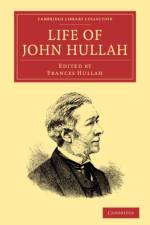
The composer and music teacher John Pyke Hullah (1812-84) enjoyed considerable success with The Village Coquettes, his 1836 opera with a libretto by Charles Dickens. He is best remembered, however, for his 'singing school for schoolmasters' which he directed at London's Exeter Hall in the 1840s and later at the specially built St Martin's Hall. Although his use of the French fixed sol-fa system was quickly superseded by Curwen's tonic sol-fa approach, his efforts - with the support of Sir James Kay-Shuttleworth - embedded music firmly in the school curriculum. An influence on the rapid growth of British amateur choral societies, he was also appointed the first government inspector of music in training colleges in 1872. First published in 1886, this biography was prepared from Hullah's notes by his second wife, Frances Rosser Hullah (1839-c.1921), a professional sculptor and writer on music for women's periodicals.
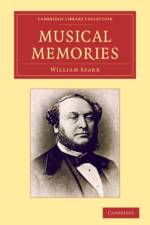
The organist and writer William Spark (1823-97) is best remembered for his active role in the Leeds musical scene, notably his involvement in the People's Concerts and the Leeds Festival. Spark had been articled to the organist and composer Samuel Sebastian Wesley in 1840 and accompanied him when he moved to Leeds two years later. Following several posts as an organist, he worked with Henry Smart on the design of the organ for Leeds town hall in 1858, giving regular recitals on it thereafter. He wrote on a wide variety of musical topics and the present work, first published in 1888, brings together his personal reminiscences and anecdotes. The pen portraits of eminent musicians - including conductor Sir Michael Costa, composer Felix Mendelssohn and soprano Adelina Patti - offer a remarkably informed insight into the development of musical culture in the nineteenth century.
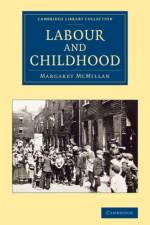
Celebrated for her pioneering work to improve the education, health and welfare of slum children, Margaret McMillan (1860-1931) was an active socialist campaigner and member of the Independent Labour Party. Her involvement with Bradford school boards drew her attention to the poor state of health of the pupils - rickets, scurvy, anaemia and malnutrition were commonplace. Working with her sister Rachel (1859-1917), as well as lobbying for improved standards, Margaret opened the country's first school clinic in Bow in 1908. The sisters' most famous enterprise, the Deptford Camp School, soon followed, and the Rachel McMillan College for training nurses and teachers was founded in 1930. One of her many influential books on pre-school and primary education, this work of 1907 considers the vital role of the school doctor and argues that the practice of poor schoolchildren engaging in part-time labour is detrimental to their well-being.
Abonner på vårt nyhetsbrev og få rabatter og inspirasjon til din neste leseopplevelse.
Ved å abonnere godtar du vår personvernerklæring.