Gjør som tusenvis av andre bokelskere
Abonner på vårt nyhetsbrev og få rabatter og inspirasjon til din neste leseopplevelse.
Ved å abonnere godtar du vår personvernerklæring.Du kan når som helst melde deg av våre nyhetsbrev.

Although in the original preface to this work the British naturalist Charles Waterton (1782-1865) modestly says his book has 'little merit', his account is a rich description of his experiences in South America and the Caribbean. Waterton managed his family's sugar plantations in Demerara from 1804 to 1812, studied natural history, and later (1812-25) divided his time between the Americas and Europe. This book, originally published in 1825 and reissued here in its 1828 second edition, describes his four expeditions, beginning with his search deep in the rainforest for samples of the rare poison, curare. Waterton also recounts a fierce battle with the Maroons, but his main focus is zoology, including the capture of 'an enormous Coulacara snake', encounters with sloths, monkeys and vampire bats, and close observations of a huge variety of birds. The final chapter describes Waterton's methods of 'preserving birds for cabinets of natural history'.
The English writer Robert Charles Dallas (1754-1824) was a relative by marriage of Lord Byron (1788-1824), with whom he maintained a 'frequent' correspondence between 1808 and 1814. As a friend and the editor of some of Byron's poems, Dallas had been entrusted with several of the poet's personal letters. First published in France in 1825, this book contains letters Byron wrote to his mother while travelling across Europe as a young man, his correspondence with Dallas, and Dallas' 1824 'Recollections' of the poet. It includes a long statement by Dallas's son, describing the disputes that arose between Dallas and Byron's executors concerning the publication of the letters. Intended by Dallas as a 'whole faithful memoir' of Byron's life during the period of their correspondence, this book provides a vivid portrait of the poet and reveals how he was perceived by a close, though much older, friend.
The biographer and novelist E. J. Trelawny (1792-1881) published Recollections in 1858. It is a memoir of the time Trelawny spent in the Mediterranean with the Romantic poets Percy Bysshe Shelley (1792-1822) and Lord Byron (1788-1824) from 1822 until the early deaths of both poets. Trelawny's vivid and personal account quickly became popular, comfortably out-selling other biographies, and was republished in 1878 under the title Records of Shelley, Byron and the Author. The work, based on Trelawny's notes and correspondence, describes their expatriate lifestyle in Italy, Shelley's sudden tragic death at sea, Byron's support for the Greek War of Independence, and his death. It is an indispensable source about the final months of Shelley and Byron's intense and unconventional lives, providing eye-witness details and intimate knowledge of two of England's greatest Romantic poets.
Mark Pattison's Memoirs, compiled during his last illness and published posthumously in 1885, recount the academic's fascinating, if difficult, life. Highly regarded for his learning, Pattison (1813-84) spent most of his adult life in Oxford, first as a student, then a tutor, and eventually, from 1861, as Rector of Lincoln College. He was a close associate of Newman and the Tractarians during the 1840s, though he later tended towards agnosticism. During the 1850s he made several visits to German universities, and developed an interest in early modern Protestant thought. He later edited works by Pope and Milton. Pattison's Memoirs paint a vivid though often bitter portrait of life in Victorian Oxford. They describe his incompetent tutors, his disillusionment with the Oxford Movement, and vicious academic rivalries. Pattison would not permit changes to 'soften' the impact, but his editor omitted certain passages that might 'wound the feelings of the living'.
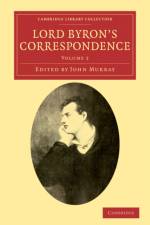
A leading figure in Romanticism and a political campaigner committed to social reform, Lord Byron (1788-1824) is regarded as one of the greatest of British poets. First published in 1922, this two-volume work is a compilation of letters Byron wrote between 1808 and 1824 to some of his close friends, including Lady Melbourne, John Cam Hobhouse, a fellow-student at Cambridge, and Percy Bysshe Shelley. The introduction and biographical notes by the publisher John Murray IV (1851-1928), grandson of Byron's own publisher John Murray II, supplement the letters and restore their narrative thread. Volume 2 features the letters Byron wrote from 1816 until his death. It focuses on Byron's exile in Italy and his involvement in the Greek independence movement. Three appendices provide additional perspectives, and include letters from Anne Isabella Milbanke (to whom Byron was briefly married), and his rejected lover Lady Caroline Lamb.
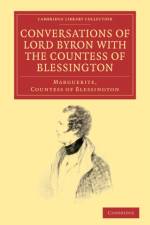
When the Countess of Blessington (1789-1849) met the poet Lord Byron (1788-1824) in Genoa in 1823 she noted that 'the impression of the first few minutes disappointed me'. Despite this precarious start, they struck up a friendship and met nearly every day for two months. Byron had been living in the Italian port city since the previous autumn and Blessington and her family had arrived in April 1823. Her account of their conversations was not published until 1834, a decade after Byron's death. Blessington expresses candid opinions about the poet in this work, writing that Byron 'is a strange melange of good and evil, the predominancy of either depending wholly on the humour he may happen to be in'. Through her frankness, the author - herself a well-known writer who hosted a distinguished literary salon - also reveals much about herself and the literary world she and Byron inhabited.
Assembled in 1891 by Sir Sidney Colvin (1845-1927), this collection of John Keats' correspondence contains 164 letters written to the poet's family and friends during his short life. Colvin was at various times Slade Professor of Fine Art at Cambridge, Director of the Fitzwilliam Museum, and Keeper of Prints and Drawings at the British Museum. He had a long-standing interest in Keats and eventually published a biography of the celebrated poet (also reissued in this series) in 1917. Among the letters included here are those written to Keats' publisher John Taylor, his sister Fanny Keats, his close friend Charles Armitage Brown, the artist Benjamin Haydon, writers John Hamilton Reynolds and Leigh Hunt and many others, providing a rich insight into the poet's character. The book also includes an explanatory preface containing background information and brief biographical sketches of Keats' correspondents.
Women novelists dominated the market in Victorian times, covering all genres from the mainstream to the Gothic, religious and sensational. Some are now classic household names whilst others, popular in their time, lie neglected on the shelves. This collection of appraisals of female writers by female writers was published in 1897 as a contribution to the celebrations of Queen Victoria as the longest reigning British monarch. The brief is exact: only those whose work was done after the Queen's accession and who were dead would be included. Nonetheless, the range is wide and includes essays on the Brontes, George Eliot and Mrs Gaskell, by Margaret Oliphant, Eliza Lynn Linton and Ada Ellen Bayly respectively, as well as appraisals of Catherine Crowe, Mrs Archer Clive and Mrs Henry Wood (author of East Lynne), by Adeline Sergeant, and the children's authors Charlotte Tucker and Juliana Ewing by Emma Marshall.
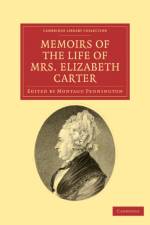
Montagu Pennington (1762-1849) published this account of the life and work of the English poet and classicist Elizabeth Carter (1717-1806) in 1807. Carter first made her name in 1758 through her English translation of the work of the Greek Stoic philosopher Epictetus, for which she was acclaimed by Samuel Johnson as the 'best Greek scholar in England'. Carter also published numerous essays, articles, and translations and was an influential member of the Blue Stockings Society; later in life, she became an evangelical Christian. This volume vividly recounts her education, life, and scholarly work. Being based on her own personal papers and letters, and containing a number of Carter's poems, notes and articles, the work is an invaluable source for the life of a remarkable eighteenth-century woman. For more information on this author, see http://orlando.cambridge.org/public/svPeople?person_id=cartel
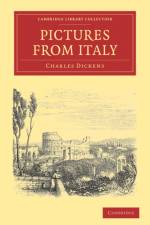
In 1844 Charles Dickens (1812-70) and his family moved to Italy for a year, eventually settling in Genoa. This book, Dickens' second travel memoir, describes his experience of travelling through France and exploring Italy. Based on letters to friends, particularly John Forster, it was first published in instalments from January to March 1846 in the Daily News (a new radical newspaper which Dickens himself founded and briefly edited). The edition in book form reissued here appeared in May 1846. The main focus of the book is the northern regions of Italy, including Tuscany, Milan and Venice. It also includes substantial sections on Rome and Naples as well as a brief sketch of Switzerland. Landscapes, architecture, lodgings and food are described with selective but penetrating detail. The shrewd social observations characteristic of Dickens' novels are found here, especially in his critical remarks about poverty, popular religion and the Catholic clergy.
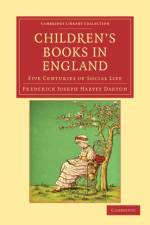
From fables to fairy tales, romances to nursery rhymes, this highly influential 1932 study analyses the evolution of children's literature. Publisher and writer F. J. Harvey Darton (1878-1936) draws upon his family's involvement in children's publishing since the late eighteenth century, his knowledge of medieval literature, and his own extensive collection of children's books to present the first account of English children's literature seen as a continuous whole. Setting children's books in their historical context, the work reflects much about the history of English social life as well as providing an in-depth perspective on the genre - in the author's words 'a chronicle of the English people in their capacity of parents, guardians and educators of children'. A classic and authoritative study for anyone interested in the history of children's literature, Darton's book remains an invaluable source of information on the genre.
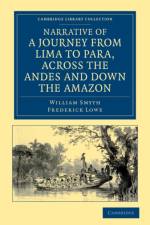
During 1834-5 the British naval officer and artist William Smyth (1800-77) and his fellow officer Frederick Lowe (1811-47) went on an expedition to Peru and North-Eastern Brazil. This account of their journey, first published in 1836, combines a travel narrative with anthropological observation. Their objective was to explore the river Pachitea in Peru and investigate its potential as a route from the Andes via the Amazon to the Atlantic Ocean that could reduce journey times and benefit Peruvian exports. The tone of the book is typical of early nineteenth-century European travel literature, in that it shows the authors to have been fascinated by the cultures they encountered while retaining a deep mistrust of the indigenous 'savages' some of whom were held to be 'cannibals'. It is, however, full of fascinating details about the rainforest and its inhabitants, the colonial settlers, and their interactions.
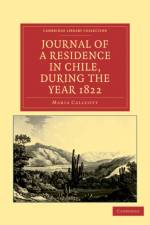
Published in 1824, the journal of Maria Graham (1785-1842) depicts one woman's immersion in the culture and society of post-independence Chile. Graham, known later as Lady Callcott, travelled through India and Europe as well as South America, and her writings and reflections on these regions and their cultures, as well as other historical works, established her reputation both as a writer and later as an art historian. Graham outlines the parameters of her work in her preface and her historical Introduction: she is interested not only in what has happened to the Chileans, but in what the future holds for them and their new nation. Graham's writing reveals sensitivity to the sentimental, romantic, and gothic trends among her contemporaries, and her Journal benefits from her literary awareness.
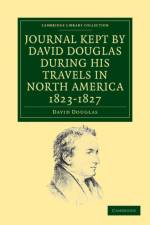
David Douglas (1799-1834), the influential Scottish botanist and plant collector, trained as a gardener before attending Perth College and Glasgow University. His genius for botany flourished and his talents came to the attention of the Royal Horticultural Society. With the society's backing he went to North America in 1823, beginning his life-long fascination with the region's flora. He discovered thousands of new species and introduced 240 of them to Britain, including the Douglas fir. Douglas continued to explore and discover plant species until his death in the Sandwich Islands (present-day Hawaii) in 1834. This remarkable journal, which remained unpublished until 1914, describes his adventures in North America during 1823-7. It also includes extracts from his journal of his explorations of Hawaii during 1833-4. The appendices include a listing of the plants Douglas introduced to Britain, and contemporary accounts of investigations into the mysterious circumstances of his death.
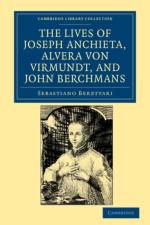
This book first appeared in 1849, during the renaissance of English Catholicism that followed the 1829 Relief Act. It contains three anonymous translations of early modern biographies. The first, published in Latin in Cologne in 1617 by Sebastiano Berettari (1543-1622), and translated here from an Italian manuscript version of 1670, focuses on the Jesuit missionary to Brazil Joseph Anchieta (1534-97), praising his 'talent and diligence in human affairs' and his 'heroic virtues'. The second, based on Caspar Peter Lull's account published in both Latin and German in 1682, briefly describes the life of the nun Alvera of Virmundt (1617-49) as a model of female piety full of 'virtue and perfection'. The third is devoted to the Belgian Jesuit John Berchmans (1599-1621), remembered as a 'holy young man', and is translated from an 1826 Paris edition of a text published in 1706 by Nicholas Frizon (d. 1737).
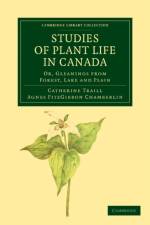
Catharine Parr Traill (1802-99) was a writer, botanist and settler who emigrated from England to Canada with her husband in 1832. Both she and her sister, Susanna Moodie, became well known for their writing on settler life: Traill is also the author of The Backwoods of Canada and The Canadian Settler's Guide. This 1885 publication is the most comprehensive of her botanical works. Plants are grouped together by family and the book is divided into four sections: native flowers, flowering shrubs, forest trees and native ferns. Written to inspire the Canadian public to share her passion for the plant life of their country, the book has an engaging style where anecdotes and literary quotations appear alongside detailed descriptions and classification information. Traill's niece, Agnes Chamberlin, is the book's illustrator. A beautiful example of nineteenth-century popular botany, this book will appeal to anyone interested in the history of the subject.
Alexander von Humboldt (1769-1859) was one of the most respected scientists of his time; Darwin called him 'the greatest scientific traveller who ever lived'. From 1799 Humboldt spent five years exploring the Americas, reporting his findings in thirty volumes, published over a period of more than twenty years from 1805. His Essai Politique, describing northern New Spain, particularly Mexico, was one of the first studies of a single country written to take account of both its history, its society and its political development. In 1824, the English mining engineer John Taylor published this abridged translation, combining it with passages from Humboldt's Geognostical Essay on the Superposition of Rocks in order to provide a focussed account of Mexico's mining concerns and opportunities. Including detailed maps, this work contains exhaustive statistics, particularly with regard to trade, agriculture and mining, alongside geographical studies and observations on the population and government.
The Victorian printer Emily Faithfull (1835-95) published Three Visits in 1884. The work is an account of her American lecture tours that took place in 1872-3, 1882-3 and 1884. Faithfull, a controversial and independently minded figure, campaigned for the employment and education rights of women. In 1860, Faithfull set up a printing establishment for women, the Victoria Press, where, despite fierce resistance from the printing trade, she employed and trained women as compositors. In 1862, she was made Printer and Publisher in Ordinary to Queen Victoria. Faithfull, a talented speaker, lectured widely on how America was dealing with the changing position of women, and the campaign for women's employment rights. This account remains a key source for the history of liberal feminism and the emancipation of nineteenth-century women.
Originally published in 1808, this work had long been out of print before being revived in this 1876 edition, which is enhanced by a biography of the author by her godson. A poet, letter-writer and essayist, Anne Grant (1755-1838) lived in America between the ages of three and thirteen, after which her family returned to Scotland. Described by the author as a 'miscellany of description, observation and detail', the book paints a charming picture of New York life in the idyllic world of pre-revolutionary America. Grant blends memories of her childhood in Albany with biographical details of her friend Madame Schuyler, of whom she wrote 'whatever culture my mind received, I owe to her'. Greatly admired by Scott and Southey, the book provides sketches of New York life alongside anecdotes of the Indians. For more information on this author, see http://orlando.cambridge.org/protected/svPeople?formname=r&person_id=granan
J. Tyrwhitt Brooks was a pseudonym of the nineteenth-century publisher and journalist, Henry Vizetelly (1820-94). Born in London, Vizetelly was apprenticed to a wood engraver as a young child. He entered the printing business and helped found two successful but short-lived newspapers, the Pictorial Times and the Illustrated Times. His Four Months among the Gold-Finders, published in 1849, was a commercial and critical success on both sides of the Atlantic. It purported to be a genuine diary about the Californian Gold Rush, and was widely accepted as such. However, he admits in his 1893 autobiography, Glances Back Through Seventy Years (also reissued in the Cambridge Library Collection) that it was an elaborate hoax. The supposed author was a doctor (whose testimony would be considered reliable) who had found and then lost a fortune. The Times reviewed it enthusiastically and at length as a morality tale for its time.
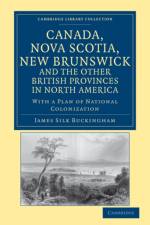
The Cornish-born traveller and writer James Silk Buckingham (1786-1855) campaigned energetically for social reform while a Member of Parliament during the 1830s. He later spent four years in North America, and in 1839 travelled on to Canada to investigate its social and economic landscape. In this revealing account, first published in 1843, Buckingham recalls his experiences in the Eastern provinces. He found the Canadians to be civilized, hospitable, hard working and unfailingly loyal to Britain (unlike the independent Americans, who he reports they despised). He also encountered evidence of widespread poverty, and argues that in order to advance Canada's economy and, in turn, that of Britain, new emigrants needed better financial support from the British government. He concludes by calling for a new system whereby land, labour, skill and capital would be optimally utilized, in a pioneering proposal that he expected to prove controversial.
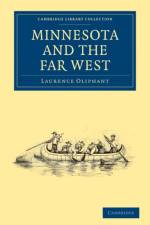
Laurence Oliphant (1829-88) was a much-travelled British diplomat and writer. In the mid-nineteenth century, between two stints in the Caucasus, he spent several years in North America, helped Lord Elgin negotiate a trade treaty between Canada and the US, and was for a time Superintendent-General for Indian Affairs in Canada. In this book, first published in 1855, Oliphant expresses his enthusiasm for the rapid development in the American West that was being driven by industry and commerce. He documents a fact-finding journey around the Great Lakes region, travelling on the new railway and adventurously taking a bark canoe down rapids and across portages. From picnics, dances and sleigh rides to mining, forest clearance and land speculation, Oliphant conveys a vivid picture of the opportunities and hardships of the frontier society. He focuses in detail on the Native Americans he encountered, their customs, skills, way of life and future prospects.
Published in 1863, English novelist George Alfred Lawrence's first foray into travel-writing recounts a failed attempt to join the Confederate Army of Virginia. Lawrence (1827-76), who abandoned a law career when his first novel (1853) sold, became known for books that celebrated the brash, violent, aristocratic hero. Lawrence had joined the militia in England, and one critic has suggested that Lawrence's American expedition was his attempt to live as his most famous character, Guy Livingstone, and his attempt to write himself into heroism. In novelistic fashion his work describes his voyage from England to New York, his journey as far as Maryland, his capture by farmers, and his weeks in a Washington gaol. Lawrence embraced the Confederate cause and his work, often racist and relativist, expresses total faith in it.
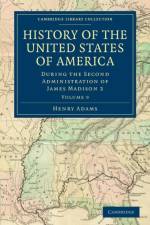
Henry Adams (1838-1918), journalist, novelist, and historian, was the great-grandson of John Adams and grandson of John Quincy Adams, both presidents of the United States. A professor of medieval history at Harvard whose areas of research were wide-ranging, he was deeply interested in the evolution of democracy in the United States. While Adams is best remembered for his autobiography The Education of Henry Adams (1907), for which he was posthumously awarded a Pulitzer prize, his nine-volume history of the United States during the presidencies of Jefferson and Madison (1801-17), which was published 1889-91, has been hailed as one of the greatest historical works in English. Adams was an advocate of scientific history, and this monumental work adheres to its principles, considering social trends and circumstances rather than focusing on particular events. Volume 9, on Madison's second administration (1813-17), also includes an index to all volumes.
Henry Adams (1838-1918), journalist, novelist, and historian, was the great-grandson of John Adams and grandson of John Quincy Adams, both presidents of the United States. A professor of medieval history at Harvard whose areas of research were wide-ranging, he was deeply interested in the evolution of democracy in the United States. While Adams is best remembered for his autobiography The Education of Henry Adams (1907), for which he was posthumously awarded a Pulitzer prize, his nine-volume history of the United States during the presidencies of Jefferson and Madison (1801-17), which was published 1889-91, has been hailed as one of the greatest historical works in English. Adams was an advocate of scientific history, and this monumental work adheres to its principles, considering social trends and circumstances rather than focusing on particular events. Volume 8 continues the account of the second administration of James Madison.
Henry Adams (1838-1918), journalist, novelist, and historian, was the great-grandson of John Adams and grandson of John Quincy Adams, both presidents of the United States. A professor of medieval history at Harvard whose areas of research were wide-ranging, he was deeply interested in the evolution of democracy in the United States. While Adams is best remembered for his autobiography The Education of Henry Adams (1907), for which he was posthumously awarded a Pulitzer prize, his nine-volume history of the United States during the presidencies of Jefferson and Madison (1801-17), which was published 1889-91, has been hailed as one of the greatest historical works in English. Adams was an advocate of scientific history, and this monumental work adheres to its principles, considering social trends and circumstances rather than focusing on particular events. Volume 7 describes the second administration of James Madison (1813-17).
Henry Adams (1838-1918), journalist, novelist, and historian, was the great-grandson of John Adams and grandson of John Quincy Adams, both presidents of the United States. A professor of medieval history at Harvard whose areas of research were wide-ranging, he was deeply interested in the evolution of democracy in the United States. While Adams is best remembered for his autobiography The Education of Henry Adams (1907), for which he was posthumously awarded a Pulitzer prize, his nine-volume history of the United States during the presidencies of Jefferson and Madison (1801-17), which was published 1889-91, has been hailed as one of the greatest historical works in English. Adams was an advocate of scientific history, and this monumental work adheres to its principles, considering social trends and circumstances rather than focusing on particular events. Volume 6 continues the account of the first administration of James Madison (1809-13).
Henry Adams (1838-1918), journalist, novelist, and historian, was the great-grandson of John Adams and grandson of John Quincy Adams, both presidents of the United States. A professor of medieval history at Harvard whose areas of research were wide-ranging, he was deeply interested in the evolution of democracy in the United States. While Adams is best remembered for his autobiography The Education of Henry Adams (1907), for which he was posthumously awarded a Pulitzer prize, his nine-volume history of the United States during the presidencies of Jefferson and Madison (1801-17), which was published 1889-91, has been hailed as one of the greatest historical works in English. Adams was an advocate of scientific history, and this monumental work adheres to its principles, considering social trends and circumstances rather than focusing on particular events. Volume 5 describes the first administration of James Madison (1809-13).
Henry Adams (1838-1918), journalist, novelist, and historian, was the great-grandson of John Adams and grandson of John Quincy Adams, both presidents of the United States. A professor of medieval history at Harvard whose areas of research were wide-ranging, he was deeply interested in the evolution of democracy in the United States. While Adams is best remembered for his autobiography The Education of Henry Adams (1907), for which he was posthumously awarded a Pulitzer prize, his nine-volume history of the United States during the presidencies of Jefferson and Madison (1801-17), which was published 1889-91, has been hailed as one of the greatest historical works in English. Adams was an advocate of scientific history, and this monumental work adheres to its principles, considering social trends and circumstances rather than focusing on particular events. Volume 4 continues the account of the second administration of Thomas Jefferson (1805-9).
Henry Adams (1838-1918), journalist, novelist, and historian, was the great-grandson of John Adams and grandson of John Quincy Adams, both presidents of the United States. A professor of medieval history at Harvard whose areas of research were wide-ranging, he was deeply interested in the evolution of democracy in the United States. While Adams is best remembered for his autobiography The Education of Henry Adams (1907), for which he was posthumously awarded a Pulitzer prize, his nine-volume history of the United States during the presidencies of Jefferson and Madison (1801-17), which was published 1889-91, has been hailed as one of the greatest historical works in English. Adams was an advocate of scientific history, and this monumental work adheres to its principles, considering social trends and circumstances rather than focusing on particular events. Volume 3 describes the second administration of Thomas Jefferson (1805-9).
Abonner på vårt nyhetsbrev og få rabatter og inspirasjon til din neste leseopplevelse.
Ved å abonnere godtar du vår personvernerklæring.