


Gjør som tusenvis av andre bokelskere
Abonner på vårt nyhetsbrev og få rabatter og inspirasjon til din neste leseopplevelse.
Ved å abonnere godtar du vår personvernerklæring.Du kan når som helst melde deg av våre nyhetsbrev.

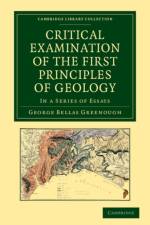
Born in London, the geologist G. B. Greenough FRS (1778-1855) initially studied law. His studies took him to the University of Gottingen where, almost by chance, he attended lectures on natural history. He was immediately hooked, gave up his legal studies, and devoted himself to geology, going on a series of scientific tours of France, Italy, Britain, Ireland and lastly India. He helped to found the Geological Society, and under its auspices, he organised a cooperative project that led to his famous geological map of England and Wales. He was made a Fellow of the Royal Society in 1807 for his services to geology. This influential series of essays, published in 1819, debunked a range of geological theories that were popular at the time, and by so doing, Greenough helped to reform much of geological thinking. The book also includes transcripts from his presidential addresses to the Geological Society.
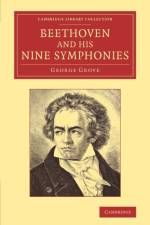
Beethoven's symphonies captured the public imagination from the outset and remain compelling today. Revolutionary in their time, these life-enhancing works now sit at the centre of the classical music repertoire, retaining their ability to delight and inspire. The career of Sir George Grove (1820-1900) ranged from civil engineering to biblical scholarship, but he is best known for editing his celebrated Dictionary of Music and Musicians. A driving force at the heart of nineteenth-century British musical life, Grove organised important concerts at the rebuilt Crystal Palace in Sydenham, and he served as the first director of the Royal College of Music from 1883 to 1894. First published in 1896, and reissued here in its swiftly corrected and indexed second edition, this work is a classic of musical analysis, exploring the composition, structure, performance and reception of each symphony in turn. Intended for 'the amateurs of this country', it represents the culmination of a lifetime's research.
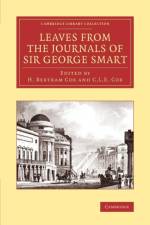
Sir George Smart (1776-1867), conductor, composer, singing teacher and organist, was a central figure in nineteenth-century British musical life. He is best remembered as one of the founder members of the Philharmonic Society, for which he often conducted. Notably, in 1826 he presided over the first performance in England of Beethoven's ninth symphony. Smart was also much in demand as a conductor at the major English musical festivals and on royal occasions. These edited journal entries, first published in 1907, provide insightful accounts of concert life at the time, and they are particularly valuable for Smart's detailed observations - gathered during his extensive tour of 1825 - on musical practice in Europe, including conducting methods and performing speeds. The journal extracts end in 1845 with an account of Smart's visit to Bonn for the unveiling of Beethoven's statue.
Founded as the Astronomical Society of London in 1820, this illustrious organisation received its royal charter in 1831. It has counted some of the world's greatest astronomers among its members, most notably its first president, Sir William Herschel, whose family archive forms part of its extensive library. Now based in Burlington House in Piccadilly, it continues to publish journals, award medals and prizes, and support education and outreach work. Following the society's centenary, this survey of its history appeared in 1923 and comprises contributions from leading astronomers of the early twentieth century. The extracts from primary sources include the diary entry of Sir John Herschel, son of William, recording the dinner at which the society's formation was discussed. The work also provides insights into how the society was able to take advantage of imperial expansion to collect observations and data from around the world, fuelling the Victorian pursuit of scientific knowledge.
Even while professionally engaged in banking, Sir John William Lubbock (1803-65) applied his formidable mind to scientific questions. Several of his early writings on astronomy - his particular sphere of interest - are gathered together in this reissue, notably On the Determination of the Distance of a Comet from the Earth, and the Elements of its Orbit (1832), On the Theory of the Moon and on the Perturbations of the Planets (1833), and An Elementary Treatise on the Computation of Eclipses and Occultations (1835). Lubbock received a Royal Society medal for tidal research in 1834, and herein is his Elementary Treatise on the Tides (1839). Also included is Lubbock's On the Heat of Vapours and on Astronomical Refractions (1840), in which he relates celestial observations to Gay-Lussac's gas expansion law. The collection closes with On the Discovery of the Planet Neptune (1861), Lubbock's lecture discussing how John Couch Adams first predicted the planet's existence.
Famous for his metal prosthetic nose, and for being associated with 'unlucky' days in Scandinavian folklore, Tycho Brahe (1546-1601) made the most accurate naked-eye astronomical measurements of his day. Cataloguing more than 1,000 new stars, his stellar and planetary observations helped lay the foundations of early modern astronomy. John Louis Emil Dreyer (1852-1926) was a fellow Dane, but he spent much of his working life in Ireland. When he was fourteen, he had read a book about Brahe and this inspired him to 'be an astronomer and nothing else'. First published in 1890, Dreyer's biography of his hero remained the definitive work for more than a century. He sets out to illuminate not simply the life of his subject, but also the lives and work of Brahe's contemporaries and the progress of science in the sixteenth century.
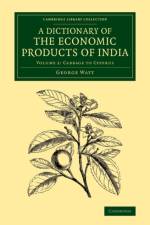
A Scottish doctor and botanist, George Watt (1851-1930) had studied the flora of India for more than a decade before he took on the task of compiling this monumental work. Assisted by numerous contributors, he set about organising vast amounts of information on India's commercial plants and produce, including scientific and vernacular names, properties, domestic and medical uses, trade statistics, and published sources. Watt hoped that the dictionary, 'though not a strictly scientific publication', would be found 'sufficiently accurate in its scientific details for all practical and commercial purposes'. First published in six volumes between 1889 and 1893, with an index volume completed in 1896, the whole work is now reissued in nine separate parts. Volume 2 (1889) contains entries from cabbage (introduced to India by Europeans) to Cyperus (a genus of grass-like flowering plants).
A Scottish doctor and botanist, George Watt (1851-1930) had studied the flora of India for more than a decade before he took on the task of compiling this monumental work. Assisted by numerous contributors, he set about organising vast amounts of information on India's commercial plants and produce, including scientific and vernacular names, properties, domestic and medical uses, trade statistics, and published sources. Watt hoped that the dictionary, 'though not a strictly scientific publication', would be found 'sufficiently accurate in its scientific details for all practical and commercial purposes'. First published in six volumes between 1889 and 1893, with an index volume completed in 1896, the whole work is now reissued in nine separate parts. Volume 3 (1890) contains entries from Dacrydium (a genus of coniferous trees) to Gordonia obtusa (a species of evergreen tree).
A Scottish doctor and botanist, George Watt (1851-1930) had studied the flora of India for more than a decade before he took on the task of compiling this monumental work. Assisted by numerous contributors, he set about organising vast amounts of information on India's commercial plants and produce, including scientific and vernacular names, properties, domestic and medical uses, trade statistics, and published sources. Watt hoped that the dictionary, 'though not a strictly scientific publication', would be found 'sufficiently accurate in its scientific details for all practical and commercial purposes'. First published in six volumes between 1889 and 1893, with an index volume completed in 1896, the whole work is now reissued in nine separate parts. Volume 4 (1890) contains entries from Gossypium (the cotton genus) to Linociera intermedia (a species of small tree, used for timber).
A Scottish doctor and botanist, George Watt (1851-1930) had studied the flora of India for more than a decade before he took on the task of compiling this monumental work. Assisted by numerous contributors, he set about organising vast amounts of information on India's commercial plants and produce, including scientific and vernacular names, properties, domestic and medical uses, trade statistics, and published sources. Watt hoped that the dictionary, 'though not a strictly scientific publication', would be found 'sufficiently accurate in its scientific details for all practical and commercial purposes'. First published in six volumes between 1889 and 1893, with an index volume completed in 1896, the whole work is now reissued in nine separate parts. Volume 5 (1891) contains entries from Linum (the flax genus) to oyster (the subcontinent's best oyster beds were to be found 'on the coast near Karachi, Bombay and Madras').
John Stevens Henslow (1796-1861), professor of botany at Cambridge University and Anglican clergyman, is best remembered for his role as a mentor to Charles Darwin. First published in 1862, this biography by Henslow's colleague and brother-in-law, Leonard Jenyns, pays tribute to a man he describes as one of the most remarkable of his time. Through vivid accounts of times spent with Henslow both in the university and on travels around Britain, he paints a portrait of a modest and conscientious man, whose pursuits were intended solely for the benefit of others. Recounting Henslow's scientific work and religious endeavours, Jenyns also explores his pioneering contribution to botany and geology, his assistance to the farmers and the poor of his parish, and the role of his faith in his work. Compiled with help from Darwin and other colleagues, Jenyns' memoir provides a unique insight into an important figure in scientific history.
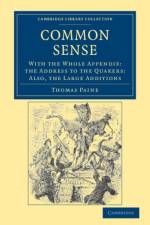
This famous pamphlet - published anonymously in 1776 because of its seditious content - by the British political radical Thomas Paine (1737-1809) laid out his pioneering ideas for American independence, and earned him the title of 'Father of the American Revolution'. The Declaration of Independence, written chiefly by Thomas Jefferson and famously promulgated later that year, was influenced by Paine's arguments in this work: that America was too large to be governed by a country as small as Britain - which, he claimed, was ruling America only for its own financial gain - and that the colonies had now achieved the financial and military capacity to break free. Criticising the British monarchical system, with a single figure at its pinnacle, Paine called instead for a government that promoted security, liberty and equality for its people. Over half a million copies of this highly influential document were sold in America in its first year.
This is an extensively illustrated laboratory manual of transmission electron microscopy techniques for the technician, graduate student, or researcher. Chapters begin with a general discussion, move on to the chemicals and equipment required for the method being described and conclude with a step-by-step presentation of the method and instructions for the preparation of solutions. Notes at the end of each chapter warn of possible pitfalls and outline 'tricks of the trade'. The methods and techniques outlined have been tested for over ten years in clinical and research laboratory situations, and are entirely reliable. Practical Electron Microscopy covers fixation, dehydration and embedding, semi-thin and thin sectioning, the electron microscope, and photography. For this new edition, the chapters on photography and the electron microscope have been completely rewritten and two new chapters have been added, one on immuno electron microscopy using colloidal gold, and one dealing with such special techniques as retrieving specimens from paraffin and handling nasal brushings and blood samples. This manual will be an invaluable guide to anyone using electron microscopy on human and animal tissue and wishing to develop a routine that guarantees good and reproducible results.
This up-to-date account of the novel's composition, structure, and achievement provides readers with the literary and historical knowledge needed to make sense of the text. Professor Bellos explains how Balzac challenged prevailing nineteenth-century expectations of what novels should be like.
The Victorian intellectual Mark Pattison (1813-84) published Isaac Casaubon in 1875, while rector of Lincoln College, Oxford. Casaubon (1559-1614), a French Protestant and distinguished Renaissance scholar, was the author of critical texts and commentaries on a vast corpus of classical authors, including Diogenes Laertius, Theocritus, Aristotle and Strabo. His magnum opus was his text and commentary on Athenaeus' Deipnosophistae. Pattison's account is based on letters, diaries, unpublished lecture notes and students' notes, published works, city archives, and university documents. The work covers Casaubon's youth, education, scholarly career, and final years spent in England (1610-14), where he influenced the rising 'Anglican school'. In his image of Casaubon, Pattison paints the picture of the ideal scholar, and through his portrayal reveals his deeply Victorian convictions and sensibilities. The work is an invaluable source for the life of the Renaissance scholar and the ideas and perspectives of the Victorian man.
The English poet, literary critic, biographer and lexicographer Samuel Johnson (1709-84) is perhaps most famous for his Dictionary of the English Language and the influential Lives of the Most Eminent English Poets, and is often considered the most distinguished man of letters in English history. First published in 1878 in the first series of 'English Men of Letters', this biography by the eminent critic Sir Leslie Stephen traces Johnson's life from his childhood to his career as a writer and literary critic, and concludes with an overview of his works. Stephen describes Johnson's style as one of 'masculine directness', reflecting a life blighted by experiences of poverty and disease, and a desire to escape from pain. Painting a striking portrait of one of the most vigorous intellects of the eighteenth century, this work remains of interest to literary scholars today.
What is philosophy about? According to the author of this work (published in the first series of 'English Men of Letters' in 1879) it is fundamentally the answer to the question: 'What can I know?' T. H. Huxley (1825-95), the distinguished English scientist and disciple of Darwin, succeeds in giving a clear and succinct account of the way in which Scottish philosopher David Hume (1711-56) answered this question. The book is divided into two parts: in the first, Huxley provides the reader with a sketch of Hume's life, but the main emphasis of the book is in Part 2, where by expounding Hume's views on the object of philosophy, consciousness, theology, language and free will, Huxley guides the reader towards an understanding of how Hume's philosophical principles can be regarded as a search for the ultimate element out of which all valid knowledge may be shown to emerge.
Written by the novelist Anthony Trollope (1815-82), who had been a friend of William Makepeace Thackeray (1811-63) since 1860, and originally published in 1879 in the first series of English Men of Letters, this book surveys the life and works of the author of Vanity Fair. It remains a useful introductory text about an author who is still popular today, and offers insights into Victorian assumptions about novel writing, as well as providing an account of Thackeray's life and career which benefits from Trollope's personal knowledge of his subject. A prolific author of both fiction and non-fiction, Trollope is best remembered today for his 'social comedy' novels. In this biography, he addresses what he describes as every reader's desire to know not only the works, but the man behind them.
This life of John Milton was first published in the English Men of Letters series in 1879. Its author, Mark Pattison (1813-84) spent most of his adult life in Oxford, as a student, a tutor, and eventually, from 1861, Rector of Lincoln College. Pattison's scholarly interest in religious thought in England, and in the history of classical learning after the Renaissance, made him the ideal biographer for the poet whose writing life was spent in justifying God's ways to man, and whose knowledge of Greek and Latin literature was almost unmatched. Pattison sees the life as divided into three periods: he provides a narrative of events and an analysis of Milton's literary output (both verse and prose) for each. The final chapter is a discussion of the major poems: Paradise Lost, Paradise Regained, and Samson Agonistes, concluding with the assertion of Milton's supremacy over all English writers except Shakespeare.
This volume on Edmund Burke (1729-97), published in 1879 in the first series of English Men of Letters, was written by the general editor of the series, John Morley (1838-1923). Himself a politician as well as an author, Morley had previously published a 'historical study' of Burke in 1867, but emphasises in an introductory note that this book 'is biographical rather than critical' and is intended as a narrative life. Morley himself was a radical in politics, and his interest in Burke, who he does not hesitate to characterise on occasion as a narrow-minded reactionary, may seem surprising, but he greatly admired his subject's independent political stance, which he describes as a mixture of utilitarian liberalism and historic conservatism, unfettered by abstract doctrine, and which he believed might again come to dominate political discourse in the last decades of the nineteenth century.
Edmund Spenser (1552-99) has been described as one of the greatest English poets, and is best known for The Faerie Queene, which he composed in celebration of the Tudor dynasty and Elizabeth I. Published in the first series of English Men of Letters in 1879, this biography by R. W. Church (1815-90), Dean of St Paul's, recounts Spenser's life and work, hailing him as a genius who continued the Chaucerian tradition of reflecting the deepest human passions through verse. Beginning with an account of his early life and his time as a Cambridge scholar, Church moves on to explore Spenser's career as secretary to Lord Grey of Wilton, the then Lord Deputy of Ireland. He concludes with a detailed analysis of The Faerie Queene, explaining its significance as a work of moral philosophy, and one that represented a cornerstone of English literary history.
Like other works in the first series of English Men of Letters, Shairp's 1879 biography of Robert Burns (1759-96) is a work of both history and literary criticism that can be used as an entry point to a wider study of its subject. Literary scholar John Campbell Shairp (1819-85) was born in Linlithgowshire and educated at Oxford. His publications include the essay collection Culture and Religion (1870) and Studies in Poetry and Philosophy (1868), both of which ran to multiple editions. In 1877 he was elected Professor of Poetry at Oxford, and held that chair in conjunction with the principalship of the United College of St Andrews until his death. With the insights of a historian and a poet, Shairp explores Burns' life through places lived in and travelled to, before turning to the 'characters, poems, and songs' of a poet widely admired in the late Victorian period.
Published in the first series of English Men of Letters in 1879, a time when a complete edition of Daniel Defoe's works was yet to be collated, this biograhical account by William Minto (1845-93) was a significant achievement in literary scholarship as well as an engaging portrait of a colourful and outspoken polemicist. Himself a journalist and essayist for the pioneering Pall Mall Gazette and the Daily News, Minto combines the critical insight of a literary scholar with the empathy and understanding of a fellow writer. Spanning the novelist's entire life (c. 1659-1731), from the passions of his youth to the publication of Robinson Crusoe, his 'later journalistic labours' and the impact of literary success, this biography tells how Defoe disproved the rule that the lives of men of letters are rarely eventful.
Written by Scottish novelist William Black (1841-98), this biography of the Irish-born poet, dramatist and novelist Oliver Goldsmith (c.1728-74) was published in 1878 as the sixth book in the first series of English Men of Letters. Goldsmith is best known for his novel The Vicar of Wakefield (1766) and the play She Stoops to Conquer (1771), as well as his close association with Samuel Johnson, James Boswell, and William Hogarth. The biography is a colourful one: as Black observes, Goldsmith, who was trained as a physician but whose whole career was in literature, possessed a 'happy knack of enjoying the present hour', and his pursuit of pleasure frequently left him in debt. Black himself was one of the most prolific and popular writers of his day; a collected edition of his works published 1892-4 ran to twenty-six volumes.
John Addington Symonds (1840-93), well known as an author, poet and critic, wrote this biography of the poet Percy Bysshe Shelley (1792-1822) in an attempt to portray the complete man. Shelley, Symonds writes, was more than a controversial atheist. He was full of earnest conviction, enthusiasm, and intellectual vigour, but also extravagance, crudity and presumption. Published in 1878 in the first series of English Men of Letters, this book thus provides an account of a literary life famously cut short, describing a writer whose intellectual and poetic legacy was perhaps not fully appreciated in the Victorian period, when the response to his poems was frequently coloured by antipathy to his revolutionary ideas and his unconventional private life, as well as to his loudly proclaimed atheism.
Described by his biographer as the author of 'monumental and supreme' histories, Edward Gibbon (1737-94) is widely acknowledged as a major figure of the Enlightenment and the father of modern historical scholarship. However, despite these epithets, the personal life of one of the eighteenth century's most successful authors remains unknown to many of his readers. Published in the first series of English Men of Letters in 1878 (and going into a second edition in the same year), this biography by James Cotter Morison (1832-88) provides a learned but accessible account of the man who wrote The Decline and Fall of the Roman Empire. Starting with a childhood plagued by ill health and infirmity, and covering Gibbon's time in the militia and travelling on the Grand Tour, Morison leads readers through a life which was apparently unremarkable, but in fact resulted in a work of enduring scholarly achievement.
Sir Walter Scott (1771-1832) is famous for his poetry and historical romances such as Ivanhoe and Rob Roy. As the first English-language author to achieve truly international fame in his lifetime, his depiction of Scottish history and culture spread around the world so effectively that it persists even today. Scott also contributed to Scottish history himself: in 1818 he helped to unearth Scotland's missing crown jewels, and he also led the campaign that saved the Scottish banknote when the London Parliament threatened its existence. First published in 1878 in the first series of 'English Men of Letters', this biography by the journalist Richard H. Hutton (1826-97) tells Scott's story from his childhood and ancestry, through his early years as an advocate to his extraordinary fame and success as a writer, through bankruptcy to recovery, and his final days.
John Bunyan (1628-88), the Bedfordshire tinker and non-conformist preacher, is best known for writing The Pilgrim's Progress. Published in 1880 in the first series of English Men of Letters, this revealing biography by J. A. Froude (1818-94), historian and friend and biographer of Thomas Carlyle, traces Bunyan's life from his troubled childhood to his early spiritual experiences, his career as a dissenting minister and his imprisonment (during which he contemplated and wrote many of his works) for preaching unlawfully. Setting The Pilgrim's Progress within the context of Bunyan's life, Froude argues that the struggles of its 'hero', Christian, to overcome temptation and sin reflected Bunyan's personal turmoil as he was plagued with guilt and self-doubt, feelings that were only further compounded upon his religious conversion. Froude's study can be read with interest today by scholars of theology and literature alike.
This biography of William Cowper by Goldwin Smith (1823-1910) was published in the first series of English Men of Letters in 1880 (this reissue being from the 'ninth thousand' of 1881). Smith states in his opening chapter that Cowper (1731-1800) 'is the most important English poet of the period between Pope and the illustrious group headed by Wordsworth, Byron and Shelley ... he may perhaps himself be numbered among the precursors of the Revolution, though he was certainly the mildest of them all'. He also regards Cowper as the great poet of the religious revival of the eighteenth century. Smith himself was an Oxford-educated historian who wrote for the Saturday Review among other periodicals. He was appointed Regius Professor of Modern History at Oxford in 1858, and later taught at Cornell University, before settling in Canada, where he wrote widely on historical, constitutional and religious topics.
This biography of Geoffrey Chaucer (c. 1340-1400) was published in the first series of English Men of Letters in 1879. Its author, Sir Adolphus William Ward (1837-1924), a prominent scholar who became President of the British Academy, wrote on English literature from the sixteenth to the nineteenth centuries, translated Curtius' History of Greece, and was a historian of both Britain and Germany. He approached the task of writing Chaucer's life as a historian rather than as a literary critic, emphasising the archival sources from which information on Chaucer the man, the civil servant and the courtier could be drawn, and placing the life very much in the context of the times. An epilogue discusses the legacy of the 'father of English poetry' to the poets and dramatists of the sixteenth and seventeenth centuries, and the renewal of interest in Chaucer's works in the nineteenth century.
Abonner på vårt nyhetsbrev og få rabatter og inspirasjon til din neste leseopplevelse.
Ved å abonnere godtar du vår personvernerklæring.