





Gjør som tusenvis av andre bokelskere
Abonner på vårt nyhetsbrev og få rabatter og inspirasjon til din neste leseopplevelse.
Ved å abonnere godtar du vår personvernerklæring.Du kan når som helst melde deg av våre nyhetsbrev.

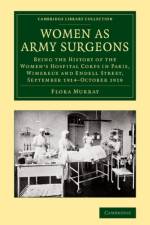
After training to be a doctor at the London School of Medicine for Women, Flora Murray (1869-1923) became an active member of the Women's Social and Political Union. At the outbreak of the First World War, she and her fellow suffragists laid down their banners and sought to aid the Allied war effort. Working within the newly formed Women's Hospital Corps, Murray and her colleague Louisa Garrett Anderson (1873-1943) overcame initial prejudice and established two military hospitals in France in the period 1914-15. Their success prompted an invitation from the War Office to open the Endell Street Military Hospital in London, staffed entirely by women. First published in 1920, Murray's account, illustrated with numerous photographs, records important steps in furthering the acceptance of women in the medical profession. For female doctors, surgeons and nurses, the war provided not only the 'occasion for service' but also 'great professional opportunities'.
The physician and author John Ayrton Paris (1785-1856), several of whose other medical and popular works have been reissued in the Cambridge Library Collection, published the first edition of this book in 1812. It was immediately successful, and went into eight further editions until 1843: this reissue is of the 1820 third edition. Many volumes on materia medica existed at the time, and Paris claims in his preface that he is not disparaging these competitor works, but that they presume too much prior knowledge on the part of the reader. His own work is designed to inform the student of the properties and effects of each medicinal substance, and how they function, both alone and in combinations. This will lead to greater understanding of the efficacy of medicines, and also help to prevent their adulteration. The qualities of each ingredient are discussed, and formulae and doses provided.
From the 1770s onwards, John Banks (1740-1805) lectured on natural philosophy across the north-west of England. Much of his work aimed to show engineers, mechanics and artisans how they could benefit from expanding their theoretical knowledge. First published in 1795, and reissued here in its 1815 second edition, this work shows how to calculate the power limits of waterwheels, millstones and other commercially important machines. In the author's words, a key aim is to avoid wasted effort 'in attempting what men of science know to be impossible'. Starting with the mechanics of circular motion, he leads the reader step by step through a series of worked problems, showing the theory's practical applications. He then moves on to his experiments on the flow of water, and uses his results to better analyse the various types of waterwheel. Banks' On the Power of Machines (1803) is also reissued in this series.
For those engaged in military conflict at the end of the nineteenth century, infection and disease were still as formidable enemies as the guns of an opposing army. Yet advances in sanitary science and understanding continued to help officers keep their troops in optimal fighting condition. After serving as an assistant surgeon for the Union Army during the American Civil War, Alfred Alexander Woodhull (1837-1921) began to publish on the topics of hygiene and sanitation, and how they related to military effectiveness. Arguably his most important publication, the present work was based on lectures he delivered at the US Infantry and Cavalry School. It covers such varied topics as the selection of men, uniform design, and the management of waste. First published in 1890, it was recommended as a textbook by the surgeon general of the time. Reissued here is the revised third edition, which appeared in 1904.
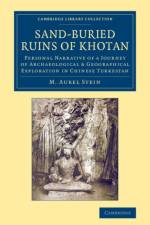
Between 1900 and 1901, the Hungarian-born archaeologist Marc Aurel Stein (1862-1943) made the first of several significant trips through Central Asia. In 1903, he published this account of his journey from Calcutta to London via the deserts of Chinese Turkestan. The text is richly illustrated with photographs of locations on the route followed by Stein's party, as well as of the people they encountered and many of the artefacts they excavated in the vicinity of the ancient oasis town of Khotan. Stein intended his book to be accessible to non-specialists, and his descriptions of the many important archaeological discoveries, such as Sanskrit texts of Buddhist scriptures, are interspersed with compelling human details and anecdotes about traversing the challenging terrain of eastern Central Asia. The work of an indefatigable explorer, this book sheds light on the spread of Graeco-Buddhist culture along the Silk Route.
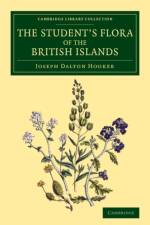
This textbook was originally published in 1870, but is here reissued in the third edition of 1884. Its object was 'to supply students and field-botanists with a fuller account of the Flowering Plants and Vascular Cryptograms of the British Islands than the manuals hitherto in use aim at giving'. Sir Joseph Dalton Hooker (1817-1911), one of the most eminent botanists of the later nineteenth century, was educated at Glasgow, and developed his studies of plant life through expeditions all over the world. (Several of his other works are also reissued in the Cambridge Library Collection.) A close friend and supporter of Charles Darwin, he was appointed to succeed his father as Director of the Botanical Gardens at Kew in 1865. The flora is followed in this reissue by an 1879 catalogue of British plants compiled by the botanist George Henslow (1835-1925), intended as a companion volume.
Originally published in 1884 as a centennial biography for Sir Moses Montefiore (1784-1885), this book draws on official records and informal writings to create a well-rounded account of Montefiore's life as, firstly, a financier and, later, a significant Jewish community leader. In an age of frequent pogroms and anti-Semitic prejudice in Europe, Montefiore immersed himself in philanthropic works after a religious awakening in 1824 in Palestine. By encouraging reforms, lobbying for the release of wrongfully imprisoned Jews and investing in Jewish projects all over Europe, he endeavoured to improve the lives and rights of Jews globally. Wolf (1857-1930) was himself a prominent political journalist and campaigner for Jewish rights. His book not only recounts Montefiore's life and achievements, but also incorporates the history of English Jews between 750 and 1837.
First published in 1857, this work comprises assorted noteworthy writings by the mathematician and astronomer Sir John Herschel (1792-1871), reflecting his diverse scientific and literary interests. It includes a piece on terrestrial magnetism, a review of William Whewell's writings on the history and philosophy of science, and several addresses to the Royal Astronomical Society. Of particular interest is Herschel's commentary on Adolphe Quetelet's work on probability, which advocated applying statistics and probability calculus to social and political questions. Herschel's article not only influenced the growth of social science in Britain, but also played an important role in James Clerk Maxwell's development of a statistical treatment of heat phenomena. Also included in this collection are Herschel's translations of poems by Schiller (accompanied by the original German) as well as examples of his own verse. In an intriguing appendix, Herschel outlines a method for compiling vocabularies of indigenous peoples.
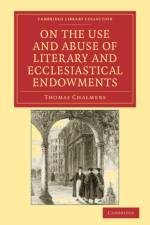
Scottish minister and social reformer Thomas Chalmers (1780-1847) is famous as the leader of the group of 470 ministers who left the Church of Scotland in 1843 to found the Free Church of Scotland, and as the author (in 1834) of the first Bridgewater Treatise (also reissued in this collection). Along with his theological interests, Chalmers was deeply concerned with educational reform in schools and universities. In 1827 he published this paper on university endowments, asserting that it was the state's responsibility to support religious and educational institutions, because churches, schools, and universities maintained the nation's Christian principles and character. Chalmers argued that only endowed national establishments were capable of ensuring the religious and moral well-being of the individual. In addition to his appeal for university endowments, he also advocated (unusually for his time) the extension of full civil rights to dissenters and Catholics.
Having studied medicine at Guy's Hospital, London, John Kidd (1775-1851) established himself as a physician and educator at Oxford, where he lectured widely on chemistry, anatomy, mineralogy and geology. Regius professor of medicine and a fellow of the Royal Society from 1822, he rooted his scientific understanding and teaching in natural theology. Published in 1833 as the second Bridgewater Treatise, the present work attempted to bring science and religion into harmony, drawing on such disciplines as anthropology and comparative anatomy. Seeking to demonstrate the superiority of humans in the natural world, Kidd argues that animals, minerals and plants had been adapted by God to serve mankind. Founded upon a belief in the antediluvian world and the revealed existence of God in nature, the work exemplifies the influence of natural theology within the scientific establishment before the era of Darwin.
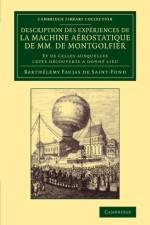
The French geologist and traveller Barthelemy Faujas de Saint-Fond (1741-1819) was a strong supporter of the aerostatic experiments of the Montgolfier brothers, seeking to publicise their pioneering endeavours in this 1783 work. Exploiting the principle that hot air is lighter than cold, the Montgolfiers developed and demonstrated their hot air balloons to great acclaim. In this collection of reports, Faujas presents the details of each experiment, describing the balloons as well as potential improvements. Where possible, he specifies the position of witnesses, precise timings and viewing angles. A number of finely engraved plates enhance the work, giving readers a flavour of the spectacle that impressed contemporary observers. Faujas published a second volume, containing additional accounts and illustrations, in 1784. His Mineralogie des volcans (1784) and Essai de geologie (1803-9) are also reissued in this series.
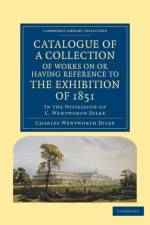
C. Wentworth Dilke (1810-69), an influential figure at the Society of Arts, was one of the key organisers of the Great Exhibition of 1851. He played a leading part in planning the event and the catalogue, overseeing the installation of exhibits and managing the PR. The exhibition generated an enormous number of publications, official and unofficial, both in Britain and abroad, ranging from vistors' guides to London and descriptions of individual exhibits to discussions about the long-term future of the Crystal Palace, together with essays, sermons and poems. Dilke acquired several hundred such books and pamphlets, in various languages, and in 1855 privately published this catalogue of his collection, noting that it omits 'mere trade pamphlets' and that his 'departments' of relevant music and engravings are not comprehensive. Alphabetically organised and thoroughly cross-referenced, Dilke's catalogue remains an invaluable research resource for those studying the Great Exhibition and its global impact.
William Hoey (1849-1919) was a magistrate in Lucknow, India when this book was published by the American Missionary Press in 1880. At the time, Lucknow was the seventh largest city in the British Empire, and it was the capital of the province that had most recently come under British rule. Hoey's monograph captures the details of trade in the city and surrounding regions at this time of change. Part 1 outlines the prominent features of trade in the area and includes tables of imports and exports. Part 2 focuses on Lucknow specifically, and contains the author's discussion of the impact of British rule on the city. The third part is a detailed A-Z of every trade, including information on production, prices and profit, and the work concludes with an extensive glossary of Indian terms. The level of detail in this work makes it an invaluable historical document.
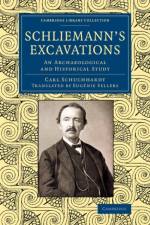
This overview of the famous and pioneering excavations of Heinrich Schliemann was first published in German in 1889, and in this extended English translation in 1891. The author, Carl Schuchhardt (1859-1943), had wide experience of excavations in both Asia Minor and Europe, and the translator, Eugenie Sellers (1860-1943), was the first female student of the British School at Athens. The book begins with a life of Schliemann, who had died in 1890, and goes on to describe his extraordinary discoveries at Troy and Mycenae, and his work at Tiryns, Ithaca and Orchomenos. It also contains two reports of later work at the mound of Hissarlik, the site of Troy, by Schliemann himself and his assistant Wilhelm Dorpfeld, which had not been included in the German edition. The book is illustrated with many line drawings, and includes the famous photograph of Sophia Schliemann wearing 'the gold of Troy'.
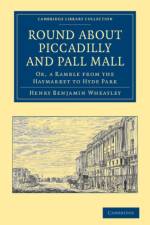
Henry B. Wheatley (1838-1917) was a prolific writer, an energetic founder of societies, a keen student of London history, and a first-rate bibliographer. He was also an expert indexer, and because of his contributions to the subject he is sometimes called the 'father of British indexing'. He had a wide range of interests and founded the Samuel Pepys Club, the Library Association (now CILIP) and the Early English Text Society. He wrote two classics of indexing, What Is an Index? and How to Make an Index, as well as a three-volume history of London, called London Past and Present. (All of these titles are now available in the Cambridge Library Collection.) Published in 1870, this book is his historical journey through Piccadilly and Pall Mall, the 'court end of London'. It explores the characters, the buildings and the institutions that make up this history-packed area of the city.
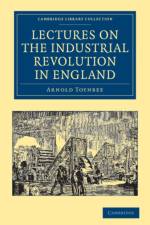
Widely credited as having established the term 'industrial revolution' as a historical concept, Arnold Toynbee (1852-83) was among the most outspoken political economists of the nineteenth century. This volume is a collection of his Balliol lectures and other public addresses, originally published posthumously in 1884. The lectures, often humorous, discuss developments in contemporary political economy, the views of other commentators, and the impact on society of this new discipline; viewed as a collection, they represent one of the first calls for economic history as an academic subject to be studied separately from political history. Given during the early 1880s, the popular addresses treat some of the most important economic topics of the day, from the role of trade unions to the relationship between wages and production. Also included in this book are a preface by the author's wife, and a memoir by his friend and colleague, Benjamin Jowett.
Pierce Egan (1772-1849) was born near London and lived in the area his whole life. He was a famous sports reporter and writer on popular culture. His first book, Boxiana, was a collection of articles about boxing. It was a huge success and established Egan's reputation for wit and sporting knowledge. He is probably best remembered today as the creator of Corinthian Tom and Jerry Hawthorn ('Tom and Jerry'). Published in 1821 and beautifully illustrated by the Cruikshank brothers, this book is the original collection of Tom and Jerry's riotous adventures through Regency London. Its satirical humour and trademark use of current slang made it an overnight success, spawning many imitators and appearing in numerous editions. It was translated into French and inspired a number of successful stage plays that delighted audiences on both sides of the Atlantic. More recently, in 2006, an adaptation appeared on BBC Radio.
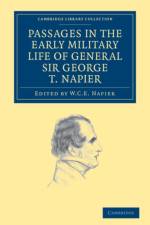
George Napier (1784-1855) was a brother of the famous soldiers Sir Charles and Sir William Napier, and himself had a distinguished career in the British Army as general and Governor of the Cape of Good Hope, South Africa. He wrote these memoirs to guide and amuse his own children, not intending them to be widely circulated. In 1884, however, his son published them, earning a letter of congratulation from Queen Victoria. George Napier tells of his early army life, which took him around Europe from Sicily to Sweden to Bordeaux, and writes of his admiration for the Duke of Wellington, hailing him as 'one of the greatest captains that ever lived'. Napier's reflections on the responsibilities of an army officer (including the duty to obey and not to criticise), and his advice on how a regiment should be commanded, raise this work above a conventional autobiography.
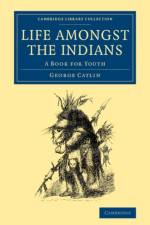
The American artist George Catlin (1796-1872) was fascinated by the indigenous peoples of North and South America. Spending many years travelling and living among different tribes, he felt compelled by a desire to rescue from destruction 'the looks and customs of the vanishing races of native man in America'. Famed for his paintings of Native Americans, he also wrote a number of books. In the present work, first published in 1861, Catlin recounts his childhood in Pennsylvania, where he witnessed hostilities between settlers and the indigenous people. He also covers his later travels through the Americas and his time in Europe, where he introduced visiting Native Americans to English and French royalty. Although intended for children, his illustrated stories make lively and compelling reading for all ages. Catlin's 1868 follow-up, Last Rambles Amongst the Indians of the Rocky Mountains and the Andes, is also reissued in this series.
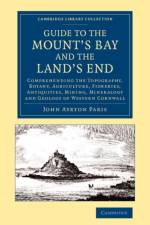
President of the Royal College of Physicians from 1844 until his death, John Ayrton Paris (1785-1856) wrote chiefly on medical topics, yet he also devoted time to the study of science and natural history. He served as physician to the Penzance Dispensary between 1813 and 1817, during which time he helped to establish what became the Royal Geological Society of Cornwall. First published anonymously in 1816, and reissued here in the second edition of 1824, this work explores the landscapes and natural history of the western part of Cornwall. Presented as a series of 'excursions', the guide takes in locations such as St Michael's Mount and the Lizard, also covering the rich mining districts at Redruth and St Just, and discussing local customs, the Cornish language and the health-giving climate. Several of Paris's medical and biographical works are also reissued in this series, including his life of the Cornish chemist Sir Humphry Davy.
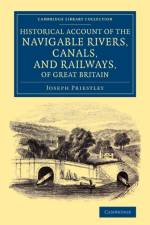
This account of the waterways and railways of Great Britain covers those transport routes and systems of inland navigation that had been completed or were in construction at the time of publication in 1831. Not to be confused with his polymath namesake, Joseph Priestley (1766-1852) entrenched his expertise as manager of the Aire and Calder Navigation. Here he provides alphabetical entries ranging from the Aberdare Canal in Glamorganshire to the Wyrley and Essington Canal in the Midlands. Details are given regarding location, construction, relevant Acts of Parliament, and even tonnage rates. Published to accompany a huge map of British inland navigation (a smaller version is featured here as the frontispiece), the book became a standard reference work in its day. Shedding light on the development of commercially crucial infrastructure, it remains valuable to readers and researchers interested in the history of British transport and technology.
The American artist George Catlin (1796-1872) was fascinated by the indigenous people of his homeland and spent many years living among them, painting them, and collecting their artefacts. In 1839 he took his vast collection to Europe to exhibit it, and he also toured with groups of visiting Native Americans. This illustrated two-volume account of his experiences was published in 1848. In Volume 2, Catlin discusses his travels with visiting Native Americans to Dublin, and later Paris, where he staged another exhibition and met King Louis Philippe. The final chapter recounts Catlin's attempt to sell his entire collection to the United States government to preserve 'all the records of this dying race'. His earlier account, Letters and Notes on the Manners, Customs, and Condition of the North American Indians (1841), is also reissued in this series, along with two later books for children about life among various tribes.
The American artist George Catlin (1796-1872) was fascinated by the indigenous people of his homeland and spent many years living among them, painting them, and collecting their artefacts. In 1839 he took his vast collection to Europe to exhibit it, and he also toured with groups of visiting Native Americans. This illustrated two-volume account of his experiences was published in 1848. Volume 1 begins with Catlin's voyage to England across the Atlantic, for which he embarked with eight tons of freight. He goes on to discuss such events as introducing a group of Native Americans to Queen Victoria. He also includes, in the appendices, press reviews of the exhibition and a catalogue of his collection. Catlin's earlier account, Letters and Notes on the Manners, Customs, and Condition of the North American Indians (1841), is also reissued in this series, along with two later books for children about life among various tribes.
Social reformer, Chartist sympathiser, advocate of universal suffrage, and opponent of slavery, Henry Solly (1813-1903) was a man driven by the desire to stamp out inequality. As part of his mission to improve the lives of working-class people, he founded the Working Men's Club and Institute Union, becoming its first paid secretary in 1863. The Union encouraged the formation of social and educational clubs where working men could 'meet for conversation, business, and mental improvement, with the means of recreation and refreshment, free from intoxicating drinks'. His tireless campaigning led directly to the formation of the Charity Organization Society, which advocated the principle of aiding those prepared to help themselves. Published in 1867, this is Solly's vigorous manifesto for social reform based around temperance and the formation of social clubs and educational institutes for working men.
Clergyman, schoolmaster and writer on aesthetics, William Gilpin (1724-1804) is best known for his works on the picturesque. In his Essay on Prints, published in 1768 and reissued in this series, he defined picturesque as 'a term expressive of that peculiar kind of beauty, which is agreeable in a picture'. First published in 1809, the present work is one of a series which records his reflections on the picturesque across British landscapes. It traces two journeys he made equipped with notebook and sketching materials: the first in 1769 across East Anglia, and the second in 1773 from Anglesey south-east to Shrewsbury. He describes his impression of notable sites such as Cambridge, Houghton Hall and its art collection, Beaumaris Castle and Snowdon, and includes reproductions of his pen-and-wash drawings. The companion volumes of Observations on other parts of Britain are also reissued in the Cambridge Library Collection.
Andrew Reed (1787-1862) was a Congregational minister, an energetic philanthropist and a highly successful fundraiser. He began to study theology at Hackney Academy in 1807 and was ordained minister in 1811, serving in this role until 1861. He helped to found numerous charitable institutions, most notably the London Orphan Asylum, the Asylum for Fatherless Children, the Asylum for Idiots, the Infant Orphan Asylum, and the Hospital for Incurables. In addition to his charitable work, he found time to write. He compiled a hymn book, and published sermons, devotional books and an account of his visit to America in 1834, when he received a Doctorate of Divinity from Yale. This biography of Reed, compiled by two of his sons, was first published in 1863. It describes his many achievements, using selections from Reed's own journals, and includes a list of his publications.
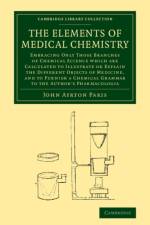
The physician and author John Ayrton Paris (1785-1856), several of whose other medical and popular works have been reissued in the Cambridge Library Collection, published the first edition of his Pharmacologia in 1812. It was immediately successful, and went into eight further editions until 1843. The third edition, of 1820, has been reissued in this series. This book, published in 1825, was intended as a companion volume, providing a 'grammar' of chemistry for the medical student. After an imaginary dialogue on the importance of chemistry, between a provincial physician and 'the author', to whom the former is entrusting his son for his medical education, the book moves systematically from the general application of chemistry to medicine, through topics such as gravity, crystallization and electricity, to the detail of the actions of specific elements, and tables of relevant weights and measures, providing fascinating insights into the history of medical education.
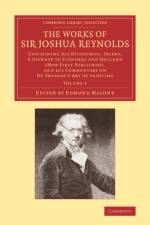
This two-volume posthumous edition of the writings on art of Sir Joshua Reynolds (1723-92), one of the greatest of eighteenth-century artists and the first president of the Royal Academy, was published in 1797. It is prefaced by a short biography of Reynolds by his friend, the Shakespearean critic Edmond Malone (1741-1812), which includes a list of Reynolds' paintings with their sale prices, when known. Reynolds took his role as president and fellow of the Royal Academy very seriously, delivering fifteen 'discourses' to the fellows and students of the Academy, which are collected in Volume 1, along with three 'letters' on art criticism published in The Idler. This periodical's editor, Dr Johnson, was one of Reynolds' most intimate friends, and Reynolds was one of only three writers, in addition to himself, whom Johnson published in it. These essays provide a fascinating insight into the intellectual basis of Reynolds' work.
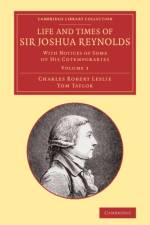
This two-volume life of Sir Joshua Reynolds (1723-92) was begun by the Royal Academician Charles Leslie (1794-1859), who had previously published a life of John Constable, also reissued in this series. On Leslie's death, the journalist and dramatist Tom Taylor (1817-80) completed the work, published in 1865. Leslie's motive was that he felt that Reynolds had been unfairly treated by an earlier biography. He aimed to show that Reynolds was 'the genial centre of a most various and brilliant society, as well as the transmitter of its chief figures to our time by his potent art'. One of the greatest artists of the eighteenth century, especially famous for his portraits, Reynolds was also instrumental in founding the Royal Academy, and was its first president. Volume 1 covers his early life and his progress as an artist until his fiftieth year.
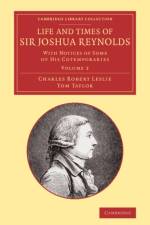
This two-volume life of Sir Joshua Reynolds (1723-92) was begun by the Royal Academician Charles Leslie (1794-1859), who had previously published a life of John Constable, also reissued in this series. On Leslie's death, the journalist and dramatist Tom Taylor (1817-80) completed the work, published in 1865. Leslie's motive was that he felt that Reynolds had been unfairly treated by an earlier biography. He aimed to show that Reynolds was 'the genial centre of a most various and brilliant society, as well as the transmitter of its chief figures to our time by his potent art'. One of the greatest artists of the eighteenth century, especially famous for his portraits, Reynolds was also instrumental in founding the Royal Academy, and was its first president. Volume 2 begins in 1773, and ends with Reynolds' death. Leslie also provides an assessment of his status as an artist.
Abonner på vårt nyhetsbrev og få rabatter og inspirasjon til din neste leseopplevelse.
Ved å abonnere godtar du vår personvernerklæring.