




Gjør som tusenvis av andre bokelskere
Abonner på vårt nyhetsbrev og få rabatter og inspirasjon til din neste leseopplevelse.
Ved å abonnere godtar du vår personvernerklæring.Du kan når som helst melde deg av våre nyhetsbrev.

The Dispute Settlement Reports of the World Trade Organization (WTO) include Panel and Appellate Body reports, as well as arbitration awards, in disputes concerning the rights and obligations of WTO members under the provisions of the Marrakesh Agreement Establishing the World Trade Organization. These are the WTO authorized and paginated reports in English. An essential addition to the library of all practising and academic trade lawyers and needed by students worldwide taking courses in international economic or trade law. DSR 2012: I to III report on United States - Measures Affecting Trade in Large Civil Aircraft (Second Complaint) (WT/DS353).
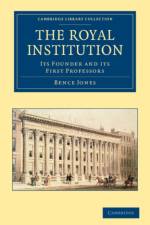
A graduate of Trinity College, Cambridge, and University College, London, Henry Bence Jones (1814-73) was a distinguished physician and chemist, as well as a chronicler of his colleagues' accomplishments. Well-known and popular in Victorian London, he was a fellow of both the Royal Society and the Royal College of Physicians, and counted Florence Nightingale among his friends. Written during his term as secretary to the Royal Institution, this account of the organisation's foundation and early members reflects his admiration for his professional forebears. Published in 1871, a year after his two-volume biography of Faraday (also reissued in this series), his account covers the lives of Count Rumford, Thomas Young, Humphry Davy and the troubled President Thomas Garnett. Incorporating a substantial appendix containing letters and papers pertaining to the Institution, this history provides a glimpse into the early years of one of Britain's most important and learned scientific organisations.
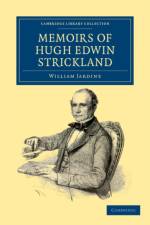
Published in 1858, this memoir recounts the life and work of the natural historian and geologist Hugh Edwin Strickland (1811-53). Written by his father-in-law, the Scottish naturalist Sir William Jardine (1800-74), the book covers Strickland's early childhood, his education at Oxford, his involvement in and influence upon the establishment of the Ray Society and his notable academic pursuits in natural history before his life was tragically cut short by a freak railway accident in 1853, when he was just forty-two. The reader will gain an insight into Strickland's character, his scientific acquaintances, including Henslow and Darwin, and his wide-ranging interests in the area of natural history, including geology, zoology, palaeontology and especially ornithology, demonstrated by his study The Dodo and its Kindred (1848). Drawing upon revealing and informative extracts from Strickland's journals throughout, the book also contains a wide selection of Strickland's shorter scientific writings.
The Dispute Settlement Reports of the World Trade Organization (WTO) include Panel and Appellate Body reports, as well as arbitration awards, in disputes concerning the rights and obligations of WTO members under the provisions of the Marrakesh Agreement Establishing the World Trade Organization. These are the WTO authorized and paginated reports in English. An essential addition to the library of all practising and academic trade lawyers and needed by students worldwide taking courses in international economic or trade law. DSR 2012: I to III report on United States - Measures Affecting Trade in Large Civil Aircraft (Second Complaint) (WT/DS353).
The Dispute Settlement Reports of the World Trade Organization (WTO) include Panel and Appellate Body reports, as well as arbitration awards, in disputes concerning the rights and obligations of WTO members under the provisions of the Marrakesh Agreement Establishing the World Trade Organization. These are the WTO authorized and paginated reports in English. An essential addition to the library of all practising and academic trade lawyers and needed by students worldwide taking courses in international economic or trade law. DSR 2012: I to III report on United States - Measures Affecting Trade in Large Civil Aircraft (Second Complaint) (WT/DS353).
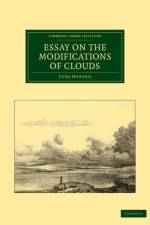
An industrial chemist by profession, Luke Howard (1772-1864) proposed the method of cloud classification that is still in use today. His life-long interest in meteorology led him to produce this landmark work in the history of the subject. General scientific opinion at the time was that clouds were too changeable to be classified, but, inspired by Linnaeus' work in biological classification, Howard proposed a method which used Latin terminology - cirrus, cumulus, stratus and nimbus - to provide a standard description for each of three groups of cloud types. His work was first published in the Philosophical Magazine in 1803; it was produced in book form in 1832 but went quickly out of print. This reissue is of the third printing (1865) of the edition brought out after his death in 1864 by two of his sons. Howard's other meteorological works are also reissued in this series.
Sir Andrew Crombie Ramsay (1814-91) was a British geologist with a particular interest in the effects of glaciation on the landscape. He travelled in Europe and America, and was a keen climber. His first work, Geology of the Island of Arran (1840), also published in this series, attracted the attention of Roderick Murchison, who found him employment with the Geological Survey, and Ramsay later succeeded Murchison as its director. He carried out important fieldwork in Wales, taught at University College London and the Royal School of Mines, and published a successful textbook. Another major contribution was his work on the origin of lakes: his controversial 1862 proposal that glaciers could hollow out lake basins even in the absence of earth movements was eventually accepted. Ramsay's younger colleague at the Geological Survey, Sir Archibald Geikie (1835-1924), who also wrote a biography of Murchison, published this memoir in 1895.
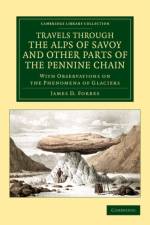
The renowned geologist James D. Forbes (1809-68) presents an account of his systematic exploration of alpine mountain regions and glaciers in this important 1843 publication. Forbes' graphic descriptions of alpine scenery and his mountaineering feats are combined with detailed records of his scientific research and experiments. The study cemented Forbes' reputation in the field, which was later to be commemorated by the naming of the Aiguille Forbes in the Alps and of Mount Forbes in both Canada and New Zealand. The aim in writing the book, says Forbes, was to 'illustrate the physical geography of a particular district in one of the most frequented regions of the Alps'. In doing this, he draws upon the important work of the 'bold mountaineer' Horace Benedict de Saussure, whose feats and achievements Forbes clearly admired. The book is still viewed today as one of the most influential and important publications on mountaineering.
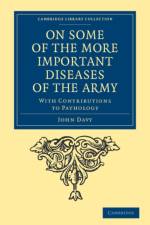
Born in Cornwall, John Davy (1790-1868) physiologist and anatomist, and the younger brother of the distinguished chemist Sir Humphry Davy (1778-1829), was one of the most prolific medical experts of his day. After taking a medical degree from Edinburgh in 1814 he became an army surgeon. He later became a hospital inspector and spent time living in overseas territories including India, Sri Lanka, and Barbados. First published in 1862, Davy's book discusses the prominence of fever, dysentery, cholera, liver disease, pneumonia, and other diseases common to the army, estimating that 45% of deaths in the British army serving abroad were caused by disease rather than by conflict. Davy also records his observations on putrefaction of bodies, particularly the vital organs, emphasising the need to determine the normal condition of human organs so that abnormal, diseased organs can be easily identified.
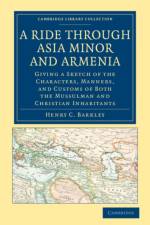
Henry C. Barkley (c.1825-c.1895) was a civil engineer and author. His travel books included Between the Danube and the Black Sea (1876), which covers the five years in which he was working on the construction of a railway line linking the Danube and the Black Sea, and Bulgaria before the War (1877), written at the time of the Russo-Turkish war. (He also wrote a guide to rat-catching for public-school boys, and My Boyhood (1877), a collection of tales from his own childhood.) Published in 1891, this work recounts the author's adventures on a journey that took him in 1878 from Bucharest, through Istanbul, across Asia Minor and back to Trebizond (now Trabzon) on the Black Sea coast, a distance of 1400 miles, completed in 96 days. He describes with zest and humour the habits and customs of Christian and Muslim communities that he encounters on the way.
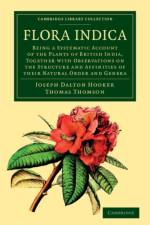
Sir Joseph Hooker (1817-1911) was one of the greatest British botanists and explorers of the nineteenth century. He succeeded his father, Sir William Jackson Hooker, as Director of the Royal Botanic Gardens, Kew, and was a close friend and supporter of Charles Darwin. His journey to the Himalayas and India, during which he collected some 7,000 species, was undertaken between 1847 and 1851 to increase the Kew collections; his account of the expedition (also reissued in this series) was dedicated to Darwin. In 1855 he published Flora Indica with his fellow-traveller Thomas Thomson, who became Superintendent of the East India Company's Botanic Garden at Calcutta. Lack of support from the Company meant that only the first volume of a projected series was published. However, the introductory essay on the geographical relations of India's flora is considered to be one of Hooker's most important statements on biogeographical issues.
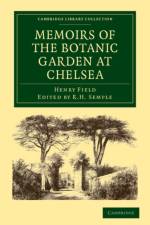
Henry Field (1755-1837) was a British apothecary and member of the Society of Apothecaries of London. Besides serving in various administrative capacities for the Society, as well as for the London Annuity Society (founded by his father), he was nominated in 1831 as one of the medical officers for the City of London board of health, charged with taking precautions against an outbreak of cholera in the city. A lecturer and regular contributor to medical journals, Field is also the author of this history of the Chelsea Physic Garden, first published in 1820. The present reissue, published in 1878, was revised and extended by Robert Hunter Semple (1815-91). The garden was originally created by the Society as a professional resource in 1673 and the book covers its development up to 1878, and also includes a ground plan of the garden in that year.
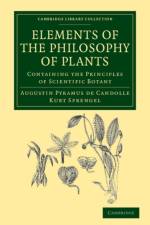
This treatise on scientific botany brings together the works of two leading European scientists from the beginning of the nineteenth century, the Swiss botanist Augustin Pyramus de Candolle (1778-1841) and the German botanist and physicist Kurt Polycarp Joachim Sprengel (1766-1833). First published in German in 1820, it was almost immediately translated (anonymously) into English and published in Edinburgh by Blackwood in 1821. This collaborative volume includes three chapters from de Candolle's Theorie elementaire de la botanique published in Paris in 1819, while the remaining texts and the preface were written by Sprengel; at the time, it provided significant advances on previous botanical theories such as the work of German botanist Carl Ludwig Willdenow (1765-1812). A fascinating document on the evolution of botanical science, the book contains a practical section detailing the characteristics of over forty plants, as well as eight illustrations.
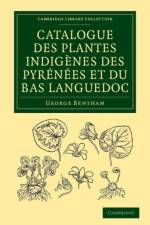
English botanist George Bentham (1800-84) is most famous as the author of the popular Handbook of the British Flora (1858), which ran into many editions. A distinguished scientist, Bentham was elected a Fellow of the Royal Society in 1862, and served as President of the Linnean Society of London for thirteen years (1861-74). Originally published in 1826, this catalogue of plants from the Pyrenees region of France is Bentham's second work. Inspired by French botanist de Candolle (1778-1841) as well as by the analytical methods of his uncle, the famous philosopher Jeremy Bentham, this book is a systematic overview of the plants found between Figueras, in the north of Spain, and Bordeaux, Narbonne and Montpellier in France. The book opens with the story of Bentham's 1825 three-month trip through the Pyrenees region, with botanist G. A. Walker Arnott (1799-1868), on which the Catalogue is based.
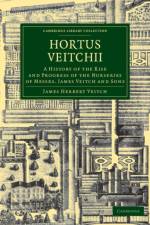
The Veitch dynasty, originally from Scotland, owned plant nurseries in Devon and London throughout the nineteenth century. By commissioning several expeditions to search for new and exotic flora for British gardens, they were instrumental in bringing many previously unknown plants into cultivation in Britain. James Herbert Veitch (1868-1907), who became managing director of the firm, spent time in Germany and France studying the techniques of horticulture, and later travelled the world himself collecting plants for the nursery in Chelsea. This work, published in 1906, gives a detailed account of the family business and of the men that the firm sent to South America, Japan, China and India during the period 1840-1906, including distinguished plant finders such as William Lobb, his brother Thomas, who first introduced various types of orchids from India to Britain for cultivation, and Richard Pearce, who brought back tuberous begonias from South America.
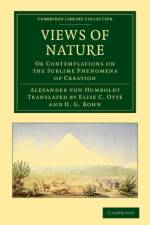
Alexander von Humboldt (1769-1859) was an intellectual giant: an explorer who helped lay the foundations of biogeography, a naturalist who influenced Charles Darwin, and a botanist who developed a model of the Earth's climate zones. He travelled extensively in Europe, carried out scientific explorations across the Russian Empire and in Latin America, and devoted much energy to seeking a unified view of the different branches of scientific knowledge. Ansichten der Natur, published in 1808 with a second edition in 1826, aimed to 'engage the imagination' as well as to communicate new ideas, and was translated into many European languages. This authorised translation of the third and final 1849 edition, dating from Humboldt's eightieth year, was published in 1850, though another English translation (by Mrs Sabine) had appeared the previous year. The wide coverage, including geology, geography and biology, is typical of Humboldt, as is the precise and engaging style.
The author of pioneering works on the plant families Euphorbiaceae and Malpighiaceae, French botanist Adrien de Jussieu (1797-1853), from a famous family of scientists, became professor of botany at the Paris Museum National d'Histoire Naturelle in 1826. The author of several specialised monographs, he is best known for his Botanique: Cours elementaire d'histoire naturelle (1842), an exhaustive introduction to botany originally intended for use in French schools. This much acclaimed book went through twelve editions between 1842 and 1884, and was translated into many languages. This English translation, completed while he was still an Oxford student by the young British botanist James Hewetson Wilson (1826-50), was first published in 1849. It contains additional descriptions of the different systems and structures that clarify de Jussieu's terminology, as well as an appendix on geology.
Reginald J. Farrer (1880-1920) was a horticulturalist and plant finder who made a lasting contribution to British gardening, the rockery designs for which he is best known having been greatly influenced by those he discovered in Asia. First published in 1909, this study eloquently describes the author's own garden and its surrounding countryside in his home town of Clapham, Yorkshire. Focusing on the early spring, Farrer reveals through figurative prose the awakening of the flowers and shrubs, the character of the garden as winter disappears, and the aesthetics inherent to the natural world. The study shows his passion for horticulture, and his dedication to an aesthetic that led him to influence generations of gardeners. Featuring an extensive index of plant names and illustrated with photographs taken by the author, it is as informative as it is descriptive, and offers a wealth of anecdotal advice that remains of great interest.
Gertrude Jekyll (1843-1932), the distinguished and influential garden designer of the late nineteenth and early twentieth centuries, originally trained as an artist but later turned her hand to craftwork, gardening, and plant collecting and breeding. During her career she collaborated with distinguished architects such as Sir Edwin Lutyens and reached a popular audience through the publication of articles in newspapers and magazines such as William Robinson's The Garden. Jekyll's second book, first published in 1890, is a collection of her advice and reflections on a range of topics, particularly those relating to her own home, Munstead Wood. It contains chapters on particular plants, and gives guidance on projects such as building rock gardens, as well as more idiosyncratic pieces on her cats, or the importance of one's own tools. Jekyll's informal tone and the range of topics discussed make this a fascinating work of social and gardening history.
Gertrude Jekyll (1843-1932) was one of the most influential garden designers of the late nineteenth and early twentieth centuries. Skilled as a painter and in many forms of handicrafts, she found her metier in the combination of her artistic skills with considerable botanical knowledge. Having been collecting and breeding plants, including Mediterranean natives, since the 1860s, she began writing for William Robinson's magazine, The Garden, in 1881, and together they are regarded as transforming English horticultural method and design: Jekyll herself received over 400 design commissions in Britain, and her few surviving gardens are treasured today. Like Robinson's, her designs were informal and more natural in style than earlier Victorian fashions. In this, the first of fourteen books, published in 1899, she stresses the importance of being inspired by nature, and sums up her philosophy of gardening: 'planting ground is painting a landscape with living things'.
James Shirley Hibberd (1825-90) was a journalist and horticultural writer who worked as a bookseller before devoting his time to researching and lecturing and publishing on gardening. An active member of the Royal Horticultural Society, he edited several gardening magazines including Floral World, and his writing was widely enjoyed and respected. This book, first published in 1856, is Hibberd's carefully researched and practical guide to decorating the home and garden. Hibberd explains the practical aspects of garden design, the pleasures of bee-keeping, and how to construct a pond or aquarium. Full of useful advice on everything from preserving cut flowers to the ideal species of bird to keep in an aviary, this is a charming and enjoyable manual for the Victorian gardener which was very popular in its time, and remains a useful source for the cultural historian as well as an entertaining treat for the general reader.
John D. Sedding (1838-91) was an English church architect and an influential figure in the Arts and Crafts movement. Having worked in Penzance and Bristol, he was elected a Fellow of the Royal Institute of British Architects in 1874 and set up a practice in London, eventually becoming a neighbour of William Morris. His designs included new churches such as Holy Trinity in Sloane Street (1888-90), Holy Redeemer in Clerkenwell (1887-95), and All Saints, Falmouth (1887-90), as well as restoration projects and decorative work. In 1888 he moved to Kent, and developed his interests in gardening and garden design. This book, completed in 1890 and published posthumously in 1891, sets out Sedding's vision for the landscaped garden. It helped to revive garden features such as terraces, covered walkways and topiary, and inspired generations of garden designers, particularly in the Arts and Crafts movement.
First published in 1868, this book provides an intriguing memoir of Irish culture and society during and after the Potato Famine. W. Steuart Trench (1808-72) studied agriculture with a view to becoming a land agent: having taken on this role for the Shirley estate in Monaghan in 1843, he eventually managed Irish estates for the Marquess of Lansdowne in County Kerry, for the Marquess of Bath and for Lord Digby. His book, a series of stories of everyday (and some extraordinary) events in nineteenth-century Ireland, purports to give the English public a clear and truthful account of the daily occurrences and difficulties experienced by an Irish landlord and his agent. The book also contains detailed appendix material, including letters describing the devastating effects of the famine (1845-52). The work was immediately successful, with five reprintings (of which this reissue is the third) within twelve months of publication.
Robert Pashley (1805-59), lawyer, economist, traveller, and fellow of Trinity College, Cambridge, is famous for his travel memoirs as well as his legal achievements. First published in 1852, his history of pauperism and the poor laws in England analyses the history of poverty and the various attempts at reform, including legislation in the reign of Elizabeth I, the statute of Charles II for the Removal of the Poor, and the pauper legislation of 1834. In the final chapters, Pashley asserts the necessity for a total repeal of the existing legislation, including the Poor Law Amendment Act of 1834, arguing that the provisions for raising and administering relief to paupers should be consolidated into one statute and suggesting a national levy on property to aid poor relief. Pashley's work was influential, although reform of the system did not begin until the creation of the Local Government Board in 1871.
James Neild (1744-1814), penal reformer and philanthropist, first became interested in the welfare of prisoners after visiting a friend jailed for debt. He went on to investigate prisons across Britain, France, Flanders, and Germany, fundraising to release those incarcerated for petty debt. In 1772 he helped establish the Society for the Relief and Discharge of Persons Imprisoned for Small Debts (the Thatched House Society), which succeeded in freeing over 16,000 debtors. Published in 1812, this work records the findings of Neild's thorough survey of debtors' prisons in Britain, and also discusses those imprisoned for other minor criminal offences. Neild exposes the harsh sentences assigned to debtors and petty criminals, using this evidence to support his campaign to improve the conditions of the prisoners and to stop imprisonment for debt. His efforts to improve the conditions of prisoners eventually influenced parliamentary reforms of the penal system.
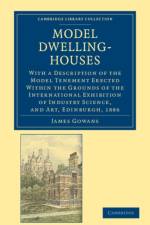
This detailed guide to the model tenement building displayed at Edinburgh's International Exhibition of Industry Science and Art in 1886 was first published in that year. A prominent figure in Scottish architecture and engineering, Sir James Gowans (1821-90) designed and built railways, roads, and stone houses during his long career, including a model village in West Lothian named Gowanbank. His intention in designing tenement buildings was to produce a standardised model that would make homes more affordable. This short book considers the tenement designs, including the situation of staircases, drainage, materials, and the mode of construction. Gowans' book also features chapters on the Prince Albert Victor Sundial, built to commemorate the opening of the exhibition by the prince, the Memorial Mason's pillars erected in Edinburgh, and the Electric Tramway. Gowans was made Lord Dean of Guild of the city of Edinburgh in 1885.
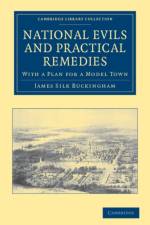
James Silk Buckingham (1786-1855) was a Cornish-born traveller and writer. As a member of Parliament in the 1830s he campaigned for reforms in the army and navy as well as for the temperance movement. He travelled widely to the Middle East, Israel and America, wrote travel books and also founded a number of journals. One of these was The Athenaeum, a weekly London periodical covering a wide range of topics from literature to popular science. In this work, published in 1849, Buckingham names seven evils threatening contemporary society (ranging from ignorance from intemperance to war and competition), proposes a number of economic reforms that primarily target the existing taxation system, and pleads for a new Reform Bill. Buckingham develops in great detail his vision of a model town and the community inhabiting it, and offers his thoughts on how a such city should be planned.
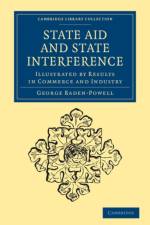
George Baden-Powell, KCMG (1847-98), graduated from Balliol College, Oxford, before studying at the Inner Temple in London. After a varied career as a commissioner in Victoria in Australia, the West Indies, Malta and Canada, he became the MP for Liverpool Kirkdale in 1885. He also found time to observe the total solar eclipse of 1896 in the Arctic, and co-write a paper about it for the Royal Society. He was a passionate advocate of free trade within the British Empire, and wrote extensively to support the cause. First published in 1882, this classic work on economics sets out Baden-Powell's case for imperial free trade. In the first chapter he sets out his arguments; the rest of the book is devoted to presenting his evidence and comparing the relative merits of protectionist and free trade economies around the world.
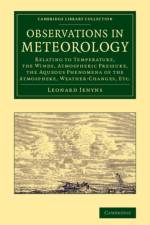
Although devoted to his parish, Leonard Jenyns (1800-93) combined his clerical duties with keen research into the natural world around him. His numerous publications include A Manual of British Vertebrate Animals (1835) and Observations in Natural History (1846), both of which are reissued in this series. This 1858 work is based on nineteen years of meticulous observation of Cambridgeshire weather, including trends in atmospheric pressure and precipitation. Jenyns' careful recording of his surroundings supplies the raw data for the text and many informative tables. The geological position of Swaffam Bulbeck, where most of the observations were made, is briefly discussed along with other factors bearing upon the climate of Cambridgeshire more generally. Throwing light on how meteorological observation was conducted and interpreted, the work reflects a growing interest in the topic in Victorian Britain.
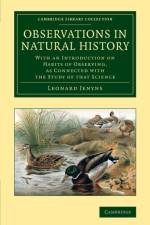
Although devoted to his parish, Leonard Jenyns (1800-93) combined his clerical duties with keen research into natural history. Notably, he was offered the place on the Beagle that later went to Charles Darwin. His numerous works include A Manual of British Vertebrate Animals (1835) and Observations in Meteorology (1858), both of which are reissued in this series. First published in 1846, the present work was originally intended as a companion volume to Gilbert White's acclaimed Natural History and Antiquities of Selborne (1789), which Jenyns had copied out as a student at Eton. The product of two decades of meticulous observation of Jenyns' surroundings in eastern England, the text includes journal entries with careful records on a wide variety of wildlife, including quadrupeds, birds, reptiles, fish, insects and molluscs. Also featuring a detailed calendar of periodic phenomena, this work illuminates the rhythms and quirks of the natural world in England.
Abonner på vårt nyhetsbrev og få rabatter og inspirasjon til din neste leseopplevelse.
Ved å abonnere godtar du vår personvernerklæring.