

Gjør som tusenvis av andre bokelskere
Abonner på vårt nyhetsbrev og få rabatter og inspirasjon til din neste leseopplevelse.
Ved å abonnere godtar du vår personvernerklæring.Du kan når som helst melde deg av våre nyhetsbrev.

Alfred Day (1810-49) first published this controversial work in 1845 to substantial negative criticism. He was encouraged in his enterprise by the composer George Alexander Macfarren (1813-87) who remained a staunch supporter of Day's theories. The work begins with an introduction to Day's new approach to the figured bass and then moves on to set out his concept of diatonic (or strict) harmony and chromatic (or free) harmony. Each is discussed in depth, with sections devoted to common chords and their inversions, discords, pedals and modulation together with a large number of musical examples. This second edition of 1885 by Macfarren includes an additional preface discussing the genesis of the work and supporting its basic premise, together with an extensive appendix presenting his additions and differences of view, developed during the intervening period. Despite its complexity, Day's thinking had considerable influence on later writers on harmony.
In the preface to this work, mathematician Augustus De Morgan (1806-71) claims that 'The most worthless book of a bygone day is a record worthy of preservation.' His purpose in writing this catalogue, published in 1847, was to provide an accurate record of the early history of publishing on arithmetic, but describing only those books which he had examined himself. He surveyed the library of the Royal Society, works in the British Museum, the wares of specialist booksellers, and the private collections of himself and his friends to compile a chronological list of books from 1491 to 1846 (the final book being a work of his own), giving bibliographical details, a description of the contents, and sometimes comments on the mathematics on display. De Morgan's Formal Logic and a Memoir of Augustus De Morgan by his widow are also reissued in the Cambridge Library Collection.
Henry Charles Banister (1831-97) is best-remembered for Music, his textbook on harmony published in 1872 which ran through many editions during his life, and for his biography of the composer Sir George Macfarren. In his capacity as a professor at the Royal Academy of Music and the Guildhall School of Music, a teacher at the Royal Normal College for the Blind, and a member of the National Society of Professional Musicians, he gave many lectures and papers to widely varying audiences. Three of these form this volume, first published in 1887. The first, given to the National Society in 1887, discusses the nature of music as a profession and his thoughts on the difference between the professional and the amateur. The second and third papers consider approaches to the study of the theory and structure of music, its appreciation as an art form and its role in society.
The author and clergyman William Coxe (1748-1828), noted for his travel works, was the stepson of Handel's amanuensis, German-born John Christopher Smith (1712-95). First published in 1799, the present work is a valuable source of first-hand information about two men at the heart of eighteenth-century English music: George Frideric Handel (1685-1759), whose inventive and sensitive melodic genius and exuberant brilliance in depicting the spectacular are best displayed in his Messiah and Zadok the Priest, and Smith, a composer of attractive and fashionable music, who settled in London in 1720, took lessons with Handel and later supported the great composer as his eyesight failed. Smith was also organist at the Foundling Hospital until 1770. This publication, profits from which were intended to support Smith's family, draws on the works of John Hawkins and Charles Burney, and on anecdotes claimed to be 'derived from unquestionable authority'.
James Bryce (1806-77) was a Scottish schoolteacher and geologist. His numerous articles on geology earned him a place in the Geological Society of London (1834) and in the Royal Society of Edinburgh (1875). He also campaigned to reform the Scottish universities and for Scottish education to be independent of the English system. In 1855 Bryce conducted a geological survey of Clydesdale and the Isle of Arran for the British Association for the Advancement of Science (BAAS). His findings were published the same year, in this book. Bryce's study records the natural history of the two regions, with descriptions of the geological features encountered on various expeditions in Arran. Bryce also describes the Arran flora, marine fauna, and rare insect life. This book remained the geological authority on Arran and Clydesdale for a long time; the third edition, reissued here, was published in 1865.
Leonard Jenyns (1800-93; he changed his name late in life to benefit from a legacy), was a clergyman, and a respected naturalist and zoologist. A distinguished member of a dozen scientific societies, he was educated at Eton, and then at St John's College, Cambridge, where he graduated in 1822. During his tenure as vicar in Swaffham Bulbeck, he made important contributions to zoology, becoming one of the original members of the Zoological Society of London. In 1831, unwilling to spend years away from his parish responsibilities, he turned down the chance to travel as the naturalist on-board H.M.S. Beagle. Published in 1889, this is the second edition of Jenyns' autobiography, which he had first had privately printed. It starts with the major events of his life, then shares a series of scientific anecdotes, including his decision to recommend Darwin instead of himself as the naturalist for the Beagle voyage.
In the middle of the nineteenth century, British Arctic exploration became defined by the search for the missing expedition of Sir John Franklin, who had in fact perished in desperate circumstances in 1847. As a newly qualified naval officer, William Hulme Hooper (1827-54) took part in one of the many expeditions which sought to find Franklin. Embarking in 1848, the crew of HMS Plover spent three winters in the Arctic, with tragic consequences for Hooper's health. On his return, perhaps realising time was short, he wrote this illustrated account of his travels, and saw it published the year before he died at the age of only twenty-seven. The work is of particular interest because of its detailed descriptions of the Bering Sea region, Alaska and the Canadian Arctic. Especially noteworthy are the observations on the way of life of the indigenous Chukchi people, whom Hooper called 'Tuski'.
John Lindley (1799-1865) was an English botanist and a leading authority on orchids. He attended Norwich Grammar School but was unable to afford university. Lindley's passion for botany helped him into the position of assistant in the herbarium of the naturalist and explorer Sir Joseph Banks. He soon established himself as a botanist of considerable talent, and was elected to the Linnean Society of London at the age of twenty-one. In 1822 he became assistant secretary to the Horticultural Society, and was elected Fellow of the Royal Society in 1828. He was Professor of Botany at University College, London, from 1829 to 1860. Published in 1838, Flora Medica is a systematic reference work written to help medical students understand the botanical characteristics and therapeutic properties of important medicinal plants from around the world. The book includes an appendix of indigenous names of Asiatic species, and a full index.
One of the leading Arctic navigators of his age, William Edward Parry (1790-1855) led three expeditions in search of the North-West Passage (accounts of which are also reissued in this series). Parry's early career had been spent protecting the whaling fleet of Spitsbergen and this experience led him in 1826 to propose to the Admiralty an expedition to the North Pole. In order to reach further north than earlier attempts, Parry used sledge-boats that could be towed over the ice on runners, and then take to any open sea that the crew encountered. In 1827 the expedition attained a record latitude that stood for nearly fifty years. This illustrated account, published in 1828, was described by the Quarterly Review as a record of 'the patient, persevering, energetic, and undaunted conduct which British seamen are capable of displaying, in the most difficult, discouraging, and dangerous circumstances'.
Born in Leighlinbridge in Ireland, John Tyndall (1820-93) was a brilliant nineteenth-century experimental physicist and gifted science educator. He worked initially as a draughtsman, then spent a year teaching at an English school before attending the University of Marburg to study physics and chemistry. Tyndall carried out important research on magnetism, light and bacteriology. Among his many significant achievements, he demonstrated the greenhouse effect in Earth's atmospheric gases using absorption spectroscopy. He was a skilled and entertaining educator and as Professor of Natural Philosophy at the Royal Institution he gave many public lectures and demonstrations of science. In this engaging potpourri of essays published in 1893, Tyndall's prose enlivens subjects as diverse as the life of Louis Pasteur, observing the Sabbath, the prevention of phthisis (tuberculosis), personal experiences of Alpine mountaineering, and the science of rainbows.
Born in Leighlinbridge in Ireland, John Tyndall (1820-93) was a brilliant nineteenth-century experimental physicist and gifted science educator. He worked initially as a draughtsman, then spent a year teaching at an English school before attending the University of Marburg to study physics and chemistry. Tyndall carried out important research on magnetism, light and bacteriology. Among his many significant achievements, he demonstrated the greenhouse effect in Earth's atmospheric gases using absorption spectroscopy. He was a skilled and entertaining educator and as Professor of Natural Philosophy at the Royal Institution he gave many public lectures and demonstrations of science. Published in 1873, this book features six accessible lectures on light. They explore a wide range of ideas in a non-technical way, from basic scientific theories through magnetism and light scattering, to analytical spectroscopy. The book ends with a series of essays on special topics, and includes a detailed index.
The great French zoologist Lamarck (1744-1829) was best known for his theory of evolution, called 'soft inheritance', whereby organisms pass down acquired characteristics to their offspring. Originally a soldier, Lamarck later studied medicine and biology. His distinguished career included admission to the French Academy of Sciences (1779), and appointments as Royal Botanist (1781) and as professor of zoology at the Musee Nationale d'Histoire Naturelle in 1793. Acknowledged as the premier authority on invertebrate zoology, he is credited with coining the term 'invertebrates'. In this 1809 work, translated into English in 1914, he outlines his theory that under the pressure of different external circumstances, species can develop variations, and that new species and genera can eventually evolve as a result. Darwin paid tribute to Lamarck as the man who 'first did the eminent service of arousing attention to the probability of all change ... being the result of law'.
These letters to Gilbert White (1720-93), the author of The Natural History and Antiquities of Selborne (1789; also reissued in this series) were published in 1907. They were written between 1744 and 1790 by John Mulso (1721-91); brother of the bluestocking Mrs Chapone, to White, whom he had met when both were undergraduates at Oxford. White's letters to Mulso were unfortunately destroyed, frustrating plans to publish a 'most interesting and amusing series of letters' between intimate friends, but the remaining half of the correspondence, 'containing almost the only contemporary illustration of Gilbert White's character and career', and then in the possession of the earl of Stamford, was edited by Rashleigh Holt-White, a great-great-nephew and enthusiast of his ancestor's life. These fascinating letters give insights into not only White's character but also the lives of the gentry of the period, and the intellectual milieu in which both men moved.
Little is known about Christopher Davy (c.1803-49), despite his regular contributions to architectural and engineering magazines in Britain and America. Describing himself as an 'architect and teacher of architecture', he also took an interest in steam engines and railway construction. In this work, published in 1839, and using information gathered from experiments by the Board of Ordnance, Davy begins by describing the characteristics of the geology of England and Wales, with regard to its suitability for obtaining building materials and laying strong foundations. He describes the means by which soil and rock samples may be taken, and gives details relating to the construction of the foundations of St Paul's Cathedral on the troublesome London clay. Later chapters discuss the practicalities of pile driving, the use of concrete, and the properties of limestone. Reflecting the progress of technical knowledge in the early nineteenth century, the work features several illustrations of contemporary apparatus.
Published in 1878, this biography of the civil engineer Robert Stevenson (1772-1850) was written by his second-youngest son David (1815-86), also a civil engineer and uncle to the author Robert Louis Stevenson. Having already published The Principles and Practice of Canal and River Engineering in 1872 (also reissued in this series), he set about writing this survey of his father's life and works, based on extracts from Robert's professional reports, notes from his diary, and communications to scientific journals and societies between 1798 and 1843. Perhaps most widely known for his practical and persuasive leadership in building many lighthouses for the Northern Lighthouse Board - including that on the notorious Bell Rock, over which he came into conflict with engineer John Rennie regarding the design - Stevenson ensured that the Scottish coastline became a much safer place for shipping for decades to come.
Abandoning a promising career in the law, Barthelemy Faujas de Saint-Fond (1741-1819) enjoyed the encouragement of the eminent scientist Buffon in pursuing his love of natural history. His keen interest in rocks, minerals and fossils led to a number of important discoveries, among which was confirmation that basalt was a volcanic product. Appointed assistant naturalist at the natural history museum in Paris, he became a professor of geology in 1793, occupying this position until his death. This 1784 work begins with concise accounts of numerous varieties of basalt, describing the key features of each, before moving on to discuss several other volcanic products, including breccia and pozzolana. Of related interest, two other works by Faujas, Essai de geologie (1803-9) and the revised English edition of A Journey through England and Scotland to the Hebrides in 1784 (1907), are also reissued in the Cambridge Library Collection.
An officer in the Royal Engineers, Sir Charles William Pasley (1780-1861) wrote on matters ranging from military sieges to architecture. In this substantial work, first published in 1838, he outlines the experimentally determined properties of various building materials, with a view to their practical application. Offering guidance on how to decide between different calcareous mortars and cements, Pasley discusses how to judge their comparative strengths. Heeding advice from the Institution of Civil Engineers, he made this work a broad overview, rather than simply focusing on his special area of interest: natural and artificial cements. His research on cements led to the large-scale manufacture of products such as Portland, patent lithic, and blue lias. Pasley discusses the research of other authors in the appendix. Also reissued in this series, in English translation, is Louis-Joseph Vicat's Practical and Scientific Treatise on Calcareous Mortars and Cements, Artificial and Natural (1837).
Published in 1888, this work reproduced for the first time in full the letters sent by the English gentlewoman Dorothy Osborne (1627-95) to Sir William Temple (1628-99) during their courtship. Osborne first met Temple on the Isle of Wight in 1648, but both their families opposed the relationship and the couple were not able to marry until 1654. Osborne's letters are highly engaging, especially notable for their political and social commentary as well as for the details they reveal about her daily life and the clandestine courtship. Only one of Temple's letters survives, since Osborne destroyed them as soon as she had read them. While extracts of her letters had appeared in print earlier, the lawyer and author Edward Abbott Parry (1863-1943) was the first person to publish the entire collection of surviving correspondence. His edition is particularly valuable for the explanatory notes that accompany each letter.
Professor of botany from 1825 until his death, John Stevens Henslow (1796-1861) revived and greatly advanced the study of plants at Cambridge. His influence helped to make the University Botanic Garden an important centre for teaching and research. Originally published over a period of seventeen years, and now reissued here together, these thirteen papers reveal the impressive breadth of Henslow's scientific knowledge. The first two items, from 1821, address the geology of the Isle of Man and Anglesey respectively, preceding his five-year tenure as chair of mineralogy at Cambridge from 1822. The rest of the papers, dating from 1829 to 1838, address botanical topics. Professor John Parker, Director of Cambridge University Botanic Garden, has provided a new introduction that traces Henslow's developing interests and contextualises the items in this collection. Several of Henslow's other publications, including his Catalogue of British Plants (1829), are reissued separately in this series.
A significant limitation on the development of zoology, botany and palaeontology in the mid-nineteenth century was the absence of a centralised collection of specimens. Appointed superintendent of the British Museum's natural history departments in 1859, the distinguished biologist Richard Owen (1804-92) quickly realised the need to make various scattered samples more readily available for study, and began campaigning for a new, national museum with unprecedented space and resources. This book is the text of one of his speeches to the Royal Institution, given in 1861 and first published in 1862. He argues against the usual practice of exhibiting only one type form for each genus, provides possible floor plans, and presents case studies across the zoological field which show the limitations of the then current system. He also stresses a new idea, that such a museum should aim not only to help scientists, but to educate the general public.
Clerk of works to an aristocratic landowner, Thomas Potter possessed considerable practical experience when he published this work in 1877. His intention was to provide a source of helpful information relating to a building material that was being increasingly used in Victorian construction, yet not without detractors, who objected on aesthetic as well as technical grounds. Clearly enthusiastic about concrete's potential applications, Potter seeks to give a balanced assessment of its usefulness and versatility. While the text does not discuss the chemical processes involved, it does cover aggregates, matrices, how to mix the two, the apparatus needed, the construction of walls, floors and roofs, and the costs and disadvantages of using concrete. The book also features several contemporary advertisements, including one for 'Potter's Concrete Building Apparatus and Appliances'. Of related interest, Charles William Pasley's Observations on Limes, Calcareous Cements, Mortars, Stuccos, and Concrete (1838) is also reissued in this series.
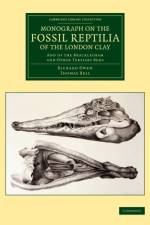
Covering a wide area of the London and Hampshire basins, the London Clay has been famous for over two hundred years as one of the richest Eocene strata in the country. In this work, first published between 1849 and 1858, Fellows of the Royal Society Richard Owen (1804-92) and Thomas Bell (1792-1880) describe their findings from among the reptilian fossils found there. The book is divided into four parts, covering chelonian, crocodilian, lacertilian and ophidian fossils, and includes an extensive section of detailed illustrations. Using his characteristic 'bone to bone' method and an emphasis on taxonomy, Owen draws some significant conclusions; he shows that some of Cuvier's classifications were wrongly extended to marine turtles, and adds to the evidence for an Eocene period much warmer than the present. The work is a fascinating example of pre-Darwinian palaeontology by two scientists later much involved in the evolutionary controversy.
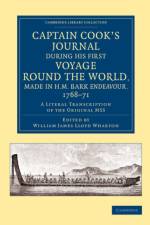
Famed for his exploration of the Pacific and Australasia, James Cook (1728-79) was also an excellent surveyor and a meticulous keeper of records. The journal entries presented here cover Cook's first voyage around the world aboard the Endeavour, during which he mapped New Zealand and claimed the eastern coastline of Australia for George III, having made landfall at Botany Bay. Cook's journal is an invaluable first-hand account containing nautical details of his voyage around the Pacific as well as geographical observations, descriptions of flora and fauna, and notes on the peoples, cultures and languages encountered. Critical of the 1773 Hawkesworth edition (also reissued in this series), the naval officer William James Lloyd Wharton (1843-1905) published this annotated transcription of Cook's journal in 1893. A number of illustrations, maps and facsimiles of some entries are spread throughout the text. The work also contains a sketch of Cook's life.
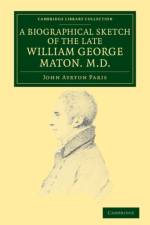
English physician William George Maton (1774-1835) was a polymath who had a special interest in botany: a shell and a parrot were among species named in his honour. His writings on natural history included a catalogue of the plant and animal life around Salisbury, Wiltshire, which was published posthumously in 1843 and is reissued as the second part of this composite work. The first part contains a sketch of Maton's life and work by fellow physician and writer John Ayrton Paris (c. 1785-1856), first presented to the Royal College of Physicians, and subsequently published in 1838. Paris discusses Maton's early life, his contributions to the growing field of botany, his other scientific and antiquarian interests, and his distinguished medical career, during which he was appointed physician-extraordinary to Queen Charlotte, wife of George III, and later physician-in-ordinary to the duchess of Kent and the young Princess (later Queen) Victoria.
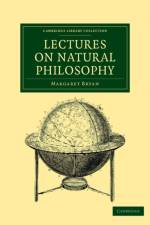
Margaret Bryan (c.1760-1816) taught natural science to women at a time when it was largely the preserve of men. She ran a boarding school for girls in Blackheath, London, from 1795 to 1806, and the curriculum included mathematics and sciences - rarely offered to young women. She published her lecture notes on astronomy in 1797, and after their positive reception she decided to undertake another volume of lectures. This resulting work, published in 1806, is a collection of Bryan's lectures on 'natural philosophy', containing thirteen chapters on topics such as mechanics, pneumatics and acoustics, magnetism and electricity. Each chapter provides illustrations, and at the end of the volume there is an appendix with astronomical and geographical questions and exercises, as well as a scientific glossary. These lectures provide a glimpse into the little-known world of women's education towards the end of the Georgian period.
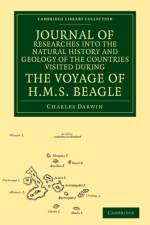
Charles Darwin (1809-82) was the English naturalist famous for the theory of evolution by natural selection. He began studying medicine at the University of Edinburgh, but developed a fascination for natural history and left Edinburgh to attend Christ's College, Cambridge, where he pursued his new interest while taking a Bachelor of Arts degree. After graduating, he had the opportunity to secure a position as ship's naturalist aboard H.M.S. Beagle for a five-year, round-the-world voyage which would make him famous. Published in 1845, this book is the second edition of Darwin's expedition journal, more popularly known as The Voyage of the Beagle. Throughout the journey he made observations and discoveries that would lead him to develop his revolutionary theory of evolution, which later appeared in On the Origin of Species and created a storm in the scientific and religious communities.
The great French zoologist Lamarck (1744-1829) was best known for his theory of evolution, called 'soft inheritance', whereby organisms pass down acquired characteristics to their offspring. Originally a soldier, Lamarck later studied medicine and biology, becoming particularly interested in botany; his distinguished career included admission to the French Academy of Sciences (1779), and appointments as Royal Botanist (1781) and as professor of zoology at the Musee Nationale d'Histoire Naturelle in 1793. Acknowledged as the premier authority on invertebrate zoology, he is credited with coining the term 'invertebrates'. This work, published in Paris in 1801, expands on Linnaeus' classification system, introducing seven sub-categories, creating finer divisions along lines of the species' inherent physical traits, and describing their natural characteristics and organisation. Also included is Lamarck's museum lecture, delivered in 1800, in which he first set out his ideas on evolution.
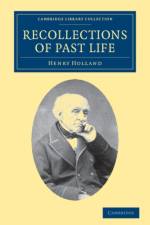
First published in 1872, this memoir recounts the extraordinary life of Sir Henry Holland (1788-1873), physician, and travel writer. Holland's first voyage abroad was a four-month trip to Iceland in 1810, and he went on to traverse much of the globe by boat, on horseback, and on foot. He journeyed through Europe during the Napoleonic Wars, survived earthquakes and other disasters, and was arrested three times during his travels. Holland was also well known as a society doctor in London, and this work also includes numerous references to the eminent people Holland treated in a medical capacity. He was medical attendant to Queen Caroline, wife of George IV, and was appointed physician-extraordinary to Queen Victoria in 1837. He also treated six British prime ministers. Originally written for his friends and children and printed privately, the book was revised and expanded for publication the year before Holland died.
Thomas Southwood Smith (1788-1861) was a minister, physician and social reformer, who considerably improved the health of the poor by linking sanitation with epidemics. A utilitarian, and friend of Jeremy Bentham, his arguments in The Use of the Dead to the Living (1827) helped lead to the Anatomy Act of 1832 which allowed corpses from workhouses to be sold to medical schools, and so ended the market for grave-robbers while improving medical education. Although the fame of his granddaughter, Octavia Hill, has eclipsed his own reputation, Southwood Smith was an important figure in his day, whose work initiated many public health reforms. He served on the royal commission on children's employment, and was medical representative on the General Board of Health to deal with the cholera epidemic of 1848. This biography, written by his granddaughter Gertrude, who was G. H. Lewes' daughter-in-law, was published in 1898.
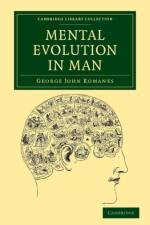
George John Romanes (1848-94) was considered by The Times to be 'the biological investigator upon whom in England the mantle of Mr. Darwin has most conspicuously descended'. Incorporating some of Darwin's unpublished notes, this book explores the question of whether human intelligence evolved. In a stance still often considered controversial at the time of its first printing in 1888, the first half establishes a link between humans and animals, and introduces some of the most important issues of nineteenth-century evolutionary psychology: the impact of relative brain sizes of humans and primates, the origin of self-consciousness and the possible reasons behind the apparent mental stasis of what Romanes terms 'savage man'. Following the argument that one of the main factors to be considered is language, the second half focuses on philology. Romanes' earlier work, Mental Evolution in Animals (1883), is also reissued in this series.
Abonner på vårt nyhetsbrev og få rabatter og inspirasjon til din neste leseopplevelse.
Ved å abonnere godtar du vår personvernerklæring.