









Gjør som tusenvis av andre bokelskere
Abonner på vårt nyhetsbrev og få rabatter og inspirasjon til din neste leseopplevelse.
Ved å abonnere godtar du vår personvernerklæring.Du kan når som helst melde deg av våre nyhetsbrev.

Published in 1847, this is a fascinating account by the Prussian explorer Ludwig Leichhardt of his 3,000-mile expedition from north to south across Australia, from 1844 to 1846. One of the most authoritative early recorders of Australia's environment, Leichhardt was also the best trained naturalist to explore Australia during this time. The expedition departed on 1 October 1844 from Jimbour, the farthest outpost of settlement on the Queensland Darling Downs. Leichhhardt describes in detail the difficulties his party encountered from the very start, the extreme weather conditions they battled, the kindness of the people they met and his close observations of the habits of the aborigines. He also presents detailed analysis of his findings of natural phenomena. After travelling nearly 3,000 miles, Leichhardt arrived in Sydney on 25 March 1846 to a hero's welcome. Engaging and historically revealing, the volume will capture the imagination of the modern reader.
After the success of his richly illustrated Encyclopaedia of Cottage, Farm, and Villa Architecture and Furniture (1833), which is also reissued in this series, the landscape gardener John Claudius Loudon (1783-1843) received a great deal of correspondence from interested readers. This prompted him and the Encyclopaedia's contributors to publish this supplement in 1842. Loudon and his colleagues had continued to study a range of rural buildings - from homes to farms and schools - in England and Scotland, while at the same time receiving architectural designs and detailed letters from North America and Australia. The supplement draws on this wealth of material to discuss developments in the use of building materials as well as innovations in design. The focus is on cottages, farms, pubs, schools and almshouses. Construction methods and furnishings are also discussed. As with the volume it supplements, this work contains a plethora of detailed illustrations.
Throughout the nineteenth century, Britain remained hungry for minerals to fuel her industrial and economic growth. Archibald Liversidge (1846-1927) found his knowledge and research to be in high demand. He had studied at the Royal College of Chemistry, and then obtained an exhibition to Cambridge, where he founded the Cambridge University Natural Sciences Club. At just twenty-seven years old Liversidge was appointed Reader in Geology at the University of Sydney, where he revolutionized the study of minerals and their potential applications. First published in 1876, and reprinted here from the enlarged, third edition of 1888, his chemical audit of the minerals of New South Wales became a key text for students of this field. Divided into two sections that address metallic and non-metallic minerals in turn, and incorporating a detailed map and substantial appendix, this work is of enduring interest and importance to geologists, chemists and historians of science.
Ernest Powell Giles (1835-97) is best remembered as one of the first explorers of South Australia. Powell emigrated to Australia with his parents in 1850, settling in Adelaide. From 1861 he was leading small-scale expeditions along the Darling River, searching for land suitable for cultivation. Following the completion of the Overland Telegraph Line between Adelaide and Darwin in 1872, Powell embarked on five expeditions attempting to discover an overland route between Adelaide and Perth. These volumes, first published in 1889, provide a detailed and dramatic account of his discoveries. Based on Powell's personal journals, these volumes describe in vivid detail the hardships and dangers of exploration in Australia in the nineteenth century, while providing an evocative description of the South Australian landscape before colonisation. Volume 2 deals with Powell's expeditions in 1874 and 1875, including his discovery of the Great Victoria Desert and his return journey.
Ernest Powell Giles (1835-97) is best remembered as one of the first explorers of South Australia. Powell emigrated to Australia with his parents in 1850, settling in Adelaide. From 1861 he was leading small-scale expeditions along the Darling River, searching for land suitable for cultivation. Following the completion of the Overland Telegraph Line between Adelaide and Darwin in 1872, Powell embarked on five expeditions attempting to discover an overland route between Adelaide and Perth. These volumes, first published in 1889, provide a detailed and dramatic account of his discoveries. Based on Powell's personal journals, these volumes describe in vivid detail the hardships and dangers of exploration in Australia in the nineteenth century, while providing an evocative description of the South Australian landscape before colonisation. Volume 1 contains Powell's account of his first two unsuccessful expeditions of 1872 and 1873, including his discovery of the Gibson Desert and Lake Amadeus.
The Revd Samuel Marsden (1765-1838) was an influential religious figure in Australia, New Zealand and Tahiti. Educated at St John's College, Cambridge, and having spent time in Australia as a missionary to convicts and aborigines, from 1814 until his death he worked as a missionary to the Maori in New Zealand. First published in 1858, this biography, which uses Marsden's own letters and memoirs by friends and colleagues to explore his life and work, was edited by the historian J. B. Marsden (1803-70) who was not in fact related to his subject. Vivid and anecdotal, the work reveals Marsden's strong religious beliefs and his dedication to the welfare of the war-torn native peoples, even though his activities were not always popular. The editorial commentary sets Marsden's work within a social and historical context, and the study concludes with some appendixes documenting his lasting influence on New Zealand and Tahiti.
In 1822, an ambitious but bankrupt mariner named James Mudie arrived in Australia. With the support and patronage of the Colonial Office he was appointed justice of the peace and went on to acquire a reputation as one of the harshest and most brutal magistrates in New South Wales. Published in 1837, as a gesture of protest against Sir Richard Burke's relative leniency, Mudie's account of the 'social, moral and political condition' of the penal colony terrified British readers. Using dramatic imagery and anecdotes to support his argument, the author recommends a three-pronged attack on the 'depraved appetites and vicious courses' of convicts. Advocating strict discipline, the subjection of the will of the prisoner to that of the master, and 'religious impression', Mudie's treatise reveals not only the challenges facing nineteenth-century magistrates, but also the brutal treatment that awaited those whose punishment began with transportation to Australasia.
Thomas M'Keevor served as the physician for the second group of Selkirk settlers that set out in 1812 for the Red River Colony in Canada. This short account of what he witnessed, particularly the crossing of Hudson Bay, appeared in 1819. Greatly interested in icebergs, M'Keevor discusses these 'sea mountains' in detail. He also describes the Inuit peoples encountered, giving a short glossary of Inuit words. Presenting a vivid account of the scene, he was clearly moved by seeing a polar bear protecting her cubs from a hunting party sent out from the ship. Also published in this volume is a brief account in English of the 1806 voyage of the Sirene by the French naval officer Freminville. Initially tasked with attacking British whalers off Spitsbergen, the frigate came close to the coast of Greenland, yet most of the time on land was spent in Iceland, where observations were made of the Icelandic people, fauna and geology.
In August 1913, the explorer and scientist Fridtjof Nansen (1861-1930), who later received the Nobel Peace Prize for his humanitarian work, set off from Norway to find a sea route across the north of the Eurasian continent. This 'north-east passage' had been the goal of explorers since the sixteenth century, but Nansen's object, as he puts it, was 'to open up a regular trade connexion with the interior of Siberia, via the Kara Sea and the mouth of the Yenisei'. By the time the book was published in English translation in 1914, the First World War had begun, and the need for ways to keep supplies and troops moving between Russia and her western allies made it even more timely. Nansen's delightfully written account of 'the land of the future' remains of value to anyone seeking to find out more about the geography, resources, and native peoples of Siberia.
The French historian Auguste Bouche-Leclercq (1842-1923) made major contributions to our knowledge of the Hellenistic period. A member of the Academie des Inscriptions et Belles-Lettres, he was also made an officer of the Legion d'Honneur. Bouche-Leclercq is also considered the first modern historian of astrology: he had developed a long-lasting interest in divination during his extensive researches on ancient Greek civilisation. This field had not been considered worthy of serious scholarly study until he published his Histoire de la divination dans l'antiquite between 1879 and 1882. L'Astrologie grecque, first published in 1899, is another important work, still referred to today. Bouche-Leclercq looks back to the oriental roots of Greek astrology. He delves into the specific influence of the zodiac signs, and explains how the celestial sphere was divided in order to draw horoscopes. Other topics include astrology in Roman culture, as well as astrological medicine.
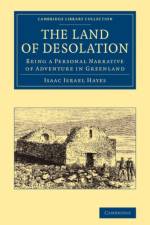
Despite the fact that his previous trip to the Arctic had left him gravely ill and with a permanently injured foot, the explorer and physician Isaac Israel Hayes (1832-81) immediately proclaimed his desire to return north. In 1869, aboard the steamer Panther, he was granted his wish. The trip was financed by the artist William Bradford (1823-92), who planned to use it as an opportunity to paint and photograph Greenland. First published in 1871, this account gives the reader the opportunity to survey the landscape, touching also on the history of polar exploration. It is illustrated with a number of engravings. Also reissued in the Cambridge Library Collection are An Arctic Boat-Journey in the Autumn of 1854 (1860), Hayes's account of a gruelling episode during the ill-fated second Grinnell expedition in search of Sir John Franklin, and The Open Polar Sea (1867).
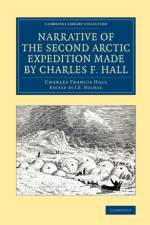
The American explorer Charles Francis Hall (1821-71) made two voyages to the Arctic to determine the fate of Sir John Franklin's lost expedition. While there, he lived with Inuit, learning their language and adopting their way of life. Edited after his death and published in 1879, this account of his second expedition, from 1864 to 1869, brings the conditions he endured vividly to life. Two punishing sledge journeys to King William Island revealed evidence of Franklin's encampment there, but also the stark fact that rumours of survivors were unfounded. The work, which contains a number of fine engravings and maps, also includes appendices presenting Hall's detailed scientific observations and notes of his conversations with the Inuit, which disclosed evidence of cannibalism among Franklin's crew. Based on his earlier expedition, Hall's Life with the Esquimaux (1864) is also reissued in this series.
First published in 1906, this work was one of the first and most important Ricardian apologias for a general readership. A distinguished geographer, whose long career had involved voyaging to the Arctic in search of Sir John Franklin, as well as travels in Peru and India, Sir Clements Markham (1830-1916) had played a crucial role in launching Scott's first expedition to Antarctica in 1901. Markham also had a long-standing interest in the reputation of England's last Plantagenet king. The first part of this book presents the life of Richard, while the second half is devoted to a thorough examination of the charges laid against the monarch by the Tudors and later historians. Markham seeks to expose these charges as unfair and unfounded. The work also includes genealogical tables and a map of the Battle of Bosworth Field.
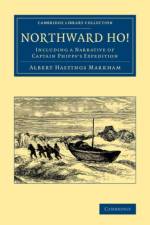
Originally published in 1879, this illustrated work by Albert Hastings Markham (1841-1918) opens with accounts of Arctic exploration from the sixth to the nineteenth centuries, including the expeditions led by Constantine John Phipps (1744-92), William Edward Parry (1790-1855) and George Nares (1831-1915). The journal of Thomas Floyd (c.1754-78), who served as midshipman under Phipps in 1773, comprises the most significant part of the work. Outlining the difficulties faced by an eighteenth-century expedition, ranging from encounters with wildlife to adverse weather conditions, Floyd's narrative is notable also for its inclusion of some early episodes in the career of Horatio Nelson, also a midshipman on the voyage. More than a dozen engravings enhance the work. Other publications by Markham, including A Whaling Cruise to Baffin's Bay (1874) and The Great Frozen Sea (1878), are also reissued in this series.
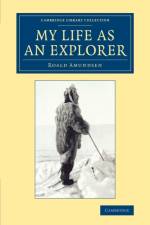
Prior to his disappearance in the Arctic during an airborne rescue mission, the Norwegian explorer Roald Amundsen (1872-1928) had reflected in writing on his extraordinary career. First published in 1927 and reissued here in the English translation of that year, his autobiography discusses in straightforward style the numerous difficulties of his many expeditions, ranging from problems of finance and planning through to dealing with life-threatening danger and inevitable controversy. Generously acknowledging an 'old gentleman in Grimsby' for providing materials that helped him plan the first navigation of the North-West Passage, Amundsen credits painstaking preparation as the cornerstone of his success, especially in the conquest of the South Pole. His fuller accounts of these two expeditions are also reissued in the Cambridge Library Collection. Frank and focused like its author, the present work will reveal to readers the outlook and approach of a remarkable figure in the history of polar exploration.
A founder in 1830 of the National Colonization Society, Charles Tennant (1796-1873) advocated government support for emigration to Britain's colonies as a means of alleviating poverty at home and boosting the workforce overseas. Briefly representing St Albans in Parliament, he later wrote treatises on contemporary political and financial questions, notably arguing for the abolition of income tax in The People's Blue Book (1857). Also published anonymously, the present work, which appeared in 1864, offers a critique of John Stuart Mill's Utilitarianism (1863). Tennant argues that happiness does not consist in utility, but rather in conformity to divine will as described by the Christian faith. Nevertheless, Tennant says, we ought to promote utility, as this is likely to be conducive to happiness. He then applies this view in detail to contemporary problems of government, domestic policy, taxation, colonies, dependencies, and foreign policy.
From the end of antiquity to the middle of the nineteenth century it was generally believed that Aristotle had said all that there was to say concerning the rules of logic and inference. One of the ablest British mathematicians of his age, Augustus De Morgan (1806-71) played an important role in overturning that assumption with the publication of this book in 1847. He attempts to do several things with what we now see as varying degrees of success. The first is to treat logic as a branch of mathematics, more specifically as algebra. Here his contributions include his laws of complementation and the notion of a universe set. De Morgan also tries to tie together formal and probabilistic inference. Although he is never less than acute, the major advances in probability and statistics at the beginning of the twentieth century make this part of the book rather less prophetic.
John Ross had disappeared while exploring the Northwest Passage in 1829. A lieutenant in the Royal Navy, George Back (1796-1878) had already served with John Franklin on two Arctic expeditions in 1819-22 and 1824-26. He volunteered to lead an expedition to find Ross, setting out in 1833. When Ross returned safely in 1834, Back continued his explorations down the unknown Great Fish River and mapped the Arctic coast westwards, travelling some 7,500 miles in total. Valuable observations on weather, geology, entomology, magnetics and aurora are included as appendices in this 1836 publication. Engravings of Back's own illustrations further enhance the narrative. Although described by some as an opportunist and a weak leader, Back was greeted as a hero on his return and awarded the gold medal of the Royal Geographical Society. The success of this expedition enabled him to head back to the Arctic in 1836.
In later life the recipient of the Nobel Peace Prize for his humanitarian work, the explorer and scientist Fridtjof Nansen (1861-1930) encouraged and supported the 1901 voyage of his fellow Norwegian Roald Amundsen (1872-1928), publishing this account of its scientific findings in 1906. Amundsen had just purchased his famous boat, the Gjoa, and wanted to test her in Arctic waters. He planned to pay for the expedition by hunting seals, but wanted to carry out scientific work at the same time. On Nansen's advice, he decided to make oceanographic observations. After a six-month voyage, he returned with both observations and samples of water and plankton which considerably enlarged understanding of the bottom waters of the Norwegian Sea and the play of current in the area. Nansen's work supplies technical details, diagrams and maps from this remarkable scientific survey.
Hannah Smith (1849-1939) was a composer for children and an educator. In 1903 she published the popular Founders of Music, a series of biographical sketches of composers written for children. Written in 1898, when Wagner had been dead for only fifteen years, this is a concise history of music and instruments, aimed at the enthusiast. Covering broad subjects rather than concentrating on a few composers, Smith discusses not just the development of musical styles but also how musical notation developed, how the ear functions and how musical instruments produce the sounds they do. The tastes of the time are evident, particularly in the surprisingly detailed discussion of the Oratorio: however, the book allows us to see how music and its progress were regarded at the turn of the twentieth century, before composers such as Stravinsky and Schoenberg shook the musical establishment.
First published by the house of Novello in 1853, and later reprinted, this was one of the earliest treatises to take a scientific as well as a practical approach to the discussion of music. Written before Wagner had begun work on Tristan, this work can be seen as a response to the growing interest from the amateur in the 'science' of music. Little is known about the author, Daniel Reeves, who declares that that 'the idea of music comprises both an art and a science: the art consisting in the power of performing ... ; the science, in an acquaintance with the system on which the constituent sounds ... depend'. Using numerous examples, Reeves explains the basics of musical notation, and includes a lengthy mathematical analysis of the ratios of tones and intervals, underlining his belief that an understanding of music should be 'a necessary branch of every gentleman's education'.
The music scholar, composer and editor Ebenezer Prout (1835-1909) is best known for his edition of Handel's Messiah and as the man who put words to the fugue subjects in Bach's Well-tempered Klavier. He taught at the Royal Academy of Music (numbering Henry Wood amongst his pupils) and the reputation he established through his works on music theory gained him the post of Professor of Music at Trinity College, Dublin. This is the sixteenth (1903) edition, of his 1889 treatise on harmony which ran through over twenty editions, such was its popularity. This edition marks a significant change in Prout's approach to the theory of harmony, moving from a scientific exposition using the harmonic series to a more aesthetic style, which resulted in extensive re-casting of the work and an entirely new key to the exercises. This reprint includes the analytical key to the exercises.
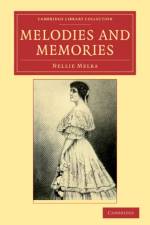
Dame Nellie Melba (1861-1931) was one of the most famous sopranos of her time. Born in Australia, Melba began her training in Melbourne but moved to Europe in 1882 to start her career. She found success in Brussels as Gilda in Verdi's Rigoletto and was soon well known throughout the continent's opera houses. She debuted at the Metropolitan Opera in New York in 1893. Her repertoire extended over twenty-five roles, and she was regarded as unmatched in ten of these, continuing to perform throughout her life, in concert recitals as well as in opera, to great acclaim, and becoming one of the earliest modern 'celebrities'. In this autobiography, published in 1925, Melba describes her childhood and her journey from the 'great Australian Bush' to the bright lights of the European and American stage, while also giving a colourful, first-hand account of the world of opera.
Hugh Reginald Haweis (1838-1901) was a clergyman and writer. Published in 1884, this memoir deals with one of his great interests: music. He was a proficient violinist, and his musical writings included books on church bell-ringing, violins, and the best-selling Music and Morals (also reissued in this series), which had reached its sixteenth edition by his death. As curate of St James, Westmoreland Street, he used musical events as a way of turning an empty church into a fashionable one. He acted as music critic for Truth and the Pall Mall Gazette, in addition to lecturing and writing on religious subjects. The book recounts a lifetime of making and enjoying music, and conveys Haweis' emotional response to music from an early age. It is a record of nineteenth-century musical performances and changing tastes, which also demonstrates Haweis' belief in the reforming influence of music on morals and society.
This short work, featuring a number of attractive engravings, traces an abortive expedition to the Canadian Arctic. George Francis Lyon (1795-1832), naval officer and explorer, had accompanied William Parry on a previous expedition in search of the North-West Passage. In 1824 Lyon was instructed to return to Repulse Bay and to explore the mainland. Unfavourable weather conditions forced Lyon to turn back after a few months, and he published this account of the experience the following year. Lyon's text is notable for his descriptions of encounters with Inuit, with whom he spent a great deal of time. The book also includes the text of the official instructions issued by the Admiralty. Chronicling the 1821-3 expedition with Parry, The Private Journal of Captain G. F. Lyon (1824) is also reissued in the Cambridge Library Collection, along with his Journal of a Residence and Tour in the Republic of Mexico (1828).
The English cleric and writer H. R. Haweis (1838-1901) considers the philosophical side of music and how it is connected with emotions and morals in this 1871 publication. Containing an interesting mixture of musical philosophy and facts, the book is divided into four sections - Philosophical, Biographical, Instrumental and Critical - each of which comprises a series of short entries or essays on a wide range of subjects. Haweis provides informative biographies of a number of great composers, including Handel, Schubert, Mozart, Beethoven and Mendelssohn, together with analysis of some of their best-known works. He takes an in-depth look at a selection of instruments, including violins and pianos, and concludes with a section of short essays on a wide range of topics including brass bands, musical tastes in England, conductors and opera. Quirky and engaging, the book contains a wealth of information and will appeal to any music-lover.
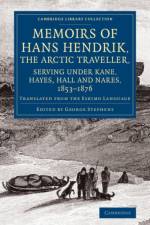
First published in 1878, this English translation of the memoirs of Hans Hendrik (c.1834-89), a native Greenlander, provides a valuable alternative perspective on polar exploration in the nineteenth century. Inuit were often employed on Arctic expeditions of the period. Hendrik is remarkable, however, not only because his skills as a guide and hunter were called on repeatedly during several expeditions - notably those led by Elisha Kent Kane, Isaac Israel Hayes, Charles Francis Hall and George Strong Nares - but also because he wrote his own account of these experiences. The memoirs show that Hendrik distinguished himself through his application of survival skills and that he dealt with numerous challenges, including the forced abandonment of ship and drifting for months on an ice floe. Instances of sickness and malnutrition are also recorded, as is the poor treatment that Hendrik and other Inuit sometimes experienced from their employers.
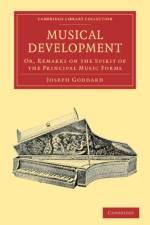
Joseph Goddard (1833-1910) was a philosopher, theorist and historian of the music of the late eighteenth and early nineteenth centuries, who developed some highly influential ideas about the relationship between music and human evolution. First published in 1868, this study presents Goddard's theory on the connection between music and the human spirit, in which he argues that two major counterparts of emotion - instinctive and abstract - correlate directly with two key elements of music: melody and harmony. He demonstrates this through a fascinating and thorough comparative analysis of the works of Mozart, Beethoven, Haydn and Mendelssohn, and moves on to show how emotion is expressed in the melodic and harmonic styles of sacred music and opera. Concluding with a detailed analysis of how mental progress has influenced the development of music, this thorough and judicious work remains of interest in the fields of music history, philosophy, and theory.
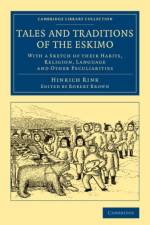
The Danish geologist and geographer Hinrich Rink (1819-93) amassed decades of experience in exploring Greenland, becoming well versed in the language and customs of the Inuit. The present work is a condensed version of his investigations into indigenous culture, first published in two volumes in 1866 and 1871. Rink revised and translated the work from Danish into English for this 1875 publication, and the text was emended by the Scottish scientist and explorer Robert Brown (1842-95). In the book's first part, Rink describes succinctly the Inuit mode of life in Greenland. The second part, which is significantly longer, recounts the legends and folk tales that Rink had recorded on his travels. The book also includes a number of illustrations drawn and engraved by the Inuit people themselves. This work will appeal to those interested in the history of Inuit culture and nineteenth-century ethnography.
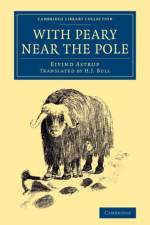
This 1898 English translation of a popular 1895 Norwegian work provides a valuable first-hand account of Arctic exploration in Greenland. Elvind Astrup (1871-95) took part in the expeditions led by the American explorer Robert Peary (1856-1920) between 1891 and 1894. Another of Astrup's shipmates during this time was Frederick Cook (1865-1940), who would later claim to be the first man to have reached the North Pole. Astrup gives here a short narrative of the expeditions, yet the real appeal of his work lies in its vivid descriptions of life on the ice - not merely that of the explorers, but crucially that of the Inuit, whose survival skills and techniques were later to prove invaluable during Peary's own drive towards the Pole. Numerous illustrations are spread throughout the text, based on sketches and photographs taken during the expeditions.
Abonner på vårt nyhetsbrev og få rabatter og inspirasjon til din neste leseopplevelse.
Ved å abonnere godtar du vår personvernerklæring.