





Gjør som tusenvis av andre bokelskere
Abonner på vårt nyhetsbrev og få rabatter og inspirasjon til din neste leseopplevelse.
Ved å abonnere godtar du vår personvernerklæring.Du kan når som helst melde deg av våre nyhetsbrev.

In this two-volume work, J. Rendel Harris (1852-1941) fundamentally shaped Biblical scholarship in the twentieth century, arguing for the existence of a 'first known treatise on Christian theology', antedating the New Testament. A palaeographer, Harris examined recurring textual corruptions of Old Testament passages in early Christian writers and surmised an underlying collection, which he called the 'Testimony Book'. The book, Harris believed, collected Biblical testimonia - passages prophesying Christ - in order to prove the legitimacy of the new Christian faith. These arguments against Judaic theology marked, in Harris's opinion, the beginnings of the Christian written tradition. Volume 2 (1920) seeks to demonstrate how the New Testament relied upon the 'Testimony Book', by examining Galatians, Hebrews and other letters and gospels. 'The starting point of the modern study of the use of the Old Testament in the New', this is a work of enduring importance to religion scholars.
In this two-volume work, J. Rendel Harris (1852-1941) fundamentally shaped Biblical scholarship in the twentieth century, arguing for the existence of a 'first known treatise on Christian theology', antedating the New Testament. A palaeographer, Harris examined recurring textual corruptions of Old Testament passages in early Christian writers and surmised an underlying collection, which he called the 'Testimony Book'. The book, Harris believed, collected Biblical testimonia - passages prophesying Christ - in order to prove the legitimacy of the new Christian faith. These arguments against Judaic theology marked, in Harris's opinion, the beginnings of the Christian written tradition. Volume 1 (1916) lays the groundwork for Harris's argument by examining the use of testimonia in early Christian writers like Cyprian and Gregory of Nyssa. 'The starting point of the modern study of the use of the Old Testament in the New', this is a work of enduring importance to religion scholars.
A distinguished civil engineer, David Stevenson (1815-86) continued his father's work of designing and building lighthouses around the coast of his native Scotland. His three-month tour of the United States and Canada in 1837 resulted in this highly detailed and unprecedented survey, first published in 1838. Stevenson covers a large number of engineering works, ranging from lighthouses and canals through to roads, bridges and railways. Notably, Stevenson's praise for North America's faster and sleeker steam vessels led British shipbuilders to emulate the models he describes and illustrates in this text. The work remains a historically valuable assessment of the continent's infrastructure at a time of great industrial expansion. Stevenson's The Principles and Practice of Canal and River Engineering, 2nd edition (1872) and his Life of Robert Stevenson (1878), a biography of his father, are also reissued in this series.
A. Lukyn Williams (1853-1943) presents here a wide range of examples of Christian apologetic writings about Judaism. Taking material from the earliest years of the Christian Church until the Renaissance, the book investigates sources with Syriac, Greek, Spanish, and Latin origins. It includes observations on lost or possible books such as the first 'Book of Testimonies' posited by J. Rendel Harris (with whom Williams did not fully agree) which pre-dated the Biblical Gospels; incomplete early treatises; and scriptural extracts. Concerned more with historical detail than with exegesis, Williams' study provides extensive scholarly commentaries on all the texts included and covers possible dates of origin, sources, intended audience, and biographical information about the authors. First published in 1935 with the aim of offering source material in an area often neglected by scholars, the book remains a useful resource for students and scholars of Christian-Jewish relations.
First published in 1874, this illustrated work by Albert Hastings Markham (1841-1918) recounts his experiences aboard the Dundee steam whaler Arctic. Markham also gives an account of the rescue of the crew of the American vessel Polaris, crushed by ice in 1872 during its attempt to reach the North Pole. The work is enhanced by details of meetings with Inuit, encounters with polar wildlife, oceanographic observations, and meteorological events. Appropriately, fellow naval officer and explorer Sherard Osborn (1822-75) wrote the introduction: he had a long interest in Arctic exploration, advocated the benefits of using steam ships in icy waters, and encouraged Markham to embark on the whaling cruise. The appendices include a 'list of birds shot', as well as data on botanical and geological specimens. Also reissued in this series are Markham's The Great Frozen Sea (1878), Northward Ho! (1879) and A Polar Reconnaissance (1881).
Not much is known about the life of William T. Kilgour, apart from the fact that in the late nineteenth century he spent two decades as an irregular member of staff at the meteorological observatory on Ben Nevis. In 1905, a year after the observatory closed due to lack of funds, Kilgour published this account of his experiences, including some of 'the more outstanding incidents inseparable from an existence spent at such an altitude', both as a chronicle of life on the mountain and to encourage the public to support the reopening of the observatory. The text is illustrated with several photographs of the striking natural surroundings as well as images of the meteorologists working and relaxing at the inhospitably located station. The result is an accessible and charming record of scientific life on Britain's highest peak around the turn of the century.
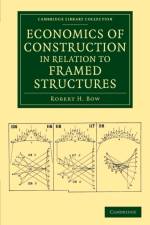
From the 1850s onwards, the civil engineer Robert Henry Bow (1827-1909) became known for his expertise in structural analysis, publishing on the design of bridge and roof trusses, and working with the prolific railway engineer Sir Thomas Bouch (of later Tay Bridge infamy). In the first part of this 1873 publication, Bow describes 337 different truss structures, grouping them into four classes according to their structural characteristics: statically determinate, kinematically determinate, indeterminate, and other. In the second part, he describes a method for graphically analysing truss structures, based on the work of Thomas Maxwell and others, and applies this method to the structures listed in the first part. Perhaps of most interest to the working engineer are the explanations as to which structures are most efficient given typical material constraints, such as girders of uniform cross-section. The work remained a useful resource for practising engineers well into the twentieth century.
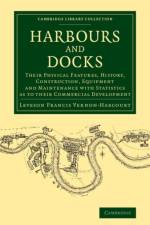
Professor of civil engineering at University College London, Leveson Francis Vernon-Harcourt (1839-1907) drew on considerable practical experience, having worked most notably on London's East and West India docks. The present work was first published in two volumes in 1885. This reissue combines in one volume the text and the plates, including plans and maps of important examples. The topics discussed include natural and artificial harbours; the impact of waves, tides and currents; and general principles of construction. Furthering Vernon-Harcourt's aim to educate readers on both the theory and practice of hydraulic engineering, the work features case studies on specific projects (including their origins and condition at that time), shedding much light on the history and operation of infrastructure that proved essential for the development of modern trade. Of related interest, Thomas Stevenson's The Design and Construction of Harbours (second edition, 1874) is also reissued in this series.
Little is known about Charles L. Money, who sailed in 1861 from Gravesend to New Zealand, where, as he recounts in this volume, he spent the next seven years, working as a gold prospector, a surveyor, a sheep hand, a baker's boy, and a log splitter. He also spent periods in the military, serving in McDonnell's campaign against the Maori in the second Taranaki war (1863-6), which was instrumental in establishing colonial control of the area, and participating in the notorious Pokaikai raid, an eyewitness account of which is included in the book. Money also, pragmatically, worked with, and occasionally for, the Maori. His narrative provides source material for social tensions in this formative period of New Zealand history, as well as giving a vivid picture of the hardships of emigrant life. It was published in 1871 by Samuel Mullen, the owner of the first literary library and bookshop in Australia.
Written in 1914 by Alice, Lady Lovat (1846-1938), a cousin, this biography of Sir Frederick Aloysius Weld (1823-91) is characterised by its subtitle, 'a pioneer of empire'. The young Weld emigrated to New Zealand with a cousin to establish sheep stations. Entering politics, he became Minister for Native Affairs and then Premier; his Native Rights Act of 1865 redressed many of the grievances which had led to the Maori Wars. In 1868 he was appointed Governor of Western Australia, where he brought in a degree of representative government and helped develop the telegraph and transport infrastructure. In 1874 he became Governor of Tasmania, and in 1880 was promoted to the Straits Settlements, where his period as a colonial administrator was notable for the increase of British influence among the princely rulers of the Malay States. Retiring in 1887 for health reasons, he died in England in 1891.
Henry Demarest Lloyd (1847-1903), writer and social reformer, rose to prominence as one of America's first muckraker journalists. Born in New York City, Lloyd started his journalism career at the Chicago Tribune and went on to expose the abuse of power in American oil companies. He also pursued a career in politics. In 1899 he travelled to New Zealand and Australia, the 'political laboratories' of Great Britain, to investigate how they resolved the conflict between organised capital and organised labour, and how they promoted social welfare. This book, published in 1900, praises New Zealand's system of compulsory arbitration and describes many instances of successful dispute resolution, from clothing manufacture to newspaper typesetting. The book includes an introduction by William Pember Reeves (1857-1932), liberal newspaper editor and writer, who as New Zealand's minister of labour had brought in the Arbitration Act of 1894 and other important labour legislation.
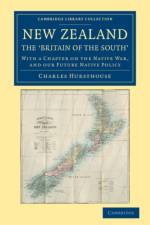
In October 1854 the Taranaki Herald reported the return to New Zealand of Charles Hursthouse, who 'for years past has been in England the untiring advocate of New Zealand emigration, and by his writings and lectures has materially contributed to the colonization of the settlement'. In this updated 1861 version of his 1857 book, Hursthouse promises 'a fair and honest picture of New Zealand as she is today' and expresses his belief that thousands of struggling British people from all walks of life would be 'saved' by emigrating. He describes New Zealand's history, climate, natural history, population, government, exports and markets, agricultural pursuits and trades, and includes a revealing chapter on war and 'native policy'. Hursthouse explains his own reasons for emigrating, and provides practical advice on official regulations, travel insurance, choice of ship, the best times to sail and how to keep occupied during the voyage.
English-born Thomas Morland Hocken (1836-1910), doctor, historian, and bibliographer, arrived in New Zealand in 1862 after abandoning his career as a ship's surgeon. After establishing a general practice in Dunedin, Hocken began to take a keen interest in the country's recent past. Published in 1898, this book was Hocken's first major work on New Zealand. The book focuses on the history of European settlement in the southern province of Otago in the years preceding the gold rush. Hocken begins with an account of the first pioneers' arrival in New Zealand, and the 'Wakefield Scheme' of assisted passage. The book describes the lives of the founding fathers of Dunedin, the migration of settlers to the area and the establishment of churches, and ends with the discovery of gold. Hocken wrote several other accounts of New Zealand history and was elected Fellow of the Linnean Society for his contribution to botany.
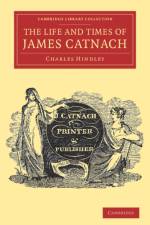
James Catnach (1792-1841) became famous for publishing satirical ballads and sensational accounts of famous murders in his daily broadsheets, first printed in his own home in Seven Dials, London. Capitalising on the turbulent times, Catnach grew rich on producing lurid descriptions of crimes and the trials and executions that followed them. His imagination occasionally over-stepped the mark; he was once jailed for libel after claiming that a local butcher made his sausages from human flesh. This sympathetic and entertaining biography of Catnach, first published in 1878 by London raconteur Charles Hindley (d. 1893), describes Catnach's rise to prominence and features numerous reproductions of his ballads and stories. It is a fascinating tale encompassing the development of early forms of mass media and the wider political and social currents of the time, and provides invaluable insights into popular culture in nineteenth-century London.
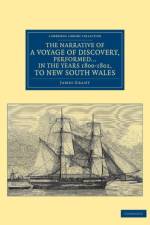
In 1800-2 the naval officer James Grant (1772-1833) sailed to Australia on board the Lady Nelson, a surveying ship that was the first in England to be built on the sliding-keel principle. In this 1803 publication, Grant assesses the merits of the design and documents various teething problems experienced during the voyage from England to Australia. He describes his stay at Cape Town, and his favourable impression of the living standard of the deported convicts at Sydney, which he found better than that of poor people in England. Grant records his experiences on the coast of New South Wales, his encounters with the Aborigines there, and the presence of coal deposits on the Hunter River, and even reports that the cabra grub is 'no bad apology for a better meal'. He also describes his return journey via Cape Horn, during which he was becalmed in the South Atlantic.
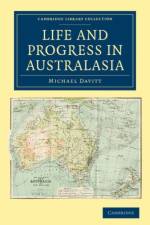
Michael Davitt (1846-1906) was a prominent and influential figure in Irish politics in the nineteenth century. A fervent supporter of Irish independence, he was imprisoned more than once in England, but later became a Member of Parliament for Irish constituencies. In this book, first published in 1898, Davitt records a journey of seven months through the Australasian colonies, noting his impressions of the areas he passed through and discussing the political and social norms across the different regions. He examines land laws in many of the areas and describes the different industries then emerging. He also reports on the treatment of aborigines, ranging from 'exterminating the aborigines' in Tasmania to the 'efforts to protect them' in Western Australia, and finally focuses on prisons and prisoner welfare across the colonies he visited. This book offers a wealth of information on many aspects of nineteenth-century Australasia.
Having decided to try his fortune in the new colonies of South Australia and New Zealand, budding geologist James Coutts Crawford (1817-89) landed at Sydney in 1838 and lost no time in buying and driving a herd of cattle from Braidwood, New South Wales, to Adelaide, a distance of more than three hundred miles of unfamiliar territory. This remarkable journey proved typical of the rest of his travels, during which he served variously as explorer, translator, and sheriff of Wellington. This book, which includes illustrations and maps, is his own record of his experiences, first published in 1880. Even at that time, New Zealand and Australia had changed radically since Crawford's first arrival in the earliest, minimal colonies; today, his account offers not only a fascinating insight into the difficulties and dangers of life there, but a useful source for students and researchers in history and geology.
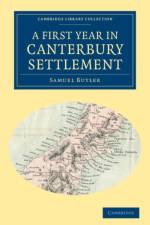
Samuel Butler (1835-1902) became famous with his satirical Utopian novel Erewhon, based on his experiences as a sheep farmer in New Zealand and published, initially anonymously, in 1872. This earlier book, published in London in 1863 while he was still abroad, is a compilation of his letters home. Having obtained a degree in Classics from Cambridge, Butler had left England in 1859 with generous funding from his father, who hoped that making his fortune in the colonies would cure his son's ambition to become an artist. Butler was highly successful in his farming enterprise, and his letters provide both financial details and information on the practicalities of animal husbandry, pasture management and colonial life. Butler also explored Canterbury and travelled to the Southern Alps, and describes vividly the landscapes, flora and fauna of South Island. This classic source for New Zealand history also sheds light on Butler's later work.
The disappearance of Sir John Franklin's Arctic expedition of 1845 led to many rescue attempts, some by the British government and some by private individuals, as well as a large number of works recounting these expeditions and reflecting on the mystery. Little is known about the author of this 1857 work, James Parsons. He begins this dramatic account by noting that the disappearance of a large and well-equipped party is almost unprecedented in the Arctic: nothing certain was known about Franklin's fate twelve years after the last recorded sighting. Parsons' speculations derive from a knowledge of naval practice, and familiarity with the seas and climate of the Arctic region and the records of earlier expeditions. He offers practical suggestions about a new attempt using steam-boats, but knows that this will be to find out what actually happened, because there could now be no possibility of finding survivors.
In June 1875, Frederick George Innes-Lillingston (1849-1904) set out for the Arctic aboard Pandora, a steam yacht captained by the seasoned polar explorer Allen Young (1827-1915). In this, the first of two voyages north, Young sought to make the north-west passage. His lieutenant Innes-Lillingston published this short account in 1876. It follows the voyage through to Peel Strait, where Young was forced to turn back in the face of heavy ice. On the journey home, the Pandora picked up the dispatches of the expedition under George Nares that was attempting to reach the North Pole. Conveying both the thrill and difficulty of the endeavour, this narrative provides a highly readable account of seafaring in extreme conditions. Also reissued in this series are two related works by Young: Cruise of the Pandora (1876) and The Two Voyages of the Pandora (1879).
This interesting piece of social history, published in 1899, appears to have been the first non-fiction work by Teresa Praga (d.1920), the wife of a portrait painter and miniaturist, who also published novels. Her later output included books on cookery, housekeeping and dress, many with the emphasis on 'easy' (Easy French Sweets for English Cooks, for example). Like Jane Panton (several of whose books on lifestyle are also reissued in this series), Praga is writing for middle-class wives with not much money, and aspirations to gracious living. Appearances (subtitled How to Keep Them Up on a Limited Income) is presented as autobiography: how a newly married woman, on a very restricted income but used to - and liking - being 'waited on', manages a house. With detailed descriptions of finances, menus, the duties of servants, and other minutiae, this is a light-hearted account of late Victorian housekeeping.
Norwegian-born Carsten Egeberg Borchgrevink (1864-1934) claimed to have been the first person to step onto the Antarctic mainland when he first visited the continent in 1895. Becoming enthusiastic about Antarctic exploration, he was inspired to organise his own expedition on the Southern Cross, with principal funding from Sir George Newnes, an English newspaper proprietor. The British Antarctic Expedition (1898-1900) of ten men to Cape Adare comprised seven Norwegians, two British and one Australian. This was the first expedition to construct a building in Antarctica, overwinter on land, and use sledge dogs for travel. It also set a new farthest south record. Although Borchgrevink was not an effective leader, and problems developed between the Norwegians and the English speakers, the expedition's scientific and exploratory achievements were significant. First published in 1901, and illustrated with many photographs, this work illuminates these endeavours.
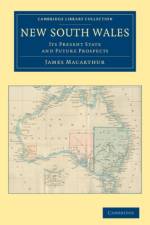
This 1837 book was ghost-written by the young Edward Edwards (1812-86), later a key figure in the development of British public libraries. It contains two petitions requesting closer British government involvement in the transition of New South Wales from a convict colony to a well run society of respectable emigrants. It includes the names and, unusually for that period, the domiciles of all the petitioners, together with supporting arguments and detailed statistical documentation about the population, economy, laws and governance of the colony. The publication was supervised by the wealthy Australian-born landowner James Macarthur (1798-1867), who was becoming increasingly influential in the political and economic development of New South Wales. He aimed to secure 'the best interests of the Colony, strengthen the ties to the Parent State and render it in every way worthy of its British origin', by elevating 'the moral character of its society'.
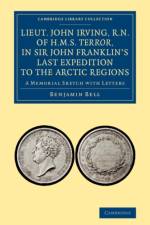
John Irving (1815-1847?) was a lieutenant on board H.M.S. Terror during Sir John Franklin's fateful expedition, and had the melancholy distinction of being the first identifiable body to be found by a subsequent search party - that of the US officer Frederick Schwatka - in 1878. Irving was identified by a silver medal, won for mathematics in 1830. His remains were brought back to Britain and reburied in his home town, Edinburgh, and at the request of Irving's father this 'memorial sketch', including some of the young lieutenant's letters to his family, was published in 1881 by Benjamin Bell (1810-83), great-grandfather of the surgeon Joseph Bell, Conan Doyle's model for Sherlock Holmes. As well as the touching memoir, the work includes details of the various search and rescue attempts, and a reconstructed chronology by Clements Markham of the Franklin expedition up to its disastrous end.
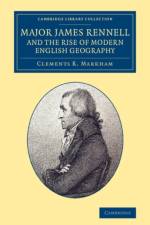
In this 1895 survey of the life and works of James Rennell (1742-1830), the geographer and historian Clements R. Markham (1830-1916) describes him as 'the greatest geographer that Great Britain has yet produced'. The book was published in the 'Century Science Series', which narrated the lives and works of exemplars in each area of science, and Markham goes on to explain why Rennell should be the chosen representative of geography. 'He was an explorer both by sea and land, a map compiler, a physical geographer, a critical and comparative geographer, and a hydrographer.' Rennell is probably best remembered for the surveys of western Asia (also reissued in this series) in which he attempted to match modern to classical sites, but his professional career was spent as an army surveyor in India and Africa. Markham's account of Rennell's life concludes with an examination of his geographical legacy.
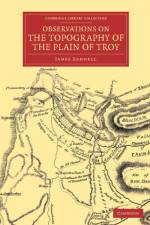
James Rennell (1742-1830) could be claimed as the father of historical geography. After a long career at sea and in India, during which he had learned surveying and cartography, he returned to England and entered the circle of Sir Joseph Banks, who encouraged him to widen his interests to include the geography of the ancient world. In this work, published in 1814, Rennell compares the actual topography of the area in which Troy was believed to be located with the accounts of ancient commentators on Homer, with the Homeric accounts themselves, and finally with the work of ancient geographers. Without offering his own solution to the problem, he demolishes with zest the then current theory that Troy was located at the village of Bournabashi - a conclusion with which Heinrich Schliemann later agreed. Rennell's posthumously published work on the topography of Western Asia is also reissued in this series.
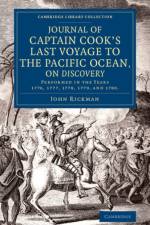
John Rickman, second lieutenant on one of the two ships commanded by James Cook on his last expedition, wrote this journal during the voyage. It was first published anonymously in 1781, because the Admiralty embargoed all personal accounts until an official report of the voyage was released. Rickman apparently wanted to anticipate any attempt to blame him (a party under his command had killed a Hawaiian chief) for precipitating Cook's death. This revised edition, 'compared with, and corrected from, the voyage published by authority' was published - again anonymously - in 1785. After an editorial preface and an introductory account of earlier voyages to the South Seas, the journal itself offers a detailed first-hand narrative of the four-year voyage, including the deaths of Cook and of Captain Clerke, who took over command of the expedition but died of tuberculosis while searching for the western entrance to the North-West Passage.
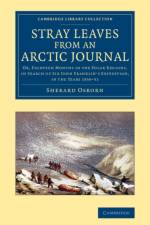
By the middle of the nineteenth century, the goal of the North-West Passage had claimed the lives of many explorers, yet the disappearance of the expedition led by Sir John Franklin occasioned the greatest response. Naval officer Sherard Osborn (1822-75) took part in the search mission of 1850-1 under Horatio Thomas Austin. Osborn was appointed to command the Pioneer, one of two steam tenders on the voyage. This was the first time such vessels had been deployed in the punishing conditions of the Arctic. Such was their success in cutting through ice and navigating the treacherous waters that similar models were later adopted by the whaling fleet. The present work, first published in 1852, gives a compelling account of the hardships of the expedition, which was successful in its surveying work and confirmed that Franklin had not been lost in Baffin Bay.
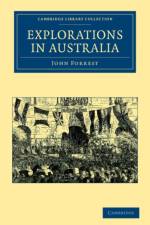
John Forrest (1847-1918), was an Australian surveyor and explorer. At twenty-two, he led an expedition to determine the fate of Ludwig Leichardt, who had earlier disappeared in the western desert. The following year he surveyed the coastal route from Perth to Adelaide, establishing the possibility of a telegraph line. In 1874, he crossed the central western desert, a two-thousand mile journey which confirmed his heroic reputation. He received the founder's medal of the Royal Geographical Society in London and was appointed Deputy Surveyor-General. His account of these expeditions, published in 1875, is based on his diaries, with extracts from official letters and the newspapers that covered the events. Forrest became Premier of Western Australia, held several positions under the subsequent federal government, and was the first native-born Australian to be recommended for a barony. This book thus illuminates the political history of Australia and that of its geographical exploration.
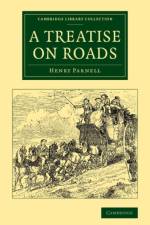
The politician Sir Henry Parnell (1776-1842) was instrumental in drafting legislation to improve the important road linking London with Holyhead in Anglesey, a major port for communication with Dublin. He was aided by the pioneering civil engineer Thomas Telford, and in 1833 Parnell published the first edition of this thorough work on road construction and maintenance. Reissued here is the second edition of 1838. Drawing on his experiences with Telford, who called the work 'the most valuable Treatise which has appeared in England' on the subject, Parnell outlines not only the rules governing the planning of a new road, but also addresses the practical aspects of building and repairing roads, noting the various tools and materials needed. Parnell, later Baron Congleton, also highlights the connection between road construction and national development, and includes a number of appendices relating to contemporary legislation on the subject of roads.
Abonner på vårt nyhetsbrev og få rabatter og inspirasjon til din neste leseopplevelse.
Ved å abonnere godtar du vår personvernerklæring.