
Gjør som tusenvis av andre bokelskere
Abonner på vårt nyhetsbrev og få rabatter og inspirasjon til din neste leseopplevelse.
Ved å abonnere godtar du vår personvernerklæring.Du kan når som helst melde deg av våre nyhetsbrev.

The son of a shopkeeper, Joseph Lancaster (1778-1838) received little formal education himself. In 1798 he set up a school in Southwark, waiving fees for poor children. Originally published in 1803, this work sets out in detail the philosophy and practice of Lancaster's system of education, which relied on peer tutoring. He was always concerned with the education of the underprivileged in industrial cities, lamenting that 'poor children be deprived of even an initiatory share of education, and of almost any attention to their morals'. The early decades of the nineteenth century saw the peak of the popularity of Lancaster's system as his ideas spread and inspired the establishment of schools around the world. His book is still significant in the history of educational methods. This reissue of the revised third edition of 1805 incorporates a brief 1840 biography of Lancaster.
One of the most celebrated and prolific authors of the Victorian era, Anthony Trollope (1815-82) was also an enthusiastic traveller. This two-volume work recounts his two-year journey across Britain's colonies in the Antipodes. First published in 1873, it celebrates the success of British colonisation, but also considers with pragmatic foresight the inevitable unification of the Australian territories and their desire for greater independence. In Volume 2, Trollope describes his travels through Tasmania, Western Australia, South Australia and New Zealand. He supplements his travelogue with maps and a section on Australian institutions. He also tells of his unsuccessful foray into kangaroo hunting, showcasing his wit and appetite for adventure. North America (1862), Trollope's account of the continent during the American Civil War, and his An Autobiography (1883) are also reissued in this series.
One of the most celebrated and prolific authors of the Victorian era, Anthony Trollope (1815-82) was also an enthusiastic traveller. This two-volume work recounts his two-year journey across Britain's colonies in the Antipodes. First published in 1873, it celebrates the success of British colonisation, but also considers with pragmatic foresight the inevitable unification of the Australian territories and their desire for greater independence. Volume 1 covers Trollope's travels through Queensland, New South Wales and Victoria. Each section addresses the history and governance of the relevant state, assessing also the current condition of the region's institutions, people and resources. In the process, Trollope informs his reader about everything from the temperament of Aboriginal Australians to the troubles of travelling by steamboat. North America (1862), his account of the continent during the American Civil War, and his An Autobiography (1883) are also reissued in this series.
A singer and poet as well as a farmer, Thomas Tusser (c.1524-80) first produced his verse manual on farming in the mid-sixteenth century. Since then, it has gone through more than a dozen editions. This 1812 version is a collation of three of the poem's early editions. Editor William Mavor (1758-1837) provides a biographical sketch of Tusser, modernises the work's orthography and punctuation, and includes page-by-page annotations on subject matter and difficult points of language. The work divides into two: the first half, structured around the farming calendar, deals with the cultivation of open and enclosed land, while the second contains 'points of huswifery', arranged loosely around the working day. Tusser writes from the perspective of a tenant farmer, notably placing emphasis on the often overlooked benefits of land enclosure as well as on the role of women in farm labour.
Elisha Kent Kane (1820-57) was a medical officer in the United States Navy, best known for the so-called 'Grinnell voyages' to the Arctic in search of Sir John Franklin's expedition. Originally published in 1856, this two-volume work documents his second expedition, between 1853 and 1855, during which his ship became ice-bound, and he and his men survived by adopting Inuit survival skills, such as hunting, sledge-driving and hut-building. In Volume 2, Kane continues to describe the Inuit people by whom he was aided, their birth and death rites, their survival skills in times of famine, and their rescuing of his crew. Accompanied by an extensive appendix containing his meteorological and geological surveys of the area, Kane's writings reveal his own controversial personality, his scholarly and navigational abilities, and his admiration of the way in which the Inuits' life was adapted to their environment.
Taking the view that medicine is as much the art of avoiding ill health as it is the cure of disease, physician William Buchan (1729-1805) published this home health guide in 1769. The first part is devoted to preventing ailments through proper diet and exercise, while the second part helps families diagnose and treat maladies ranging from coughs and hiccups to jaundice and gout. Buchan showed particular concern for the health of women and children, whom he believed were often misunderstood and neglected. He condemned corsets and restrictive infant swaddling, discouraged 'high living' and indolence, and blamed the high child-mortality rate on upper-class ignorance of child-rearing wisdom. His book became the most popular health guide prior to the twentieth century, with over a hundred editions by 1871. This reissue is of the first edition. Its diagnoses of physical (and cultural) ailments will illuminate eighteenth-century concerns for modern readers.
Written by his son, the Rev. Edward Parry, this 1857 memoir describes the life and times of Rear-Admiral Sir W. Edward Parry (1790-1855), the British naval officer and Arctic explorer. The work describes how Parry became a successful pioneer of Arctic enterprise, having in 1827 attempted one of the earliest expeditions to the North Pole, setting a record which then stood for fifty years. Reflecting the religious side of Parry's character, the book demonstrates how he was a constant promoter of the welfare of his crews. From Parry's childhood years, the book traces the explorer's distinguished career in the Navy, his meticulous scientific work and his long and usually dangerous voyages and expeditions. Alongside his professional successes, including his knighthood in 1829, the book gives insights into the difficulties of his private life, including the tragic deaths of his first wife and of some of his children.
At the close of the Napoleonic Wars, Malta officially became part of the British Empire in 1814. As the British presence there increased, so too did public interest in the island's history, particularly the military religious order of the Knights Hospitaller. In 1858, the army officer Whitworth Porter (1827-92) published this two-volume work, tracing the fortunes of the order since its establishment following the First Crusade. Incorporating details of the knights' social habits and customs into his narrative, Porter also provides supplementary material such as royal and papal documents in translation. Volume 2 opens in 1522 with the surrender of Rhodes, followed by the order's eventual relocation to Malta, which the Ottomans besieged without success in 1565. The coverage extends to the blockade of Valletta, then under French control, at the end of the eighteenth century.
In 1829, Thomas Simpson (1808-1840), born in Dingwall, Scotland, joined the fur-trading Hudson's Bay Company. Under its auspices, he was the junior officer of a successful survey expedition along the North-West Passage, beyond the limits of Franklin's disastrous 1819-22 attempt. The Royal Geographical Society awarded Simpson their Founder's Medal; however the Company refused his request immediately to lead an expedition further east along the coast. Simpson, ambitious and furious, set out for London, hoping to secure approval there, but before he reached the Atlantic, he was shot in the head. The men who had accompanied him alleged that he went mad, and killed two of them before committing suicide. Simpson's own account of his explorations was edited by his brother, Alexander, and published in 1843 in an attempt to restore his reputation. It sheds light on Simpson's difficult character and also on the contribution of trade interests to exploration.
William Edward Parry (1790-1855) spent the early part of his naval career protecting the whale fisheries of Spitzbergen. He was later appointed to several Arctic expeditions, including three in search of the North-West Passage. This 1821 publication, reissued here in the unchanged second edition from the same year, describes the first of these voyages. Although unsuccessful, it provided valuable scientific data and experience that shaped subsequent expeditions. Noted for his care for his men, and his ability to quickly find solutions to difficult problems, Parry realised during this expedition the importance of keeping his explorers occupied during the winter, and started a newspaper and a theatre group. This first expedition established that, contrary to John Ross's 1819 account (also reissued in this series), a westward route through Lancaster Sound did in fact exist. It also began to map the many islands in the region.
After joining the Navy at thirteen, William Edward Parry (1790-1855) spent three years protecting the whale fisheries of Spitzbergen. He was later appointed to several Arctic expeditions. Although his first voyage in search of the North-West Passage ended without success in 1819, it provided valuable scientific data and experience. The expedition of 1821-3 was longer, with two winters spent on the ice, but also ended without success. Parry's account of that second voyage, first published in 1824, provides insights into the early days of Arctic exploration and the character of one of its pioneers, noted for his care for his men, his precision in navigation and scientific observations, and his ability to quickly find solutions to difficult problems. The book also includes descriptions of the 'Esquimaux' encountered by the explorers, and their communities as well as a vocabulary of their language.
Sir John Franklin (1786-1847) joined the Navy at the age of fourteen and saw action at Copenhagen and Trafalgar. Between those battles, he circumnavigated Australia with his uncle, Matthew Flinders; he became famous after his first major expedition to northern Canada in 1819-22, although it resulted in the deaths of over half of his men. Accounts of both of these voyages are also reissued in this series. Franklin returned to the Arctic in 1825, and this, his second book, describes that more successful endeavour. Published in 1828, it records the expedition's planning, route, scientific observations, and the mapping of over 1200 miles of Canada's northern coastline. The party included two artists, and their work is reproduced in over thirty engravings. Franklin was later posted to the Mediterranean and Tasmania, but in 1845 embarked on his disastrous third expedition to the North-West Passage, during which he and his entire crew were lost.
William Scoresby junior (1789-1857), explorer, scientist, and later Church of England clergyman, first travelled to the Arctic when he was just ten years old. The son of Arctic whaler and navigator William Scoresby of Whitby, he spent nearly every summer for twenty years at a Greenland whale fishery. He made significant discoveries in Arctic geography, meteorology, oceanography, and magnetism, and was elected a fellow of the Royal Society in 1824. First published in 1823, this book recounts Scoresby's voyage to Greenland in the summer of 1822 aboard the Baffin, a whaler of his own design. On this journey, his penultimate voyage to the north, he charted a large section of the coast of Greenland. His narrative also includes descriptions of scientific observations and geographical discoveries made during the voyage, and the appendices includes lists of rock specimens, plants and animal life, and notes on meteorological and other data.
Having married and settled in Florence in the 1840s, the poet and translator Theodosia Trollope (1816-65) found herself well placed to chronicle the events which contributed to the unification of Italy. While another Englishwoman in Italy, Elizabeth Barrett Browning, would become better known for her verse, Trollope nevertheless firmly established herself in the liberal and literary circles of Florentine society, allowing her to witness at first hand, and explore in prose, the effects that the Risorgimento was having on those living through it. Vividly capturing the unfolding situation in Tuscany, twenty-seven letters first appeared in The Athenaeum in 1859-60. They were published together in this work of 1861, along with an update on the months that had elapsed since the last letter was written in April 1860. Championing the cause of unification, Trollope's writing helped to generate enthusiasm in Britain for the progress and personalities of the Risorgimento.
A pioneering Egyptologist, Sir William Matthew Flinders Petrie (1853-1942) excavated over fifty sites and trained a generation of archaeologists. These three illustrated excavation reports, now reissued together, were originally published in 1898, 1901 and 1908 in collaboration with other experts. They focus on the cemeteries at Deshasheh, Abadiyeh and Hu (the latter known also as Diospolis Parva), and Athribis. Light is shed on the major discoveries, such as large quantities of beautifully preserved Neolithic linen, the 'pan graves' of semi-nomadic settlers, and a tomb featuring an early relief of Egyptians besieging a fortified Near Eastern town. Most significantly, these reports reflect Petrie's development of sequence dating, which influenced the use of seriation as a relative dating method in archaeology. Petrie wrote prolifically throughout his long career. Many of his other publications - for both Egyptologists and non-specialists - are also reissued in this series.
A pioneering Egyptologist, Sir William Matthew Flinders Petrie (1853-1942) excavated over fifty sites and trained a generation of archaeologists. This reissue brings together two of the well-illustrated excavation reports that he prepared with collaborators. The first, originally published in 1905, documents his work at Ehnasya (or Herakleopolis Magna), ranging in its coverage from the twelfth-dynasty temple to the houses of the Roman period. The text includes material by C. T. Currelly (1876-1957) on the various cemeteries. The second report, from 1912, records the findings from a number of sites. Petrie discusses the labyrinth located in the Faiyum; Gerald Wainwright (1879-1964) notes the discovery at Gerzeh of early examples of iron and ceramic artefacts; and the cemeteries and pyramids of Mazghuna are examined by Ernest Mackay (1880-1943). Petrie wrote prolifically throughout his long career, and a great many of his other publications are also reissued in this series.
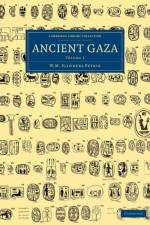
A pioneering Egyptologist, Sir William Matthew Flinders Petrie (1853-1942) excavated over fifty sites and trained a generation of archaeologists. Now reissued in two volumes are the four excavation reports, published between 1931 and 1934, covering his extensive dig at Tell el-Ajjul in Palestine. The reports scrupulously record the finds of artefacts dating from the Copper Age and extending to the Hyksos period. Descriptions of the working party's struggles against malaria and the elements highlight Petrie's devotion to his work. Volume 1 combines the first two reports, first published in 1931 and 1932, and includes descriptions of various cemeteries, tombs, palaces and horse burials. Each report features a section of photographs and sketches of tombs, pottery, weapons and jewellery. Petrie wrote prolifically throughout his long career, and a great many of his Egyptological publications - for both specialists and non-specialists - are also reissued in this series.
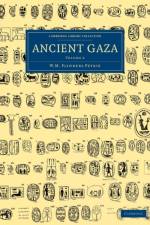
A pioneering Egyptologist, Sir William Matthew Flinders Petrie (1853-1942) excavated over fifty sites and trained a generation of archaeologists. Now reissued in two volumes are the four excavation reports, published between 1931 and 1934, covering his extensive dig at Tell el-Ajjul in Palestine. The reports scrupulously record the finds of artefacts dating from the Copper Age and extending to the Hyksos period. Descriptions of the working party's struggles against malaria and the elements highlight Petrie's devotion to his work. Volume 2 combines the final two excavation reports, first published in 1933 and 1934, and includes the significant discovery of the large tomb of the governor under Tutankhamun. Each report features a section of photographs and sketches of tombs, pottery, weapons and jewellery. Petrie wrote prolifically throughout his long career, and a great many of his Egyptological publications - for both specialists and non-specialists - are also reissued in this series.
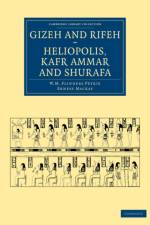
A pioneering Egyptologist, Sir William Matthew Flinders Petrie (1853-1942) excavated over fifty sites and trained a generation of archaeologists. The two excavation reports now reissued here together were written in collaboration with other experts. The first, published in 1907, describes digs at Giza and Rifeh, including the discovery of the Tomb of the Two Brothers, a well-preserved Middle Kingdom burial. The second report, co-authored with Ernest Mackay (1880-1943) and published in 1915, covers work at Heliopolis, Kafr Ammar and Shurafa. Petrie and his collaborators describe how they came to make their discoveries, shedding light on developing archaeological practices used in the early twentieth century. Each report includes a section of valuable illustrative material, such as photographs and drawings of artefacts. Petrie wrote prolifically throughout his long career, and a great many of his other publications - for both specialists and non-specialists - are also reissued in this series.
Herbert Spencer (1820-1903), Victorian philosopher, biologist, sociologist and political theorist, one of the founders of Social Darwinism and author of the phrase 'survival of the fittest', was nominated for the Nobel Prize for Literature in 1902, losing out to Theodor Mommsen. Spencer left his post at The Economist in 1857 to focus on writing his ten-volume System of Synthetic Philosophy, a work that offers an ethics-based guide to human conduct to replace that provided by conventional religious belief. Published in 1879, this volume seeks to demonstrate that social evolution tends towards greater individualism, altruism and co-operation. Spencer argues that it is possible to establish rules of right conduct on a scientific basis, and declares that this work is the culmination of his life's study. He was anxious to publish it outside the planned order of the System, because he feared (wrongly) that his death would prevent its completion.
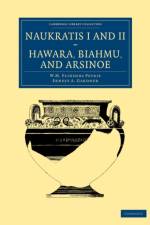
A pioneering Egyptologist, Sir William Matthew Flinders Petrie (1853-1942) excavated over fifty sites and trained a generation of archaeologists. Ernest A. Gardner (1862-1939) was to become a leading classical archaeologist, but his first major project was carrying on the work of Petrie at Naukratis, the ancient Greek colony in the Nile Delta that Petrie had discovered in 1884. Reissued here together are Petrie's initial excavation report of 1886 and Gardner's 1888 continuation, each with many illustrations and material contributed by specialists on certain topics. Notably, the finds of inscribed pottery yielded significant insights into how the Greek alphabet developed. The final component included here is Petrie's 1889 report covering recent digs, particularly his discovery of a Roman necropolis and dozens of remarkable mummy portraits at Hawara. He wrote prolifically throughout his long career, and a great many of his other publications are also reissued in this series.
After more than ten years teaching ancient Greek history and philosophy at University College, Oxford, the British philosopher and political theorist Bernard Bosanquet (1848-1923) resigned from his post to spend more time writing. He was particularly interested in contemporary social theory, including the social ramifications of the growing field of psychology, and this book, published in 1897, is a collection of his lectures on this topic. The ten lectures explore many aspects of psychology and its relationship to larger philosophical and ethical issues. Bosanquet poses the question whether psychology takes a subjective point of view, while other sciences take an objective one. He discusses classic psychological themes such as the ego, the soul, self-consciousness, emotion and feeling, and individual volition. Bosanquet's observations in these concise essays offer the perspective of a leading nineteenth-century thinker on this growing and influential field of scientific and social inquiry.
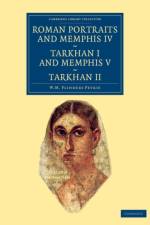
A pioneering Egyptologist, Sir William Matthew Flinders Petrie (1853-1942) excavated over fifty sites and trained a generation of archaeologists. The diversity of his work is revealed in these three excavation reports, reissued here together but originally published separately in 1911, 1913 and 1914. The first, an important resource on mummy portraits, records significant discoveries made during renewed work on the Roman necropolis at Hawara. Continued excavations at Memphis are also described. Petrie's work at Tarkhan, where he excavated numerous tombs, is written up in the second and third reports. Each report features a valuable section of illustrations, including photographs and drawings of the various sites and finds, most notably the lifelike mummy portraits. Petrie wrote prolifically throughout his long career, and a great many of his other publications - including earlier reports from both Hawara and Memphis - are also reissued in this series.
Edith Simcox (1844-1901) was a prominent British feminist, social critic and prolific writer. She published widely, advocating support for women's right to education, improved working conditions and suffrage. Her scholarly works in philosophy and economic history sought to demonstrate that contemporary capitalism was not the only route to a prosperous society. Her articles appeared in many periodicals and among her books are Episodes in the Lives of Men, Women, and Lovers (1882) and the two-volume Primitive Civilizations (1894), both also reissued in this series. First published in 1877, this book analyses the laws that govern human relations with society and with the natural world. Its chief concern is to establish whether human actions and feelings are subject to the same natural laws as inanimate objects, and whether such laws are 'of supernatural imposition'. For more information on this author, see http://orlando.cambridge.org/public/svPeople?person_id=simced
The physicist Sir Oliver Lodge (1851-1940) made significant contributions to the study of electrons, electromagnetic waves, X-rays, radio and telegraphy, earning him the Rumford Medal, the Faraday Medal and, in 1902, a knighthood. In addition to serving as President of the Physical Society, Lodge succeeded F. W. H. Myers as President of the Society for Psychical Research, an organisation devoted to the study of paranormal phenomena. In this work, first published in 1908, Lodge discusses the controversy between science and faith, showing how the self-sufficient laws of 'orthodox science' may be reconciled with the divinely ordered universe of 'orthodox religion'. Immensely popular from the moment of its publication, the book reached its twenty-first printing in 1928. This sixth edition of 1909 conveys the full scope of Lodge's ambitious project, including his treatments of evolutionary science, church reform and the immortality of the soul.
A pioneering Egyptologist, Sir William Matthew Flinders Petrie (1853-1942) excavated over fifty sites and trained a generation of archaeologists. This single-volume reissue brings together three well-illustrated reports of his excavations over three seasons at Memphis and Meidum on the west bank of the Nile, first published in 1909-10. Work at Memphis in 1908 and 1909 notably focused on the west hall of the temple of Ptah and the royal palace of Apries. Chapters on the inscriptions are provided by James Herbert Walker (d.1914). The excavations at Meidum continued those begun in 1891 and recorded in the 1892 report that is also reissued in this series. Petrie was assisted by Ernest Mackay (1880-1943) and Gerald Averay Wainwright (1879-1964) in working on the pyramid, built for the fourth-dynasty pharaoh Sneferu, and the mastaba of Nefermaat, one of the largest private tombs of the Old Kingdom.
Among the leading Egyptologists of his day, Sir William Matthew Flinders Petrie (1853-1942) excavated over fifty sites and trained a generation of archaeologists. This single-volume reissue brings together two of his well-illustrated excavation reports. The first, originally published in 1896, covers the work undertaken in 1893-4 at Koptos (modern-day Qift), a key settlement in Upper Egypt on the Nile's east bank. This includes a chapter on classical inscriptions by David George Hogarth (1862-1927). The second report, first published in 1909, discusses recent archaeological work around Qurna in the Theban necropolis, including the discovery of an intact royal burial dating from the seventeenth dynasty. The epigraphic material is addressed in a chapter by James Herbert Walker (d.1914). Petrie wrote prolifically throughout his long career, and a great many of his other publications - for both specialists and non-specialists - are also reissued in this series.
Who was James Mill (1773-1836)? What was his legacy to British society and culture? The achievement of this Scottish-born political philosopher, economist and historian has been overshadowed by that of his son, John Stuart Mill, but as Alexander Bain (1818-1903), himself a philosopher and empiricist, shows in this biography, published in 1882, Mill's range of interests was remarkable. He wrote on education and psychology, and developed theories on political economy and the need for parliamentary reform. Mill was also critical of the history of British colonialism (his three-volume History of India is reissued in this series), and argued for religious tolerance, as well as collaborating with Jeremy Bentham as a proponent of utilitarianism, the philosophy which sought 'the greatest happiness of the greater number'. Bain places the facts of Mill's life in the context of the remarkable changes undergone by British society and culture in this period.
Scottish philosopher Thomas Brown (1778-1820) held the chair of moral philosophy at the University of Edinburgh. He was distinguished for his work in the philosophy of mind and causation, and was a founder member of the Edinburgh Review. At the beginning of the nineteenth century, controversy arose over John Leslie being appointed to the chair of mathematics at the university. City ministers opposed him because he defended Hume's view of causation, which was seen as being incompatible with the existence of God. In 1805 Brown wrote a pamphlet, Observations on the Nature and Tendency of the Doctrine of Mr. Hume Concerning the Relation of Cause and Effect, which among other things aimed to show that Hume's theory was compatible with belief in God. This book, first published in 1818, is the third edition of that original pamphlet, which grew to become a thorough examination of the philosophy of causation.
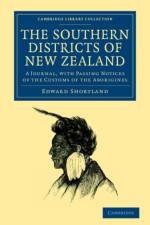
The physician and ethnographer Edward Shortland (1812-93) first travelled to New Zealand in 1841, a year after the Treaty of Waitangi. He became private secretary to Governor William Hobson, and quickly learned the Maori language. First published in 1851, this book describes Shortland's experiences on the east coast of New Zealand's South Island while conducting a census of the local Maori settlements in 1843. It documents South Island Maori myths, traditions and everyday life, and includes genealogical tables and a short word-list of the local dialect. It also describes a French Company agent at Akaroa reporting the successful introduction of French vines, the Scottish settlement at Dunedin, and the productivity of several whaling stations. Shortland reminds prospective settlers of the importance of understanding the 'ideas and prejudices' of the Maori, whose many qualities including 'natural bravery and love of freedom' guarantee them continuing 'political weight in their own country'.
Abonner på vårt nyhetsbrev og få rabatter og inspirasjon til din neste leseopplevelse.
Ved å abonnere godtar du vår personvernerklæring.