

Gjør som tusenvis av andre bokelskere
Abonner på vårt nyhetsbrev og få rabatter og inspirasjon til din neste leseopplevelse.
Ved å abonnere godtar du vår personvernerklæring.Du kan når som helst melde deg av våre nyhetsbrev.

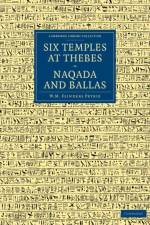
A pioneering Egyptologist, Sir William Matthew Flinders Petrie (1853-1942) excavated over fifty sites and trained a generation of archaeologists. This single-volume reissue brings together two of his well-illustrated excavation reports. The first, originally published in 1897, describes work on six of the temples at Thebes, including the discovery of the famous Merneptah Stele, which contains the first non-biblical reference to Israel. A chapter on this inscription and others found in the temples is provided by the German scholar Wilhelm Spiegelberg (1870-1930). The second report, first published in 1896, discusses the archaeological work carried out at Naqada and Ballas by Petrie and James Edward Quibell (1867-1935), with a chapter by F. C. J. Spurrell (1842-1915) on the flint implements found at Naqada. Petrie wrote prolifically throughout his long career, and a great many of his other publications - for both specialists and non-specialists - are also reissued in this series.
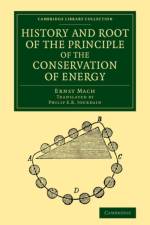
The Austrian scientist Ernst Mach (1838-1916) carried out work of importance in several fields of enquiry, including physics, physiology and psychology. In this short work, first published in German in 1872 and translated here into English in 1911 by Philip E. B. Jourdain (1879-1919) from the 1909 second edition, Mach discusses the formulation of one of science's most fundamental theories. He provides his interpretation of the principle of the conservation of energy, claiming its foundations are not in mechanical physics. Mach's 1868 work on the definition of mass - one of his most significant contributions to mechanics - has been incorporated here. His perspective on the topic as a whole remains relevant to those interested in the history of science and the theory of knowledge. Also reissued in this series in English translation are Mach's The Science of Mechanics (1893) and Popular Scientific Lectures (1895).
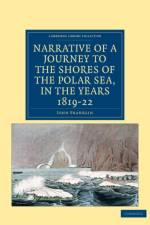
First published in 1823, this book narrates the disastrous expedition undertaken by Naval officer and Arctic explorer Sir John Franklin up the Coppermine River in North America. Franklin (1786-1847) and nineteen others set out in 1819, initially with guides from the Hudson Bay Company until the journey continued overland, when they relied on Native Americans as guides. The party ran short of supplies and, lacking adequate knowledge for survival, were reduced to eating lichens. One of the party was suspected of eating the bodies of the nine men who had died of exposure and starvation, and two more were killed in a subsequent skirmish. The book was immediately popular on publication and quickly became a travel literature classic. Franklin undertook a second, more successful Arctic journey (the account of which is also published in this series) before setting out on his final expedition of 1845, which ended in tragedy and enduring mystery.
The Scottish naturalist Robert O. Cunningham (1841-1918) began his 1866 voyage to South America in inclement weather, and, by the eleventh day of travel, noted a 'pond' forming in his tiny cabin aboard HMS Nassau. With never-failing humour, Cunningham presents here a record of the zoological, botanical and geological observations made across the three years he spent at sea. As the ship's naturalist (recommended for the post by J. D. Hooker), his time was given wholly to research and exploration, and his findings are both fascinating and thorough. Included are his anecdotal records of seamen's slang, research into the history of the changing landscapes he visited, which had been previously documented by travellers as diverse as Drake and Darwin, statistical data on various species of animals and plants, and twenty-two original images. First published in 1871, this is an absorbing testament of the breadth of the explorer-naturalist's interests.
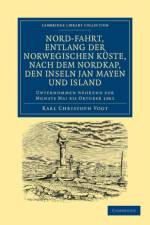
In the summer of 1861 the German-born geologist, zoologist and politician Carl Vogt (1817-95), Professor at Geneva, accompanied the wealthy landowner Georg Berna on a privately financed voyage to the Norwegian coast, the North Cape and Iceland. His role was to explain the natural history of the places they visited; also in the party was the artist Heinrich Hasselhorst, whose drawings illustrate this account of their journey. Vogt's book, published in 1863, is a travel narrative rather than a scientific report. It describes life on board the Joachim Hinrich, and his impressions of places including Bergen, Tromso and Reykjavik, which he compares to a 'white desert' without trees or bushes. Vogt praises the hospitality, athletic physique and good looks of the Icelandic people, but expresses surprise that the natural resources of the island remain largely unexploited. The book includes appendices on Norwegian geology and Icelandic volcanoes.
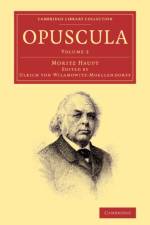
A prolific philologist of both the German and classical languages, Moriz Haupt (1808-74) enjoyed a successful academic career at the universities of Leipzig and Berlin. As well as founding the Zeitschrift fur deutsches Altertum, which is still published, he was a painstaking yet somewhat bold editor of many classical texts. In the years immediately following his death, his shorter works were gathered together in this three-volume collection, edited by fellow philologist Ulrich von Wilamowitz-Moellendorff (1848-1931). Volume 2 (1876) contains the Latin text of forty-two lectures delivered by Haupt twice a year at the University of Berlin between 1854 and 1874. The lectures cover a variety of topics concerning classical texts, philology and literature, including an exposition of the forgeries by Simeon Bosius of the texts of Catullus. This work remains of value to researchers interested in nineteenth-century German classical scholarship.
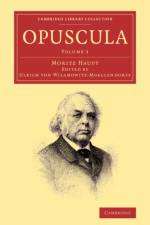
A prolific philologist of both the German and classical languages, Moriz Haupt (1808-74) enjoyed a successful academic career at the universities of Leipzig and Berlin. As well as founding the Zeitschrift fur deutsches Altertum, which is still published, he was a painstaking yet somewhat bold editor of many classical texts. In the years immediately following his death, his shorter works were gathered together in this three-volume collection, edited by fellow philologist Ulrich von Wilamowitz-Moellendorff (1848-1931). Volume 1 (1875) contains essays by Haupt in both Latin and German on a variety of classical subjects. Included here are his Quaestiones Catullianae (1837), an analysis of a fragment of a Pindaric dithyramb, and a commentary on the bucolic poems of Calpurnius and Nemesianus. This work remains of value to researchers interested in the history of classical scholarship, particularly the significant contributions made by German scholars in the nineteenth century.
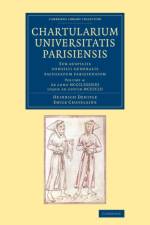
An Austrian Dominican priest, Heinrich Denifle (1844-1905) carried out painstaking research in the archives of the Vatican and in libraries throughout Europe, resulting in several major publications on medieval history and theology. In 1887 he was appointed to edit the medieval records of the University of Paris, with the assistance of the palaeographer Emile Chatelaine (1851-1933). Paris was the centre of theological learning in Europe in the Middle Ages, and the records here contain important information regarding the university's organisation, teachers, students, relations with popes and kings, religious orders, and intellectual controversies. The four volumes published between 1889 and 1897 contain the texts of some 2,700 records, with references to many more in the notes. Volume 4 (1897) contains almost a thousand records from the period 1394-1452, a difficult time for the university owing to the Western Schism and the Hundred Years War.
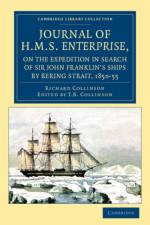
Published posthumously in 1889, this journal records the 1850-5 expedition undertaken by naval officer and navigator Sir Richard Collinson (1811-83) to attempt to discover the fate of Sir John Franklin's expedition by entering the hypothetical North-West Passage from the 'other side', via Bering Strait. Franklin, the famous Polar explorer, disappeared on an expedition to discover the Passage in 1845, and no fewer than thirty attempts were made between 1847 and 1859 to investigate what had happened to his 129-strong party. Collinson set out in command of HMS Enterprise in 1850, and his ship, which passed three successive winters in the Arctic, came closest to the place where Franklin's expedition was believed to have ended. Collinson was awarded a Gold Medal by the Royal Geographical Society in 1858 for making a significant contribution to the geographical knowledge of the area, and he was knighted in 1875.
An Austrian Dominican priest, Heinrich Denifle (1844-1905) carried out painstaking research in the archives of the Vatican and in libraries throughout Europe, resulting in several major publications on medieval history and theology. In 1887 he was appointed to edit the medieval records of the University of Paris, with the assistance of the palaeographer Emile Chatelaine (1851-1933). Paris was the centre of theological learning in Europe in the Middle Ages, and the records here contain important information regarding the university's organisation, teachers, students, relations with popes and kings, religious orders, and intellectual controversies. The four volumes published between 1889 and 1897 contain the texts of some 2,700 records, with references to many more in the notes. Volume 3 (1894) covers 1350-94, as the university dealt with the aftermath of the Black Death, and with the Hundred Years War.
George W. Melville (1841-1912) was a member of an 1879 American Arctic expedition seeking a northern passage from the Bering Strait to the Atlantic. Its ship was trapped in ice for nearly two years, and was eventually crushed and sank. The crew, stranded in three small boats, were left with few provisions and little hope of rescue. Melville was the only boat commander to bring his men to safety, assuming leadership of the survivors after landing in Siberia in 1881. He returned to search for other survivors, trekking over a thousand miles, but found only the bodies of his former companions in a frozen campsite, from which, however, he recovered the expedition's records. This account also includes details of Melville's role in the Greely Relief Expedition of 1884, from which he returned shortly before the book's British publication in 1885, and a detailed proposal for reaching the North Pole.
An Austrian Dominican priest, Heinrich Denifle (1844-1905) carried out painstaking research in the archives of the Vatican and in libraries throughout Europe, resulting in several major publications on medieval history and theology. In 1887 he was appointed to edit the medieval records of the University of Paris, with the assistance of the palaeographer Emile Chatelaine (1851-1933). Paris was the centre of theological learning in Europe in the Middle Ages, and the records here contain important information regarding the university's organisation, teachers, students, relations with popes and kings, religious orders, and intellectual controversies. The four volumes published between 1889 and 1897 contain the texts of some 2,700 records, with references to many more in the notes. Volume 2 (1891) contains material covering 1286-1350, when the university was growing both in size and influence internationally.
Robert Peary (1856-1920) was an American Arctic explorer. For much of the twentieth century, he was for many years credited with being, in 1909, the first man to reach the North Pole, although this has recently been questioned. Born in Cresson, Pennsylvania, Peary graduated from Bowdoin College in 1877 and joined the US Navy in 1881. He began his Arctic expeditions in 1886, exploring Greenland for a number of years in search of a route to the Pole. Published in 1893, this illustrated book consists of two parts. Drawing on the diaries of the expedition's surgeon, Robert Keely, Part I describes the journey that took Peary to Greenland in 1891. Part II uses the journal of the botanist William Meehan to describe the 1892 expedition to bring the exploring party home. The book includes transcripts of the logs of Richard Pike, captain of the Kite on both voyages.
An Austrian Dominican priest, Heinrich Denifle (1844-1905) carried out painstaking research in the archives of the Vatican and in libraries throughout Europe, resulting in several major publications on medieval history and theology. In 1887 he was appointed to edit the medieval records of the University of Paris, with the assistance of the palaeographer Emile Chatelaine (1851-1933). Paris was the centre of theological learning in Europe in the Middle Ages, and the records here contain important information regarding the university's organisation, teachers, students, relations with popes and kings, religious orders, and intellectual controversies. The four volumes published between 1889 and 1897 contain the texts of some 2,700 records, with references to many more in the notes. The university came into being around 1160, and Volume 1 (1889) covers the period up to 1286, with some 55 documents dating from before 1200.
The Austrian scientist Ernst Mach (1838-1916) carried out work of importance in many fields of enquiry, including physics, physiology, psychology and philosophy. Published in this English translation of 1906, these essays examine geometry from three different perspectives. Mach argues that, as our ideas about space are created by the senses and how we experience our environment, researchers must not consider the subject from a mathematical standpoint alone. In the first essay, he explains how humans generate spatial concepts. Next, he discusses the psychology of geometry, its empirical origins, and its development. In the final piece, he writes from the viewpoint of a physicist, outlining how various mathematicians, such as Carl Friedrich Gauss and Bernhard Riemann, have contributed to our geometrical understanding. Also reissued in this series in English translation are Mach's The Science of Mechanics (1893) and Popular Scientific Lectures (1895).
The Austrian scientist Ernst Mach (1838-1916) carried out work of importance in many fields of enquiry, including physics, physiology, psychology and philosophy. Many significant thinkers, such as Ludwig Wittgenstein and Bertrand Russell, benefited from engaging with his ideas. Mach delivered the twelve lectures collected here between 1864 and 1894. This English translation by Thomas J. McCormack (1865-1932) appeared in 1895. Mach tackles a range of topics in an engaging style, demonstrating his abilities as both a researcher and a communicator. In the realm of the physical sciences, he discusses electrostatics, the conservation of energy, and the speed of light. He also addresses physiological matters, seeking to explain aspects of the hearing system and why humans have two eyes. In the final four lectures, he deals with the nature of scientific study. The Science of Mechanics (1893), Mach's historical and philosophical account, is also reissued in this series.
The astronomer John Lee (1783-66) inherited Hartwell House in Buckinghamshire in 1827. During its colourful history, the mansion had notably been occupied between 1809 and 1814 by the exiled court of Louis XVIII. Lee turned the house into something of a museum for his antiquarian and scientific interests, constructing an observatory to the design of the his close friend William Henry Smyth (1788-1865), after whom Lee named a lunar sea. A naval officer, Smyth had helped to found the Royal Geographical Society in 1830. His Sidereal Chromatics (1864) and The Sailor's Word-Book (1867) are also reissued in this series. This charming history and description of Hartwell, its grounds, buildings and contents, appeared in two volumes between 1851 and 1864, illuminating especially the practice of contemporary astronomy. Illustrated throughout, the first volume (1851) includes coverage relating to the locality, the lords of the manor, the collected antiquities and the observatory.
A pioneer of British Egyptology, Sir John Gardner Wilkinson (1797-1875) first travelled to Egypt in 1821, the year before Champollion published his breakthrough work on the Rosetta Stone. As public interest in Egypt grew, Wilkinson studied and sketched the country's major archaeological sites, most notably the tombs of Thebes. His Topography of Thebes and General View of Egypt (1835) and Modern Egypt and Thebes (1843) are also reissued in this series. This well-illustrated three-volume work, first published in 1837, remained for over a century a key text on the lives of ancient Egyptians. Writing in a popular genre that was normally focused on contemporary societies, Wilkinson covers areas ranging from daily life to funerary beliefs. His imaginative approach underpinned the book's considerable success. Volume 3 includes discussion of hunting techniques, decorative arts, the making of papyrus, ship construction, and the building and decoration of monuments.
Oliver Heaviside (1850-1925), the self-taught physicist and electrical engineer, began his career as an operator on the newly laid Anglo-Danish telegraph cable in 1868. The most advanced electrical technology of the time, the cable system inspired several of his early mathematical papers. This monograph, first published as a paper in the Philosophical Magazine in 1888, then as a book in 1889, draws on his established work on telegraphic propagation and self-inductance, and on Maxwell's field theory. In a fascinating insight into the contemporary scientific community, he complains that these subjects are still often misunderstood, and explains his formulae afresh from several angles. Also covered - and frequently questioned - are contemporary theories of permittivity, the speed of electromagnetic waves, and the dielectric properties of conductors. Heaviside's Electrical Papers (2 volumes, 1892) and his Electromagnetic Theory (3 volumes, 1893-1912) have also been reissued in this series.
A pioneer of British Egyptology, Sir John Gardner Wilkinson (1797-1875) first travelled to Egypt in 1821, the year before Champollion published his breakthrough work on the Rosetta Stone. As public interest in Egypt grew, Wilkinson studied and sketched the country's major archaeological sites, most notably the tombs of Thebes. His Topography of Thebes and General View of Egypt (1835) and Modern Egypt and Thebes (1843) are also reissued in this series. This well-illustrated three-volume work, first published in 1837, remained for over a century a key text on the lives of ancient Egyptians. Writing in a popular genre that was normally focused on contemporary societies, Wilkinson covers areas ranging from daily life to funerary beliefs. His imaginative approach underpinned the book's considerable success. Volume 2 provides discussion of Egyptian justice, architecture, diet, music, crafts, and the furnishing of homes.
A pioneer of British Egyptology, Sir John Gardner Wilkinson (1797-1875) first travelled to Egypt in 1821, the year before Champollion published his breakthrough work on the Rosetta Stone. As public interest in Egypt grew, Wilkinson studied and sketched the country's major archaeological sites, most notably the tombs of Thebes. His Topography of Thebes and General View of Egypt (1835) and Modern Egypt and Thebes (1843) are also reissued in this series. This well-illustrated three-volume work, first published in 1837, remained for over a century a key text on the lives of ancient Egyptians. Writing in a popular genre that was normally focused on contemporary societies, Wilkinson covers areas ranging from daily life to funerary beliefs. His imaginative approach underpinned the book's considerable success. Volume 1 addresses the physical and human geography of ancient Egypt, with a historical narrative up to the point of its conquest by Alexander the Great.
In 1895, naturalists Henry J. Pearson (1859-1913) and Colonel H. W. Feilden (1838-1921) set out to Norway for the first time, aiming to study Arctic bird life, geology and botany. This book, first published in 1899, is a collection of their diary entries and papers. Full of humour and written almost novelistically, Pearson's diary describes his ornithological findings and the other noteworthy features of their voyages - he includes an anecdotal account of the process of catching a whale, and describes their own less than ideal ship, and the many difficulties of travelling in the often inhospitable and little-explored North. In the second half of the book, Feilden focuses on geology and botany in three technical papers accompanied by his own photographs. A remarkable account of an ambitious project, this book forms part of the nineteenth-century genre of scientific travel literature, and contains still-relevant information about the Arctic environment.
Vitus Bering (1681-1741) was a Danish-born Russian navigator. He enlisted in the Russian navy and fought during the Great Northern War (1700-21) against the Swedish Empire. In 1725 he received a commission from Peter the Great to discover whether there was a land bridge between Russia and America. He sailed through what would later be called the Bering Strait, but was unable to reach America on this first attempt. He succeeded on his next voyage, later named the Great Northern Expedition, and set about mapping significant sections of North American coastline. He also charted the Arctic coast of Siberia, 'discovered' Japan from the North and became the first European to explore Alaska. Published in English translation for the American market in 1889, this sympathetic biography by the historian and geographer Peter Lauridsen (1846-1923) had originally appeared in Danish in 1885. It includes extensive notes and an index.
Intended for young men with limited formal education, this manual was the final project of the landscape gardener John Claudius Loudon (1783-1843). Completed by friends, the book appeared posthumously in 1845. The son of a farmer, Loudon was well aware that men who began their careers as gardeners often became the stewards of estates, bailiffs, or tenant farmers later in life, and he provides here some of the mathematical and technical instruction necessary to carry out those roles successfully. Including sections on fractions, geometry, trigonometry, architectural drawing, and the calculation of wages and interest rates, the book traces a remarkable picture for the modern reader of the administrative duties expected of horticultural and agricultural workers in the mid-nineteenth century. Also included are conversion tables, a biography of Loudon, and a short preface by his wife Jane, whose Instructions in Gardening for Ladies (1840) is also reissued in this series.
Fredrik Hjalmar Johansen (1867-1913) was a Norwegian Polar explorer. He accompanied Nansen on the Fram Expedition of 1893-6 and took part in a number of explorations of the Svalbard archipelago. He later participated in Roald Amundsen's expedition to the South Pole in 1910-12, although he was written out of the official history following a bitter dispute with Amundsen. Johansen's account of Nansen's Fram Expedition appeared in Norwegian in 1898, and this English translation was published the following year. It describes Nansen's attempt to drift north in a deliberately ice-bound ship and then ski to the North Pole, and reveals the dangers and challenges faced by the crew during their three-year journey. Although they did not reach the Pole, they set a new furthest-north record that stood for several years. Nansen's own account of the expedition, Farthest North, is also available as part of the Cambridge Library Collection.
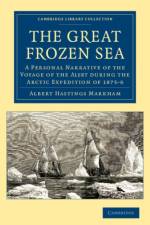
Sir Albert Hastings Markham (1841-1918) was a British Admiral and Arctic explorer. He joined the Royal Navy at fifteen and after postings in China, the Mediterranean and Australia he was promoted to Commander in 1872. For the next six years he took part in Arctic exploration, later writing fascinating accounts of his experiences. He was appointed as Naval Aide-de-Camp to Queen Victoria in 1888, and in 1903 he received a knighthood and was promoted to admiral. Published in 1878, this is the first of several editions of Markham's fascinating first-hand account of the British Arctic expedition of 1875-6. It describes the first passage through Nares Strait, named after the expedition's leader George Nares, and the intrepid dog-sled journey ,led by Markham, that took the party further north than any previous Arctic explorers. Nares' own account of the voyage is also reissued in this series.
Bath physician Joseph Hume Spry (c.1779-1859) was concerned that the popular practice of 'taking the waters' had fallen out of favour. In 1822 he produced this treatise extolling the healing properties of Bath's waters, supported by his own case notes and the writings of other physicians. He claimed that manifold afflictions, ranging from gout to indigestion, could be eased by drinking or bathing in these mineral-rich waters. In addition to offering careful instructions for treating each ailment, Spry's book includes a chapter on Bath's history, detailed descriptions and a sketch of the Roman baths, and a summary of the authors who had previously described the baths, from Solinus in the third century to Spry's contemporaries. Opening the work with a supplicating dedication to one of Bath's wealthy patrons, Charles Herbert Pierrepont, second Earl Manvers, Spry also used the book to appeal for the much-needed restoration of the Roman baths.
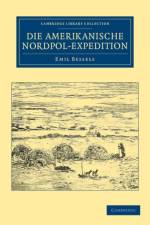
The German surgeon and explorer Emil Bessels (1847-88) was head of the scientific team on the American-sponsored Polaris Expedition, which in 1871-3 made an unsuccessful attempt to reach the North Pole. Some of the crew spent months adrift on an ice floe and others were marooned in Greenland. Astonishingly, they survived, but much of the expedition's scientific research remained unpublished as a result of financial wrangling. This 1879 publication is a popular account of the journey, with a substantial scientific appendix based on the expedition papers and additional data shared with Bessels by Sir George Nares. It describes the expedition's landfalls from Newfoundland to Greenland, and experiences, including temperatures so low that mercury froze, hunting for polar bears and seals for food, and the help provided by the local Inuit, whose language, traditions and burial customs Bessels outlines. The book also contains over eighty illustrations, mostly woodcuts.
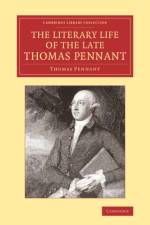
The humorously self-styled 'late' Thomas Pennant (1726-98) published this short autobiographical survey in 1793. A prominent Welsh naturalist and antiquary, he was known more for his energy and meticulous methodology than for original scientific genius. Yet he helped popularise natural history with beautifully illustrated works such as his History of Quadrupeds, the third edition of which is also reissued in this series. Moreover, he is credited with preserving thorough records of antiquities that were later damaged or destroyed. Samuel Johnson, who toured Scotland after Pennant, praised him as 'the best traveller I ever read'. More than a mere travelogue, Pennant's Literary Life is full of delightful vignettes - his meeting with the 'wicked wit' Voltaire, his affection for his faithful servant and illustrator Moses Griffith, and his poetic critique of certain hypocritical clergy. The appendices contain several of Pennant's shorter pieces on diverse topics, from anthropology to politics.
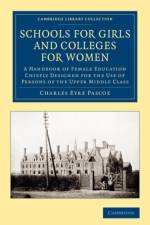
The author of handbooks that reflected the Victorian emphasis on bettering one's prospects, Charles Eyre Pascoe (1842-1912) addressed the topic of female education in this work of 1879, at a time when the Cambridge colleges of Girton and Newnham were in their infancy. 'Chiefly designed for the use of persons of the upper middle class', the guide aims to assist parents in making informed choices about their daughters' education. The coverage extends from kindergarten through to university, before focusing on career options for women in the late nineteenth century, in fields such as teaching, the arts and medicine. Throughout, Pascoe's recommendations are based on consideration of the breadth of the curriculum, the qualifications of the teaching staff and the results achieved in examinations. For higher education, details of entrance examinations are provided, together with information on the subjects and lectures that were open to women at that time.
Abonner på vårt nyhetsbrev og få rabatter og inspirasjon til din neste leseopplevelse.
Ved å abonnere godtar du vår personvernerklæring.