

Gjør som tusenvis av andre bokelskere
Abonner på vårt nyhetsbrev og få rabatter og inspirasjon til din neste leseopplevelse.
Ved å abonnere godtar du vår personvernerklæring.Du kan når som helst melde deg av våre nyhetsbrev.

A pioneering Egyptologist, Sir William Matthew Flinders Petrie (1853-1942) excavated over fifty sites and trained a generation of archaeologists. This reissue brings together two of his well-illustrated excavation reports. The first, originally published in 1891, covers his 1890 dig in Palestine at Tell el-Hesi. Although he identified it incorrectly as the biblical city of Lachish, his work here was significant in Near Eastern archaeology for the stratigraphic method of excavation and use of pottery to establish chronology. The second report, from 1906, records the work carried out at a number of Hyksos and Israelite sites in Egypt, such as Tell el-Yehudiyeh and Tell er-Retabeh. It also includes chapters by John Garrow Duncan (1872-1951) on the cemeteries of Suwa and Goshen. Each report contains a section of photographs and drawings of sites, artefacts and inscriptions. Petrie wrote prolifically throughout his long career, and a great many of his other publications are also reissued in this series.
A pioneering Egyptologist, Sir William Matthew Flinders Petrie (1853-1942) excavated over fifty sites and trained a generation of archaeologists. This excavation report, first published in 1900, documents and illustrates the findings made at the cemetery of Dendera, until then neglected by archaeologists in favour of the more famous temple site. The work includes descriptions of the tombs and a chapter by Francis Llewellyn Griffith (1862-1934) on the inscriptions. Also covered are the pottery, funereal furniture and animal catacombs. The discoveries date from the Old Kingdom right through to the Roman period. The extensive section of plates includes plans of the tombs along with drawings and photographs of the many artefacts found within. Petrie wrote prolifically throughout his long career, believing that insights gained from his digs should be shared as swiftly as possible. A great many of his other publications - for both specialists and non-specialists - are also reissued in this series.
Professor of natural philosophy at the Royal Institution between 1853 and 1887, the British physicist and mountaineer John Tyndall (1820-93) passionately sought to share scientific understanding with the Victorian public. A lucid and highly regarded communicator, he lectured on such topics as heat, light, magnetism and electricity. In this collection of eight lectures, first published in 1867, Tyndall explains numerous acoustic phenomena for a non-specialist audience. Emphasising the practical nature of scientific enquiry, he describes experiments throughout and includes many illustrations of laboratory equipment. The lectures discuss the general properties of sound, how it travels, how noise and music differ, how gas flames can produce musical notes, and much more. Several of Tyndall's other publications, from his work on radiant heat to his exploration of alpine glaciers, are also reissued in this series.
Jane Haldimand Marcet (1769-1858) wrote across a range of topics, from natural philosophy to political economy. Her educational books were especially intended for female students, to combat the prevalent idea that science and economics were unsuitable for women, but they found broader popularity: Michael Faraday, as a young bookbinder's apprentice, credited Marcet with introducing him to electrochemistry. This two-volume work, first published in 1829, is a beginner's guide to botany. Since the chief aim was accessibility, Marcet does not dwell on the often burdensome process of plant classification, but focuses on plant forms and botany's practical applications. She presents the facts in the form of simple conversations between two students and their teacher. Based on the lectures of the Swiss botanist Candolle, Volume 1 introduces roots, leaves, sap, and the effects of different soil and air.
Jane Haldimand Marcet (1769-1858) wrote across a range of topics, from natural philosophy to political economy. Her educational books were especially intended for female students, to combat the prevalent idea that science and economics were unsuitable for women, but they found broader popularity: Michael Faraday, as a young bookbinder's apprentice, credited Marcet with introducing him to electrochemistry. This two-volume work, first published in 1829, is a beginner's guide to botany. Since the chief aim was accessibility, Marcet does not dwell on the often burdensome process of plant classification, but focuses on plant forms and botany's practical applications. She presents the facts in the form of simple conversations between two students and their teacher. Based on the lectures of the Swiss botanist Candolle, Volume 2 considers agriculture and plant diseases, the cultivation of trees and culinary vegetables, and the effects of humans on flora.
Famed for his masterful oratory and fearless criticism of parliamentary opponents, William Pitt the Elder (1708-78) distinguished himself through the strong leadership he provided during Britain's struggle against France in the Seven Years' War. Edited by his great-grandsons and first published between 1838 and 1840, this four-volume collection presents nearly forty years' worth of letters to and from the great statesman. Each volume also contains a useful list of the principal officers of state for the period covered, along with facsimile plates of letters and signatures by some of Pitt's eminent correspondents. Volume 1 (1838) covers the period 1741-59, although most of the letters date from 1754 onwards. Pitt's early political career saw him launch attacks on Sir Robert Walpole, contributing to the latter's resignation in 1742. Once Pitt had himself taken up the reins of power, the annus mirabilis of 1759 marked a high point of his wartime strategy.
Famed for his masterful oratory and fearless criticism of parliamentary opponents, William Pitt the Elder (1708-78) distinguished himself through the strong leadership he provided during Britain's struggle against France in the Seven Years' War. Edited by his great-grandsons and first published between 1838 and 1840, this four-volume collection presents nearly forty years' worth of letters to and from the great statesman. Each volume also contains a useful list of the principal officers of state for the period covered, along with facsimile plates of letters and signatures by some of Pitt's eminent correspondents. Including six pre-1760 letters, Volume 2 (1838) chiefly covers the period from 1760 through to the end of July 1766. The accession of a hostile George III in October 1760 created difficulties for Pitt, which resulted in his resignation from government a year later. During his time in opposition, the Treaty of Paris concluded Anglo-French hostilities.
Famed for his masterful oratory and fearless criticism of parliamentary opponents, William Pitt the Elder (1708-78) distinguished himself through the strong leadership he provided during Britain's struggle against France in the Seven Years' War. Edited by his great-grandsons and first published between 1838 and 1840, this four-volume collection presents nearly forty years' worth of letters to and from the great statesman. Each volume also contains a useful list of the principal officers of state for the period covered, along with facsimile plates of letters and signatures by some of Pitt's eminent correspondents. Volume 3 (1839) covers the period from 1766 through to November 1770. Following Rockingham's resignation in July 1766, Pitt accepted a peerage and became the Earl of Chatham, forming a new ministry that lasted until 1768. As prime minister, he was constantly troubled by longstanding health problems.
Famed for his masterful oratory and fearless criticism of parliamentary opponents, William Pitt the Elder (1708-78) distinguished himself through the strong leadership he provided during Britain's struggle against France in the Seven Years' War. Edited by his great-grandsons and first published between 1838 and 1840, this four-volume collection presents nearly forty years' worth of letters to and from the great statesman. Each volume also contains a useful list of the principal officers of state for the period covered, along with facsimile plates of letters and signatures by some of Pitt's eminent correspondents. Volume 4 (1840) covers the period from November 1770 until Pitt's death in May 1778. Despite his retirement and deteriorating health, he continued to take an active interest in politics, writing to his many correspondents on a wide range of subjects, notably the unfolding American Revolution.
Terence's Eunuchus (The Eunuch) was his most successful play in his lifetime but has been surprisingly neglected by modern commentators. In this first ever full-scale commentary in English, Professor Barsby provides a thorough examination of the play in terms of its literary and dramatic qualities, its staging, and its relationship to the two plays of Menander's on which it is based. The commentary includes scene-by-scene discussions which bring out the development of character and plot, and the notes offer a close study of Terence's language in comparison with that of his predecessor Plautus. A full introduction puts Terence in his historical and literary context, and there are two appendices, one on metre and the other giving text and translation of the remains of Menander's Eunouchos and Kolax.
A landmark in female historiography, this work first appeared in eight volumes between 1763 and 1783. Notable for her radical politics and her influence on American revolutionary ideology, Catharine Macaulay (1731-91) drew diligently on untapped seventeenth-century sources to craft her skilful yet inevitably biased narrative. Seen as a Whig response to David Hume's Tory perspective on English history, the early volumes made Macaulay a literary sensation in the 1760s. Later instalments were less rapturously received by those critics who took exception to her republican views. Both the product and a portrait of tumultuous ages, the work maintains throughout a strong focus on the fortunes of political liberty. Volume 4 (1768) follows the course of the English Civil War from the Siege of Gloucester in 1643 through to the trial and execution of Charles I.
A landmark in female historiography, this work first appeared in eight volumes between 1763 and 1783. Notable for her radical politics and her influence on American revolutionary ideology, Catharine Macaulay (1731-91) drew diligently on untapped seventeenth-century sources to craft her skilful yet inevitably biased narrative. Seen as a Whig response to David Hume's Tory perspective on English history, the early volumes made Macaulay a literary sensation in the 1760s. Later instalments were less rapturously received by those critics who took exception to her republican views. Both the product and a portrait of tumultuous ages, the work maintains throughout a strong focus on the fortunes of political liberty. Volume 5 (1771) covers the momentous period following the execution of Charles I in 1649 through to the restoration of the monarchy in 1660.
This book follows the same successful approach as Dr Burn's previous book on number theory. It consists of a carefully constructed sequence of questions which will enable the reader, through his or her own participation, to generate all the group theory covered by a conventional first university course. An introduction to vector spaces, leading to the study of linear groups, and an introduction to complex numbers, leading to the study of Mobius transformations and stereographic projection, are also included. Quaternions and their relationship to three-dimensional isometries are covered, and the climax of the book is a study of crystallographic groups, with a complete analysis of these groups in two dimensions.
A landmark in female historiography, this work first appeared in eight volumes between 1763 and 1783. Notable for her radical politics and her influence on American revolutionary ideology, Catharine Macaulay (1731-91) drew diligently on untapped seventeenth-century sources to craft her skilful yet inevitably biased narrative. Seen as a Whig response to David Hume's Tory perspective on English history, the early volumes made Macaulay a literary sensation in the 1760s. Later instalments were less rapturously received by those critics who took exception to her republican views. Both the product and a portrait of tumultuous ages, the work maintains throughout a strong focus on the fortunes of political liberty. Volume 6 (1781) covers the reign of Charles II up to the end of the Third Anglo-Dutch War in 1674.
A landmark in female historiography, this work first appeared in eight volumes between 1763 and 1783. Notable for her radical politics and her influence on American revolutionary ideology, Catharine Macaulay (1731-91) drew diligently on untapped seventeenth-century sources to craft her skilful yet inevitably biased narrative. Seen as a Whig response to David Hume's Tory perspective on English history, the early volumes made Macaulay a literary sensation in the 1760s. Later instalments were less rapturously received by those critics who took exception to her republican views. Both the product and a portrait of tumultuous ages, the work maintains throughout a strong focus on the fortunes of political liberty. Volume 7 (1781) deals with the period following the end of the Third Anglo-Dutch War in 1674, extending to the trial and execution of Algernon Sidney in 1683.
This book shows how political argument in terms of rights and natural rights began in medieval Europe, and how the theory of natural rights was developed in the seventeenth century after a period of neglect in the Renaissance. Dr Tuck provides a new understanding of the importance of Jean Gerson in the formation of the theories, and of Hugo Grotius in their development; he also restores the Englishman John Selden's ideas to the prominence they once enjoyed, and shows how Thomas Hobbes's political theory can best be understood against this background. In general, the book enables us to understand more fully the characteristics of the natural rights theories available to the men of the Enlightenment, and thereby to appreciate the complexity and equivocal nature of modern right theories.
Bartholomaeus de Cotton, the Cellarer of Norwich Cathedral Priory, died in 1321/2. His most important work is the Historia Anglicana, written in 1292, with a few later additions. Book I, the history of Britain, taken from Geoffrey of Monmouth, was omitted by H. R. Luard from this 1859 edition. Book II, the history of England, is divided into two sections, from 455 to 1066, and from 1066 to the end of the thirteenth century. The work is most valuable for the period after 1264, as one of Cotton's sources, an anonymous Norwich chronicle, contains material not found elsewhere, and he also quotes from ecclesiastical and royal documents. Book III gives the history of the bishops and archbishops of England, mostly taken from other sources but with some useful material relating to the Diocese of Norwich. A glossary is provided.
Published as part of the Rolls Series in 1861, these collected letters date mainly from 1235-53, when, as bishop of Lincoln, their author presided over the largest diocese in England. Both a scientist and a theologian, Robert Grosseteste (c.1170-1253) boasts what the medieval historian R. W. Southern describes as 'a rarely paralleled breadth of intellectual interests'. His letters are invaluably illustrative of the social conditions of the time. He writes heatedly and earnestly on such topics as the laws concerning illegitimacy, the condition of the Jews and the liberties of the Church, with a violence of opinion that was 'balanced, indeed prompted, by a deep concern for the souls of ordinary people'. Henry Richards Luard (1825-91) puts Grosseteste's writing into context in his preface, while useful summaries of each letter in the contents list, and commentary provided in the side-notes, make the Latin text accessible to modern readers.
John Capgrave (1393-1464) was the Prior of Bishop's Lynn, and the most learned Augustinian friar of his time. Although he was the author of forty-one scholarly works, only twelve survive. This work was dedicated to King Henry VI and chronicles the lives of other great Henries, including six emperors of Germany and six kings of England (including the dedicatee himself). Largely compilations of other sources, his extensive accounts demonstrate the breadth of the scholarship for which he was known. This annotated edition was commissioned as part of the Rolls Series, a project designed, in an early campaign for ease of access to scholarly material, to put more historical sources into print. Edited by F. C. Hingeston and first published in 1858, it includes Capgrave's full Latin text and a glossary, thorough biographical notes, and chapter-by-chapter summaries, offering a useful resource for students of medieval history.
Thomas of Elmham (1364-1427?) was treasurer of St Augustine's Abbey, Canterbury, when he compiled this work, which he called the Speculum Augustinianum, around 1414. He planned to give a complete history of the Abbey, and the chronological table covers the period from 597 to 1414, but the main text ends in 806, with a collection of documentary sources from the period 1066 to 1191 appended. His failure to complete the work was probably due to his appointment as Prior of the Cluniac House at Lenton in Nottinghamshire. Elmham made great use of documentary sources in the Abbey's famous library, reproducing and editing original charters, as well as using the work of earlier historians of the House, though, unfortunately, many of the sources he uses were forgeries or corrupt transcripts, produced to support the Abbey's claims to royal and ecclesiastical privileges. This edition by Charles Hardwick was published in 1858.
Written c.1290, this chronicle follows the pattern of similar texts in recording historical events through using earlier sources; but, by adapting and editing what he chose to include, the author produced a unique work. He is able to provide greater depth and detail to the descriptions of events closer to his own time, yet the text finishes abruptly in a passage concerning the contemporary theologian Robert of Winchelsea. Published in the Rolls Series in 1859, the work was edited by Henry Ellis (1777-1869), the librarian of the British Museum. Topics covered in the chronicle include Henry II's crowning of his eldest son as 'Henry III', and their joint rule until the latter rebelled against his father; the 'extreme cruelty with which the Jews were treated in England'; and 'an occurrence which continued ... to our own time, namely, the inundation of Westminster Hall by the River Thames'.
An author of educational works intended especially for young women, Jane Haldimand Marcet (1769-1858) sought to combat the notion that technical topics were unsuitable for female students. Inspired by conversations with the famous scientists she entertained, she wrote textbooks in the lively form of discussions between a teacher and her two female pupils. Published anonymously at first, they found broad popularity: Michael Faraday, as a young bookbinder's apprentice, credited Marcet with introducing him to electrochemistry. The present work, an introduction to physics, astronomy and the properties of matter, sound and light, was Marcet's first, though it remained unpublished until 1819. Her other works include Conversations on Chemistry (1805), Conversations on Political Economy (1816) and Conversations on Vegetable Physiology (1829), all of which are reissued in this series. Never professing to be original, Marcet's work is noted nonetheless for its thoroughness and clear presentation of concepts.
This reissue contains two works by the botanist Maria Elizabetha Jacson (1755-1829), a Cheshire clergyman's daughter. Her interest in science, and especially botany, may have been encouraged by a family connection with Erasmus Darwin, but it was not until she was in her forties that domestic circumstances drove her to professional writing. In 1797 she published Botanical Dialogues, between Hortensia and her Four Children, an introduction to the Linnaean system for use in schools. This technically rather demanding work was recast for adults in 1804 as Botanical Lectures: 'a complete elementary system, which may enable the student of whatever age to surmount those difficulties, which hitherto have too frequently impeded the perfect acquirement of this interesting science'. The more practical Florist's Manual (1816) was aimed at female gardeners, offering advice on garden design and the war against pests as well as notes on plants and cultivation.
Remembered for devising the measure of wind speed that bears his name, the naval officer and hydrographer Sir Francis Beaufort (1774-1857) also had a hand in the production of more than a thousand nautical charts over the course of his career. In 1810 he had been appointed to command the frigate Frederikssteen by the Lords Commissioners of the Admiralty. His mission was to explore 'Karamania', a contemporary European term for the shores of southern Turkey. For two years Beaufort charted the coastline and investigated its classical ruins before his work was brought to an end in 1812 by a Turkish attack which left him wounded. Returning to England, Beaufort set about drawing up the charts of his survey and documenting his findings, publishing this work in 1817, complete with engraved maps and plates. Experts and laypeople received the book favourably, as it shed much light on an underexplored region.
The Franciscan Roger Bacon (c.1214-92?) was one of the most significant intellectuals of the thirteenth century. His most important work was the Opus Majus of 1267 (also available in this series). The works included in this volume, edited by J. S. Brewer, had not previously been published, and only one volume of the unpublished works ever appeared, because of Brewer's other commitments. The Opus Minus was a precis of the larger work, written at the same time. The Opus Tertium, written the following year, was Bacon's attempt to cover topics which he felt had been omitted, or inadequately explained, in the previous versions; it also includes autobiographical information. Neither the Opus Minus or Opus Tertium survive in their entirety, but Brewer includes all the parts known in 1859. The Compendium Philosophiae deals with Bacon's wide-ranging intellectual interests in all aspects of medieval scholarship.
It is a peculiarity of Cambridge that in one of the principal streets, Trumpington Street, there is a runnel of fresh water, called Hobson's Conduit, on either side of the road (a similar stream in St Andrew's Street was covered over in the 1990s.) These streams form part of a system of water supply named after Thomas Hobson (1545-1631), the Cambridge carrier, from whom we get the expression 'Hobson's Choice', and for who the young John Milton wrote two verse epitaphs, reproduced in this work. For 250 years, Hobson's Conduit provided the principal supply of drinking water for the centre of the city, after Andrew Perne (1519-89), Vice-Chancellor of the University, persuaded a number of patrons, including Hobson, to subscribe towards the project. First published in 1938, this history of Cambridge's ancient urban watercourse was written by W. D. Bushell, one of the trustees of the Hobson's Conduit Trust.
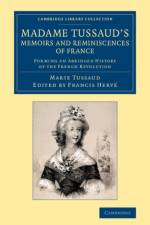
As a younger woman, Anna Maria 'Marie' Tussaud (1761-1850) rubbed shoulders with many of the key figures of the French Revolution, sculpting in wax the likes of Louis XVI, Marie Antoinette, Marat and Robespierre. After moving to Britain, she made her living by exhibiting her sculptures in numerous towns and cities. In 1835 she settled in London and opened her museum, which became one of the city's most popular attractions. Initially reluctant about releasing her memoirs, Madame Tussaud was convinced by her editor Francis Herve (1781-1850) that her unique position - of seeing first-hand the events and characters that drove the Revolution, while maintaining a generally non-partisan view of them - would make the book of real interest to the public. First published in 1838, it offers evocative eyewitness insights into one of the defining periods in modern European history.
John William Donaldson (1811-61), though somewhat unorthodox in his methods, was an important, if controversial, figure in the development of comparative philology. In this 1844 publication, he attempts to supply young English scholars of Latin with an introductory guide to Latin philology by outlining the origins of the Roman people and, through this, explaining the foundational structures of the Latin language and how they gave rise to Classical Latin. Epigraphic evidence, drawn from the Twelve Tables in particular, is examined as part of the enquiry into Old Latin, and other Italic languages such as Umbrian, Oscan and Etruscan are considered as part of the development of a more standardised Latin language. Although many of the conclusions Donaldson draws are based on limited evidence, the book remains an interesting specimen of early comparative philology. His earlier work on Greek, The New Cratylus (1839), is also reissued in this series.
Akbar the Great (1542-1605) is often regarded as the Mughal Empire's most accomplished ruler. This document on the workings of his empire was produced by Akbar's vizier, Abu'l-Fazl ibn Mubarak (1551-1602). Between 1783 and 1786, the scholar Francis Gladwin (1744/5-1812) produced an English translation from the original Persian. Reissued here is the two-volume edition that appeared in 1800. As the work's dedicatee and Governor-General of Bengal, Warren Hastings had seen the translation as illuminating the Mughal Empire's 'original constitution' and believed it would educate and inform Britain's colonial administrators. Gladwin's text would not be superseded for many decades, and it testifies to the quality of his scholarship and the contemporary concerns of the East India Company. Volume 1 explains the workings of the royal household and military offices, including details of the mint, treasury and harem, as well as building regulations.
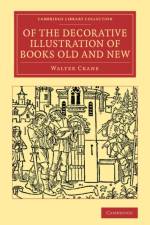
Published in 1896 at the peak of his career, this work by Walter Crane (1845-1915) was developed from a series of lectures given to the Society of Arts in 1889. Although chiefly remembered as an illustrator of books for children, Crane was a versatile and knowledgeable artist and designer. His practical experience with book illustration and printing methods gives this text the weight of considerable authority. A prominent figure in the Arts and Crafts movement alongside William Morris, he demonstrates here his understanding of historical techniques of illustration since the medieval period. Drawing parallels across the ages, Crane notes in particular how Arts and Crafts aesthetics influenced book illustration in the late Victorian era. Featuring copious reproductions of illustrations ranging in date, style, technique and sophistication, this work reflects Crane's artistic ethos through the exploration of many examples of exquisite craftsmanship.
Abonner på vårt nyhetsbrev og få rabatter og inspirasjon til din neste leseopplevelse.
Ved å abonnere godtar du vår personvernerklæring.