






Gjør som tusenvis av andre bokelskere
Abonner på vårt nyhetsbrev og få rabatter og inspirasjon til din neste leseopplevelse.
Ved å abonnere godtar du vår personvernerklæring.Du kan når som helst melde deg av våre nyhetsbrev.

This is the first collection of the writings of Edmund Burke which precede Reflections on the Revolution in France, and the first to do justice to the connections and breadth of Burke's thought. A thinker whose range transcends formal boundaries, Burke has been highly prized by both conservatives and liberals, and this new edition charts the development of Burke's thought and its importance as a response to the events of his day. Burke's mind spanned theology, aesthetics, moral philosophy and history, as well as the political affairs of Ireland, England, America, India and France, and he united these concerns in his view of inequality. In the writings in this edition Burke indicated how societies embodying revealed religion and social hierarchy could sustain civilisation and political liberty. These thoughts reached their apogee in Reflections on the Revolution in France. This edition provides the student with all the necessary information for an understanding of the complexities of Burke's thought. Each text is prefaced by a summary and notes to the texts elucidate the literary and historical references. An introduction and biographical and bibliographical essays help place these works in the context of Burke's thought as a whole.
John Milton was not only the greatest English Renaissance poet but also devoted twenty years to prose writing in the advancement of religious, civil and political liberties. The height of his public career was as chief propagandist to the Commonwealth regime which came into being following the execution of King Charles I in 1649. The first of the two complete texts in this volume, The Tenure of Kings and Magistrates, was easily the most radical justification of the regicide at the time. In the second, A Defence of the People of England, Milton undertook to vindicate the Commonwealth's cause to Europe as a whole.This book, first published in 1991, was the first time that fully annotated versions were published together in one volume, and incorporated a new translation of the Defence. The introduction outlines the complexity of the ideological landscape which Milton had to negotiate, and in particular the points at which he departed radically from his sixteenth-century predecessors.
The years of the first industrial revolution saw a remarkable flowering of radical social criticism in Britain. This is a study of the ideas that emerged then and of the social and intellectual conditions from which they developed. Dr Stafford begins in Part I by presenting what will be seen as a very valuable general account of the historical and cultural setting, showing how the language of social debate had been affected by intellectual developments and the increasingly rapid transformations of society. Then in Part II he discusses ten major critics of British society, from Thomas Spence to William Cobbett, who represent a wide range of political opinion from anarchism to Tory radicalism. Dr. Stafford takes a key text by each author, sets out its argument, and analyzes it both critically and historically, showing the particular influences that shaped it and revealing the ways in which the social thought of the time resembles or diverges from our own. This book will help to recover from unwarranted neglect this important tradition of writing that did much to form subsequent thinking about society. It will make a valuable contribution to the study of the literature and the social and intellectual history of the period.
This new edition of Ahmed and Spreadbury's excellent textbook Electronics for Engineers provides, like the first edition, an introduction to electronic circuits covering the early part of degree level courses in electronics and electrical engineering. The text of the first edition has been entensively revised and supplemented to bring it up to date; two entirely new chapters have been added on the subject of digital electronics. A first chapter on the general principles of signal handling in electronic circuits is followed by descriptions of amplifiers using field-effect and bipolar transistors and integrated circuit op-amps, written from the point of view of the engineering student building up a system. Subsequent chapters discuss the principles of applying negative and positive feedback in amplifiers, leading the reader to the final two chapters covering digital circuits and their applications. All chapters conclude with a solved problem followed by a number of practice questions from various universities to which answers are given. This new edition, like the first, will prove a valuable text for first and second year courses in universities and polytechnics on electronics and electrical engineering and will be useful to practising engineers and scientists who need to use analogue and digital chips in the course of their work.
Equilibrium Thermodynamics gives a comprehensive but concise course in the fundamentals of classical thermodynamics. Although the subject is essentially classical in nature, illustrative material is drawn widely from modern physics and free use is made of microscopic ideas to illuminate it. The overriding objective in writing the book was to achieve a clear exposition: to give an account of the subject that it both stimulating and easy to learn from. Classical thermodynamics has such wide application that it can be taught in many ways. The terms of reference for Equilibrium Thermodynamics are primarily those of the undergraduate physicist; but it is also suitable for courses in chemistry, engineering, materials science etc. The subject is usually taught in the first or second year of an undergraduate course, but the book takes the student to degree standard (and beyond). Prerequisites are elementary or school-level thermal physics.
Many students of physical and applied science and of engineering find difficulty in copying with the mathematics necessary for the quantitative manipulation of the physical concepts they are atudying in their main course. This book is designed to help first and second year under-graduates at universities and polytechnics, as well as technical college students, to find their feet in the important mathematical methods they will need. Throughout the text the physical relevance of the mathematics is constantly stressed and, where it is helpful, use has been made of pictorial mathematics and qualitative verbal descriptions instead of over-compact mathematical symbolism. Topics are presented in three stages: a qualitative introduction, a more formal presentation and an explicit check or worked example. There are many exercises included in the text which are aimed at testing a student's understanding and building his confidence progressively throughout each piece of work.
An elegant analysis of how animals work and function. Professor Schmidt-Nielsen's incisive account gives a clear understanding of comparative physiology in relation to body size, form and function, energy supply, and environment. The author is concerned with principles. For example, he explains how difficult it may be to lose heat and water from the respiratory tract. This leads to a consideration of the mechanism of panting as a means of heat loss. The author describes the centuries-old problem of how birds breathe, which now has been solved in his laboratory. He then discusses energy expenditure for swimming, running, and flying, and the effects of activity on heat balance. The ability of mammals to maintain different parts of the body at different temperatures is explained on the basis of counter-current heat exchange; a related mechanism permits the fast-swimming tuna to enjoy some of the advantages of being warm-blooded. The problems raised by being small in size, or large, are considered in detail. It is shown that many physiological variables can be placed on a scale which permits the derivation of non-dimensional numbers to describe the interrelations between different parameters. This interesting and stimulating account was written primarily for students, but since it brings together and synthesizes much new and up-to-date information it will interest all biologists and physiologists.
In this edition Professor Fantham offers the first full-scale commentary on the neglected second book of Lucan's epic poem on the war between Caesar and Pompey: De bello civili. Book II presents all three leading figures - Cato, Caesar and Pompey - in speech and action. It expresses the moral and political dilemma of civil war and portrays Pompey's loss of authority during his withdrawal from Italy in language designed to evoke and cancel Virgil's heroic presentation of the foundation myth of Aeneas. In her introduction, Professor Fantham gives a general account of Lucan's life and work and continues with a discussion of his narrative and interpretation of Caesar's military 'invasion' of Italy covering Books I and II, a survey of language, style and metre, and a brief history of the text. The commentary, besides supplying all necessary grammatical explanation and some assistance with translation, aims to provide the political, historical and geographical background to Lucan's epic narrative.
This book offers a variety of approaches to Zola's masterpiece, published amid considerable controversy in 1876-7. L'Assommoir (the tale of a Parisian washerwoman who after a hard life turns to drink and dies in abject poverty) is analysed as a social and political novel, as a representative work of literary naturalism, and in the context of its repercussions in the history of the novel. Professor Baguley investigates its complex and sometimes ambiguous themes, its literary structures and its technical innovativeness. He provides a synthesis of the best research and criticism of the novel together with insights into its interpretation. The biographical and historical context is given, and there is a guide to further reading.
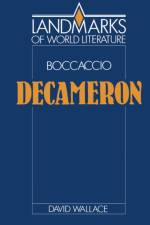
In Boccaccio's innovative text, ten young people leave Florence to escape the Black Death of 1348, and organize their collective life in the countryside through the pleasure and discipline of story-telling. David Wallace guides the reader through their one hundred novelle, which explore both new and familiar conflicts from private and public spheres of life with unprecedented subtlety, urgency and humour. He emphasises the relationship between Decameron and the precocious vitality of Florentine culture in Boccaccio's time. He also discusses gender issues and the influence of the text particularly on Chaucer and the novel.
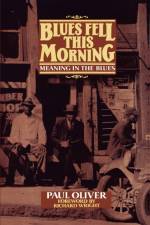
This is a new, thoroughly revised edition of Paul Oliver's classic study of the blues. First published in 1960, this remarkable book has not been superseded and its reappearance will be welcomed by all who wish to understand the complexity of meaning in the blues and the experiences which they expressed. The book examines the functions of the blues as black American folk music recorded during the 78 rpm era, from the 1920s to the 1950s. The lyrics are quoted extensively throughout the book, revealing their significance as a means of communication within black society. The author shows how the themes of labour and unemployment, migration and the Depression years, love, sex, and marriage, crime, violence and imprisonment, disasters, sickness, war and death are expressed in black idioms and he discusses their meaning on many levels.
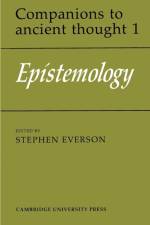
This volume deals with Epistemology. The period from the sixth century BC to the second and third centuries AD was one of the most fertile for the theory of knowledge, and the range of 'epistemic states' explored in the ancient texts is much wider than those to be found in contemporary discussions of epistemology or cognition. Greek philosophers approached these problems in a great variety of ways, from the extreme relativism of Protagoras to the scepticism of the Pyrrhonists, and the contributors demonstrate both the familiarity and novelty of this range of views in their critical essays.
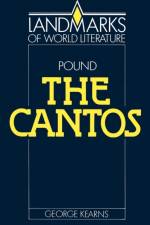
Pound's 800 page Cantos, written over a period of more than fifty years (1917-1969), invites the reader to join the poet on a journey from darkness and despair towards light and positive activity. In this book, George Kearns addresses the reader approaching The Cantos for the first time. He examines the poem's aesthetic and political-ethical-didactic dimensions and shows that despite its complexity and the many objections which can be raised to its poetics and politics, its study can be greatly rewarding.
This is a new and enlarged edition of Professor Allen's highly successful book on the pronunciation of Attic Greek in classical times. In this edition, Professor Allen has in particular revised the presentation of the controversial question of stress; the chapter on quantity has been extensively recast; and an appendix has been added on the names of the letters of the Greek alphabet. In addition to the new material, the supplementary notes of the second edition are now incorporated into the main text making this a very convenient book to use.
Professor ThorIby offers a close reading of this classic novel and explores the subtle psychology in Tolstoy's characterisation. He avoids complex terminology and assumes a readership studying the text in English translation.
This book is an introduction to psycholinguistics, the study of human language processing. It deals with the central area of this field, the language abilities of the linguistically mature, monolingual adult. It aims to be comprehensive in its coverage, dealing with both written and spoken language, and their comprehension and production, and the nature of linguistic systems and models of processing. The book is divided into two parts. Part I identifies and investigates the main contributory areas of study, concerning the nature of the language signal, the biological foundations of language (including auditory and visual systems, the organisation of language in the brain, and articulatory and manual systems), and the sources of evidence on the abstract language system. Part II reviews a number of processing models and issues, covering perception and production of speech and writing, lexical storage and retrieval, and the comprehension and production of multiword utterances. The final chapter examines the issues that arise in the context of brain damage and the consequent impairment of language processing (in aphasia and related disorders), an additional important source of evidence and area of process modelling. Psycholinguistics provides an overview of the major contemporary issues surrounding the psychological foundations of language, most of which have roots in the last decade of research. It assumes a basic grounding in linguistic theory, but it is drawn from the author's considerable experience of teaching this subject, and has thus been designed to be accessible to students of linguistics and psychology, as well as for any reader with an interest in the psychological foundations of human language. It will be an essential work for students and specialists alike.
This book challenges conventional theories about literacy, and the practices which often arise from them. It attempts to provide a new perspective through which the variety of literacy practices across different cultures can be viewed and from which the practical issues that arise in specific literacy campaigns and programmes can be approached. Dr Street first examines the explicit theories developed about literacy within different academic disciplines, on the premise that these underlie statements about literacy within development campaigns and in everyday usage. He analyses in detail arguments about the 'technical' and 'neutral' nature of literacy and its supposed 'cognitive' consequences in the work of some psychologists, linguists and social anthropologists. He claims that these amount to a coherent but flawed model that he terms the 'autonomous' model of literacy. Against this he poses an 'ideological' model, one which pays greater attention to the social structure. He attempts to bring together recent shifts in this direction in writings on literacy and to construct a coherent model for further work.
Bernard Comrie defines tense as the grammaticalisation of location in time. In this textbook he introduces readers to the range of variation found in tense systems across the languages of the world, bringing together a rich collection of illustrative material that student and specialist alike will find invaluable. This systematic account of the data is carefully integrated with a theoretical discussion of tense that is sensitive both to the range of tense oppositions found cross-linguistically and also to the constraints on that variation. For the most part the book is written without formalism, nor is it written within the framework of any specific current theory of linguistics. Nevertheless, as the final chapter makes clear, a formal theory of tense can build upon the insights gained here. For all readers, Dr Comrie's coherent and characteristically elegant account of this complex grammatical category will provide a solid basis for further research on tense, even in a language as thoroughly studied as English.
Professor Shackleton Bailey is renowned for his major scholarly editions of Cicero's letters already published by Cambridge University Press. This selection from the complete correspondence is designed specifically for students at universities and in the upper forms at schools, and offers them a representative introduction to one of the most varied and most important literary correspondences in any language. In choosing letters for inclusion the editor concentrates on Cicero as a man and writer and on his relationship with his contemporaries, but he has also included letters which deal with people and events of special significance in the turbulent political history of the period. The edition includes an introduction, the text of the letters with critical notes, and a commentary which gives help with linguistic problems as well as elucidating the historical and social background.
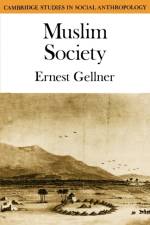
Of all the great world religions, Islam appears to have the most powerful political appeal in the twentieth century. It sustains some severely traditional and conservative regimes, but it is also capable of generating intense revolutionary ardour and of blending with extreme social radicalism. As an agent of political mobilisation, it seems to be overtaking Marxism, arid surpassing all other religions. The present book seeks the roots of this situation in the past. The traditional Muslim society of the arid zone has, in the past, displayed remarkable stability and homogeneity, despite great political fragmentation, and the absence of a centralised religious hierarchy. The book explores the mechanisms which have contributed to this result - a civilisation in which (in the main) weak states co-existed with a strong culture, which had a powerful hold over the populations under its sway. A literate Great Tradition, in the keeping of urban scholars, lived side by side with a more emotive, ecstatic folk tradition, ill tile keeping of holy lineages, religious brotherhoods and freelance saints. One tradition was sustained by the urban trading class and periodically swept the rest of the society in waves of revivalist enthusiasm; the other was based on the multiple functions it performed in rural tribal society and amongst the urban poor. The two traditions were intertwined, yet remained in latent tension which from time to time came to tile surface. The book traces the manner in which the impact of the modern world, acting through colonialism arid industrialisation upset the once stable balance, and helped the erstwhile urban Great Tradition to become the pervasive arid dominant one, culminating in the zealous arid radical Islam which is so prominent now. The argument is both formulated in the abstract and illustrated by a series of case studies and examinations of specific aspects, and critical examinations of rival interpretations.
Historical Linguistics is concerned with the process of language change through time. It investigates how and why the language of individuals, a social group or a whole 'speech community' develops in respect of its pronunciation, vocabulary and grammar. Dr Bynon regards language as essentially a dynamic phenomenon, whose character can be at best only partly understood by a static, and necessarily idealized, synchronic approach. In Part I she establishes the theoretical framework by providing a systematic survey of the three main models of language development - the neogrammarian, structuralist, and transformational generative. Examples drawn substantially from English and German, but also from classical languages, French, Welsh and a variety of others, are used to explain and compare these approaches. In Part II she turns to sociolinguistics and shows how changes within a language over a period of time, and changes brought about by contact between languages, are both indicators and agents of more general cultural developments. Accounts of bilingualism and of pidgin and Creole languages are included as well as wider-ranging examples of different kinds of borrowing such as loan words, loan translations and extensions of meaning. The student is provided with a practical and critical guide both to what has been done and what can be done to discover and verify these linguistic relationships. Designed primarily as a textbook for linguistics and philology students, this book will also be of interest to those studying English language, classics and modern languages.
A comparative general study of the problems of suffering as treated by Judaism, Christianity, Islam, Marxism, Hinduism and Buddhism.
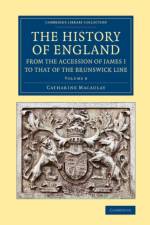
A landmark in female historiography, this work first appeared in eight volumes between 1763 and 1783. Notable for her radical politics and her influence on American revolutionary ideology, Catharine Macaulay (1731-91) drew diligently on untapped seventeenth-century sources to craft her skilful yet inevitably biased narrative. Seen as a Whig response to David Hume's Tory perspective on English history, the early volumes made Macaulay a literary sensation in the 1760s. Later instalments were less rapturously received by those critics who took exception to her republican views. Both the product and a portrait of tumultuous ages, the work maintains throughout a strong focus on the fortunes of political liberty. Volume 8 (1783) covers the final years of the reign of Charles II and the ill-fated reign of James II, concluding with a full account of the Glorious Revolution.
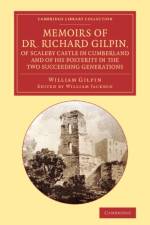
A physician and nonconformist minister who was active in the north of England, Richard Gilpin (1625-1700) was a popular preacher, leading large congregations, yet he faced opposition from Quakers and was ultimately unable to unite various dissenting factions. Including details about his descendants, the present work sets his story within the wider context of the Gilpin family history. First published in 1879, it was written in 1791 by fellow clergyman William Gilpin (1724-1804), an enlightened schoolmaster and writer on aesthetics. As well as covering his ancestors, William appends here his own life story, discussing his career as a teacher and his literary calling. He touches on his journeys during summer vacations when, with notebook and sketching materials, he would explore picturesque features of the British landscape. His volumes of Observations, based on these travels, are also reissued in the Cambridge Library Collection.
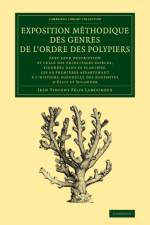
A professor of natural history at Caen and a member of the Academie des Sciences, Jean Vincent Felix Lamouroux (1779-1825) made significant contributions to the field of marine biology. Following the appearance in 1816 of his Histoire des polypiers corralligenes flexibles, he published in 1821 the present work, drawing upon John Ellis and Daniel Solander's seminal Natural History of Many Curious and Uncommon Zoophytes (1786). It divides more than 130 genera known at the time into twenty groupings. Taxonomy has progressed considerably since Lamouroux's day, yet this work, complete with eighty-four exquisitely drawn plates, serves to illuminate the contemporary understanding and classification of some remarkable marine organisms, principally those which take the form of polyps, such as corals. Moreover, a copy of this work is known to have been consulted by Charles Darwin aboard the Beagle on his famous voyage of discovery the following decade.
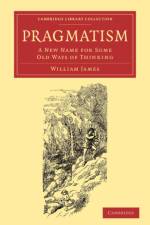
One of the great American pragmatic philosophers alongside Peirce and Dewey, William James (1842-1910) delivered these eight lectures in Boston and New York in the winter of 1906-7. Though he credits Peirce with coining the term 'pragmatism', James highlights in his subtitle that this 'new name' describes a philosophical temperament as old as Socrates. The pragmatic approach, he says, takes a middle way between rationalism's airy principles and empiricism's hard facts. James' pragmatism is both a method of interpreting ideas by their practical consequences and an epistemology which identifies truths according to their useful outcomes. Furnished with many examples, the lectures illustrate pragmatism's response to classic problems such as the question of free will versus determinism. Published in 1907, this work further develops James's approach to religion and morality, introduced in The Will to Believe (1897) and The Varieties of Religious Experience (1902), both reissued in this series.
The Scottish geologist Sir Roderick Impey Murchison (1792-1871) first proposed the Silurian period after studying ancient rocks in Wales in the 1830s. Naming the sequence after the Silures, a Celtic tribe, he believed that the fossils representing the origins of life could be attributed to this period. This assertion sparked a heated dispute with his contemporary Adam Sedgwick, ultimately ruining their friendship. First published in 1854, Siluria is a significant reworking of Murchison's earlier book, The Silurian System, which had appeared in 1839. Thorough in his approach, he combines his own findings with those of researchers around the world, touching also on the later Devonian, Carboniferous and Permian periods as well as questions of natural history. An important text in nineteenth-century geology and palaeontology, the work contains a valuable geological map of Wales along with detailed engravings of fossils, including crustaceans, cephalopods and fish.
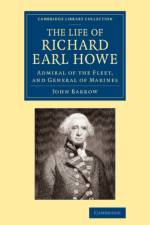
Richard, Earl Howe (1726-99) participated in some of the Royal Navy's most significant conflicts. As captain of the Dunkirk, he fired the first shots of the Seven Years' War off the eastern coast of North America in 1755. After being forced to juggle the demands of the American Revolutionary War with the British government's reluctance to put the ships he needed at his disposal, he resigned his command of the North American Station, but later made a comeback, masterminding the battle against the French on the 'Glorious First of June' in 1794. Prolific author Sir John Barrow (1764-1848) drew on more than 400 of Howe's personal letters in preparing this substantial biography, first published in 1838. Several of Barrow's other works have also been reissued in this series, including his autobiography and accounts of the early years of polar exploration.
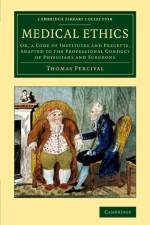
A physician and medical reformer enthused by the scientific and cultural progress of the Enlightenment as it took hold in Britain, Thomas Percival (1740-1804) wrote on many topics, but he was particularly concerned about public health issues arising from the factory conditions of the Industrial Revolution. Calling for improved standards of care, he believed that the working poor should be treated the same as wealthy private clients. Following a disastrous dispute in 1792 which closed the Manchester Infirmary's Fever Hospital during an epidemic, Percival was asked to draft regulations on professional medical conduct. In 1794 he privately circulated a tract, Medical Jurisprudence, which he later revised for this 1803 publication. Based on Hippocratic and Christian principles, Percival's work is considered the first modern formulation of doctor-patient etiquette. His Essays Medical and Experimental (revised edition, 1772-3) and the four volumes of his collected works (1807) are also reissued in this series.
Malebranche's Dialogues on Metaphysics and on Religion is in many ways the best introduction to his thought, and provides the most systematic exposition of his philosophy as a whole. In it, he presents clear and comprehensive statements of his two best-known contributions to metaphysics and epistemology, namely, the doctrines of occasionalism and vision in God; he also states his views on such central issues as self-knowledge, the existence of the external world and the problem of theodicy. His skilful handling of the dialogue form enables the reader to see how he responds to objections made to his earlier work The Search after Truth. This edition presents a translation of the text which is clear, readable and more accurate than any of its predecessors, together with an introduction that analyses Malebranche's central teachings and explains the importance of the Dialogues in the context of seventeenth-century philosophy.
Abonner på vårt nyhetsbrev og få rabatter og inspirasjon til din neste leseopplevelse.
Ved å abonnere godtar du vår personvernerklæring.