



Gjør som tusenvis av andre bokelskere
Abonner på vårt nyhetsbrev og få rabatter og inspirasjon til din neste leseopplevelse.
Ved å abonnere godtar du vår personvernerklæring.Du kan når som helst melde deg av våre nyhetsbrev.

A three-volume essay writing course for students in American English. Academic Writing Skills 2 takes students through a step-by-step process of writing expository, argumentative, and compare and contrast essays. It is appropriate for students wishing to focus on specific essay types that require the use and integration of sources to complete academic writing tasks.
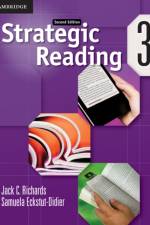
Strategic Reading is a three-level series designed to develop reading, vocabulary-building, and critical-thinking skills. Strategic Reading Level 3 is a reading skills book that contains twelve thematic units, each with three high interest authentic readings. The readings are unsimplified and are appropriate for students at the low-advanced to advanced level. Exercise material surrounding the readings builds students' vocabulary and develops their reading and critical thinking skills.
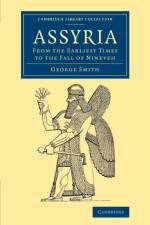
The Assyriologist George Smith (1840-76) was trained originally as an engraver, but was enthralled by the discoveries of Layard and Rawlinson. He taught himself cuneiform script, and joined the British Museum as a 'repairer' of broken cuneiform tablets. Promotion followed, and after one of Smith's most significant discoveries among the material sent to the Museum - a Babylonian story of a great flood - he was sent to the Middle East, where he found more inscriptions which contained other parts of the epic tale of Gilgamesh. In 1875, he published a history of Assyria for the 'Ancient History from the Monuments' series. Using biblical accounts as well as the Akkadian documents in clay and stone then being excavated in the area, Smith traces the history of the Assyrian empire from its origins until the fall of Nineveh in 612 BCE. Several other books by Smith are also reissued in this series.
Nice Talking with You is a two-level oral communication series designed to get students talking. Nice Talking with You Level 2 is designed for elementary and pre-intermediate students. It contains 12 topic-based units and two review units. Topics in Level 2 relate to the equivalent units in Level 1, and include Going out, Fashion, Learning, Experience abroad, Health, and Careers. Practical conversation strategies are introduced in each unit and recycled in later units. Examples of strategies featured in Nice Talking with You Level 2 are: introducing a new idea; making, accepting and declining invitations; changing the focus of a topic; and making an inference.
Nice Talking with You is a two-level oral communication series designed to get students talking. Nice Talking with You Level 1 is designed for false beginner students. It contains 12 topic-based units and two review units. Topics include Shopping, Music, Travel, Free time, and Work. Practical conversation strategies are introduced in each unit and recycled in later units. Examples of strategies featured in Nice Talking with You Level 1 are beginning and ending a conversation, showing interest, getting time to think, agreeing, and disagreeing.
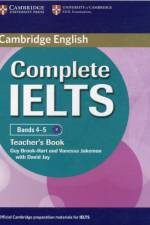
Complete IELTS combines the very best in contemporary classroom practice with stimulating topics aimed at young adults wanting to study at university. Complete IELTS Bands 4-5 prepares students for the IELTS test at B1 (foundation level). It is designed to introduce students to the critical thinking required for IELTS and provide strategies and skills to maximise their score. The information, practice and advice contained in the course ensure that they are fully prepared for all parts of the test. The Teacher's eBook contains detailed teacher's notes with advice on classroom procedure as well as extra teaching ideas and answer keys. There are also extra printable materials including class activities, progress tests and vocabulary extension wordlists.
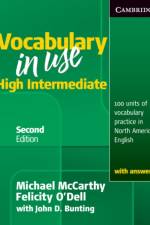
A three-level vocabulary series for both self-study and classroom use. Now with a revised edition for each level, this best-selling series has been fully updated to give students the support they need to master more than 7,000 words and phrases in American English. Following the popular in Use format, new language is taught in manageable two-page units with presentation of vocabulary on the left-hand page and innovative practice activities on the right. Suitable for self-study or classroom use, the books are informed by the Cambridge International Corpus to ensure vocabulary taught is useful, up-to-date, and presented in a natural context. Additional activities for extra vocabulary and listening practice are available on the companion website. Firmly based on current vocabulary acquisition theory, this series promotes good learning habits and teaches students how to discover rules for using vocabulary correctly. The High Intermediate level teaches approximately 3,500 vocabulary items.
A three-level vocabulary series for both self-study and classroom use. Now with a revised edition for each level, this best-selling series has been fully updated to give students the support they need to master more than 7,000 words and phrases in American English. Following the popular in Use format, new language is taught in manageable two-page units with presentation of vocabulary on the left-hand page and innovative practice activities on the right. Suitable for self-study or classroom use, the books are informed by the Cambridge International Corpus to ensure vocabulary taught is useful, up-to-date, and presented in a natural context. Additional activities for extra vocabulary and listening practice are available on the companion website. Firmly based on current vocabulary acquisition theory, this series promotes good learning habits and teaches students how to discover rules for using vocabulary correctly. The Intermdiate level teaches approximately 2,500 vocabulary items.
A three-level vocabulary series for both self-study and classroom use. Now with a revised edition for each level, this best-selling series has been fully updated to give students the support they need to master more than 7,000 words and phrases in American English. Following the popular in Use format, new language is taught in manageable two-page units with presentation of vocabulary on the left-hand page and innovative practice activities on the right. Suitable for self-study or classroom use, the books are informed by the Cambridge International Corpus to ensure vocabulary taught is useful, up-to-date, and presented in a natural context. Additional activities for extra vocabulary and listening practice are available on the companion website. Firmly based on current vocabulary acquisition theory, this series promotes good learning habits and teaches students how to discover rules for using vocabulary correctly. The Basic level teaches approximately 1,200 new vocabulary items.
First published in 1882, this clearly written account, accessible to non-specialists, is one of the principal works of the pioneering Celtic scholar Sir John Rhys (1840-1915). The son of a Welsh farmer and lead miner, Rhys went on to become the first professor of Celtic at the University of Oxford, principal of Jesus College, and a fellow of the British Academy. Knighted in 1907, Rhys had by then made significant contributions to the study of Celtic languages, travelling widely and examining many inscriptions at first hand. Here he covers Celtic etymology, ethnology and history in Britain from the time of Julius Caesar to the eleventh-century Scottish kingdoms. His Lectures on Welsh Philology (1877) and Celtic Folklore: Welsh and Manx (1901) are also reissued in the Cambridge Library Collection. For the study of Celtic language, culture and mythology, the importance of Rhys's research is still acknowledged today.
The first career of Robert Sweet (1783-1835) was as a gardener in private employment and as a nurseryman. He turned in 1826 to botanical writing, having already published Hortus suburbanus Londinensis (1818), and the first of the five-volume Geraniaceae (1820-30). The first edition of this work was published in 1826, and this revised second edition in 1830. Sweet uses Jussieu's 'natural' system of classification, but concedes that 'we still consider the addition of the Linnaean classes and orders, of great use, as they are so readily attained by the young Botanist'. He provides nine two-column closely packed pages of source works in which images of the plants cited in this unillustrated work can be found, and which also testify to the breadth of his own research in producing a reference work which is comprehensive as a record of plants then growing and flowering in British gardens.
The amateur scientist George John Singer (1786-1817) worked in the family business of artificial flower and feather making, but all his spare time was absorbed in the study of electricity and electromagnetism. He invented his own apparatus, including a gold-leaf electrometer, and built a laboratory-cum-lecture room at the back of his house: his public demonstrations were attended by Faraday and Francis Ronalds, and he was also a friend of the pioneering 'electrician' Andrew Crosse. This significant book, published in 1814, demonstrates the breadth of Singer's knowledge of his subject and of other contemporary work in the field. It describes in detail electric phenomena, in nature and in the laboratory, covering a wide range of experiments with and applications of electricity, and discussing the work of Franklin, Volta, Crosse and Dalton, among others. Sadly, Singer's promising scientific career was brought to an early end by tuberculosis: he died aged only thirty-one.
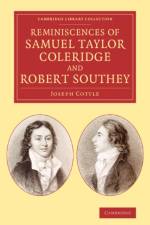
Published in 1847 by Joseph Cottle (1770-1853), this work recounts his relationship with Coleridge and Southey, whom he first met in 1794 as a successful bookseller in Bristol. Cottle went on to finance a number of the Romantic poets' publications, including Wordsworth and Coleridge's Lyrical Ballads (1798), which is seen as marking the start of Romanticism. A reworking of Cottle's controversial Early Recollections (1837), Reminiscences was criticised upon publication for being exaggerated and misleading, coloured by the breakdown of the author's friendship with the poets, as well as revealing information about disputes, moneylending and Coleridge's opium addiction. In spite of its shortcomings, the work gives a uniquely valuable insight into the lives and characters of the Romantic poets by a member of their inner circle. Cottle's memoir has much to reveal about the poets' private lives and artistic influences during a key moment in the Romantic period.
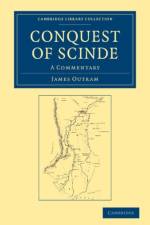
This work by Sir James Outram (1803-63), subtitled A Commentary and originally published in two parts in 1846, is an attempt by the author to vindicate his reputation which, he believes, was sullied by Sir William Napier's book The Conquest of Scinde (1845; also reissued in this series), in which he is represented as devoid alike of military and diplomatic skill. (William Napier was the brother of Sir Charles Napier, the British Commander-in-Chief in India, and his account is not unbiased.) In Part 1, Outram declares his intention to expose these misrepresentations and to vindicate a reputation which for a quarter of a century he had 'maintained unimpeached'. He claims to corroborate his version of events using personal correspondence, describing in detail and in the first person the political and diplomatic intrigues and the military actions which led to the conquest of the Province of Sindh by the British.
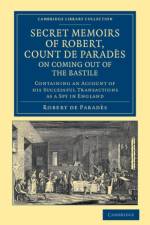
Little is known of the true origins of the French adventurer Victor-Antoine-Claude Robert, Count de Parades (1752-86). He arrived in Paris in 1778, just as the Franco-American alliance, which guaranteed French military support to the United States against Great Britain, was being signed. Parades was determined to join the French Army, but lacking the connections to do so, offered his services as a spy. He travelled repeatedly to England, visiting ports and fortifications to gather confidential information. First published in 1791, this work provides a detailed account of Parades' adventures and misfortune. Written while he was jailed in the Bastille, the book denounces the corruption of ministers who wrongly accused him of state treason after the failure of the 1779 Franco-Spanish 'Armada' against Plymouth. A fascinating historical document, it sheds light on the political relations between France and England during the American War of Independence.
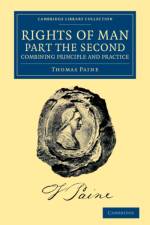
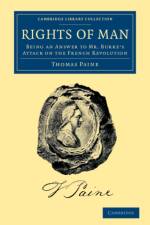
A major actor in the American Revolution, English intellectual Thomas Paine (1737-1809) is remembered especially for his pamphlet Common Sense (1776; also reissued in this series), which advocates America's independence from Great Britain. A dedicated radical, Paine went on to lend his support to the French Revolution. In 1791, he published Rights of Man in response to Burke's Reflections on the Revolution in France (1790), a condemnation of the events in France. First published in 1792, this book is a continuation of Rights of Man. While the first volume was a passionate rebuttal of Burke's argument, this book - reissued here in its second edition - develops concrete measures for political reform, proposing novel concepts such as political representation and tax reform to benefit the poor. Widely circulated because of its low price, the book proved immensely influential, and resulted in indictments for seditious libel for Paine and his editor.
A major actor in the American Revolution, English intellectual Thomas Paine (1737-1809) is remembered especially for his pamphlet Common Sense (1776; also reissued in this series), which advocates America's independence from Great Britain. An immediate best-seller, it sold over 100,000 copies in three months. Paine was a dedicated reformer who also lent his support to the French Revolution. First published in 1791, this book was sparked by the publication of Edmund Burke's Reflections on the Revolution in France (1790), a direct condemnation of the French uprising; and the fourth edition of this remarkable contribution to political philosophy is reissued here. In a passionate rebuttal of Burke's position, Paine argues that revolution is legitimate against a government that fails to protect its people and their essential rights. Extremely influential in its own day, this book develops a critique of authoritarian governments that remains relevant today.
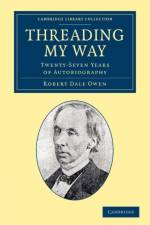
Robert Dale Owen (1801-77) was a social reformer and politician who emigrated to the United States in 1825. He was elected to the US House of Representatives in 1842, and appointed US Minister at Naples in 1853. He was the author of political pamphlets, as well as books inspired by spiritualism, such as Footfalls on the Boundary of Another World (1860; also reissued in this series). First published in 1874, this autobiography focuses on Owen's early life, beginning with the history of his family before his birth. As well as Owen's childhood in New Lanark, it documents the beginnings of the experimental community set up by Robert Owen, the author's father, in New Harmony, Indiana. Owen, who emigrated to the United States to help his father in this project, tells of his own experience of communal life, and sheds light on an early example of Utopian socialism.
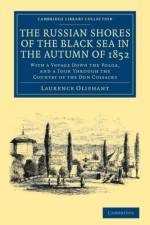
The British diplomat and writer Laurence Oliphant (1829-88) was the author of travel diaries and novels, including the very successful Piccadilly (1870). A keen traveller, he worked as a correspondent for The Times during the Franco-Prussian War (1870-1) and served as Secretary to British Diplomat Lord Elgin in Canada, China and Japan. This book is a narrative of the journey Oliphant made to Russia as a young man, with his friend Oswald Smith. Its publication in 1853 coincided with the beginning of the Crimean War, turning the book into an immediate success. From the splendour of mid-nineteenth-century St Petersburg, to the annexation of the Crimea, and the international consequences of Russian foreign policy for Europe, this illustrated book is also full of witty anecdotes and captivating descriptions. Very influential in its time, it remains an important resource for cultural and political historians.
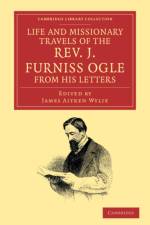
The Reverend John Furniss Ogle (1823-65) was an academic, a Church of England clergyman and a committed missionary. Born into a wealthy religious family and educated at Cambridge, he worked as a tutor and minister before undertaking missions in the Falkland Islands, Europe and Africa. First published in 1873, this collection of Ogle's letters was compiled shortly after his death at sea during a mission to Algeria. Interspersed with detailed commentary by the book's editor, the Reverend James Aitken Wylie (1808-90), the letters trace Ogle's early childhood, his studies at Cambridge, his embarking on a religious life, and his determined missionary enterprises. They offer a revealing insight into life in nineteenth-century Europe and Africa, and portray Ogle as humble man, dedicated to his pursuits and to the welfare of others.
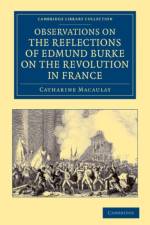
Catharine Macaulay (1731-91) is considered to have been the first female historian. Her eight-volume History of England (1763-83) and her radical views brought her considerable fame in eighteenth-century England. She was a political activist in favour of parliamentary reform, and wrote several political pamphlets on the subject. She also wrote the feminist work Letters on Education (1790), which argues for the equal education of men and women and is thought to have been influential upon Mary Wollstonecraft. Macaulay supported both the American Revolution and the French Revolution and saw them as moves towards equality and liberty. This political pamphlet, first published in 1790, was written in support of the French Revolution and against Burke's Reflections on the Revolution in France. It is a passionate polemic that challenges Burke's interpretation of British history. It remains an important work in the history of political philosophy.
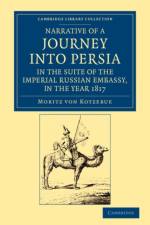
Moritz von Kotzebue (1789-1861), son of the German dramatist and an experienced seaman and soldier, who had faced Bonaparte's troops on the battlefield, travelled to the court of Fath Ali Shah Qajar (1772-1834), the king of Persia, with a Russian embassy in 1817. His account of the journey was published in German in 1819, and an English translation was published in the same year, claiming to offer a different perspective from the ordinary run of British writings on Persia. Covering the journey from St Petersburg through the Caucasus and down to Soltaniyeh, where the embassy meets the Shah, the work is a compilation of day-to-day observations on people and events. The author is astute and witty, and the book is not only an interesting read but also a useful source for the region's social history; a lengthy description of the Shah's court is particularly impressive.
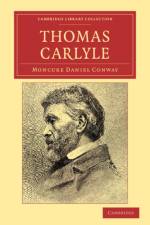
Moncure Daniel Conway (1832-1907), the son of a Virginian plantation-owner, became a Unitarian minister but his anti-slavery views made him controversial. He later became a freethinker, and following the outbreak of the Civil War, which deeply divided his own family, he left the United States for England in 1863. He gained a reputation as the 'least orthodox preacher in London', and was acquainted with many figures in the literary and scientific world, including Charles Dickens and Charles Darwin. This memoir of Thomas Carlyle, another friend, was published in 1881 soon after Carlyle's death. Carlyle had not wanted to be the subject of a biography, and reluctantly authorised J. A. Froude to write one, but Conway rushed into print this somewhat hagiographical account because he was concerned, with reason, about the damage Froude's frank biography (published in 1882-4 and also reissued in this series) might do to Carlyle's reputation.
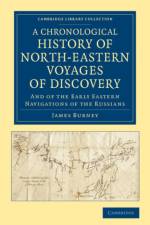
Rear-Admiral James Burney (1750-1821), brother of the novelist Fanny Burney and son of the musicologist Dr Charles Burney, is best known for his five-volume compilation of voyages in the Pacific Ocean (also reissued in this series). He began his maritime career at the age of ten, as a captain's servant. Five years later he became a naval officer, and from 1772 to 1780 served on Cook's second and third voyages to the South Seas. Following his forced retirement in 1784, he turned to his second career as an author. Published in 1819, this work summarises nine hundred years of exploration of the coastline from Northern Europe to North-East Asia, from the Norse chieftain Ochter's voyage around the North Cape in 890 CE to Captain Billings' 1790 expedition to the Aleutian Islands. He concludes with a detailed discussion of the search for a passage between the Atlantic and Pacific Oceans.
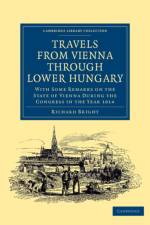
Richard Bright (1789-1858), pioneer in research on kidney disease, fellow of the Royal College of Physicians and Physician-Extraordinary to Queen Victoria, describes his observations while travelling in Eastern Europe in this book, first published in 1818. He had set off to witness the closing stages of the Congress of Vienna in 1814, and having spent the winter observing the various heads of state, courtiers and politicians, he decided to travel further east, to areas little visited or understood by the British. Although full of factual details and statistics, the book also pays attention to subjects such as the importance of agriculture in an area little touched as yet by the Industrial Revolution, and Gypsies, who greatly intrigued Bright. An appendix contains ten pieces covering a variety of topics, including the coronation of Joseph I as King of Hungary in 1687, and a comparative vocabulary of Gypsy words.
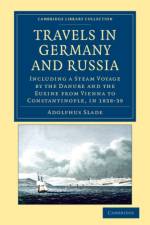
Sir Adolphus Slade (1804-77), British naval officer and author, documents his experiences crossing Europe to Turkey in these detailed and richly worded travel journals. Having joined the Royal Navy at a young age, he was promoted to Lieutenant in 1827. Subsequently, he was posted on several missions to Turkey and Greece, in between which he would take the opportunity for personal travel and writing. This is one among several works recording his travels across Europe; he was later appointed administrative head of the Turkish Navy (his history of the Crimean War is also reissued in this series). This collection of accounts, first published in 1840, has a remarkably broad scope. Slade covers peculiarities and specificities of tradition, landscape, class, politics and architecture, often describing encounters with individuals. He draws comparisons with England, presenting the reader with a double cultural insight in a fascinating example of nineteenth-century travel writing.
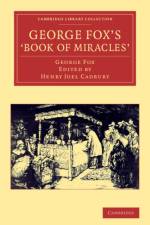
George Fox (1624-91), founder of The Religious Society of Friends (or Quakers), was well known during his lifetime as a healer and worker of miracles. He wrote prolifically of how he used God's power to effect over one hundred and fifty cures, of both physical disease or injury and mental or psychological problems. This work was critical to spreading the word about Quakerism in its early years. Many of Fox's papers were lost after his death, but from the clues and fragments that remained, and a contemporary index of his works, Henry Cadbury (1883-1974) was able to create this book, published in 1948. The preface make clear that this was not intended as a work of critical analysis, though the findings are annotated with historical and documentary detail. The editor's devotion to his task is testament to the historical and spiritual significance of Fox's contribution to Quakerism.
The author of numerous popular novels, British author and poet Matilda Betham-Edwards (1836-1919) was also a dedicated Francophile. With books such as France of To-Day (1892), which describes contemporary French life to a British readership, she worked to promote a better understanding between the two nations. In recognition of her efforts, she was made Officier de l'Instruction Publique de France by the French government, and awarded several medals. In this autobiography, first published in 1898, Betham-Edwards recounts significant episodes of her life. She tells of her childhood and education, the publication of her first book in 1857, and her experiences as a female professional author, including meeting George Eliot and John Stuart Mill. Her travel narrative Through Spain to the Sahara (1868), and her editions of the writings of agriculturalist Arthur Young, are also reissued in this series.
This hugely influential work of 1861 is probably the one for which Sir Henry Maine (1822-88) is best remembered. Appointed Regius Professor of Civil Law at Cambridge when he was only twenty-five, Maine then became Reader in Roman law and jurisprudence at the Council of Legal Education, which had been established in London in 1852 by the Inns of Court, and combined this post with research and journalism. He was interested in the relationship between the law and the society that both shaped it and consented to be regulated by it, and drew on historical examples from the culture of many Indo-European societies to further his arguments on the development of law as a vital component of civilisation. Published at a time when the evolution of institutions as well as of species was a topic of widespread interest, this remains a landmark work in the intellectual history of legal studies.
William Stubbs (1825-1901), one of the leading historians of his generation, pursued his academic research alongside his work as a clergyman. He was elected Regius Professor of Modern History at Oxford in 1866 and appointed a bishop in 1884. Stubbs was a major figure in medieval English historiography, with special interests in legal and constitutional history. This work was first published in 1870. It begins with an outline of English constitutional history, which he urged should be part of the curriculum, and then presents documents from Roman times up to the thirteenth century. Eight editions followed in Stubbs' lifetime, and it became a core textbook. The ninth edition of 1913, revised by H. W. C. Davis (1874-1928), is reissued here, and contains better editions and translations of Anglo-Saxon and French texts than were available in Stubbs' lifetime, as well as some then newly discovered material and an updated glossary.
Abonner på vårt nyhetsbrev og få rabatter og inspirasjon til din neste leseopplevelse.
Ved å abonnere godtar du vår personvernerklæring.