


Gjør som tusenvis av andre bokelskere
Abonner på vårt nyhetsbrev og få rabatter og inspirasjon til din neste leseopplevelse.
Ved å abonnere godtar du vår personvernerklæring.Du kan når som helst melde deg av våre nyhetsbrev.

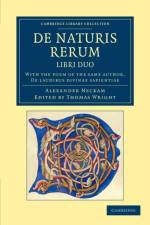
Thomas Wright (1810-77) was a highly prolific scholar of Old and Middle English and archaeology, although some of his work, particularly that on prehistory, was contentious. The present work, which he edited and published in 1863, comprises two texts by Alexander Neckam (1157-1217). The son of Richard I's foster mother, Neckam was a respected teacher and prolific scholar who became abbot of Cirencester. The larger of these texts, De naturis rerum, consists of a scientific manual followed by a theological treatise, a commentary on Ecclesiastes. Neckam later produced an abbreviated verse form of this, the second text found here. The first part of each text is a compendium of all the scientific knowledge of western Europe and England in the twelfth century, which Neckam aimed to treat morally as well as factually. In producing this edition, Wright has included the Latin marginal annotations, possibly by Neckam himself, found in his manuscript exemplars.
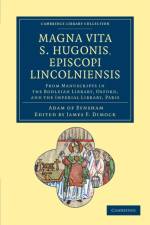
Edited by the clergyman and historian James Francis Dimock (1810-76) and published in 1864, this life of the twelfth-century St Hugh, bishop of Lincoln, by his chaplain Adam of Eynsham, is presented in the original Latin. Completed before 1220, after Hugh's death in 1200, this is a detailed portrait of the Carthusian monk, scholar and bishop, by a trusted companion, resulting in an unusually personal and lifelike depiction of Hugh's character. It is one of the last and fullest examples of hagiography from the high middle ages, and is of great interest to historians as Hugh lived through the reigns of three English kings and was personally involved in many important events. As well as reporting the day-to-day activities of a medieval bishop, the text also contains original material on the foundation of the Carthusian house at Witham, tales of marvels and miracles, and notices of public affairs.
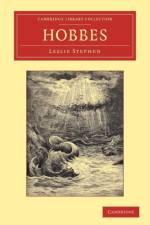
At the age of eighty-four, Thomas Hobbes (1588-1679) wrote an autobiography in Latin elegaics. Unsurprisingly, it was not as widely read as his two great philosophical works, Leviathan and Behemoth, in which he laid out a set of sociopolitical theories that enraged many of the philosophers and moralists of Europe. In this comprehensive biography, first published in 1904, Sir Leslie Stephen (1832-1904) charts the character and changes of Hobbes' thinking, from the scholasticism of his early Oxford education, to his later devotion to geometry and deductive science. With an emphasis on personal influences, Stephen sets Hobbes and his work in the historical context of Hobbes' often difficult patrons, the Civil War, and the Restoration, providing an insight into the life of the eminent philosopher and into the tenets of early twentieth-century biographical writing. An interesting text for students of both philosophy and English literature.
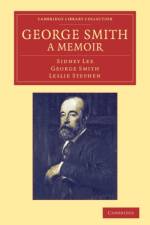
This 1902 book, originally intended for private circulation, is a memoir of George Smith (1824-1901), founder, proprietor and publisher of The Cornhill Magazine and later the Dictionary of National Biography. The small volume, compiled by Smith's wife, consists of a memoir of Smith by Sidney Lee, followed by four short autobiographical pieces that Smith wrote for The Cornhill. He recalls his years at the publishing house of Smith, Elder and Co.; his encounters with Charlotte Bronte, who stayed with the Smiths in London; his idea of founding a magazine; and the 'lawful pleasures' of court cases for libel. The final item is Sir Leslie Stephen's obituary of Smith, first published in The Cornhill. The book, illustrated with two portraits of Smith, and a photograph of his memorial tablet in St Paul's Cathedral, provides an engaging portrait of a significant Victorian publisher and man of letters.
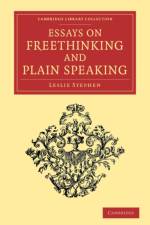
Sir Leslie Stephen (1832-1904), the founding Editor of the Dictionary of National Biography and writer on philosophy, ethics, and literature, was educated at Eton, King's College, London, and Trinity Hall, Cambridge, where he remained as a Fellow and tutor until 1864, becoming an ordained priest in 1859. Doubt concerning his religious convictions set in rapidly, although it was not until 1875 that he formally renounced his orders. First published in book form in 1873, these closely argued essays challenging the philosophy of religious doctrine were written originally for Fraser's Magazine and The Fortnightly Review. Despite its cautious reception, the work established his reputation as a leading writer on agnosticism, paving the way for his later work The Science of Ethics. His interest in eighteenth-century thinkers is reflected in this work, with chapters on Shaftesbury and Warburton, and contemporary debate is explored in the essay on Darwinism and Divinity.
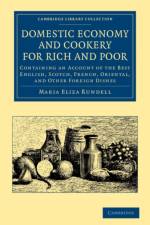
Maria Eliza Rundell (1745-1828) was a phenomenally successful cookery writer. Originally compiled for her daughters, the first edition of this work was published in 1806, with improved and illustrated editions following regularly. It became one of publisher John Murray's chief assets, but after legal disputes between author and publisher over the profits, Rundell transferred the work to Longman in 1821; by 1849 it had reached its 73rd edition. The 1827 edition is reissued here. The book was the first manual of household management which aimed at completeness, including advice on servants, shopping with economy and attention to seasonal food, hygiene, and nutrition for children and invalids. It was much imitated, although apparently not used as a source by Mrs Beeton. It is surprisingly cosmopolitan, including French, German, Turkish and Indian recipes, and is a fascinating source for social historians on standards of living and fashions in food and entertaining.
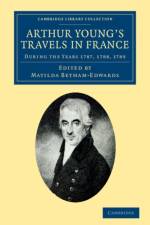
This work was first published in 1793 by the agricultural expert Arthur Young (1741-1820). In addition to farming, he describes the scenery, roads, inns, manners, and - more significantly - examples both of wealth and poverty. Despite describing some servants he encountered in an inn as 'walking dunghills', he was acutely aware of the grinding poverty of the rural poor, noting the excesses of the ruling class, and ascribing to bad government the striking differences he found between the lives of working people in France and England. Hearing of the fall of the Bastille whilst in Strasbourg, he recognised it as presaging either a new constitution or 'inextricable confusions and civil war'. This centennial edition includes an account of recent journeys made by the editor, noting the changes seen since Young's original work. The work remains one of the most fascinating and valuable sources for understanding the conditions of pre-revolutionary rural France.
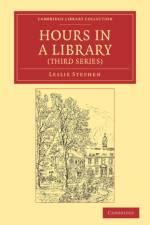
This three-volume set brings together a diverse selection of essays by Sir Leslie Stephen (1832-1904), author, philosopher and literary critic. Educated at Eton and Cambridge, he was the founding editor of the Dictionary of National Biography and father of Virginia Woolf and Vanessa Bell. He wrote critiques of many authors and works, which were published in periodicals such as the Cornhill Magazine (of which he was editor from 1871), Fraser's Magazine and the Fortnightly Review. The Third Series, first published in 1879, includes commentaries on the works of Henry Fielding, Charlotte Bronte, Charles Kingsley and Walter Savage Landor, and the poetry of William Wordsworth. Stephen sets each writer's work in its historical context, comparing it to that of other significant authors of its era and evaluating its philosophical and moral qualities. His articles remain of great interest to scholars of early modern, Romantic and Victorian literature.
This three-volume set brings together a diverse selection of essays by Sir Leslie Stephen (1832-1904), author, philosopher and literary critic. Educated at Eton and Cambridge, he was the founding editor of the Dictionary of National Biography and father of Virginia Woolf and Vanessa Bell. He wrote critiques of many authors and works, which were published in periodicals such as the Cornhill Magazine (of which he was editor from 1871), Fraser's Magazine and the Fortnightly Review. The Second Series, first published in 1876, includes commentaries on the works of Sir Thomas Browne, Samuel Johnson, Benjamin Disraeli and Horace Walpole, and the poetry of George Crabbe. Stephen sets each writer's work in its historical context, comparing it to that of other significant authors of its era and evaluating its philosophical and moral qualities. His articles remain of great interest to scholars of early modern, Romantic and Victorian literature.
This three-volume set brings together a diverse selection of essays by Sir Leslie Stephen (1832-1904), author, philosopher and literary critic. Educated at Eton and Cambridge, he was the founding editor of the Dictionary of National Biography and father of Virginia Woolf and Vanessa Bell. He wrote critiques of many authors and works, which were published in periodicals such as the Cornhill Magazine (of which he was editor from 1871), Fraser's Magazine and the Fortnightly Review. The First Series, published in 1874, includes commentaries on the works of Daniel Defoe, Samuel Richardson, Sir Walter Scott and Honore de Balzac, and the poetry of Alexander Pope. Stephen sets each writer's work in its historical context, comparing it to that of other significant authors of its era and evaluating its philosophical and moral qualities. His articles remain of great interest to scholars of early modern, Romantic and Victorian literature.
Sir James Frazer (1854-1941) is best remembered for his monumental study of ancient religion, The Golden Bough (of which the first and third editions are both reissued in this series). He also produced a translation of and commentary on the Description of Greece of Pausanias, the second-century CE traveller and antiquarian, and the first piece in this 1900 compilation of Frazer's 'sketches' is the introductory essay to that work. Short descriptions then follow of the present-day appearance of over ninety places visited by Pausanias, and the work ends with an essay on Pericles and the effect of the period of his rule on the art and architecture of Athens. This fascinating work is imbued with Frazer's enthusiasm for, and knowledge of, the topography of ancient Greece, and will be of interest not only to scholars but also to visitors to the country.
Sarah Grubb (1756-90) was the eldest daughter of William Tuke, founder of the York Retreat. The Tukes were early members of The Society of Friends, or Quakers, and in 1779 Sarah became a minister herself. In this capacity she undertook extensive travels in Britain, France, Holland and Germany, both with her husband Robert Grubb and with female companions. Although childless herself, Sarah had strong views on education and she and her husband also found time to establish Suir Island Girls' School at their home in Clonmel, Ireland. Her determined dedication to her vocation, coupled with her frequent travels, quickly exhausted her and she died at the age of only thirty-four. The journals she kept were first published in Dublin in 1792. They are presented woven together with narrative to bridge gaps, and with extensive selections from her letters, to form an account of her life and work.
The scientist Richard Lovell Edgeworth (1744-1817), educated at Trinity College, Dublin, and Oxford, was known for his significant mechanical inventions. He was a Member of the Lunar Society of Birmingham, where he exchanged ideas with other scientists, including James Watt. However, Edgeworth was also greatly interested in education: drawing on his own experiences of raising twenty children (by his four wives), in 1788 he published, with his daughter, the poet Maria Edgeworth, his famous two-volume Practical Education (also reissued in this series). The work was very influential, and led to this book, published in 1809, a series of essays on professional education (again written in co-operation with Maria), dealing with the nature of different occupations in a state. He discusses education for the professions, including the Church, the Army and the Law, but also refers to the education of statesmen, gentlemen and even princes.
Two of Jane Austen's brothers made successful careers in the Navy: Francis (1774-1865) rose to the rank of Admiral; Charles (1779-1852) to Rear-Admiral. Jane's naval heroes, most notably Captain Wentworth in Persuasion, as well as much of her knowledge of naval life and contemporary affairs during the Napoleonic Wars, owe much to the stories and letters of her brothers. Written by Francis Austen's grandson John Hubback and his daughter Edith, this double biography is informed by family tradition as well as research into contemporary documents. The Hubbacks, with their unique insight, suggest many family anecdotes and characteristics as possible sources for Jane's novels. Beyond its interest as a record of how her brothers' naval careers influenced her work, this book, first published in 1906, also remains of great interest to historians of the Navy in the first half of the nineteenth century.
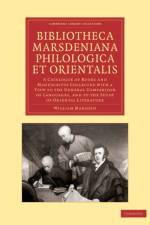
Amassed over a forty-year career, first with the East India Company in Sumatra and later with the Admiralty as its First Secretary, William Marsden's library, as revealed in this catalogue of 1827, was an invaluable collection. An expert in Asian languages, Marsden (1754-1836) published his catalogue to provide a basis for study into comparative linguistics and oriental literature. This work provides an insight into both the practice of book-collecting in the period, and the variety of works published throughout the world. It lists texts on travel, medicine and linguistics, as well as works of literature and religion, including some extremely rare Bibles, and a possibly unique copy of the Book of Genesis in the Algonquin language. The library itself was donated to King's College, London, in 1835 and is now shared by King's College and the School of Oriental and African Studies at the University of London.
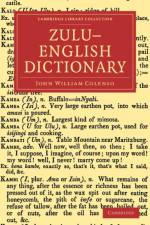
John William Colenso (1814-83) was appointed the first Bishop of Natal in 1853 and settled there in 1855. He devoted great energy to developing the diocese, overseeing the completion of the cathedral in Pietermaritzburg, the building of churches in Durban and Richmond and the establishment of mission stations. He also learned Zulu and set up a printing press. He published a Zulu grammar in 1855, within months of his arrival, and translated the New Testament into Zulu. This substantial Zulu-English dictionary appeared in 1861, with financial support from the colonial legislature. It contains over 10,000 entries, many with examples of usage, and includes loan words from European languages. The Preface provides brief notes on phonology, and explains Colenso's orthographic principles, criteria for selection, and the structure of the entries. The dictionary remained a standard work even after Colenso's death, and a fourth revised edition was published in 1905.
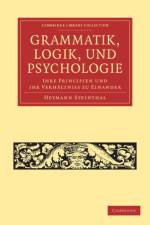
The German linguist and mythologist Heymann Steinthal (1823-99) taught at the University of Berlin (today Humboldt-University Berlin) and was especially engaged with Wilhelm von Humboldt and his linguistic works. He was a co-founder of the Berliner Gesellschaft fur Anthropologie, Ethnologie und Urgeschichte (Berlin Society for Anthropology, Ethnology and Prehistory). This innovatory volume, published in 1855, draws a connection between the disciplines of linguistics and psychology, and further relates them to the issue of logic. The three parts of the book deal with the nature of grammar, its relation to logic and the connection of grammar and linguistics to cognitive behaviour. Finally Steinthal discusses the idea of linguistics as ethnopsychology. Pursuing this concept, he, with his brother-in-law Moritz Lazarus, co-founded the journal Zeitschrift fur Volkerpsychologie und Sprachwissenschaft (Journal for Ethnopsychology and Linguistics) in 1860, thus laying the foundations for a promising new area of research.
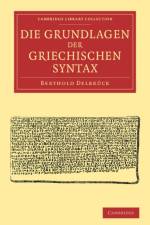
In this fourth part of his general work on syntax, published in 1879, Berthold Delbruck (1842-1922), the German scholar remembered for his contribution to the study of the syntax in Indo-European languages (his three-volume Vergleichende Syntax der indogermanischen Sprachen is also reissued in this series), concentrates on the syntax of ancient Greek. His focus is deliberately broad as he seeks to engage classicists who are interested in linguistics or in how the Greek language was actually used, rather than in highly specialised case studies. In twelve chapters, Delbruck guides the reader through the gender and case of nouns, and explains some features seen as peculiarities of Homeric Greek which in fact demonstrate its kinship as an Indo-European language with the Vedic language of the Hindu scriptures. He also covers the tenses and moods of verbs, prepositions, pronouns and particles, and word order.
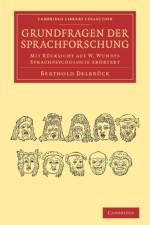
In this 1901 work, Berthold Delbruck (1842-1922), who is famous for his contribution to the study of the syntax in Indo-European languages, focuses on Wilhelm Wundt's understanding of speech. Wundt (1832-1920), often referred to as the 'father of experimental psychology', held that language was one of the most important aspects of mental processing. In order to account for Wundt's theories on the nature of the soul, and his belief that emotion and perception are acts of experience rather than objects, Delbruck compares Wundt's theories with those of psychologist and educationalist J. F. Herbart (1776-1841). Delbruck also pays attention to the explanation of such topics as the hand gestures used by actors (and the people of Naples), the sentence structure of the German language, and onomatopoeia, though he emphasises that he has not addressed those elements in Wundt's works which are founded in psychology rather than in grammar.
In 1876 the Leipzig publisher Breitkopf und Hartel launched a series on Indo-European languages entitled 'Bibliothek Indogermanischer Grammatiken'. The first three volumes covered phonology, Greek and Sanskrit. This short introduction to the comparative method, published in 1880, was the fourth. It was highly successful, with six editions appearing between 1880 and 1919. Its author, Berthold Delbruck (1842-1922), Professor of Sanskrit at Jena, was a former student of the pioneering Indo-Europeanist Franz Bopp. Delbruck expanded the horizons of the field to cover syntax as well as phonology and morphology; his magisterial studies of Sanskrit and Indo-European syntax (also reissued in the Cambridge Library Collection) appeared between 1886 and 1900. This book, designed as a guide for readers of the Breitkopf series, includes a fascinating history of Indo-European philology from its founding fathers Jones and Bopp through Humboldt, Schleicher and Curtius to Delbruck's own time, and outlines the most recent developments.
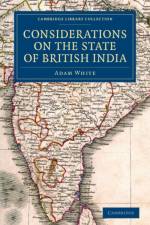
In this 1822 work, Lieutenant Adam White (1790-1839) of the Bengal Native Infantry reviews the state of India under British rule, presenting arguments for and against colonisation, the activities of missionaries and the freedom of the Press. He also discusses the Indian Army and its recent activities in Nepal and against the Mahrattas, as well as the civil government. He explains in his preface that, having spent twelve years in India, he had no plans to write a book and had not collected any material for it, but a chance reading of Prinsep's account of Warren Hastings' administration changed that. White set out to 'amuse his leisure on board ship' back to Europe by refuting Prinsep's account, and attempting to offer the British public an alternative view of Hastings' rule. White was posted as political agent to Upper Assam, and was later killed in action at Sadiya.
With this self-contained, introductory text, readers will easily understand the fundamentals of microwave and radar image generation. Written with the complete novice in mind, and including an easy-to-follow introduction to electromagnetic scattering theory, it covers key topics such as forward models of scattering for interpreting S-parameter and time-dependent voltage data, S-parameters and their analytical sensitivity formulae, basic methods for real-time image reconstruction using frequency-sweep and pulsed-radar signals, and metrics for evaluating system performance. Numerous application examples and practical tutorial exercises provided throughout allow quick understanding of key concepts, and sample MATLAB codes implementing key reconstruction algorithms accompany the book online. This one-stop resource is ideal for graduate students taking introductory courses in microwave imaging, as well as researchers and industry professionals wanting to learn the fundamentals of the field.
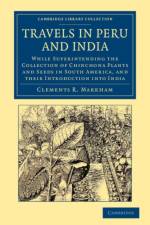
Sir Clements Robert Markham (1830-1916) had a lifelong interest in Peru. Having already travelled there in his early twenties, he was commissioned to return ten years later to supervise the collection of sufficient specimens of the cinchona tree for its introduction to India. The bark of the tree yielded quinine, by then a well-known febrifuge and one of the few effective treatments for malaria. This book, originally published in 1862, is Markham's personal account of his travels. His story moves from the misty heights of the Peruvian mountains, where he suffered from altitude sickness, to the Malabar coastline and its complex, remarkable caste system. Markham also includes a detailed history of the use of cinchona bark, both by Europeans and aboriginal Peruvians, and a discussion of Incan culture since the arrival of the Spanish. His work is still a valuable resource for students of scientific and colonial history.
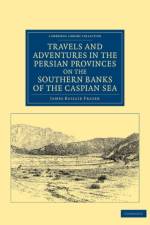
Scottish explorer and author James Baillie Fraser (1783-1856) was already known for his narratives of travel in the East (his 1820 journal of a journey through the Himalayas being also reissued in this series) when in 1826 he published this account of his journey into the lesser known provinces of Persia. Though it includes an appendix containing information on geology and commerce, it dwells less on statistical and historical details than it does on the author's personal experiences and impressions. In his preface, Fraser summarily rejects factual material as 'insignificant', preferring to describe the manners of a people seldom encountered by Europeans. The work captures both the sights and sounds of bazaars and cities, and the characters of the people, from princes to peasant boys; and Fraser provides facts on topics ranging from rice cultivation to the architecture of ancient tombs and methods of cooling water.
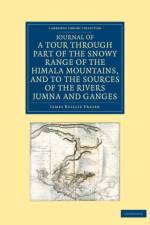
Scottish explorer and author James Baillie Fraser (1783-1856) published this account of his Himalayan journey through Nepal and India in 1820. (His 1826 book describing his travels in the lesser-known provinces of Persia is also reissued in this series.) Part I begins with a historical sketch of Nepal, the reasons for the outbreak of war between Nepal and British India in 1814 and the course and consequences of the war. The remainder of the book describes Fraser's travels through previously inaccessible mountainous areas to Jamunotri and Gangotri, the sources of the rivers Jumna and Ganges. Fraser admits in his preface that he is not an expert in any of the fields which would give his account scientific value, but he offers detailed descriptions of villages, temples and 'grand scenery', and of a people 'as they appeared before an intercourse with Europeans had in any degree changed them'.
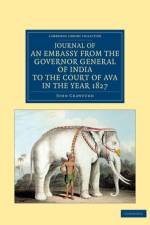
After studying medicine at Edinburgh, John Crawfurd (1783-1868) joined the medical service of the East India Company. While posted at Penang, he studied the Malay language and culture and became an expert in Eastern affairs. His talent was recognised by the British Government, which entrusted to him both administrative and diplomatic responsibilities. He was sent as an envoy on many missions, most notably to the Court of Siam (Thailand) where his efforts led to a possibility of opening up the diplomatic relations between the two countries, troubled since the seventeenth century. In 1827, he was sent on his last diplomatic assignment in the service of the East India Company, to the Court of Ava (then the capital of present-day Myanmar (Burma)). This 1829 work describes his experiences at Ava, and provided a reference source for subsequent missions. The appendix contains several relevant official communiques.
William Hay Macnaghten (1793-1841), of the Bengal Civil Service, published this work in 1825. It is a compilation of principles and precedents of Islamic law, focusing on family, inheritance and property law, including the status of slaves. Born in India and from a legal family, Macnaghten used his skill in languages as well as his legal training to produce this monumental work, and a similar two-volume treatise on Hindu law (1828-9). Quoting from both Sanskrit and Arabic sources, Part I discusses the principles of family law, inheritance, sales, wills, and slavery, while Part II offers precedents in all these areas, and an appendix gives details of the cases cited. Macnaghten was involved in political as well as legal work, and the disastrous First Anglo-Afghan War was begun largely on his advice. He was killed by an Afghan leader during negotiations outside Kabul in 1841.
These extracts from the personal journal of Sir James Outram (1803-63), which he kept while serving with the 23rd Regiment in the British Army of the Indus, describe the British campaigns in Sindh and Afghanistan in 1838-9. In the preface to the book, originally published in 1840, the author explains that his 'rough notes' are not attempting a narrative of the military operations but have been printed 'for the perusal of valued friends'. The work begins in Sindh, where the author joins the campaign that aims to restore Shah Shuja to the throne of Kabul, the ultimately disastrous First Anglo-Afghan War. It is dedicated to Sir William Macnaghten, who was later killed during negotiations with an Afghan chief. Outram himself later clashed with the Napier family over Sir William Napier's account of the Conquest of Scinde, and both books are also reissued in this series.
Written by Austrian baron Karl Alexander Anselm von Hugel (1795-1870), this travelogue was one of the first western books published on the Kashmir region. Von Hugel, who worked as a soldier, diplomat, botanist, explorer and ethnologist at various stages in his life, embarked on a trip to India in the 1830s as part of an extensive world tour. His account of his time in Kashmir and the Punjab was first published in German as a four-volume edition from 1840. He aimed to 'lift the veil' on Kashmir in an attempt to resolve the contentious reputation among Europeans of this unfamiliar region, and the book serves as a thorough guide to its history, geography, climate, culture and politics. This English translation and abridgement was prepared by Thomas Best Jervis (1796-1857) and published in 1845. Also included in this reissue is a biography that the author's son, Anatole von Hugel, privately published in 1903.
Originally published between 1824 and 1853, these four pieces by James Silk Buckingham (1786-1855) illuminate the concerns of a broad-minded traveller and the problems of governing an empire. A newspaperman, social reformer and fierce critic of the East India Company, Buckingham published the Calcutta Journal until his expulsion from India in 1823 for attacking vested interests. The first and second pieces reissued here are his open letters, written anonymously in 1824, to the MP Sir Charles Forbes regarding press freedom and the expulsion, without trial, of himself and another editor. These are followed by an 1830 account of the reception of his public lecture tour on the East India Company's monopoly, and an 1853 outline for the future government of India. Together, these polemical texts provide great insight into contemporary colonial debates surrounding British rule in India.
Abonner på vårt nyhetsbrev og få rabatter og inspirasjon til din neste leseopplevelse.
Ved å abonnere godtar du vår personvernerklæring.