








Gjør som tusenvis av andre bokelskere
Abonner på vårt nyhetsbrev og få rabatter og inspirasjon til din neste leseopplevelse.
Ved å abonnere godtar du vår personvernerklæring.Du kan når som helst melde deg av våre nyhetsbrev.

The British colonial administrator and scholar Sir Reginald Fleming Johnston (1874-1938) travelled extensively in the Far East, developing a deep interest in Chinese culture and spirituality. His fourteen-year posting to the relatively quiet port of Weihaiwei allowed him to indulge this interest and to travel to places not usually visited by Europeans. Well acquainted with the philosophy of Confucius, Johnston had happily quoted the Confucian classics in his court judgments at Weihaiwei. In 1918, he was appointed tutor to the young Puyi (1906-67), who had been China's last emperor before his forced abdication. This 1934 publication, developed from lectures, presents an accessible interpretation of the tenets and fortunes of Confucianism, notably the impact of the New Culture Movement on the philosophy's place in Chinese society. Among other works, Johnston's Buddhist China (1913) and Twilight in the Forbidden City (1934) are also reissued in this series.
The British colonial administrator and scholar Sir Reginald Fleming Johnston (1874-1938) travelled extensively in the Far East, developing a keen intellectual interest in Chinese culture and spirituality. His fourteen-year posting to the relatively quiet port of Weihaiwei allowed him to indulge this interest and to travel to places not usually visited by Europeans. In 1918, he was appointed tutor to the young Puyi (1906-67), who had been China's last emperor before his forced abdication. Deeply interested in Mahayana Buddhism, Johnston played an important role in raising Western awareness of its philosophy and practice in China. This work, first published in 1913, provides valuable insight into the history of this branch of Buddhism as well as fascinating accounts of notable centres of Chinese monasticism. Among other works, Johnston's Confucianism and Modern China (1934) and Twilight in the Forbidden City (1934) are also reissued in this series.
The son of a Turin lawyer, Bartolomeo Gastaldi (1818-79) initially followed in his father's footsteps but then abandoned the law to pursue his passion for geology and palaeontology. Later one of the founders of the Italian Alpine Club, Gastaldi was especially interested in the geology and glaciology of the Alps in his native Piedmont. The mineral gastaldite is named after him. This work, first published in Italian in 1862, is reissued here in the 1865 English translation prepared by Charles Harcourt Chambers (1826-76) for the Anthropological Society of London. Its importance lies in the meticulous descriptions, by Gastaldi and others, of the human remains and artefacts discovered at Stone Age and Bronze Age settlements on the site of lakes and peat bogs to the south of the Alps. Featuring engraved illustrations throughout, the work also includes Gastaldi's summary of discoveries since his book's first appearance.
The explorer and multi-disciplinary scientist Alexander von Humboldt (1769-1859) was a prominent figure in the European scientific community of the eighteenth and nineteenth centuries and the first to make a scientific survey of South and Central America. His travels alone brought him widespread recognition, but the extensive field notes and research he undertook were developed further on his return. Originally published in French and translated in 1823, this work brought his geological speculations to a British audience. Humboldt explores the positioning of different types of rocks across the globe, and the causes behind these formations. He also hypothesises that the flora of these areas are affected by the geology, which in turn is influenced by the thermal currents of the earth's molten core. These insights into rock formations are also key to Humboldt's theory of continental drift, now recognised as resulting from the shifting of the continental plates.
An Anglican clergyman and fellow of the Royal Society, John Harris (c.1666-1719) was an important promulgator of Newtonian science, through private teaching, public lectures and published writing. His Lexicon Technicum (1704) may be considered the first encyclopaedia in English. In the present work, published in 1719, Harris presents for his well-to-do readership a series of didactic conservations between a gentleman of science and an aristocratic lady. He aims to induce 'persons of birth and fortune' to dedicate some of their 'happy leisure ... to the improvement of their minds', and uses quotes from poets such as Samuel Butler and John Dryden to help elucidate scientific concepts. In particular, Harris explains the use of contemporary scientific apparatus (and expensive status symbols) such as terrestrial and celestial globes. The book ends with a description of the ultimate contemporary symbol of scientific refinement: the orrery, a working model of the solar system.
Prussian explorer and naturalist Alexander von Humboldt (1769-1859) was described by Darwin as 'the greatest scientific traveller who ever lived'. His boundless curiosity as well as his scientific and cultural knowledge helped lay the foundations of physical geography, climatology, ecology and oceanography. In 1799, Humboldt embarked on a five-year trip to explore Central and South America. He devoted a large amount of time to the study of geognosie, the science of the origin and distribution of minerals and rocks forming the earth, later known as geology. In 1805, Humboldt published his first impressions of volcanoes and earthquakes in the Americas in his Personal Narrative. In this 1826 work, he makes the first systematic attempt to compare the rocks of the Old and New Worlds. This groundbreaking analysis became one of the most important geological works of its time.
The Scottish mathematician and natural philosopher Sir John Leslie (1766-1832) had set out at the end of the eighteenth century to explore the nature of heat radiation, which he felt was a 'dubious and neglected' area of physics. Leslie's inquiry, published in 1804, details his many experiments, notably the use of two self-devised instruments: Leslie's cube and his differential thermometer. Establishing several basic laws of heat radiation and rejuvenating the debate about the physical composition of heat, Leslie's work gained him the Rumford medal of the Royal Society in 1805. Nevertheless, the same publication jeopardised his chances of obtaining an academic position at Edinburgh. A single, allegedly atheistic endnote, supporting David Hume's views on causation, prompted protests by the local clergymen when his candidature for the chair of mathematics was under consideration. Leslie secured the professorship, however, and remained with the university until his death.
A. H. Savage Landor (1867-1925), the grandson of the author Walter Savage Landor (1775-1864), was born and educated in Florence. He abandoned his painting studies in Paris to travel around the world, and visited Asia, the Middle East and South America, supporting himself as he went by painting portraits of people he encountered. Landor became a Fellow of the Royal Geographical Society in 1892, and a Member of the Royal Institution in 1897. This volume, first published in 1893, deals with his adventurous experiences among the indigenous Ainu, the 'hairy men' who lived in the northern 'home islands' of Japan and in Sakhalin, the island whose possession was disputed by Japan and Russia for two hundred years. Landor insisted on 'doing in Ainuland as the Ainu does'. He describes his journey through the Ainu territory and gives a detailed and ethnographically aware account of its people and their culture.
The original French edition of this book appeared in 1866 as part of Hachette's extensive, popularising Bibliotheque des Merveilles series, which included several science titles by Frederic Zurcher (1816-90) and Elie Margolle (1816-84). Their books were illustrated with attractive wood-cuts, and remained in print until the 1880s; they were also translated into English. This volume was published in London in 1868, and is a good example of popular science publishing in Victorian Britain. The material is organised geographically, beginning in Europe with Vesuvius, Etna and Icelandic volcanoes including Hecla, all of which had recently seen major eruptions. The authors quote from eyewitness accounts, and refer to scholarly publications on volcanoes including Darwin (1844) and Scrope (1862), also reissued in the Cambridge Library Collection. Later chapters describe oceanic volcanoes, the Andes, the volcanic zone of New Zealand's North Island, and recently discovered volcanoes such as Mt Erebus in Antarctica.
The Englefield mountain barometer was designed to calculate altitude and was so easy to use that a reading could be taken out of the window of a carriage - provided the horses stood still. Using a bar of mercury, which fell in the lower air pressure of higher altitudes, the barometer gave readings accurate to one thousandth of an inch. By taking a mercury reading at two locations, the owner could work out the difference in altitude between them. In this companion book, first published in 1817, the maker of the new barometer, Thomas Jones, provides tables listing the heights of objects measuring between fifteen and thirty-one inches of mercury. These measurements account for the heights of all mountains in England. He also includes tables that show how to allow for the expansion of both air and mercury. A fascinating book for historical researchers and experimenters in physics alike.
The Greek geographer and historian Strabo is known chiefly for this remarkable description of the known world in the early decades of the Roman Empire. The range and importance of the text ensured its copying and distribution in the medieval period, and multiple printed editions appeared later. Reissued here is the version published by the influential French publishing house Didot in 1853 as part of their series of Greek classics. It was prepared by the German classical scholars Karl Wilhelm Ludwig Muller (1813-94) and Johann Friedrich Dubner (1802-67). Muller's two-volume collection of the writings of lesser-known Greek geographers, Geographi Graeci Minores (1855-61), is also reissued in this series. The full text of Strabo's seventeen books is presented here in Greek with a parallel Latin translation as well as variant readings. Also included are several maps and a substantial index of names and places.
The agrarian interests of politician William Hillier Onslow (1853-1911), fourth earl of Onslow, led to his briefly becoming a cabinet minister as president of the Board of Agriculture and Fisheries in 1903-5, but he became convinced that the government of the day took no real interest in farming and food - to the extent that in 1914, sixty per cent of British food was imported. He had already decided that English landowners should, at a time of agricultural depression, help the labourers on their estates by making allotments of land available to them, and he published this work in 1886, in the hope of achieving a voluntary extension of the allotment system. It provides a historical context, examines in detail the current situation, and discusses the pros and cons of voluntary versus compulsory ceding of land, while providing insights into the development of the allotment movement.
William of Malmesbury (c.1090-c.1142) was a prolific historian and a trustworthy chronicler, described by Professor R. M. Thomson as 'the most learned European of his day' and 'England's greatest national and local historian since Bede'. A Benedictine monk, he spent his adult life at Malmesbury Abbey, where he assisted the Abbot in founding the library, and devoted his time to writing. The Latin text presented here, originally published in 1870 as part of the Rolls Series, is based on the manuscript at Magdalen College, Oxford. It is described with confidence by N. E. S. A. Hamilton as 'no other than Malmesbury's own autograph' - a claim which the editor backs up in his comprehensive preface. Revised and added to over a period of ten years following its completion in around 1125, this early ecclesiastical history of England is as much a historical record as a primary source in its own right.
Roger of Hoveden's Chronica was begun around 1192 and covers English history from 732 to 1201, when it is assumed he died. The work is largely an annotated compilation of various other chronicles, including the Gesta Regis Henrici Secundi Benedicti Abbatis (also reissued in this series). This was formerly attributed to Benedict of Peterborough, which was the view taken by William Stubbs (1825-1901) when he edited this work for the Rolls Series in 1868-71. Since the twentieth century, however, Hoveden has been recognised as the author. As a clerk to Henry II until 1189, and later as a diplomat during the Third Crusade, he was ideally placed to gain first-hand knowledge and also documents, which he provides here in full. Volume 4 (1192-1201) comprises public documents and original work by Hoveden, particularly relating to the north of England, where he was based.
Roger of Hoveden's Chronica was begun around 1192 and covers English history from 732 to 1201, when it is assumed he died. The work is largely an annotated compilation of various other chronicles, including the Gesta Regis Henrici Secundi Benedicti Abbatis (also reissued in this series). This was formerly attributed to Benedict of Peterborough, which was the view taken by William Stubbs (1825-1901) when he edited this work for the Rolls Series in 1868-71. Since the twentieth century, however, Hoveden has been recognised as the author. As a clerk to Henry II until 1189, and later as a diplomat during the Third Crusade, he was ideally placed to gain first-hand knowledge and also documents, which he provides here in full. Volume 3 (1189-92) again reworks the Gesta, with revisions for its new context. There are details relating to the Third Crusade and Hugh de Puiset, Bishop of Durham.
Roger of Hoveden's Chronica was begun around 1192 and covers English history from 732 to 1201, when it is assumed he died. The work is largely an annotated compilation of various other chronicles, including the Gesta Regis Henrici Secundi Benedicti Abbatis (also reissued in this series). This was formerly attributed to Benedict of Peterborough, which was the view taken by William Stubbs (1825-1901) when he edited this work for the Rolls Series in 1868-71. Since the twentieth century, however, Hoveden has been recognised as the author. As a clerk to Henry II until 1189, and later as a diplomat during the Third Crusade, he was ideally placed to gain first-hand knowledge and also documents, which he provides here in full. In Volume 2 (1148-89), Hoveden edits and amalgamates other chronicles, including his own Gesta, adding further annotations and a collection of letters relating to the Becket controversy.
Roger of Hoveden's Chronica was begun around 1192 and covers English history from 732 to 1201, when it is assumed he died. The work is largely an annotated compilation of various other chronicles, including the Gesta Regis Henrici Secundi Benedicti Abbatis (also reissued in this series). This was formerly attributed to Benedict of Peterborough, which was the view taken by William Stubbs (1825-1901) when he edited this work for the Rolls Series in 1868-71. Since the twentieth century, however, Hoveden has been recognised as the author. As a clerk to Henry II until 1189, and later as a diplomat during the Third Crusade, he was ideally placed to gain first-hand knowledge and also documents, which he provides here in full. Volume 1 (to 1148) comprises copies of chronicles attributed to Symeon of Durham and Henry of Huntington, and draws on the Historia Saxonum sive Anglorum post obitum Bedae.
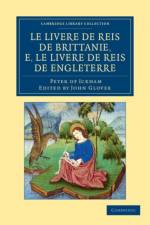
Published as part of the Rolls Series, this genealogy is attributed to Peter of Ickham (d.1295), a chronicler and Benedictine monk better known for his Latin chronicle of the Kings of England. It is mainly an Anglo-Norman version of extracts by well-known historians such as Geoffrey of Monmouth, Florence of Worcester, and Ralph de Diceto. The editor, vicar and librarian John Glover (c.1823-84), published the original text in 1865 together with his own facing-page translation into contemporary English. Glover's scholarship, as well as instances of semi-Saxonised French, will interest philologists and history students alike. The genealogy begins with Britain's colonisation by the legendary Brutus and covers the history of Saxon and Norman kings. It ends with a portrait of the life and reign of Edward II.
Jean-Francois Daubuisson (1769-1841), geologist and engineer, was an Officer of the Legion d'Honneur, Knight of St Louis and Chief Engineer at the Royal Mining Corps. He published numerous papers on geology, mining and hydraulics, and is best known for his textbooks, Traite de geognosie and Traite d'hydraulique. He studied geology and mineralogy in Freiburg with Abraham Werner, the key proponent of Neptunism, the theory that all rocks had an aqueous origin. Later in his career Daubuisson was to side with the Plutonists, who argued that basalts formed from molten rock. However, in this paper, published in French in 1803, he describes his observations of the basalts of Saxony and argues that they, and all basalts, are sedimentary. This English translation by the Secretary of the Wernerian Natural History Society was published in 1814, and provides a fascinating insight into this discredited but once influential theory of the Earth.
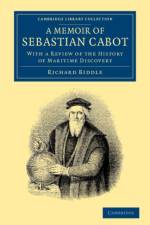
Richard Biddle (1796-1847), an American politician and lawyer, published this work on the life of the explorer and cartographer, Sebastian Cabot (c.1481-1557), anonymously in 1831. He was responding to widespread criticisms of Cabot - allegedly an unscrupulous character who played the governments of England and Spain to his own ends. The work includes notes on Sebastian's discoveries on the North American continent along with his father, John, and his search for the North-West Passage. As a governor of the Muscovy Company, Cabot initiated the expansion of English trade to Russia and the East. Cabot's own accounts of his journeys have been lost; therefore, Biddle's research is derived from other sources, particularly the writings of Richard Hakylut (c.1552-1616). This study was recognised at the time as the best review of the history of maritime discovery in the period treated, and prompted further research into the Cabot legacies.
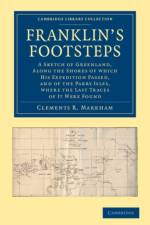
Clement Robert Markham (1830-1916) was a geographer who took part in one of the many Arctic expeditions launched to search for missing explorer John Franklin (1786-1847). This account, published in 1853, was written in response to criticism of the expedition. They had found some evidence of Franklin's route - he had set off in May 1845 to find the North-West Passage - but returned to Britain without any of the survivors. Markham gives a brief history of Arctic exploration, but the majority of the book recounts the expedition's efforts to find Franklin. The crew endured a harsh winter and sailed in iceberg-laden waters along the coast of Greenland, looking for clues of Franklin's whereabouts. They also spent some time exploring the Parry Islands (the present-day Queen Elizabeth Islands). Markham's account of the rescue mission provides insight into the little-known and often dangerous world of Arctic explorers.
This first book by James Croll (1821-90), published in 1875, includes many of the original geophysical theories that he had formulated throughout the early years of his career. A self-educated amateur, Croll obtained work at the Glasgow Andersonian Museum, which gave him leisure time to pursue his scientific interests. The fluidity of scientific disciplines at the time allowed him to virtually invent the field of geophysics, and his unique insights united ideas previously thought unconnected, such as using physics to explore the causes of the glacial epochs, climatic changes and the circulation and temperature of ocean currents. Croll, whose Stellar Evolution and its Relations to Geological Time is also reissued in this series, later became a Fellow of the Royal Society and of St Andrew's University, but (possibly because of his non-scientific background) he writes in a style which makes his works accessible to a lay readership.
James Croll (1821-90) was self-educated, but on gaining a post at the Glagow Andersonian Museum had the time to explore his academic interests. Despite his lack of formal training, he quickly became a leading light of the Scottish Royal Geological Society. Using physics, mathematics, geology and geography he explored the pressing scientific questions of the time. In this, his final book, published in 1889, Croll divides his focus between 'the probable origin of meteorites, comets and nebulae', the age of the sun and the impact of the pre-nebular condition of the universe on star evolution. Using both proven facts and theories, Croll explores the ideas and hypotheses then current, frequently crediting colleagues for their work, and building on it. Croll, who from humble beginnings became a Fellow of The Royal Society and of St Andrew's University, writes in a style which makes his works accessible to a lay readership.
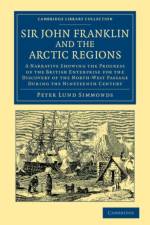
In May 1845, the famous Arctic explorer John Franklin (1786-1847) embarked on another attempt to find the elusive North-West Passage. He never returned from this voyage, and was last seen by whalers in Baffin Bay in July 1845. Some thirty rescue missions were launched between 1847 and 1859 to find the missing men. Franklin was not the first explorer to make the dangerous voyage to find the route connecting the Atlantic and Pacific, and journalist Peter Lund Simmonds (1814-97) draws from a wide range of reports and publications about these expeditions in his history of the search for the North-West Passage, published in 1851. The detailed account also includes descriptions of the many missions to find Franklin, and this second edition was published later in the same year as the first in order to include updated reports on the progress of his rescue.
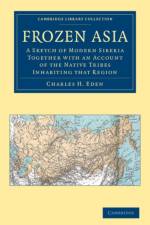
Illustrated by a substantial map and recommended to nineteenth-century readers as a 'neat little volume', this account of Siberia by Charles H. Eden (1839-1900) combines the conventions of a topographical study with detailed descriptions of flora and fauna, 'native races', 'climate', 'trade and manufactures', and 'political divisions and government'. Published in 1879, it built upon Eden's previous success with Australian Heroes and The Fifth Continent to confirm his reputation as an accessible and instructive author. His clear narrative style combined with dramatic subject matter ensured his popularity with specialists and general readers alike. The inclusion of a collection of stories from Siberian folklore provides an unusual dimension and a valuable insight into nineteenth-century British attitudes towards indigenous cultures, including the Kirghis, Buriates, and Tungooses. Concluding with a detailed description of 'recent explorations', it should fascinate geologists, geographers, and historians of anthropology in equal measure.
In the nineteenth century, scientists were convinced that the North Pole was free of ice. This myth was fostered since the eighteenth century, when it was thought that ice came from rivers and mainly formed near coasts. Rivers supposedly carried into the north seas a prodigious amount of glacons or 'ice cubes', which formed enormous masses of ice as they accumulated. This misconception led to an inaccurate climate theory that persisted until the beginning of the twentieth century: ice near a country's shores produces bitter cold in that country. This book, published in 1818, links the harsh winters of 1815-17 in England and Europe to the impressive amount of ice encountered at the same time in the Atlantic. The cold was thought to be caused by the break-up and southward drift of Arctic ice. It is attributed to the French meteorologist Antoine Aubriet, who was active in 1815-30.
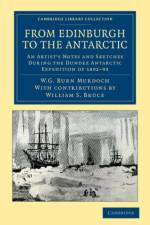
Scottish artist W. G. Burn Murdoch (1862-1939) joined a whaling expedition to Antarctica that left Dundee in 1892. He was on board the barque Balaena, the largest of the ships in the group, and under the command of Captain Fairweather. They were searching for the valuable Bowhead whale, which had been sighted on Ross' 1839-43 Antarctic expedition. Although unsuccessful at achieving this aim, the ships returned in 1893 loaded with seal pelts. First published in 1894, this is Murdoch's account of the expedition, illustrated throughout with his sketches. He documents each stage of the voyage, and describes living conditions on the Balaena. His illustrations include scenes such as the Ship's departure and ice landscapes, as well as focusing on the daily work of the crew. The Ship's naturalist, William S. Bruce (1867-1921), wrote the final chapter, focusing on the scientific observations he made during the voyage.
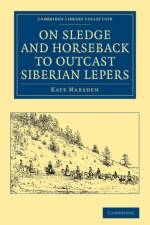
Kate Marsden (1859-1931), the youngest of eight children from a poor family, was a highly committed nurse. She cared for soldiers in the Russo-Turkish War in 1877-8, and undertook missionary travels to various countries, but she was especially concerned about the plight of those suffering from leprosy. This volume, published in 1893, describes her remarkable journey to Siberian leper colonies. At first she travelled by sledge with a friend, but continued alone on horseback, facing appalling weather conditions with her customary courage. Her commitment to leprosy sufferers led her to found the St Francis Leprosy Guild in London in 1895, and she organised a leprosy hospital in the remote Siberian town of Vilyusk in 1897. She was made a Member of the Russian Imperial Red Cross Society, and she was also one of the first women to be appointed a Fellow of the Royal Geographical Society.
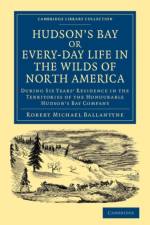
In 1841, aged just sixteen, the intrepid young Scotsman Robert M. Ballantyne (1825-94) joined the Hudson's Bay Company. Posted immediately to North-Eastern Canada, he spent five years traversing the region's inhospitable terrain by sleigh and canoe. His journal and letters home were so evocative that, upon his return, he was persuaded to publish an account of his experiences. Combining anthropological observations with descriptions of landscapes, plants, and animals, the account was applauded by the Dundee Courier for 'opening up a mine of information to the curious' and 'describing the everyday life of a novel and singular existence' with 'buoyancy and animation'. Appearing within a year of the first edition in 1848, the second edition reproduced here is illustrated throughout with views and vignettes. 'Free from tedious details and unnecessary wordiness', Ballantyne's fast-moving and readable narrative challenges many misconceptions about nineteenth-century Canada and its indigenous peoples.
Sir Sidney Lee (1859-1926) was a lifelong scholar and enthusiast of Shakespeare, but is also remembered as the 'sub-editor' recruited by Sir Leslie Stephen when he was embarking on the project of the Dictionary of National Biography, and whose editorial and organisational skills were vital in keeping the publication programme close to its planned schedule. His own contributions to the Dictionary included an account of the life of Queen Victoria and (in Volume 51, 1897) William Shakespeare. This study of Stratford-on-Avon was first published in 1885, and the greatly enlarged version, reissued here, in 1890. (In 1898 Lee produced his biography of Shakespeare (also reissued in this series), regarded for much of the twentieth century as the most reliable account of Shakespeare's life.) This illustrated work draws on the archival material then available to provide a history of the town of Stratford up to the time of Shakespeare's death.
Abonner på vårt nyhetsbrev og få rabatter og inspirasjon til din neste leseopplevelse.
Ved å abonnere godtar du vår personvernerklæring.