






Gjør som tusenvis av andre bokelskere
Abonner på vårt nyhetsbrev og få rabatter og inspirasjon til din neste leseopplevelse.
Ved å abonnere godtar du vår personvernerklæring.Du kan når som helst melde deg av våre nyhetsbrev.

Vincent Eyre (1811-81) was an English officer in the East India Company from 1827 and took part in the First Anglo-Afghan War (1839-42), which ended in disaster for the British. He would later become a major-general and a Knight Commander of the Star of India, but in this work Eyre lucidly describes his experiences as a lieutenant in the war, during which he was severely wounded. In addition to providing a wealth of military detail, he also includes an account of how he was captured with his family by Akbar Khan in January 1842 and held hostage for nearly nine months. Eyre kept a diary throughout, and the manuscript was smuggled to a friend in India prior to publication in England in 1843. This updated third edition offers insights into both military and personal misfortune.
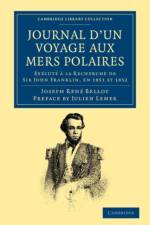
The intrepid French explorer Joseph Rene Bellot (1826-53) became a symbol of Anglo-French friendship in 1851, when he took part in the second expedition of the Prince Albert in search of Sir John Franklin. During the seventeen-month expedition, Bellot wrote a journal which captures his enthusiasm for the discovery of unknown lands and the anxieties of a perilous journey. Together with Captain William Kennedy, Bellot found the northernmost point of the American continent and was named a fellow of the Royal Geographical Society. His journal was published posthumously, together with a short account of his life, in 1854 by Julien Lemer, and reissued several times because of its scientific and literary interest. Bellot died tragically, aged twenty-seven, during his second polar expedition. His courage and devotion to a foreign cause earned him much admiration in Britain: an obelisk was raised in his honour outside the Greenwich Hospital for sailors.
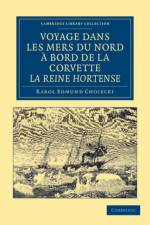
In 1856, Prince Napoleon, the French Emperor's cousin, carried out a four-month expedition in the North Sea. He was accompanied by a scientific committee as well as a group of painters, photographers and writers. Among the participants was Polish novelist, playwright, poet and journalist Karol Edmund Choiecki (1822-99). In 1844, he had fled Russian persecution in Poland, having been in jeopardy due to his activism and patriotic writings. He found refuge in France and befriended such members of the intellectual elite as Gustave Flaubert and George Sand. In 1857, Choiecki published a beautifully illustrated account of the expedition, in which he shares his views on navigation and exploration as he goes via Scotland, Iceland, Norway's Jan Mayen Island, Greenland, the Faroe and Shetland Islands, and Scandinavia. Choiecki paints a lyrical picture of the journey, offering a welcome contrast and addition to the scientific accounts of his day.
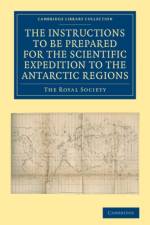
The 1839-43 Antarctic expedition was primarily a scientific voyage. James Clark Ross, a member of the expedition that had located the Magnetic North Pole in 1831, was the natural choice to lead this mission to find the Magnetic South Pole. Although he was unsuccessful in this aim, he charted the coastline of most of the continent, collected valuable scientific data and made several important discoveries. Published in 1840, these papers were prepared by the Royal Society for the expedition and give detailed instructions on how to make the important magnetic and meteorological observations. There are further instructions, such as how to preserve animal specimens, and surprisingly a request to investigate the reasons for the poor cultivation of vines at the Cape of Good Hope as 'the bad quality of Cape wine ... is well known'. These papers reveal the expectations and demands placed upon this expedition.
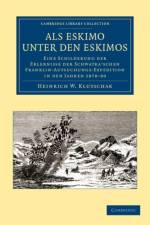
With this 1881 publication, Heinrich Klutschak (1847-90), a German native of Prague, produced one of the first comprehensive accounts of Inuit life. In the years 1878-80 the artist and writer was part of an expedition, led by the American soldier Frederick Schwatka, which travelled in the Canadian Arctic. This undertaking was but one of many that sought to discover what had happened during the last expedition of the British explorer Sir John Franklin in the 1840s. As the title of the work indicates, Klutschak and his fellow expedition members attempted to live as fully as possible in the manner of the Inuit and in close proximity to them. Although Klutschak dwells on the antipathy between some of the Inuit bands, the general tone of the book is one of respect for their survival skills and way of life.
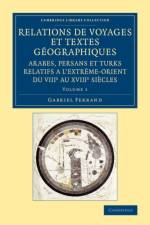
Gabriel Ferrand (1864-1935) travelled widely as a French diplomat and pursued scholarly passions as a polyglot orientalist. He served as consul to Madagascar and published several works about the island, noting the Arab influence that preceded the arrival of Europeans. A member of the Societe Asiatique, and editor of its journal from 1920 until his death, Ferrand sought in particular to make Arabic geographical and nautical writings more accessible to fellow scholars and students. Forming part of that project, this work appeared in two volumes in 1913-14. It presents annotated French translations of mainly Arabic texts relating to the Far East. Brief biographical notes on the authors are given for the benefit of non-specialists. Volume 1 contains the preliminary matter explaining Ferrand's approach to transcription and translation. This is followed by texts up to the thirteenth century, including extracts from the ninth-century author Sulaiman al-Tajir.
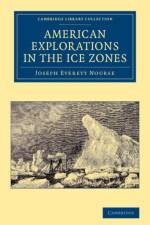
In 1879, the steamer Jeannette went missing near Alaska. It had been sent by the American Navy in search of a missing Swedish expedition. Having become trapped in ice, the ship was not heard from for almost two years, when her remaining crew finally reached safety. By this time, any American expedition that focused its efforts further north than the sixtieth parallel was usually considered to be within the Arctic, and these invariably perilous expeditions were often launched in search of lost ships. In 1884, Joseph Everett Nourse (1819-89) published details of all the major American expeditions, including the efforts to rescue the Jeannette, Hayes's attempt to prove the existence of the Open Polar Sea, and Schwatka's 3,000-mile sledge journey across the tundra. Written to make the journals of explorers more accessible to young readers, Nourse's comprehensive text is still of relevance to students of American maritime history.
James Elmes (1782-1862), the son of a builder, trained at the Royal Academy Schools as an architectural designer, but his career encompassed publishing and writing on architecture as well. A friend of Benjamin Robert Haydon and his circle, he was the first publisher (in his Annals of Fine Arts) of Keats' most famous odes. This work - the first biography of Wren - was published in 1823, and is dedicated to the President and Fellows of the Royal Society, of which Wren was a founder member in 1660. Elmes based his work on the so-called 'Parentalia', or notes on the Wren family compiled by his son (also Christopher), and privately printed by his grandson Stephen in 1750. Elmes puts Wren's life and works into the context of the intellectual ferment of Restoration England, and combines the narrative of Wren's life with an architectural commentary on his most important works.
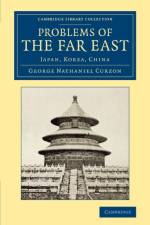
Following his election to Parliament and extensive travels through Asia, George Nathaniel Curzon (1859-1925) published in 1894 this consideration of the present state of Japan, Korea and China within a changing international landscape. Later viceroy of India, Curzon was fascinated by the rich cultural heritage of the Far East, yet he remained a staunch supporter of British imperialism. He explains that the book's purpose is to delve deeper into political, social and economic conditions, rather than present a travel narrative of 'temples, tea-houses and bric-a-brac'. After devoting a substantial section to each country, Curzon closes with 'The Prospect', exploring what he envisages for the future of the whole region. The favourable reception of this title and his 1892 work, Persia and the Persian Question (also reissued in the Cambridge Library Collection), highlighted Curzon's diligently acquired knowledge of Asian affairs and how they affected Britain's imperial interests.
Descended from French Protestants who had emigrated to Geneva, Leopold de Saussure (1866-1925) began his career in the French navy. Before retiring with the rank of lieutenant in 1899, he had learned Chinese and how to accurately observe the stars. The study of ancient Chinese astronomy then became the focus of his scholarly energies, and he made a number of significant contributions. Posthumously published in 1930, this work gathers together eleven of the twelve articles that originally appeared in the journal T'oung Pao between 1907 and 1922. In his preface, the French orientalist Gabriel Ferrand (1864-1935) quotes a letter, written by Saussure a month before his death, noting a shift of opinion: he now believed China had been influenced by the Middle East rather than vice versa. Irrespective of the question of priority, Saussure's work here reveals the depth of his understanding of the Chinese system.
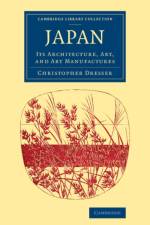
Educated at the Government School of Design (predecessor of the Royal College of Art), Christopher Dresser (1834-1904) became arguably the first industrial designer, identified by his name on his work. He was an early proponent of oriental art: as a leading figure in the Aesthetic Movement, he promoted Japonism in art and decoration. In 1876-7 he toured Japan at the Japanese government's invitation, investigating local manufacturing and design. This beautifully illustrated 1882 work is the result. The first half is a travelogue of Dresser's time in Japan, written with a designer's eye for the architecture and decoration around him. The second half, covering the various ways in which design and decoration were used in the manufacturing industries, includes consideration of architectural motifs, the importance of symbols, lacquerware, ceramics, metalware, and fabric production. This remains an invaluable resource for the student of Japanese art and design.
This extraordinary collection of historical facts, a valuable source for local history, was compiled by Thomas Fuller (1608-61), who came from a clerical family and was educated at Cambridge. He was ordained, had gained a reputation as a preacher, and had published several theological works, when at the outbreak of the Civil War he enlisted as a chaplain in the royalist army. Travelling round the country with Sir Ralph Hopton's troops, he pursued the historical enquiries which would result in the posthumous publication in 1662 of his most famous work. This two-volume edition was annotated by John Nichols, the bookseller and publisher, and published in 1811. The first part of the work consists of twenty-five short chapters which explain the organisation of the work, after which England and Wales are examined county by county: first, natural resources and manufactures, and then notable people, starting with princes and saints.
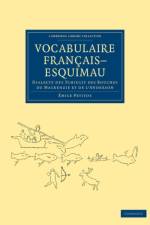
French missionary Emile Petitot (1838-1916) was based in Canada's Northwest Territories for twelve years, from 1862. He visited the Inuit people five times and became so well accepted that they called him 'Mr Petitot, son of the Sun'. Petitot believed that understanding Inuit languages was crucial to the religious conversion of the natives. During his mission, he collected more linguistic material than ever before and prepared dictionaries of the various Dene dialects. In this book, published in 1876, he describes the Inuit's traditions and sets about the monumental task of compiling the first grammar and vocabulary of the extremely complex Tchiglit dialect. Petitot also made substantial contributions to the geology, palaeontology, zoology and botany of the Northwest region. His efforts were rewarded with a Silver Medal from the French Societe de Geographie and the Back Award from the Royal Geographical Society of London.
Sir John Ross (1777-1856), the distinguished British naval officer and Arctic explorer, undertook three great voyages to the Arctic regions; accounts of his first and his second voyages are also reissued in this series. (During the latter, his ship was stranded in the unexplored area of Prince Regent Inlet, where Ross and his crew survived by living and eating as the local Inuit did.) In this volume, first published in 1855, the explorer describes his experiences during his third (privately funded) Arctic voyage, undertaken in 1850 as part of the effort to locate the missing expedition led by Sir John Franklin, his close friend. Ross also summarises in partisan style the previous efforts by the Royal Navy to find out what happened to the Erebus and Terror, and is scathing in his account of what he regards as the mismanagement and incompetence of the Admiralty.
Abby Jane Morrell (b. 1809) was the wife of ship captain and explorer Benjamin Morrell (1795-1839). During the nineteenth century it became more common for women to join their husbands on voyages, and Abby insisted on accompanying her husband on his fourth voyage. They left America for the Pacific in 1829 on board the Antarctic, which visited the Auckland Islands and Pacific Islands in search of commercial gain, before returning via the Azores in 1831. First published in 1833, this is Abby's account of their journey. It was ghostwritten by the American author Samuel Knapp (17838) and followed the publication of Benjamin Morrell's own account as part of A Narrative of Four Voyages (also reissued in this series). It includes an account of the violent conflicts with the inhabitants of some of the Pacific Islands, and also contains Abby's comments on the 'amelioration of the condition of American Seamen'.
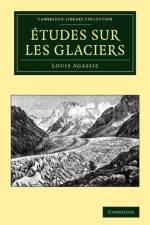
Swiss-born zoologist, geologist and paleontologist Louis Agassiz (1807-73) was among the foremost scientists of his day. When he took up the study of glaciology and glacial geomorphology in Switzerland in 1836, he recorded evidence left by former glaciers, such as glacial erratics, drumlins and rock scouring and scratching. In this work, published in 1840, he proposed a revolutionary ice-age theory, according to which, glaciers are the remaining portions of sheets of ice which once covered the earth. His radical suggestion undermined the hypothesis that landscape features were the result of a great biblical flood. Although Agassiz's invaluable work led some to acclaim him as the 'father' of glacial theory, critics have cited the contributions of others, including Jean de Charpentier and Karl Schimper. The book also describes the features of active glaciers, including ice tables, ice pinnacles and moraines.
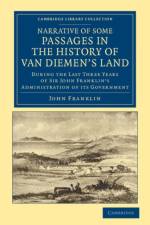
The famous explorer of the Arctic region, Sir John Franklin (1786-1847) was appointed Governor of the penal colony of Tasmania (then known as Van Diemen's Land) in 1837. At first enthusiastically welcomed by the free colonists of the island, Franklin quickly became embroiled in political and administrative difficulties, and his compassion for convicts and aboriginals alike was incompatible with his duties. In 1843, colonial officials loyal to his predecessor succeeded in getting Franklin recalled by sending damaging accounts of his conduct to London. This pamphlet was Franklin's defence of his own character against these misrepresentations, but he was not to see his reputation recovered. He completed the book on 15 May 1845, just days before he departed on another Arctic expedition to search for the North-West Passage. Franklin and his entire crew died on the journey, and only many years later was the tragic fate of the expedition discovered.
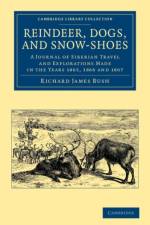
The Russo-American Telegraph Project of 1865-7 was truly monumental. Although plans to lay cable from San Francisco to Moscow via Alaska and Siberia were superseded by the laying of the sub-Atlantic cable, one of the benefits of the enterprise was the knowledge of the area gained by those engineers and explorers sent out to assess the task. Publication of their experiences and travels followed and one such work was this journal by Richard James Bush, first published in 1871 by Harper & Brothers, describing his adventures in Siberia between 1865 and 1867. Bush makes it clear that this is not a scientific account, but a travel narrative containing observations of his time in the Kamchatka Peninsula and the area of Siberia by the Sea of Okhotsk, of herding deer and life in the tundra. The engagingly written book is illustrated with fine drawings of the region by Bush himself.
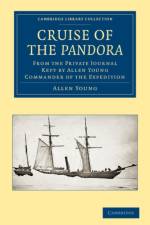
Sir Allen Young (1827-1915), merchant navy officer and experienced Polar explorer, took part in several expeditions before that of the Pandora. As navigator he had accompanied the McClintock expedition to discover the fate of Sir John Franklin, during which he explored several hundred miles of new coastline by sledge. He was also in command of the Fox on the 1860 North Atlantic telegraph expedition to assess the practicality of a cable route between Europe and America across the Faroes, Iceland and Greenland. In 1875, he led, and financed, the British North-West Passage Expedition on the Pandora, and this compelling account of his journey was first published in 1876. In it, he records his attempt to reach the magnetic pole via Baffin Bay and Lancaster Sound, and to navigate the North-West Passage in one season, though he failed in this attempt because of heavy ice in the Franklin Strait.
Spectral analysis is widely used to interpret time series collected in diverse areas. This book covers the statistical theory behind spectral analysis and provides data analysts with the tools needed to transition theory into practice. Actual time series from oceanography, metrology, atmospheric science and other areas are used in running examples throughout, to allow clear comparison of how the various methods address questions of interest. All major nonparametric and parametric spectral analysis techniques are discussed, with emphasis on the multitaper method, both in its original formulation involving Slepian tapers and in a popular alternative using sinusoidal tapers. The authors take a unified approach to quantifying the bandwidth of different nonparametric spectral estimates. An extensive set of exercises allows readers to test their understanding of theory and practical analysis. The time series used as examples and R language code for recreating the analyses of the series are available from the book's website.
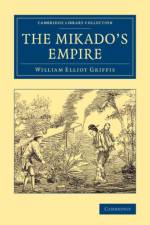
A respected authority on Japan, William Elliot Griffis (1843-1928) did much to foster understanding between the United States and Japan in the late nineteenth century. This was his most popular work on the subject. It is arranged in two sections, with maps and illustrations throughout. The first part is a detailed history of Japan from 660 BCE, covering factual events as well as mythological elements of the Japanese past. This is followed by a personal account of the four years Griffis lived in Japan, during which the country underwent significant modernisation. Highly successful, the work went through twelve editions following its initial publication in 1876. It is reissued here in its second edition of 1877 and features improvements, such as the addition of content in the appendices and footnotes, made in response to comments by critics. Giffis' Corea, the Hermit Nation (1882) is also reissued in this series.
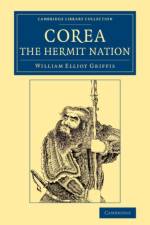
Described as a 'hermit nation' because it isolated itself from the rest of the world, Korea remained very little known to English speakers in the late nineteenth century. During his time in Japan, the American author and educator William Elliot Griffis (1843-1928), who did much to foster understanding between the United States and Japan, became fascinated by Korea and its influence on Japanese history and culture. This historical outline of Korea is compiled from printed sources and eyewitness accounts rather than from personal experience since Griffis was yet to visit Korea at this point. Despite this, and the fact that he was sometimes criticised for presenting Korea in comparison with Japan, this book was well received. First published in 1882, it contains an annotated bibliography and features maps and illustrations throughout. Griffis' most famous work on Japan, The Mikado's Empire (1877), is also reissued in this series.
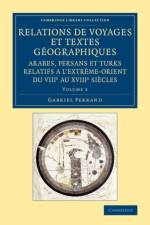
Gabriel Ferrand (1864-1935) travelled widely as a French diplomat and pursued scholarly passions as a polyglot orientalist. He served as consul to Madagascar and published several works about the island, noting the Arab influence that preceded the arrival of Europeans. A member of the Societe Asiatique, and editor of its journal from 1920 until his death, Ferrand sought in particular to make Arabic geographical and nautical writings more accessible to fellow scholars and students. Forming part of that project, this work appeared in two volumes in 1913-14. It presents annotated French translations of mainly Arabic texts relating to the Far East. Brief biographical notes on the authors are given for the benefit of non-specialists. Volume 2 contains texts from the thirteenth century onwards, and includes a section of translated extracts from Chinese, Japanese, Tamil, Kawi and Malay texts.
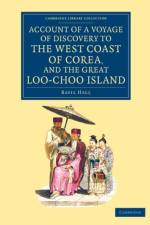
A naval officer and man of science, Basil Hall (1788-1844) commanded the brig HMS Lyra as part of Lord Amherst's 1816 embassy to the Qing court in China. While Amherst was engaged on his ultimately abortive venture, the mission's ships visited the west coast of Korea, and then travelled to the island of Okinawa (then known as the Great Loo-Choo Island), where they stayed for several weeks. Little was known about these regions in Britain, and this illustrated account of the journey offered many insights. As well as providing nautical data, such as surveys, soundings and meteorological observations, Hall also comments on geography and culture. A substantial vocabulary and primer on the Okinawan language, compiled by fellow naval officer H. J. Clifford, is included in the appendix. Hall's narratives of his later travels to both North and South America are also reissued in the Cambridge Library Collection.
Born and educated in Florence, Arnold Henry Savage Landor (1867-1925) abandoned his art studies in Paris in favour of adventurous expeditions across Asia, Africa, the Middle East and South America. A fellow of the Royal Geographical Society from 1892, Landor was also made a member of the Royal Institution in 1897. Dismissive of specialist equipment, he embarked on extraordinary trips that often required considerable courage and endurance. Another of his publications, Alone with the Hairy Ainu (1893), is also reissued in the Cambridge Library Collection. The present work, first published in 1895, is an absorbing account of the geography, people and culture of Korea. While Landor's grasp of the forces of change at work in the country may be partial, the work nevertheless demonstrates a valuable understanding of Korean culture and customs not found in earlier accounts. Many fine illustrations by Landor himself increase the book's appeal.
Continuum mechanics studies the foundations of deformable body mechanics from a mathematical perspective. It also acts as a base upon which other applied areas such as solid mechanics and fluid mechanics are developed. This book discusses some important topics, which have come into prominence in the latter half of the twentieth century, such as material symmetry, frame-indifference and thermomechanics. The study begins with the necessary mathematical background in the form of an introduction to tensor analysis followed by a discussion on kinematics, which deals with purely geometrical notions such as strain and rate of deformation. Moving on to derivation of the governing equations, the book also presents applications in the areas of linear and nonlinear elasticity. In addition, the volume also provides a mathematical explanation to the axioms and laws of deformable body mechanics, and its various applications in the field of solid mechanics.
Fluid mechanics is the study of fluids including liquids, gases and plasmas and the forces acting on them. Its study is critical in predicting rainfall, ocean currents, reducing drag on cars and aeroplanes, and design of engines. The subject is also interesting from a mathematical perspective due to the nonlinear nature of its equations. For example, the topic of turbulence has been a subject of interest to both mathematicians and engineers: to the former because of its mathematically complex nature and to the latter group because of its ubiquitous presence in real-life applications. This book is a follow-up to the first volume and discusses the concepts of fluid mechanics in detail. The book gives an in-depth summary of the governing equations and their engineering related applications. It also comprehensively discusses the fundamental theories related to kinematics and governing equations, hydrostatics, surface waves and ideal fluid flow, followed by their applications.
In 1863, the English architect John Turtle Wood (1821-90) resigned from a railway development project in western Turkey to begin his search at Ephesus for the Temple of Artemis, lost from view since the middle ages. In the first part of this well-illustrated 1877 publication, Wood describes the city and the initial excavations carried out with support from the British Museum. This survey of various structures concludes with Wood's work at the great theatre, where he found the Greek inscription that helped direct him to the correct location of the temple in 1869. Part II focuses on the exhausting four years that Wood spent excavating the temple, which was buried under many layers of sand. The appendix presents Greek and Latin inscriptions, with facing-page translations, from various Ephesian sites. Also reissued in this series, Edward Falkener's Ephesus (1862) includes a review of references to the temple in ancient writings.
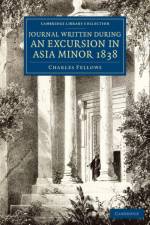
The traveller and archaeologist Sir Charles Fellows (1799-1860) made several trips through Asia Minor. This work is an account of the first of these, recording his careful observations of the lands he travelled through. On this trip, he found ancient cities which were unknown to Europeans at that time, including Xanthos, the capital of ancient Lycia, dating from the fifth century BCE. Fellows' narrative brings the journey to life with vivid descriptions of the people and places he encountered, and detailed sketches of notable antiquities and inscriptions. First published in 1839, this work generated significant interest, fuelling the British Museum's eagerness to acquire antiquities from the region. Fellows was later knighted for his role in these acquisitions, though controversy surrounds their removal. Two of his later works, An Account of Discoveries in Lycia (1841) and The Xanthian Marbles (1843), are also reissued in this series.
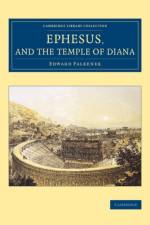
The English architect and archaeologist Edward Falkener (1814-96) spent a fortnight sketching the ancient ruins of Ephesus during his trip through Anatolia in the 1840s. In Part I of this 1862 publication, he tries to reconstruct the architectural features of Ephesian buildings, tracing the history of the city. Falkener's accomplished sketches and layouts display his artistic talent, which won him the grand medal of honour at the Paris Universal Exhibition in 1855. Part II focuses on the Temple of Artemis, one of the seven wonders of the ancient world. Falkener surveys ancient writings relating to the Greek temple, which still awaited rediscovery at that time. Although his speculations about the location of the temple were later proven wrong by John Turtle Wood, who correctly identified the site in 1869 (his 1877 account is also reissued in this series), Falkener's work added to the Victorian interest in ancient architecture.
Abonner på vårt nyhetsbrev og få rabatter og inspirasjon til din neste leseopplevelse.
Ved å abonnere godtar du vår personvernerklæring.