
Gjør som tusenvis av andre bokelskere
Abonner på vårt nyhetsbrev og få rabatter og inspirasjon til din neste leseopplevelse.
Ved å abonnere godtar du vår personvernerklæring.Du kan når som helst melde deg av våre nyhetsbrev.

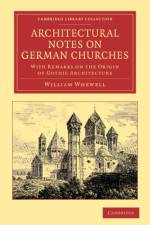
A tutor of mathematics at Cambridge, William Whewell (1794-1866) mostly published on mechanics. He became professor of mineralogy in 1828, Knightbridge professor of moral philosophy in 1838, and master of Trinity College in 1841. This work is unusual among his writings for its focus on architecture, yet the emphasis placed on terminology is consistent with his other publications, such as An Essay on Mineralogical Classification and Nomenclature (1828). Architectural Notes is significant for offering a detailed theoretical analysis of the origins of Gothic architecture, especially of the mechanical principles underlying it, notably the pointed arch. The discussion of German churches, despite the book's title, is of secondary concern, although guidance is given for recording Gothic buildings. This first edition was published anonymously in 1830. The second (1835) and third (1842) editions bore Whewell's name and were partially revised to reflect recent research on the origin of the pointed arch.
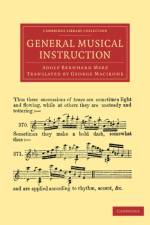
Adolf Bernhard Marx (1795-1866) was an influential music theorist, critic, composer and pedagogue. He believed that music should be part of everyone's general education and lobbied the Prussian government for a comprehensive national music-education scheme. This English translation by George Macirone of Marx's 1839 Allgemeine Musiklehre was published in 1854 as the first work in the series Novello's Library for the Diffusion of Musical Knowledge. The series, described by the publisher as 'a collection of standard treatises on the art of music written by the most esteemed English and foreign masters', was devised in response to a growing demand for training books and manuals to support domestic music-making. It also included Berlioz's famous treatise on instrumentation (also reissued in this series). Marx's work covers the basic elements of music theory, musical instruments, compositional techniques, forms of music, performance advice, and the importance of musical education in general.
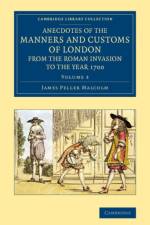
Born in Philadelphia, James Peller Malcolm (1767-1815) travelled to London in 1787, remaining there until his death. Initially hoping for a career as a landscape painter, he became well known for his engravings, which appeared in the Gentleman's Magazine from 1792, and for his books on history that made extensive use of original local records. First published in 1808, Anecdotes gives a typically personal and often light-hearted account of the history and customs of Malcolm's adopted city. Illustrated with his engravings, the work ranges from considering the diet and dress of the ancient Britons to suggesting that the Great Fire of London was state-sanctioned to rid the city of plague. This is the 1811 second edition of a valuable and often entertaining insight into English social history. Volume 3, most concerned with London itself, covers amusements and the origins of popular pastimes, and includes a detailed description of a masque by William Davenant.
Henry of Huntingdon (c.1088-c.1157) wrote his comprehensive Latin chronicle of English history at the behest of the bishop of Lincoln, who asked him to provide a narrative from the earliest English kings right up to their own day. Henry's fondness for anecdotes - including the story of King Cnut attempting to hold back the tide - adds charm to his account. Although the work was originally completed by 1130, Henry continued to add to his magnum opus for many years, producing a version that concluded with the death of King Stephen and the accession of Henry II in 1154. This is the version edited for the Rolls Series in 1879 by Thomas Arnold (1823-1900), whose scholarly introduction describes the various different versions of the text, lists the extant manuscripts, and surveys Henry's sources. The text is accompanied by side-notes in English as well as appendices, a glossary and an index.
Cecil Nathan Sidney Woolf (1887-1917), Fellow of Trinity College, Cambridge, was killed in the First World War. In this prize-winning book, published in 1913, Woolf examines the way in which the medieval jurist Bartolus of Sassoferrato (1314-57) interprets the Roman Law to make it relevant to fourteenth-century Italian political reality. Considering Bartolus's treatment of the relationships between the Roman Empire and the papacy, kingdoms and city-republics, Woolf places Bartolus's thought in its wider historical context by surveying the complex problem of the empire from the mid-thirteenth century onwards. In particular, he assesses Bartolus's most famous argument that the city is its own emperor. Arguing that Bartolus's influence lasted into the early modern period, both in the practice of law and in the use made of his works by writers like Bodin and Albericus Gentilis, this book also includes a useful table explaining Bartolus's distinctions between imperium and jurisdiction.
In Britain, the name of Cadbury has been synonymous with chocolate ever since John Cadbury opened his factory in 1831. This book, written by Richard Cadbury (1835-99) under the pen name 'Historicus', was published in 1892. It describes the natural history of the tropical American cocoa plant, its spread in cultivation across the world, and the history of its use. He also deals with the manufacturing process, as exemplified by the Cadbury factory at Bournville, surrounded by the model housing and leisure facilities which the family built for its workers. The processing of cocoa beans into solid and drinking chocolate is described in detail, with emphasis on the developments in machinery which simplified production. A chapter deals with the importance of the vanilla plant for flavouring, and an appendix gives guidance on the cultivation of cocoa trees. This remains a fascinating account of one of the world's most popular indulgences.
This highly illustrated 1900 work on Egypt old and new by John Ward (1832-1912) seeks to guide the visitor to the ancient sites while also remarking on the radical changes to the economy and the development of the modern state since the intervention of the British government in 1883 and the appointment of Lord Cromer as consul-general and effective ruler. This blending of ancient and modern can be seen in discussions of Port Said ('not an Egyptian town at all') alongside the abandoned and silted-up delta ports of the Egyptians, Ptolemies and Ottomans. Thebes is discussed both as a city of the living and a city of the dead, and Ward notes approvingly the flattening of the ancient town of Assouan (Aswan), to form the foundations for new public buildings, on the orders of Lord Kitchener. Ward's subsequent book, Our Sudan (1905), is also reissued in this series.
Revised by Adolf Michaelis, the third edition of German philologist Otto Jahn's Greek text of Sophocles' Electra was published in 1882. Sophocles (c.496-406 BCE) wrote his great tragedy towards the end of his career; it is one of only seven of his estimated 123 works to survive. Taking place in Argos, the play portrays the revenge taken by Electra and Orestes, following the murder of their father Agamemnon, on their mother Clytemnestra and stepfather Aegisthus. Jahn (1813-69), who also produced a renowned scholarly biography of Mozart, was Professor of archaeology at Leipzig - until his removal for involvement in the 1848 uprisings - then Director of the Academic Art Museum at Bonn, and Professor of Archaeology at Berlin. This highly regarded edition, with extensive critical apparatus and commentary throughout, remains an authoritative resource for readers interested in the history of philology, textual criticism, and Classical Greek literature.
Classical scholar Robinson Ellis (1834-1913) studied at Balliol College, Oxford, under Benjamin Jowett, before becoming a Fellow of Trinity and, in 1893, Corpus Professor of Latin. His 1876 Commentary on Catullus (also reissued in this series) publicised the Codex Oxoniensis but overlooked its significance and was criticised by other scholars in the field. Nevertheless, his commentaries became standard texts, including this 1881 publication of Ovid's Ibis. A vitriolic invective poem, written in exile, aimed at an enemy whose identity remains unclear, and invoking Callimachus' lost poem of the same name, it is probably Ovid's least-known work. This edition, including text, scholia, and Ellis's prolegomena and critical apparatus, illuminates nineteenth-century traditions of classical scholarship.
This is the first translation into English of Guicciardini's Dialogue on the Government of Florence. Written in the early 1520s by the author of the famous History of Italy, as well as a History of Florence and Political Maxims and Reflections, this dialogue presents what is arguably the most searching and comprehensive analysis of the politics of his times. Like Machiavelli, his contemporary and friend, Guicciardini rejects classical republican arguments in the name of the new political realism and acknowledges the important role of patronage and graft in contemporary politics and the illegitimacy of nearly all forms of political power. In this Dialogue he provides one of the clearest expositions of the term 'reason of state', which he was one of the first to employ and which he uses to justify the priority of state interest over private morality and religion.
A successful officer in the colonial Indian Medical Service, Glasgow-educated Laurence Austine Waddell (1854-1938) was fascinated by the landscapes and cultures of Darjeeling and Tibet, studied local languages, and spent his leisure time researching and writing on Tibetan topics. His earlier books The Buddhism of Tibet (1895) and Among the Himalayas (1899) are also reissued in the Cambridge Library Collection. Waddell had attempted to enter Lhasa (then closed to foreigners) in disguise in 1892, but did not succeed until he accompanied the controversial British expedition to Tibet in 1903-4; he describes his arrival there as 'the realisation of a vivid and long-cherished dream'. His eyewitness account of how the 'peaceful mission' became an 'invasion' occupies the first half of this 1905 publication. The later chapters vividly portray the city and its inhabitants. The book includes more than a hundred of Waddell's own photographs, as well as maps and line drawings.
Charles Roach Smith (1806-90), born on the Isle of Wight and educated in Hampshire, was apprenticed to a lawyer at fifteen, but a year later transferred to a chemist, where he prospered, moving to London and becoming wealthy from a firm of wholesale druggists and his own chemist's shop in Lothbury, in the City of London. Sewerage and other works in the City meant that Roman and medieval artefacts were regularly coming to light, and Smith's collection eventually numbered more than 5,000 pieces. He eventually sold it to the British Museum, at far less than its market value, so that it could remain intact. This book, published in 1859, describes the excavations, and uses the finds he and others acquired to illustrate 'the institutions, the habits, the customs, and the arts of our forefathers'. It remains an invaluable record of finds arising from the Victorian redevelopment of London.
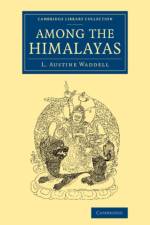
Laurence Austine Waddell (1854-1938) spent twenty-five years as a medical officer in the colonial Indian Medical Service. Fascinated by the landscapes and cultures of Darjeeling and Tibet, and inspired by reports from British spies surveying the remote Himalayan valleys, Waddell studied local languages, and spent his leisure time researching and writing on Tibetan topics. His books The Buddhism of Tibet (1895) and Lhasa and its Mysteries (1905) are also reissued in the Cambridge Library Collection. This 1899 publication, illustrated with photographs and drawings, claims to describe 'the grandest part of the grandest mountains in the world', for the first time since Hooker (whose 1854 Himalayan Journals are also reissued), and anticipates today's trekking industry. Waddell's colourful account of jungles, snakes, glaciers, yaks, dizzying mountain ridges, rickety bamboo bridges, tribal peoples and unfamiliar food aims to 'bring home to the reader a whiff of the bracing breezes of the Himalayas'.
The Scottish doctor Henry Faulds (1843-1930) is best remembered for his role in the history of fingerprinting. His strong religious faith had first led him to missionary work in India and then, from 1874, in Japan. He worked there as a surgeon in the mission hospital at Tsukiji, near Tokyo, where he also established a medical school and a school for the blind. It was his discovery of the impressions of thumbprints on ancient Japanese pottery which led to his development of a fingerprinting system and his championing of it as a forensic tool. The present work, part-travelogue, part-journal, was first published in 1885. It remains an engaging account of Japanese life, customs, geography and natural history, interwoven with discussions of topics such as education, language, and the future of the country. There are characterful line drawings throughout. Faulds' Dactylography (1912) is also reissued in the Cambridge Library Collection.
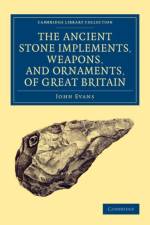
Combining a very active career as a prosperous paper manufacturer with the pursuit of various antiquarian interests, Sir John Evans (1823-1908) began the study of geology in the context of a court case over water rights for his paper mills, but extended his interests to the artefacts found in gravel beds in Britain, and in the Somme valley in France. This work was published in 1872, and was translated into French soon afterwards. Heavily illustrated, it describes stone implements from the Palaeolithic and Neolithic periods, including weapons, tools and ornaments, from cave and river-bed deposits as well as settlement sites. Evans also continued to research fossils, and was highly respected as a numismatist. He was a fellow of the Royal Society, the Geological Society, and the Society of Antiquaries. His son Arthur Evans (1851-1941) discovered the Minoan civilisation of Crete.
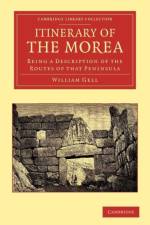
Classical topographer Sir William Gell (1777-1836) first came to public attention with his Topography of Troy (1804). Based on his travels around Bunarbashi, near to where Schliemann would subsequently excavate, the work became a standard treatise. Byron even wrote: 'Of Dardan tours let dilettanti tell, / I leave topography to classic Gell.' A noted conversationalist and intellectual intermediary, Gell became a Fellow of the Royal Society and, indeed, a Member of the Society of Dilettanti. He also served, in 1803, on a diplomatic mission to the Ionian Islands; his subsequent journey, with the archaeologist Edward Dodwell, through the Peloponnese - then known as the Morea - became the subject of several later books, including Narrative of a Journey in the Morea (1823; also reissued in this series) and this 1817 publication. Comprising a survey of routes through the area, and their natural and archaeological landmarks, it sheds light on both contemporary Greece and the practicalities of early topographical study.
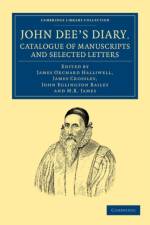
John Dee (1527-1608), popularly remembered as an alchemist and spiritualist, was an enthusiastic scholar specialising in mathematics and astronomy, and collected manuscripts, early printed books and scientific instruments. Despite meeting Elizabeth I in person, he never progressed in the Church, and died in poverty. The four selections from his writings reissued here show Dee painstakingly listing his books before a journey to Europe, and appealing to the Queen for help when, after a catastrophic burglary at his library and the destruction of his laboratory equipment, his pay also failed to arrive. J. O. Halliwell (1842) reproduces the full text of Dee's diaries with an index; James Crossley (1851) transcribes Dee's appeals to the Queen; Bailey's book (1880), of which only 20 copies were printed, contains a full commentary on the last five years of the diaries; and M. R. James (1920) researches the fate of Dee's books over the centuries.
The Danish plant scientist Wilhelm Johannsen (1857-1927) is remembered for his experimental work on plant heredity, and as a founding figure of modern genetics. The terms 'gene', 'genotype' and 'phenotype' were first used by him. The results of his studies on beans supported theories advanced during the 1890s by the Dutch botanist Hugo de Vries, who had unknowingly replicated the work of Gregor Mendel, published in English translation in 1902 (also reissued in this series) by William Bateson. Johannsen's proposal that changes in heredity resulted from sudden mutations rather than from slow processes of natural selection was seen at the time as a threat to Darwinian theory, though later research showed otherwise. This influential book, first published in 1909 (with later editions in 1913 and 1926), is a revised, expanded German translation of a 1905 Danish book by Johannsen, itself based on a journal article originally published in 1903.
Later known as an administrator in Australia and founder of one of Tasmania's earliest settlements, William Paterson (1755-1810) was an army officer, naturalist and friend of Joseph Banks. Keenly interested in botany from childhood, in 1777 he was dispatched to Cape Colony on an expedition to collect plant specimens, many of which remain in the Natural History Museum. His accounts, published in 1789, are the observations and impressions of one of the first Europeans to venture into the south-east of modern-day South Africa. On his return to England he brought with him the skin and skeleton of a giraffe, which remained on show in the British Museum until the early twentieth century. He writes clearly and engagingly of the people, flora and fauna, assuring the reader that the work is 'a series of facts, noted down upon the spot, without any after additions'.
In 1816, an expedition to Africa, commanded by Captain James Tuckey (1776-1816), set out on HMS Congo, accompanied by the storeship Dorothy. The aim was to discover more about African geography - of which relatively little was then known - and in particular the connection between the River Congo, also known as the Zaire, and the Niger Basin. The mission failed when eighteen crew members, including Tuckey, died from virulent fevers and attacks by hostile natives. However, the Lords Commissioners of the Admiralty gave permission for publication of Tuckey's notes, and those of his Norwegian botanist Christen Smith (1785-1816), who also died during the voyage. First published in 1818, the work comprises their narratives of the doomed expedition. At the time it aroused Western interest in Africa, encouraging further research, and it remains of interest to geographers, botanists and scholars of African studies today.
Sir Reginald Fleming Johnston (1874-1938) was a colonial administrator and oriental scholar. He travelled extensively in the Far East and developed a deep interest in Chinese culture and religion. His fourteen-year posting to Weihaiwei, a quiet naval base, allowed him to travel to places not usually visited by Europeans, and to begin writing. In 1906 he spent six months travelling across China to Burma, publishing this illustrated account of his arduous journey in 1908. In it he comments on the economic and political state of China, but the book's main theme is the beauty of the country and the character of its people. His understanding of the language, religion and culture make this a valuable description of Chinese society at the beginning of the twentieth century. Johnston's Lion and Dragon in Northern China (1910) and Twilight in the Forbidden City (1934) are also reprinted in this series.
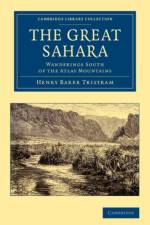
After sailing on a crowded steamer from Marseilles, Henry Baker Tristram (1822-1906) arrived in Algiers in the winter of 1856, and began preparations for an expedition into the Sahara. Although the northern areas had been well documented by the occupying French forces, the south was little travelled by Europeans. A keen naturalist and later a Fellow of the Linnaean Society, Tristram made meticulous preparations for collecting specimens, and kept a thorough journal as he travelled. This book, one of the first English reports of the South Sahara, published in 1860, is an almost exact transcription of that journal. Travelling with a tin of chocolate and a collection of fine silk handkerchiefs to trade, Tristram made notes on a host of topics, from the flight of flamingos to the government and customs of the native Touareg. His account is still a valuable resource for students of the history of science.
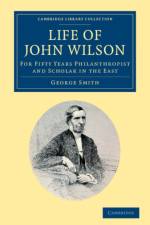
John Wilson (1804-1875) was a Christian missionary and philanthropist. He spent most of his working life in India, where he built churches and schools, and founded the institutions now known as Wilson College and the University of Mumbai. First published in 1878, this biography was compiled by George Smith (1833-1919), at the request of Wilson's son. As former editor of the Calcutta Review, Smith was an expert on Wilson's career, and having met him on his own travels to India, held him and his work in high esteem. The book traces Wilson's life from his childhood to his final days. It reveals his patient mediation between native Indians and their rulers, his groundbreaking and lasting influence on their lives, and his pivotal role in the British government's efforts to help India and its neighbouring countries. It remains of great interest to scholars of religious and Asian studies.
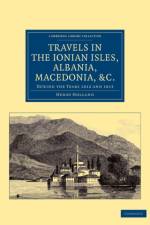
Sir Henry Holland (1788-1873) was a passionate and intrepid traveller from a young age. In addition to a distinguished career as court physician - first to Caroline of Brunswick, then to Queen Victoria and Prince Albert - he sought to keep two months of each year free to travel. His trip to Greece formed part of a European tour that Holland undertook in 1812-13 after having taken his medical degree at Edinburgh. Holland focuses on the lesser-known islands and parts of Macedonia and Albania, and gives a unique first-hand account of the Albanian vizier Ali Pasha (1740-1822), whom he befriended while visiting his court. The publication of Holland's travelogue in 1815 enhanced his reputation greatly and he was elected Fellow of the Royal Society that year. The book contributed to the early nineteenth-century fascination with Greece that would later lead Lord Byron to join the Greek War of Independence.
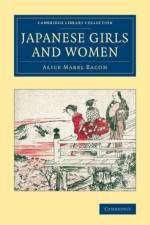
After spending a year in Tokyo, American teacher Alice Mabel Bacon (1858-1918) became the first author to usher Western readers into the graceful, paper-walled realm of the Japanese woman. An intimate friend of several Japanese ladies, Bacon was privy to a domestic world which remained closed to male visitors. This 1891 work begins with birth and childhood, including the colourful, kimono-like dress of infants, their ornate dolls, and their education in handwriting, flower painting and etiquette. Trained for a lifetime of service to her husband and his parents, the Japanese woman was praised for her loyalty and obedience. But new Western influences, especially on education, were challenging the old ways. Bacon evocatively depicts Japanese women unsettled by their modern education, yet saddled with traditional cultural expectations. With its insight into Japan's class system, cultural history and moral framework, this book remains an essential complement to any study of Japanese social history.
The Prussian schoolmaster Hermann Grassmann (1809-77) taught a range of subjects including mathematics, science and Latin and wrote several secondary-school textbooks. Although he was never appointed to a university post, he devoted much energy to mathematical research and developed revolutionary new insights. Die lineale Ausdehnungslehre, published in 1844, is an astonishing work which was not understood by the mathematicians of its time but which anticipated developments that took a century to come to fruition - vector spaces, dimension, exterior products and many other ideas. Admired rather than read by the next generation, it was only fully appreciated by mathematicians such as Peano and Whitehead.
Peter Gustav Lejeune Dirichlet (1805-59) may be considered the father of modern number theory. He studied in Paris, coming under the influence of mathematicians like Fourier and Legendre, and then taught at Berlin and Gottingen universities, where he was the successor to Gauss. This book contains lectures on number theory given by Dirichlet in 1856-7. They include his famous proofs of the class number theorem for binary quadratic forms and the existence of an infinity of primes in every appropriate arithmetical progression. The material was first published in 1863 by Richard Dedekind (1831-1916), professor at Braunschweig, who had been a junior colleague of Dirichlet at Gottingen. The second edition appeared in 1871; this reissue is of the third, revised and expanded, edition of 1879; a fourth edition appeared as late as 1894. The appendices contain further work by both Dirichlet and Dedekind.
The nineteenth century saw the paradoxes and obscurities of eighteenth-century calculus gradually replaced by the exact theorems and statements of rigorous analysis. It became clear that all analysis could be deduced from the properties of the real numbers. But what are the real numbers and why do they have the properties we claim they do? In this charming and influential book, Richard Dedekind (1831-1916), Professor at the Technische Hochschule in Braunschweig, showed how to resolve this problem starting from elementary ideas. His method of constructing the reals from the rationals (the Dedekind cut) remains central to this day and was generalised by Conway in his construction of the 'surreal numbers'. This reissue of Dedekind's 1888 classic is of the 'second, unaltered' 1893 edition.
Sophie Germain (1776-1831) was one of the first distinguished female mathematicians of the modern era. Largely self-taught, she won the admiration and friendship of Legendre and Gauss (whose work also appears in this series). Germain is best known for her work on number theory, notably Fermat's Last Theorem, but she played an important part in establishing the foundations of elasticity. This book, described by her slightly younger contemporary Navier as 'a work which few men are able to read and which only one woman was able to write', contains her research on the topic, which was awarded a prize by the Paris Academy of Sciences. This work was published in Paris in 1821.
The British mathematician William Burnside (1852-1927) and Ferdinand Georg Frobenius (1849-1917), Professor at Zurich and Berlin universities, are considered to be the founders of the modern theory of finite groups. Not only did Burnside prove many important theorems, but he also laid down lines of research for the next hundred years: two Fields Medals have been awarded for work on problems suggested by him. The Theory of Groups of Finite Order, originally published in 1897, was the first major textbook on the subject. The 1911 second edition (reissued here) contains an account of Frobenius's character theory, and remained the standard reference for many years.
Abonner på vårt nyhetsbrev og få rabatter og inspirasjon til din neste leseopplevelse.
Ved å abonnere godtar du vår personvernerklæring.