
Gjør som tusenvis av andre bokelskere
Abonner på vårt nyhetsbrev og få rabatter og inspirasjon til din neste leseopplevelse.
Ved å abonnere godtar du vår personvernerklæring.Du kan når som helst melde deg av våre nyhetsbrev.

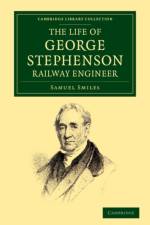
A political and social reformer, Samuel Smiles (1812-1904) was also a noted biographer in the Victorian period, paying particular attention to engineers. His first biography was of George Stephenson (1781-1848), whom he met at the opening of the North Midland Railway in 1840. After Stephenson died, Smiles wrote a memoir of him for Eliza Cook's Journal. With the permission of Stephenson's son, Robert, this evolved into the first full biography of the great engineer, published in 1857 and reissued here in its revised third edition. This detailed and lively account of Stephenson's life, which proved very popular, charts his education and youth, his crucial contribution to the development of Britain's railways, and his relationships with many notables of the Victorian world. It remains of interest to the general reader as well as historians of engineering, transport and business.
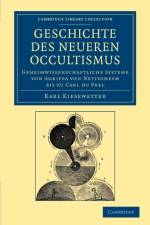
A leading German theosophical writer, Karl Kiesewetter (1854-95) produced a number of works on esotericism and occult beliefs and practices. This book, first published in 1891, remains one of the most extensive histories of modern esotericism. In his account of its development, Kiesewetter focuses on a number of historical figures who were, in his opinion, highly influential in the field. He discusses the Renaissance esotericism of Heinrich Cornelius Agrippa (1486-1535) and devotes much consideration to Paracelsus (1493-1541), whom he considers to be 'the Luther of medicine'. He also engages with the system of pneumatology developed by Emanuel Swedenborg (1688-1772) and quotes extensively from the works of Jacob Bohme (1575-1624) and other German writers on pneumatology. Also included in this historical overview of modern occultism is the work of Andrew Jackson Davis (1826-1910), who was a leading figure within nineteenth-century American spiritualism.
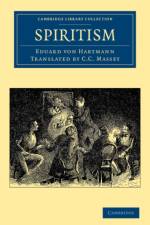
Eduard von Hartmann (1842-1906) had expected to follow his father's military career, but an injury forced him to reassess his ambitions. Torn between music and philosophy, he settled on the latter and in 1869 published his first book, The Philosophy of the Unconscious, which proved a great success. Published in 1885 as the period saw an enormous rise in the popularity of spiritualism, this work attempts to give psychological explanations for all occult phenomena, including subjective delusions as well as 'objective' physical manifestations, without resorting to hypotheses of ghosts, demons or trickery. C. C. Massey, a leading theosophist and translator of the work, wrote, 'Now for the first time, a man of commanding intellectual position has dealt fairly by us as an opponent.' This work will appeal to anyone with an interest in the growth of spiritualism and the philosophical and metaphysical debates of the nineteenth century.
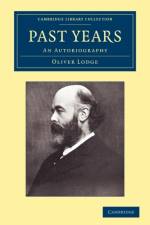
Sir Oliver Lodge (1851-1940) was a physicist instrumental in the discovery of electromagnetic waves: the basis of today's radio and X-ray technology. He came from humble beginnings. After suffering at the hands of violent masters and schoolmates during his childhood, Lodge went on to teach physics and chemistry to young women at Bedford College in London. Later, he was appointed professor of physics at the University of Liverpool, and became known for his public lectures on a vast range of topics, from the comic faults of phonographs to the medical applications of X-rays. Whether seeing the cells of a voltaic battery in a pile of plates or appreciating the enunciation of Alexander Graham Bell, Lodge had a warm enthusiasm that shines through in this touching autobiography, first published in 1931. It remains ideal for general readers as well as students in the history of science.
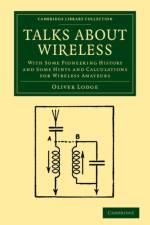
In the 1860s, radio waves were predicted by James Clerk Maxwell in his work on electromagnetism. It took a further twenty years for the first experiments to produce a working demonstration. In this guide to radio technology, first published in 1925, eminent physicist Sir Oliver Lodge (1851-1940) provides a concise history of the development of the wireless radio, explains the theory behind it, and includes some practical tips for amateurs. Having lived through and contributed to the discovery, he explains the difficulty of the early experiments, which took place in a time when terms like 'frequency' and 'inductance', now taken for granted, did not exist in the scientific vocabulary. His first-hand account reveals the incredible efforts poured into the development of a revolutionary modern technology, rekindling the sense of wonder that once surrounded this strange new science.
In his study of optics, Newton postulated that light, like sound, must be carried through a medium, and that this medium must exist even in a vacuum. By the late nineteenth century, this theoretical substance was known as the luminiferous ether. But the ether theory faced several problems. If the earth moved through ether, there would be ether wind, and light travelling against the flow would move more slowly than light travelling with it. That was soon disproven. Nor could the ether be stationary: by 1905, Einstein's work on relativity had disproven absolute motion. In this fascinating advocacy of ether, first published in 1933, Sir Oliver Lodge (1851-1940) fiercely defends ether against the new physics, arguing for solid models over mathematical abstractions, and urging new ether experiments. With in-depth references to Einstein, Jeans and Eddington, this book is still relevant to students in the history of science.
Among the widely agreed facts of physics in the late nineteenth century was the existence of luminiferous ether: the medium through which light was thought to travel. Theorised to be a highly rarefied substance, the ether accounted for the movement of light, gravity and even heat across a vacuum. It also had great implications for spiritualism. Where thought was not proven to be a result of chemistry in the brain, the presence of ether allowed for the idea that cognition and emotion might exist independently of a physical body. First published in 1925, this monograph by the eminent physicist and ether advocate Sir Oliver Lodge (1851-1940) was written for the non-scientific reader. With a focus on straightforward explanations rather than mathematical theory, his book still represents a fascinating introduction to the topic today.
The mathematician Charles Babbage (1791-1871) was one of the most original thinkers of the nineteenth century. In this influential 1830 publication, he criticises the continued failure of government to support science and scientists. In addition, he identifies the weaknesses of the then existing scientific societies, saving his most caustic remarks for the Royal Society. Asserting that the societies were operated largely by small groups of amateurs possessing only superficial interest and knowledge of science, Babbage explores the importance of the relationships between science, technology and society. Exposing the absence of a true scientific culture, he states, 'The pursuit of science does not, in England, constitute a distinct profession, as it does in other countries.' These concerns found favour with many, influencing reforms of the Royal Society and leading to the founding of the British Association.
In 1816, Sir Francis Ronalds (1788-1873) became the first physicist to demonstrate the possibility of an electric telegraph. Previously, the only telegraphs were semaphores - cumbersome signal towers capable of sending only two or three words per minute. However, his idea was dismissed by the Admiralty, where senior officials deemed any new telegraphs 'unnecessary'. Although his designs were soon to be superseded by those of the more successful Samuel Morse, Ronalds' devotion to telegraphy never waned; he spent much of his life collecting books on the subject. Upon his death, his collection was left to the Society of Telegraph Engineers, where it would become available to those most in need of it. Covering more than 13,000 titles, and including a short memoir of Ronalds, this book, first published in 1880, is a catalogue of that collection and other relevant works. It remains an invaluable resource for students in the history of science.
Margaret Heitland (1860-1938), nee Bateson, who became active in the suffrage movement, was the daughter of William Henry Bateson, Master of St John's College, Cambridge. In 1886 she moved to London to work as a journalist, joining in 1888 the staff on the magazine, The Queen, where she began its 'Women's employment department' feature the following year. She returned to Cambridge in 1901 upon her marriage to William Emerton Heitland, a Fellow of St John's, and she continued to be very active in the women's movement. This fascinating series of conversations with Victorian professional women first appeared in The Queen and was published in book form in 1895. Her aim was to offer inspiration and advice to young women seeking a career, and to demonstrate 'the intense happiness that merely being and doing something yields'. The wide range of professions represented include acting, dentistry, librarianship and stockbroking.
Knowing there was no money in science, Vincenzo Galilei wanted his son to become a cloth-dealer. While the young Galileo was disobeying his father and cultivating an unwholesome interest in geometry, Tycho Brahe was maintaining the impoverished Johannes Kepler and his entire family. Not long after this, a certain Cambridge mathematician noticed a strange phenomenon that became known as 'the precession of the equinoxes', before formulating his law of gravity. In this fascinating collection of lectures, first published in 1893, the eminent Professor of Physics Oliver Lodge (1851-1940) takes the reader on a tour of the history of astronomy. Including biographical notes on landmark astronomers, more than a hundred illustrations, and simple explanations of important concepts, this engaging book's range from the geocentric theory of the universe to the discovery of Neptune and the calculation of tides. It remains highly accessible to the general reader today.
A monk of Christ Church, Canterbury, and the closest companion of St Anselm, Eadmer (c.1060-c.1126) witnessed the archbishop's disputes with William II and Henry I and accompanied him twice into exile. This edition of Anselm's biography, which Eadmer began to write during those years of exile, was published by the Rolls Series in 1884. With English side-notes to the main Latin text, it includes the Historia novorum, remarkable for its use of direct speech in relating the life of Anselm and his controversial relations with the monarchy. The Vita is a record of his private conversations, to which Eadmer attached a series of posthumous miracles. Eadmer was ordered to destroy the manuscripts by Anselm around 1100, but fortunately he retained his notes. The work is the best contemporary life of the saint, but also offers a history of Canterbury and a zealous defence of Anglo-Saxon tradition.
In 1889, a year after both he and Heinrich Hertz discovered electromagnetic waves and for the first time demonstrated the truth of Maxwell's great theory of the electromagnetic field, physicist Oliver Lodge (1851-1940) published his deepest reflections on the nature and meaning of electricity, how it originates, and its different manifestations. There had been great scientific advances - the work of Faraday and Maxwell, his own experiments and those of Hertz - and a revolution in technology. There were also puzzling questions. What is the connection between electricity and the ether that occupies space? How does electricity manifest itself in matter? Why does it come in fixed units? The discovery of the electron eight years later would offer crucial answers. Always lucid and direct, with a gift for making the difficult seem simple, Lodge engages the reader with his fascination for the subject, much as he did in his famous lectures.
During the early nineteenth-century craze for conducting kite experiments in lightning, deaths were not unheard of. Electrical physicists, meanwhile, were often shocked badly enough to collapse in the course of their work. However, the perils of electricity did not deter its proponents. Published in 1844, this enlarged collection of lectures by Henry Minchin Noad (1815-77) had proven immensely popular in earlier incarnations, eventually running to four editions and recognised as an invaluable textbook for electricians and telegraph engineers until the turn of the century. An electrical practitioner himself, Noad includes illustrated explanations of some of the most significant ideas in the field, and describes many of his own experiments, from his version of the lightning kite to a battery constructed with fifty jars and a thousand feet of wire. His work remains relevant to students in the history of science.
As a result of being asked to give public lectures on the subject, the eminent physicist Oliver Lodge (1851-1940) published in 1892 a pioneering study of the protection of buildings, cables and telegraphic instruments from the devastation caused by lightning strikes. This work led him almost immediately to the discovery of electromagnetic wave transmission and ultimately to the development of a version of radio telegraphy. Lodge also saw that many of the current theories about the nature of lightning were seriously in error, and his investigations led to a number of significant changes in the design of lightning conductors and lightning guards. Some of the methods and procedures that Lodge advocated have since become standard practice. They are described with Lodge's characteristic flair and accompanied by a wealth of illustrations that give a fascinating insight into how contemporary scientists and engineers tackled this significant problem.
The discovery in 1897 of the electron, the first subatomic particle, led to rapid advances in our knowledge of atomic structure, the solid state, radioactivity and chemistry. It also raised major questions. Was the electron point-like or did it have structure? Was there a positive electron? What did the positive part of the atom look like? Did a hydrogen atom have one electron or a thousand? Published in 1906, this expository account by leading physicist Sir Oliver Lodge (1851-1940) examines the spectacular phenomena of cathode rays in evacuated tubes, the fixed units of charge observed in electrolysis, and the puzzling regularities in atomic spectra. Lodge knew most of the pioneers in the field, and his enthusiastic descriptions of their work and clear analyses of the problems as well as successes paint a vivid picture of the excitement of cutting-edge research and the scientific process in action.
Self-taught chemist and inventor Sir Humphry Davy (1778-1829) was one of the first professional scientists of his age. President of the Royal Society from 1820 to 1827, he was also a brilliant lecturer whose popularising of science made him famous. He also pioneered electrochemistry, isolating potassium, sodium and calcium. But Davy is best known for creating the safety lamp when he was asked to address the frequent occurrence of explosions in coal mines. He realised that firedamp - flammable gases such as methane - was ignited at high temperature by the open flames of miners' lamps. In 1815, he devised a lamp with a mesh screen that prevented ignition of firedamp; this application of science allowed miners to work in greater safety. First published in 1818 and revised in 1825, this work details the invention that cemented Davy's position as a national hero and earned him the Royal Society's Rumford Medal.
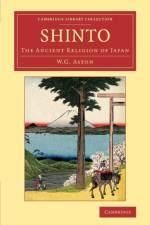
The diplomat and Japanese and Korean scholar William George Aston (1841-1911) wrote several highly regarded publications, particularly on the Japanese language. Condensed from his more comprehensive 1905 study of the subject, this 1907 work is a brief introduction to Shinto, the indigenous religion of Japan. Based on the worship of nature and ancestor spirits, Shinto has evolved throughout its history, particularly under Buddhist and Confucian influence. In the late nineteenth century it played a notable role in the revival of Japanese nationalism, and continued to be central to public life until 1945. This work focuses on describing Shinto's general character, and its myths and practices, drawing on early written sources based on the oral tradition. Aston's work has been criticised for its dependence on philological study of the early texts, but his expertise is undeniable. His groundbreaking History of Japanese Literature (1899) is also reissued in this series.
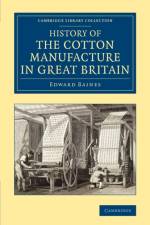
The journalist and politician Edward Baines (1800-90) succeeded his father as editor of the Leeds Mercury and as MP for Leeds. From a dissenting family, he was a social reformer but passionately believed that the state should not interfere in matters such as working hours and education. In this 1835 work, he sees the cotton industry as an exemplar of the unity of 'the manufactory, the laboratory, and the study of the natural philosopher', in making practical use of creative ideas and scientific discoveries. He surveys cotton manufacture from its origins to its 'second birth' in England, and focuses on the current state of machinery, trade and working conditions in all aspects of the business, and its outputs, including cloth, lace, stockings and cotton wool. This comprehensive work was important for its detailed analysis of a vital commercial activity, and remains so today for the historical information it contains.
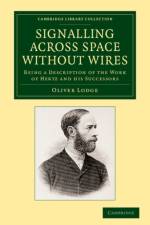
The early 1890s saw the development of wireless telegraphy. Although the behaviour of radio waves had been predicted by James Clerk Maxwell, the production of a working coherer occupied some of the greatest practical physicists of the time. A giant in the field was Heinrich Hertz (1857-94), who was among the first to discover that radio waves could travel independently of wires. When Hertz died, his work was continued and soon led to the development of the first wireless radios. This book, published in 1900, is the third edition of Sir Oliver Lodge's popular explanation of Hertz's work. Including the Royal Institution lecture that Lodge (1851-1940) gave in 1894, along with detailed diagrams, it covers the basic principles of radio waves and some of the theory surrounding telegraphic technology. Also included in this reissue is Lodge's 1924 lecture on electrical precipitation, discussing the scintillating possibility of altering atmospheric conditions through the use of electrical charges.
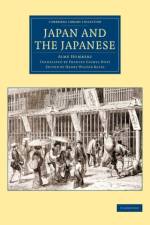
Taking advantage of his diplomatic privilege in Japan to travel further and inquire deeper than other foreigners, Swiss envoy Aime Humbert (1819-1900) brought back stories of life under the Tokugawa shogunate in its final years. First published in the journal Le Tour du monde in 1866, his account of Japanese history and daily life was republished as Le Japon illustre in 1870. This 1874 English translation brought readers up to date by including additional chapters on the 1868 revolution and its aftermath. Humbert focused his narrative on the history and culture of four locations: Benten, the foreign settlement at Yokohama; Kyoto, where emperors had resided for centuries; Kamakura, the old centre of political power; and Yeddo, now Tokyo, the new capital of Japan. Featuring almost 200 illustrations taken from Humbert's collection of prints and photographs, this book captures descriptively and pictorially a country on the verge of dramatic political and social change.
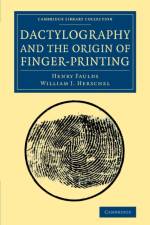
The Scottish doctor Henry Faulds (1843-1930) and the English judge Sir William James Herschel (1833-1917) both recognised the potential of fingerprints as a means of identification. While working in Japan, Faulds had developed his methods after noticing impressions on ancient pottery. Herschel, during his service as a magistrate in India, had introduced a system of using fingerprints as a way of preventing fraud. In the course of a lengthy controversy, Faulds sought to be acknowledged for the significance of his discoveries. Although there is no doubt that Faulds was first to publish on the subject, it was Herschel's work, begun in the 1850s, which was later developed by Galton and Henry as the tool of forensic science we know today. Reissued here together, these two works, first published in 1912 and 1916 respectively, are Faulds' overview of the subject and Herschel's account of his work in India.
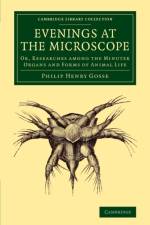
English zoologist Philip Henry Gosse (1810-88) spent several years studying the biodiversity of habitats in North America and the Caribbean. His Naturalist's Sojourn in Jamaica (1851) is reissued in this series. When he settled on the Devonshire coast, the area proved equally rich for research. In this 1859 publication, the deeply religious Gosse considers the 'Divine mechanics' of animal body parts and microorganisms seen through the lens of a microscope. He leads the reader through a selection of specimens ranging from a hog's bristle to the shoe-like protist Paramecium. Gosse's writing style, enlivened with anecdotes and literary references, earned him considerable appreciation among Victorian audiences. His entertaining text is complemented by more than 100 illustrations which showcase his draughtsmanship. While the work shares its year of publication with Darwin's groundbreaking Origin of Species, Gosse's religious views firmly shaped his interpretation of the specimens on show.
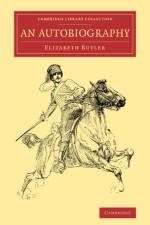
The young Elizabeth Butler (nee Thompson, 1846-1933) and her sister, the poet Alice Meynell, were educated at home by their wealthy father, and much of their childhood was spent in Italy. Elizabeth began to train as an artist at the Female School of Art, South Kensington, in 1866. She became famous for her work in the genre (unusual for a woman) of military art, one of her best known paintings being The Roll Call, an imagined incident from the Crimea. She took great trouble to ensure the accuracy of the detail of regimental uniform, and her depiction of the bravery and stoicism of the 'ordinary British soldier' was much appreciated in the late nineteenth century. This brisk and amusing 1922 autobiography, illustrated with her own sketches, takes the reader from her childhood through her artistic success to her life as the wife of a soldier and the mother of five children.
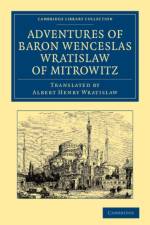
Of Czech ancestry, Albert Henry Wratislaw (1821-92) was educated at Rugby and Cambridge, and later became a prominent English public-school headmaster. At Cambridge he became interested in the literature and history of Bohemia and in 1849 he travelled there for the first time, quickly becoming proficient in the language. Upon his return home he began a lifetime of immersion in Czech literature. Published in 1862, this book was the first translation into English of a major Czech prose work. It is the vivid true story of a Bohemian nobleman's journey to, imprisonment in, and return from Constantinople in the late sixteenth century. Wratislaw's translation and brief introduction to Bohemian history proved popular and helped bring Czech literature and history to a wider audience.
Carl Gustav Jacob Jacobi (1804-51) was one of the nineteenth century's greatest mathematicians, as attested by the diversity of mathematical objects named after him. His early work on number theory had already attracted the attention of Carl Friedrich Gauss, but his reputation was made by his work on elliptic functions. Elliptic integrals had been studied for a long time, but in 1827 Jacobi and Niels Henrik Abel realised independently that the correct way to view them was by means of their inverse functions - what we now call the elliptic functions. The next few years witnessed a flowering of the subject as the two mathematicians pushed ahead. Adrien-Marie Legendre, an expert on the old theory, wrote: 'I congratulate myself that I have lived long enough to witness these magnanimous conflicts between two equally strong young athletes'. This Latin work, first published in 1829, is Jacobi's pioneering account of the new theory.
Delight in other people's errors never dates, and this little book, first published in 1893, is a fount of human folly and a joy to read. Its compiler, Henry Benjamin Wheatley (1838-1917), was a distinguished librarian, bibliographer and scholar, and a prolific author on London history and the history of books. This publication displays his great sense of humour, and his effortless command of far-flung sources in the search for a good joke. Citing examples from historians to misguided schoolboys, as well as from everyday conversation, Wheatley looks at comic misprints, misunderstandings, and garbled English in foreign parts. However, the book also has a more serious contribution to make: the chapter on printed errata makes use of the earliest evidence of proof correction by authors, and the analysis of misprints in early printing shows how many variant readings in the works of Shakespeare came about.
Comprising seven essays by learned contributors and controversially advocating a rationalist Christianity, this work became a sensation upon publication in 1860. Frederick Temple (1821-1902), later Archbishop of Canterbury, wrote on the cultural contributions of non-Christians; Roland Williams (1817-70), Professor of Hebrew at Lampeter, questioned Old Testament prophesies; Baden Powell (1796-1850), Oxford Professor of Geometry, challenged belief in miracles and embraced Darwinism; Henry Bristow Wilson (1803-88) questioned literal biblical history; the only lay contributor, Egyptologist Charles Wycliffe Goodwin (1817-78), embraced geology; Mark Pattison (1813-84), tutor at Lincoln College, wrote on the history of rationalist theology; and Benjamin Jowett (1817-93), Oxford Professor of Greek, advocated a historical reading of the Bible. Wilson and Williams were later found guilty of heresy by a Church court, though this was overturned on appeal. For readers interested in the theological controversies of the Victorian era, these essays remain invaluable.
An architect and architectural theorist, George Edmund Street (1824-81) was one of the key proponents of the 'High Victorian' Gothic style in nineteenth-century Britain. He is best known as the mind behind London's Royal Courts of Justice. Elected an associate of the Royal Academy in 1866, Street became its professor of architecture in 1880. In 1874 he received the gold medal of the Royal Institute of British Architects after John Ruskin declined it, and he served as the Institute's president in 1881. Street's Gothic architecture was influenced by continental examples: this book, first published in 1855, serves as an important source for interpreting his output. It is copiously illustrated, arranged as a travelogue of mostly pointed-arch architecture seen in Italy, and covers exterior and interior elevations, sculptural details, metalwork and furniture.
Professor of natural and experimental philosophy at the University of Cambridge, Robert Willis (1800-75) mostly lectured on mechanism, and was elected an honorary member of the Institution of Civil Engineers in 1838. But Willis's interests also included Italian Gothic architecture, and his observations on the style, amassed in 1832-3 while travelling in France, Italy and Germany, were presented in this book, first published in 1835. The work is a pioneering study of Italian Gothic, a mode overlooked by his contemporaries, and key examples are brought together. It places Italian Gothic architecture within a European context and argues that the style represents an evolutionary assemblage of architectural motifs from different places and earlier periods. Willis's narrative refocused attention on Italian Gothic, winning the approval of the Institution of British Architects, which made him an honorary member in the year of its publication.
Abonner på vårt nyhetsbrev og få rabatter og inspirasjon til din neste leseopplevelse.
Ved å abonnere godtar du vår personvernerklæring.