

Gjør som tusenvis av andre bokelskere
Abonner på vårt nyhetsbrev og få rabatter og inspirasjon til din neste leseopplevelse.
Ved å abonnere godtar du vår personvernerklæring.Du kan når som helst melde deg av våre nyhetsbrev.

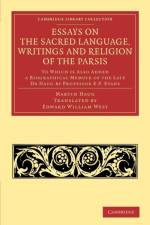
Published in English in 1884, this is the posthumous third edition of an 1862 study by the German orientalist Martin Haug (1827-76). He produced this groundbreaking analysis and comparison of Sanskrit and the Avesta while professor of Sanskrit at the Government College of Poona. His time in India enabled him to make an unprecedented study of Zoroastrian texts, becoming the first to translate the seventeen Gathas into a European language, thereby helping to highlight that they were composed by Zoroaster. Edward William West (1824-1905), an engineer and self-taught orientalist, met Haug in India. Having read this work's first edition, he was inspired to study further the Pahlavi language. On his and Haug's return to Europe in 1866, they worked closely together in translating and publishing Zoroastrian texts. West's edition of Haug's Essays includes several updates, unpublished papers from Haug's collection, appendices of further translations, and a biography of the author.
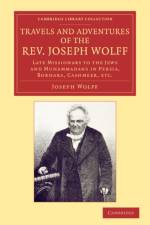
Published in 1861, this work in the third person, dictated by Joseph Wolff (1795-1862) to friends, is an epic miscellany of stories. Wolff, the son of a rabbi, had a peripatetic Middle European childhood. He converted to Christianity in 1812, studying Near Eastern languages in Vienna and Tubingen, and theology in Rome - until he was expelled by the Inquisition for heretical views. He eventually moved to England, working for the London Society for Promoting Christianity amongst the Jews. Beginning his mission in the Middle East, he later travelled to Afghanistan, Ethiopia, India, and the United States, where he preached to Congress. His eventful career saw him variously shipwrecked, enslaved, and forced to walk without clothes for 600 miles following a robbery. In 1847 he settled more quietly in a Somerset vicarage. Though characteristically orientalist (and with possible embellishments), this work remains an invigorating depiction of a lifetime's adventure.
Maurice Platnauer (1887-1974) published this seminal study of the metrical practices of the great Augustan elegists in 1951, and it is yet to be superseded. Principal of Brasenose College, Oxford, between 1956 and 1960, Platnauer examined every conceivable aspect of the versification of the three principal Latin elegiac poets, Tibullus, Propertius and Ovid, scrutinising in turn their prosody, word use and idiom. The book contains numerous tables of statistics comparing the frequency of various metrical and idiomatic usages among the three authors, including the placement of caesuras, use of elision, dactylic opening feet and polysyllabic line endings. This wealth of technical detail is offset by Platnauer's keen appreciation of the ultimate poetic purpose of these prosodic investigations: he explicitly hopes that the book will prove to be of use not only to teachers, but also to the 'not yet quite extinct genera' of writers of Latin verse.
Euclidean and other geometries are distinguished by the transformations that preserve their essential properties. Using linear algebra and transformation groups, this book provides a readable exposition of how these classical geometries are both differentiated and connected. Following Cayley and Klein, the book builds on projective and inversive geometry to construct 'linear' and 'circular' geometries, including classical real metric spaces like Euclidean, hyperbolic, elliptic, and spherical, as well as their unitary counterparts. The first part of the book deals with the foundations and general properties of the various kinds of geometries. The latter part studies discrete-geometric structures and their symmetries in various spaces. Written for graduate students, the book includes numerous exercises and covers both classical results and new research in the field. An understanding of analytic geometry, linear algebra, and elementary group theory is assumed.
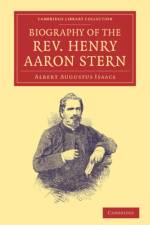
Henry Aaron Stern (1820-85), of German Jewish birth, moved to London in 1839, converted to Christianity and became a lifelong missionary for the London Society for Promoting Christianity amongst the Jews. With his wife he preached in Palestine, Babylon, Constantinople, Baghdad, Persia, and to the Karaite Jews of the Crimea. Famously, in 1863, he was caught in a diplomatic dispute in Ethiopia that led to his imprisonment and eventual rescue, five years later, by a British military force. Stern was made a doctor of divinity in 1881. He wrote three memoirs, which were drawn on by Albert Augustus Isaacs (1826-1903), a vicar at Leicester who knew Stern personally. Isaacs's biography, first published in 1886, is hagiographic and written with religiosity. Nonetheless, it includes informative accounts of missionary work among Jewish communities, and remains a valuable source on the orientalism of Victorian Britain.
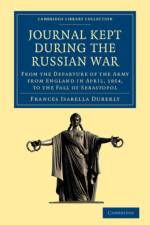
Frances Isabella Duberly (1829-1902) accompanied her officer husband to the Crimea as the only woman on the front line. Her letters home to her sister, highlighting the incompetence and negligence of the generals, and describing the appalling conditions in which the men were fighting, appeared anonymously in the press and, along with W. H. Russell's reports, helped stir public opinion against the prosecution of the war. This reaction persuaded Duberly to ask her brother-in-law to edit her diary, and it provoked a sensation when published in 1855. Although she occasionally conveys some of the elation of victory, the journal is more often a stark and disturbing document: following the battle of Balaclava she writes that 'even my closed eyelids were filled with the ruddy glare of blood'. No history of this brutal campaign can ignore this journal, and it stands comparison with any account of the horrors of war.
Educated in Prague, Vienna and Leipzig, Moritz Steinschneider (1816-1907) was a Jewish Bohemian orientalist with a deep understanding of classical and Semitic languages and cultures, specialising in bibliography. He edited twenty-one volumes of the journal Hebraische Bibliographie from 1859 to 1882, and his 1878 catalogue of the Hebrew manuscripts held in the Hamburg State Library is also reissued in this series. First published in 1877, this book is an elaborate record of Arabic polemic and apologetic literature among Muslims, Christians and Jews. The product of several decades of work, it offers detailed historical and bibliographic information on each item, alphabetical lists of titles and authors, an appendix of background information, and a useful index. Steinschneider's painstaking work remains of value to scholars of the Abrahamic religions and the history of interfaith relations.
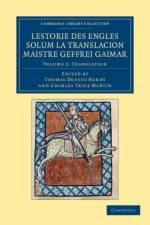
Published in two volumes for the Rolls Series between 1888 and 1889, this is the oldest surviving metrical chronicle in vernacular French. It was written by the Anglo-Norman poet and historian Geoffrei Gaimar (fl.1136-7), who lived in England at a time when French was still used among the aristocracy. The text is largely based on the Anglo-Saxon Chronicle and also draws on various French, English and Latin sources. Gaimar's unique perspective breaks with the tradition of religious chronicles by offering the first secular account of the history of England. Edited by archivist and antiquary Sir Thomas Duffus Hardy (1804-78) and Charles Trice Martin (1842-1914), Volume 2 is a translation of the original text into modern English. It covers the period from the arrival of Cerdic in 495 to the death of Henry I and includes the story of Havelok the Dane.
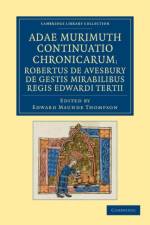
These two Latin chronicles are principally concerned with the events of the mid-fourteenth century, and are particularly interesting for their accounts of the French campaigns of Edward III in the 1340s and 1350s. The chronicle of Adam Murimuth (c.1275-1347), which the writer designed to be a continuation of earlier works, begins in 1303 and extends to 1347. Although it is meagre at first, its latter parts are much fuller as Murimuth was able to draw on contemporary accounts. The chronicle of the deeds of Edward III by Robert of Avesbury (d.1359) is a military history of his reign up to the year 1356. It makes use of important documents that are not reproduced elsewhere. Published in 1889, this edition by Edward Maunde Thompson (1840-1929) includes an introduction providing historical background and relating what little is known of each chronicler. The Latin texts are accompanied by English side-notes.
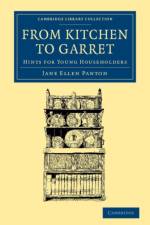
Jane Ellen Panton (1847-1923) was the second daughter of the artist William Powell Frith, and a journalist and author on domestic issues. First published in 1896, this was one of a series of advice guides written by Panton on life and work in the middle-class home. In it she offers ideas to those with 'middle sized incomes' for overcoming the pitfalls of suburban life, such as selecting the optimal location, avoiding noise and disputes between neighbours, decorating and furnishing the home, and employing various domestic techniques in order to achieve the 'perfect house and housekeeping'. Drawing on twelve years' experience of suburban living, the author makes suggestions for each part of the house, and the concluding chapter addresses the question of whether to employ a servant. Providing a revealing snapshot of life in late nineteenth-century England, this book will be of great interest to historians and sociologists.
The greatest postnatal killer of the nineteenth century was puerperal fever. A vicious and usually fatal form of septicaemia, puerperal or childbed fever was known to occur in maternity hospitals far more frequently than at home births, and to spread faster in crowded wards than in those with fewer patients. Its cause was unknown. In this precise statistical analysis of the facts, gathered from several sources across the major cities of Europe, Florence Nightingale (1820-1910) explores the mystery of puerperal fever and its possible causes. She stresses the necessity of good ventilation in hospitals, condemning those with overcrowded wards, and cites instances where the layout of wards has a noticeable correlation with the number of deaths. Published in 1871, just before Pasteur's work on germ theory proved that the problem could be all but eradicated if doctors washed their hands more rigorously, this work remains clear, scholarly and engaging.
In the years preceding the American Civil War, religion was at the heart of the debate over slavery. William Ellery Channing (1780-1842) had rejected the strict Calvinism of his background to become the leading Unitarian spokesman and preacher, and in later life he began to address the subject of slavery. Published in 1836, this work was Channing's most substantial contribution to the debate, revealing the real difficulties men such as Channing had in questioning a practice with which they had grown up. He vacillates between contempt for the institution and empathy for the slaveholders, writing, 'I do not intend to pass sentence on the character of the slave-holder.' He sees black slaves as humans, but not of equal status with white people. The final chapter is particularly prescient: 'There is a great dread ... that the union of the States may be dissolved by the conflict about slavery.'
The Christmas Rebellion (1831-2) saw the uprising of 60,000 Jamaican slaves, many of them followers of one Baptist preacher. Initially intended only as a peaceful strike, it escalated as estates were burned down and plantation owners killed. This 1832 pamphlet details the violence and persecution directed against nonconformists and missionaries, who were regarded as having been sympathetic towards the revolt. The materials were published by William Knibb, a Baptist minister, who in 1832 was summoned to appear before parliamentary committees investigating the state of the Caribbean colonies. His evidence and the rebellion itself are regarded as having quickened the pace of emancipation in Jamaica. The documents are reissued here with an 1837 narrative by James Williams, a youth who became an apprentice under the system that replaced slavery. He describes how conditions for former slaves were little improved, with many instances of harsh treatment and unjust imprisonment.
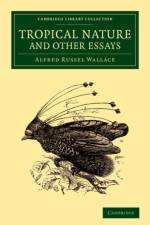
Sometimes referred to as 'the grand old man of science', Alfred Russel Wallace (1823-1913) was a naturalist, evolutionary theorist, and friend of Charles Darwin. In this study of tropical flora and fauna, he takes the reader on a tour of the equatorial forest belt - the almost continuous band of forest that stretches around the world between the tropics. There, chameleon-like caterpillars alter the colours of their cocoons, parasitical trees override their hosts with spectacular aerial root systems, and some of the most pressing questions of Victorian evolutionary science arise: how do animals and plants come to be brightly coloured? Can their adaptations provide clues about past geological eras? And was Darwin wholly correct in his theory of sexual selection? First published in 1878, Wallace's book is a skilfully written reflection of contemporary naturalism, still highly readable and relevant to students in the history of science.
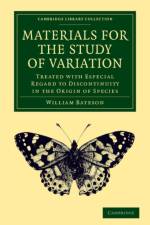
Building on the work of Darwin and Mendel, the biologist William Bateson (1861-1926) was the first scientist to combine the study of variation, heredity and evolution, and to use the term 'genetics'. This book was first published in 1894 after many years of experimental and theoretical work - particularly in the embryology of the acorn worm genus Balanoglossus - which had been guided by the principle that embryonic developmental stages replay the evolutionary transitions of adult forms of an organism's ancestors. Bateson was the first to challenge this theory, which made him unpopular among the scientific establishment of the time, but he was proved right. Organising his material by anatomical sections, Bateson explores speciation, phylogeny and discontinuous and continuous variation among a wide range of species, including vertebrates, invertebrates and plants. This pioneering work offers great insight into how the study of genetics and inheritance itself evolved.
Jane Ellen Panton (1847-1923) was the second daughter of the artist William Powell Frith, and a journalist and author on domestic issues. First published in 1887, this is the revised 1893 edition of her guide for young married couples on how to set up their first home. In it she draws on twenty-three years' experience of living in London to advise on everything from choosing a house and internal decoration to budgeting effectively and entertaining friends. Updated extensively, the book contains a thorough index, a selection of illustrations, and new information on many of the topics discussed. The author devotes each chapter to a different part of the house, and concludes by advising her readers to let 'love, beauty, carefulness and economy' rule their lives. Providing revealing insight into domestic middle-class life in late nineteenth-century England, this book remains of interest to historians and sociologists.
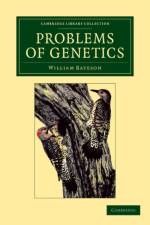
A key figure in the field of evolutionary biology, William Bateson (1861-1926) revived Mendelian methods of analysis to develop Darwin's theory of evolution, thereby pioneering the study of genetics. In these lectures, published at Yale in 1913, Bateson systematically chronicles the era's conflicting and developing theories on taxonomy, speciation, variation and hybridisation, and includes his own thoughts on continuous and discontinuous variation and its causes. Drawing on the comparative physiology and anatomy of species that he knew from his wide experience, citing detailed examples from across the taxonomic kingdoms, Bateson brings to life this exciting time in biology. Because the theories central to the modern understanding of genetics, heredity and evolution were formed at this time, this work remains valuable and relevant to students of biology and the history of science.
Eva Charlotte Ellis Luckes (1854-1919) was a pioneer of nursing training and friend of Florence Nightingale. In 1880, aged only twenty-six, she became Matron of the London Hospital, the largest hospital in England, a post she held until her death. During her time there she improved working conditions for the nurses and trained her own staff, recognising the importance of a knowledge of anatomy and physiology, but never losing sight of the primary duty of a nurse to care for a patient's needs. She opposed proposals for the registration of nurses as she believed it would endorse lower standards of training than those she espoused. Her popular textbook for ward sisters was first published in 1896 and provides practical advice on ward and staff management and training of probationers, emphasising the importance of the sister as role model and mentor to her staff. This is the 1893 third edition.
Renowned economic historian and clergyman William Cunningham (1849-1919) published this work in 1896, which is considered a companion volume to his seminal Essay on Western Civilisation. Educated at Edinburgh, Cambridge and Tubingen, Cunningham wrote widely on theology and economics. He was a Cambridge lecturer and fellow at Trinity, Professor of Economics at King's College London, a teacher at Harvard, a founding fellow of the British Academy, and President of the Royal Historical Society. Favouring historical empiricism over deductive theory, his work, labelled neo-mercantilist, was against laissez-faire and favoured economic regulation, social religion, and conservative incremental change. This book outlines these views as part of an analysis of the basic units of economic life - exchange, possessions, money, credit, selling, price, labour, trade, profit, interest, rent, wages - and how these interact within capitalism. The work strongly influenced contemporary thought and remains relevant in the historiography of economics.
Olive Schreiner (1855-1920), South African author and feminist, and friend of Havelock Ellis and Eleanor Marx, was one of the most important and challenging social commentators of her time. The ninth of twelve children, she lacked formal education and was taught by her mother. It was her 1883 novel Story of an African Farm that secured her reputation as an author and feminist, which her activities in England (1881-9) further consolidated. First published in 1911, this acclaimed feminist work, one of the most influential of the early twentieth century, established Schreiner's place in the Women's Movement. A reworking of an earlier manuscript destroyed during looting of her Johannesburg home by British soldiers, it considers how the role and position of women has been determined by the artificial constrictions of society. Schreiner ends the work with her vision of true equality between man and woman. This is the 1914 printing.
Jane Ellen Panton (1847-1923) was the second daughter of the artist William Powell Frith, and an expert on domestic issues. Published in 1909, this is a further collection of Panton's memoirs, following her earlier autobiography Leaves from a Life (also reissued in this series). It looks back on life in mid-nineteenth-century England and the changes that had taken place since then, beginning by asking the question of how much the present generation knew about their country's past. Over fifteen chapters, Panton explores developments in the nature and structure of institutions such as the family, the community, the church, the electorate and the military, deeming certain changes as negative, such as the decline of county families and the gentry, while welcoming others, such as increased opportunities for women. Providing revealing insight into English middle-class concerns in the nineteenth and early twentieth centuries, this book remains of interest to social historians.
Jane Ellen Panton (1847-1923) was the second daughter of the artist William Powell Frith, and a journalist and author on domestic issues. She grew up in London, where she developed an aesthetic and practical interest in the various homes she lived in, and went on to publish a series of advice guides on buying property, decorating, and running households. Given her family's background and diverse interests, art, literature and theatre were also prominent in her life, as well as law and religion. First published in 1908, this is Panton's revealing autobiography, in which she recalls the places she lived, as well as the painters, actors, writers, and religious and legal figures who were central to her family's circle, influencing her tastes and interests. Offering a portrait of a creative milieu in the late nineteenth and early twentieth centuries, this book is both historically valuable and highly readable.
Jane Ellen Panton (1847-1923) was the second daughter of the artist William Powell Frith, and an expert on domestic issues. First published in 1911, this is a further collection of her memoirs, following her earlier autobiography Leaves from a Life (also reissued in this series). The focus of this book is her close friend Basil Hodges and his great influence on her life. She describes Hodges, an artist she met in her childhood, as an 'underdog' whom she set out to help, and went on to support him through difficulties in his marriage and career, accompanying him on his travels. Her friendship with Hodges led her to travel abroad and meet a range of colourful characters, all recounted here in vivid and often humorous detail. Offering reflections on life in England and France in the later nineteenth and early twentieth centuries, this book has much to offer social historians.
A solicitor with offices in Scarborough, William Otter Woodall (1837-1914) was a prominent member of the local community. This work, edited by Woodall and first published in 1873, brings together reports of seven notable and intriguing nineteenth-century civil and criminal trials as case studies for the benefit of the legal profession. (It was intended as the first of a series, but no further volumes were published.) The book includes the case of the so-called 'Quaker' poisoner John Tawell, executed in 1845, who was the first person to be arrested with the aid of the electric telegraph and about whose fate several popular ballads were written; that of Abraham Thornton in 1818 - for the murder of Mary Ashford - who claimed the right to the ancient Norman tradition of trial by battle; and that of Reverend William Bailey, transported for life in 1843 to Van Diemen's Land for forgery. This colourful, engaging work will appeal to anyone with an interest in the law or true crime stories.
First published in 1869, this book describes the spiritualist activity of Scottish-born Daniel Dunglas Home (1833-86), who emerged as a medium in the United States in the wake of the Fox sisters' alleged 'spirit rappings' in the mid-nineteenth century. Written by the Irish journalist and politician Windham Thomas Wyndham-Quin, Lord Adare (1841-1926), who befriended Home in 1867, the book records Adare's observations of seventy-eight spiritualist sittings over two years, and reports verbatim the conversations between Home and the spirits with whom he was allegedly in contact. Adare also describes Home's supernatural interactions away from the formal setting of a seance. The accounts were originally written as private reports to Adare's father, the landowner and archeologist Edwin Wyndham-Quin, third Earl of Dunraven. Dunraven was deeply interested in spiritualist activity and wrote the introduction to this work, which also includes a classification of all spiritualist phenomena.
Jane Ellen Panton (1847-1923) was the second daughter of the artist William Powell Frith, and a journalist and author on domestic issues. First published in 1890, this was one of a series of advice guides written by Panton on life and work in the middle-class home. With each chapter focusing on a different area of the house, the book offers advice to young married couples on how to make their homes 'tasteful without undue expense' by devoting time and effort to renovation and furnishing, and by choosing decorative styles that would not date. The author encourages her readers to become 'house proud', and to this end suggests that men should learn basic carpentry and refurbishment skills, while women should become proficient in needlework, as opposed to 'dawdling' over 'mere society flutter'. Providing a revealing snapshot of life in late nineteenth-century England, this book will appeal to historians and sociologists.
The American artist George Catlin (1796-1872) travelled extensively and wrote about his experiences. After abandoning the legal profession, Catlin moved to Missouri in 1830 to launch his career as a painter of Native Americans with the express purpose of creating a gallery dedicated to America's indigenous population. He was greatly influenced by the Romantic ideal of the 'noble savage' and spent time living with various tribes, recording their everyday life and habits. In the 1850s, he also made three trips to South America and began to draw comparisons between the populations. He shares his thoughts in this work, published in 1868. Written for children and intended as a follow-up to his Life amongst the Indians (1861), the book is a mixture of legend, history, folklore and anecdotes of personal experience. Sometimes regarded as a pioneer of American anthropology, Catlin also outlines his ethnographical theories in the last few chapters.
First published in 1880, this study of the biology and geography of islands investigates some of the most pressing questions of nineteenth-century natural science. Why do countries as far-flung as Britain and Japan share similar flora and fauna when those of neighbouring islands in Malaysia are utterly unalike? What is the origin of life in New Zealand? And why do the geological formations of Scotland and Wales appear to be the result of glaciers when those countries lie in the temperate zone? Dismissing popular theories of submerged continents and 'special creation', Alfred Russel Wallace (1823-1913) presents extensive evidence of the mass migration of species, and of drastic and repeated climatic changes across the globe. Drawing on a vast range of sources and the newest ocean soundings to support his theories, Wallace wrote the text for the intelligent general reader. It remains a fascinating introduction to the subject matter today.
An important figure in British commercial mineralogy, John Mawe (1766-1829) first published this work in 1812; reissued here is the 1821 revised edition. Mawe and his wife ran a mineral-dealing business, based in Derby with a shop in London. Collecting specimens for the aristocracy, advising on explorations, and going on gathering tours, he also wrote on Derbyshire mineralogy, the South Seas, diamonds, geology and conchology. This book covers his voyage to South America in 1804, including his expedition in 1809 to the gold and diamond mining areas of Brazil. It also describes the local climate, people, natural history, trade and agriculture, and the splendour of such cities as Buenos Aires and Rio de Janeiro. A bestseller, found on library shelves across Europe - and aboard the Beagle with Charles Darwin - the book remains relevant in the history of mineralogy and will appeal to non-specialists interested in South American adventure.
Alexander von Humboldt (1769-1859), 'the greatest scientific traveller who ever lived' according to Darwin, made groundbreaking contributions to the fields of geography, oceanography, climatology and ecology. In 1804, he returned from a five-year exploration of Latin America with an incredible wealth of specimens and data which provided the foundations for his theories on the natural order. He expounds them in this book, which was printed in German in 1808 before being translated by the geographer Jean-Baptiste Benoit Eyries (1767-1846) and published in French in 1828. Humboldt does more than provide descriptions of the great features and phenomena of the Earth, ranging from the geological character of immense plains and steppes to the structure and action of volcanoes. He combines a rigorous scientific approach with his emotional and aesthetic responses to the natural world, thereby constructing a true 'philosophy of nature'.
Abonner på vårt nyhetsbrev og få rabatter og inspirasjon til din neste leseopplevelse.
Ved å abonnere godtar du vår personvernerklæring.