
















Gjør som tusenvis av andre bokelskere
Abonner på vårt nyhetsbrev og få rabatter og inspirasjon til din neste leseopplevelse.
Ved å abonnere godtar du vår personvernerklæring.Du kan når som helst melde deg av våre nyhetsbrev.

A new edition of the world-leading Cambridge Latin Course, re-energised for modern learners. Inspired by teacher feedback and research, the new course provides today''s learners with a more diverse and nuanced picture of the reality of Roman civilisation and history, while continuing to offer clear and extensive language support. Moving on from the destruction of Pompeii, Book 2 captures the drama of the daily lives of the inhabitants of two very different provinces at opposite ends of the Roman empire, Britain and Egypt.
THiNK Second edition is the English course that develops your students as learners and encourages them to think big - in English.
This element shows, based on a review of the literature, how digital technology has affected liberal democracies with a focus on three key aspects of democratic politics: political communication, political participation, and policy-making. The impact of digital technology permeates the entire political process, affecting the flow of information among citizen and political actors, the connection between the mass public and political elites, and the development of policy responses to societal problems. This element discusses how digital technology has shaped these different domains, identifies areas of research consensus as well as unresolved questions, and argues that a key perspective involves issue definition, that is, how the nature of the problems raised by digital technology is subject to political contestation.
Sociological Approaches to Theories of Law applies empirical insights to examine theories of law proffered by analytical jurisprudents. The topics covered include artifact legal theory, law as a social construction, idealized accounts of the function of law, the dis-embeddeness of legal systems, the purported guidance function of law, the false social efficacy thesis, missteps in the quest to answer 'What is law?', and the relationship between empiricism and analytical jurisprudence. The analysis shows that on a number of central issues analytical jurisprudents assert positions inconsistent with the social reality of law. Woven throughout the text, the author presents a theoretically and empirically informed account of law as a social institution. The overarching theme is that philosophical claims about the nature of law can be tested and improved through greater empirical input.
China registered double-digit GDP growth for more than three decades. Recently, the rate has slowed down considerably. The slow growth period, which Chinese policymakers refer to as the 'new-normal', has created enormous curiosity among scholars and policymakers. In particular, scholars often tend to project if China is destined to follow Japan's fate. Insufficient reforms in the banking sector in commensuration with the real economy in Japan resulted in an unprecedented financial catastrophe. Similarly, an asymmetric development between the Chinese banking sector and the real economy is observed. This leads to an interesting question: is China destined to meet Japan's legacy? This Element attempts to answer this question. In so doing, it delves deep into the banking sector reforms of China. The Element concludes that China is not on course to meet an immediate financial chaos, but the country needs further banking reforms to avoid a potential crisis.
Does the language we speak affect the way we think? This Element provides a synthesis of contemporary research on the interplay between language and cognition in speakers of two or more languages and examines variables deemed to impact bilingual acquisition and conceptualization of language-specific thinking patterns during L2 learning. An overview of different yet interrelated studies is offered across a variety of conceptual domains to illustrate different approaches and key variables. The comparison of monolingual and bilingual data demonstrates the highly integrative nature between L2 learning and the changing of one's entire cognitive outlook in L2 speakers. This Element makes relevant connections between language learning and bilingual cognition, aiming to shed new light on how learners acquire conceptual distinctions of the target language(s). It also raises theoretical and pedagogical issues that encourage teachers to reflect upon how to incorporate recent advances in language-and-cognition research with aspects of L2 teaching.
Islam is the only biblical religion that still practices animal sacrifice. Indeed, every year more than a million animals are shipped to Mecca from all over the world to be slaughtered during the Muslim Hajj. This multi-disciplinary volume is the first to examine the physical foundations of this practice and the significance of the ritual. Brannon Wheeler uses both textual analysis and various types of material evidence to gain insight into the role of animal sacrifice in Islam. He provides a 'thick description' of the elaborate camel sacrifice performed by Muhammad, which serves as the model for future Hajj sacrifices. Wheeler integrates biblical and classical Arabic sources with evidence from zooarchaeology and the rock art of ancient Arabia to gain insight into an event that reportedly occurred 1400 years ago. His book encourages a more nuanced and expansive conception of "e;sacrifice"e; in the history of religion.
This Element explores the roles of explicit and implicit learning in second language acquisition. The authors lay out some key issues that they take to underlie the debate on the extent to which second language acquisition involves explicit learning, implicit learning, or both. They also discuss what they take to be an oversight in the field: namely, the lack of clear definitions of key constructs. Taking a generative perspective on the nature of language, while addressing alternative approaches at key points, they refocus the discussion of explicit and implicit learning by first asking what must be learned (i.e., what is this mental representation we call "e;language"e; that all functioning humans possess?) The discussion and research reviewed leads to the conclusion that second language acquisition is largely if not exclusively implicit in nature and that explicit learning plays a secondary role in how learners grapple with meaning.
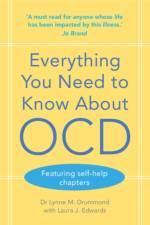
Do you ever find yourself overwhelmed by troublesome and persistent thoughts that make you feel anxious? Do you feel an urge to wash your hands repeatedly, or check appliances over and over, to help ease your anxiety? Do you feel panicked about what might happen if you did not perform these rituals? You may be struggling with Obsessive Compulsive Disorder (OCD). OCD is a common, yet distressing condition, but one that is responsive to modern treatments. Everything You Need to Know About OCD gives you a comprehensive insight in to this condition, how to spot symptoms of it in yourself or a loved one, and outlines the treatment options available. The book features self-help chapters that guide you through Graded Exposure therapy, a highly effective psychological treatment for OCD. These chapters will equip you with strategies to banish unwanted thoughts and help you regain control of your life.
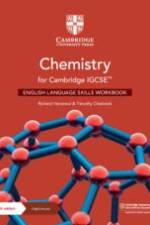
This English language skills workbook with digital access helps learners develop their language skills in the context of the Cambridge IGCSE(TM) Chemistry syllabus. Each chapter contains exercises that combine the science content with relevant language skills. Exercises provide opportunities for students to practise using key language in different ways, such as using sentence stems in their writing; speaking and listening with peers, or group work. Activities range from practising using the passive form of verbs in the context of electrolysis to the naming of chemical substances using common prefixes. Answers can be found online at www.cambridge.org/go.
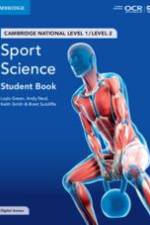
This print and digital student book covers all units for the redeveloped Cambridge National in Sport Science, with an easy-to-follow visual layout and accessible language to stimulate students' interest. Takes a scaffolded, activity-based approach to understanding the content, written at just the right level, helping to engage students in their learning and give them the confidence to progress. Provides lots of activities to help students develop the knowledge and skills to complete their assessments. Bite-sized learning topics build understanding of essential concepts and are supported by case studies with three levels of differentiated questions to support all students.
This student book with digital edition covers all units for the redeveloped Cambridge National in Enterprise and Marketing, with an easy-to-follow visual layout and accessible language to stimulate students' interest. Takes a scaffolded, activity-based approach to understanding the content, written at just the right level, helping to engage students in their learning and give them the confidence to progress. Provides lots of activities to help students develop the knowledge and skills to complete their assessments. Bite-sized learning topics build understanding of essential concepts and are supported by case studies with three levels of differentiated questions to support all students
Comprehensive second editions of History for the IB Diploma Paper 2, revised for first teaching in 2015.
Get your students thinking critically. A six-level skills-based English course.
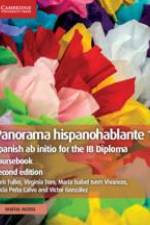
An expertly written IB Spanish ab initio course now updated for first examination 2020.
Develop your learners' skills in creative writing and writing for a purpose.
Weber provides an economic analysis of current, post-crash monetary reform proposals, including Bitcoin, sovereign money, regional money and modern monetary theory. The book critically examines these reform concepts, exposing their flaws and fallacies, guiding the reader towards a contemporary understanding of what money is and how it works today.
During the recent financial crisis, the conflict between sovereign states and banks over who controls the creation of money was thrown into sharp relief. This collection investigates the relationship between government debt and banks' mobile capital, and the critical junctures in these conflicts over the social-economic purposes of money creation.
This book focuses perspectives on finance and banking on predicting future financial crises. It is for students and scholars in financial regulation, banking and macroprudential policy-making, as well as practitioners working in central banks and other financial institutions concerned with risk management and financial regulation.
In this book Tobias Hoffmann studies the medieval free will debate during its liveliest period, from the 1220s to the 1320s, and clarifies its background in Aristotle, Augustine, and earlier medieval thinkers. Among the wide range of authors he examines are not only well-known thinkers such as Thomas Aquinas, Duns Scotus, and William of Ockham, but also a number of authors who were just as important in their time and deserve to be rediscovered today. To shed further light on their theories of free will, Hoffmann also explores their competing philosophical explanations of the fall of the angels, that is, the hypothesis of an evil choice made by rational beings under optimal psychological conditions. As he shows, this test case imposed limits on tracing free choices to cognition. His book provides a comprehensive account of a debate that was central to medieval philosophy and continues to occupy philosophers today.
Post-war legal scholars commonly consider the Third Reich's judicial system to be the paradigm of 'evil law'. By examining how crucial parts of this distorted normative order evolved and were justified by regime-loyal legal theorists, we can appreciate how law can bend to a political ideology and fail to keep state power from transgressing elementary standards of humanity and the rule of law. From 1933 to 1939, a flood of publications reflected on the question of how to adapt law to the political ends of National Socialism, debating both the normative and constitutional foundations of the National Socialist state, and the proper form and content of criminal and police law in this new political framework. These debates, the main threads of which are central to this book, reveal the normative ideas driving the Fuhrer state and the legal subtext to the Nazi regime's escalating atrocities.
Explores differences in beliefs of what constitutes reliable scientific evidence during public health emergencies, including COVID-19. It stresses the need to assess evidence on the basis of narratives and values rather than on purely scientific criteria. This title is also available as Open Access on Cambridge Core.
Abonner på vårt nyhetsbrev og få rabatter og inspirasjon til din neste leseopplevelse.
Ved å abonnere godtar du vår personvernerklæring.