


















Gjør som tusenvis av andre bokelskere
Abonner på vårt nyhetsbrev og få rabatter og inspirasjon til din neste leseopplevelse.
Ved å abonnere godtar du vår personvernerklæring.Du kan når som helst melde deg av våre nyhetsbrev.

It is estimated that of Syria's pre-war population, over half have been displaced from their homes, some having moved abroad and many remaining in the country despite the threats posed by civil war from Bashar Assad's government, ISIS, foreign intervention, and a proliferation of rebel groups and militias. Despite this, migration is just one option out of a broad set of potential self-protection strategies available to civilians, with other strategies including fighting, protesting, collaborating, or hiding. In this study, Justin Schon emphasises that civilian behaviour in conflict zones includes repertoires of survival strategies, instead of migration alone. Providing a microanalysis of civilian self-protection strategies during armed conflict in Syria, Schon draws on ten months of fieldwork in Turkey, Jordan, Kenya, and the United States, with over two hundred structured interviews with Syrian refugees. Exploring how civilians select specific survival strategies, their motives and opportunities, he reveals questions which have the potential to guide new research on civil wars, and affect how we think about other survival strategies, from political, violent, to environmental threats.
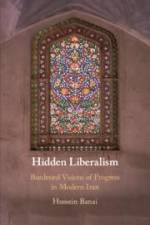
Compared to rival ideologies, liberalism has fared rather poorly in modern Iran. This is all the more remarkable given the essentially liberal substance of various social and political struggles - for liberal legality, individual rights and freedoms, and pluralism - in the century-long period since the demise of the Qajar dynasty and the subsequent transformation of the country into a modern nation-state. The deeply felt but largely invisible purchase of liberal political ideas in Iran challenges us to think more expansively about the trajectory of various intellectual developments since the emergence of a movement for reform and constitutionalism in the late nineteenth century. It complicates parsimonious accounts of Shi'ism, secularism, socialism, nationalism, and royalism as defining or representative ideologies of particular eras. Hidden Liberalism offers a critical examination of the reasons behind liberalism's invisible yet influential status, and its attendant ethical quandaries, in Iranian political and intellectual discourses.
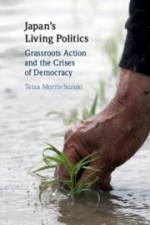
The first two decades of the twenty-first century have witnessed a rise of populism and decline of public confidence in many of the formal institutions of democracy. This crisis of democracy has stimulated searches for alternative ways of understanding and enacting politics. Against this background, Tessa Morris-Suzuki explores the long history of informal everyday political action in the Japanese context. Despite its seemingly inflexible and monolithic formal political system, Japan has been the site of many fascinating small-scale experiments in 'informal life politics': grassroots do-it-yourself actions which seek not to lobby governments for change, but to change reality directly, from the bottom up. She explores this neglected history by examining an interlinked series of informal life politics experiments extending from the 1910s to the present day.
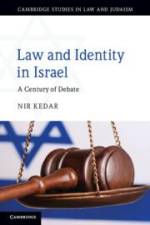
What makes Israeli law Israeli? Why is the word 'Jewish' almost entirely absent from Israeli legislation? How did Israel succeed in eluding a futile and dangerous debate over identity, and construct a progressive, independent, original and sophisticated legal system? Law and Identity in Israel attempts to answer these questions by looking at the complex bond between Zionism and the Jewish culture. Forging an original and 'authentic' Israeli law that would be an expression and encapsulation of Israeli-Jewish identity has been the goal of many Jewish and Zionist jurists as well as public leaders for the past century. This book chronicles and analyzes these efforts, and in the process tackles the complex meaning of Judaism in modern times as a religion, a culture, and a nationality. Nir Kedar examines the challenges and difficulties of expressing Judaism, or transplanting it into, the laws of the state of Israel.
This book elaborates, illuminates, and illustrates a confident and attractive account of social and political liberalism in light of a rich understanding of flourishing and fulfilment rooted in a version of natural law theory. Examining issues in ethics, law, and politics - including consumer responsibility, the assignment of grades by teachers, deception by lawyers, war and empire, and the use of victim-impact statements in parole decisions - Gary Chartier shows how natural law theory can effectively support pluralism, diversity, social equality, integrity, peace, and freedom.
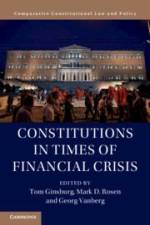
Many constitutions include provisions intended to limit the discretion of governments in economic policy. In times of financial crises, such provisions often come under pressure as a result of calls for exceptional responses to crisis situations. This volume assesses the ability of constitutional orders all over the world to cope with financial crises, and the demands for emergency powers that typically accompany them. Bringing together a variety of perspectives from legal scholars, economists, and political scientists, this volume traces the long-run implications of financial crises for constitutional order. In exploring the theoretical and practical problems raised by the constitutionalization of economic policy during times of severe crisis, this volume showcases an array of constitutional design options and the ways they channel governmental responses to emergency.
Examining a key puzzle in the study of electoral violence, this study asks how elites organize violence and why ordinary citizens participate. While existing theories of electoral violence emphasize weak institutions, ethnic cleavages, and the strategic use of violence, few specify how the political incentives of elites interact with the interests of ordinary citizens. Providing a new theory of electoral violence, Kathleen F. Klaus analyzes violence as a process of mobilization that requires coordination between elites and ordinary citizens. Drawing on fifteen months of fieldwork in Kenya, including hundreds of interviews and an original survey, Political Violence in Kenya argues that where land shapes livelihood and identity, and tenure institutions are weak, land, and narratives around land, serve as a key device around which elites and citizens coordinate the use of violence. By examining local-level variation during Kenya's 2007-8 post-election violence, Klaus demonstrates how land struggles structure the dynamics of contentious politics and violence.
This book identifies a set of principles and corresponding tax settings that countries may apply to cross-border income derived by, through, or from a trust and will appeal to international tax practitioners, administrators, policymakers, academics, and students.
The advent of the CRISPR/Cas9 class of genome editing tools is transforming not just science and medicine, but also law. When the genome of germline cells is modified, the modifications could be inherited, with far-reaching effects in time and scale. Legal systems are struggling with keeping up with the CRISPR revolution and both lawyers and scientists are often confused about existing regulations. This book contains an analysis of the national regulatory framework in eighteen selected countries. Written by national legal experts, it includes all major players in bioengineering, plus an analysis of the emerging international standards and a discussion of how international human rights standards should inform national and international regulatory frameworks. The authors propose a set of principles for the regulation of germline engineering, based on international human rights law, that can be the foundation for regulating heritable gene editing both at the level of countries as well as globally.
In this major new study, Margherita Zanasi argues that basic notions of a free market economy emerged in China a century and half earlier than in Europe. In response to the commercial revolutions of the late 1500s, Chinese intellectuals and officials called for the end of state intervention in the market, recognizing its power to self-regulate. They also noted the elasticity of domestic demand and production, arguing in favour of ending long-standing rules against luxury consumption, an idea that emerged in Europe in the late seventeenth and early nineteenth centuries. Zanasi challenges Eurocentric theories of economic modernization as well as the assumption that European Enlightenment thought was unique in its ability to produce innovative economic ideas. She instead establishes a direct connection between observations of local economic conditions and the formulation of new theories, revealing the unexpected flexibility of the Confucian tradition and its accommodation of seemingly unorthodox ideas.
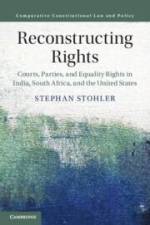
Judges often behave in surprising ways when they re-interpret laws and constitutions. Contrary to existing expectations, judges regularly abandon their own established interpretations in favor of new understandings. In Reconstructing Rights, Stephan Stohler offers a new theory of judicial behavior which demonstrates that judges do not act alone. Instead, Stohler shows that judges work in a deliberative fashion with aligned partisans in the elected branches to articulate evolving interpretations of major statutes and constitutions. Reconstructing Rights draws on legislative debates, legal briefs, and hundreds of judicial opinions issued from high courts in India, South Africa, and the United States in the area of discrimination and affirmative action. These materials demonstrate judges' willingness to provide interpretative leadership. But they also demonstrate how judges relinquish their leadership roles when their aligned counterparts disagree. This pattern of behavior indicates that judges do not exercise exclusive authority over constitutional interpretation. Rather, that task is subject to greater democratic influence than is often acknowledged.
We are at a time when international law and the law of war are particularly important. The testing of nuclear weapons that is being used in the rhetoric surrounding threats of war is creating new fears and heightening current tensions. Richard Falk has for decades been an outspoken authority calling for nuclear disarmament and the enforcement of non-proliferation treaties. In this collection of essays, Falk examines the global threats to all humanity posed by nuclear weapons. He is not satisfied with accepting arms control measures as a managerial stopgap to these threats and seeks no less than to move the world back from the nuclear precipice and towards denuclearization. Falk's essays reflect the wisdom and innovative thinking he has brought to his long career as a scholar and activist, as he reminds nuclear weapons states of their obligation under international law and moral imperative to seek nuclear disarmament.
Natural law has long been considered the traditional source of Roman Catholic canon law. However, new scholarship is critical of this approach as it portrays the Catholic Church as static, ahistorical, and insensitive to cultural change. In its attempt to stem the massive loss of effectiveness being experienced by canon law, the church has to reconsider its theory of legal foundation, especially its natural law theory. Church Law in Modernity analyses the criticism levelled at the church and puts forward solutions for reconciling church law with modernity by revealing the historical and cultural authenticity of all law, and revising the processes of law making. In a modern church, there is no way of thinking of the law without the participation of the faithful in legislation. Judith Hahn therefore proposes a reformed legislative process for the church in the hope of reconciling the natural law origins of church law with a new, modern theology.
With events and movements such as #MeToo, the Gender Equality UN Sustainable Development Goal, the Irish and Chilean abortion policy changes, and the worldwide Women's March movement, women's rights are at the top of the global public agenda. Yet, countries around the world continue to debate if and how women should have access to reproductive rights, and specifically abortion. This book provides the most comprehensive comparative review of this topic to date. How are reproductive rights produced? This book analyzes three spheres of influence on abortion policymaking: civil society, national government, and international bodies. It engages scholars as well as undergraduate and graduate students in social sciences, law, gender studies, and development and sustainability studies. With insights into the influence of intergovernmental bodies, international health organizations, state-level political representatives, and religious civil society players, this book will be of interest to policymakers, organizations and individuals concerned with influencing reproductive policy.
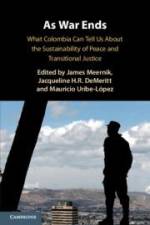
For decades a bitter civil war between the Colombia government and armed insurgent groups tore apart Colombian society. After protracted negotiations in Havana, a peace agreement was accepted by the Colombian government and the FARC rebel group in 2016. This volume will provide academics and practitioners throughout the world with critical analyses regarding what we know generally about the post-war peace building process and how this can be applied to the specifics of the Colombian case to assist in the design and implementation of post-war peace building programs and policies. This unique group of Colombian and international scholars comment on critical aspects of the peace process in Colombia, transitional justice mechanisms, the role of state and non-state actors at the national and local levels, and examine what the Colombian case reveals about traditional theories and approaches to peace and transitional justice.
How do we begin to handle the greatest crisis affecting humanity today? Climate change is already causing droughts, flooding, and famine that are forcing people to leave their livelihoods and communities. In the years to come, millions will find their local areas uninhabitable, as mass displacement of people reaches disastrous levels. Handling Climate Displacement explains how climate change has become recognized as a human rights concern, and how human rights are key to managing the crisis. Local authorities and populations increasingly call for guidance in the absence of an internationally recognized framework. Drafted in 2013 by a committee of experts and practitioners, Hassine uses the Peninsula Principles on Climate Displacement within States to offer concrete solutions to the impending emergency. Enriched by the author's experience working with the victims of climate displacement, this book offers an effective framework to deal with the challenges presented by mass displacement while protecting human rights.
A fascinating history of nineteenth century Eastern Mediterranean port cities, which re-examines the European influence over the urban space, leisure practises, and the formation of class, gender and national identity, providing an alternative view of the relationship between the Islamic World and Europe.
This book brings together research on democratization processes and constitutional justice by examining the role of three generations of European constitutional courts in the transitions to democracy that took place in Europe in the twentieth century. Using a comparative perspective, the author examines how the constitutional courts during that period managed to ensure an initial full implementation of the constitutional provisions, thus contributing - together with other actors and factors - to the positive outcome of the democratization processes. European Constitutional Courts and Transitions to Democracy provides a better understanding of the relationship between transitions to democracy and constitutionalism from the perspective of constitutional courts.
Solas discusses the incentives and economics of third party funding transactions in different legal contexts while explaining how the practice emerged, how it is likely to develop, and how its development will impact society at large. This book will appeal to academics, litigation lawyers, insolvency practitioners, and corporate legal counsel.
Abonner på vårt nyhetsbrev og få rabatter og inspirasjon til din neste leseopplevelse.
Ved å abonnere godtar du vår personvernerklæring.