















Gjør som tusenvis av andre bokelskere
Abonner på vårt nyhetsbrev og få rabatter og inspirasjon til din neste leseopplevelse.
Ved å abonnere godtar du vår personvernerklæring.Du kan når som helst melde deg av våre nyhetsbrev.

This book will be required reading for anyone interested in the history of the doctrine of original sin or Christianity and science. It offers a groundbreaking discussion of Thomas Aquinas in his medieval context. Moreover, it defends a view of original sin that is compatible with mainstream evolutionary biology.
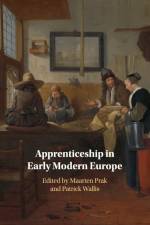
This is the first comparative and comprehensive account of occupational training before the Industrial Revolution. Apprenticeship was a critical part of human capital formation, and, because of this, it has a central role to play in understanding economic growth in the past. At the same time, it was a key stage in the lives of many people, whose access to skills and experience of learning were shaped by the guilds that trained them. The local and national studies contained in this volume bring together the latest research into how skills training worked across Europe in an era before the emergence of national school systems. These essays, written to a common agenda and drawing on major new datasets, systematically outline the features of what amounted to a European-wide system of skills education, and provide essential insights into a key institution of economic and social history.
"A partially-auxetic metamaterial is introduced, inspired by the Maltese cross. Each unit of this metamaterial consists of a pair of counter-rotating equal-armed crosses, which is interconnected to neighboring units via hinge rods and connecting rods. Based on linkage theory, the on-axes Poisson's ratio was established considering a two-fold symmetrical mechanism, while the (anti)tetrachiral mechanisms were identified for on-axes uniaxial compression. A shearing mechanism is suggested for pure shearing and diagonal loading of the metamaterial with square array. Results suggest that the approximated infinitesimal models are valid for the Poisson's ratio of the two-fold symmetrical and the (anti)tetrachiral mechanisms under on-axis tension and compression, respectively; however, the finite model is recommended for quantifying the Poisson's ratio under pure shear and off-axis loading. This metamaterial manifests microstructural trinity, in which three different loading modes result in three different groups of deformation mechanisms. Finally, suggestions are put forth for some unsolved predictive problems"--
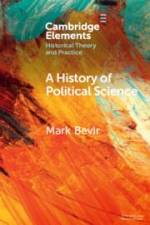
"This Element denaturalizes political science, stressing the contestability and contingency of ideas, traditions, subfields, and even the discipline itself. The history of political science is less one of scholars testing and improving theories by reference to data than of their appropriating and transforming ideas, often obscuring or obliterating former meanings, to serve new purposes in shifting political contexts. Political science arose in the late nineteenth century as part of a wider modernism that replaced earlier developmental narratives with more formal explanations. It changed as some scholars yoked together behavioural topics, quantitative techniques, and positivist theory, and as other scholars rejected their doing so. Subfields such as international relations remained semi-detached and focussed on policy as much as theory. Furthermore, the shifting fashions within political science - modernism, behaviouralism, realism, neoliberalism, the new institutionalism - have informed the policies by which governments have tried to tame contingency and govern people"--
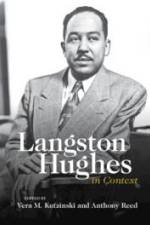
"Langston Hughes was among the most influential African American writers of the twentieth century. He inspired and challenged readers from Harlem to the Caribbean, Europe, South America, Asia, the African continent, and beyond. To study Langston Hughes is to develop a new sense of the twentieth century. He was more than a man of his times; emerging as a key member of the Harlem Renaissance, his poems, plays, journalism, translations, and prose fiction documented and shaped the world around him. The twenty-nine essays in this volume engage his at times conflicting investments in populist and modernist literature, his investments in freedom in and beyond the US, and the many genres through which he wrote. Langston Hughes in Context considers the places and experiences that shaped him, the social and cultural contexts in which he wrote, thought and travelled, and the international networks that forged and secured his life and reputation"--
If you think that statistics has nothing to say about what you do or how you could do it better, then you are either wrong or in need of a more interesting job. Stephen Senn explains here how statistics determines many decisions about medical care, from allocating resources for health, to determining which drugs to license, to cause-and-effect in relation to disease. He tackles big themes: clinical trials and the development of medicines, life tables, vaccines and their risks or lack of them, smoking and lung cancer and even the power of prayer. He entertains with puzzles and paradoxes and covers the lives of famous statistical pioneers. By the end of the book the reader will see how reasoning with probability is essential to making rational decisions in medicine, and how and when it can guide us when faced with choices that impact on our health and even life.
The field of mathematical psychology began in the 1950s and includes both psychological theorizing, in which mathematics plays a key role, and applied mathematics motivated by substantive problems in psychology. Central to its success was the publication of the first Handbook of Mathematical Psychology in the 1960s. The psychological sciences have since expanded to include new areas of research, and significant advances have been made both in traditional psychological domains and in the applications of the computational sciences to psychology. Upholding the rigor of the original Handbook, the New Handbook of Mathematical Psychology reflects the current state of the field by exploring the mathematical and computational foundations of new developments over the last half-century. The third volume provides up-to-date, foundational chapters on early vision, psychophysics and scaling, multisensory integration, learning and memory, cognitive control, approximate Bayesian computation, and encoding models in neuroimaging.
"Seeking Justice: Access to Remedy for Corporate Human Rights Abuse explores victims' varying experiences in seeking remedy mechanisms for corporate human rights abuse. It puts forward a novel theory about the possibility of productive contestation and explores governance outcomes for victims of corporate human rights abuse across Latin America. This foundation informs three pathways that victims can use to press for their rights: working within the institutional environment, capitalizing on corporate characteristics, and elevating voices. Seeking Justice challenges the common assumptions in the governance gap literature and argues instead that greater democratic practices can emerge from productive contestation. This book brings to bear tough questions about the trade-offs associated with economic growth and conflicting values around human dignity - questions that are very salient today, as citizens around the globe contemplate the types of democratic and economic systems that might better prepare us for tomorrow"--
"Focused on conservative writers of the long Restoration, this book reveals a synergistic relationship between postsecularity and the modern sphere of literature. Its provocative account of the relationship between literature and politics is stimulating for scholars of eighteenth-century culture, literary studies, religion, and postsecularity"--
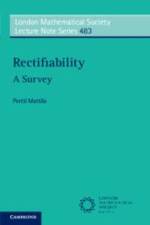
"This short book gives an overview of rectifiability and its deep connections with surprisingly large parts of mathematics. It avoids long technical arguments in favour of the big picture, with full references given via an extensive bibliography, giving readers an easily digestible presentation of this wide and active field"--
"This pioneering work explores a new wave of widely overlooked conflicts that have emerged across the Andean region, coinciding with the implementation of internationally acclaimed indigenous rights. Why are groups that have peacefully cohabited for decades suddenly engaging in hostile and, at times, violent behaviours? What is the link between these conflicts and changes in collective self-identification, claim-making, and rent-seeking dynamics? And how, in turn, are these changes driven by broader institutional, legal and policy reforms? By shifting the focus to the 'post-recognition', this unique study sets the agenda for a new generation of research on the practical consequences of the employment of ethnic-based rights. To develop the core argument on the links between recognition reforms and 'recognition conflicts', Lorenza Fontana draws on extensive empirical material and case studies from three Andean countries - Bolivia, Colombia and Peru - which have been global forerunners in the implementation of recognition politics. Lorenza B. Fontana is Associate Professor of International Politics in the School of Social and Political Sciences at the University of Glasgow. Her research has addressed questions around the ethnic politics of socio-environmental conflicts, the domestic politics of human rights of vulnerable groups, and, more recently, the contentious politics of wildfires"--
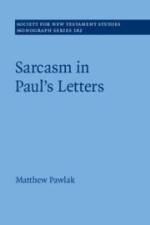
"In this book, Matthew Pawlak offers the first treatment of sarcasm in New Testament studies. He provides an extensive analysis of sarcastic passages across the undisputed letters of Paul, showing where Paul is sarcastic, and how his sarcasm affects our understanding of his rhetoric and relationships with the Early Christian congregations in Galatia, Rome, and Corinth. Pawlak's identification of sarcasm is supported by a dataset of 400 examples drawn from a broad range of ancient texts, including major case studies on Septuagint Job, the prophets, and Lucian of Samosata. These data enable the determination of the typical linguistic signals of sarcasm in ancient Greek, as well as its rhetorical functions. Pawlak also addresses several ongoing discussions in Pauline scholarship. His volume advances our understanding of the abrupt opening of Galatians, diatribe and Paul's hypothetical interlocutor in Romans, the "Corinthian slogans" of First Corinthians, and the "fool's speech" found within Second Corinthians 10-13"--
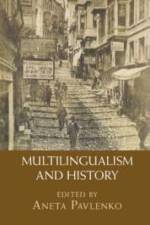
"We often hear that our world "is more multilingual than ever before," but is it true? This book shatters that clichâe. It is the first volume to shine the light on the millennia-long history of multilingualism as a social, institutional, and demographic phenomenon. Its fifteen chapters, written in clear, accessible language by prominent historians, classicists, and sociolinguists, span the period from the third century BC to the present day, and range from ancient Rome and Egypt to medieval London and Jerusalem, from Russian, Ottoman, and Austro-Hungarian empires to modern Norway, Ukraine, and Spain. Going against the grain of traditional language histories, these thought-provoking case studies challenge stereotypical beliefs, foreground historic normativity of institutional multilingualism and language mixing, examine the transformation of polyglot societies into monolingual ones, and bring out the cognitive and affective dissonance in present-day orientations to multilingualism, where "celebrations of linguistic diversity" coexist uneasily with the creation of "language police.""--
"At the same time as it demonstrates how the theater transformed early modernity's crisis of uncertainty into stage spectacle, this book supplies a new account of early modern theatrical experience, one that is informed by the period's culture of playgoing and material conditions of performance"--
"Since the late twentieth century, multicultural reforms to benefit minorities have swept through Latin America, however, in Colombia ethno-racial inequality remains rife. "Becoming Heritage" evaluates how heritage policies affected the Afro-Colombian community of San Basilio de Palenque after it was proclaimed by UNESCO as Intangible Cultural Heritage of Humanity in 2008. Although the designation partially delivered on its promise of multicultural inclusion, it also created ethno-racial exclusion and conflict among groups within the Palenquero community. The new forms of power, knowledge, skills and values created to safeguard heritage exacerbated political, social, symbolic and economic inequalities among Palenqueros, and did little to ameliorate the harsh realities of living and dying in Palenque. Bringing together broader discussions on race, nation and inclusion in Colombia, "Becoming Heritage" reveals that inequality in Palenque is not only a result of Black Colombians' uneven access to resources; it is enforced through heritage politics, expertise and governance. Maria Fernanda Escallâon is Assistant Professor in the Department of Anthropology at the University of Oregon. Her work has received support from the National Endowment for the Humanities, the Fulbright Program and the Mellon Foundation. Before pursuing doctoral studies, she worked in sustainable development and heritage policy-making in Colombia"--
"China's green transition is often perceived as a lesson in authoritarian efficiency. In just a few years, the state managed to improve air quality, contain dissent, and restructure local industry. Much of this was achieved through top-down, "blunt force" solutions, such as forcibly shuttering or destroying polluting factories. This book argues that China's blunt force regulation is actually a sign of weak state capacity and ineffective bureaucratic control. Integrating case studies with quantitative evidence, it shows how widespread industry shutdowns are used, not to scare polluters into respecting pollution standards, but to scare bureaucrats into respecting central orders. These measures have improved air quality in almost all Chinese cities, but at immense social and economic cost. This book delves into the negotiations, trade-offs, and day-to-day battles of local pollution enforcement to explain why governments employ such costly measures, and what this reveals about a state's powers to govern society"--
Abonner på vårt nyhetsbrev og få rabatter og inspirasjon til din neste leseopplevelse.
Ved å abonnere godtar du vår personvernerklæring.