

















Gjør som tusenvis av andre bokelskere
Abonner på vårt nyhetsbrev og få rabatter og inspirasjon til din neste leseopplevelse.
Ved å abonnere godtar du vår personvernerklæring.Du kan når som helst melde deg av våre nyhetsbrev.

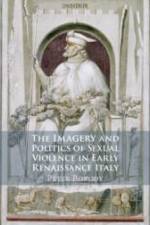
"This book is the first comprehensive study of images of rape in Italian painting at the dawn of the Renaissance. Drawing on a wide range of primary sources, Pâeter Bokody examines depictions of sexual violence in religion, law, medicine, literature, politics, and history writing produced in kingdoms (Sicily and Naples) and city-republics (Florence, Siena, Lucca, Bologna, and Padua). While misogynistic endorsement characterized many of these visual discourses, some urban communities condemned rape in their propaganda against tyranny. Such representations of rape often link gender and aggression to war, abduction, sodomy, prostitution, pregnancy, and suicide. Bokody also traces how the new naturalism in painting, introduced by Giotto, increased verisimilitude, but also fostered imagery that coupled eroticism and violation. Exploring images and texts that have long been overlooked, Bokody's study provides new insights at the intersection of gender, policy, and visual culture, with evident relevance to our contemporary condition"--
Beaudry shows how the social contract fails to take account of the moral status of people with severe intellectual disabilities.
In this examination of the early globalization of the pharmaceutical industry, Laurence Monnais argues that colonialism played a crucial part in the worldwide diffusion of modern medicines, speaking to contemporary concerns regarding over-reliance on pharmaceuticals, self-medication, and the accessibility of effective drug treatments.
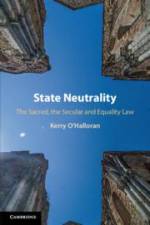
The state is legally required to be neutral towards religion, but in many countries it is increasingly anything but. This book conducts a comparative legal analysis of the church-state relationship within and between western countries - including the USA, France and Israel - that are key players in international and domestic dynamics in which religion and religious conflict take centre stage. It analyses how government accommodates diversity, how policies of multiculturalism and pluralism translate into legislation, the extent to which they address matters of religion and belief and what pattern of related issues then come before the courts. Finally, it considers how civil society and democracy in general can maintain a balance between the interests of those of different religions and beliefs and those of none. In this illuminating study, Kerry O'Halloran shows how the relationship between religion and government affects civil society and the functioning of democracy in North America and Europe.
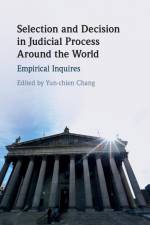
This book empirically explores whether and under what conditions the judicial process is efficient. Three specific issues are addressed: first, disputants self-select into litigation. Do they tend to bring cases with merit? Second, filed cases differ in their social import. Do courts select more important cases to devote more resource to? Third, courts establish precedents, affect resource allocation in the cases at hand, and influence future behaviours of transacting parties. Do courts, like Judge Posner asserts, tend to make decisions that enhance allocative efficiency and reduce transaction costs? Positive answers to the above questions attest to the efficiency of the judicial process. What drive efficient or inefficient outcomes are the selections and decisions by litigants, litigators, and judges. Their earlier selections and decisions affect later ones. Eleven chapters in this book, authored by leading empirical legal scholars in the world, deal with these issues in the US, Europe, and Asia.
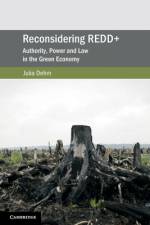
In Reconsidering REDD+: Authority, Power and Law in the Green Economy, Julia Dehm provides a critical analysis of how the Reducing Emissions from Deforestation and Forest Degradation (REDD+) scheme operates to reorganise social relations and to establish new forms of global authority over forests in the Global South, in ways that benefit the interests of some actors while further marginalising others. In accessible prose that draws on interdisciplinary insights, Dehm demonstrates how, through the creation of new legal relations, including property rights and contractual obligations, new forms of transnational authority over forested areas in the Global South are being constituted. This important work should be read by anyone interested in a critical analysis of international climate law and policy that offers insights into questions of political economy, power, and unequal authority.
The common ground between religions could be fruitfully promoted in order to call for an effective protection of the climate system. Positioned at a junction of different worlds, this book is a multidisciplinary work on Islamic law, common law and environmental law. Looking at the past, present and future, the author suggests a paradigm shift starting from the common ground in order to propose a better future for environmental law in Muslim countries. As the first book to compare Shari'a and common law in field of environmental protection, it suggests a new path in comparative environmental law by recognizing the contributions of both history and spirituality.
Discussions of monotheism often consider its bigotry toward other gods as a source of conflict, or emphasize its universality as a source of peaceful tolerance. Both approaches, however, ignore the combined danger and liberation in monotheism's 'intolerance.' In this volume, Christopher Haw reframes this important argument. He demonstrates the value of rejecting paradigms of inclusivity in favor of an agonistic pluralism and intolerance of absolutism. Haw proposes a model that retains liberal, pluralistic principles while acknowledging their limitations, and he relates them to theologies latent in political ideas. His volume offers a nuanced, evolutionary, and historical understanding of the biblical tradition's emergence and its political consequences with respect to violence. It suggests how we can mediate impasses between liberal and conservative views in culture wars; between liberal inclusivity and conservative decisionism; and, on the religious front, between apologetics for exclusive monotheism and critiques of its intolerance.
"Using the framework of Systemic Functional Linguistics (SFL), this pioneering book provides the first comprehensive account of Korean grammar, building foundations for an engagement with Korean texts across a range of spoken and written registers and genres. It treats grammar as a meaning-making resource, comprising experiential resources for construing reality, interpersonal resources for enacting social relations, textual resources for composing coherent discourse, and logical resources for linking clauses. It deals not only with clause systems and structures but also focuses on their realisation as groups and phrases (and clause rank particles), and the realisation of these groups and phrases in words (including clitics and relevant suffixation). Its concluding chapter demonstrates how this grammar can be applied - for teaching Korean as a foreign language and for translation and interpreting studies. This book is essential reading for scholars and students of Asian languages and linguistics and functional approaches to grammar description"--
Research on comparative administrative law, in contrast to comparative constitutional law, remains largely underdeveloped. This book plugs that gap. It considers how a wide range of common law systems have received and adapted English common law to the needs of their own socio-political context. Readers will be given complex insights into a wide range of common law systems of administrative law, which they may not otherwise have access to given how difficult it would be to research all of the systems covered in the volume single-handedly. The book covers Scotland, Ireland, the USA, Canada, Israel, South Africa, Kenya, Malaysia, Singapore, Hong Kong SAR, India, Bangladesh, Australia and New Zealand. Comparative public lawyers will have a much greater range of common law models of administrative law - either to pursue conversations about their own common law system or to sophisticate their comparison of their system (civil law or otherwise) with common law systems.
Canonising Shakespeare offers the first comprehensive reassessment of Shakespeare's afterlife as a print phenomenon, demonstrating the crucial role that the book trade played in his rise to cultural pre-eminence. 1640-1740 was the period in which Shakespeare's canon was determined, in which the poems resumed their place alongside the plays in print, and in which artisans and named editors crafted a new, contemporary Shakespeare for Restoration and eighteenth-century consumers. A team of international contributors highlight the impact of individual booksellers, printers, publishers and editors on the Shakespearean text, the books in which it was presented, and the ways in which it was promoted. From radical adaptations of the Sonnets to new characters in plays, and from elegant subscription volumes to cheap editions churned out by feuding publishers, this period was marked by eclecticism, contradiction and innovation as stationers looked to the past and the future to create a Shakespeare for their own times.
Written by eminent international judges, scholars and practitioners, this book offers a timely study of China's role in international dispute resolution in the context of the construction of the 'Belt and Road Initiative' (BRI). It provides in-depth analysis of the law and practice in the fields of international trade, commerce, investment and international law of the sea, as they relate to the BRI construction. It is the first comprehensive assessment of China's policy and practice in international dispute resolution, in general and in individual fields, in the context of the BRI construction. This book will be an indispensable reading for scholars and practitioners with interest in China and international dispute resolution. It also constitutes an invaluable reference for anyone interested in the changing international law and order, in which China is playing an increasingly significant role, particularly through the BRI construction.
Abonner på vårt nyhetsbrev og få rabatter og inspirasjon til din neste leseopplevelse.
Ved å abonnere godtar du vår personvernerklæring.