













Gjør som tusenvis av andre bokelskere
Abonner på vårt nyhetsbrev og få rabatter og inspirasjon til din neste leseopplevelse.
Ved å abonnere godtar du vår personvernerklæring.Du kan når som helst melde deg av våre nyhetsbrev.

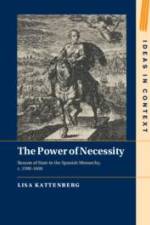
"Exploring reason of state in a global monarchy, The Power of Necessity examines how thinkers and agents in the Spanish monarchy navigated the tension between political pragmatism and moral-religious principle. This tension lies at the very heart of Counter-Reformation reason of state. Nowhere was the need for pragmatic state management greater than in the overstretched Spanish Empire of the seventeenth century. However, pragmatic politics were problematic for a Catholic monarchy steeped in ideals of justice and divine justifications of power and kingship. Presenting a broad cast of characters from across Europe, and uniting published sources with a wide range of archival material, Lisa Kattenberg shows how non-canonical thinkers and agents confronted the political-moral dilemmas of their age by creatively employing the legitimizing power of necessity. Pioneering new ways of bridging the persistent gap between theory and practice in the history of political thought, she casts fresh light on the struggle to preserve the monarchy in a modernizing world. Lisa Kattenberg is Assistant Professor in Early Modern Intellectual History at the University of Amsterdam. Between 2019 and 2022, she was Research Fellow in History at Gonville and Caius College, University of Cambridge. Her doctoral dissertation, from which she developed this book, was awarded the Keetje Hodshon Award for the best doctoral thesis in history completed at a Dutch university during the past five years by the Royal Netherlands Academy of Arts and Sciences. She has published broadly in Spanish, English and Dutch"--
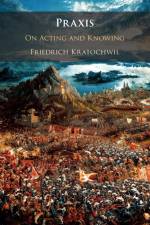
Praxis investigates both the existing practices of international politics and relations during and after the Cold War, and the issue of whether problems of praxis (individual and collective choices) can be subjected to a 'theoretical treatment'. The book comes in two parts: the first deals with the constitution of international relations and the role of theoretical norms in guiding decisions, in areas such as sanctions, the punishment of international crimes, governance and 'constitutional' concern, the second is devoted to 'theory building'. While a 'theorization' of praxis has often been attempted, Kratochwil argues that such endeavours do not attend to certain important elements characteristic of practical choices. Praxis presents a shift from the accepted international relations standard of theorizing, by arguing for the analysis of policy decisions made in non-ideal conditions within a broader framework of practical choices, emphasizing both historicity and contingency.
"This book presents a novel interpretation of Hegel's early masterwork, The Phenomenology of Spirit, focusing on the related themes of recognition and the self. It will be important for students and scholars of Hegel and German idealism, and philosophers and others interested in recognition"--
Explores the status of politics in Augustine's City of God by considering the relationship between the earthly city and the political sphere. Ogle is attentive to Augustine's rhetorical strategy and theological vision and her book will be of interest to theologians, philosophers, political theorists, and historians of political thought.
The sublime - that elusive encounter with overwhelming height, power or limits - has been associated with music from the early-modern rise of interest in the Longinian sublime to its saturation of European culture in the later nineteenth century and beyond. This volume offers a historically situated study of the relationship between music, sound and the sublime. Together, the authors distinguish between the different aesthetics of production, representation and effect, while understanding these as often mutually reinforcing approaches. They demonstrate music's strength in playing out the sublime as transfer, transport and transmission of power, allied to the persistent theme of destruction, deaths and endings. The volume opens up two avenues for further research suggested by the adjective 'sonorous': a wider spectrum of sounds heard as sublime, and (especially for those outside musicology) a more multifaceted idea of music as a cultural practice that shares boundaries with other sounding phenomena.
We talk and think about our beliefs both in a categorical (yes/no) and in a graded way. How do the two kinds of belief hang together? The most straightforward answer is that we believe something categorically if we believe it to a high enough degree. But this seemingly obvious, near-platitudinous claim is known to give rise to a paradox commonly known as the 'lottery paradox' - at least when it is coupled with some further seeming near-platitudes about belief. How to resolve that paradox has been a matter of intense philosophical debate for over fifty years. This volume offers a collection of newly commissioned essays on the subject, all of which provide compelling reasons for rethinking many of the fundamentals of the debate.
In Justice in Extreme Cases, Darryl Robinson argues that the encounter between criminal law theory and international criminal law (ICL) can be illuminating in two directions: criminal law theory can challenge and improve ICL, and conversely, ICL's novel puzzles can challenge and improve mainstream criminal law theory. Robinson recommends a 'coherentist' method for discussions of principles, justice and justification. Coherentism recognizes that prevailing understandings are fallible, contingent human constructs. This book will be a valuable resource to scholars and jurists in ICL, as well as scholars of criminal law theory and legal philosophy.
This is the first comprehensive volume in English on Cassirer's philosophy for over seventy years. Eleven leading Cassirer scholars address all of the key aspects of Cassirer's multi-faceted thought and situate them in the wider context of his philosophy of culture. Their essays demonstrate the depth and richness of a philosophical enterprise that still awaits recognition as one of the most original contributions to twentieth-century philosophy. Interpreting Cassirer will prove invaluable not only for Cassirer scholars and researchers of early twentieth-century philosophy, but also for scholars of the philosophy of culture, language, science, art, history, and mind.
Abonner på vårt nyhetsbrev og få rabatter og inspirasjon til din neste leseopplevelse.
Ved å abonnere godtar du vår personvernerklæring.