






















Gjør som tusenvis av andre bokelskere
Abonner på vårt nyhetsbrev og få rabatter og inspirasjon til din neste leseopplevelse.
Ved å abonnere godtar du vår personvernerklæring.Du kan når som helst melde deg av våre nyhetsbrev.

This volume presents the first global history of human rights politics in the age of decolonization. The conflict between independence movements and colonial powers shaped the global human rights order that emerged after the Second World War. It was also critical to the genesis of contemporary human rights organizations and humanitarian movements. Anti-colonial forces mobilized human rights and other rights language in their campaigns for self-determination. In response, European empires harnessed the new international politics of human rights for their own ends, claiming that their rule, with its promise of 'development,' was the authentic vehicle for realizing them. Ranging from the postwar partitions and the wars of independence to Indigenous rights activism and post-colonial memory, this volume offers new insights into the history and legacies of human rights, self-determination, and empire to the present day.
"Dying Abroad offers a sophisticated ethnographic account of how immigrant and minoritized communities navigate end-of-life decisions in countries where they face barriers to political inclusion and equal social standing"--
"Lawyers interested in human rights, art law, cultural rights, cultural heritage law; artists and art students who want to know more about the legal framework applicable to arts; free speech activists and human rights defenders; political scientists interested in global controversies such as Charlie Hebdo and the Danish Cartoons"--
The seventh Marquess of Londonderry (1878-1949) held government posts in Dublin, Belfast and London. Controversial in his own lifetime, he oversaw the early years of both the Royal Air Force and Northern Ireland, and he was attacked as a 'warmonger' for his role at the World Disarmament Conference held at Geneva in the early 1930s. Londonderry's subsequent venture into amateur diplomacy cemented his reputation as an arch appeaser of Nazi Germany. He corresponded throughout with important national and international figures and others of significance, including Winston Churchill, Neville Chamberlain, Ramsay MacDonald, Stanley Baldwin, and Lord Halifax. In the late 1930s his regular correspondents also included Hermann Göring, Joachim von Ribbentrop, and Franz von Papen. This volume provides a vivid insight into the outlook and actions of an unapologetic aristocrat-politician, his colleagues in government, and the efforts of his German correspondents to inform and shape British opinion on the Nazi regime.
"From the colonial through the antebellum era, enslaved women in the US used lethal force as the ultimate form of resistance. By amplifying their voices and experiences, Brooding over Bloody Revenge strongly challenges assumptions that enslaved women only participated in covert, non-violent forms of resistance, when in fact they consistently seized justice for themselves and organized toward revolt. Nikki M. Taylor expertly reveals how women killed for deeply personal instances of injustice committed by their owners. The stories presented, which span centuries and legal contexts, demonstrate that these acts of lethal force were carefully pre-meditated. Enslaved women planned how and when their enslavers would die, what weapons and accomplices were necessary, and how to evade capture in the aftermath. Original and compelling, Brooding Over Bloody Revenge presents a window into the lives and philosophies of enslaved women who had their own ideas about justice and how to achieve it." --
The early 2000s were a period of social policy expansion in Latin America. New programs were created in healthcare, pensions, and social assistance, and previously excluded groups were incorporated into existing policies. What was the character of this social policy expansion? Why did the region experience this transformation? Drawing on a large body of research, this Element shows that the social policy gains in the early 2000s remained segmented, exhibiting differences in access and benefit levels, gaps in service quality, and unevenness across policy sectors. It argues that this segmented expansion resulted from a combination of short and long-term characteristics of democracy, favorable economic conditions, and policy legacies. The analysis reveals that scholars of Latin American social policy have generated important new concepts and theories that advance our understanding of perennial questions of welfare state development and change.
The recent advances in the field of molecular diagnostic techniques have led to the identification of targetable alterations prompting a paradigm shift in the management of non-small cell lung cancer (NSCLC) and an era of precision oncology. This Element highlights the most clinically relevant oncogenic drivers other than EGFR, their management and current advancements in treatment. It also examines the different challenges in resistance to targeted therapies and diagnostic dilemmas for each oncogenic driver and the future direction of NSCLC management.
"Written by an international leader in the field, this is a coherent and accessible account of the concepts that are now vital for understanding cutting-edge work on supermassive black holes. These include accretion disc misalignment, disc breaking and tearing, chaotic accretion, the merging of binary supermassive holes, the demographics of supermassive black holes, and the defining effects of feedback on their host galaxies. The treatment is largely analytic and gives in-depth discussions of the underlying physics, including gas dynamics, ideal and non-ideal magnetohydrodynamics, force-free electrodynamics, accretion disc physics, and the properties of the Kerr metric. It stresses aspects where conventional assumptions may be inappropriate and encourages the reader to think critically about current models."--
This Element discusses the relationship between Christianity and evolutionary theory, with special emphasis on Darwinian evolutionary theory (Darwinism). The Creationists argue that the two are incompatible and it is religion that is the truth and Darwinism the falsity. The New Atheists argue that the two are incompatible and it is religion that is the falsity and Darwinism the truth. Through a careful examination of both Darwinian theory and Christianity, it is shown that both extremes are mistaken. It is accepted that there are difficult issues to be solved, for example the problem of evil - which some think is exacerbated by Darwinism - and the necessarily appearance of Homo sapiens - which is problematic if evolutionary theory does not guarantee progress and the evolution of humans as the apotheosis. It is argued that there are ways forward, and Christianity and evolutionary thinking can be shown compatible.
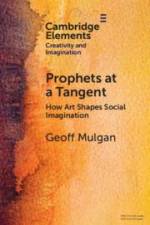
This Element asks if the arts can help us imagine a better future society and economy, without deep social gulfs or ecological harm. It argues that at their best, the arts open up new ways of seeing and thinking. They can warn and prompt and connect us to a bigger sense of what we could be. But artists have lost their role as gods and prophets, partly as an effect of digital technologies and the ubiquity of artistic production, and partly as an effect of shifting values. Few recent books, films, artworks or exhibitions have helped us imagine how our world could solve its problems or how it might be better a generation or more from now. This Element argues that artists work best not as prophets of a new society but rather as 'prophets at a tangent'.
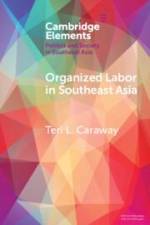
This Element analyzes the economic and political forces behind the political marginalization of working-class organizations in the region. It traces the roots of labor exclusion to the geopolitics of the early postwar period when many governments rolled back the left and established labor control regimes that prevented the reemergence of working-class movements. This Element also examines the economic and political dynamics that perpetuated labor's containment in some countries and that produced a resurgence of labor mobilization in others in the 21st century. It also explains why democratization has had mixed effects on organized labor in the region and analyzes three distinctive ¿anatomies of contention¿ of Southeast Asia's feistiest labor movements in Cambodia, Indonesia, and Vietnam.
This Element offers an opinionated and selective introduction to philosophical issues concerning idealizations in physics, including the concept of and reasons for introducing idealization, abstraction, and approximation, possible taxonomy and justification, and application to issues of mathematical Platonism, scientific realism, and scientific understanding.
"Moral education is an enduring concern for societies committed to the value of justice and the well-being of children. What kind of moral guidance do young people need to navigate the social world today? Which theories, perspectives, values, and ideals are best suited for the task? This volume offers educators insight into both the challenges and promises of moral education from a variety of ethical perspectives. It introduces and analyzes several important developments in ethics and moral psychology, and discusses how some key moral problems can be addressed in contemporary classrooms. In doing so, Moral Education in the 21st Century helps readers develop a deeper understanding of the complexities of helping young people grow into moral agents and ethical people. As such, researchers, students, and professionals in the fields of moral education, moral psychology, moral philosophy, ethics, educational theory, and philosophy of education will benefit from this volume"--
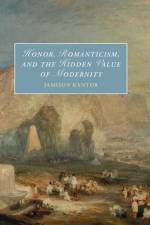
Despite our preconceptions, Romantic writers, artists, and philosophers did not think of honor as an archaic or regressive concept, but as a contemporary, even progressive value that operated as a counterpoint to freedom, a well-known preoccupation of the period's literature. Focusing on texts by William Godwin, William Wordsworth, Jane Austen, Walter Scott, Mary Prince, and Mary Seacole, this book argues that the revitalization of honor in the first half of the nineteenth century signalled a crisis in the emerging liberal order, one with which we still wrestle today: how can political subjects demand real, materialist forms of dignity in a system dedicated to an abstract, and often impoverished, idea of 'liberty'? Honor, Romanticism, and the Hidden Value of Modernity presents both a theory and a history of this question in the media of the Black Atlantic, the Jacobin novel, the landscape poem, and the "financial" romance.
Abonner på vårt nyhetsbrev og få rabatter og inspirasjon til din neste leseopplevelse.
Ved å abonnere godtar du vår personvernerklæring.