















Gjør som tusenvis av andre bokelskere
Abonner på vårt nyhetsbrev og få rabatter og inspirasjon til din neste leseopplevelse.
Ved å abonnere godtar du vår personvernerklæring.Du kan når som helst melde deg av våre nyhetsbrev.

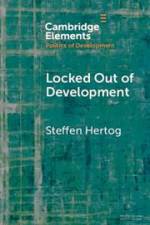
This Element argues that the low dynamism of low- to mid-income Arab economies is explained with a set of inter-connected factors constituting a 'segmented market economy'. These include an over-committed and interventionist state with limited fiscal and institutional resources; deep insider-outsider divides among firms and workers that result from and reinforce wide-ranging state intervention; and an equilibrium of low skills and low productivity that results from and reinforces insider-outsider divides. These mutually reinforcing features undermine encompassing cooperation between state, business and labor. While some of these features are generic to developing countries, others are regionally specific, including the relative importance and historical ambition of the state in the economy and, closely related, the relative size and rigidity of the insider coalitions created through government intervention. Insiders and outsiders exist everywhere, but the divisions are particularly stark, immovable and consequential in the Arab world.
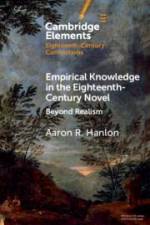
This Element examines the eighteenth-century novel's contributions to empirical knowledge. Realism has been the conventional framework for treating this subject within literary studies. This Element identifies the limitations of the realism framework for addressing the question of knowledge in the eighteenth-century novel. Moving beyond the familiar focus in the study of novelistic realism on problems of perception and representation, this Element focuses instead on how the eighteenth-century novel staged problems of inductive reasoning. It argues that we should understand the novel's contributions to empirical knowledge primarily in terms of what the novel offered as training ground for methods of reasoning, rather than what it offered in terms of formal innovations for representing knowledge. We learn from such a shift that the eighteenth-century novel was not a failed experiment in realism, or in representing things as they are, but a valuable system for reasoning and thought experiment.
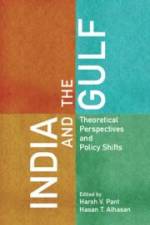
"India's foreign policy in the Gulf has undergone a significant transformation in recent years. From the oil boom of the 1970s to Narendra Modi's aggressive regional outreach after 2014, the density of India's interactions with the region in the form of migration, financial remittances, and trade has grown by multiple orders of magnitude. India has reconfigured its diplomatic and strategic ties with the Gulf states accordingly. This volume examines the subject from a variety of theoretical lenses and methodological approaches. It treads a range of traditional and emergent themes in India's foreign policy in the Gulf region, including India's alignment choices, its strategic partnerships in the region, the paradiplomacy of Indian states in the region, and the competing political projects shaping India's outlook on the Gulf"--
"This book tells the story of how remarkable serendipitous discoveries by radio astronomers changed our understanding of the Universe. It gives various examples of the unexpected ways in which real-life scientific research often advances, for general readers interested in astronomy and those interested in the history of modern scientific research"--
"This book will appeal to academics and students studying law, transitional justice, political science and international relations as well as to policymakers, diplomats, journalists and civil society professionals working on conflict related injustices and are interested in the role of law and justice in political transitions and peacebuilding"--
In the interpretive literature from the 1950's through the 1970's the term 'criterion' was thought to be a central key to the understanding of Wittgenstein's later philosophy. Later on, it was relegated from this place of honour to being one of a variety of expressions used by Wittgenstein in dealing with philosophical questions. This Element tries to account for the shifting fate of this concept. It discusses the various occurrences of the word ¿criteriä in the Philosophical Investigations, argues that the post-Wittgensteinian debate about criteria was put on the wrong track by a problematic passage in Wittgenstein's early Blue Book, and finally gives an overview of the main contributions to this debate, trying to achieve a reconciliation between the rival conceptions.
"Greek poetry invented ephemerality as a mark of the human condition and introduced materials for confronting it. This book examines ancient Greek poetry, including Homer, Archilochus, Sappho, Simonides, Aeschylus, Pindar and Timotheus, to show how this poetry offered the embodiment of its rhythms as an answer to change and loss"--
Abonner på vårt nyhetsbrev og få rabatter og inspirasjon til din neste leseopplevelse.
Ved å abonnere godtar du vår personvernerklæring.