
















Gjør som tusenvis av andre bokelskere
Abonner på vårt nyhetsbrev og få rabatter og inspirasjon til din neste leseopplevelse.
Ved å abonnere godtar du vår personvernerklæring.Du kan når som helst melde deg av våre nyhetsbrev.

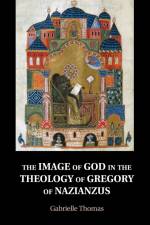
Gregory of Nazianzus, known best for his Christology and Trinitarian doctrine, presents an incomparable vision of the image of God. In this book, Gabrielle Thomas offers a close analysis of his writings and demonstrates how Nazianzen depicts both the nature and experience of the image of God throughout his corpus. She argues that Nazianzen's vision of the human person as an image of God is best understood in light of biblical and extra-biblical themes. To establish the breadth of his approach, Thomas analyzes the image of God against the backdrop of Nazianzen's beliefs about Christology, Pneumatology, creation, sin, spiritual warfare, ethics, and theosis. Interpreted accordingly, Nazianzen offers a dynamic and multifaceted account of the image of God, which has serious implications both for Cappadocian studies and contemporary theological anthropology.
Shakespeare and Lost Plays returns Shakespeare's dramatic work to its most immediate and (arguably) pivotal context; by situating it alongside the hundreds of plays known to Shakespeare's original audiences, but lost to us. David McInnis reassesses the value of lost plays in relation to both the companies that originally performed them, and to contemporary scholars of early modern drama. This innovative study revisits key moments in Shakespeare's career and the development of his company and, by prioritising the immense volume of information we now possess about lost plays, provides a richer, more accurate picture of dramatic activity than has hitherto been possible. By considering a variety of ways to grapple with the problem of lost, imperceptible, or ignored texts, this volume presents a methodology for working with lacunae in archival evidence and the distorting effect of Shakespeare-centric narratives, thus reinterpreting our perception of the field of early modern drama.
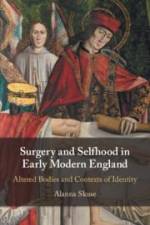
This pioneering account offers a new perspective on debates concerning embodiment in the early modern period, examining the varied experiences of those who underwent surgical alteration as a starting point for discussing questions of personal integrity, morality, and resurrection. This title is also available as Open Access on Cambridge Core.
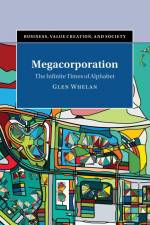
When the scale and scope of influence that a corporation wields is so great that it eclipses that of nearly all other corporations combined, it attains megacorporate status. Whelan proposes that, amongst the current big tech cohort, it is only Alphabet, the parent company of Google, that can be categorized as such. In advancing a novel philosophical perspective, and aspiring to an amoral ideal of analysis, Whelan reveals Alphabet's activities to be informed by the ideology of infinite times, consequently transforming how we experience the past, present and the future at personal and social levels. By shining a light on such corporate existential impacts, Megacorporation: The Infinite Times of Alphabet opens up a new field of research that makes the philosophical analysis of business and society an everyday concern. This novel study on corporate social influence will appeal to readers interested in big tech, business and society, political economy and organization studies.
Hume considered his Enquiry Concerning the Principles of Morals to be one of his best works. In it he offers his most elegant and approachable account of the origins and scope of morality. With the hope of reaching a broad audience, he argues that morality is neither rigid nor austere, but is rather a product of sentiments that all human beings share, and which they are naturally inclined to recognize and act upon. In this Critical Guide, a team of distinguished scholars discuss each section of the Enquiry, its place in Hume's philosophy as a whole, and its historical context; their topics include the nature of morals, talents and moral virtues, benevolence, sympathy, and the sources of moral disagreement. The volume will be valuable for scholars and advanced students working on Hume.
Foreign relations law and public international law are two closely related academic fields that tend to speak past each other. As this innovative volume shows, the two are closely interrelated and depend on each other for their mutual construction and identity. A better understanding of this relationship is of vital importance for upholding important constitutional values like democracy, the rule of law and the protection of human rights, while enabling states to engage in meaningful forms of international cooperation. The book takes a close look at the encounters between the two fields and offers perspectives for a constructive engagement between the two. Collectively, the contributions argue that the delimitation between the two fields occurs in a hybrid zone of interaction which requires both bridges and boundaries: bridges for the construction of the relationship between the two fields, and boundaries for preserving key normative expectations of both domestic and international law. This title is also available as Open Access on Cambridge Core.
Religious pluralism, as encountered in multi-faith settings such as Nigeria's biggest city Lagos, challenges much of what we have long taken for granted about religion, including the ready-made binaries of Christianity versus Islam, religion versus secularism, religious monism versus polytheism, and tradition versus modernity. In this book, Marloes Janson offers a rich ethnography of religions, religious pluralism and practice in Lagos, analysing how so-called 'religious shoppers' cross religious boundaries, and the coexistence of different religious traditions where practitioners engage with these simultaneously. Prompted to develop a broader conception of religion that shifts from a narrow analysis of religious traditions as mutually exclusive, Janson instead offers a perspective that focuses on the complex dynamics of their actual entanglements. Including real-life examples to illustrate religion in Lagos through religious practice and lived experiences, this study takes account of the ambivalence, inconsistency and unpredictability of lived religion, proposing assemblage as an analytical frame for exploring the conceptual and methodological possibilities that may open as a result.
The Ptolemaic and Seleucid empires are usually studied separately, or else included in broader examinations of the Hellenistic world. This book provides a systematic comparison of the roles of local elites and local populations in the construction, negotiation, and adaptation of political, economic, military and ideological power within these states in formation. The two states, conceived as multi-ethnic empires, are sufficiently similar to make comparisons valid, while the process of comparison highlights and better explains differences. Regions that were successively incorporated into the Ptolemaic and then Seleucid state receive particular attention, and are understood within the broader picture of the ruling strategies of both empires. The book focusses on forms of communication through coins, inscriptions and visual culture; settlement policies and the relationship between local and immigrant populations; and the forms of collaboration with and resistance of local elites against immigrant populations and government institutions.
Common Law, Civil Law, and Colonial Law builds upon the legal historian F.W. Maitland's famous observation that history involves comparison, and that those who ignore every system but their own 'hardly came in sight of the idea of legal history'. The extensive introduction addresses the intellectual challenges posed by comparative approaches to legal history. This is followed by twelve essays derived from papers delivered at the 24th British Legal History Conference. These essays explore patterns in legal norms, processes, and practice across an exceptionally broad chronological and geographical range. Carefully selected to provide a network of inter-connections, they contribute to our better understanding of legal history by combining depth of analysis with historical contextualization. This title is also available as Open Access on Cambridge Core.
Why did the Greeks of the archaic and early Classical period join in choruses that sang and danced on public and private occasions? This book offers a wide-ranging exploration of representations of chorality in the poetry, art and material remains of early Greece in order to demonstrate the centrality of the activity in the social, religious and technological practices of individuals and communities. Moving from a consideration of choral archetypes, among them cauldrons, columns, Gorgons, ships and halcyons, the discussion then turns to an investigation of how participation in choral song and dance shaped communal experience and interacted with a variety of disparate spheres that include weaving, cataloguing, temple architecture and inscribing. The study ends with a treatment of the role of choral activity in generating epiphanies and allowing viewers and participants access to realms that typically lie beyond their perception.
Beckett's work is somewhat out of step with the logic of commemoration and celebration. Festival, with its association with celebration, spectacle, and publicity, would not seem the ideal vehicle for Beckett's work. Yet that work has become highly festivalised, and the incongruities between it and festival forms provide a useful basis from which to examine both Beckett as festivalised commodity and festivals themselves. Festivalising Beckett in Ireland might be characterised as a way of bringing him back home, as well as a way of returning him to the canonical fold - he showed little interest in either during his later years, it need hardly be added. This Element examines Beckett's dissidence in the face of these imperatives of nation, home and the canon, utilising Beckett's work in festival contexts to highlight in the negative the nature of the festival form and to critique the festivalisation of culture.
Euripides' Iphigeneia among the Taurians has been a popular and influential text from antiquity onwards. It is a suspenseful drama which explores themes of family loyalty, Greeks and barbarians, and the nature of the gods. The Introduction and Commentary specifically help undergraduates and above tackling the play in Greek.
An overview of medical software design, implementation and management. Covers technical, commercial and regulatory issues and includes cautionary real-world case studies. For undergraduates in biomedical engineering, electrical engineering, computer science, junior software engineers in the medical device industry, and digital health entrepreneurs.
The first in-depth treatment of the judicial review of non-statutory executive powers challenges the conventional wisdom on both the rationale and doctrines of judicial review, suggesting a return to neglected concepts, including the idea of office and official action. A must-read for students, practitioners, and scholars of public law.
Abonner på vårt nyhetsbrev og få rabatter og inspirasjon til din neste leseopplevelse.
Ved å abonnere godtar du vår personvernerklæring.