












Gjør som tusenvis av andre bokelskere
Abonner på vårt nyhetsbrev og få rabatter og inspirasjon til din neste leseopplevelse.
Ved å abonnere godtar du vår personvernerklæring.Du kan når som helst melde deg av våre nyhetsbrev.

A new international instrument is needed to address access to interoperability standards and standards-essential intellectual property, which are critical to maintaining technological advancement and promoting cost-effective solutions for consumers. Applying law and economics methodologies, Simon Brinsmead systematically explores how international and domestic law deals with these matters. This important book includes an examination of the technical and economic nature of interoperability standards; a detailed analysis of the issues arising under intellectual property and competition law; an analysis of whether liability or exclusive property rules should apply with respect to interoperability standards and SEIP; and consideration of feasible international approaches. Finally, Brinsmead includes a draft of his proposed international soft law instrument as a starting point for future discussions in the field. Of interest to lawyers, regulators and scholars, this work offers a meaningful contribution to international governance, harmonization of laws and technological advancement.
This first Element in the series Islam and the Sciences is introductory and aims to give readers a general overview of the wide and rich scope of interactions of Islam with the sciences, including past disputes, current challenges, and future outlooks. The Element introduces the main voices and schools of thought, adopting a historical approach to show the evolution of the debates: Khan's naturalism, al-Jisr's hermeneutics, Abduh's modernist Islam, Nasr's perennialist and sacred science, al-Attas's Islamic science, Sardar and the Ijmalis' ethical science, al-Faruqi's Islamization of knowledge/science, Bucaille's and El-Naggar's 'miraculous scientific content in the Qur'an, ' Abdus Salam's universal science, Hoodbhoy's and Edis's secularism, and the harmonization of the 'new generation.' The Element also maps out new and emerging topics that are beginning to reignite the debates, before a concluding section examines how issues of Islam and Science are playing out in the media, in public discourse and in education
"Despite initiatives to 'diversify' the publishing sector, there has been almost no transformation to the historic racial inequality that defines the field. This Element argues that contemporary book culture is structured by practice that operates according to a White taste logic"--
"Various public health strategies to promote breastfeeding have been developed and implemented for over four decades, yet progress has stagnated, and exclusive breastfeeding rates remain low globally. An evolutionary perspective directs us to consider the fitness costs of breastfeeding, together with the role of social learning and cultural norms"--
Harriet Taylor Mill is an overlooked figure in the history of political philosophy, ethics, economics and politics, over-shadowed by the fame of her writing partner, and eventual husband, John Stuart Mill. This Element explores her contribution to political theory; ethics; political economy; and political reform.
"This Element discusses the challenges and opportunities that different types of corpora offer for the study of pragmatic phenomena. The focus lies on a hands-on approach to methods and data that provides orientation for methodological decisions. In addition, the Element identifies areas in which new methodological developments are needed in order to make new types of data accessible for pragmatic research. Linguistic corpora are currently undergoing diversification. While one trend is to move towards increasingly large corpora, another trend is to enhance corpora with more specialised and layered annotation. Both these trends offer new challenges and opportunities for the study of pragmatics. This volume provides a practical overview of state-of-the-art corpus-pragmatics methods in relation to different types of corpus data, covering established methods as well as innovative approaches"--
Theory is not a set of texts, it is a style of approach. It is to engage in the act of speculation: gestures of abstraction that re-imagine and dramatize the crises of living. This Element is a both a primer for understanding some of the more predominant strands of critical theory in the study of religion in late antiquity, and a history of speculative leaps in the field. It is a history of dilemmas that the field has tried to work out again and again - questions about subjectivity, the body, agency, violence, and power. This Element additionally presses us on the ethical stakes of our uses of theory, and asks how the field's interests in theory help us understand what's going on, half-spoken, in the disciplinary unconscious.
Kant's final drafts, known as his Opus postumum, attempt to make what he calls a 'transition from the metaphysical foundations of natural science to physics.' Interpreters broadly agree that in this project Kant seeks to connect the general a priori principles of natural science, as set out in the major critical works, to the specific results of empirical physics. Beyond this, however, basic interpretative issues remain controversial. This Element outlines a framework that aims to combine the systematic ambition of early twentieth-century readings with the rigor of more recent studies. The author argues that a question that has animated much recent scholarship - which 'gap' in Kant's previous philosophy does the Opus postumum seek to fill? - can be profitably set aside. In its place, renewed attention should be given to a crucial part of the manuscript, fascicles X/XI, and to the problematic 'arrival point' of the transition, namely, Kant's question: What is physics?
This Element provides a comprehensive overview of the Transcendental Meditation (TM) Movement and its offshoots. Several early assessments of the as a cult and/or new religious movement are helpful, but are brief and somewhat dated. This Element examines the TM movement's history, beginning in India in 1955, and ends with an analysis of the splinter groups that have come along in the past twenty-five years. Close consideration is given to the movement's appeal for the youth culture of the 1960s, which accounted for its initial success. The Element also looks at the marketing of the meditation technique as a scientifically endorsed practice in the 1970s, and the movement's dramatic turn inward during the 1980s. It concludes by discussing the waning of its popular appeal in the new millennium. This Element describes the social and cultural forces that helped shape the TM movement's trajectory over the decades leading to the present and shows how the most popular meditation movement in America distilled into an obscure form of Neo-Hinduism.
"This Element reviews the evidence for three workplace conditions that matter for improving quality and safety in healthcare: staffing; psychological safety, teamwork, and speaking up; and staff health and wellbeing at work. This title is also available as Open Access on Cambridge Core"--
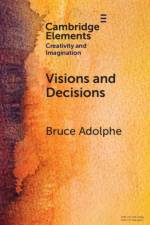
This Element investigates the balance and interaction of imagination (visions) and technique (decisions) in the composition of music and includes current scientific research on dreams, the hypnagogic state, emotions, and feelings. It also includes thoughts of composers past and present, and examines how works start from visions in a range of music, comparing musical ideas and techniques to models in other creative disciplines. The Element elucidates aspects of musical discourse by imagining how Haydn, Mozart, and other composers would order falafel for takeout. This unorthodox approach emphasizes parallels between music and theater that are central to this Element.
This extraordinary three-volume work provides an accessible, comprehensive introduction to mathematical and statistical techniques for data-driven learning and inference. Ideal for early-career researchers and graduate students across signal processing, machine learning, statistics and data science.
"This book examines how social interaction and relationships influence the brain in aging. Using a case study on the elderly population in a rapidly aging society, the authors effectively integrate different levels of data from social connection to socioeconomic information, psychological functioning, and cognitive and brain measures"--
Understand the science and engineering behind conventional and renewable heat loss recovery techniques with this thorough reference. Provides you with the knowledge and tools necessary to assess the potential waste-heat recovery opportunities that exist within various industries and select the most suitable technology. In particular, technologies that convert waste heat into electricity, cooling or high-temperature heating are discussed in detail, alongside more conventional technologies that directly or indirectly recirculate heat back into the production process. Essential reading for professionals in chemical, manufacturing, mechanical and processing engineering who have an interest in energy conservation and waste heat recovery.
Primary Science Education: A Teacher's Toolkit is an accessible and comprehensive guide to primary school science education and its effective practice in the classroom. Primary Science Education is structured in two parts: Planning for Science and Primary Science in the Classroom. Each chapter covers fundamental topics, such as: curriculum requirements (including the Australian Curriculum and Australian Professional Standards for Teachers); preparing effective learning sequences with embedded authentic assessment; combining science learning with other learning areas, such as technologies and STEM; and critically analysing the teacher's role in the classroom. The text features short-answer and 'Bringing it Together' questions to encourage readers to consolidate their understanding of key themes. Case studies throughout provide guidance on the classroom experience and Teacher Background Information boxes explore topics where more in-depth knowledge is required. The book is supported by a suite of online resources, including interviews with Australian primary teachers and students, and downloadable activities.
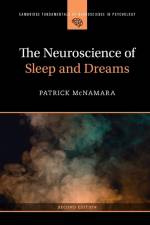
This book provides complete coverage of the neuroscience of both sleep and dreams for upper-level undergraduates and graduate students. Unlike other introductory texts, it emphasizes the social nature of sleep and dreams, and links new discoveries to established evolutionary theory.
"The focus of this Element is the variegated ways in which Christians address, turn to, and worship God in their central rituals and celebrations. Surveying a representative sample of official liturgical sources from different Christian Churches, the question is asked how 'pure' the monotheism expressed in them is"--
"Explore sustainable electric power generation technology, from first principles to cutting-edge systems, in this in-depth resource. Including energy storage, carbon capture, hydrogen and hybrid systems, the detailed coverage includes performance estimation, operability concerns, economic trade-off and other intricate analyses, supported by implementable formulae, real-world data and tried-and-tested quantitative and qualitative estimating techniques. Starting from basic concepts and key equipment, this book builds to precise analysis of balance of plant operation through data and methods gained from decades of hands-on design, testing, operation and trouble-shooting. Gain the knowledge you need to operate in conditions beyond standard settings and environment, with thorough descriptions of off-design operations. Novel technologies become accessible with stripped-back descriptions and physics-based calculations. This book is an ideal companion for engineers in the gas turbine and electric power field"--
Abonner på vårt nyhetsbrev og få rabatter og inspirasjon til din neste leseopplevelse.
Ved å abonnere godtar du vår personvernerklæring.