
















Gjør som tusenvis av andre bokelskere
Abonner på vårt nyhetsbrev og få rabatter og inspirasjon til din neste leseopplevelse.
Ved å abonnere godtar du vår personvernerklæring.Du kan når som helst melde deg av våre nyhetsbrev.

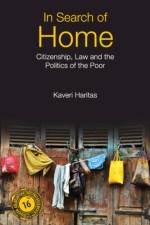
In Search of Home explores a new yet less explored space of urban poverty - rehabilitation housing for the displaced poor, which increasingly dots the peripheries of Indian cities. This longitudinal ethnography examines these new liminal zones suspended between a slum and the legal city, producing 'citizenship in-limbo' and relegating the poor to perpetual dependence on the state albeit legal residence. It examines how the flexible governance of such housing produces illegalities, and how state institutions and actors stand to gain through systemic corruption that co-opts urban poor groups, pre-empting radical resistance. This book makes central the gendered nature of such politics, detailing the everyday political work of women, vital to the development of poor neighbourhoods and political struggles for housing. This analysis of rehabilitation housing policies and their implementation, chronicles the myriad strategies employed by the urban poor, from documenting to political performances, in their struggles for a home.
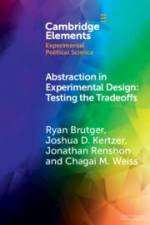
Political scientists designing experiments often face the question of how abstract or detailed their experimental stimuli should be. Typically, this question is framed in terms of tradeoffs relating to experimental control and generalizability: the more context introduced into studies, the less control, and the more difficulty generalizing the results. Yet, we have reason to question this tradeoff, and there is relatively little systematic evidence to rely on when calibrating the degree of abstraction in studies. We make two contributions. First, we provide a theoretical framework which identifies and considers the consequences of three dimensions of abstraction in experimental design: situational hypotheticality, actor identity, and contextual detail. Second, we field a range of survey experiments, varying these levels of abstraction. We find that situational hypotheticality does not substantively change experimental results, but increased contextual detail dampens treatment effects and the salience of actor identities moderates results in specific situations.
Alongside debates over rising inequalities, the stubbornness of urban poverty, globally, has emerged as a major academic and policy concern. Urban poverty policy positions are typically framed by paradigms of basic services and welfare. In the backdrop of Bangalore's evolution into India's silicon valley, the book presents research spanning old, inner city slums, new migrant settlements in urban peripheries, slum development projects, and garment export and construction workers, highlighting that intergenerationally, the urban poor remain tied to traditional low paying occupations, or, get incorporated into new urban growth channels (export industries, low end services) under highly unfavourable terms and conditions. Using the concepts of the old and the new poor, to explore channels of inclusion and exclusion, the book underscores that the poor's vulnerabilities are defined by different regimes of informality. Debates on the urban poor's political agency are used to problematize informality's complex relationship to contemporary theories of class.
Reading Shakespeare through Drama arises out of case study research which focuses on reading as a socio-cultural practice. Underpinned by theories of reading, learning, drama and play, it is, nevertheless, rooted in the everyday work of secondary English classrooms. Utilising the dialogic ambiguities inherent in Shakespeare's playscripts, this collaborative approach to reading pays particular attention to adolescent readers as meaning-makers and cultural producers. The authors examine different iterations of 'active Shakespeare' pedagogies in the UK, the USA and Australia, drawing a distinction between 'reading through drama' as an approach and the theatre inflected practices promoted by well-known arts-based institutions. Observational and interview data highlight the importance of addressing issues concerning identity and representation that are inevitably raised by the study of canonical literature. Importantly, this Element situates teachers' practice within broader ideological contexts at institutional and national policy level, particularly from the perspective of England's highly regulated system of schooling.
The music of Johann Sebastian Bach, George Frederic Handel and Domenico Scarlatti received more performances, publications and appreciation in Britain between 1750-1850 than in any other country during this era. The compositions of these three seminal baroque composers were heard in the numerous public and private concerts that proliferated at this time; edited, arranged and published for professionals and amateurs; written about by scholars and journalists; and used as teaching pieces and in pedagogical treatises. This Element examines the reception of their music during this dynamic period in British musical history, and places the discussion within the context of the artistic, cultural, economic, and political factors that stimulated such passionate interest in 'ancient music.' It also offers a vivid picture of the aesthetic concerns of those musicians and audiences involved with this repertoire, providing insights that help us better understand our own encounters with music of the past.
Experiencing a parent or guardian with cancer is extremely difficult for children and adolescents with healthcare professionals and cancer support centres often lacking the specialised knowledge needed to also support these individuals. This practical guide provides a comprehensive and current understanding of the impact of parental cancer on children, young people and families. It offers a longitudinal account of the impact of cancer through the different stages of the illness and explores the impact of culture and international contexts on how families experience parental cancer. The book also crucially focuses on how to support children, young people and families by examining existing interventions. Important chapters on death and bereavement, and on self-care for practitioners also supplement the book. A valuable handbook for healthcare practitioners from a range of specialities working with patients and families affected by cancer, including clinical psychology, counselling, nursing, oncology, palliative care and social work.
This Element presents a philosophical exploration of the notion of scientific representation. It does so by focussing on an important class of scientific representations, namely scientific models. Models are important in the scientific process because scientists can study a model to discover features of reality. But what does it mean for something to represent something else? This is the question discussed in this Element. The authors begin by disentangling different aspects of the problem of representation and then discuss the dominant accounts in the philosophical literature: the resemblance view and inferentialism. They find them both wanting and submit that their own preferred option, the so-called DEKI account, not only eschews the problems that beset these conceptions, but further provides a comprehensive answer to the question of how scientific representation works. This title is also available as Open Access on Cambridge Core.
Biological variations in sex development, also known as intersex, are greatly misunderstood by the wider public. This unique book discusses psychological practice in healthcare for people and families impacted by a range of 'intersex' variations. It highlights the dilemmas facing individuals and their loved ones in the social context and discusses the physical and psychological complexities of irrevocable medical interventions to approximate social norms for bodily appearance and function. It exposes the contradictions in medical management and suggests valuable theoretical and practice tools for psychosocial care providers to navigate them. Uniquely featuring theory and research informed practice vignettes, the book explores interpersonal work on the most salient psychosocial themes, ranging from grief work with impacted caretakers to sex therapy with impacted adults. An indispensable resource for working ethically, pragmatically and creatively for a variety of healthcare specialists and those affected by variations in sex development and their families and communities.
Although the subject matter of this Element is properties, do not expect in-depth introductions to the various views on properties 'on the market'. Instead, here that subject matter is treated meta-philosophically. Rather than ask and try to answer a question like do properties exist? this Element asks what reasons one might have for thinking that properties exist (what problem properties, if they exist, are there to solve), what counts as solving that (or those) problems (including what counts as 'a property'), as well as how we ought to proceed when trying to find out if properties exist (by which method this ought to be decided). As it turns out, these questions and their answers are all intricately intertwined. Theory comparison and theory evaluation is in other words (and perhaps not that surprisingly) tricky. Do properties exist? After reading this Element all we can say is therefore this: that depends.
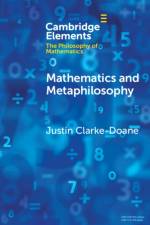
This Element discusses the problem of mathematical knowledge, and its broader philosophical ramifications. It argues that the challenge to explain the (defeasible) justification of our mathematical beliefs ('the justificatory challenge'), arises insofar as disagreement over axioms bottoms out in disagreement over intuitions. And it argues that the challenge to explain their reliability ('the reliability challenge'), arises to the extent that we could have easily had different beliefs. The Element shows that mathematical facts are not, in general, empirically accessible, contra Quine, and that they cannot be dispensed with, contra Field. However, it argues that they might be so plentiful that our knowledge of them is unmysterious. The Element concludes with a complementary 'pluralism' about modality, logic and normative theory, highlighting its surprising implications. Metaphysically, pluralism engenders a kind of perspectivalism and indeterminacy. Methodologically, it vindicates Carnap's pragmatism, transposed to the key of realism.
"This book explores the tension between capital controls and international economic law. The book will establish whether the IMF has the authority to regulate the use of capital controls and analyse whether a country's use of capital controls is consistent with obligations undertaken in various trade and investment agreements"--
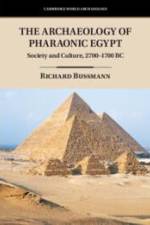
"In this book, Richard Bussmann presents a fresh overview of ancient Egyptian society and culture in the age of the pyramids. He addresses key themes in the comparative research of early complex societies, including urbanism, funerary culture, temple ritual, kingship, and the state, and explores how ideas and practices were exchanged between ruling elites and local communities in provincial Egypt. Unlike other studies of ancient Egypt, this book adopts an anthropological approach that places people at the centre of the analysis. Bussmann covers a range of important themes in cross-cultural debates, such as materiality, gender, non-elite culture, and the body. He also offers new perspectives on social diversity and cultural cohesion, based on recent discoveries. His study vividly illustrates how our understanding of ancient Egyptian society benefits from the application of theoretical concepts in archaeology and anthropology to the interpretation of the evidence." --
This Element aims to address the complexity of metalinguistic awareness to achieve a thorough account of its impacts on second language (L2) reading development and promote an in-depth understanding of the factors regulating the influence of first language (L1) metalinguistic awareness on L2 reading. It is guided by four questions: 1) To what extent do L1 phonological, orthographic, and morphological awareness correlate with L2 phonological, orthographic, and morphological awareness in L2 readers? 2) To what extent do phonological, orthographic, and morphological awareness correlate with word decoding intralingually in L2 readers? 3) To what extent do L1 phonological, orthographic, and morphological awareness correlate with L2 word decoding in L2 readers? 4) To what extent do the relations in questions 1¿3 vary as a function of linguistic-, learner-, measurement-, and instruction-related factors? This Element is the first to systematically investigate the roles of distinct facets of metalinguistic awareness in L2 reading.
Billions of dollars are annually transferred to poor nations to help them adapt to the effects of climate change. This Element examines how the discourses on adaptation finance of many developing country negotiators, environmental groups, development charities, academics and international bureaucrats have renewed a specific vision of aid, that of an aid intended to respond to international injustices and to fuel a regular transfer of resources between rich and poor countries. By reviewing manifestations of this normative vision of aid in key contemporary debates on adaptation finance, the author shows how these discourses have contributed to the significant financial mobilisation of developed countries towards adaptation in the Global South. But there remains a stark contrast between the many expectations associated with these discourses and today's adaptation finance landscape.
"Explores how narratives of Jesus in early Christian literature were shaped by royal and messianic ideologies and discourses regnant in the Greco-Roman (and especially Second Temple Jewish) world"--
"Through literary and art-historical analysis, Pauwels brings to life the vibrant cultural production center of Kishangarh in the eighteenth century. Reconstructing how Bani-thani came to be acclaimed as "India's Mona Lisa," she conveys new insights in the history of Hindi literature, devotion, palace women, and social mobility of the enslaved"--
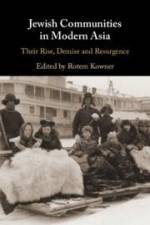
Jewish settlement in Asia, beyond the Middle East, is largely a modern phenomenon. Imperial expansion and adventurism by Great Britain and Russia were the chief motors that initially drove Jewish settlers to move eastwards, in the nineteenth century, combined as this was with the rise of port cities and general development of the global economy. The new immigrants soon become centrally involved, in ways quite disproportionate to their numbers, in Asian commerce. Their role and centrality finished with the outbreak of World War II, the chaos that resulted from the fighting, and the consequent collapse of Western imperialism. This unique, ground-breaking book charts their rise and fall while pointing to signs of these communities' post-war resurgence and revival. Fourteen chapters by many of the most prominent authorities in the field, from a range of perspectives, explore questions of identity, society, and culture across several Asian locales. It is essential reading for scholars of Asian Studies and Jewish Studies.
Abonner på vårt nyhetsbrev og få rabatter og inspirasjon til din neste leseopplevelse.
Ved å abonnere godtar du vår personvernerklæring.