



















Gjør som tusenvis av andre bokelskere
Abonner på vårt nyhetsbrev og få rabatter og inspirasjon til din neste leseopplevelse.
Ved å abonnere godtar du vår personvernerklæring.Du kan når som helst melde deg av våre nyhetsbrev.

Since the 1990s, modern slavery has been recognized as a global problem, with campaigners around the world providing assessments of its nature and extent, its drivers, and possible solutions for ending it. However, largely absent from the global antislavery movement's discourse and policy prescriptions are the voices of survivors of slavery themselves. Survivors' authentic voices are underemployed vital tools in the fight against modern slavery in all its forms. Through close readings of over 200 contemporary slave narratives, Andrea Nicholson repositions the history of the genre and exposes the conditions and consequences of slavery, and the challenges survivors face in liberation. Far from the trope of 'capture, enslavement, escape,' she argues that narratives are rich and vitally important sources that enable the antislavery community to be gain important insights and build more effective interventions.
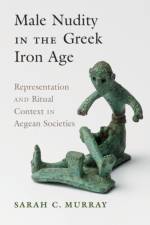
Why did the male nude come to occupy such an important place in ancient Greek culture? Despite extended debate, the answer to this question remains obscure. In this book, Sarah Murray demonstrates that evidence from the Early Iron Age Aegean has much to add to the discussion. Her research shows that aesthetics and practices involving male nudity in the Aegean had a complicated origin in prehistory. Murray offers a close analysis of the earliest male nudes from the late Bronze and Early Iron Ages, which mostly take the form of small bronze votive figurines deposited in rural sanctuaries. Datable to the end of the second millennium BCE, these figurines, she argues, enlighten the ritual and material contexts in which nude athletics originated, complicating the rationalizing accounts present in the earliest textual evidence for such practices. Murray's book breaks new ground by reconstructing a scenario for the ritual and ideological origins of nudity in Greek art and culture.
In this volume Anthi Andronikou explores the social, cultural, religious and trade encounters between Italy and Cyprus during the late Middle Ages, from ca. 1200 -1400, and situates them within several Mediterranean contexts. Revealing the complex artistic exchange between the two regions for the first time, she probes the rich but neglected cultural interaction through comparison of the intriguing thirteenth-century wall paintings in rock-cut churches of Apulia and Basilicata, the puzzling panels of the Madonna della Madia and the Madonna di Andria, and painted chapels in Cyprus, Lebanon, and Syria. Andronikou also investigates fourteenth-century cross-currents that have not been adequately studied, notably the cult of Saint Aquinas in Cyprus, Crusader propaganda in Santa Maria Novella in Florence, and a unique series of icons crafted by Venetian painters working in Cyprus. Offering new insights into Italian and Byzantine visual cultures, her book contributes to a broader understanding of cultural production and worldviews of the medieval Mediterranean.
Most criminological theories are not truly scientific, since they do not yield exact quantitative predictions of criminal career features, such as the prevalence and frequency of offending at different ages. This Element aims to make progress towards more scientific criminological theories. A simple theory is described, based on measures of the probability of reoffending and the frequency of offending. Three offender categories are identified: high risk/high rate, high risk/low rate, and low risk/low rate. It is demonstrated that this theory accurately predicts key criminal career features in three datasets: in England the Offenders Index (national data), the Cambridge Study in Delinquent Development (CSDD) and in America the Pittsburgh Youth Study (PYS). The theory is then extended in the CSDD and PYS by identifying early risk factors that predict the three categories. Criminological theorists are encouraged to replicate and build on our research to develop scientific theories that yield quantitative predictions.
Editing Fiction considers the collaborative efforts of literary production as well as editorial practice in its own right, using case studies by Australian novelists Jessica Anderson, Thea Astley and Ruth Park. An emphasis on collaboration is necessary because literary criticism often takes books as finite, discrete works rather than the result of multiple contributors, engaged to differing degrees. The editorial process always involves a negotiation over edits for the sake of the work, taking its potential reception or projected sales into account. Through examination of the archives, this Element shows that editing can be formative, limiting, commercially directed, a literary collaboration - or a mix of all these interventions. For editors and scholars alike, the Element examines practices of the recent past, seeking to determine the responsibilities of editors and publishers to authors, the text itself and to society; and the interrelation of editorial work, social conditions and market forces.
Dr Viktor Dorfler combines his background in developing and implementing AI with scholarly research on knowledge and cultivating talent to address misconceptions about AI. The Element explains what AI can and cannot do, carefully delineating facts from beliefs or wishful thinking. Filled with examples, this practical Element provokes thinking. The purpose is to help CEOs figure out how to make the best use of AI, suggesting how to extract AI's greatest value through appropriate task allocation between human experts and AI. The author challenges the attribution of characteristics like understanding, thinking, and creativity to AI, supporting his argument with the ideas of the finest AI philosophers. He also discusses in depth one of the most sensitive AI-related topics: ethics. The readers are encouraged to make up their own minds about AI and draw their own conclusions rather than accepting opinions from people with vested interests or an agenda.
Despite considerable advances in our understanding of the biology that underlies tumor development and progression of cancer and the rapidly evolving field of personalized medicine, cancer is still one of the deadliest diseases. Many cancer patients have benefited from the survival improvements observed with targeted therapies but only a small subset of patients receiving targeted drugs experience an objective response. Because cancer is a complex and heterogeneous disease, the search for effective cancer treatments will need to address not only patient-specific molecular defects but also aspects of the tumor microenvironment. The functional tumor profiling directly measures the cellular phenotype, in particular tumor growth, in response to drugs using patient-derived tumor models and might be the next step toward precision oncology. In this Element, the authors discuss the personalized drug screening as a novel patient stratification strategy for the determination of individualized treatment choices in oncology.
This Element surveys the history and practice of Scientology studies over the past sixty years and offers resources for scholars and students moving forward. Section 1 reviews the history of academic research on the subject from 1958 to the present day. Section 2 draws on the author's fieldwork with the Church of Scientology to illuminate how founder L. Ron Hubbard (1911-86) is viewed among contemporary members. Section 3 considers Hubbard's influence and legacy in terms of the church sites and institutions that exist today in connection with the soteriological 'Bridge to Total Freedom.' Section 4 introduces English-language archival resources and their strengths. Section 5 proposes some open areas for Scientology researchers. Finally, glossaries of terms and appendices are included with major dates in Hubbard's life and Scientology research and bibliographical information for major archival collections in North America.
Social movements have often played an important role in emergencies, mobilising in defence of those rights that they perceive as being at risk or more urgently needed than ever. In general, progressive social movements develop in moments of intense change, mobilising with the aim of turning them to their advantage. the variable mix of challenges and opportunities related to a critical juncture. The specific balance of challenges and opportunities faced by progressive social movements during the Covid-19 crisis is a central question addressed in this volume. Based on existing research on the first phases of the pandemic Covid-19, this Element addresses the ways in with the health emergency had an impact on the repertoire of action, the organizational networks and the collective framing of progressive social movements that adapted to the pandemic conditions and the related crises, but also tried to transform them.
Pregnant women and their partners often ask healthcare professionals whether sex is safe during pregnancy, and what consequences may result from sexual activity. Many clinicians can also be unsure of the answers to these type of questions, leading to both patient and clinician resorting to the internet for advice, which can be inaccurate and anxiety-inducing. Here, the authors provide clinicians with an insight into the information offered by 'Dr Google' so that they can reassure and advise their patients as necessary. Aimed at obstetricians and other physicians caring for pregnant women, this book reviews the implications of sex during pregnancy such as those complicated by medical conditions, those at risk of preterm birth and multiple pregnancies. Other chapters cover physiological changes during pregnancy that may affect sexual function and intimacy, as well as the differing guidelines provided by various global obstetric societies.
Corporate law has traditionally assumed that men organize business, men profit from it, and men bring cases in front of male judges when disputes arise. It overlooks or forgets that women are dealmakers, shareholders, stakeholders, and businesspeople too. This lack of inclusivity in corporate law has profound effects on all of society, not only on women's lives and livelihoods. This volume takes up the challenge to imagine how corporate law might look if we valued not only women and other marginalized groups, but also a feminist perspective emphasizing the importance of power dynamics, equity, community, and diversity in corporate law. Prominent lawyers and legal scholars rewrite foundational corporate law cases, and also provide accompanying commentary that situates each opinion in context, explains the feminist theories applied, and explores the impact the rewritten opinion might have had on the development of corporate law, business, and society.
Recent developments in behavioural economics have deeply influenced the way governments design public policies. They give citizens access to online simulators to cope with tax and benefits systems and increasingly rely on nudges to guide individual decisions. The recent surge of interest in Behavioural Public Finance is grounded on the conviction that a better understanding of individual behaviours could improve predictions of tax revenue and help design better-suited incentives to save for retirement, search for a new job, go to school or seek medical attention. Through a presentation of the most recent developments in Behavioural Public Finance, this Element discusses the way Behavioural Economics has improved our understanding of fiscal policies.
Climate change is a matter of extreme urgency. Integrating science and economics, this book demonstrates the need for measures to put a strict lid on cumulative carbon emissions and shows how to implement them. Using the carbon budget framework, it reveals the shortcomings of current policies and the debates around them, such as the popular enthusiasm for individual solutions and the fruitless search for 'optimal' regulation by economists and other specialists. On the political front, it explains why business opposition to the policies we need goes well beyond the fossil fuel industry, requiring a more radical rebalancing of power. This wide-ranging study goes against the most prevalent approaches in mainstream economics, which argue that we can tackle climate change while causing minimal disruption to the global economy. The author argues that this view is not only impossible, but also dangerously complacent.
The events of January 6, 2021 gave new currency to the idea of brainwashing. Some claimed that Trump's followers had been brainwashed, while others insisted that a 'deep state' had brainwashed most Americans into accepting a rigged election. Scholars who explain that brainwashing theories have long been rejected by most academics and courts of law find it difficult to be heard. Brainwashing nevertheless remains a convenient explanation of how seemingly normal citizens convert to unusual religious or political ideologies. This Element traces its origins to the idea that conversion to deviant beliefs is due to black magic. A more scientific hypnosis later replaced magic and the Cold War introduced the supposedly infallible technique of brainwashing. From the 1960s, new religious movements, more commonly called cults, were accused of using brainwashing. Most scholars of religion reject the theory as pseudoscience, but the controversy continues to this day.
This Element investigates how the Ghanaian household wealth index is impacted by travel time reduction, which is a direct effect of infrastructural investments from 2000 to 2016. The wealth index is constructed based on the possession of selected assets and reflects the well-being of residents in Ghana. The Element employs two datasets, the Demographic and Health Survey (DHS) and the DHS Covariates. The two-stage least square estimation is implemented to establish the causal relationship. The Element finds that a ten percent reduction in travel time from 2000 to 2015 would result in a 1.2 percent increase in the wealth index from 2003 to 2016. This finding is robust to various settings, including the addition of more control variables, the use of different instrumental variables, and the study of both short-term and long-term effects. The analysis lends support to the Ghanaian government's current economic and infrastructure development plans.
The application of energy storage within transmission and distribution grids as non-wire alternative solutions (NWS) is hindered by the lack of readily available analysis tools, standardized planning processes, and practical know-how. This Element provides a theoretical basis along with examples and real-world case studies to guide grid planners in the siting, sizing, and lifetime techno-economic evaluation of storage systems. Many applications are illustrated including feeder peak shaving, feeder reliability improvements, transmission reliability, transmission congestion relief, and renewable integration. Three case studies, based on the author's consulting experience, illustrate the versatility of the analysis methods and provide a guide to grid planners while tackling real world problems.
Energy storage systems (ESS) exist in a wide variety of sizes, shapes and technologies. An energy storage system's technology, i.e. the fundamental energy storage mechanism, naturally affects its important characteristics including cost, safety, performance, reliability, and longevity. However, while the underlying technology is important, a successful energy storage project relies on a thorough and thoughtful implementation of the technology to meet the project's goals. A successful implementation depends on how well the energy storage system is architected and assembled. The system's architecture can determine its performance and reliability, in concert with or even despite the technology it employs. It is possible for an energy storage system with a good storage technology to perform poorly when implemented with a suboptimal architecture, while other energy storage systems with mediocre storage technologies can perform well when implemented with superior architectures.
The purpose of this Cambridge Element is to bring together three subfields of the language sciences: cognitive, historical (diachronic), and Russian linguistics. Although diachrony has inspired a number of important works in recent years, historical linguistics is still underrepresented in cognitive linguistics, and the most influential publications mainly concern the history of English. This is an unfortunate bias, especially since its lack of morphological complexity makes English a typologically unusual language. In this Cambridge Element, the author demonstrates that Russian has a lot to offer the historically oriented cognitive linguist, given its well-documented history and complex phonology and morpho-syntax. Through seven case studies the author illustrates the relevance of four basic tenets of Cognitive Grammar: the cognitive, semiotic, network, and usage-based commitments.
Susan Stebbing (1885-1943), the UK's first female professor of philosophy, was a key figure in the development of analytic philosophy. Stebbing wrote the world's first accessible book on the new polyadic logic and its philosophy. She made major contributions to the philosophy of science, metaphysics, philosophical logic, critical thinking and applied philosophy. Nonetheless she has remained largely neglected by historians of analytic philosophy. This Element provides a thorough yet accessible overview of Stebbing's positive, original contributions, including her solution to the paradox of analysis, her account of the relation of sense data to physical objects, and her anti- idealist interpretation of the new Einsteinian physics. Stebbing's innovative work in these and other areas helped move analytic philosophy from its early phase to its middle period.
The idea of progress is a product of historical thinking. It is a bold interpretation of history that combines understandings of the past, perceptions of the present and expectations of the future. This Element examines the shifting scale of this past, present and future configuration from antiquity to the present day. It develops five categories that reveal the conceptual features of progress together with the philosophies of history in which they have been enmeshed, from temporal outlooks that held no notion of progress to universal histories that viewed progress as a law of nature, from speculation on the meaning and direction of history to the total rejection of all historical constructions. Global in scope and conversant with present-day debates in the theory and philosophy of history, the argument throughout is that the scale on which we conceive history plays a determining role in how we think about progress.
The Pythagorean women are a group of female philosophers who were followers of Pythagoras and are credited with authoring a series of letters and treatises. In both stages of the history of Pythagoreanism - namely, the fifth-century Pythagorean societies and the Hellenistic Pythagorean writings - the Pythagorean woman is viewed as an intellectual, a thinker, a teacher, and a philosopher. The purpose of this Element is to answer the question: what kind of philosopher is the Pythagorean woman? The traditional picture of the Pythagorean female sage is that of an expert of the household. The author argues that the available evidence is more complex and conveys the idea of the Pythagorean woman as both an expert on the female sphere and a well-rounded thinker philosophising about the principles of the cosmos, human society, the immortality of the soul, numbers, and harmonics.
Tracing her intellectual development from her university years, when she was trained in a Cartesian and neo-Kantian philosophical tradition, to her final decade, during which she was recognised as having inspired the emerging strands of late twentieth-century feminism, Beauvoir is shown to have been among the most influential philosophical voices of the mid twentieth century. Countering the recent trend to read her in isolation from Sartre, she is shown to have both adopted, adapted, and influenced his philosophy, most importantly through encouraging him to engage with Hegel and to consider our relations with others. The Second Sex is read in the light of her existentialist humanism and ultimately faulted for having succumbed too uncritically to the masculine myth that it is men who are solely responsible for society's intellectual and cultural history.
This book traces the socio-spatial transformation of Ahmedabad's worker neighbourhoods over the course of the twentieth and early twenty-first centuries - during which the city witnessed dramatic and disturbing transformations. It follows the multiple histories of Ahmedabad's labour landscapes from the times when the city acquired prominence as an important site of Gandhian political activity and as a key centre of the textile industry, through the decades of industrial collapse and periods of sectarian violence in the recent years. Taking the working-class neighbourhood as a scale of social practice, the question of urban change is examined along two axes of investigation: the transformation of local political configurations and forms of political mediation and the shifts in the social geography of the neighbourhood as reflected in the changing regimes of property.
Conflicts between environmental protection laws and human rights present delicate trade-offs when concerns for social and ecological justice are increasingly intertwined. This book retraces how the legal ordering of environmental protection evolved over time and progressively merged with human rights concerns, thereby leading to a synergistic framing of their relation. It explores the world-making effects this framing performed by establishing how 'humans' ought to relate to 'nature', and examines the role played by legislators, experts and adjudicators in (re)producing it. While it questions, contextualises and problematises how and why this dominant framing was construed, it also reveals how the conflicts that underpin this relationship - and the victims they affect - mainly remained unseen. The analysis critically evaluates the argumentative tropes and adjudicative strategies used in the environmental case-law of regional courts to understand how these conflicts are judicially mediated, thereby opening space for new modes of politics, legal imagination and representation.
In this book, Hedi Viterbo radically challenges our picture of law, human rights, and childhood, both in and beyond the Israel/Palestine context. He reveals how Israel, rather than disregarding international law and children's rights, has used them to hone and legitimize its violence against Palestinians. He exposes the human rights community's complicity in this situation, due to its problematic assumptions about childhood, its uncritical embrace of international law, and its recurring emulation of Israel's security discourse. He examines how, and to what effect, both the state and its critics manufacture, shape, and weaponize the categories 'child' and 'adult.' Bridging disciplinary divides, Viterbo analyzes hundreds of previously unexamined sources, many of which are not publicly available. Bold, sophisticated, and informative, Problematizing Law, Rights, and Childhood in Israel/Palestine provides unique insights into the ever-tightening relationship between law, children's rights, and state violence, at both the local and global levels.
Mary Wollstonecraft is recognized as an important early feminist. This Element argues that she is also an ingenious moral philosopher, who showed that true virtue and the liberty of women are necessarily interdependent. The Element consists of eight sections. After an introduction, Section 2 discusses Wollstonecraft's concept of reason by examining its metaphysical foundation and its role as moral capacity. According to Wollstonecraft, reason interacts closely with the passions. Then, Sections 3 and 4 discuss the roles of the passions and the imagination. Reason, passion and imagination all come together in Wollstonecraft's discussions of love and friendship, which are the topic of Section 5. Wollstonecraft values education and knowledge, but discussions of her epistemology have been rare. Section 6 analyses some aspects of her views on knowledge. Finally, Section 7 discusses Wollstonecraft's notion of virtue, including its relations to liberty and duty. Section 8 makes some general conclusions.
There has recently been a resurgence of interest in the early nineteenth century Scottish philosopher Mary Shepherd. This Element is intended to provide an overview of Shepherd's system, including her views on the following wide range of topics: causation, induction, knowledge of the external world, matter, life, animal cognition, the relationship between mind and body, the immortality of the soul, the existence of God, miracles, and the nature of divine creation. The author also provides an overview of relevant secondary literature and argues for their own interpretation of Shepherd's metaphysics.
Identity criteria are powerful tools for the metaphysician. They tell us when items are identical or distinct. Some varieties of identity criteria also try to explain in virtue of what items are identical or distinct. This Element has two objectives: to discuss formulations of identity criteria and to take a closer look at one notorious criterion of object identity, Leibniz's Law. The first section concerns the form of identity criteria. The second section concerns the better-regarded half of Leibniz's Law, the indiscernibility of identicals. The third section turns to the more controversial half of Leibniz's Law, the identity of indiscernibles. The author considers alternatives to Leibniz's Law as well as the possibility that there are no adequate identity criteria to be found.
Why is an understanding of political competition essential for the study of public economics and public policy generally? How can political competition be described and understood, and how does it differ from its strictly economic counterpart? What are the implications of the fact that policy proposals in a democracy must always pass a political test? What are the strengths and weaknesses of electoral competition as a mechanism for the allocation of economic resources? Why are tax structures in democratic polities so complicated, and what implications follow from this for normative views about good policy choice? How can the intensity of political competition be measured, why and how does it vary in mature democracies, and what are the consequences? This Element considers how answers to these questions can be approached, while also illustrating some of the interesting theoretical and empirical work that has been done on them.
The Royal College of Emergency Medicine (RCEM) has implemented a new 2021 curriculum, with a new Single Best Answer (SBA) paper for the fellowship examination. Featuring 200 Single Best Answer questions and answers, this text is the first on the market to help prepare for this new examination. Mapped to the curriculum, this book covers core areas such as cardiology, environmental emergencies, mental health, toxicology, trauma, resuscitation and quality improvement. All of the answers are fully referenced to up-to-date guidelines and research, to allow for further reading. This is an essential text for postgraduate doctors in Emergency Medicine studying for the Fellowship of the Royal College of Emergency Medicine (FRCEM) SBA examination.
Abonner på vårt nyhetsbrev og få rabatter og inspirasjon til din neste leseopplevelse.
Ved å abonnere godtar du vår personvernerklæring.