











Gjør som tusenvis av andre bokelskere
Abonner på vårt nyhetsbrev og få rabatter og inspirasjon til din neste leseopplevelse.
Ved å abonnere godtar du vår personvernerklæring.Du kan når som helst melde deg av våre nyhetsbrev.

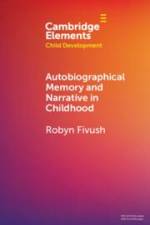
This Element delineates how the narrative expression of autobiographical memory develops through everyday interactions that frame the forms and functions of autobiographical remembering. Narratives are both outward and inward facing, providing the interface between how we perceive the world and how we perceive ourselves. Thus narratives are the pivot point where self and culture meet. To make this argument, the author brings together literature from multiple perspectives, including cognitive, personality, evolutionary, cultural, and developmental psychology. To fully understand autobiographical memory, it must be understood how it functions in the context of lives lived in complex sociocultural contexts.
Networks are convenient mathematical models to represent the structure of complex systems, from cells to societies. In the last decade, multilayer network science - the branch of the field dealing with units interacting in multiple distinct ways, simultaneously - was demonstrated to be an effective modeling and analytical framework for a wide spectrum of empirical systems, from biopolymers networks (such as interactome and metabolomes) to neuronal networks (such as connectomes), from social networks to urban and transportation networks. In this Element, a decade after one of the most seminal papers on this topic, the authors review the most salient features of multilayer network science, covering both theoretical aspects and direct applications to real-world coupled/interdependent systems, from the point of view of multilayer structure, dynamics and function. The authors discuss potential frontiers for this topic and the corresponding challenges in the field for the next future.
Aging is a subject of concern to everyone, but is widely misunderstood. If we view it as inevitable, we miss the fact that not everyone is able to grow to an old age. Realization of this reality helps us to understand that aging presents a wonderful opportunity - an opportunity to make choices about how we live which can enhance the aging process and offer a chance to live to our potential. This book clearly presents the four, multiple reserve, factors (cognitive, physical, psychological and social) which impact our ability to have healthy responses to the stresses of aging. By giving the biological basis for the advice given, you will learn the steps to take in your activities, diet and mental outlook to grasp the opportunity that aging offers. Everyone must know that what we do makes a difference.
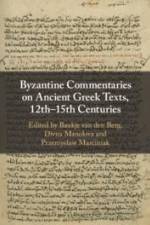
This is the first volume to explore the commentaries on ancient texts produced and circulating in Byzantium. It adopts a broad chronological perspective (from the twelfth to the fifteenth century) and examines different types of commentaries on ancient poetry and prose within the context of the study and teaching of grammar, rhetoric, philosophy and science. By discussing the exegetical literature of the Byzantines as embedded in the socio-cultural context of the Komnenian and Palaiologan periods, the book analyses the frameworks and networks of knowledge transfer, patronage and identity building that motivated the Byzantine engagement with the ancient intellectual and literary tradition.
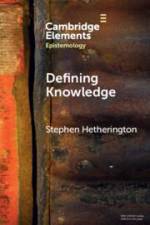
Post-Gettier epistemology is increasingly modalized epistemology - proposing and debating modally explicable conditionals with suitably epistemic content (an approach initially inspired by Robert Nozick's 1981 account of knowledge), as needing to be added to 'true belief' in order to define or understand knowing's nature. This Element asks whether such modalized attempts - construed as responding to what the author calls Knowing's Further Features question (bequeathed to us by the Meno and the Theaetetus) - can succeed. The answer is that they cannot. Plato's and Aristotle's views on definition reinforce that result. Still, in appreciating this, we might gain insight into knowing's essence. We might find that knowledge is, essentially, nothing more than true belief.
In this book, Victoria Lorrimar explores anthropologies of co-creation as a theological response to the questions posed by technologically enhanced humans, a prospect that is disturbing to some, but compelling for many. The centrality the imagination for moral reasoning, attested in recent scholarship on the imagination, offers a fruitful starting point for a theological engagement with these envisioned technological futures. Lorrimar approaches the topic under the purview of a doctrine of creation that affirms a relationship between human and divine creativity. Traditionally, theological treatments of creativity have been almost exclusively applied to artistic endeavours. Here, Lorrimar breaks new ground by extending such theological accounts to include technology, and uniting them with the strengths of scientific accounts of co-creation. She draws on metaphor studies, cognitive sciences, as well as literary studies, to develop an account of human creativity in relation to divine creativity, which is then applied to various enhancement scenarios.
There is broad consensus across the political spectrum in the US that monopolistic corporations - particularly Big Tech companies -- have grown too powerful, and that we need to revive antitrust to take on the 'curse of bigness.' But both the diagnosis and the cure are rooted in an outdated understanding of how the American economy is organized. Information and communication technologies have fundamentally altered the markets for capital, labor, supplies, and distribution in ways that undermine the basic categories we use to understand the economy. Nationality, industry, firm, size, employee, and other fundamental terms are increasingly detached from the operations of the economy. If we want to understand and tame the new sources of economic power, we need a new diagnosis and a new set of tools.
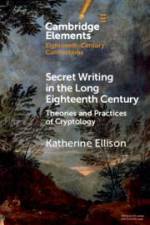
Cryptology of the long eighteenth century became an explicit discipline of secrecy. Theorized in pedagogical texts that reached wide audiences, multimodal methods of secret writing during the period in England promoted algorithmic literacy, introducing reading practices like discernment, separation, recombination, and pattern recognition. In composition, secret writing manipulated materials and inspired new technologies in instrumentation, computation, word processing, and storage. Cryptology also revealed the visual habits of print and the observational consequences of increasing standardization in writing, challenging the relationship between print and script. Secret writing served not only military strategists and politicians; it gained popularity with everyday readers as a pleasurable cognitive activity for personal improvement and as an alternative way of thinking about secrecy and literacy.
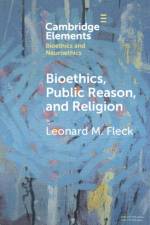
Can religious arguments provide a reasonable, justified basis for restrictive (coercive) public policies regarding numerous ethically and politically controversial medical interventions, such as research with human embryos, pre-implantation genetic diagnosis, or using artificial wombs? With Rawls, we answer negatively. Liberally reasonable policies must address these controversial technologies on the basis of public reasons accessible to all, even if not fully agreeable by all. Further, public democratic deliberation requires participants to construct these policies as citizens who are agnostic with respect to the truth of all comprehensive doctrines, whether secular or religious. The goal of these deliberations is practical, namely, to identify reasonable policy options that reflect fair terms of cooperation in a liberal, pluralistic society. Further, religious advocates may participate in formal policymaking processes as reasonable liberal citizens. Finally, public reason evolves through the deliberative process and all the novel technological challenges medicine generates for bioethics and related public policies.
This book tells an overlooked story in the history of the will, a contested idea in both politics and philosophy of mind. For it is Cicero, statesman and philosopher, who gives shape to the notion of will as it would become in Western thought and who invents the idea of 'the will of the people'. In a single word - voluntas - he brings Roman law in contact with Greek ideas, chief among them Plato's claim that a rational elite must rule. When the republic falls to Caesarism, Cicero turns his political argument inward: will is a force to win the virtue in the soul that was lost on the battlefield, the marker of inner freedom in an unfree age. Though his vision of a free republic failed in his time, Cicero's ideal of rational elitism has shaped and fractured the modern world - and Ciceronian creativity may yet save it.
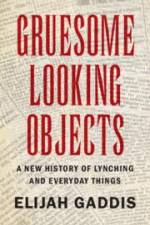
The 1898 lynching of Tom Johnson and Joe Kizer is retold in this groundbreaking book. Unlike other histories of lynching that rely on conventional historical records, this study focuses on the objects associated with the lynching, including newspaper articles, fragments of the victims' clothing, photographs, and souvenirs such as sticks from the hanging tree. This material culture approach uncovers how people tried to integrate the meaning of the lynching into their everyday lives through objects. These seemingly ordinary items are repositories for the comprehension, interpretation, and commemoration of racial violence and white supremacy. Elijah Gaddis showcases an approach to objects as materials of history and memory, insisting that we live in a world suffused with the material traces of racial violence, past and present.
This book provides the first detailed analysis of recognition and enforcement of foreign judgments and awards in civil and commercial matters from a transnational perspective. This perspective facilitates greater understanding of the present state of recognition and enforcement and offers insight into the establishment and operation of key modern instruments. This book represents a timely contribution, as instruments harmonising and promoting recognition and enforcement are increasingly being considered and implemented internationally. Many countries have recently reiterated their commitment to improving access to justice and have indicated an intention to sign one or both of the treaties designed to harmonise and promote recognition and enforcement of civil and commercial judgments internationally: the 2005 Choice of Court Convention or the 2019 Judgments Convention. This book is an essential resource for policymakers, scholars, and intergovernmental organisations to understand the nature and origin of recognition and enforcement approaches, as well as their application, interpretation, and future directions.
What would development look like if its practitioners and scholars were 'against NGOs,' challenging common sense about them? This book presents a critical perspective on NGOs, describing how they emerged as key agents of development over time. Through an interpretative history based on Gramscian concepts it shows how civil society organizations were gradually enlisted in development as non-state technocratic actors. The book argues that management studies and development studies emerged as commonsensical explanations for capitalist crises. Each offered complementary solutions to balance the needs of capital and society, in particular historical circumstances. These solutions also situated civil society as agents of development and vectors of management. Against NGOs fills a gap within the literature of management and development studies through its original discussion of their historical interconnections and shared themes. The book raises provocative questions on what forms of knowledge-politics can respond productively to the crises of our contemporary moment.
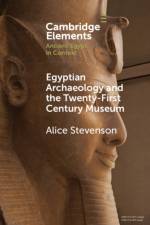
This Element addresses the cultural production of ancient Egypt in the museum as a mixture of multiple pasts and presents that cohere around collections; their artefacts, documentation, storage, research, and display. Its four sections examine how ideas about the past are formed by museum assemblages: how their histories of acquisition and documentation shape interpretation, the range of materials that comprise them, the influence of their geographical framing, and the moments of remaking that might be possible. Throughout, the importance of critical approaches to interpretation is underscored, reasserting the museum as a site of active research and experiment, rather than only exhibitionary product or communicative media. It argues for a multi-directional approach to museum work that seeks to reveal the inter-relations of collection histories and which has implications not just for museum representation and documentation, but also for archaeological practice more broadly.
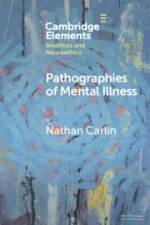
This Element is a survey of the field of pathographies of mental illness. It explores classic texts in the field as well as other selected contemporary memoirs. In doing so, the reader is introduced to psychiatric information about various mental illnesses through a narrative lens, emphasizing experience. Because clinical research is evidenced-based and aims to produce generalizable knowledge (i.e., trends), the reading of pathographies can complement these findings with practical experiential insights. By pairing psychiatric information with pathographies, certain personal themes become apparent that are different from the empirical trends identified by scientific and medical researchers. Based on the survey presented here, this Element identifies seven such themes, laying the foundation for future research, inquiry, practice, and policy.
Major figures including W. B. Yeats, Marianne Moore, D. H. Lawrence, Ford Madox Ford, and Virginia Woolf viewed 'cross-sex' collaboration as a valuable, and often subversive, strategy for bringing women and men's differing perspectives into productive dialogue while harnessing the creative potential of gendered discord. This study is the first to acknowledge collaboration between women and men as an important part of the modernist effort to 'make it new.' Drawing on current methods from textual scholarship to read modernist texts as material, socially constructed products of multiple hands, the study argues that cross-sex collaboration involved writers working not just with each other, but also with publishers and illustrators. By documenting and tracing the contours of their desire for cross-sex collaboration, we gain a new understanding of the modernists' thinking about sex and gender relations, as well as three related topics of great interest to them: marriage, androgyny, and genius.
Children's imagination was traditionally seen as a wayward, desire-driven faculty that is eventually constrained by rationality. A more recent, Romantic view claims that young children's fertile imagination is increasingly dulled by schooling. Contrary to both perspectives, this Element argues that, paradoxically, children's imagination draws much inspiration from reality. Hence, when they engage in pretend play, envision the future, or conjure up counterfactual possibilities, children rarely generate fantastical possibilities. Their reality-guided imagination enables children to plan ahead and to engage in informative thought experiments. Nevertheless, when adults present children with less reality-based possibilities - via biblical narratives or the endorsement of special beings - children are receptive. Indeed, such imaginary possibilities can infuse their otherwise commonsensical appraisal of reality. Finally, like adults, young children enjoy being absorbed into a make-believe, fictional world but faced with real-world problems calling for creativity, they often need guidance, given their limited knowledge of prior solutions.
Blockchains have become increasingly important for organizing contemporary economic and social activities. This Element offers a deeper understanding of blockchains to both management scholars and practitioners, with an emphasis on blockchains' strategic implications for fundamental issues in organizing. It provides a critical examination of the core themes, theoretical lenses, and methodologies used in blockchain research in business and management scholarship. Furthermore, it offers an in-depth discussion of why and how blockchains offer a new way of organizing, providing profound implications for three major issues of strategic organization: contracting, trust, and organizational design. It also discusses several limitations of the technology in its current stage of development. Finally, this Element points to the implication of blockchains on both scholarly research and business practice.
In this innovative study of everyday charity practices in Jeddah, Nora Derbal employs a 'bottom-up' approach to challenge dominant narratives about state-society relations in Saudi Arabia. Exploring charity organizations in Jeddah, this book both offers a rich ethnography of associational life and counters Riyadh-centric studies which focus on oil, the royal family, and the religious establishment. It closely follows those who work on the ground to provide charity to the local poor and needy, documenting their achievements, struggles and daily negotiations. The lens of charity offers rare insights into the religiosity of ordinary Saudis, showing that Islam offers Saudi activists a language, a moral frame, and a worldly guide to confronting inequality. With a view to the many forms of local community activism in Saudi Arabia, this book examines perspectives that are too often ignored or neglected, opening new theoretical debates about civil society and civic activism in the Gulf.
Witchcraft and paganism exert an insistent pressure from the margins of midcentury British detective fiction. This Element investigates the appearance of witchcraft and paganism in the novels of four of the most popular female detective authors of the era: Agatha Christie, Margery Allingham, Ngaio Marsh and Gladys Mitchell. The author approaches the theme of witchcraft and paganism not simply as a matter of content but as an influence which shapes the narrative and its possibilities. The 'witchy' detective novel, as the author calls it, brings together the conventions of Golden Age fiction with the images and enchantments of witchcraft and paganism to produce a hitherto unstudied mode of detective fiction in the midcentury.
The extent of available pre-judgment asset preservation relief is widely regarded as a unique characteristic of English law and one of the key factors attracting international commercial litigation to the English courts. By taking a novel view of the theoretical foundations of a freezing injunction, this book challenges the long-established view that such an injunction is an in personam form of relief whose sole purpose is to prevent unscrupulous defendants from making themselves judgment-proof. Dr Saranovic combines historical and comparative perspectives to identify several theoretical flaws in the court's jurisdiction to grant this popular form of interim relief. The book demonstrates that the current application of private international law rules in this field leads to inequality among litigants and illegitimate encroachment upon the sovereignty of foreign states. It proposes a range of possible solutions to alleviate concerns about the scope of freezing injunctions both in the domestic and international arena.
Clinical Topics in Teaching Psychiatry draws on classic papers previously published in BJPsych Advances, alongside newly commissioned chapters, to provide a rich overview of teaching and learning as applied to psychiatry. Written by clinicians, professors and lecturers, the book covers the direct teaching of the specialty through to educational management, coaching and mentoring. It examines diverse methods of teaching and learning, from journal clubs to simulation, and gives an updated overview of psychiatry in the foundation programme. It covers the challenges faced by trainers in recent times in delivering training virtually through webinars and remote placements. Newly commissioned chapters include how to conduct an online literature search, writing for learning and publication, delivering a good lecture and supporting trainees. Accessible throughout, the book provides much-needed guidance for busy clinicians, primarily psychiatrists, who are acting as trainers. It will also be an invaluable guide for trainees and other mental health professionals.
This Element is a contribution to a new generation of corpus pragmatics research by taking as its starting point the multifaceted nature of speech acts in conversation, and by adopting a mixed-methods approach. Through a unique combination of theoretical, qualitative, quantitative, and statistical approaches, it provides a detailed investigation of advice-giving and advice uptake in relation to (i) the range of constructions used to give advice in different discourse contexts and at different points in time, and (ii) their interaction with dialogic and social factors of advice uptake as key components of frames of advice exchanges in natural conversation. Using data from the London-Lund Corpora of spoken British English, the Element shows, firstly, that there are systematic differences in advising between discourse contexts over the past half a century, and, secondly, that who gave the advice and how they did it are the strongest predictors of the advisee's response. This title is also available as Open Access on Cambridge Core.
War and Literary Studies poses two main questions: First, how has war shaped the field of literary studies? And second, when scholars today study the literature of war what are the key concepts in play? Seeking to complement the extant scholarship, this volume adopts a wider and more systematic approach as it directs our attention to the relation between warfare and literary studies as a field of knowledge. What are the key characteristics of the language of war? Of gender in war? Which questions are central to the way we engage with war and trauma or war and sensation? In which ways were prominent 20th century theories such as critical theory, French postwar theory, postcolonial theory shaped by war? How might emergent concepts such as 'revolution,' 'the anthropocene' or 'capitalism' inflect the study of war and literature?
This research examines how museums and heritage sites can embrace a social justice approach to tackle inequalities and how they can empower disadvantaged groups to take an equal benefit from cultural resources. This Element argues that heritage institutions can use their collections of material culture more effectively to respond to social issues, and examines how they can promote equal access to resources for all people, regardless of their backgrounds. This research examines heritage and museum practices, ranging from critical and democratic approaches to authoritarian practices to expose the pitfalls and potentials therein. By analysing case studies, examining institutions' current efforts and suggesting opportunities for further development with regard to social justice, this Element argues that heritage sites and museums have great potential to tackle social issues and to create a platform for the equal redistribution of cultural resources, the recognition of diversities and the representation of diverse voices.
This textbook provides a comprehensive treatment of irrigation engineering for advanced undergraduates and graduate students. It does not require a background in calculus, hydrology, or hydraulics, offering a one-stop overview of the entire field of study. It includes everything a student of irrigation engineering needs to know: concepts of climate, soils, crops, water quality, hydrology, and hydraulics, as well as their application to design and environmental management. To demonstrate the practical applications of the theories discussed, there are over 300 worked examples and end-of chapter exercises. The exercises allow readers to solve real-world problems and apply the information they've learned to a diverse range of scenarios. To further prepare students for their future careers, each chapter includes many illustrative diagrams and tables containing data to help design irrigation systems. For instructors' use when planning and teaching, a solutions manual can be found online alongside a suite of PowerPoint lecture slides.
In this Element the author argues that genre deeply affects how early Christian female philosophers are characterized across different works. The included case studies are three women who feature in both narrative and dialogic texts: Thecla, Macrina the Younger and Monica. Based on these examples, the author demonstrates that the narrative sources tend to eschew secular education, while the dialogic sources are open to displays of secular knowledge. Philosophy was not only seen as a way of life, but sometimes also as a mode of educated argumentation. The author further argues that these female philosophers were held up in their femininity as models for imitation by both women and men.
In accounts of Chinese history, the Western Zhou period has been lionized as a golden age of ritual, when kings created the ceremonies that underlay the traditions of imperial governance. In this book, Paul Nicholas Vogt rediscovers their roots in the vagaries of Western Zhou royal geopolitics through an investigation of inscriptions on bronze vessels, the best contemporary source for this period. He shows how the kings of the Western Zhou adapted ritual to create and retain power, while introducing changes that affected later remembrances of Zhou royal ritual and that shaped the tradition of statecraft throughout Chinese history. Using ritual and social theory to explain Western Zhou history, Vogt traces how the traditions of pre-modern China were born, how a ruling dynasty establishes and holds on to power, how religion and politics can support and restrain each other, and how ancient peoples made, used, and assigned meaning to art and artifacts.
Portuguese explorations opened the sea-route to Asia, bringing armed trading to the Indian Ocean. This Element examines the impact of the 1511 Portuguese conquest of the port-kingdom of Melaka on early travel literature. Putting into dialogue accounts from Portuguese, mestico, and Malay perspectives, this study re-examines early modern 'discovery' as a cross-cultural trope. Trade and travel were intertwined while structured by religion. Rather than newness or wonder, Portuguese representations focus on recovering what is known and grafting Asian knowledges-including local histories-onto European epistemologies. Framing Portuguese rule as a continuation of the sultanate, they re-spatialize Melaka into a European city. However, this model is complicated by a second one of accidental discovery facilitated by native agents. For Malay texts too, travel traverses known routes and spaces. Malay travelers insert themselves into foreign spaces by forging new kinship alliances, even as indigenous networks were increasingly disrupted by European incursions.
In this Element, the authors focus on the translational dimension of 'on-screen language' (OSL). They analyse a data set covering the Polish localisations of Tom Clancy's The Division 2 and Shadow Warrior 2, from which over 1000 cases of unique and meaningful OSL were extracted, almost exclusively in languages other than Polish. Close to 100 representative examples are examined in this Element to map out a comprehensive typological account of OSL. First, visual-verbal stimuli are categorised by their prominence in the 3D environment. The second typology focuses on the identified OSL functions. A supplementary typological distinction is proposed based on the technical (static vs. dynamic) implementation of OSL. The discussion of findings and implications notably comprises input from an interview that the authors conduced with a lead level developer behind Shadow Warrior 2 to provide a complementary professional perspective on OSL and its translation.
Abonner på vårt nyhetsbrev og få rabatter og inspirasjon til din neste leseopplevelse.
Ved å abonnere godtar du vår personvernerklæring.